Category: World News

  • Dozens of Christian Girls in Pakistan Targeted for Rape, Abduction, Forced Conversion

    Dozens of Christian Girls in Pakistan Targeted for Rape, Abduction, Forced Conversion

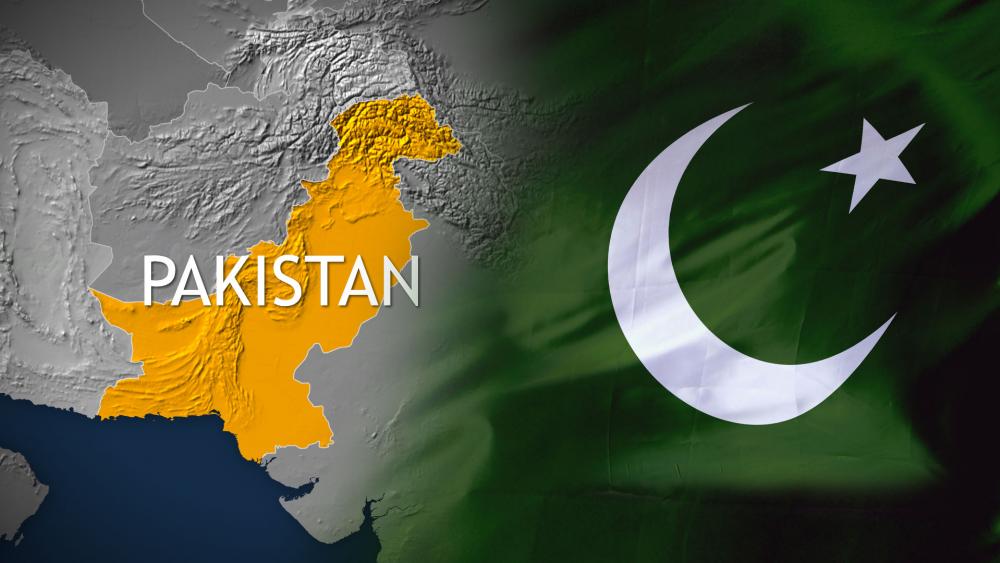
    A poor Christian family in Pakistan is calling for justice after their teenaged daughter was reportedly kidnapped at gunpoint and raped by five Muslims.

    UCANews.com reports the girl named Maria, 15, was taken from her house in Sheikhupura city of Punjab province on June 9. Her father, Jalal Masih, was at his job at the time, working as a laborer.

    Masih filed a police report accusing Muhammad Sajid, a local businessman, and four others in the attack in which there were several witnesses.

    “The locals saw them abducting her at gunpoint in a vehicle. I reached his (Sajid’s) office but he was absent,” Masih said in the First Information Report (FIR) filed six days after the incident. “We made contact the next day and he threatened to return her dead body if we informed the police.”

    “Sajid escaped after leaving Maria on our doorstep on June 10 night. She was extremely scared,” her father said.

    As the news of the attack spreads on social media, Christian activists are calling for the arrest of the suspects.

    According to Legal Evangelical Association Development (LEAD), a non-profit advocacy group providing legal aid to persecuted minorities, 28 Christian girls became victims of abduction, torture, sexual harassment, rape, forced conversion and forced marriages in Pakistan from November 2018 to June 2019.

    “The number of unreported cases will be higher as the families of victims usually avoid getting help from biased police officials who support cruel and influential culprits. Only Christian and Hindu girls are victims in such cases,” LEAD national director Sardar Mushtaq Gill told UCANews.com. “Crimes against religious minorities are increasing at a high scale in Pakistan.”

    “In Pakistan, abduction of girls from Christian and Hindu minorities’ communities has been on the higher side since years,” Gill wrote in his online blog. “These girls after abduction are sexually assaulted, forcibly married to the abductors and forced into conversions. Some human rights groups define persecution in old fashion(ed) way but the persecutors have changed their ways to persecute religious minorities in a new ways and they called it policy and it could be implemented at both by Government sector and at private sector.”

    “So it is the need of time to define religious persecution in a broader-way and to believe it or not Pakistani Christians and Hindu are most vulnerable who are being persecuted by Islamic extremists objectively because their poor status and poor defense in society,” he continued.

    The news website also reports the interfaith group Rwadari Tehreek launched an anti-rape campaign with a protest on June 15 in front of the Punjab Assembly in Lahore.

    “It is a sad reality that dozens of male and female children are subjected to sexual abuse and violence almost every day,” Chairman Samson Salamat told the website.

    “Unfortunately, governments and concerned authorities have turned a blind eye toward these serious violations of human rights and the victims are being denied justice because of the lacunas in the justice system,” he said.

    Salamat also called local officials to organize sessions to educate police officers and other law enforcement officials on the issue.

    “Most cases are dealt with in a wrong manner because of the bad treatment and attitude in police stations. The victims only become more victimized. Safe and fully equipped rehabilitation centers should be established for the victims of rape and child sexual abuse,” he said.
    source

  • China Govt Harvesting Human Organs from Falun Gong, Other Prisoners Also Victims

    China Govt Harvesting Human Organs from Falun Gong, Other Prisoners Also Victims

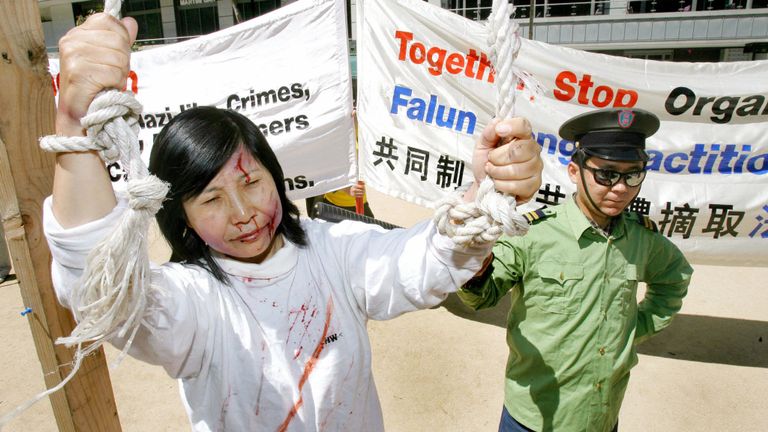
    A year-long study just completed and released Monday in London by an independent international tribunal concludes that China is killing prisoners in order to harvest their organs. Most of the victims are detainees from the Falun Gong religious movement.

    These are “Chinese who are in jail because of the way they are seeking God, or they worship God and the Chinese government is threatened by that and they are killing these prisoners and are harvesting their internal organs for profit,” said Gary Bauer, member of the U.S. Commission on International Religious Freedom.

    Former Falun Gong and Uyghur Muslim inmates report prison officials subjected them to ongoing medical checkups and blood testing.

    China says it stopped harvesting the organs of executed prisoners about five years ago, and the government says the allegations are being used for political propaganda against the communist country.

    But the China tribunal suggests such harvesting of organs is still happening. Bauer insists the tribubal report shows that despite China’s previous denials, it has been killing prisoners of conscience in many cases. He praised the tribunal and its chairman, Sir Geoffrey Nice, who has devoted years of work on human rights issues.

    “The other members of the tribunal were people who were steeped in Chinese history, Chinese culture. They interviewed dozens and dozens of witnesses, so this is a very credible report,” explained Bauer.

    Bauer said egregious violations of human rights and religious liberties in China must be addressed by the Trump administration and the U.S. Congress.

    “We are not talking here about a couple of dozen incidents a year,” he said. “Previous studies have shown there may have been as many as 60,000 to 90,000 of these killings taking place each year in which organs were harvested.”

    Bauer said China is not only harvesting human organs for profit, but government officials are equal opportunity abusers who violate religious freedoms and human rights.

    “All of these practices are beyond the pale.They deserve international condemnation and it ought to raise serious questions in my view,” he continued. “My personal view that any business that is doing business, making a profit in China — they ought to seriously be asking themselves if they want to be doing business in a country that is engaged in this type of unbelievable violations of basic human rights and human dignity.”

    source

  • Texas gained almost nine Hispanic residents for every additional white resident last year

    Texas gained almost nine Hispanic residents for every additional white resident last year

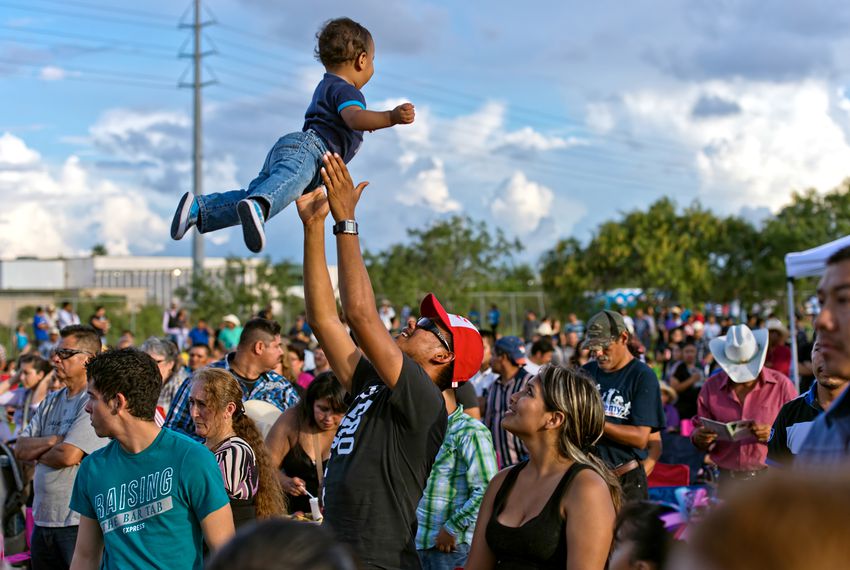
    The gap between Texas’ Hispanic and white populations continued to narrow last year when the state gained almost nine Hispanic residents for every additional white resident.

    With Hispanics expected to become the largest population group in Texas as soon as 2022, new population estimates released Thursday by the U.S. Census Bureau showed the Hispanic population climbed to nearly 11.4 million — an annual gain of 214,736 through July 2018 and an increase of 1.9 million since 2010.

    The white population, meanwhile, grew by just 24,075 last year. Texas still has a bigger white population — up to 11.9 million last year — but it has only grown by roughly 484,000 since 2010. The white population’s growth has been so sluggish this decade that it barely surpassed total growth among Asian Texans, who make up a tiny share of the total population, in the same time period.

    The estimates come as lawmakers begin to sharpen their focus on the 2021 redistricting cycle, when they’ll have to redraw the state’s congressional and legislative maps to account for population growth. And they highlight the extent to which the demographics of the state continue to shift against the Republican Party.

    During the last go-around, which is still being litigated in federal court, Hispanics accounted for about 65% of the state’s growth. With about two years of growth left to go, their share of Texas’ population increase since 2010 reached 54% last July.

    The Hispanic community is growing in numbers across the state. But 47% of Texas Hispanics now live in the state’s five biggest counties — Harris, Bexar, Dallas, Tarrant and Travis. Home to Houston, Harris County leads that list with more than 2 million Hispanic residents. But Hispanic growth since 2010 continues to be most significant in Tarrant County.

    With a growth rate of 26%, the Hispanic population in Tarrant County reached 609,236 last year — up from 482,977 in 2010.

    But while Hispanics’ numbers are growing the most, the state’s Asian community is growing the fastest.

  • Kamala Harris says Israel meets human rights standards ‘overall’ (days after its forces wound 92 Palestinian civilians at protest)

    Kamala Harris says Israel meets human rights standards ‘overall’ (days after its forces wound 92 Palestinian civilians at protest)

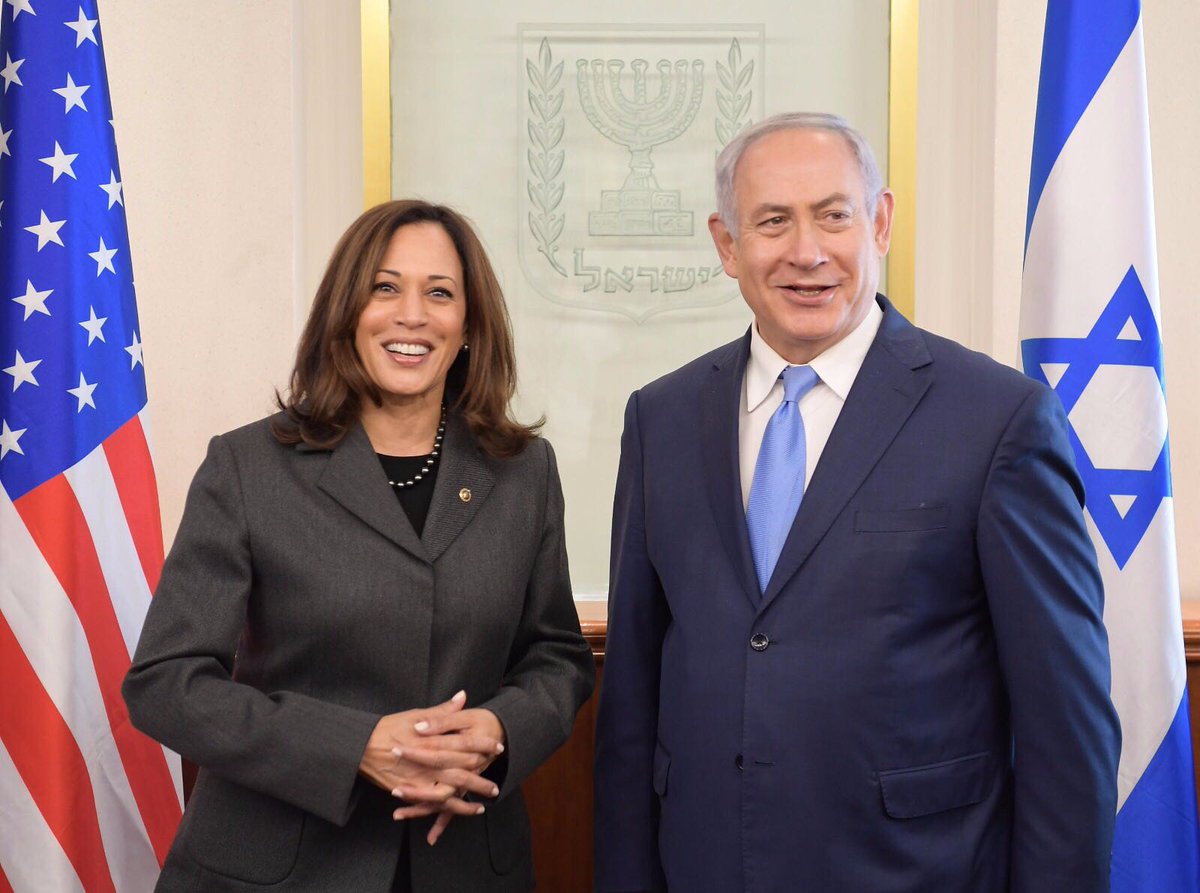
    In an interview with the New York Times, Democratic presidential hopeful Kamala Harris said she believes Israel meets international human rights standards “overall.” The declaration comes less than a week after Israel wounded ninety-two Palestinian civilians during a weekly protest at the Gaza border, including twenty-eight children and four medics.

    Harris made the comments about Israel during a New York Times feature, in which the paper asked a number of the candidates twenty-one questions. One of those questions was, “Do you think Israel meets international standards of human rights?”

    Harris: I think that Israel as a country is dedicated to being a democracy, and is one of our closest friends in that region and that we should understand the shared values and priorities that we have as a democracy, and conduct foreign policy in a way that is consistent with understanding the alignment between the American people and the people of Israel.

    New York Times: Does Israel meet human rights standards to your personal satisfaction?

    Harris: Well, talk in more detail, what specifically are your referring to?

    New York Times: As a country overall in terms of how they–

    Harris: Overall, yes.

    Among Democratic presidential hopefuls, Harris has charted one of the least-critical stances toward Israel, rarely criticizing the country and hewing close to the AIPAC line.

    On June 14, Israeli forces wounded 92 Palestinian civilians, including twenty-eight children and four paramedics during a protest at the Gaza border. Palestinians have been protesting every Friday for the last sixty-one weeks, demanding displaced refugees be allowed to return their homeland. According to the Palestinian Centre for Human Rights, 207 Palestinian civilians have been killed and 12,707 have been wounded since the protests began last March. The deaths include 44 children, 4 paramedics, and 9 disabled people. On one day in May 2018, when the US opened its new embassy in Jerusalem, Israel killed over 60 protesters.

    This content was originally published here.

  • New Poll Shows Mexicans Increasingly Want To Keep Illegal Immigrants Out Of Mexico

    New Poll Shows Mexicans Increasingly Want To Keep Illegal Immigrants Out Of Mexico

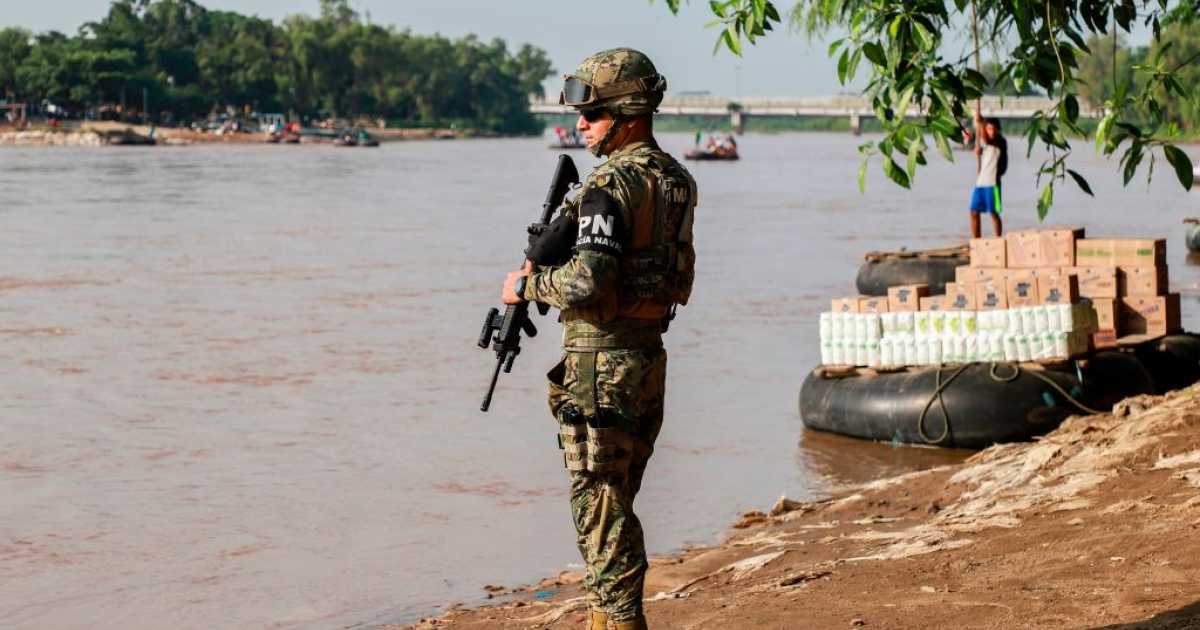
    A new poll by the Mexican newspaper El Universal shows that since October 2018, more Mexicans support stricter immigration enforcement to keep illegal immigrants from entering Mexico. Last October, the percentage of Mexicans who agreed that tougher immigration was necessary was 49%; that percentage has risen to 61%.

    As Newsbusters reports, “The poll also found that 54% of Mexicans are opposed to their government offering work visas to the asylum-seeking wave of Central Americans flooding into their country. The same poll also found that 47% of Mexicans believe President Trump will deliver on his threats to impose tariffs on Mexican imports, while 21% do not.”

    Newsbusters also translated the segment of the June 12, 2019 late night edition of Noticiero Univision, in which anchor Arantxa Loizaga and correspondent Alejandro Madrigal discussed Mexicans’ tougher stance on immigration, with Madrigal expounding, “In Mexico, the presence of the immigrants is now starting to become irritating. Six out of every 10 Mexicans agree that the Government should prevent them from crossing, and only one in ten people think they should be allowed to travel freely through the country. This according to a survey in the Mexican newspaper El Universal.”

    Madrigal added, “According to the survey, 44 percent of Mexicans believe that the government of President Andres Manuel López Obrador should immediately expel immigrants from the country, and 57 percent do not believe the Government should allow them into the national territory.”

    The New York Times reported on June 3, “In recent weeks, the Mexican authorities have been breaking up migrant caravans and setting up round-the-clock roadblocks along common routes north … But their recent enforcement efforts aside, Mexican officials admit that their southern border is highly porous, with thousands of migrants slipping across every month through hundreds of known illegal crossings.”

    In April, USA Today reported, “Mexican authorities said a group of about 350 migrants broke the locks on a border gate Friday and forced their way into southern Mexico to join a larger group of migrants trying to make their way toward the United States. The National Immigration Institute did not identify the nationalities of the migrants, but they are usually from Central America. A similar confrontation occurred on the same border bridge between Mexico and Guatemala last year.”

    Transcript of the Univision segment below from Newsbusters:

    ARANTXA LOIZAGA, ANCHOR, UNIVISION: In Mexico, the policy of President Trump to indiscriminately expel undocumented immigrants in the United States has generated a lot of criticism. But now, according to a survey from the newspaper El Universal, 44 percent of those who participated in this poll believe that President López Obrador ought to expel from Mexico all the migrants who are there irregularly. Alejandro Madrigal takes up the issue.

    ALEJANDRO MADRIGAL, CORRESPONDENT, UNIVISION: In Mexico, the presence of the immigrants is now starting to become irritating. Six out of every 10 Mexicans agree that the Government should prevent them from crossing, and only one in ten people think they should be allowed to travel freely through the country. This according to a survey in the Mexican newspaper El Universal.

    FIRST UNIDENTIFIED MAN ON THE STREET: Stop them and return them in a dignified way, not… not with violence.

    SECOND UNIDENTIFIED MAN ON THE STREET: I would simply not let them go through because, as I mentioned, we already have enough problems of our own.

    MADRIGAL: According to the survey, 44 percent of Mexicans believe that the government of President Andres Manuel López Obrador should immediately expel immigrants from the country, and 57 percent do not believe the Government should allow them into the national territory. In the Government of Mexico there are also beginning to appear differences with the measures being taken to stop immigrants on the southern border. Among them, the President of the Chamber of Deputies, Porfirio Muñoz Ledo.

    PORFIRIO MUÑOZ LEDO, PRESIDENT, MEXICAN CHAMBER OF DEPUTIES: Yesterday the National Guard agents left to put our wall. Because that’s what it is, the National Guard that was created to fight criminals, not to fight immigrants.

    MADRIGAL: The survey also asks Mexicans about the permits that the Mexican Government grants to immigrants so that they can work in this country. 57 percent are opposed. The topic of the tariffs was also included. To avoid them, the Mexican Government will strengthen the northern border.

    ALEJANDRO ENCINAS, UNDERSECRETARY OF GOVERNMENT: No, I hope and calculate that in the coming months we will top more than 50 thousand people.

    MADRIGAL: Although 47 percent of Mexicans believe that President Trump will deliver on his threat to impose tariffs on Mexican imports. President López Obrador has insisted that he will not enter into conflict with the government of the United States. But 90 percent of Mexicans are asking him to answer each and every aggressions made by Donald Trump, according to the survey. In Mexico City, Alejandro Madrigal, Univision.

    This content was originally published here.

  • Mongolia: Bridge or Buffer in Northeast Asia?

    Mongolia: Bridge or Buffer in Northeast Asia?

    What if you held a big party for 200 people and one of the guests you most wanted to see RSVPed but never showed up? This was the scenario with North Korea’s absence at the sixth Ulaanbaatar Dialogue (UBD) on Northeast Asian Security, a 1.5 level forum for officials and academics, which I attended from June 5-6 in the Mongolian capital. Nonetheless, Mongolia succeeded in making its case as a meaningful interlocutor on North Korean issues and a participant in Northeast Asian economic integration efforts, such as ongoing discussions about expanding the use of wind and solar power in a regional power grid.

    Although Mongolia was considered as a venue for one of the summits between U.S. President Donald Trump and North Korean leader Kim Jong Un, it was eventually not selected. Of course, it was not unexpected that North Korea would prefer an authoritarian host to a fledgling democracy that had made a transition from socialism. Nevertheless, Mongolia has played an important, if often overlooked, role over the years as a facilitator of Northeast Asian diplomacy with North Korean officials. As Foreign Minister Damdin Tsogtbaatar put it, Mongolia has the potential to be a “bridge for peace” in Northeast Asia, due to its own unique history as a socialist state and more recent development as a democracy.

    Mongolia is also one of a few countries to enjoy good relations with both South and North Korea. Mongolia’s relations with South Korea have deep historical and cultural roots, and democratization in both countries has deepened their mutual affinity. Alicia Campi, a former diplomat and scholar of Mongolia’s foreign policy, notes that its longstanding bilateral relations with North Korea are “underappreciated.” Despite the differences in their trajectory after Mongolia’s democratic transition, the two countries have retained mutually beneficial economic ties, including the provision of North Korean guest workers (until sanctions prohibited this in 2018). Then-President Tsakhiagiin Elbegdorj used the occasion of a state visit to Pyongyang in 2013 to offer his country as a mediator in the nuclear crisis (as well as to praise democracy during his speech at Kim Il Sung university). The annual Ulaanbaatar Dialogue began in 2014 as a means of encouraging regionwide security discussion and reducing distrust among the parties in the aftermath the collapse of the Six-Party Talks.

    Elbegdorj was the first foreign leader to meet Kim Jong Un, and his successor, President Khaltmaagiin Battulga, extended an invitation to the North Korean leader to visit Mongolia. In December 2018, North Korean Foreign Minister Ri Yong Ho visited Ulaanbaatar to celebrate 70 years of diplomatic relations between the two countries. Mongolian officials have also participated in a number of less public mediation efforts, helping to facilitate the return of Japanese abductees from North Korea and assisting South Korea in resettling North Korean refugees. As a nuclear weapons-free state and a small developing country surrounded by stronger powers, Mongolian officials believe their experience is highly relevant to ongoing discussions of security on the Korean Peninsula. To this end, at the recent UBD some proposed Mongolia’s participation in future multilateral talks on the nuclear crisis, a position that Russian officials supported in the past.

    Apart from North Korea’s no show at the June 2019 UBD, the other hot topic in Ulaanbaatar was whether or not Mongolia should seek full membership in the Shanghai Cooperation Organization (SCO), which both Russia and China have encouraged. Membership was restricted to China, Russia, and the Central Asian states until 2017, when India and Pakistan both joined. Mongolia has been an observer in the SCO since 2004. Some Mongolian officials contend that full membership would enhance trust between Mongolia, Russia, and China, and potentially add new dynamism to their trilateral economic cooperation plans. Others argue that such a move might compromise Mongolia’s “third neighbor” policy and that Mongolia does not share the same concerns as other SCO members over terrorism, extremism, and separatism. Moreover, at a fraught time in U.S. relations with both Russia and China, Mongolia’s membership in the SCO might be construed in Washington and other Western capitals as anti-NATO, despite Mongolia’s history of military cooperation with it. Certainly, Mongolia’s participation last summer in the major Russian military exercise, Vostok, along with a contingent of Chinese forces, raised some eyebrows.

    While India has been able to navigate between membership in the SCO and its partnership with the United States and other democracies, it does not face the same economic or geopolitical pressures as landlocked Mongolia, which seeks to balance sustainable development with independence from its two powerful neighbors. Despite expectations of a shift in Mongolia’s position, Battulga’s attendance at the SCO summit in Bishkek did not lead to any change from his country’s observer status. Admitting that SCO membership remained controversial at home, the Mongolian president noted that “Mongolia is exploring levels of increase of its participation” in the organization and supported the additional opportunities at the Bishkek summit for observer states and international organizations to join in the discussions with member states.

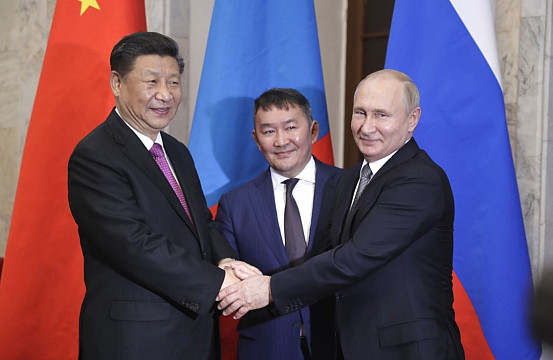
    Presidents Xi Jinping, Vladimir Putin, and Battulga met on the sidelines of the summit to discuss their trilateral cooperation in the framework of the China-Mongolia-Russia-Economic Corridor established as a part of the Belt and Road in 2014. In their individual statements, each president provided a different vision of what this corridor should involve. Given the lack of consensus among the three, it is not surprising that the corridor has made little progress so far, not even in achieving mutually acceptable feasibility studies, not to mention completing planned projects.

    Mongolia has enthusiastically supported the trilateral economic agenda with its two neighbors, but bilateral issues have stymied its progress. On the one hand, the slow pace of Sino-Russian regional cooperation has held up trilateral plans for road and rail connections via Mongolia. For example, the bridge from Blagoveshchensk, Russia, to Heihe, China, on the books since 1995 and at long last constructed earlier this month, will be a key link in these new transit routes once road and rail connections are completed. The possibility of a second Sino-Russian gas pipeline transiting Mongolian territory depends on the protracted Sino-Russian negotiations over routing and pricing, as well as China’s view of pipelines transiting third countries as an energy security risk, a concern likely to color its view of a Northeast Asian energy grid as well. Other key areas of China-Mongolia-Russia trilateral cooperation (simplifying customs clearance and rail logistics) also need to be negotiated bilaterally.

    On the other hand, the deepening Sino-Russian political partnership makes Mongolia’s effort to balance a good relationship with each of its two neighbors — with the goal of avoiding economic dependence on either one — all the more difficult. Although Battulga, responding to anti-Chinese sentiment in the Mongolian public, appeared to be tilting more toward Moscow in his first year in office, a series of meetings with Xi since 2018 have sought to rebalance Mongolian foreign policy, given the inescapable fact of the country’s considerable reliance on trade and investment from China. Nonetheless, excessive dependence on China for trade and investment creates new vulnerabilities, as economic stagnation in China diminishes its demand for Mongolian minerals, a fact that already worsened Mongolia’s economic woes earlier in the decade. The challenge will be for Mongolia to implement some of its creative foreign policy thinking, which looks beyond the immediate pressures of the two large neighbors and seeks to put Mongolia on the map through a variety of multilateral initiatives as well as its “third neighbor” policy.

    Elizabeth Wishnick is a Professor of Political Science at Montclair State University and a Senior Research Scholar at the Weatherhead East Asian Institute, Columbia University.

    This content was originally published here.

  • Till debt do us part: Russia’s holdings of US Treasuries plunge to 12-year low — RT Business News

    Till debt do us part: Russia’s holdings of US Treasuries plunge to 12-year low — RT Business News

    Russia cropped its stockpile of US debt by $1.6 billion. The country’s holdings decreased from $13.7 billion in March to $12.1 billion in April. That’s the lowest figure since May 2007 when Russia’s ownership of US debt stood at $11.8 billion.

    Once a leading holder of US Treasury bonds, Russia has been sharply reducing its holdings in recent years. It has cut nearly 85 percent of the holdings from $96.9 billion in January 2018. The drop is even more significant from 2010, when Russia held over $170 billion in US debt bonds.

    Data showed that the largest US creditor, China, has also trimmed its holdings in April to the lowest level since May 2017. Chinese holdings of Treasury securities declined for a second straight month, to $1.113 trillion in April, from $1.120 trillion the previous month. The country still remains the largest foreign holder of US Treasuries.

    The second-largest non-US holder of American debt, Japan, also reduced holdings in April, to $1.064 trillion, from $1.078 trillion the previous month.

    Statistics showed that overall foreign holdings of US Treasuries dropped to $6.433 trillion in April, from $6.473 trillion in March.

    For more stories on economy & finance visit RT’s business section

    This content was originally published here.

  • Pakistan’s economic crises over, future is bright

    Pakistan’s economic crises over, future is bright

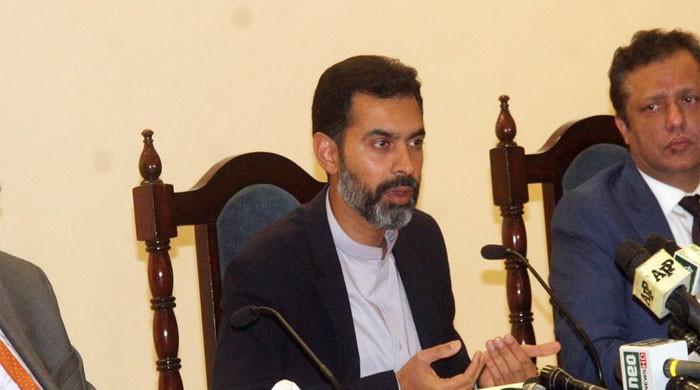
    KARACHI: Governor, State Bank of Pakistan (SBP), Dr. Reza Baqir on Monday assured that the country has come out of the economic crises as it has achieved economic stability including financial one, which has created investors’ confidence that is very positive signal.”Uncertainty and instability was a serious challenge to the country, which is now over as the economic team tackled the situation very effectively. Pakistan’s future is bright,” he said while speaking at his first interaction with media here at the SBP Building.He also answered questions by journalists in Islamabad through a video link.Dr Reza said the present government had assigned two major tasks to its economic team that is, bringing economic stability and ensuring inclusive economic growth in the country; where there is improvement in the life of the common man.“The two main reasons for the economic instability were: external deficit and fiscal deficit. Now, these were being addressed effectively and in credible manner.”The external/trade deficit situation was improving.He said it was very positive development that the government had pledged not to borrow from State Bank of Pakistan.Instead, he added, it would borrow from the money market. This would save State Bank of Pakistan from printing new notes which pushed inflation.About the exchange rate, SBP Governor said a fixed rate or free float currency policy were not in favour of the country.Rather, SBP had adopted the market-based policy for it.Regarding the key interest rate, Dr. Reza said SBP’s Monetary Policy Committee did take into account the projected inflation before fixing it.”We shall be fighting inflation to our best,” he reassured, adding the interest rate was the best tool to control inflation.He said the state bank had to work for three objectives including financial stability, maintaining exchange rate and for sustained economic growth.The SBP Governor defended the agreement being signed with IMF maintaining that it had sent positive signals to the entire world about financial stability in Pakistan that had also built confidence among the local and foreign investors.After that, Pakistan Stock Exchange also strengthened.”Going for IMF loan, everything was being done in the interest of the country,” he said and that all IMF conditions were dully fulfilled.He informed the media that on July 3, 2019 IMF Board of Directors’ meeting would be held and all details would be dully published which would make the things clear about the deal with the world credit body.

    This content was originally published here.

  • Global Economic Growth Is Already Slowing. The U.S. Trade War Is Making It Worse.

    Global Economic Growth Is Already Slowing. The U.S. Trade War Is Making It Worse.

    Data increasingly suggest trade tensions are weighing on economic confidence, globally and in the United States.

    A Federal Reserve Bank of New York manufacturing survey registered its worst drop ever on Monday, which many economists blamed on Mr. Trump’s threats earlier this month to impose tariffs on Mexican imports as punishment for failing to curb illegal immigration. While those tariffs were averted, the chance that Mr. Trump could make a similar move against another trading partner has caught the attention of global companies and foreign leaders.

    The trade war is having “a much bigger impact” on business hiring and investment in the United States than most analysts think, Deutsche Bank wrote in a research note on Monday. Several measures of policy uncertainty, compiled by economists Scott R. Baker of Northwestern University, Nicholas Bloom of Stanford University and Steven J. Davis of the University of Chicago, have spiked with the increased tensions.

    On Tuesday, Mr. Trump said in a tweet that he had spoken by phone to President Xi Jinping of China and that the two leaders would have an “extended” meeting next week at the G-20 summit in Japan. Those comments could help calm global trade fears, which had risen after the United States accused China of breaking a trade deal last month and Mr. Trump raised tariffs on $200 billion worth of Chinese goods as punishment.

    But no agreement is guaranteed, and Mr. Trump has threatened to impose tariffs on an additional $300 billion of Chinese goods if Mr. Xi does not agree to the original deal. The president has already placed import taxes on $250 billion worth of products from China and has hit trading partners with steel and aluminum tariffs and threatened tariffs on foreign autos from Europe and Japan.

    The World Bank cut its forecast for global growth by 0.3 percentage points for this year in response to unexpected weakness in trade and manufacturing across advanced and developing economies. Global trade growth has slowed to its lowest rate since the 2008 financial crisis as exports from Europe and Japan have plummeted, particularly to China.

    The bank noted that heightened policy uncertainty, including trade tensions, have been accompanied by slowing global investment and weakening confidence. It warned in a report this month that risks to its outlook are “firmly on the downside, in part reflecting the possibility of destabilizing policy developments, including a further escalation of trade tensions between major economies.”

    This content was originally published here.

  • French Billionaires Haven’t Paid ‘One Cent’ Toward Rebuilding Notre Dame

    French Billionaires Haven’t Paid ‘One Cent’ Toward Rebuilding Notre Dame

    French donors and the French state have also contributed a great deal of money that will go toward the reconstruction of Notre Dame. And that’s extremely important, because there is so much work to do. 

    There were an estimated 300 tons of lead that melted or were otherwise released into the atmosphere during the fire. High levels of lead have now been found in the soil and nearby buildings on the island where the church is located. Up to 150 workers have been tirelessly cleaning toxic lead dust from the cathedral to restore not just the church but the entire surrounding environment to its clean, original state.

    This content was originally published here.