Category: World News

  • Chinese Christians are Memorizing Scripture Because Communist Gov ‘Can’t Take What’s Hidden in Your Heart’

    Chinese Christians are Memorizing Scripture Because Communist Gov ‘Can’t Take What’s Hidden in Your Heart’

    Do you think China would have become this way if it were not for a radical religious middle eastern group that created problems for everyone in China?  All the killing this group did, and terrorising  the government like they did made it very difficult for the government to accept them.  So, rather than try to control them, all religions get the shake down.  If people are not careful this will happen everywhere.  Trying to be tolerant for so called religious groups that are violent will force governments to close everyone down.

    Wayne Cordeiro, pastor of New Hope Christian Fellowship in Honolulu, Hawaii, is praying that American Christians become more like Chinese Christians. In a sermon, the pastor of the Hawaiian megachurch shared an experience he had on a trip to China, where the church went to train leaders. On that particular trip, he brought up twenty-two Christians from the Hunan Province, who road thirteen hours on a train to attend the leadership training. They sat in a 700 square foot hotel room, with no air conditioning, or couches to sit on, with Cordeiro leading the gathering. “If we get caught what will happen to me?” Cordeiro began by asking. “Well you will get deported in 24 hours, and we will go to prison for three years,” the Chinese Christians responded. He followed up by asking how many had spent time in prison, and out of the twenty-two, eighteen shared that they had been imprisoned for their faith. The 22 that had gathered came from the mountainous province in southern China, yet amongst themselves oversaw 22 million people in China. “We forget that there are 1.3 billion people in China,” Cordeiro added. He shared that shortly after they began their lesson, in 2 Peter. He only had fifteen Bibles so seven people went without. “I said turn to 2 Peter 1, we are going to read it. Just then one lady handed hers to the person next to her, and I thought ‘hmm interesting,’” he shared.

    Once they began reading, he quickly realized why she had given her Bible away, she had memorized the whole book. “When it was done, I went over to her at a break and said ‘you recited the whole chapter.’” “In prison, you have much time in prison,” she responded “Don’t they confiscate the Bible?” he asked. She shared while they indeed confiscate any Christian material, people smuggle in scripture written on paper and hide it from the prison guards. “That’s why we memorize it as fast as we can because even though they can take the paper away, they can’t take what’s hidden in your heart,” she shared with him. After the 3-day study was complete, he asked the Christians from the Hunan Providence how he could pray for them. “Could you pray that one day we could just be like you?” One man asked, referencing the ability to worship as desired in America. “I looked at him, and said ‘I will not do that.’” “When they asked him why not, he explained: “You guys road a train thirteen hours to get here, in my country, if you have to drive more than an hour, people won’t come.”

    “You sat on a wooden floor for three days, in my country if people have to sit for more than 40 minutes they leave. You sat here for not only three days on a hard wooden floor, in my country if it’s not padded pews and air conditioning, people will not come back.” “In my country, we have an average of 2 bibles per family, we don’t read any of them. You hardly have any bibles and you memorize them from pieces of paper.” “I will not pray that you become like you, but I will pray that we become just like you,” he concluded.
    source

  • Wholesale Inflation At 2-Year Low In May

    Wholesale Inflation At 2-Year Low In May

    NEW DELHI — Wholesale price-based inflation hit a 22-month low of 2.45 per cent in May helped by falling prices of food articles, fuel and power items, and this in turn may prompt the Reserve Bank to go for another cut in key interest rates in the current fiscal. 

    The Wholesale Price Index (WPI)-based inflation was at 3.07 per cent in April this year. It was 4.78 per cent in May 2018. 

    Inflation in food articles basket was 6.99 per cent In May, 2019, down from 7.37 per cent in April, official data released Friday said. 

    However, onion prices spiked during the month with inflation at 15.89 per cent, as against (-) 3.43 per cent in April. Inflation in pulses continued in double digit for four consecutive months at 18.36 per cent in May, up from 14.32 per cent in the previous month. 

    WPI inflation in May is the lowest in 22 months, since July 2017, when it was at 1.88 per cent. 

    India Ratings & Research Principal Economist Sunil Kumar Sinha said the core inflation at 1.2 per cent is 29 months low in May 2019. “This is clearly an indication of weakening of demand impulse in the economy. Dwindling auto and FMCG sales growth has been pointing towards this for past several months.” 

    This delayed and less than normal monsoon could aggravate the food inflation further in the coming months lest the government monitors the situation proactively, checks speculative activities and intervenes in the market to stabilise prices, he added. 

    “India Ratings believes there is still a scope of one more rate cut in FY’20. However, besides being dependent on data it will also take into consideration fiscal policy stance of the government,” Sinha said. 

    Vegetables inflation eased to 33.15 per cent in May, down from 40.65 per cent in the previous month. Inflation in potato was (-) 23.36 per cent, against (-) 17.15 per cent in April. 

    Inflation in ‘fuel and power’ category cooled to 0.98 per cent, from 3.84 per cent last month on account of softening of global crude oil prices. 

    Manufactured items too saw decline in prices with inflation at 1.28 per cent in May, against 1.72 per cent in April. 

    WPI inflation data for March has been revised downwards to 3.10 per cent from provisional 3.18 per cent. 

    Data released earlier this week showed retail inflation spiked to a 7-month high of 3.05 per cent in May, on costlier vegetables, and protein-rich items. 

    The Reserve Bank, which mainly factors in retail inflation for monetary policy decision, on June 6, lowered its benchmark lending rate to a nearly 9-year low of 5.75 per cent, even as it upped its inflation projection to 3-3.1 per cent for the first half of 2019-20. 

    RBI has cut rates three times in a row since February 2019. 

    Flagging uncertain monsoon, unseasonal spike in vegetable prices, crude oil prices, financial market volatility and fiscal scenario as risks to inflation, the RBI projected upward bias in food inflation in the near-term.

    This content was originally published here.

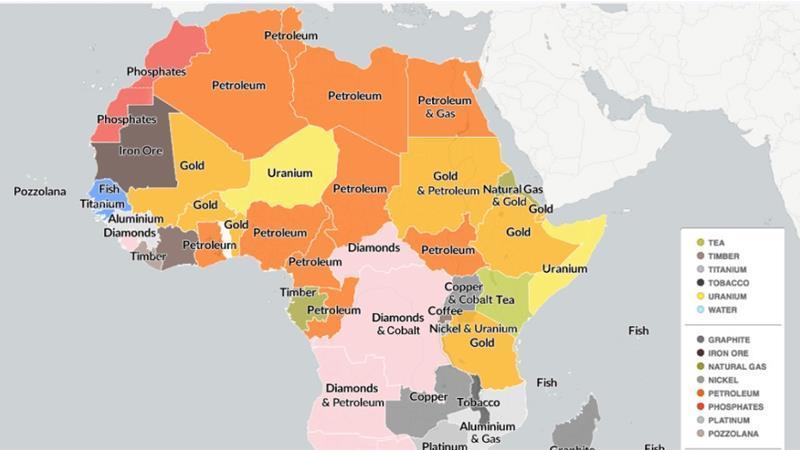
  • Report: Effects Of China-America Trade War Haunt African Economies

    Report: Effects Of China-America Trade War Haunt African Economies


     June 14, 2019//-Africa’s fear is that a slowdown in China will result in softer demand for commodities, and accordingly lower commodity prices,  according to the Institute of Chartered Accountants in England and Wales (ICAEW) latest report. 

    As happened the last time commodity prices fell dramatically, the undiversified economies will come under pressure as current account balances deteriorate, currencies come under strain, prices go up and central banks push up interest rates.
    The report titled ‘Economic Insight: Africa Q2 2019’, commissioned by ICAEW and produced by partner and forecaster Oxford Economics, underscores the role of economic diversity in weathering the storm of unstable oil and commodity prices.
    Speaking during the launch of the latest report, Michael Armstrong, ICAEW’s regional director for the Middle East. Asia and Africa, said that the strength of the diversified economies in the east of the continent plays a major role in cushioning them from the shocks of fluctuating commodity prices.
    “As it has been since the sharp fall in oil and commodity prices that started in 2014, East Africa is the region in Africa that is estimated to have experienced the most rapid real GDP growth in 2018, and it is forecast to continue doing so over the next two years,” said Mr Armstrong.
    “The region’s growth is mainly driven by strong performances in the two major economies: Kenya, a $90bn economy forecast to expand by 5.5% in 2019, and Ethiopia, an $80bn economy forecast to grow by 7.9%. Kenya, in particular, has a dynamic banking sector and its most successful banks are regional leaders,” he added.
    The franc zone’s GDP growth is forecast at 4.9% for 2019. Most of the growth will take place in Ivory Coast, which is forecast to show real GDP growth of 7.0% this year thanks in large part to services growth (although cocoa exports are still crucial).
    North Africa presents a somewhat mixed bag: Egypt, Morocco and Tunisia have diversified economies, whereas Algeria and Libya are extremely dependent on oil and gas.
    The latter two are forecast to have a very disappointing year in 2019: Libya’s economy will contract by 4.1%, and Algeria’s will grow by only 2.0%. This contrasts with a growth rate of 5.5% in Egypt, where government has been exemplary in implementing constructive economic policy.
    However, to sustain this kind of growth into the future the government will have to encourage private-sector growth and improve the corporate sector’s access to finance.
    Southern Africa is the slowest-growing region on the continent, with GDP growth forecast at barely 1.8% this year: less than a third of East Africa’s growth rate.
    Growth in the south is dragged down by South Africa, the region’s dominant economy (it accounts for more than two-thirds of regional output), where growth is forecast to remain at a dismal 0.8% in 2019 – the same level as in 2018.
    Slow growth in Angola (+1.1% in 2019, after a 2.5% contraction in 2018), the region’s second-biggest economy, acts as a further brake on the region’s growth.
    The full Economic Insight: Africa report can be found here:
    https://www.icaew.com/technical/economy/economic-insight/economic-insight-africa

    This content was originally published here.

  • End to China trade war could bring back Apple’s $1 trillion valuation

    End to China trade war could bring back Apple’s $1 trillion valuation

    Wedbush Securities analyst Daniel Ives thinks that a resolution to the burgeoning trade war between China and the U.S. would bump Apple back up to $1 trillion in value.

    Apple is currently trading at $191.33. Another $28 a share would take Apple back to the 13 figure milestone it managed last year. In a note to investors, Ives noted that a resolution to the trade war would, “take away the primary China risk which is a dark cloud over the stock now.”

    Ives thinks that Apple is currently the safest of the FAANG stocks, which also include Facebook, Amazon, Netflix and Google. That’s because it is unlikely, in his view, to be hit with a successful antitrust case. Recently, I broke down some of the potential monopoly arguments which could be made about big tech. Apple does not appear to contravene them.

    The only thing Ives thinks could hurt Apple would be the U.S. increasing tariffs on China. This could be a “game changer” for the company, and cause it to increase the price of iPhones. However, multiple suppliers are currently working to de-risk this by moving manufacturing out of China. Foxconn, which assembles many of Apple’s products, has said that it could produce all U.S. iPhones outside China. Apple made history like summer

    Apple hit the $1 trillion milestone last summer. This made it the world’s first public company to reach this valuation. Since then, both Microsoft and Amazon have also achieved this benchmark.

    In May, it was reported that Apple had returned to $1 trillion+ in market cap. However, this was incorrect: the result of misinformation about the number of outstanding shares. Due to Apple’s share buyback program, there were fewer shares around. As a result, they had to hit a higher valuation to take Apple into $1 trillion territory.

    Going by Apple’s current trading price, the company is valued at $876.6 billion.

    This content was originally published here.

  • Economists find no hope in Uganda’s 2019/20 budget

    Economists find no hope in Uganda’s 2019/20 budget

    Senior Economists have indicated that Uganda’s 2019/20 budget that was read by the Finance Minister Matia Kasaija on Thursday evening predicts no bright future for Uganda going forward.

    Dr. Fred Muhumuza, a Former Senior Economist at the Ministry of Finance and now working at the Makerere University-based Economic Policy Research Centre (EPRC) said that since in the budget, there was less money put into the agriculture sector, which is Uganda’s backbone and employs the majority of the people, industrialization for job creation and shared prosperity cannot be achieved.

    “You can’t continue to do the same thing over and over again and expect different results. It’s a structural issue, not a budget issue.

    “The reason being given to us for putting too much money in infrastructure development is to bring down the cost of doing business, has the cost of doing business ever gone down? Is the price of electricity down?

    “Without investing more money in Agriculture where the majority of the population is, there will never be a transformation in Uganda,” said Muhumuza at a budget breakfast that was organized by Ernst and Young to shed more light on Uganda’s 2019/20 Budget at Kampala Serena Hotel.

    Finance Minister Matia Kasaija, under the theme “Industrialization for job creation and shared prosperity” read a Ushs40.487 Trillion ($10.81b) budget where about Ush6.46 trillion was allocated to the Ministry of Works and Transport, Education and Sports (Ush3.3 Trillion), Energy and Minerals (Ush3 Trillion), Health (Ush2.6 Trillion) and Security (Ush3.6 Trillion).

    Agriculture ranked eleventh among the top earners in the budget at Ush1.052 trillion or 3.2% of the total budget.
    Agriculture ranked eleventh among the top earners in the budget at Ush1.052 trillion or 3.2% of the total budget.

    Agriculture ranked eleventh among the top earners in the budget at Ush1.052 trillion or 3.2% of the total budget. This, according to Muhumuza is too little to have an impact or transform Uganda into a middle-income country.

    In the Budget, Uganda Revenue Authority is targeted to collect revenue of Ush20.895 Trillion or ($5.58b) which is 51.6% of the total resource envelope.

    Ushs12.2 trillion will be raised through internal and external borrowings while the remaining Ushs7.3 Trillion covering 18.1% will be obtained from General Budget Support, General Re-financing and Appropriation in aid.

    Gideon Badagawa the Executive Director Private Sector Foundation Uganda (PSFU) who was also among the discussants of budget and tax highlights, noted that the target to generate 600,000 jobs per through industrialization can’t be attained at a 6.1% growth rate.

    “If the country wants to attain that, maybe in 400years at a 25% growth rate. That’s when the GDP per Capita of $9000 per person per year can be attained. The World Bank also estimates that Uganda can only reach lower middle-income status at a growth rate of 12% sustained for not less than 10 consecutive years,” said Badagawa.

    Badagawa also advised all concerned to get politics out of leadership and get leadership into politics.

    VG Somasekhar, the Managing Director of Airtel Uganda also discussed the progress of the telecom industry last year, where he said that they experienced the worst growth in a number of years.

    “The mobile money tax wiped out almost a year’s growth progress. 35% of all the mobile money agents left the business,” said Somasekhar.

    The post Economists find no hope in Uganda’s 2019/20 budget appeared first on East African Business Week.

    This content was originally published here.

  • India and Brexit: How New Delhi Can Position Itself to Maximize Benefit | The Diplomat

    India and Brexit: How New Delhi Can Position Itself to Maximize Benefit | The Diplomat

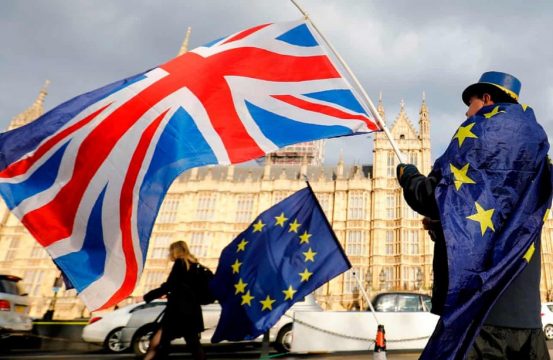
    The United Kingdom’s planned exit from the European Union, Brexit, keeps getting messier by the month. It led Theresa May to resign, just like David Cameron before her. It may end up making Boris Johnson the U.K.’s next prime minister, or be the cause of him facing judicial consequences. Brexit also led to the creation of the Brexit party, which got the largest vote share in recent European elections. So we now have British representatives in the EU who don’t want to be there. As of now, it shows no signs of getting better for the U.K.

    What does this mean for India and why does it matter? The short answer is that Brexit may end up being good for India’s relations with the U.K. and the EU. The long answer, however, is a bit more complex. To get there, let’s put Brexit into context for India.

    India and the U.K. share strong trade relations. There is a sizable Indian diaspora in Britain, which means India receives a lot of remittances from the U.K. As per previous estimations, the U.K. sends approximately $4 billion to India through formal and informal channels. Indians are among the most common non-British nationalities in the U.K., with 832,000 residents. India sees the U.K. as a lucrative market in itself and a gateway to the European Union. Between 2000 and 2018, total foreign direct investment (FDI) that flowed into India from all channels from the U.K. is estimated at $50.57 billion. Of this, the U.K. directly invested $26.09 billion in India – increasing its investment by $847 million between 2017 and 2018 – representing 7 percent of all FDI coming into the country.

    India also shares strong relations with the EU that could be developed further. The EU is India’s largest trading partner and India was the EU’s ninth largest trading partner in 2015. The EU accounted for 92 billion euros worth of trade in goods in 2018 or 12.9 percent of total Indian trade, ahead of China (10.9 percent) and the United States (10.1 percent). The EU is also a leading destination of choice for Indian exports. Eighteen percent of total Indian exports are to the EU. The relationship is set to become stronger as both parties have been considering entering into a free trade agreement, which would reduce tariffs and barriers to bilateral trade.

    How is Brexit likely to affect India’s economic relations with both these parties? A lot of it depends on whether there is a “soft” Brexit or a “hard” Brexit. In simpler terms, it depends on whether or not the U.K. leaves the single market. The EU imported around 44 percent of U.K. exports in goods and services in 2017 — 274 billion British pounds’ worth, out of 616 billion pounds of total exports. Should the U.K. leave the single market, it may have to look for other buyers for its goods and services. In a post-Brexit world, India could benefit from this. South Korea did exactly that recently, by agreeing to sign a free trade deal with the U.K. The timing is no coincidence. The U.K. needs trading partners and leaving the single market will give London strong incentive to expand in markets elsewhere, particularly the Commonwealth.

    India is one of the biggest economies in the bloc and has strong trade relations with the U.K. Moreover, Brexit may devalue the pound, which could be a boost to trade volumes between India in the U.K., providing a strong base to build upon. The timing is also ripe for India, with a new government coming in. A flagship trade deal with the U.K. would serve as great news in times where trade wars dominate the news. This is not to say that an FTA is the only way to go. Another feature of Brexit may be that European labor workers might need to leave the EU or stay on different visa requirements should Brexit turn out this way. India could also take advantage of this to incentivize movement of labor between the two countries.

    A hard/soft Brexit could also mean stronger ties between India and the EU. With the U.K.’s departure, the EU is likely to want to fill that economic gap. As far as trade with India is concerned, the first order of business might be to work toward finalizing the free trade agreement. If the U.K. can no longer serve as a gateway to Europe, Indian companies might also consider diversifying their current investments in London. An attractive destination could be Ireland, because of its close proximity to the U.K. and membership to the EU. This could also mean investments in other EU trade capitals, such as Frankfurt and Paris. Doing so would benefit the EU as a bloc in a post-Brexit world.

    While the full impact of Brexit spans across sectors, the changing nature of the U.K.’s involvement in the single market is what India should be concerned with. While trade relations between India and the EU/U.K. have been strong historically, Brexit could be the catalyst that makes them stronger. As the EU and the U.K. both look for new trade opportunities elsewhere, India could emerge as a beneficiary of this new arrangement. The reshuffle that Brexit brings with it is something the Indian economy should welcome, soft Brexit or otherwise.

    Rohan Seth is a project manager at the Takshashila Institution.

    This content was originally published here.

  • Tankers struck near Strait of Hormuz; US blames Iran

    Tankers struck near Strait of Hormuz; US blames Iran

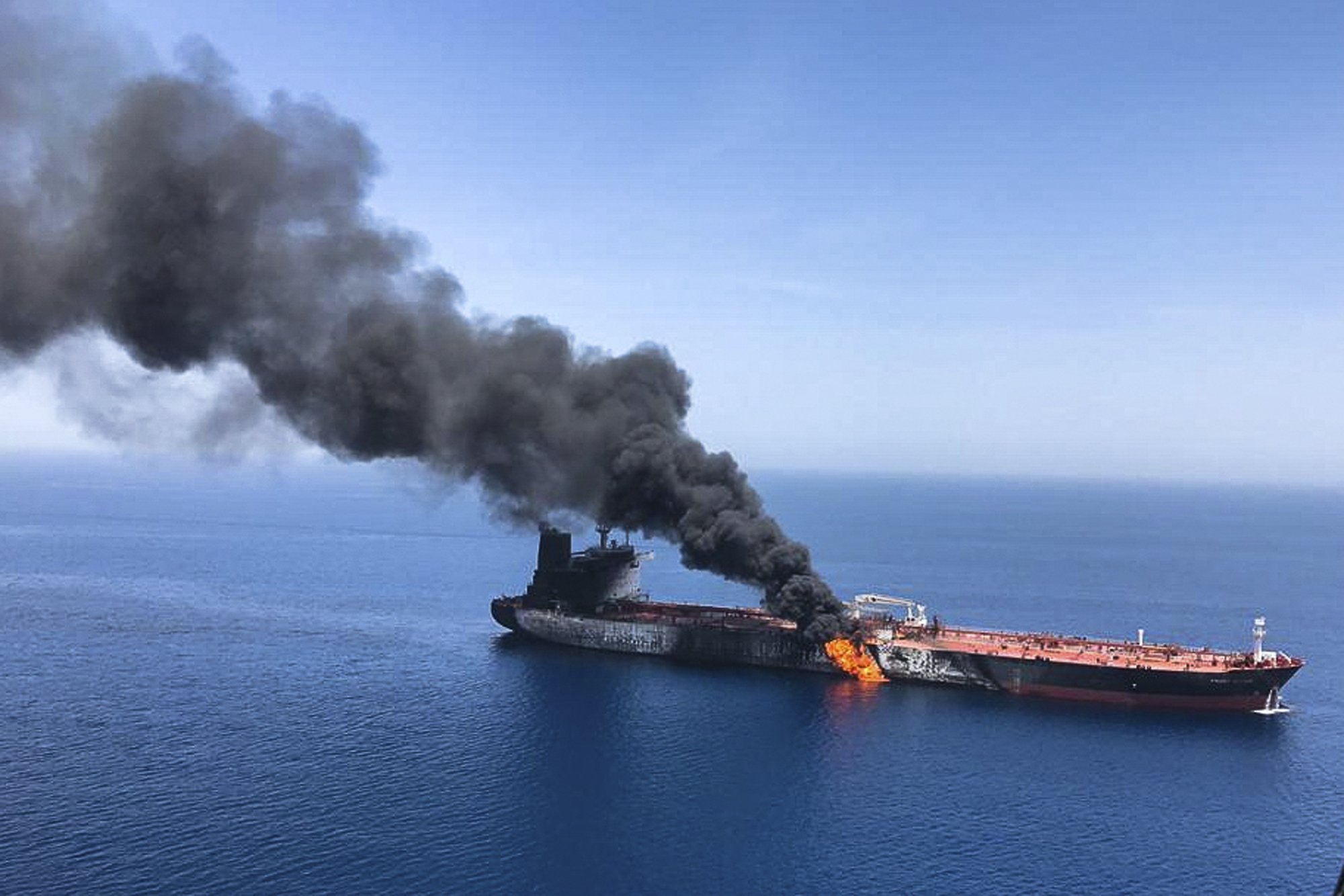
    The U.S. blamed Iran for suspected attacks on two oil tankers Thursday near the strategic Strait of Hormuz, denouncing what it called a campaign of “escalating tensions” in a region crucial to global energy supplies.

    The U.S. Navy rushed to assist the stricken vessels in the Gulf of Oman off the coast of Iran, including one that was set ablaze. The ships’ operators offered no immediate explanation on who or what caused the damage against the Norwegian-owned MT Front Altair and the Japanese-owned Kokuka Courageous. Each was loaded with petroleum products, and the Front Altair burned for hours, sending up a column of thick, black smoke.

    U.S. Secretary of State Mike Pompeo said the U.S. assessment of Iran’s involvement was based in part on intelligence as well as the expertise needed for the operation. It was also based on recent incidents in the region that the U.S. also blamed on Iran, including the use of limpet mines — designed to be attached magnetically to a ship’s hull — to attack four oil tankers off the nearby Emirati port of Fujairah and the bombing of an oil pipeline in Saudi Arabia by Iranian-backed fighters in May, he said.

    “Taken as a whole these unprovoked attacks present a clear threat to international peace and security, a blatant assault on the freedom of navigation and an unacceptable campaign of escalating tension by Iran,” Pompeo said. He provided no evidence, gave no specifics about any plans and took no questions.

    At the United Nations, the United States asked for closed Security Council consultations on the tanker incidents later Thursday.

    Iran denied being involved in the attacks last month and its foreign minister called the timing of Thursday’s incidents suspicious, given that Japanese Prime Minister Shinzo Abe was meeting Supreme Leader Ayatollah Ali Khamenei in Tehran.

    Pompeo noted that Abe had asked Iran to enter into talks with Washington but Tehran “rejected” the overture.

    “The supreme leader’s government then insulted Japan by attacking a Japanese-owned oil tanker just outside Iranian waters, threatening the lives of the entire crew, creating a maritime emergency,” Pompeo added.

    Iran previously used mines against oil tankers in 1987 and 1988 in the “Tanker War,” which saw the U.S. Navy escort ships through the region. Regardless of who is responsible, the price of a barrel of benchmark Brent crude spiked as much as 4% immediately after the attack, showing how critical the region remains to the global economy.

    source

  • Global Peace Index

    Global Peace Index

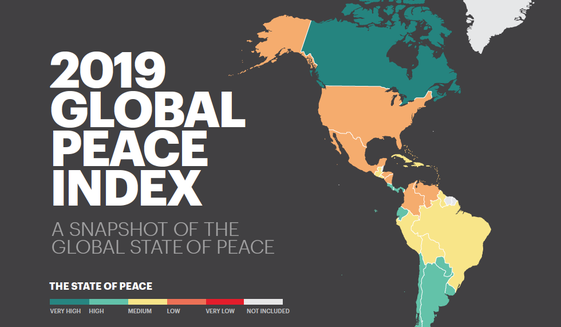
    The world has gotten a little more peaceful, according to the 13th annual Global Peace Index, a complex study that ranks 163 nations on factors such as homicide and incarceration rates, the presence of small arms, military expenditures, ongoing conflicts, terrorism, the overall economic impact of violence and even climate change. “The average level of global peacefulness improved for the first time in five years,” the index said, noting that Iceland is the most peaceful nation, a spot it has held for 11 years. New Zealand is in second place, followed by Portugal, Austria, Denmark, Canada, Singapore, Slovenia, Japan and the Czech Republic, to round out the top 10. The U.S. is ranked 128th on the peace list, down four places from last year. Among Western allies, Australia is 13th, Germany 22nd, Britain 45th and France 60th. In Central America, El Salvador, Guatemala and Honduras were rated 114, 113 and 123, respectively. At the other end of the spectrum, Afghanistan ranks as the world’s least peaceful nation — with Syria as runner-up, followed by South Sudan, Yemen, Iraq, Somalia, Central African Republic, Libya, the Democratic Republic of the Congo and Russia. The report was compiled by the Australia-based Institute for Economics and Peace, an independent, nonprofit think tank.

    “Our most striking finding is that in the problem spots of the world, there are a number of places where the situation is improving and getting better,” Steve Killelea, the index’s founder and executive chairman, said in an interview. “If we don’t start any new wars, we are probably going to see global peace improve in 2019,” Mr. Killelea said, noting that these improvements “leave some level of optimism.” The research also calculates the annual “economic impact of violence” — how much it costs on a global scale to deal with conflict, war and other factors. The report says that figure is now $14.1 trillion, and moving in the right direction.“The global economic impact of violence improved for the first time since 2012, decreasing by 3.3% or $475 billion from 2017 to 2018,” the research said. But the 103-page report also found that the world remains “considerably less peaceful now than a decade ago,” and that both positive and negative trends are at work. The research found that 86 of the nations were improving on their peaceful characteristics, while 76 faced deteriorating situations. The study also measured an emotional dynamic. “Perceptions of peacefulness have increased in some areas but decreased in others,” the report said. “More people across the world now feel that they have more freedom in life, are more satisfied with life, and are treated with more respect than in 2008. Many more people also feel that their countries are better places to live for ethnic and religious minorities. However, daily feelings of sadness, worry, and stress have also increased over the same time period.” Of nine global regions, Europe emerged as the most peaceful, followed by North America and the Asia-Pacific region. The Middle East and Africa rated as the two least peaceful regions. And there is a growing trouble spot much closer to home for Americans. “Central America and the Caribbean had the largest deterioration, especially in safety and security due to widespread crime and political instability,” the research said.

    source

  • Tourist returns from nightmare Dominican Republic trip: ‘Just don’t go’

    Tourist returns from nightmare Dominican Republic trip: ‘Just don’t go’

    A Florida man who fell sick with a mystery illness during a Dominican Republic vacation is warning other travelers to avoid the country altogether,  according to reports. “Don’t go,” said Jerry Martin, who went with his wife to Caribe Club Princess Beach Resort & Spa in Punta Cana last month for their 40th wedding anniversary — before reports surfaced of American tourists dying at other hotels on the island, according to news station WTVT. “Just don’t go.” Within days of arriving on May 17, Martin reportedly became severely sick with stomach pain while swimming in the pool. “Fire in the bottom of my stomach. Pain, excruciating pain,” Martin told WTVT. “We were down at the pool when it hit, and I had to go up and just lay down and hold my stomach. It was on fire.” Martin said he was unable to enjoy the rest of his week-long vacation because of the illness. He went to the emergency room once he returned home to Plant City, Florida. Now three weeks later, Martin said he’s still suffering from symptoms and visited the hospital five times. He claimed he has continued to lose weight and undergone tests to get to the bottom of his health woes. “I am scared, honestly,” he told the news station. “I told my wife we won’t go out of the country again.”

    A rep for the resort didn’t immediately respond to request for comment. Martin, who said he’s not sure if his illness is linked to the deaths, said there’s “no way” he would’ve gone had he known about the terrifying reports out of the country, including four fatalities within two months. The day after Martin returned home, Miranda Schaup-Werner, 41, of Pennsylvania succumbed to a heart attack on May 25 at the Grand Bahia Principe Hotel in La Romana. Five days later, Nathaniel Holmes, 63, and Cynthia Ann Day, 49, of Maryland were found dead at the same resort from pulmonary edema and respiratory failure. Relatives revealed earlier this week that 67-year-old Robert Wallace from California died on April 11 in Punta Cana. He reportedly became ill after having a drink from the minibar at the Hard Rock Hotel & Casino resort, around five miles from where Martin stayed with his wife.

    source

  • Christians Flee as Islamic Terrorists Murder at Least 19

    Christians Flee as Islamic Terrorists Murder at Least 19

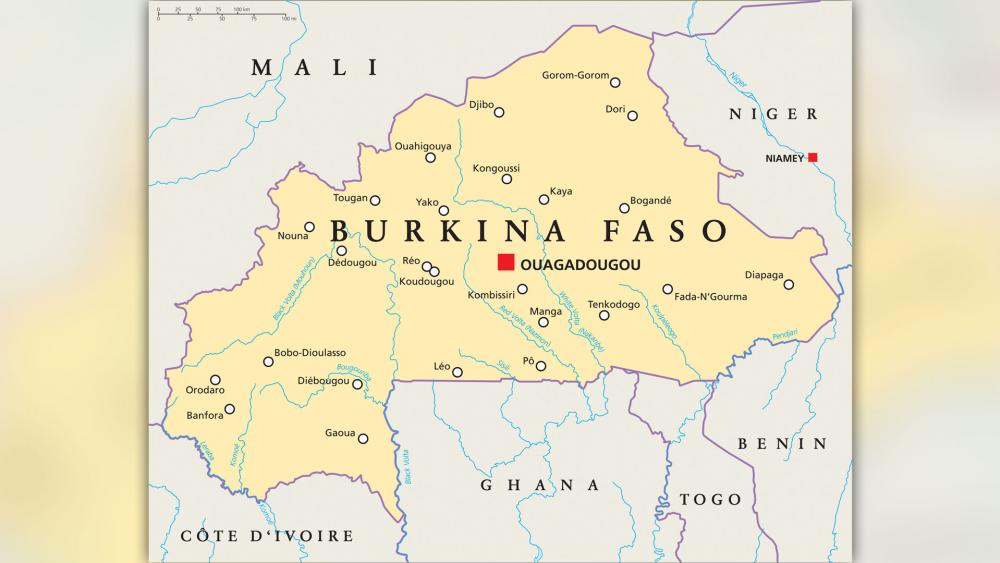
    According to Barnabas Fund sources, the number of those killed may be as high as 29 as 10 more people were reportedly murdered in the nearby Namentenga province the next day. “There is no Christian anymore in this town (Arbinda),” said a Barnabas Fund source. He added that 19 people were killed and that the entire population of Christians had fled for their safety. “It’s proven that they were looking for Christians,” the source continued. “Families who hide Christians are killed. Arbinda had now lost in total of no less than 100 people within six months.” “Several dozen armed men carried out an attack on the district of Arbinda, shooting several people dead,” an official told the AFP.  Local Barnabus Fund sources revealed 82 pastors and 1,145 Christians from 151 households, were fleeing from different locations in the northern part of the country.

    The attacks began in April in the town of Silgadji, when Islamic militants held a pastor, his son, and four of the pastor’s congregation at gunpoint. They demanded the six deny their Christian faith and convert to Islam.  When they refused, the entire group was executed.  More than 400 people have been killed in the violence since 2015, according to the AFP.  The government of France, the former colonial ruler of the country, has deployed 4,500 troops in Maili, Burkina Faso, Niger, and Chad. Their mission codenamed Barkhane is intended to help local forces deal with Islamic jihadists. Burkina Faso has also joined four other African nations, (Chad, Mali, Mauritania, and Niger) to create an anti-terror force of 5,000 troops also backed by France.

    source