Category: World News

  • Soaring Temperatures Speed Up Spring Thaw on Greenland’s Ice Sheet

    Soaring Temperatures Speed Up Spring Thaw on Greenland’s Ice Sheet

    Melting this early in the season generally does not contribute to sea level rise immediately, as most of the water remains near the surface of the ice sheet. As the warm season continues, however, the hydrology of the ice sheet changes and melt water drains down through the ice and eventually out to the ocean. Dr. Tedesco likened it to clearing clogs in a plumbing system.

    As for Arctic sea ice conditions, a warm May had reduced ice extent from its maximum of 5.7 million square miles in March to 5 million square miles at the end of the month. (As of Sunday, it was down to 4.2 million square miles.) Sea ice loss contributes to the amplification of Arctic warming, as the darker water of open ocean absorbs more sunlight than ice.

    The average sea ice extent in May is nearly half a million square miles below the average for 1981-2010, according to the National Snow and Ice Data Center. Parts of the Arctic, including the Bering Sea off western Alaska, have had exceptionally low ice cover for months.

    Dr. Scambos said that Arctic sea ice loss can be linked to temperatures in Siberia. “It’s setting up fairly dramatically right now,” he said. “There’s a lot of warmth in Siberia.”

    Still, whether this year will break the record for minimum sea ice extent — 1.3 million square miles, also in 2012 — is anyone’s guess. Conditions can change between now and the end of the summer thaw. “July and August will be pretty interesting,” Dr. Scambos said.

    For more news on climate and the environment, follow @NYTClimate on Twitter.

    This content was originally published here.

  • $32b demand – Venezuelans seek hefty compensation for Petrojam takeover

    $32b demand – Venezuelans seek hefty compensation for Petrojam takeover

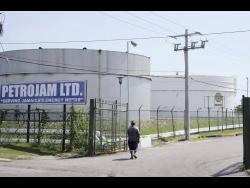
    Venezuelan oil subsidiary PDV Caribe is demanding that the Government of Jamaica (GOJ) pay a minimum of US$50 million (J$6.5 billion) in core share value as compensation for the forcible takeover of its 49 per cent stake in the local refinery, Petrojam.

    But The Gleaner understands that the claim includes supplementary add-ons in relation to dividends and prospective value that could bring the total compensation package sought to US$250 million (J$32.5 billion).

    The Jamaican Government’s initial offer of US$40 million was rejected by Venezuela and a later proposal of US$50 million also refused.

    Yesterday, reliable Gleaner sources said that the GOJ has been sent communication this month on Venezuela’s behalf, through its legal team headed by Queen’s Counsel Michael Hylton.

    Hylton could not be reached yesterday evening, but Gleaner sources confirmed the figure.

    Jamaica’s Foreign Minister Kamina Johnson Smith also acknowledged that the Government has received communication from Venezuela. However, she said, no lawsuit has been filed.

    Through the Compulsory Acquisition (Shares in Petrojam Limited) Act 2019, the Jamaican Government gave itself powers to acquire the 392,490,000 shares owned by Venezuela in Petrojam. After a valuation by Muse Stancil – the full-service, global energy consultancy firm specialising in the mid- and downstream sectors of the petroleum industry – Jamaica expropriated the shares.

    Energy Minister Fayval Williams, who replaced Andrew Wheatley on February 14, said Petrojam’s market value was eroded by nearly US$100 million because of a decade of broken promises, delays and inaction by the Venezuelan government.

    She told Parliament that Petrojam’s market value was listed at between US$126 million and US$128 million by Muse Stancil in 2006, when Jamaica signed a joint-venture agreement with Petróleos de Venezuela SA (PDVSA), Venezuela’s state-owned oil company and parent to PDV Caribe that was expected to finance a major upgrade of the 55-year-old refinery, among other things.

    But Williams said that an evaluation carried out in 2018 by the same consultants listed Petrojam’s market value at US$34 million.

    Muse Stancil, however, has remained silent, four months after The Gleaner first sought responses about the massive variance in the sale-as-is price and the investment value.

    Sources have said that there is a non-disclosure agreement between the company and Jamaica.

    At the time of the share swipe, Petrojam was jointly owned by the governments of Venezuela and Jamaica, with Jamaica’s shares – 51 per cent – held by the Petroleum Corporation of Jamaica.

    Venezuela valued the refinery at just under US$90 million, which included the initial sum paid for shares at the time of the joint-venture agreement, plus unpaid dividends and retained earnings.

    A&A Lime Hall Development Limited, a company incorporated in 2004 as a rental service in Montego Bay, St James, had also offered PDV Caribe SA US$100 million for its 49 per cent stake in Petrojam Limited.

    PDV Caribe SA is the company tasked with organising and coordinating PetroCaribe’s hydrocarbon transportation network, including its vessels, storage facilities, and port terminals, as well as refining and distribution capacity.

    PetroCaribe is an energy cooperation agreement signed by 14 Caribbean countries, including Jamaica, which was established to secure a direct oil supply among members on preferential terms. Created in 2005 by Venezuelan state-owned PDVSA, and acting as a subsidiary, PDV Caribe holds interests in several subsidiaries established in each of these countries.

    PDV Caribe is headquartered in Caracas.

    This content was originally published here.

  • Australian dollar nears decade-low after Reserve Bank justifies interest rate cut

    Australian dollar nears decade-low after Reserve Bank justifies interest rate cut

    Australian dollar nears decade-low after Reserve Bank justifies interest rate cut

    Updated June 18, 2019 17:08:20

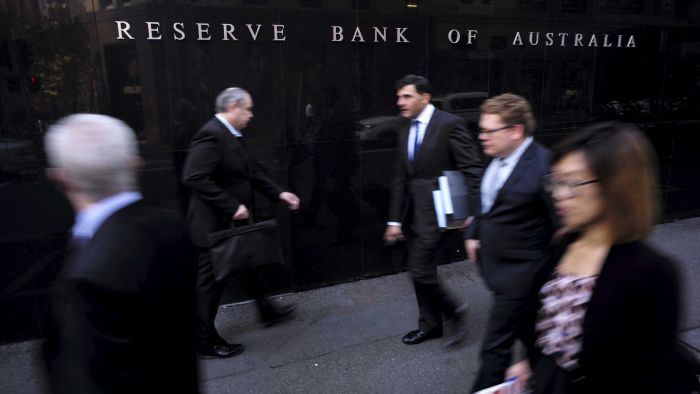
    The Australian dollar has fallen to its lowest level in around a decade as investors anticipate further interest rate cuts from the Reserve Bank in the next few months.

    Key points:

    By 12:00pm (AEST), the local currency had fallen 0.2 per cent to 68.42 US cents, following the RBA’s release of its June meeting minutes.

    That is the lowest level since January 2016, and you have to go all the way back to the aftermath of the global financial crisis in March 2009 to find an even lower level.

    The minutes revealed Australia’s central bankers thought it was “more likely than not” that it would be appropriate for the cash rate to fall in the period ahead.

    However, the board recognised that lower interest rates are not the only monetary policy lever.

    It also said that other options might assist in lowering the rate of unemployment towards 4.5 percent, the level which the RBA regards as full employment.

    Late last year, RBA deputy governor Guy Debelle has flagged the option of quantitative easing — or metaphorical money printing — to help stimulate the economy through bond buying and asset purchases, used by major global central banks during the global financial crisis.

    The minutes reiterated previous public statements that the RBA is now focussed on lowering the jobless rate given it is “apparent that the labour market still had significant spare capacity”.

    Depositors feel rate pain

    The minutes also revealed that impact of lower interest rates on depositors — in particular older Australians — was a key consideration in the RBA’s decision to slash the cash rate to a record low earlier this month.

    The “implications of lower interest rates on household incomes” was discussed at length, and “changes in interest rates can have different effects on different groups of households”, according to the RBA’s minutes of its June meeting.

    “Members recognised that many older Australians rely on interest income which would decline with lower rates,” the RBA said.

    However, board members opted to cut the cash rate to 1.25 per cent to help lower the unemployment rate after “carefully considering” the impact on people relying on interest from bank deposits.

    The argument in favour of cutting rates was based on the outlook for a lower Australian dollar, reduced borrowing rates for business, and lower interest payments for households which would free up cash for other spending.

    Since the RBA’s decision to cut rates, banks have passed on either all or most of the reduction to borrowers — while also reducing deposit rates to the disappointment of older Australians who rely on the income stream.

    The RBA board also discussed the risks of lower interest rates, especially given the current high levels of household debt.

    “Members judged a decline in interest rates was unlikely to encourage a material pickup in borrowing by households that would add to medium term risks in the economy,” the minutes said.

    The board also noted the trade dispute between the United States and China had “intensified the downside risk posed to the global economic outlook”.

    This content was originally published here.

  • BREAKING: Trump Announces ICE To Begin Removing ‘Millions Of Illegal Aliens’ Next Week

    BREAKING: Trump Announces ICE To Begin Removing ‘Millions Of Illegal Aliens’ Next Week

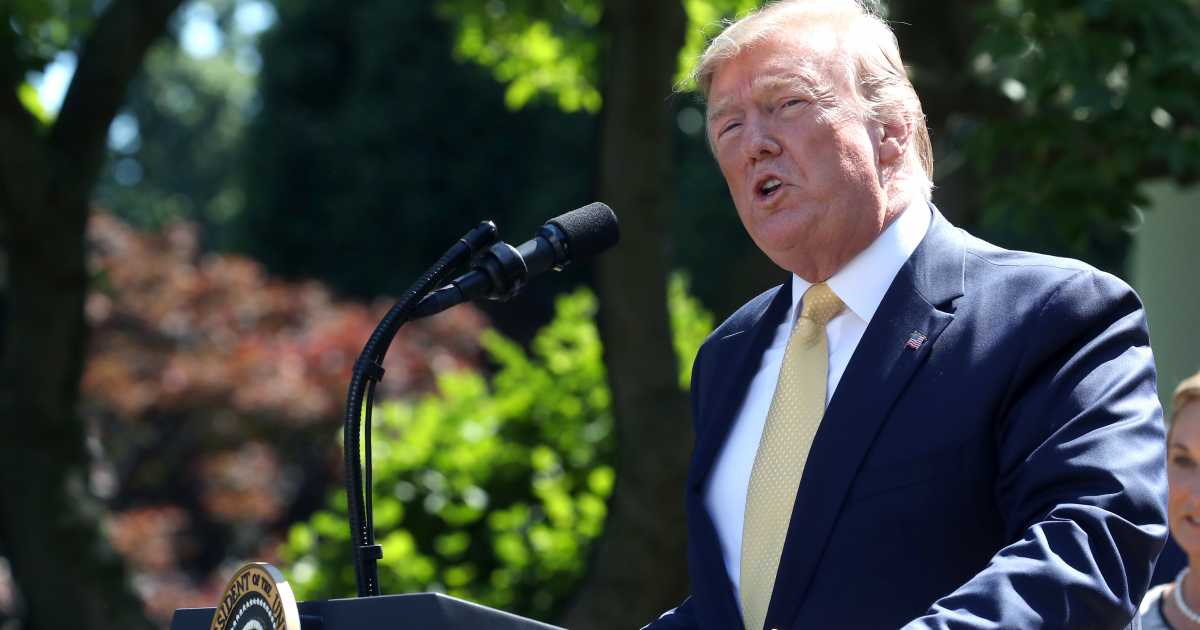
    President Donald Trump announced late on Monday night that Immigration and Customs Enforcement (ICE) will begin the process of removing illegal aliens unlawfully present in the United States.

    “Next week ICE will begin the process of removing the millions of illegal aliens who have illicitly found their way into the United States,” Trump wrote on Twitter. “They will be removed as fast as they come in. Mexico, using their strong immigration laws, is doing a very good job of stopping people long before they get to our Southern Border. Guatemala is getting ready to sign a Safe-Third Agreement. The only ones who won’t do anything are the Democrats in Congress. They must vote to get rid of the loopholes, and fix asylum! If so, Border Crisis will end quickly!”

    ….long before they get to our Southern Border. Guatemala is getting ready to sign a Safe-Third Agreement. The only ones who won’t do anything are the Democrats in Congress. They must vote to get rid of the loopholes, and fix asylum! If so, Border Crisis will end quickly!

    — Donald J. Trump (@realDonaldTrump)

    Trump’s announcement comes after the administration reached a deal with Mexico two weeks in which Mexico agreed to stop the flow of illegal aliens headed to the U.S. border and in return, the administration canceled massive tariffs it was prepared to implement against Mexico.

    Also on Monday, State Department Spokesperson Morgan Ortagus said that the administration was canceling future economic aid to the Northern Triangle, which is comprised of El Salvador, Guatemala, and Honduras.

    “We will not provide new funds for programs in those countries until we are satisfied the Northern Triangle governments are taking concrete actions to reduce the number of illegal migrants coming to the U.S. border,” Ortagus said. “Working with Congress, we will reprogram those funds to other priorities as appropriate.”

    .This content was originally published here.

  • Elderly Japanese Women Live in the World’s Most Enchanting Retirement Home

    Elderly Japanese Women Live in the World’s Most Enchanting Retirement Home

    To be in our golden years only means one thing – spending the rest of our lives in a retirement home. Getting old is inevitable and we will retire sooner or later. So, we might as well prepare for that day and plan how we’re going to spend our retirement years. If only we’re living in Japan, we won’t mind spending our lives in a retirement home. One look at this enchanting retirement home would make you want to hit retirement now. From afar, these tent-like structures look like dwarf houses in a fairy tale. But these teepee-like buildings are actually homes for elderly women. The enchanting retirement home, named Jikka, was designed by a Tokyo-based architect Issei Suma and was completed in 2015. It is located on top of a flattened mountain ridge in Shizuoka, Japan and comprised of five charming huts. The 100-square-meter dwelling was initially built for two elderly women – a retired social worker and a former cook. Today, the enchanting retirement home also serves as a hospice care for the elderly and sick. Concrete and timber are used to construct the huts. And if you think the exterior design is astounding, wait till you see the interior. It has a living room, bedroom, dining area, kitchen, and bathroom. Additionally, it has a spiral-shaped pool to assist elderly in a wheelchair to take a dip. This enchanting retirement home is surrounded by trees and mountains, giving the residents that much-needed connection with nature. But inside the homes are modern amenities to provide relaxation like no other. Jikka, an enchanting retirement home in Shizuoka, Japan Source: Awesome Inventions

    This content was originally published here.

  • UK growth tipped to slow as firms run down Brexit stockpiles | Business | The Guardian

    UK growth tipped to slow as firms run down Brexit stockpiles | Business | The Guardian

    Economic growth in Britain is expected to slow to the lowest levels since the financial crisis as firms run down Brexit stockpiles, according to a leading business lobby group.

    After a stockpiling rush this year that pumped up the rate of economic growth, the British Chambers of Commerce said growth would slow in 2020 and 2021.

    The organisation has slashed its forecast for GDP growth next year to just 1%, from 1.3%, marking the weakest expansion in the British economy since the 2009 recession that followed the financial crisis.

    Growth is also forecast to remain subdued in 2021, at 1.2%, down from its previous estimate of 1.4%.

    The British economy has benefited in recent months as companies braced for a no-deal Brexit ahead of the original deadline of 29 March, before Theresa May delayed the process until the autumn.

    What is gross domestic product (GDP)?

    Gross domestic product (GDP) is a key government statistic and provides a measure of the UK’s total economic activity.

    Put simply, if GDP is up on the previous three months, the economy is growing; if it is down, it is contracting. Two or more consecutive quarters of contraction mean the economy is officially in recession.

    GDP is the sum of all goods and services produced in the economy, including the service sector, manufacturing, construction, energy, agriculture and government.

    Economists are concerned with the real rate of change of GDP, which shows how the economy is performing once inflation is taken into account.

    The Office for National Statistics produces quarterly official GDP figures about three and a half weeks after the end of each three-month period.

    The ONS uses three measures and they should, at least in theory, all add up to the same number.
    • The value of all goods and services produced – known as the output or production measure.
    • The value of the income generated from company profits and wages – known as the income measure.
    • The value of goods and services purchased by households, government, business (in terms of investment in machinery and buildings) and from overseas – known as the expenditure measure.

    The ONS publishes three estimates of quarterly GDP figures. The first “flash” estimate comes out about 25 days after the quarter in question has ended. The figures usually get revised in subsequent months as more data from businesses and government departments is received. But even the third, dubbed “final”, estimate of quarterly GDP is not set in stone: the Blue Book, which is published once a year, in August, contains revisions going back the last 18 years.

    The National Institute of Economic and Social Research’s estimate comes out about three weeks before the official figures.

    The ONS also calculates the size of the UK economy relative to the number of people living here. GDP-per-capita shows whether we are actually getting richer or poorer, by stripping out the impact of population changes. 

    Was this helpful?

    The unprecedented rise in manufacturers storing up raw materials and components fuelled a rise in GDP of 0.5% in the first three months of the year, which the BCC said should lift the overall growth rate in for 2019 as a whole.

    However, the increase means firms now have inventories they can run down without needing to place as many orders for new stock, hitting economic momentum. Economic growth went into reverse in April as companies halted their rush to stockpile, while car manufacturers also halted production after planning to avoid disruption around the original Brexit deadline.

    Suren Thiru, head of economics at the BCC, said: “It is increasingly likely that the temporary boost from historically high stockpiling in the first quarter, which has marginally improved the growth outlook for this year, will be surpassed over the medium-term by the negative impact from the running down of these inventories.”

    He said a no-deal Brexit could damage economic growth in Britain further, should a new prime minister after the Conservative leadership race walk the country away from a deal with Brussels.

    “A messy and disorderly exit from the EU remains the main downside risk to the UK’s economic outlook as the disruption caused would increase the likelihood of the UK’s weak growth trajectory translating into a more pronounced deterioration in economic conditions,” he said.

    The continuing lack of clarity over Brexit means that business investment is forecast to contract at a faster rate this year than was previously thought, while the lingering uncertainty means corporate spending will also recover more slowly next year.

    Business investment fell for four quarters in a row last year, marking the worst run in Britain since the financial crisis, and damaging the longer-term growth rate of the UK economy. Companies investing in new technology have the potential to produce gains in productivity.

    The BCC said business investment was expected to continue falling in 2019 due to the political chaos over Brexit.

    Adam Marshall, director general of the lobby group, said: “Businesses are putting resources into contingency plans, such as stockpiling, rather than investing in ventures that would positively contribute to long-term economic growth. This is simply not sustainable.”

    This content was originally published here.

  • National Geographic’s Travel Photo Contest Is Over And Here Are The Winners

    National Geographic’s Travel Photo Contest Is Over And Here Are The Winners

    Picturesque villages, majestic animals and candid human moments – captured around the world by the photographers of this year’s National Geographic Travel Photo Contest. Each year talented artists allow us to travel the globe through the lenses of their cameras, which capture breathtaking moments we would otherwise miss. The contest honors these explorers and photographers by accepting global entries across three categories—Nature, Cities, and People.

    The 2019 grand prize of $7,500 went to Weimin Chu for his whimsical ‘Winter in Greenland’ photograph. Depicted in the image is a small fishing village in Upernavik, whose brightly colored homes shine brightly amidst the fog and snow. Top winners from the other categories include Huaifeng Li’s Showtime image, which won 1st Place in the People category and captures actors preparing for an evening opera performance in Licheng County, China. Winning 1st Place in the Nature category, Tamara Blazquez Haik’s photograph of a griffon vulture—titled Tender Eyes— perfectly timed to capture the bird soaring through the skies in Monfragüe National Park in Spain. Scroll down below to see all the winners and don’t forget to upvote your favs!

    source

  • China’s Bioluminescent Blue Tears Are Beautiful and Toxic

    China’s Bioluminescent Blue Tears Are Beautiful and Toxic

    article-image

    Along the Chinese coast of the East China Sea and around Taiwan’s Matsu Islands, depending on the time of the year, fluorescent blue sparkles dance across the ocean’s surface. It sounds—and looks—like something dreamed up by Pixar, but China’s “blue tears,” as they’re known, are a naturally occurring phenomenon. New research is bringing scientists a step closer to understanding just how they work.

    The blue tears are, surprisingly, caused by red Noctiluca scintillans, balloon-shaped, single-celled microorganisms known as dinoflagellates. These tiny creatures give off a bioluminescent glow when they are disturbed, and the larger the collection of them, the more spectacular the light show. However, red N. scintillans is associated with red tides, blooms of algae and other microorganisms that can sap water of its oxygen and produce conditions toxic to other forms of marine life. Tracking blooms of these dinoflagellates is no easy task, since they’re not entirely predictable. A study just published in Geophysical Research Letters offers a new approach to studying these red tides.

    article-image

    In 2000, a Belgian research team found that red N. scintillans (as opposed to the green variety) scatter more red light than any other microorganism in the ocean, so in addition to the light they emit, their formation and movement can change the overall color of ocean water. Scientists from the National Taiwan Ocean University, the University of South Florida, and several universities in China searched for these changes using special sensors on two NASA satellites and the International Space Station. Almost 1,000 images covering 17 years were painstakingly investigated for color patterns. The research team was able to identify the color patterns of red N. scintillans blooms, and found that they can occur farther away from the shore and in warmer water than previously observed.

    According to Chuanmin Hu, from the University of South Florida and coauthor of the study, this gap in knowledge could be because, to date, researchers have only been able to study the creatures from ships, which restricts where and when they can get out to them. “In contrast, satellite images can show algae features in more extensive regions and in different months,” says Hu, via email.

    article-image

    The satellite imagery also revealed that these blooms are becoming more abundant in the region. Hu believes this may be a direct result of development along China’s coast, expanded use of aquaculture, and heavy agricultural runoff. “Coastal eutrophication is speculated to be a major reason of the observed increases,” says Hu. The nutrients from increased use of fertilizer in China, according to the study, could be causing the dinoflagellates to become more abundant, says Hu.

    The new, wide-ranging data are going to be useful, but there’s still a lot we don’t know about this striking phenomenon. “The bluish bioluminescence of [red N. scintillans] is fascinating and beautiful. At the same time, it plays a role in ocean ecology, so more research is required to go beyond the beautiful phenomenon to better understand this role.”

    This content was originally published here.

  • Could China’s rise to power really be ‘peaceful’ and different to anything we’ve ever seen before? – China power

    Could China’s rise to power really be ‘peaceful’ and different to anything we’ve ever seen before? – China power

    Updated June 15, 2019 07:18:28

    China has developed at an unprecedented rate since opening up 40 years ago, lifting some 850 million people out of poverty and has becoming one of the largest contributors to global economic growth.

    Key points:

    Beijing has long maintained its rise will be “peaceful”, yet its exceptional growth as an economic, military and political power is commonly referred to as a “threat”, with experts calling its foreign policy “aggressive” and “menacing”.

    In 2003, Chinese academic Zheng Bijian introduced the policy of a “peaceful rise” under the leadership of former president Hu Jintao, to assert that China is not a threat to global peace and security, in line with its Five Principles of Peaceful Coexistence.

    The Five Principles:

    Analysts also say the policies are China’s attempt to avoid the Thucydides trap, which predicts that a rising power will inevitably clash with an incumbent dominant force, leading to war and conflict.

    However, the policy was criticised almost as soon as it was introduced due to the phrase “rise”, which could sound threatening to the country’s neighbours.

    It was swiftly replaced with “peaceful development” in official documents and speeches, but that hasn’t swayed critics from seeing the country as a threat.

    Belt and Road, Huawei and the South China Sea

    Pradeep Taneja, an expert in Chinese politics at the University of Melbourne, said Beijing’s “peaceful rise” policy was initially introduced to counter the “China threat” narrative.

    “[It] was meant to directly address concerns that China’s economic and military rise will ultimately lead to a conflict between the sole surviving superpower, the United States, and China,” Dr Taneja told the ABC.

    Paul Monk, a former defence intelligence analyst, told the ABC that Chinese President Xi Jinping’s ascension to power was a turning point in Beijing’s foreign policy decisions.

    The trillion-dollar Belt and Road Initiative has been accused as a “debt-trap diplomacy”, while the US has warned that Chinese telecoms giant Huawei’s 5G expansion posed a “national security risk”.

    Meanwhile, China’s militarisation of the islands in the South China Sea has become one of the main potential flashpoints, analysts say.

    “In practical terms, the use of [the peace narrative] allows China to claim that it has no aggressive intent, while at the same time aggressively pursuing its strategic interests, especially in the South China Sea,” Dr Taneja said.

    The narrative of China’s peaceful nature and growth has been used by many of its leaders to argue that its rise will be different to other great powers of the past.

    China’s economic resilience became evident after it rode through the 2007 global financial crisis relatively unscathed, and with time it became more willing to assert itself, especially under President Xi, according to Dr Monk.

    While analysts recognise that it has been a long-term strategy for the Chinese Communist Party and the People’s Liberation Army to counter the US in East Asia and the Asia-Pacific, Dr Monk says such a shift is inevitable.

    China’s contingency plans and ‘American assertiveness’

    Andrew J Nathan, professor of Chinese politics at Colombia University, writes that the Five Principles of Peaceful Coexistence offer an alternative to the US-led world order, where international institutions often reflect US interests and values.

    This Chinese alternative would allow nations to govern their own political systems and people as they see fit, and stresses that all nations are equal to do so without interference.

    For example, as a permanent member of the United Nations Security Council, China has commonly vetoed or abstained from voting on resolutions that require intervention or sanctions.

    Jane Golley, China expert at the Australian National University, told the ABC it is “natural and expected” for an emerging superpower like China to create plans to protect its own interests.

    Dr Golley said the militarisation of the South China Sea “does not inherently contradict a peaceful development”, explaining that it is a security measure to ensure shipping lanes would be open in the event of war.

    “The costs of war would take away from China’s economic gains,” she said.

    “What China is pursuing is economic power, and investment and economics is inherently peaceful.”

    Ms Golley added that “American assertiveness” has led China — under President Xi — to build up its military “in line with its economic power”.

    “Why wouldn’t a rising power prepare a contingency in the event of a conflict with a superpower?”

    However, while China pursues a peaceful foreign policy unless provoked, domestically it is a different story, she said.

    “Beijing is enacting policies which are certainly worrying,” Ms Golley told the ABC.

    “You see it in Hong Kong, Xinjiang and within its own borders, but I’m yet to see comprehensive evidence of aggression overseas.”

    Dr Monk emphasised it is important to keep a “cool head” about comparing China’s rise to its great power predecessors.

    He said the world’s former superpowers — including Europe’s colonial powers and Japan — have previously risen through “an unprecedented catastrophe”, such as world wars or the mass enslavement of peoples.

    “The possibility of [similar conflict] occurring in the 21st century as a result of China’s rise is non-existent,” Dr Monk told the ABC.

    “[China] has become integrated as a late starter in a mature international system of trade and investment, and if it messes that system up it would suffer egregiously.”

    This content was originally published here.
  • US forces other nations to violate UN resolution on Iran, threatens world security

    US forces other nations to violate UN resolution on Iran, threatens world security

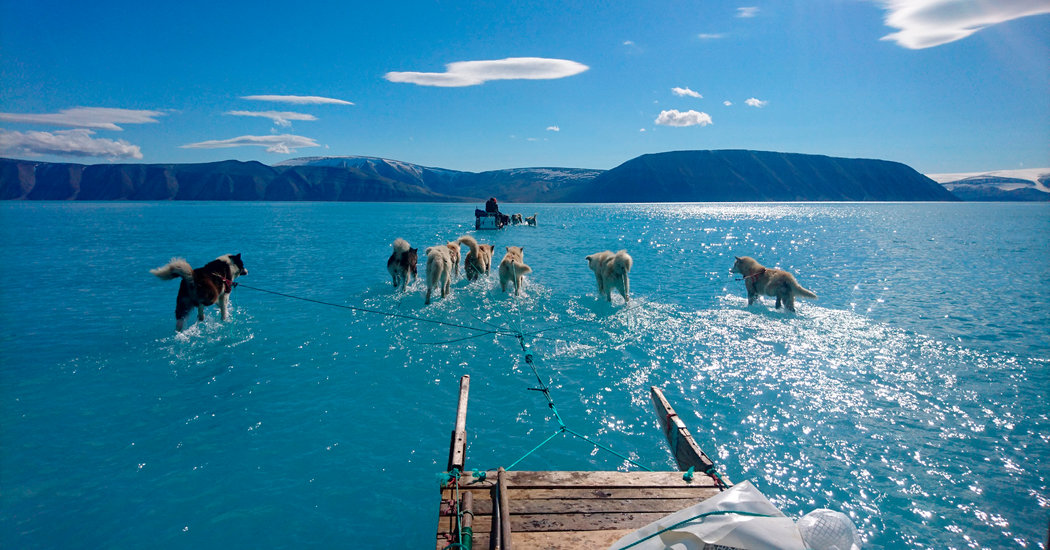
    “Unfortunately, the US unilaterally withdrew from the agreement and even threatened other parties [to the deal], calling upon them to violate UN Security Council Resolution 2231, which stands for the normalization of trade relations with Iran,” Rouhani said during the Shanghai Cooperation Organization (SCO) summit in Kyrgyzstan’s capital, Bishkek.

    The president noted that the International Atomic Energy Agency (IAEA) has on numerous occasions confirmed Iran’s full compliance with the Joint Comprehensive Plan of Action (JCPOA), which was signed after years of difficult negotiations in 2015.

    Iran asks the other participants of the deal [China, France, Russia, the UK, plus Germany] to fulfill their commitments as soon as possible so that Iran could exercise its economic interests that [the document] envisions.

    Washington unleashed several waves of sanctions against Tehran after Donald Trump quit the JCPOA, which he called “the worst deal ever,” just over a year ago. The harsh restrictions targeted Iranian oil, finance, transport, military and other sectors.

    On May 8, Tehran announced the suspension of some of its obligations under the JCPOA and warned that it would resume uranium enrichment in 60 days if Iran’s interests are not protected in line with the deal.

    Rouhani blasted Washington’s behavior in recent years, saying that “by violating all international structures and rules and using its economic, financial and military capabilities, [it] has implemented an aggressive approach.”

    The US now “poses a serious threat to stability in the [Middle East] region and the world,” he warned.

    This week saw a new spike in tensions between the US and Iran as the Americans accused Tehran of being behind explosions that struck Norwegian and Japanese oil tankers, without providing any proof of those claims. Iran responded by saying that the incident was masterminded by Washington to justify the sanctions and undermine the work of the Islamic Republic’s diplomats.

    Think your friends would be interested? Share this story!

    This content was originally published here.