Category: World News

  • These Are The World’s Most Expensive Cities To Live

    These Are The World’s Most Expensive Cities To Live

    Not the high-rise metropolis of New York, nor the celebrity-soaked Los Angeles or even the cultural crossroads of London. No, the most expensive city in the world for expatriates is Hong Kong, according to Mercer’s Cost of Living Survey, released on June 26.

    Hong Kong’s dominance of Mercer’s annual ranking for the second year running is all the more surprising given the protests that have rocked the special administrative region over the past few months.

    But this makes it all the more expensive for expatriates to live in according to Mercer, which measures each city by the cost of a “basket of goods” such as sliced white bread and men’s blue jeans.

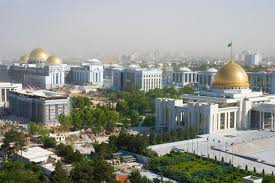
    Previous entries in the top 10 have hardly been havens of calm. They include N’Djamena in Chad, Luanda in Angola and Ashgabat in Turkmenistan, which ranks seventh this year.

    source

  • 25 Kids From Around The World Photographed With What They Eat In One Week

    25 Kids From Around The World Photographed With What They Eat In One Week

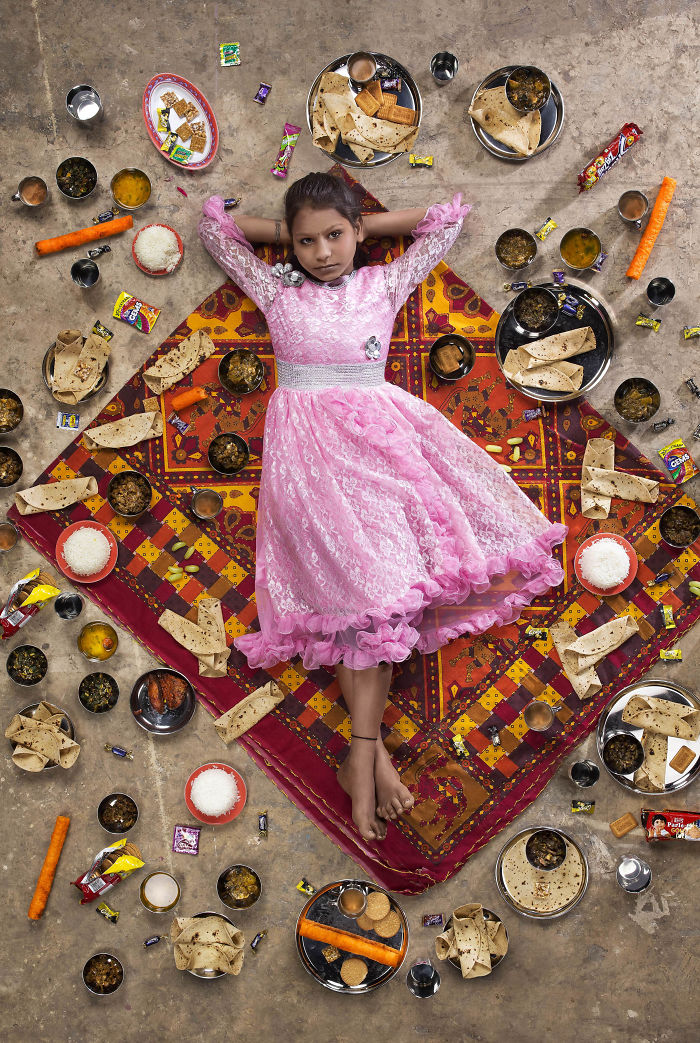
    We are what we eat. But how do our diets actually reflect us? To find out, photographer Gregg Segal has traveled around the world to shoot kids from different cultures surrounded by the stuff they stuff themselves with. Over the course of 3 years, the photographer has visited 9 countries (the USA, India, Malaysia, Germany, France, Italy, Senegal, the United Arab Emirates, and Brazil), documenting his findings in a book called Daily Bread: What Kids Eat Around the World. “I focused on kids because eating habits start young and if you don’t get it right when you’re 9 or 10, it’s going to be a lot harder when you’re older,” Gregg told Bored Panda.

    More info: greggsegal.com | Instagram | Facebook | Twitter

    #1

    Kawakanih Yawalapiti, 9, Upper Xingu Region Of Mato Grosso, Brazil

    Kawakanih Yawalapiti, 9, Upper Xingu Region Of Mato Grosso, Brazil

    Kawakanih Yawalapiti, 9, Upper Xingu region of Mato Grosso, Brazil, photographed August 19, 2018 in Brasilia. Kawakanih, a member of the Yawalapiti tribe, lives in Xingu National Park, a preserve in the Amazonian Basin of Brazil. The park is encircled by cattle ranches and soy In the past six months alone, 100 million trees have been felled to make room for When she was born, Kawakanih’s mother, Watatakalu, isolated her from those who didn’t speak Arawaki, their native language. Only 7 speakers of the language remained and her mother was afraid Arawaki would go extinct. In fact, Kawakanih is the first child to be raised speaking Arawaki since the 1940’s and her mother says it’s up to Kawakanih and her two siblings to keep the language alive. Kawakanih has also learned her father’s dialect as well as Portuguese. She loves to read history books, especially ones about the Egyptians. Most of her days are spent playing in the river or helping with chores, like harvesting manioc (cassava), making tapioca and fishing. Every couple of months, Kawakanih travels to Canarana for school where she learns computer skills, though no one in her village owns a computer; there is no electricity or running water. To get to the studio in Brasilia, Kawakanih and her mother traveled 31 hours from their village by boat, bus and car. The red paint Kawakanih wears, traditionally made from ground urucum seeds, protects her from bad spirits and energy. A cluster of seedpods are to the left of Kawakanih’s head. Rainforest tribes have used the entire Urucum plant as medicine for centuries. Kawakanih’s diet is very simple, consisting mainly of fish, tapioca, fruit and nuts. It takes five minutes to catch dinner, says Kawakanih. When you’re hungry, you just go to the river with your net.

    source

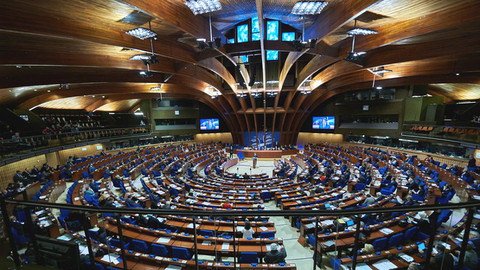
  • Council of Europe vs Russia: stay or go?

    Council of Europe vs Russia: stay or go?

    These amendments have been proposed as a potential way out of the current crisis prompted by imposing restrictions on Russian delegation’s rights in 2014-2015 in response to the annexation of Crimea and Russia’s involvement in the conflict in Donbas.

    Russia, in its turn, starting from 2016 refused to participate in the work of the assembly until its delegation’s rights are fully restored and the very opportunity of imposing such sanctions is eliminated, and in 2017 stopped paying its financial dues to the Council of Europe’s (CoE) budget.

    We have reached the point where Russia threatens to leave the CoE and cease to be party to the European Convention on Human Rights.

    The current amendments appear to be a reasonable solution, as they resolve the discrepancy between the provisions of the assembly’s rules of procedure on restrictions of national delegations rights and those of the CoE’s statute on equal participation of member states in making key decisions in the organisation.

    Importantly, the amendments preserve the opportunity of imposing certain restrictions. They are also in line with the decision of the committee of ministers on the matter adopted in Helsinki on 17 May.

    This approach has its pros and cons, but its critics do not propose any alternative options, apart from keeping the status quo.

    It is clear, though, that it cannot be preserved any longer: if the crisis is not resolved this week, there is a high risk of Russia’s pre-emptive withdrawal from the CoE at the end of June.

    Besides, Russian authorities have flagged their participation in the elections of the new CoE secretary general, also scheduled for this week’s session, as an essential condition for staying. The prospect of Russia’s withdrawal should be taken very seriously and not seen as ‘just a bluff’.

    Not adopting any decision this week would likely trigger Russia’s departure from the organisation with all the negative consequences for the Russian public and the CoE as a whole.

    As pointed out by Russian human rights defenders in November 2018, this move would by no means stop massive human rights violations in the country or contribute to the resolution of the conflict in Donbas and the return of Crimea under Ukrainian jurisdiction.

    No more influence?

    Instead, it would have irreversible consequences and eliminate even the existing limited opportunities for the CoE to influence the situation in Crimea and Donbas as well as inside Russia.

    Any sanctions are a tool to achieve some goal, not a goal in itself.

    The goal of introducing restrictions on the rights of the Russian delegation to the PACE was pushing Russia to observe the norms of international law with regard to the annexed Crimea and the conflict in Donbas.

    Five years after, we have to admit that these sanctions have not achieved their goal.

    So, those who really care about compelling the Russian authorities to observe international law should rather focus on finding more effective ways and tools for ensuring that.

    How this can be done?

    First, the continued membership of Russia in the CoE should be actively used by all concerned parties as an opportunity to build up stronger pressure on Russia to ensure implementation of its obligations.

    The PACE should much more actively use all the other tools it has, such as the monitoring procedure, thematic reports and resolutions, posing questions to the committee of ministers and prompting it to apply Article 46 in the cases of persistent non-implementation of judgements of the European Court of Human Rights by Russia.

    These measures should be complemented by other practical tools outside of the CoE, including in bilateral relations with Russia.

    Secondly, the current crisis should lead to an upgrade of the CoE’s toolbox to address grave and systemic violations of the organisation’s norms by its member states.

    Follow-up to the committee of ministers’ suggestion to develop a new procedure for a coordinated response to such situations, including a decision on suspension or expulsion of a member state, should be prioritised.

    Developing the two above-mentioned lines of action would demonstrate that the PACE has not just resorted to a short-term tactical solution to the crisis by allowing an ‘unconditional return of the Russian delegation’ and thus ‘appeasing the aggressor’ but, on the contrary, is working on a long-term stronger strategy of responding to violations committed by Russia, as well as other member states.

    This content was originally published here.

  • Did a Nuclear Bomb in Philippines Sea Cause Earthquake?

    Did a Nuclear Bomb in Philippines Sea Cause Earthquake?

    Could a One-Megaton Nuclear Bomb that was lost in the Philippines Sea have caused a earthquake and a tsunami?

    Last week we published an article about a One-Megaton Nuclear Bomb that was lost in the Philippines Sea, this got a friend of ours thinking if it could have caused as earthquake if it went off.

    Doing some research he discovered that there was an earthquake not far from where the nuclear bomb was lost and it happened 2 years 5 months after the bomb was lost.

    We are by no means saying that the earthquake was caused by the nuclear bomb we are just exploring the possibility.

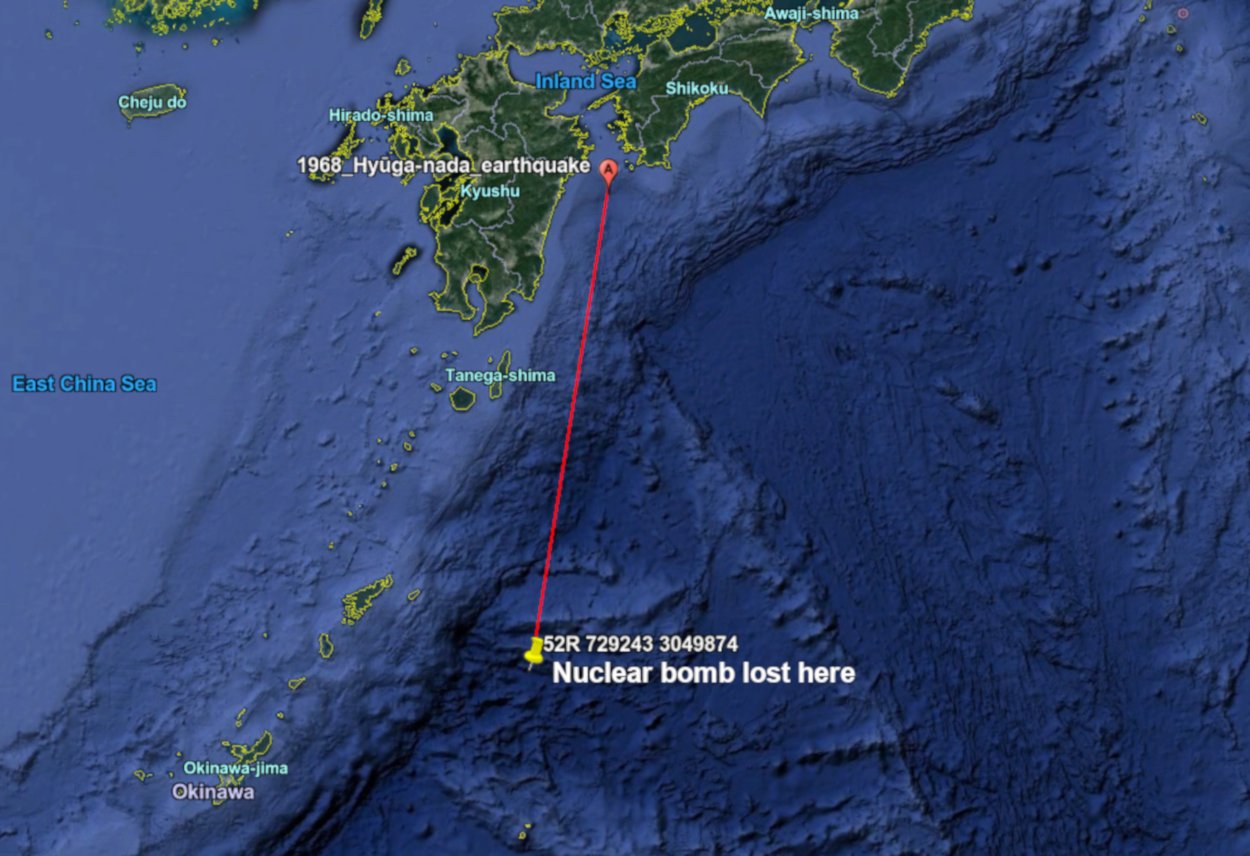
    The earthquake was the 1968 Hyūga-nada earthquake off the islands of Kyushu and Shikoku, Japan.

    OK there are a lot of earthquakes around Japan so it could just be coincidence that it was close to where the nuclear bomb was lost, however the Hyūga-nada earthquake was unique in the fact it was the strongest ever earthquake recorded in the Hyūga-nada Sea region.

    If you look at the image you will see how close the bomb was to the centre of the Hyūga-nada earthquake.

    It would have been seen on the surface

    You might think that if the bomb had exploded it would have been seen on the surface of the sea. It was something we also thought but after some research we discovered it would be unlikely to brake the surface.

    The bomb was or is at a depth 4,938 metres (16,200 feet) below the Philippines sea. At that depth the water pressure on it would be 500 atmospheres equal to 7347 pounds of force per square inch (psi).

    A Nuclear explosion from a One-Megaton Nuclear Bomb produces a blast of 50 psi. So the water pressure is far greater that the pressure from the blast.

    The deepest we could find a nuclear weapon had been tested at was at 1,000 metres so they have never been tested at 5,000 feet.

    Underwater tests

    What underwater tests have discovered is that when a nuclear explosion happens in deep water it forms a flattened gas bubble, this happens because water can not be compressed so it pushes the water out to the sides.

    The gas bubble rises but then the pressure of the water above it forces it back down causing it to bounce of the seabed so it rises again. This bouncing happens many times but loses force with each bounce.

    With so much pressure above the blast most of the force would go into the seabed, add to that the energy from the gas bubble bouncing and it puts a huge amount of pressure on the seabed.

    If you follow a line from where the nuclear bomb was last to where the earthquake happened you will notice underwater cliffs. The force of the water being pushed sideways by the gas bubble would hit these cliffs and spread north. When it gets to near where the 1968 Hyūga-nada earthquake happened you will notice there is a curve which would trap most of the force of the water being pushed by the gas bubble, putting a huge amount of pressure on the underwater cliff at that point.

    Can a nuclear explosion cause an earthquake?

    This is an interesting question. At the time when America was carrying out nuclear tests the experts said a nuclear explosion could not cause an earthquake. However now it is North Korea carrying out nuclear tests experts claim that the tests carried out by North Korea are causing earthquakes.

    So that is not much help because the answer of the experts seem to be more down to agenda than it is down to facts.

    What does seem to be sure is a nuclear explosion can not move tectonic plates, it is the movement of tectonic plates that causes most earthquakes.

    We also know that fracking can cause earthquakes, at first they thought fracking only caused small earthquakes, but new research is showing that they can be quite large and damaging.

    Scientific and government research indicates that fracking can cause earthquakes in two ways:

    1. Primarily, during the fracking process: “[Earthquakes] were caused by fluid injection during hydraulic fracturing in proximity to pre-existing faults.”

    2. Secondarily, via the disposal of fracking wastewater via underground injection.

    We would presume that a nuclear explosion at nearly 5,000 metres deep would do much the same as fracking, it would force water deep into the earth. Also the gas bubble bouncing would also be forcing water at great pressure into the earth.

    If the Earthquake was caused by a bomb they would have known

    In this case they would not have known because only the Americans knew there was a nuclear bomb there. It was not until 1989 the Americas owned up to the fact they had lost a nuclear bomb.

    So the only people that could know if it was caused by a nuclear explosion would be America and they would have been unlikely to own up.

    We are not saying that the 1968 Hyūga-nada earthquake was caused by the lost nuclear bomb we are just exploring the possibilities.

    This content was originally published here.
  • M5.5 quake hits eastern Japan; no immediate damage reported – Japan Today

    M5.5 quake hits eastern Japan; no immediate damage reported – Japan Today

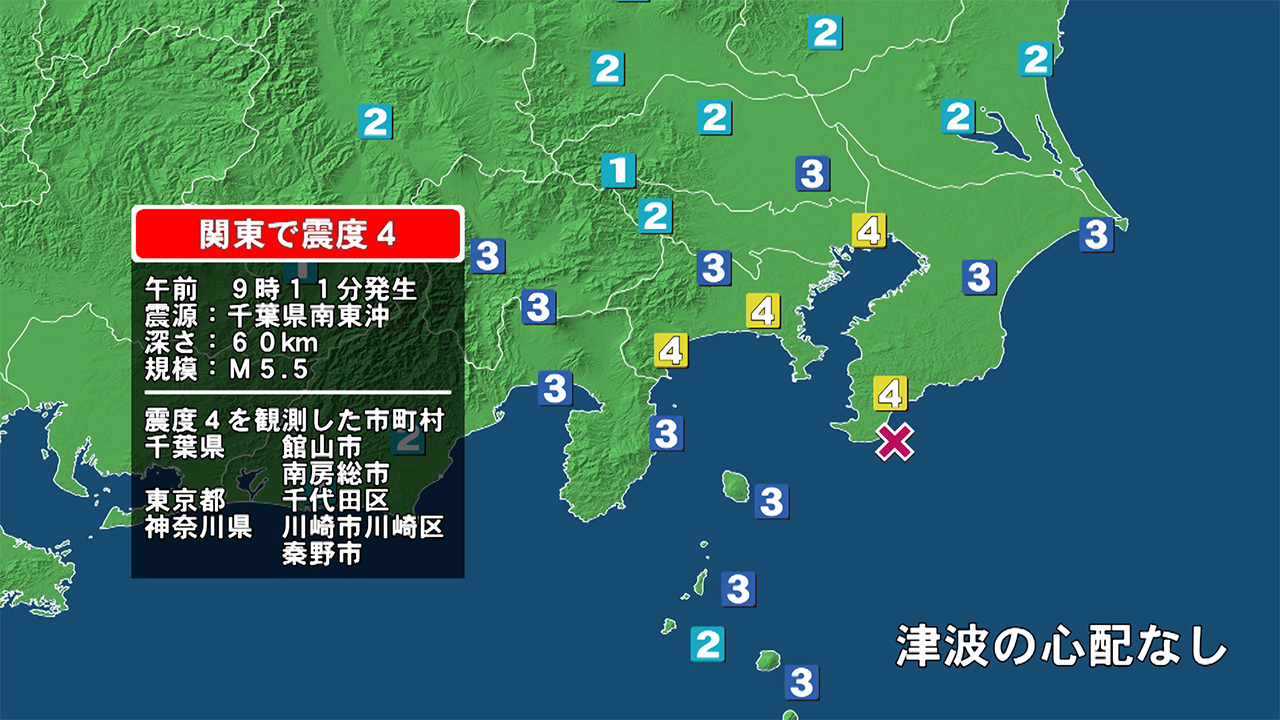
    An earthquake with a preliminary magnitude of 5.5 hit eastern Japan on Monday morning, the Japan Meteorological Agency said.

    The epicenter of the earthquake was off the coast of Chiba Prefecture, adjacent to Tokyo, the agency said, adding that a tsunami warning had not been issued.

    The quake, which hit at 9:16 a.m., had a maximum intensity of 4 on Japan’s 1-7 scale, including in parts of central Tokyo.

    There were no were immediate reports of damage.

    Earthquakes are common in Japan, one of the world’s most seismically active areas. Japan accounts for about 20 percent of the world’s earthquakes of magnitude 6 or greater.

    This content was originally published here.
  • RBNZ Preview – Maintaining Cautious Tone to Pave Way for Further Cuts | Action Forex

    RBNZ Preview – Maintaining Cautious Tone to Pave Way for Further Cuts | Action Forex

    After lowering the policy rate by -25 bps to 1.5% in May, RBNZ would likely remain on hold this month. Domestic economic developments came in largely consistent with policymakers’ projections. Yet, global economic outlook remains uncertain and major central banks have recently shifted their stance on the dovish side. As such, we expect RBNZ to maintain a cautious tone in June. Softness in leading indicators signal risks to growth are skewed to the downside, paving the way for further rate cuts later this year.

    Mixed Domestic Economic Developments

    GDP expanded +0.6% q/q in 1Q19, beating RBNZ expectations of +0.4%. The details were mixed. Household consumption growth eased to +0.5% q/q, from +1% in the prior quarter. Investment growth, however, accelerated. Residential investment expanded +2.7% y/y, following a +1.9% growth in 4Q18, while other fixed asset investment growth also accelerated to +1.9% q/q. from +1.4% in 4Q19. Moreover, net exports expanded +0.6% q/q n 1Q19, up from +0.4% in the previous quarter. Sector-wise, the good-producing sector gained a solid +2% q/q. However, growth in services activities was soft at +0.2% q/q and mixed across the industries, while the primary sector saw contraction of -0.7%.q/q.

    – advertisement –

    Leading indicators have signaled downside risks to domestic growth. ANZ Roy Morgan’s consumer index showed decline in May, while the manufacturing PMI (by BusinessNZ) fell to 50.2 in May, down -2.5 points from April and the lowest since December 2012. For the latter, the accompanying report indicates that it is “a warning signal for near term growth via its mix of falling production, near flat new orders, and rising inventory”.

    Global Uncertainty and Dovish Central Banks

    Globally, we do not expect immediate resolution on US-China trade war after the G20 meeting. At best, both sides would agree to continue negotiations. That is uncertainty of the trade war remains. Meanwhile, major central banks have shifted to the dovish side, signaling that future monetary policy stance is skewed to the easing side. RBA, after cutting the cash rate in June, revealed in the minutes that “more likely than not that a further easing in monetary policy would be appropriate in the period ahead”. Although the Fed left the policy rate unchanged in June, removal of the reference “patient” in the forward guidance could be paving the way for future rate cuts. Moreover, the median dot plots revealed that more members are in favor of lowering interest rates later this year, while the plots have projected a rate cut in 2020.

    Although headline GDP growth beat RBNZ’s expectations, the breakdowns were mixed, at best. The forward-looking indicators, however, have signaled that risks to growth are skewed to the downside. Globally, it is unlikely that G20 summit next week would resolve the US-China trade war. Meanwhile, major central banks have either resumed accommodative monetary policy or hinted easing in the near-future. All these should lead the RBNZ to adopt a cautious tone this month, while opening the door for reducing interest rates again later this year.

    This content was originally published here.

  • Fashion world shaken by cultural appropriation claims

    Fashion world shaken by cultural appropriation claims

    The women embroiderers of the remote Mexican mountain village of Tenango de Doria made worldwide headlines this week when their government went to war with an American designer for “plagiarising” their patterns.

    Wes Gordon, the artistic director of the New York label founded by Venezuelan designer Carolina Herrera, found himself accused of cultural appropriation.

    The women of the indigenous community in the east of the country told AFP how they felt cheated of their traditional motifs where “each element has a personal, family or community meaning”.

    It is the latest in a long line of controversies where multinational brands stand accused of ransacking the cultural heritage of poor villagers.

    Four years ago another indigenous Mexican community complained that the French designer Isabel Marant had lifted a 600-year-old Tlahuitoltepec blouse design that symbolises the Mixe people for one of her collections.

    Mexico has previously protested about Zara, Mango and Michael Kors designs.

    – Tougher copyright laws –

    Some of the country’s leaders now want to toughen a copyright law that already protects traditional patterns to punish “plagiarism that different indigenous peoples have suffered”.

    It is a suggestion that sent a chill down the spines of some designers at Paris fashion week.

    Berluti’s new artistic director Kris van Assche — who headed Dior’s menswear line for 11 years — told AFP that “when I was at fashion school we learned that there was nothing shameful about taking inspiration from other cultures.

    “We must be careful not to attack everybody for everything,” the Belgian creator added.

    Rising young Spanish star Alejandro Gomez Palomo was more dismissive.

    “Cultural appropriation is something we should all forget,” said the designer, who refuses to leave his own Andalusian village where his Palomo Spain label is based.

    – ‘It belongs to everyone’ –

    source

  • Mutant DNA-edited babies created by ‘Frankenstein’ scientist ‘secretly born in China’

    Mutant DNA-edited babies created by ‘Frankenstein’ scientist ‘secretly born in China’

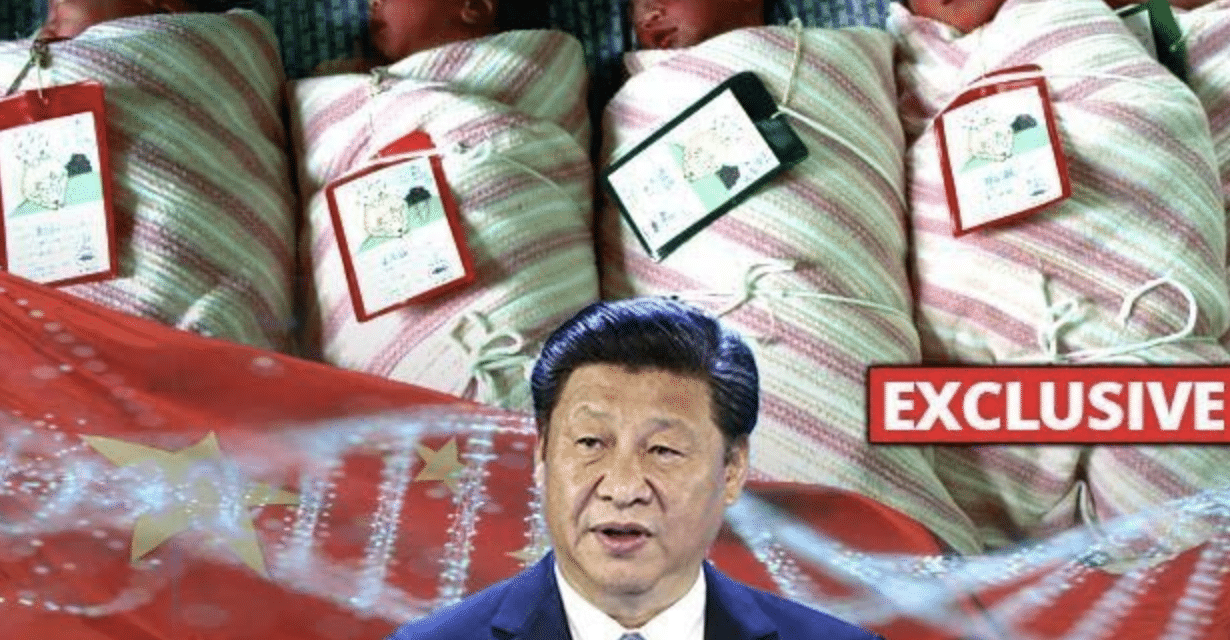
    Scientist He Jiankui was condemned around the world last year where he brazenly announced in a YouTube video he had produced the first gene-edited humans in history – dubbed “Frankenstein babies” by some critics.

    Dr Pete Mills, the Assistant Director of the Nuffield Council on Bioethics, attended the scientific conference in Hong Kong where the world first learnt about the experiment.

    Speaking to Daily Star Online, he said the scientific community was aware at the time of the creation of other mutant baby pregnancies in China – and the women would have come to the end of their pregnancies around now.

    However, information on the cases ceased to be released following an international outcry – and China’s repressive state and censorious laws could be to blame.

    Jiankui was criticised harshly because of the ethical questions about experimenting on humans, and last month it was reported China was planning tougher laws and regulations.

    “We may or may not hear about those [secret babies],” Dr Mills continued, explaining that the Chinese scientists behind the experiment have still not published their full data following the outcry.

    He said there was no evidence Chinese people have a different attitude to experiment on humans, but insisted the experiment by Jiankui and his team was “absolutely not acceptable.”

    Dr Mills described the experiments on humans as impossible to justify “where we really do not know what the consequence will be and if there will be terrible consequences”.

    Human genetics are extremely complex, and small changes to one gene, understood to influence one body part, can unexpectedly effect other organs or bodily systems.

    Just weeks ago, it was reported that the two gene-edited babies might have shorter life expectancies, as people with altered genes appear to be more susceptible to infection.

    Shortly after the babies were announced – which shocked many top scientists as Jiankui was not a known leader in the field – reports circulated that Jiankui was on house arrest and little has been heard from him since.

    Furthermore, as Jiankui has previously argued, the privacy of the small girls and their family is an important factor.

    The babies, known only as Lulu and Nana, were just single cells when a technology known as CRISPR editing was used to remove a gene known to offer the HIV virus a way to infect people.

    As Daily Star Online also reports today, CRISP has made gene-editing experiments far cheaper and easier than ever before.

    This raises the prospect that non-state backed entities could create mutant babies who are already out there, Dr Mills says, while stressing this is unlikely right now.

    Just a couple of weeks ago, it was reported that a Russian molecular biologist is seeking approval to genetically modify more human embryos.

    Molecular biologist Denis Rebrikov told Nature he is considering implanting gene-edited embryos into women, possibly before the end of the year if he can get approval.

    “We as a species need to come to terms with this,” Dr William Hurlbut, a senior research scholar in neurobiology at Stanford Medical School, commented at CNBC’s Healthy Returns conference last month.

    “For the first time in the history of life, we can affect the future of our evolution.”

    source

  • Little Girl Traumatized as School Teaches 6-Year-Olds ‘There Is No Such Thing as Girls and Boys’.

    Little Girl Traumatized as School Teaches 6-Year-Olds ‘There Is No Such Thing as Girls and Boys’.

    Does the education institutions teach science anymore?  You had better get gender right if you want to raise, say, chickens, cows, sheep, pigs, oh, and maybe people!  At age 6 don’t these kids need to learn to read first.  Maybe then they can find some good books on the subject when they are eight and make their own understand how odd it is to be worried about this at any age.  Really!  If the agenda was to promote human equal rights not a genderless agenda maybe there would be a reason to teach this stuff.

    A Canadian family has filed a civil rights complaint with the Human Rights Tribunal of Ontario after their six-year-old daughter became overtly confused when her first-grade teacher taught the class to question their gender.  In January of 2018, the child was required to watch a YouTube video titled, “He, She and They?!?—Gender: Queer Kid Stuff #2.”  It contained statements such as, “some people aren’t boys or girls,” and that there are people who do not “feel like a ‘she’ or a ‘he,’” and therefore might not have a gender.  In an exclusive story, The Post Millennial, reports that two-and-a-half months into the semester, Jason and Pamela Buffone could see the teacher’s lessons on gender theory were having a severely negative impact on their daughter.  She would ask them repeatedly why her identify as a girl was “not real.”  The young girl had never had a problem at school and her mother told the newspaper she “adores school.”

    According to Mrs. Buffone, the teacher told the children that “there is no such thing as girls and boys,” and “girls are not real and boys are not real.” The child even asked her parents if she could go “to the doctor” about the fact that she was a girl.  The girl was also “not sure if she wanted to be a mommy.”  Her mother told her that when she grew up, she could make that choice, but was concerned sexual reproduction was coming up as a part of Grade One gender lessons.  The parents became alarmed by their daughter’s confusion. She had never shown any signs of being confused about her gender before.   The Buffones met with the teacher who told them the teaching of gender fluidity was a school board policy, and she was committed to teaching it due to “a change in society.”They brought their concerns to the principal of the Devonshire Community Public School who told them the lessons were to accommodate a child in the Grade One class who had expressed interest in self-expression as the opposite sex, according to The Post Millennial.

    However, the Buffones later found out the parents of the child did not want the issue to be addressed by lessons on gender; they merely wanted the other children to be taught to act respectfully and not to bully their child. The Buffones then met with the superintendent of the school board and the curriculum superintendent.  According to the complaint, “The school board did not agree to communicate with parents when sensitive discussions took place, nor did they agree to issue any directive or take corrective action in order to ensure that children of female gender identity were positively affirmed.” Tired of being stonewalled, the Buffones were forced to enroll their daughter at another school where she is now doing well in her studies.   Mrs. Buffone told the newspaper the child has told the family she is happy she will not have a teacher who says that “girls are not real.”

    Last fall, the child reportedly told her mother,  “This table is real, and this fan is real, and even if the fan was made out of cardboard, it’s still real.” “The Ontario Human rights Code states that a poisoned environment is a form of discrimination,” Mrs. Buffone told the newspaper. “We’re going to provide evidence that the manner in which (the teacher) was teaching the concept of gender identity resulted in a poisoned environment. The principal further exacerbated the situation in that the only option provided to us was to remove our daughter from the classroom for these lessons, which is exclusionary treatment.” “This is an important case,” Buffone noted. “Our government seems to have given teachers carte blanche in terms of how they teach this concept of gender identity. If this is an example of how it can be taught, I think it’s in the public interest for the HRTO to weigh in on it.”

  • Syrian Refugee Arrested for Terrorism After Planning Attack on US Christian Church

    Syrian Refugee Arrested for Terrorism After Planning Attack on US Christian Church

    Department of Justice officials announced Wednesday that a Syrian national has been arrested on terrorism charges, including his plan to attack a Christian church in Pittsburgh, PA. Mustafa Mousab Alowemer, 21, a resident of Pittsburgh, was arrested on a federal complaint charging him with one count of attempting to provide material support and resources to the Islamic State of Iraq and al-Sham (ISIS), and two counts of distributing information relating to an explosive, destructive device, or weapon of mass destruction in relation to his plan to attack a church. According to an affidavit filed in US District Court in Pittsburgh: The FBI Pittsburgh JTTF investigation of Mustafa Mousab Alowemer (Alowemer) revealed that Alowemer plotted to bomb a church located on the North Side of Pittsburgh, Pennsylvania (the Church), using a weapon of mass destruction (i.e., an explosive device).  According to Alowemer, his motivation to detonate a device at the Church was to support the cause of ISIS and to inspire other ISIS supporters in the United States to join together and commit similar acts in the name of ISIS.  Alowemer also targeted the Church in order to “take revenge for our ISIS brothers in Nigeria.”  Alowemer was aware that numerous people in or around the Church could be killed by the explosion.

    According to the complaint and information provided to the FBI by the Department of Homeland Security, Alowemer was born in Daraa, Syria, and was admitted to the United States as a refugee on Aug. 1, 2016. In planning the attack, Alowemer used multiple social networking and mobile messenger applications to communicate with an individual whom he believed to be a fellow ISIS supporter.  During his communications, Alowemer stated his support for ISIS, and his desire to answer the call for jihad or travel to conduct jihad.  Alowemer also distributed propaganda materials, offered to provide potential targets in the Pittsburgh area, requested a weapon with a silencer, and recorded a video of himself pledging an oath of allegiance to the leader of ISIS, Abu Bakr Al-Baghdadi.  Between April 16 and June 11, Alowemer met four times in person with an FBI Undercover Employee (UCE) and/or an FBI Confidential Human Source (CHS).  At the June 11 meeting with the UCE and CHS, Alowemer provided additional details about the bomb plot and provided the materials he had purchased for construction of the device.

    Alowemer expressed a desire to meet one more time to conduct planning and coordination prior to carrying out the attempted bombing in July 2019. “Targeting places of worship is beyond the pale, no matter what the motivation,” Assistant Attorney for National Security John C. Demers said in a press release.  “The defendant is alleged to have plotted just such an attack of a church in Pittsburgh in the name of ISIS.  The National Security Division and our partners will continue our efforts to identify and bring to justice individuals in our country who seek to commit violence on behalf of ISIS and other terrorist organizations.  I want to thank the agents, analysts, and prosecutors who are responsible for this investigation.”

    “Our top priority is protecting the citizens of western Pennsylvania,” said US Attorney Scott W. Brady.  “Everyday investigators and prosecutors work tirelessly behind the scenes to disrupt terrorist activity and keep our community safe.  While the public does not always see the results of the hard work of these dedicated men and women, this case is a visible demonstration of our commitment to rooting out terrorists and bringing them to justice.” A charge is merely an allegation, and the defendant is presumed innocent unless and until proven guilty beyond a reasonable doubt in a court of law.