Category: World News

  • Switzerland named ‘world’s best destination for expats’

    Switzerland named ‘world’s best destination for expats’

    The Alpine country offers “the complete expat package” with improved quality of life alongside excellent salaries and “swift career progression”, according to the report which ranks 33 countries globally and is based on interviews with just over 18,000 people in 163 locations.

    Spain was ranked fourth in the overall rankings, for very different reasons. Germany was ranked eighth while France was 17th.

    A total of 82 percent of survey respondents based in Switzerland said their life had improved since moving to the country while 67 percent of people said they felt safer in Switzerland than in their home country.

    There were also very high levels of satisfaction with the country’s political and economic stability.

    Top for incomes

    The HSBC Expat Explorer breaks down its findings into three different categories: ‘living’, ‘aspiring’ (which refers to finances and career prospects) and ‘little expats’ – or family life and education.

    Switzerland ranks relatively highly in all three categories, coming seventh overall for living and fourth for children and family life.

    But it is in the realm of incomes that the country excels. Expats, or immigrants as many foreigners prefer to be called, earn an average $111,587 in Switzerland, against a global average of $75,966, according to HSBC.

    That sees Switzerland score top for salaries, while it comes second for disposable incomes behind the United Arab Emirates (UAE).

    However, Switzerland does less well on metrics such as career progression (15th place) and work–life balance, where it comes 16th.
    source

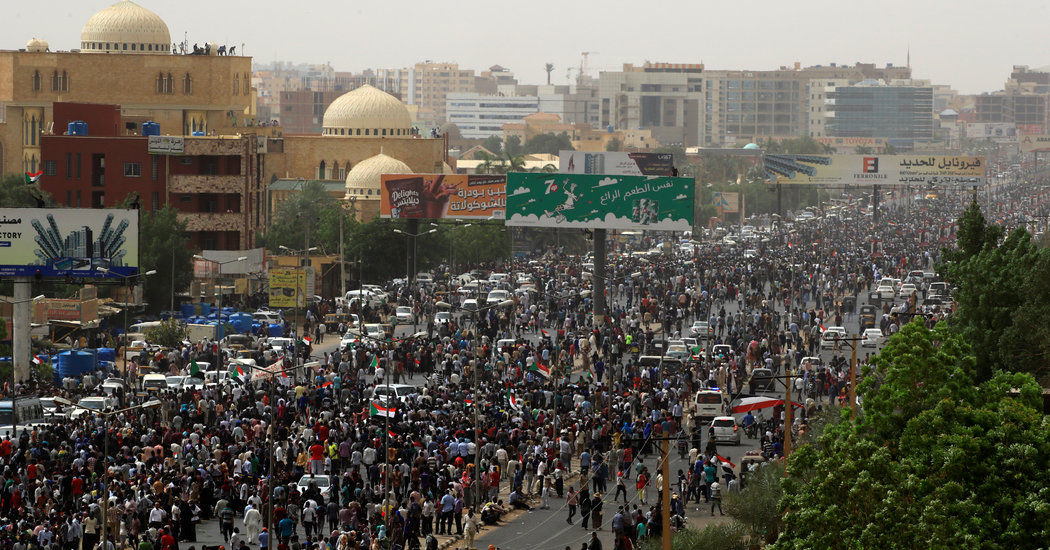
  • Bouncing Back From Crackdown, Protesters Surge Through Sudan’s Streets – The New York Times

    Bouncing Back From Crackdown, Protesters Surge Through Sudan’s Streets – The New York Times

    “We want to get things under control,” he said.

    Witnesses and medical organizations in Khartoum could not corroborate those assertions.

    A former camel trader and militia commander, General Hamdan has emerged as the most powerful figure in Sudan, even if he is formally outranked by an older man, Lt. Gen. Abdel Fattah al-Burhan. His troops patrol the streets of Khartoum, and he has held rallies in recent weeks to position himself as a potential national leader.

    The authoritarian leaders of Saudi Arabia and the United Arab Emirates, who are hostile to democracy movements in the Middle East, openly support General Hamdan. They pledged $3 billion in aid for Sudan in April in an effort to prop up the country’s ailing economy.

    The State Department, which has sided with the protesters, has been unusually critical of Saudi Arabia’s role in Sudan’s crisis. But the main diplomatic effort is being led by mediators from the African Union and Ethiopia who have worked, so far fruitlessly, to bring the protesters and generals together.

    Trust between the two sides is low. On Saturday, General Hamdan’s troops raided the main office of the Sudanese Professionals Association, which is leading the protest movement, and prevented the group from holding a news conference.

    Such measures appeared to have had limited impact on Sunday, when people flooded into the streets. Some demonstrators managed to broadcast live video of the protests, using roaming services or other methods to circumvent the month-old internet blackout that the generals say is necessary for national security.

    This content was originally published here.

  • Hell on earth: The horrors of North Korean torture camps

    Hell on earth: The horrors of North Korean torture camps

    Beatings, rape, starvation and sick public executions are a daily reality for thousands of North Koreans, according to years of witness testimony.

    US student Otto Warmbier died on Monday at age 22, just days after his release from North Korea in a vegetative state following 17 months in custody.
    US student Otto Warmbier died on Monday at age 22, just days after his release from North Korea in a vegetative state following 17 months in custody.

    Now, the death of Otto Warmbier has brought fresh scrutiny to the regime’s brutal torture camps under leader Kim Jong Un.

    The 22-year-old student passed away from mysterious brain damage he suffered while a prisoner in the isolated state.

    He succumbed to his horrifying injuries just six days after he was released from North Korea back to his parents in a vegetative state following 17 months in custody.

    Warmbier’s doctors in Cincinnati said that the student had suffered ‘extensive loss of brain tissue in all regions of his brain’ consistent with oxygen deprivation for a prolonged period.

    The isolated North Korean regime is believed to have as many 120,000 political prisoners in its harsh labor camps.

    Grotesque stories of torture offer among the few clues to Warmbier’s fate.

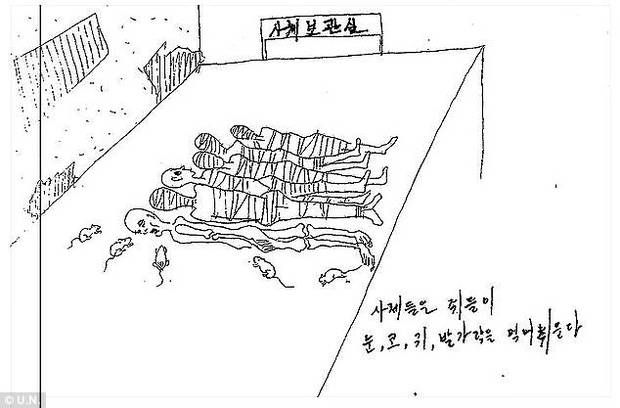
    This drawing depicts prisoners foraging among live wild animals. In the Korean description: 'out of starvation and hunger, find snakes and rats and you eat them'.
    This drawing depicts prisoners foraging among live wild animals. In the Korean description: ‘out of starvation and hunger, find snakes and rats and you eat them’.

    In a 2014 report, the United Nations Human Rights Commission called North Korea ‘a state that does not have any parallel in the contemporary world’ due to the country’s ‘systematic, widespread and gross human rights violations’.

    Beatings are widespread in the camps, in which guards are given near-absolute authority to abuse and kill prisoners, according to survivors who have survived to speak out.

    source

  • Russia plans to tow a nuclear power station to the Arctic. Critics dub it a ‘floating Chernobyl’

    Russia plans to tow a nuclear power station to the Arctic. Critics dub it a ‘floating Chernobyl’

    Next month, a floating nuclear power plant called the Akademik Lomonosov will be towed via the Northern Sea Route to its final destination in the Far East, after almost two decades in construction.

    It’s part of Russia’s ambition to bring electric power to a mineral-rich region. The 144-meter (472 feet) long platform painted in the colors of the Russian flag is going to float next to a small Arctic port town of Pevek, some 4,000 miles away from Moscow. It will supply electricity to settlements and companies extracting hydrocarbons and precious stones in the Chukotka region.
    A larger agenda is at work too: aiding President Vladimir Putin’s ambitious Arctic expansion plans, which have raised geopolitical concerns in the United States.
  • Kazakhstan to forgive debts of the poor, end bank bailouts — RT Business News

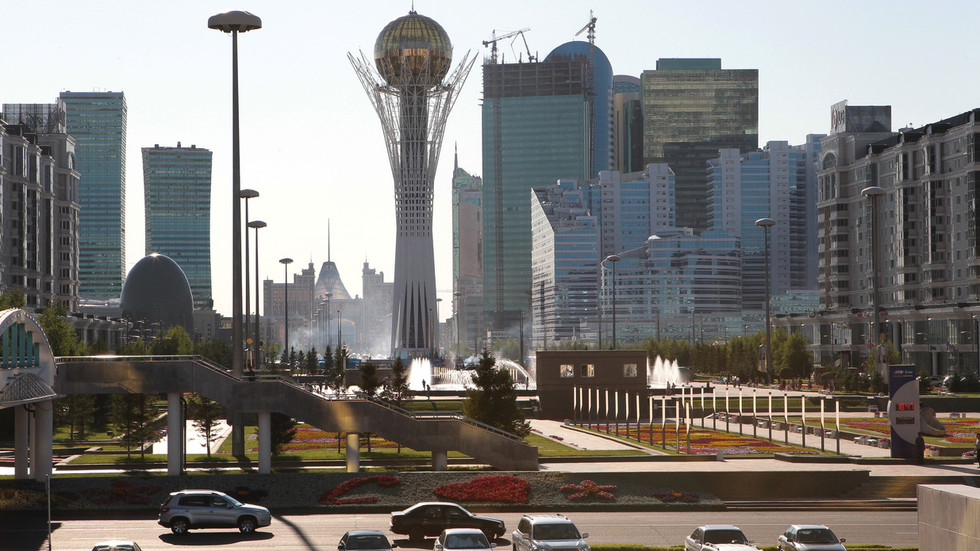
    Kazakhstan to forgive debts of the poor, end bank bailouts — RT Business News

    As part of the debt forgiveness program he aims to end costly state rescues of private banks. The 66-year-old was elected president on June 9 after longtime leader Nursultan Nazarbayev stepped down as head of state in March.

    The Central Asian country has been struggling with a decade-long crisis which forced the government to pump at least $18 billion into lenders as the banking sector was collapsing under the weight of bad debts. Kazakhstan’s central bank is conducting a review of asset quality which prompted speculation that a new round of bailouts could be in the works.

    “My attitude is that there should be no governmental bailouts” for lenders, Tokayev told Bloomberg in an interview. “My assessment of this issue as a president is that the government should not get involved any more, any longer, with its loans as far as private banks are concerned.”

    He noted that while the debt-relief initiative could help lenders, the total cost was likely to come in at “a bit less than $1 billion.”

    According to the Kazakh president, more than three million people in the country of 18 million will get help to get rid of debts. It is aimed at “people who find themselves in very difficult living circumstances,” said Tokayev.

    The presidential administration estimated that about 500,000 people are not able to manage their debt. In 86 percent of cases, the loans are less than 1 million tenge ($2,650), while the average debt is about 300,000 ($788) tenge.

    Talking about past bailouts Tokayev dismissed any political connections, saying “the lesson has been accepted by us.”

    “We will take lessons from the past, from what has happened in the banking system, and I think that in a couple of years you’ll have absolutely new questions,” he added.

    For more stories on economy & finance visit RT’s business section

    This content was originally published here.

  • Special EU channel to allow trade with Iran, circumvent US sanctions is now operational – statement — RT World News

    Special EU channel to allow trade with Iran, circumvent US sanctions is now operational – statement — RT World News

    The EU called the Joint Comprehensive Plan of Action (JCPOA) a “key element of global nuclear non-proliferation.” The deal was in limbo after Washington left it a year ago and started piling up sanctions on Tehran, hampering its trade with other countries.

    Now French, British and German officials say the trade mechanism, dubbed Instex, is operational. The mechanism would facilitate transactions between European and Iranian companies, bypassing the need for financial institutions like SWIFT to carry out exchanges. A payment balancing system will allow companies in Europe to buy Iranian goods, and vice-versa, without money-transfers between European and Iranian banks.

     The statement comes after the remaining signatures of JCPOA gathered in Vienna for a meeting that Iranian ministry spokesman Abbas Mousavi called  “the last chance for the remaining parties…to gather and see how they can meet their commitments towards Iran.”

    Tehran has been skeptical about EU’s commitment to the deal and threatened to exceed the maximum amount of enriched uranium allowed it by the deal after US had imposed a series of sanctions on the country.

    DETAILS TO FOLLOW

    This content was originally published here.

  • Rome doctors warn of health hazards from city’s garbage woes

    Rome doctors warn of health hazards from city’s garbage woes

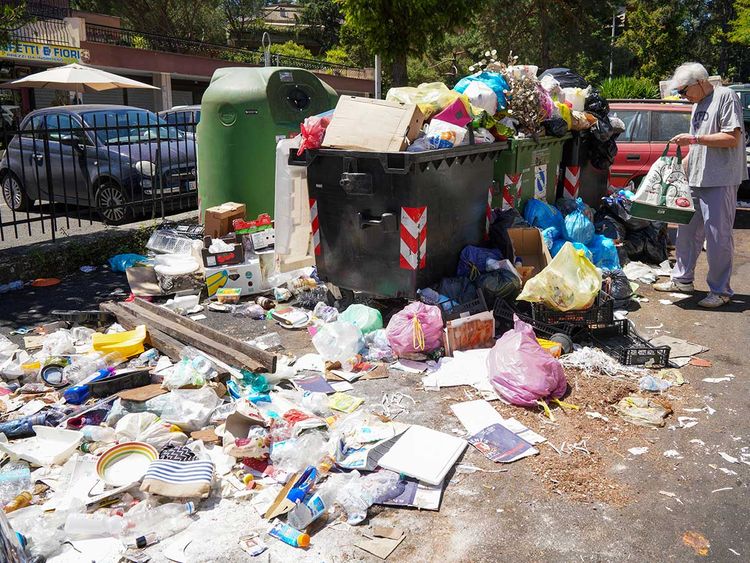
    Doctors in Rome are warning of possible health hazards caused by overflowing trash bins in the city’s streets, as the Italian capital struggles with a renewed garbage emergency aggravated by the summer heat. Trash disposal is a decades-long problem for the Eternal City. Rome was left with no major site to treat the 1.7 million metric tons of trash it produces every year since the Malagrotta landfill was closed in 2013. Successive mayors from different parties have all proved incapable of solving the city’s garbage woes, which have re-emerged dramatically since Mayor Virginia Raggi of the populist 5-Star Movement took the helm three years ago. Raggi’s administration is facing frustration and anger from both tourists and Romans over the piles of trash that threaten peoples’ health and tarnish the city’s image.

    “We’ve become the third, fourth world in my opinion,” said Rome resident Rossana Franza. “Mrs. Raggi should take a small stroll here once and a while. Because in her neighborhood, which I have been to, it is all in order.” Another woman living in Rome who only gave her name as Alessia told The Associated Press that a rat walked by her the other day and she cannot even go outside in the evenings because “there’s an incredible stink.” Animals like dogs, cats and rats or even birds like seagulls pose a serious health risks as they root around in garbage and spread bacterial infections through their waste or urine, Dr. Roberto Volpe from the National Research Council CNR told The Associated Press. “The main risk for us comes when we take out and throw the trash away,” Volpe warned. “There’s a risk of taking the contamination back home with us. That’s why it’s important to wash our hands properly afterward.”

    Volpe also discouraged angry citizens from setting garbage piles on fire, saying that could cause greater health risks through dioxin contamination, which can lead to cancer. Officials in Rome, who are often at odds over the possible solutions to the constant waste emergency, do agree on one thing: the garbage problem needs a long-term solution. “Let’s be honest … no waste plan can solve a problem aggravated by 60 years of mismanagement in one year,” said Marco Cacciatore, president of the local commission for environmental and city politics in Rome. “Let’s tell the truth to citizens: We are human. This difficult infrastructural situation cannot be resolved in the short term.”

    source

  • Dominican Republic tourism has dropped more than 74%

    Dominican Republic tourism has dropped more than 74%

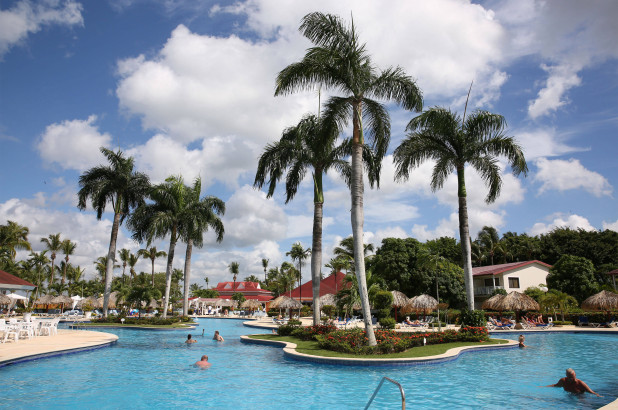
    Tourism to the Dominican Republic has taken a massive hit as the embattled Caribbean nation grapples with an onslaught of reports revealing American tourists are dying and falling sick there in droves.

    Trips booked to the island dropped by 74.3% for the months of July and August compared to the same period last year, according to a study from ForwardKeys, which analyzes more than 17 million daily bookings.

    The number of trips canceled to the country also increased by 51.2% between June 1 and June 19.

    The cancellations spiked by 70% on June 10, the day that 53-year-old Leyla Cox died at a Punta Cana resort. The Staten Island mom’s family was told she died of a heart attack during a birthday trip to the island.

    “My deepest sympathies go out to the families of the American tourists who have passed away,” said Olivier Ponti, VP insights of ForwardKeys. “Their recent and tragic deaths appear to have had a dramatic impact on travel to the Dominican Republic. Our analysis of leisure travel shows a striking correlation.”

    source

  • Hundreds gather in Victoria for largest-ever Indigenous languages conference

    Hundreds gather in Victoria for largest-ever Indigenous languages conference

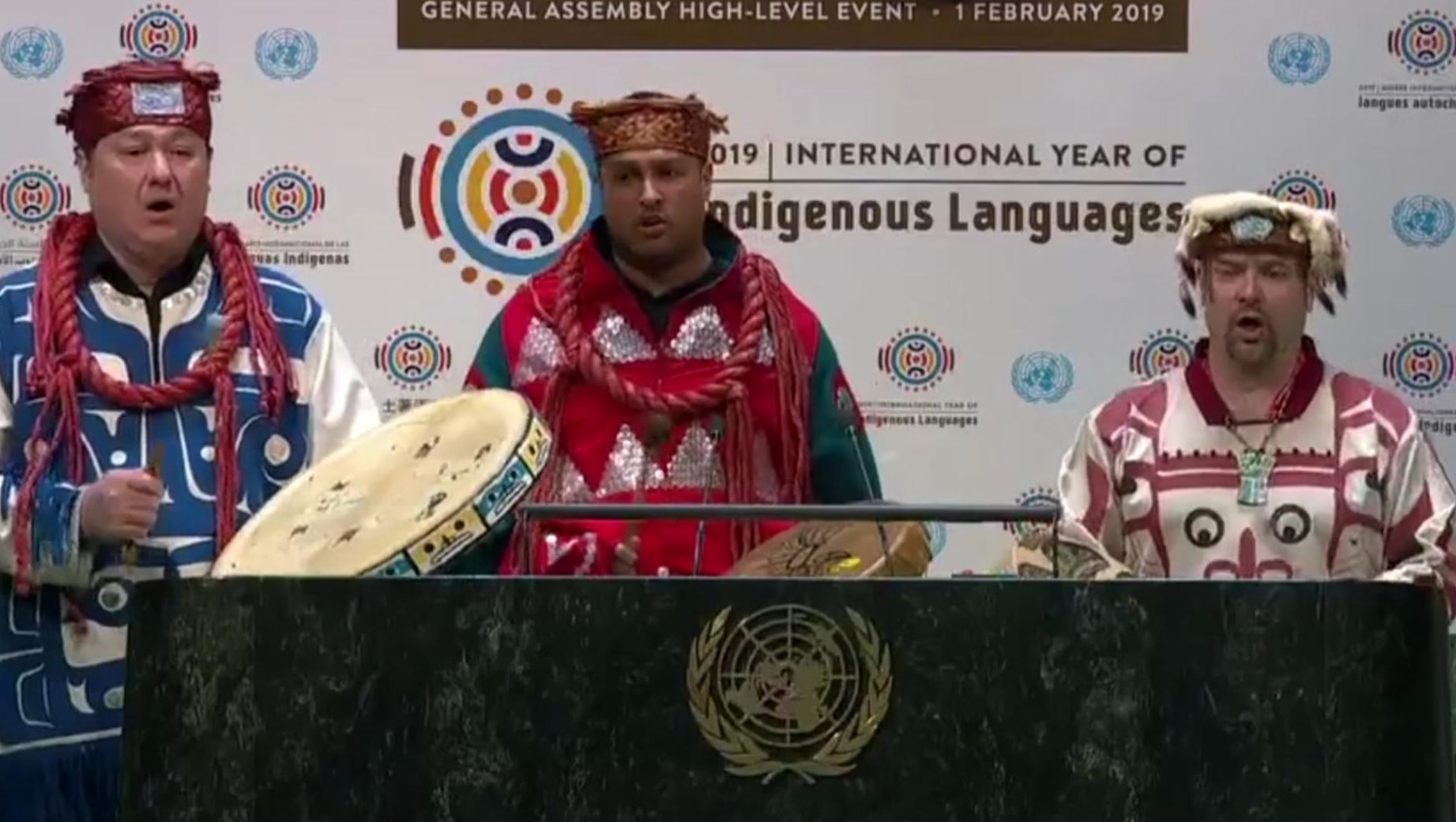
    WATCH: It’s being called the biggest event of its kind. Hundreds gathered Tuesday for the international conference on Indigenous languages in Victoria. 


    Hundreds of delegates from more than 20 countries gathered in Victoria Tuesday for the largest-ever Indigenous languages conference.

    Among those present were people with knowledge of 33 of B.C.’s Indigenous languages.

    According to the First Peoples’ Cultural Council, three per cent of First Nations people in B.C. consider themselves fluent in their ancestral language.

    The conference is taking place during a special year. Earlier this year, the United Nations declared 2019 the year of Indigenous languages.

    Earlier this month, the National Inquiry into Missing and Murdered Indigenous Women and Girls released its final report. One of the calls for justice was for Indigenous languages to become officials languages of Canada.

    “They are the languages that come from this land,” said Tracey Herbert, CEO of First Peoples’ Cultural Council. “They originate from this land and they’ve been here for 10,000 years and there’s a lot of history and heritage that are connected to the languages that come from this land.”

    Giselle Marie Martin, who has been learning Tla-o-qui-aht for about ten years, was one of the attendees.

    “It’s something we have to carry, it’s a lot of work,” she said. “But that’s the same as our territory. We don’t just land in the wilderness and it’s a playground. It’s our home. It’s our spiritual place and we have to take care of it the same way as we have to take care of our languages.”

    Eleanor Nooski, a Dakelh learner, says a gap in Dakelh knowledge has been the result of colonization and residential schools.

    She aims to become a fluent speaker within five years.

    “It’s a beautiful language and all our language is land-based,” she said. “Everything is connected to the land, so if we preserve our language, it’ll protect our land.”

    The post Hundreds gather in Victoria for largest-ever Indigenous languages conference appeared first on CHEK.

    This content was originally published here.

  • The golden asteroid that could make everyone on Earth a billionaire

    The golden asteroid that could make everyone on Earth a billionaire

    Whether it was the Big Bang, Midas or God himself, we don’t really need to unlock the mystery of the origins of gold when we’ve already identified an asteroid worth $700 quintillion in precious heavy metals.

    If anything launches this metals mining space race, it will be this asteroid–Psyche 16, taking up residence between Mars and Jupiter and carrying around enough heavy metals to net every single person on the planet close to a trillion dollars.

    The massive quantities of gold, iron and nickel contained in this asteroid are mind-blowing. The discovery has been made. Now, it’s a question of proving it up.

    NASA plans to do just that, beginning in 2022.

    Of course, says veteran miner Scott Moore, CEO of EuroSun Mining  “The ‘Titans of Gold’ now control hundreds of the best-producing properties around the world, but the 4-5 million ounces of gold they bring to the market every year pales in comparison to the conquests available in space.”

    In the decades to come, if you want to be a gold titan, you’ll have to get your feet off the ground. The real titans will be far from Earth.

    Moore should know: He heads up a junior mining company that is seeking a seat at the titan table with the biggest in-development gold mine in Europe.

    The 21st-Century Gold Rush

    Can we actually extract this space gold? That is the quintillion-dollar question, certainly.

    Speaking to Outerplaces, Professor John Zarnecki, president of the Royal Astronomical Society, estimates that it would take around 25 years to get ‘proof of concept’, and 50 years to start commercial production.

    Of course, it all depends on two key things: Economic feasibility and our advancement of space technology.

    And then, we’re not alone, either. There are other world powers who would like to get their hands on that asteroid, as well. China definitively plans to dominate this race.

    Mitch Hunter-Scullion, founder of the UK-based Asteroid Mining Company, tells the BBC that this is definitively the next industry “boom”.

    source