Category: World News

  • Migrants are finding living in Mexico hard work, and would rather go home.

    Migrants are finding living in Mexico hard work, and would rather go home.


    Yes, no one in Mexico can help them and they no longer have hand outs to keep them going.  Mexicao is expecting these people to take care of themselves.

    A report from Nuevo Laredo, Mexico, shows that many Central Americans who arrived at the U.S.-Mexico border seeking asylum are giving up and going back to their home countries.

    A reporter from the Texas Tribune asked how many of the Central American migrants at the migrant processing facility in Mexico were giving up on their asylum applications – nearly all of them indicated they were throwing in the towel.

    The Tribune attributed the reversals from migrants to the policy of the Trump administration to make asylum-seekers stay in Mexico while their application was being processed.

    One migrant told the Tribune that conditions in Mexico were actually more dangerous than those he left in Honduras because he didn’t know anyone in Mexico who would help him.

    “We’re afraid and we want to go home, even though we’re scared to return to our country,” said Cristian Urquiza. “If Honduras is dangerous, Mexico is worse. It’s more dangerous.”

    But not all were giving up.

    Those escaping the turmoil in Venezuela and Cuba were among the migrants who were not giving up.

    “Many of us have lost everything,” said Cuban migrant Geovanys Garcia.

    “If we returned to Cuba, we could run into trouble. Lose everything. We could end up in prison. We could get fined. Our only option is to stay and not to go back,” he explained.

    “If we left for Cuba, how could we ever get back here?” Garcia asked.

    On Friday, the president announced that he had reached an agreement with the government of Guatemala to help keep asylum-seekers in that country instead of taking the dangerous trek through Mexico towards the U.S. border.

    This content was originally published here.
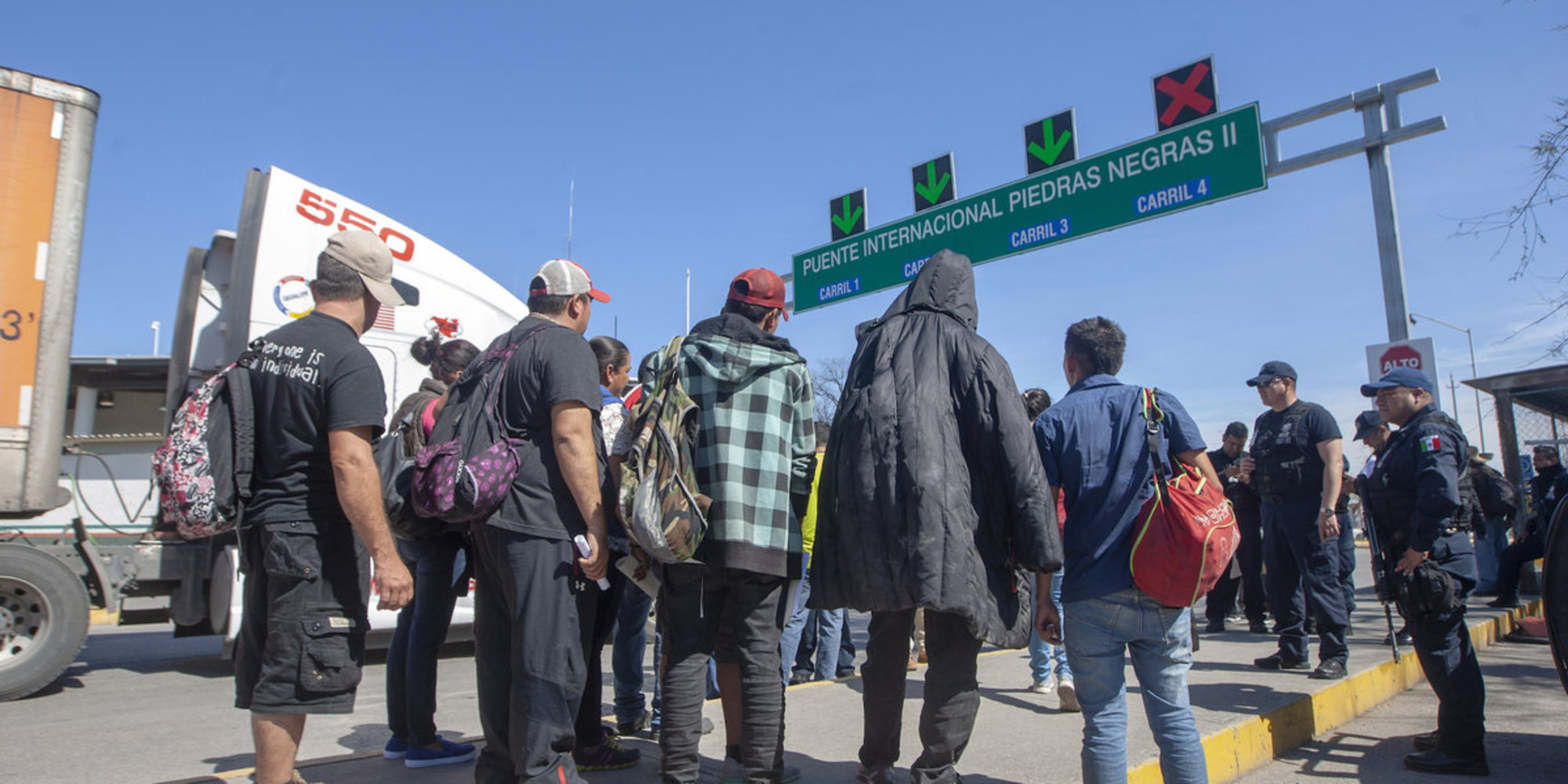
  • Understanding the psychology of corruption in South Afr…

    Understanding the psychology of corruption in South Afr…

    Beating corruption requires taking seriously the psychological legacies of apartheid and dismantling the socio-economic ones, says the writer.

    The idea that corrupt public servants are morally deficient obscures the fact that morality is frequently invoked to legitimise corruption itself. South African public servants usually accept that their corrupt acts are illegal, but stress that they are also moral; performed in the name of some social good.

    Our leaders are corrupt. They have looted the state with remarkable determination, and we talk about it all the time. We can’t get enough of the “who”, the “how” and the “what” of corruption, but what we tend to avoid is the “why”.

    Perhaps we are afraid of what we might find: is understanding corruption the same as excusing it? Could we, as a society or subgroup, be implicated in its foundations? But asking why is in our collective interest because until we learn where corruption comes from, we will struggle to stem it.

    Before you continue, abandon any preconceptions such as “what do you mean why? Jacob Zuma is simply a bad, corrupt person”, and embrace the daunting reality that life is far greyer than that. This article explores the psychological conditions that have enabled corruption, with such systemic form and shameless character, in South Africa and the post-colonial world.

    1. Morality is subjective and subjective morality can enable corruption

    The idea that corrupt public servants are morally deficient obscures the fact that morality is frequently invoked to legitimise corruption itself. Research conducted by the Public Affairs Research Institute has found that South African public servants usually accept that their corrupt acts are illegal, but stress that they are also moral; performed in the name of some social good.

    Radical economic transformation is a social good, necessary to overcome legacies of apartheid and the injustices of South African society. It is a social good that the ANC government displays proudly in its mandate cabinet.

    Insofar as corrupt dealings (patronage networks, embezzlement, cadre deployment) redistribute resources to the previously disadvantaged, they can be justified, to a certain extent, in transformative terms. And insofar as they are carried out by members of the ANC – South Africa’s liberation party – they gain a further layer of subjective moral legitimacy.

    Culture is not a reasonable explanation for corruption, except perhaps in the discrepancy between individualism and collectivism.

    In collective cultures, obligation and loyalty to in-group members can become a more important moral standard to observe than social justice. Chinua Achebe makes this argument in narrative form in No Longer at Ease, that public servants are drawn into corrupt practices from their “unenviable position on the interface of two contradictory worlds”: a governmental system that calls on individuals to pursue their wealth according to anonymous rules and regulations and a system of patronage that binds its members to obligations and duties on the basis of family, kin or friendship.

    Of course, the stakes are higher when a person’s family are impoverished, and one cannot help but wonder whether individualist cultures are only that way because there is enough to go around.

    2. The fear of imminent dispossession can enable corruption

    With the dawn of democracy, Nelson Mandela cautioned against the abuse of public office in “a desperate desire to accumulate wealth in the shortest time possible” (Report by Nelson Mandela to the 50th National Conference of the African National Congress, 16 December 1997.)

    In navigation of the harsh realities of poverty and unemployment, low-level officials attach themselves to patronage networks to access resources and opportunities. While high-level officials navigate “status strain”: an unstable politico-economic environment makes property rights vulnerable and public tenure transient (see Jacob Zuma’s 2017 Cabinet reshuffle). Resulting insecurity lures officials into illicit rent-seeking behaviours that could help them to preserve their social status even after losing their jobs (Lipset and Raab, 1970; Shleifer and Vishny, 1993; Hoon 2009.)

    This is exacerbated if a person is insecure in their skills or deservingness, or is aware that their position is dependent on the fleeting favour of higher-ranked officials.

    The “status strain” dynamic is difficult to escape in a profoundly unequal context, where the dichotomy between prosperity and poverty is so stark.

    3. Inflated fantasies and narcissistic defences can enable corruption

    Frantz Fanon observed the legitimate aspiration of the formerly colonised class to artificially high standards of living because it “identifies itself with the Western bourgeoisie from whom it has learnt its lessons”. Such standards are unrealistic without the historical assets of their coloniser counterparts and with the large extended families that they must often support. Thus, the new elite comes to rely on corruption and patronage.

    Sigmund Freud’s concept of wish fulfilment explains that during their formative years, particularly from a place of neglect or deprivation, infants create fantasies to maintain their psychological survival. In South Africa, these fantasies (aspirations of wealth and its apparent association with freedom and prosperity) formed in the context of settler colonialism. Corruption can then be understood as the result of attempts to fulfil an inflated “wish”, developed from a place of profound inequality, experienced through the lens of a child.

    The seeds of corruption can be sown during childhood, also through the development of narcissistic defences: when a baby’s physical or emotional needs are repeatedly neglected, it can learn to suppress its innate need to connect with the outside world. In adulthood, this expresses as a person viewing themselves as the primary being of importance and the world as existing to service their needs. Narcissism is often coupled with the development of “charm”, ensuring that the world orbits the narcissist in the way he/she wants to be orbited, without the need to make an emotional connection.

    In a context of poverty, there may be a higher possibility that a baby will suffer deprivation and develop narcissistic tendencies. Bolstered by legitimate grievances, this can enable corruption.

    4. The fact that everyone else is doing it can enable corruption

    Corruption becomes systemic through group mentality, first theorised by 19th-century French social psychologists Tarde and Le Bon, and extended by Sigmund Freud. Group mentality describes people’s tendency to conform to group norms against their better judgment. The mindset that informs the “tragedy of the commons” applies — “everyone is doing it anyway, so if I don’t I’ll only be missing out”. People are also their worst and most risk-taking selves in groups because of groups’ capacity to diffuse responsibility. (Tragedy of the commons: A situation in a shared-resource system where individual users acting independently according to their own self-interest behave contrary to the common good of all users by depleting or spoiling that resource through their collective action.)

    Ultimately, in South Africa’s context of rampant corruption and impunity, public officials are more likely to join in the great procession of corruption.

    These explanations are by no means exhaustive, but they do contain a common thread: the psychology of corruption can often be boiled down to historical oppression, poverty and inequality — in which case corruption requires solutions beyond top-down punishment and structural safeguards. It requires taking seriously the psychological legacies of apartheid and dismantling the socio-economic ones, in which we all have a stake and responsibility. DM


    This content was originally published here.

  • Who Is Boris Johnson?

    Who Is Boris Johnson?

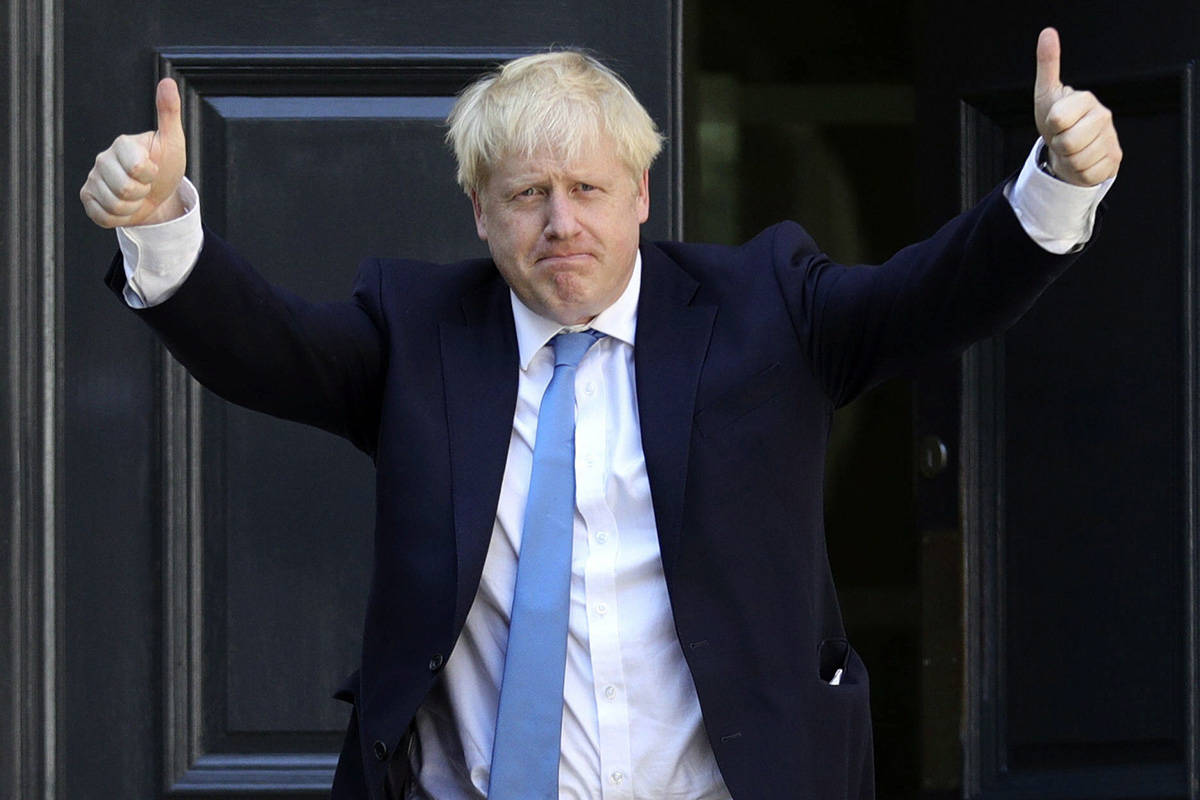
    Britain has a new Prime Minister. Britain’s Conservative Party has chosen Boris Johnson.  He’s a fan of America and has defended President Trump at times. He’s also vowed to make Brexit happen in three months, but his first challenge will be the escalating naval crisis with Iran.  Boris Johnson arrives at number 10 Downing Street at a challenging time for any prime minister, with fears that war could break out with Iran.   Iran’s Revolutionary Guards seized a British-flagged oil tanker in the Strait of Hormuz last Friday in revenge for the British seizure of an Iranian tanker off Gibraltar earlier this month.  But Johnson has already signaled he’s no hawk on Iran. During last week’s TV debates, Johnson said he would not support US military action against Iran.

    And in 2018, when he was foreign minister, Johnson traveled to Washington to try to persuade President Trump to stay in the Iran nuclear deal, saying the British government remained committed to the deal.  As for his pledge to leave the European Union by October 31 no matter what, Johnson inherits the same divided Conservative Party and Parliament that helped stymie and finally bring down Prime Minister Theresa May.  Johnson may also be handed a ‘no-confidence vote’ and early election within weeks. But he does have a friend across the Atlantic.

    President Trump said, “I like him. I like Boris Johnson. I spoke to him yesterday. I think he’s going to do a great job. I think we’re going to have a great relationship.” And that irks some in the British establishment. A BBC interviewer tried to get Johnson to say something bad about Trump. When he wouldn’t, it prompted this exchange: Andrew Neil with the BBC said, “I mean people worry, will you be as craven if you were Prime Minister?” Johnson asked, “I’ve been, towards the United States of America, craven?”  “Towards anybody who’s powerful in the world?” Neil said. “Don’t be ridiculous. If I may say so. When it comes to sticking up for UK interests whether it’s over climate change, over disputes with Iran, over the Iran nuclear deal we have been very, very forthright with the United States of America, and I will continue to be forthright,” Johnson added.

    In 2015, Johnson accused Trump of having “stupefying ignorance” and said Trump was “unfit to hold the office of president of the United States.” Johnson, a former mayor of London who is known for his occasionally wacky ways, has adopted a populist style that has served him well.  But now as prime minister, he must navigate through an international crisis, as possible war clouds loom.

    view

  • Iran stokes Gulf tensions by seizing two British-linked oil tankers

    Iran stokes Gulf tensions by seizing two British-linked oil tankers

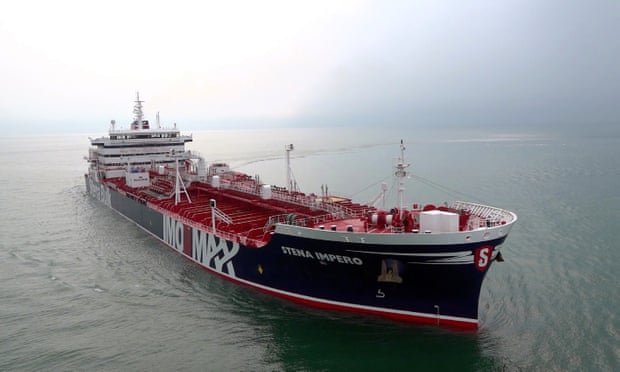
    Iran seized two oil tankers – one registered in the UK, the other in Liberia – in the strait of Hormuz on Friday, marking a dramatic escalation in the worsening standoff in the Gulf. Iran’s Revolutionary Guards claimed to have taken the British-flagged Stena Impero into port with its 23-strong crew, and Iranian officials claimed it had infringed maritime regulations. On Saturday, the semi-official Iranian news agency, Fars, said the ship had been taken to Bandar Abbas port and that the crew remained on the vessel. Meanwhile, Iran’s state-run news agency, IRNA, reported that the tanker was seized due to a collision with an Iranian fishing boat. It said the fishing boat informed Iran’s Ports and Maritime Organisation, which notified the Revolutionary Guards.

    The Stena Impero’s owners however, said the ship had been “approached by unidentified small crafts and a helicopter during transit of the strait of Hormuz while the vessel was in international waters”. A second tanker, the Mesdar, which is Liberian-flagged but British operated, also made a sudden diversion from its course towards the Saudi port of Ras Tanura on Friday, and tracking data showed it moving northwards towards the Iranian coast before apparently turning off its tracking signal. Less than two hours later, the Mesdar’s tracking signal was turned back on. Fars, the semi-official Iranian news agency, reported that it was briefly detained in the strait of Hormuz and given a notice to comply with environmental regulations before being allowed to continue on its way.

    The Mesdar’s Glasgow-based operator, Norbulk Shipping UK, confirmed that the vessel had been boarded by armed guards but had then been allowed to continue its voyage. “All crew are safe and well,” it said. Stena Bulk and Northern Marine Management confirmed in a statement on Friday that the ship remained uncontactable. Stena Impero was in “full compliance with all navigation and international regulations” when it was intercepted, the company said. Stena Bulk chief executive Erik Hanell said: “There are 23 seafarers onboard of Indian, Russian, Latvian and Filipino nationality. There have been no reported injuries and the safety and welfare of our crew remains our primary focus.” Jeremy Hunt, the UK foreign secretary, told Sky News: “We are absolutely clear that, if this situation is not resolved quickly, there will be serious consequences.”

    But he added: “We are not looking at military options, we are looking at a diplomatic way to resolve the situation but we are very clear that it must be resolved.” He said that Stena Impero had been surrounded by four Iranian vessels with a helicopter hovering overhead, while 10 Iranian speedboats had converged on the Mesdar. “These seizures are unacceptable. It is essential that freedom of navigation is maintained and that all ships can move safely and freely in the region,” Hunt said. Late on Friday night, the British government advised UK ships to stay out of the area “for an interim period”. “We remain deeply concerned about Iran’s unacceptable actions which represent a clear challenge to international freedom of navigation,” a government statement said following a meeting of ministers to discuss the incident in the strait of Hormuz. As the foreign secretary has said, our response will be considered and robust and there will be serious consequences if the situation is not resolved. “We remain in close contact with our international partners and there will be further meetings over the weekend.”

    Donald Trump, the US president, said on Friday night that the US would talk to Britain about the incidents. The Revolutionary Guards said they had seized the Stena Impero, citing international maritime law for their actions. Iran Front Page quoted an unnamed military source as saying the tanker had been “crossing a route other than the shipping lane in the strait of Hormuz, had switched off its transponders and did not pay any attention to Iran’s warnings when it was seized by the [Revolutionary Guards] forces”. The seizure of the tankers came hours after authorities in Gibraltar announced that they were extending their custody of the Iranian tanker, seized by Royal Marines on 4 July, on suspicion of shipping oil to Syria, in violation of an EU embargo. Tehran has denounced the detention of the Grace 1 as piracy carried out on orders from Washington.

    Iranian politicians have been calling for reprisals and the country’s forces, led by the Revolutionary Guards, are being increasingly aggressive in disrupting shipping lanes in the Gulf. The Stena Impero, a 30,000-tonne British-flagged and Swedish-owned ship, was heading for Saudi Arabia when it abruptly left international sea lanes, and tracking data showed it heading north towards the Iranian island of Qeshm, where the Iran’s Revolutionary Guards have a substantial base.

    Iran’s Revolutionary Guards previously attempted to capture a British tanker six days after the Grace 1 was seized. On 10 July, a British warship, the HMS Montrose, intervened to drive off three Iranian military vessels that were attempting to divert a UK tanker, the British Heritage, towards Iranian territory.

    The incidents come amid a battle of nerves along the oil export routes of the Gulf, which has involved close encounters between Iranian, UK and US military forces. Earlier on Friday, Tehran denied Trump’s claim that US forces had downed a Iranian drone over the Gulf. Iran’s top military spokesman said all drones had returned safely to base, but Trump was adamant. “No doubt about it … we shot it down,” the US president said. Trump said on Thursday that the USS Boxer took defensive action after the unmanned vehicle came within 1,000 metres of the warship and ignored multiple calls to stand down. The prospect of negotiations that might defuse the standoff appeared more distant than ever on Friday as a senior US official dismissed a nuclear offer proposed the previous day by Iran’s foreign minister, Javad Zarif, during a visit to New York. The official suggested the offer was not serious and called for “an actual decision-maker” to enter talks to “end Iran’s malign nuclear ambitions”.

    Trump has vacillated on what he wants Iran to do in return for a lifting of the oil and banking embargo that the US has imposed since walking out of an international nuclear deal with Tehran (the Joint Comprehensive Plan of Action, or JCPOA) in May last year. The sharp response to Zarif’s offer suggests that administration hardliners, led by the national security adviser, John Bolton, are currently running Iran policy.

    view

  • Large group of migrants storm border, assault CBP agents leaving several reportedly injured

    Large group of migrants storm border, assault CBP agents leaving several reportedly injured

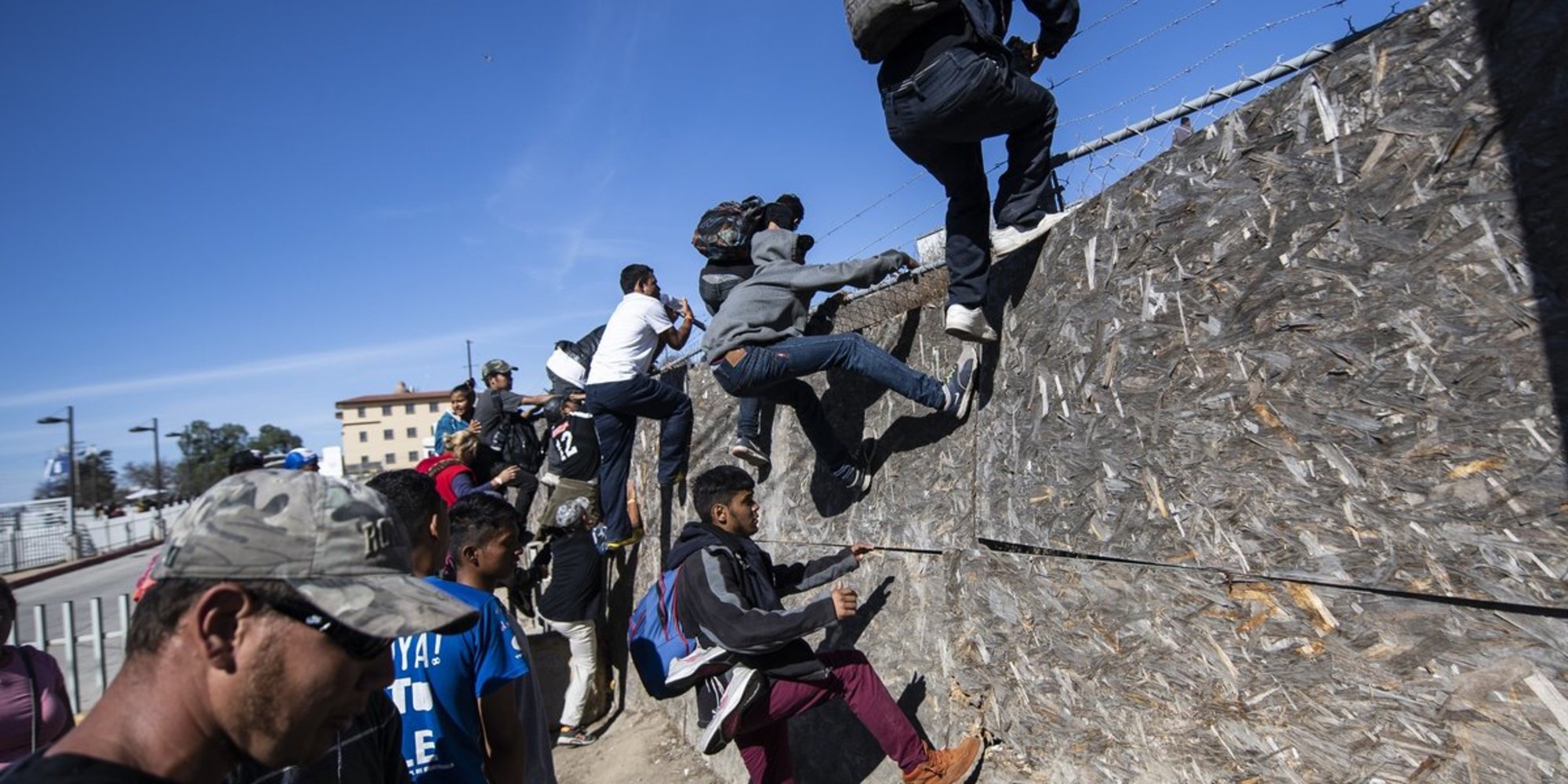
    One of the busiest ports of entry on the southern United States border had to be temporarily closed on Friday after a large group of immigrants stormed the border and confronted Border Patrol agents. Nearly 50 migrants attempted to illegally enter the U.S. Friday morning by storming the border in “waves,” Customs and Border Protection said in a statement. As a result, the The Pharr International Bridge was temporarily closed.

    “At about 4 a.m. [Friday], a group of 47 undocumented individuals attempted to illegally enter the United States in three waves via the Pharr International Bridge. Ignoring commands to stop, the group suddenly rushed the temporary barricades, bent metal poles and disabled the concertina wire affixed to the barrier,” CBP said. The migrants ignored commands to “stop,” bypassed blockade structures, and confronted immigration agents. Several male migrants reportedly assaulted officers, and even attempted to grab their “protective devices,” according to KGBT-TV.

    view

  • Millions face hardship as Zimbabwe comes close to ‘meltdown’

    Millions face hardship as Zimbabwe comes close to ‘meltdown’

    Millions of people in Zimbabwe face hardship, hunger and chaos as the economy comes close to “meltdown” and drought worsens.

    More than 18 months after the military coup that removed Robert Mugabe from power, the new government is struggling to overcome the legacy of the dictator’s 30 years of repressive rule and the consequences of its own failure to undertake meaningful political reform.

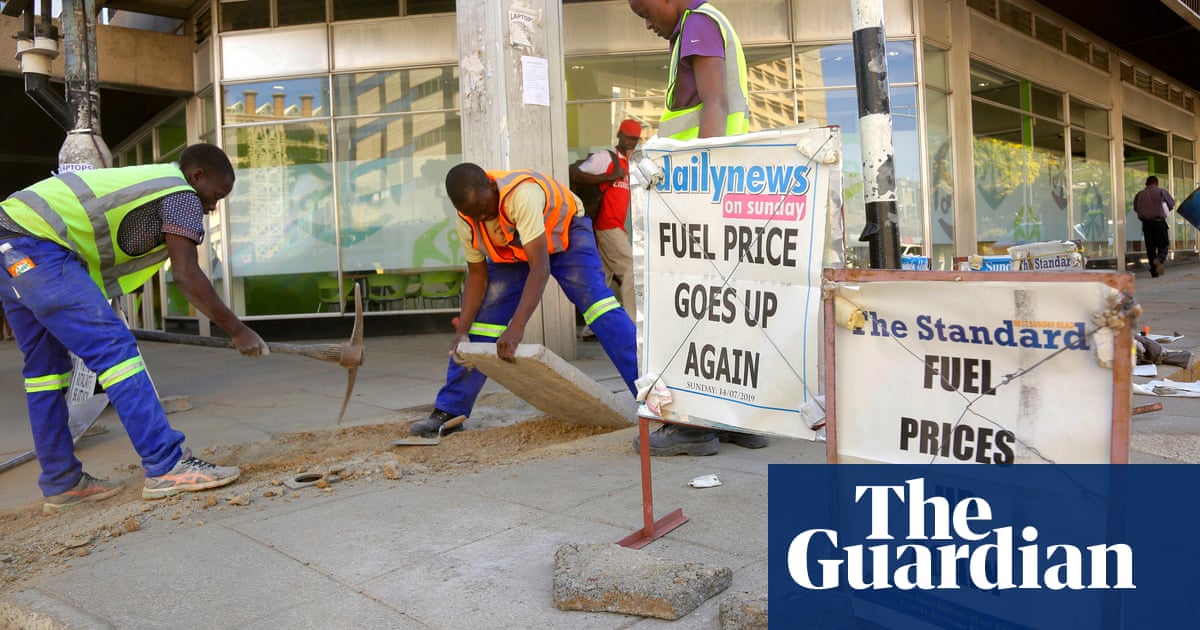
    Official figures published on Monday showed annual inflation had almost doubled to 175% in June, adding to the pressure on a population already struggling with shortages of basic foodstuffs, fuel and medicine.

    The rising prices reminded many of the economic collapse caused by Mugabe’s policies a decade ago, when hyperinflation emptied shelves of basic foodstuffs and led the southern African country to abandon its currency.

    Cleopas Murambwi, 34, a day labourer from the capital, Harare, said the economic crisis had turned him into a “pauper”.

    “Just a year ago my salary could sustain my family. Now we just live each day as it comes … It’s like we are sliding back to 2008. The signs are clear and it’s not looking good,” said Murambwi.

    Elizabeth Makazhu, who sells vegetables from a stall and earns less than $8 a day, said she was often unable to afford enough to eat.

    “Living in the city is now expensive. I hope I can get something to take home to my children. I don’t want them to suffer,” Makazhu said.

    A severe drought has caused further hardship and rolling power cuts as water levels in dams have dropped.

    The energy minister, Fortune Chasi, said on Monday that the electricity situation was a very, very big problem”.

    The government has repeatedly increased the price of fuel as it tries to end subsidies and is expected to increase electricity prices in coming weeks.

    Cecilia Alexander, chair of the Apex Council, a grouping of government workers’ unions, said the government’s austerity plans had reduced even those with jobs to poverty.

    “As workers, we refuse to be sacrificed. We … will bring the entire civil service out to protest,” Alexander said.

    Protests and a strike in January led to an army crackdown which left more than a dozen people dead and hundreds injured. Authorities were forced to resort to mass trials of detained suspects.

    Analysts say the government is making strenuous efforts to stabilise the economy, running a budget surplus for the first time in years and refraining from printing money, a key cause of the hyperinflation of 2008.

    Last month, the central bank raised interest rates to 50% to protect the local currency and has made transactions using the US dollar illegal.

    But many doubt that Zimbabwe’s new rulers can deliver economic change without wide-ranging political reform. Despite the ousting of Mugabe, the ruling Zanu-PF party remains in control and the army has deep financial interests.

    “The trouble with Zimbabwe is a predatory elite that prioritises personal accumulation over public interest and service. Comprised of top ruling party officials, their relatives and friends … It is accountable to no one, relying on coercion to protect its interests,” wrote Siphosami Malunga, director of the Open Society Initiative for Southern Africa, last month. “This economic crisis is politically manufactured.”

    Emmerson Mnangagwa, a former vice-president and right-hand man of Mugabe, led Zanu-PF to victory in elections last year. The opposition Movement for Democratic Change contested the result.

    Mnangagwa has been either unable or unwilling to push through measures that might have convinced investors and multilateral institutions to provide the funds to resuscitate the economy.

    About 7 million people are threatened with hunger.

    “We are hard pressed. When there is no money, it becomes difficult to teach and this affects the learners. We are incapacitated. How can someone work without food on the table?” said Prayer Maravamwidze, a 30-year-old teacher from Chipinge.

    Some have resorted to selling livestock and land, spending savings, withdrawing children from school and begging, according to a recent report compiled jointly by the Zimbabwe government, UN agencies and aid organisations. Many work two jobs to make ends meet.

    Loice Muranganwa, 36, a mother of two from Budiriro, a poor neighbourhood on the outskirts of Harare, earns $57 a month as a nurse.

    “I now survive by selling Tupperware. It’s better than waiting for that meagre salary. The government say there is no money,” Muranganwa said.

    This content was originally published here.
  • PH borrowings to hit record-high P1.4 trillion in 2020

    PH borrowings to hit record-high P1.4 trillion in 2020

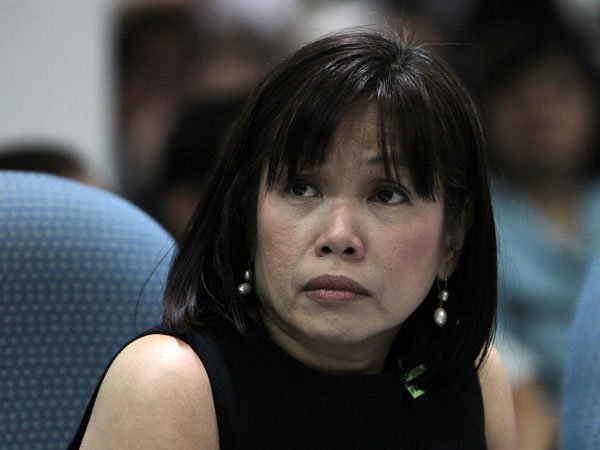
    National Treasurer Rosalia de Leon. (INQUIRER FILE PHOTO)

    MANILA, Philippines–The Philippines’ gross borrowings will peak to a record-high P1.4 trillion next year to finance the government’s programmed wider budget-deficit cap equivalent to 3.2 percent of gross domestic product (GDP) as it jacks up spending on public goods and services while also paying more amortization for outstanding debt.

    During the Development Budget Coordination Committee (DBCC) meeting, the interagency body kept the borrowing program for 2019 at P1.18 trillion, of which the bulk or 73 percent will be sourced locally mainly from the sale of treasury bills and bonds amid ample domestic liquidity, National Treasurer Rosalia V. de Leon said.

    The bias for domestic borrowings would minimize foreign exchange risks, economic managers had explained.

    Foreign borrowings, meanwhile, will come from offshore bond issuances and official development assistance (ODA) loans from bilateral partners and multilateral lenders.

    FEATURED STORIES

    As the DBCC also approved a wider budget-deficit ceiling equivalent to 3.2 percent of GDP for the rest of the Duterte administration’s remaining years in office until 2022, de Leon said total gross borrowings next year will jump to P1.4 trillion, with a borrowing mix of 75-percent domestic, 25-percent external.

    Even as the country’s borrowings further increased, the debt-to-gross domestic product (GDP) ratio will be steady at 41.4 percent this year and next year, de Leon said.

    In 2018, the debt-to-GDP ratio stood at 41.9 percent, and the government wanted to bring the share of debt to the economy to 38.6 percent in 2022 by sustaining strong economic growth.

    MORE STORIES

    Economic managers had said that while the government’s nominal debt continued to rise—the outstanding amount hit a new high of P7.916 trillion in May, the debt-to-GDP ratio was a better measure as a figure below 60 percent meant the economy remained in good shape and can pay its obligations.

    De Leon later told reporters that the record-high borrowing program for next year will only be a “blip” as it would go down to about P1.2-1.3 trillion after 2020.

    “There’s just a slight spike [in 2020]. In 2018, given the high [interest] rates, we have not really been accepting [bids] in the [Bureau of the Treasury’s] auctions… The amortization [payments] for 2020 is quite big because before we were doing [debt] exchanges, so given high rates we’re not able to do some of the exchanges. So if we do some now that rates are coming down, then we will be able to manage more,” de Leon explained during an ambush interview.

    Previously, the budget-deficit program for 2020-2022 was a lower 3 percent of GDP, but Finance Assistant Secretary Maria Teresa S. Habitan explained that they had to adjust the cap given adjustments in revenue targets and lower estimates of nominal GDP in the coming years.

    “There’s also some pressures for the infrastructure programs to come on-stream by 2022 so we needed enough room to expand and hence the decision of the DBCC to increase the [budget-deficit] ratio to GDP,” Habitan added.

    “We would want to hit our targets in terms of infrastructure spending as a percentage of GDP so it could really bolster in terms of multiplier effect to our growth,” de Leon, for her part, said.

    For 2020, the DBCC programmed a nominal budget deficit of P677.6 billion.

    As for 2019, the DBCC earlier already jacked up the budget-deficit ceiling to 3.2 percent of GDP, and Department of Budget and Management (DBM) Officer-in-Charge (OIC) Janet B. Abuel was optimistic that the government can achieve this goal through its spending catch-up plan.

    “For DPWH [the Department of Public Works and Highways], it is on track; for DOTr [the Department of Transportation], it needs catching up because of some requirements, especially the bigger projects like rails would require so much studies and paperworks. But they also have pending requests that were not captured because the evaluation that we did or the reports were as of June 30, so we are expecting them to have bigger or increase requests for funding by July onwards,” Abuel said.

    By yearend, the government had been programmed to post a P624.4-billion budget deficit as the P3.77-trillion expenditure program should outpace the targeted collections of P3.15 trillion in tax and non-tax revenues.

    But the latest Treasury data showed that as of May, the five-month budget deficit narrowed by 99.4 percent to only P809 million from P138.7 billion during the same period last year.

    The Treasury had mostly blamed the smaller end-May deficit to the delayed approval of the 2019 national budget.

    To recall, President Duterte signed this year’s P3.7-trillion budget only in mid-April as the two houses of Congress squabbled over “pork” funds, such that the government operated using reenacted 2018 appropriations during the first four months and underspent about P1 billion a day. /jpv

    Don’t miss out on the latest news and information.

    This content was originally published here.
  • 12th American To Die In Dominican Republic Went Unreported For Months

    12th American To Die In Dominican Republic Went Unreported For Months

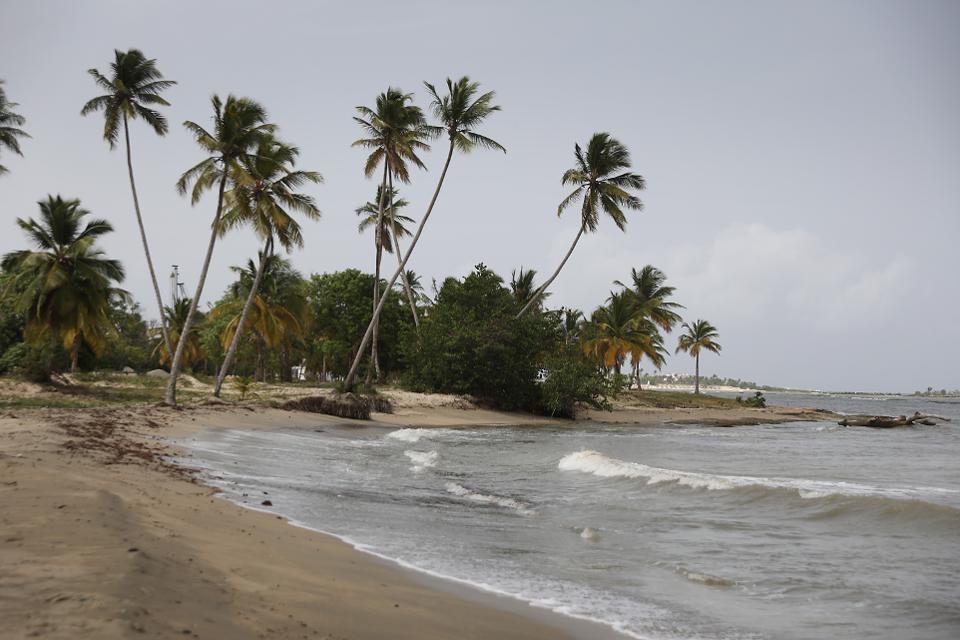
    Topline: Tracy Jerome Jester Jr. died in March while on vacation in the Dominican Republic, a death previously unreported despite nine mysterious American tourist deaths since April (and 11 in the past year) in the island nation.

    • The 31-year-old Georgia resident died of “respiratory illness,” following a day of sightseeing, according to his mother, Melody Moore. Jester Jr. was vacationing with his sister when he suddenly began to vomit and complained he couldn’t breathe, and she reported he was vomiting blood shortly before succumbing to his illness.
    • Moore confirmed Jester Jr. was diagnosed with lupus. No toxicology report was ordered as he died before other tourist deaths reported in the news media.
    • According to the U.S. State Department, there is no “uptick” in the number of American deaths in the Dominican Republic despite recent media attention. “We can confirm the death of a U.S. citizen in the Dominican Republic in March 2019. We offer our sincerest condolences to the family for their loss. Out of respect for the family during this difficult time, we do not have additional information to provide,” said a spokesperson in a statement.
    • “I would like to know the truth,” said Moore about her son’s death. According to ABC News, she reached out to the FBI for help but hasn’t yet met with the agency.
    • U.S. House representative and Dominican native Adriano Espaillat (D-New York), visited the island nation from July 1 through July 6 and met with officials and tourism executives to discuss the safety of American visitors. Espaillat made six recommendations as a result, including a call to increase standards for monitoring the quality of food and alcohol.

    Key background: The FBI conducted toxicology tests on three of the victims. Despite reports they would be released, they are not ready yet, or have not yet been made available. Similarities between some victims’ autopsy reports and symptoms prior to death raised questions about what’s actually happening in the Caribbean nation. Three victims reportedly had an alcoholic drink immediately prior to their deaths, prompting the Hard Rock Hotel & Casino in Punta Cana (where two of those victims died) to remove the liquor dispensers from their minibars. More suspicious incidents, like the woman violently beaten at a resort and a group of high schoolers falling violently ill, are also unexplained.

    Critical fact: The Dominican Republic is rated a two out of four on the U.S. State Department’s travel warning scale, last updated April 15. “Exercise increased caution due to crime. Violent crime, including armed robbery, homicide, and sexual assault is a concern throughout the Dominican Republic,” reads the advisory.

    view

  • Economists forecast Brazil’s worst recession since 1901

    Economists forecast Brazil’s worst recession since 1901

    LONDON — Brazil’s economy will shrink by nearly 3 percent in 2016, according to estimates published Monday in a weekly central bank survey of 100 of the country’s economic institutions.

    Gross domestic product in Latin America’s largest economy will contract by 2.95 percent in the thirteenth consecutive cut in the outlook for 2016.

    The predictions are more than previously expected by economists, as economic output and confidence continue to dwindle amid a prolonged political crisis.

    It is also now believed that the economy contracted by 3.71 percent in 2015, the year in which the country entered a technical recession — defined as two or more consecutive quarters of negative growth.

    If confirmed, the recession could be the worst Brazil has experienced since reliable records began in 1901 and the first time the country has seen back-to-back years in recession since 1930-31.

    Reacting to the news, the real was down 2.7 percent against the dollar just before 3 p.m. in Sao Paulo (GMT1700) on Monday. The country’s main Ibovespa index was also lower at around 2 percent.

    The real was the worst-performing currency in 2015 among major economies, losing almost one-third of its value against the greenback; the Ibovespa dropped 12 percent.

    A protracted political crisis has exacerbated the country’s economic crisis. Brazil is reeling from the biggest political corruption scandal in its history, centered on state-run oil giant Petrobras. Opposing political factions are attempting to impeach President Dilma Rousseff and overthrow Eduardo Cunha, the embattled speaker of the lower house of Congress.

    The government has also failed to force through Congress a raft of austerity measures — a move the markets say is required to address the country’s dismal economic outlook.

    The news comes after a second major credit rating agency in December downgraded Brazil to speculative grade — sure to worsen the country’s fortunes as some investors will be forced to withdraw assets as a result of the lower rating.

    It also follows a change at the top of Rousseff’s economic team, after former pro-austerity finance minister Joaquim Levy was replaced by Nelson Barbosa, seen as politically closer to the president.

    “The first challenge that Brazil must overcome before GDP will rise again, and inflation and interest rates can fall, is the political gridlock currently seen in Brasilia,” said Camila Abdelmalack, an economic analyst at CM Capital Markets in Sao Paulo.

    “We need to get past the proceedings against Rousseff and Cunha, one way or another, before any economic recovery can take place, to boost the credibility that we’ve lost,” she told Anadolu Agency, adding that the new finance minister, known for his anti-austerity views, was likely “not the solution Brazil needs”.

    With Congress in recess until February, proceedings against Rousseff and Cunha are likely to take several months to resolve. As such, Abdelmalack says economists have “minimal expectations” for 2016, and are instead “looking to 2017” as the year that might herald a recovery for the Brazilian economy.

    The annualized rate of inflation, currently estimated to be running at 10.72 percent, is predicted to fall to 6.87 percent — far closer to the government’s central target of 4.5 percent, which the central bank says it is aiming to achieve in 2017.

    Despite the forecast of lower inflation, Brazil’s benchmark Selic interest rate, already at 14.25 percent, is not likely to fall any time soon, with the central bank now expecting the rate to end 2016 even higher, at 15.25 percent.

    This content was originally published here.
  • Chinese economy can ‘endure’ trade war, says Beijing economist –
                Nikkei Asian Review

    Chinese economy can ‘endure’ trade war, says Beijing economist – Nikkei Asian Review

    BEIJING — Even before China became mired in a trade war with the U.S., there were already lingering concerns over the sustainability of its economic growth. Now, as relations remain tense between the two, a top economist says that the Chinese economy is strong enough to withstand this shock.

    “I don’t think that the Chinese economy can’t endure the pressure of the trade war,” said Zhou Qiren, a professor at the National School of Development at Peking University, who is widely regarded as a reformist economist.

    U.S. President Donald Trump has already imposed 25% punitive import tariffs on $250 billion worth of Chinese products, resulting in a significant decline in Chinese exports to the country.

    In an interview with Nikkei, Zhou said, “It is clear that the Chinese economy has been affected negatively [by the punitive tariffs.]” But he pointed out that one of the reasons the economy is suffering is because of its structure.

    Driven by its accession to the World Trade Organization in 2001, China’s economy soared over the next 10 years on the back of external demand, as its factories churned out cheap exports consumed by the world.

    But this model of growth has reached its limit, partly due to rising wages. As a result, President Xi Jinping’s government has been trying to transform the economy into one led by domestic demand and consumption.

    But Zhou said, “It can’t be said yet that the Chinese economy has transformed itself into [a] domestic demand-led growth [one] in the real sense of the term.” He said that the delay in structural transformation has exacerbated the impact of the trade war.

    In large part, the reformation of the Chinese economy has been stymied by overcapacity for which there isn’t enough local appetite. Zhou said, “There is this huge production capacity and domestic demand alone can’t digest it.”


    “[The Chinese economy] has no choice but to rely on a massive market like the U.S., and if market access is limited through additional tariffs and others, it affects [the Chinese economy] immediately,” he said.

    Nonetheless, Zhou said he believed that the Chinese economy could endure the pressure of the trade war because of its “resilience.”

    Zhou pointed to the fact that the Chinese economy had not yet reached full maturity, given as its growth over the last few decades was so rapid. For example, consumption still has room to grow.

    The Chinese government is also expanding infrastructure investment as part of measures to stimulate the economy.

    “Part of Yunnan is still poor and lacks transportation infrastructure,” said Zhou, who has just visited the southern Chinese province. “There are still many such backward areas in China. There is no comparison with Japan and Hong Kong. Infrastructure demand is huge,” he said.

    But Zhou stressed that infrastructure investment must not be increased blindly.

    “Even if investment in these poor areas is increased, there is the problem of not getting much return. [The Chinese government] should boost investment in developed areas like Shanghai and enhance the productivity of the whole nation,” he said.

    Although there had been concerns that higher infrastructure investment could lead to ballooning debt levels, Zhou said that assessing debt as a percentage of gross domestic product does not always paint an accurate picture.

    “What is important is whether investment heads to the right places, generating earnings properly,” he said. “In China, there still remains significant room for investment in fields such as transportation networks and human capital.”

    Zhou dismissed criticism that a debt reduction policy implemented by the Chinese government last year has led to an economic slowdown. Defending the policy, he said, “It is not realistic not to worry about such a ballooning of debts at all.”

    “What is important is balance. For example, is it necessary to further increase loans for real estate? As evidenced by Japan’s case, once the property market [bubble] bursts, its impact will be enormous,” he said.

    Zhou, who will turn 69 in August, graduated from Renmin University of China in the 1980s.

    After working at the Chinese Academy of Social Sciences, a government-linked think tank, he took on research roles at Oxford University, University of Chicago and elsewhere. He earned a doctorate in economics from California State University, Los Angeles.

    After returning to China, he joined the China Center for Economic Research at Peking University, now the National School of Development, which led a study into China’s transition to a market economy. He was the center’s director.

    He also served as a member of the monetary policy committee of the People’s Bank of China, the central bank, between 2010 and 2012.

    Batting off expectations for a decline in the value of the yuan, Zhou said, “China does not hope for the yuan’s fall. But as the U.S. levied unreasonable additional tariffs, the global flow of products and money has changed completely.”

    “Looking at [the situation] objectively, it is natural that the yuan faces downward pressure,” he said.

    He added, “China has racked up a huge trade surplus because the yuan exchange rate lacks flexibility. Over the long term, reforms are inevitable to enhance flexibility of the yuan exchange rate.”

    This content was originally published here.