Category: World News

  • Eternally stinky city? Rome garbage crisis sparks health fears

    Eternally stinky city? Rome garbage crisis sparks health fears

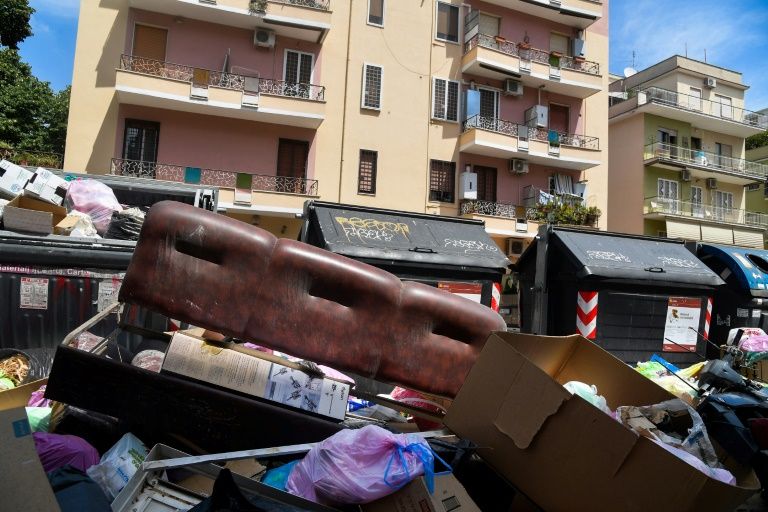
    Rome (AFP) – Landfills in flames and rats feasting on waste in the streets have sparked health fears in Rome, as doctors warn families to steer clear of disease-ridden curbside garbage and locals launch a disgusting dumpster contest online.

    Crowds of summer tourists are forced to navigate overflowing bins in the stifling heat, as the pungent perfume of neglected garbage draws scavenging animals and the threat of disease to the Eternal City and locals fume over the city’s refuse management.

    Rome’s chief physician Antonio Magi has issued a “hygiene alert”, telling AFP this could be upgraded to a health warning, with disease spread through the faeces of insects and animals banqueting on rotting waste.

    His warning prompted local prosecutors to open an investigation this week into the city’s refuse collection.

    In the meantime, furious Rome residents have launched a contest on Twitter to find the most fetid dustbins.

    Discarded pizza boxes or the remains of spaghetti lunches and fruit rinds draw opportunistic seagulls, rats and even wild boars to the streets of Rome, with wolves also spotted closer to the city’s outskirts than ever before.

    Adding to the indignation of Rome residents is the steep price they are paying for their garbage to rot in the streets.

    The city spent more than 597 euros ($670) per inhabitant on household waste treatment in 2017 — by far the highest in the country, ahead of Venice (353 euros) and Florence (266 euros), according to a report by the Openpolis Foundation.

    But the city lacks infrastructure: of its three main landfills, one has closed and the others were ravaged by fire in recent months.

    And two biological treatment sites have reduced their activities for maintenance work.

    – ‘Degradation and abandonment’ –

    Some residents make matters worse by simply dumping their old mattresses, fridges and sofas next to garbage bins.

    But local Salvatore Orlando, 50, told AFP the council was entirely to blame.

    “Of course it’s the mayor’s fault. You certainly can’t blame the citizens,” he said.

    “They produce waste, they have to throw it away, and the public services have to collect it. It’s simple. We pay taxes for it”.

    Rome’s mayor and the president of the Lazio region both assured Italy’s environment minister Tuesday that the crisis would be resolved “within 15 days”.

    But to do so, more of the city’s 5,000 tons of daily waste will have to be sent for incineration elsewhere.

    “Everyone complains about waste but no one wants an incinerator. Instead, we take the waste abroad, to Austria, to Germany!”, another aggrieved resident said, declining to give his name.

    Even Pope Francis has commented on the decline, lamenting in June Rome’s “degradation and abandonment”.

    Italy’s Interior Minister Matteo Salvini, head of the far-right League, has jumped on the chance to use the crisis as a political weapon against mayor Virginia Raggi, who hails from the anti-establishment Five Star Movement (M5S).

    The stench and sticky pavements have given him ammunition ahead of the next municipal elections, scheduled for 2021.

    But in a city where key sectors are riddled with inefficiency and corruption, residents will wonder whether Salvini has a magic recipe for resolving a situation that has stumped parties over the years across the political spectrum.

    In the meantime, rubbish is just one more daily challenge in a city with countless potholes, trees that topple at the first gust of wind and buses that catch fire — if their engines start at all.


    source

  • Turkey defies US as Russian S-400 missile defence arrives – BBC News

    Turkey defies US as Russian S-400 missile defence arrives – BBC News

    Media playback is unsupported on your device
     

    Turkey has received the first parts of a Russian S-400 missile defence system despite opposition from the US.

    The shipment arrived in an airbase in the capital Ankara on Friday, the Turkish defence ministry says.

    The move will anger the US, which has warned that Turkey cannot have both the S-400 anti-aircraft defence system and US F-35 fighter jets.

    Turkey and the US are Nato allies – but Turkey has also been establishing closer links with Russia.

    What’s the argument about?

    Turkey has signed up to buying 100 US F-35 warplanes and has invested heavily in the F-35 programme. Turkish companies produce 937 of the plane’s parts.

    But Turkey has also pursued an increasingly independent defence policy amid strained ties with the US and Europe. It has purchased Russia’s advanced S-400 air defence system for $2.5bn and sent members of its armed forces to Russia for training.

    US defence officials said the S-400 is incompatible with the wider Nato air-defence system in the region.

    The officials said they did not want the F-35 jets to be near S-400 systems because they feared Russian technicians would be able to access the F-35’s vulnerabilities.

    The US warned that it would exclude Turkey from the F-35 programme if the S-400 deal went ahead, and warned that it could impose economic sanctions.

    Turkey has argued that the two systems would be located in separate locations, and that the US was slow to offer an alternative missile defence shield.

    President Recep Tayyip Erdogan said after a meeting with US President Donald Trump that he believes the US will not impose sanctions.

    This looks set to prompt a major rift between Washington and one of its key Nato allies. For an alliance member to buy this kind of equipment from Russia is almost unprecedented.

    The US has already halted deliveries of the aircraft to Turkey and suspended the training of Turkish pilots.

    Plans are also under way to remove Turkey from the programme altogether. It manufactures part of the F-35 and is due to be a regional hub for maintenance of the aircraft.

    Turkish President Recep Tayyip Erdogan seems to believe that, whatever the Pentagon may say, Donald Trump himself is less hostile to the purchase of the Russian missiles.

    A major test of ties between Ankara and Washington beckons.

    How important is Turkey?

    Turkey has the second-largest army in Nato, a 29-member military alliance.

    It is one of the US’s key allies, and is located in a strategic position, sharing borders with Syria, Iraq and Iran.

    It has also played an important role in the Syria conflict, providing arms and military support to some rebel groups.

    However, it has seen relations deteriorate with some Nato members and the EU, who have accused Mr Erdogan of adopting an increasingly authoritarian style following a failed coup in 2016.

    Media playback is unsupported on your device
     

    How does the S-400 work?


    This content was originally published here.

  • ‘Christianophobia’? Why Anti-Christian Attacks Have Quadrupled in France

    ‘Christianophobia’? Why Anti-Christian Attacks Have Quadrupled in France

    There’s a disturbing phenomenon happening in France that you may not have heard about. An alarming increase in anti-Christian attacks on churches, cemeteries and other distinctly Christian sites has gone largely unreported.  According to the French Ministry of the Interior, there were 875 anti-Christian incidents in 2018. The number of attacks has quadrupled between 2008 and 2019.  “This kind of thing causes real consternation,” Henri Lemoigne, the mayor of a town on the English Channel, told a Catholic news source after someone vandalized a local church. “People feel that their values are under attack, even their very beings.” Richard Bernstein of RealCearInvestigations went to France to find out what may be behind this largely ignored, but unsettling issue. During his investigation, he poses this question: “Why are these attacks happening and what do they mean?”

    The answer is complicated.  Many people point to an increase in Muslim migration to France as the reason for this uptick in attacks, especially after ISIS jihadists beheaded a French priest and others committed deadly terror attacks in the name of Islam. But Bernstein says the evidence shows that Muslims only “account for a small fraction of anti-Christian crimes.” “For the majority of the attacks, we have no idea of the perpetrator,” Ellen Fantini, a former federal prosecutor in New Hampshire who heads the Observatory on Discrimination and Intolerance in Vienna, told Bernstein. “It’s safe to say that there are many attacks that have nothing to do with extremist groups.” When police have found and arrested the perpetrators of these attacks, they are frustrated young people, homeless, or the mentally ill. French press reports that 60% of the attackers are minors.  Many church leaders and intellectuals say the attacks are happening because there is a moral decay in France that is being expressed in direct attacks on symbols of Christianity.

    French political philosopher Pierre Manent told Bernstein he partially blames the vandalism on the “crisis of the church”. “There’s the impression that the church is an obstacle to contemporary life,” Manent said. “And that nourishes a certain hostility. The church suffers from ill will.”Historian Jean-Francois Colosimo disagrees.  “Is it Christianophobia? No. Is it a loss of the sense of the sacred? Yes,” he said.  He believes that some people who believe nothing is sacred want to destroy what was once considered sacred — like a church. Thanks to France’s rich Catholic history, there are hundreds of churches in the country vulnerable to attack. Recently, two boys desecrated a statue of Christ and set a church ablaze in the city of Lavaur.  Lavaur priest Father Joseph Dequick says there is a move against faith in France.

    “There is a mood against the church, against faith,” he told Bernstein. It’s a fashion to say, ‘I’m an atheist.’ The media are anti-Catholic. There is a discourse against the church. In France, in particular, there’s an anti-clerical feeling that goes back a long time. It’s not so much a religious argument as a political one. It’s a reaction against the moral limitations that the church represents.” “When somebody turns a cross upside down, that’s an anti-Christian expression. That represents a society that no longer transmits respect for values. It’s a loss of the sense of the sacred,” he added.

    You can read the entire RealClear Investigations story here.

  • FRANCE: ALGERIAN FOOTBALL FANS RIOT, WIELD CHAINSAWS, LOOT STORES

    FRANCE: ALGERIAN FOOTBALL FANS RIOT, WIELD CHAINSAWS, LOOT STORES

    Algerian football fans in Paris, Marseille, Lyon and other cities celebrated their soccer team’s Africa Cup of Nations win by rioting, looting stores and wielding chainsaws in a night of chaos.

    Police were deployed to the center of Paris to keep order as vandals threw fireworks. One video even shows a man wielding a chainsaw. The fans shouted “Allahu Akbar!,” “Nique la France” (Fuck France) and “on va baiser des keufs” (We are going to fuck the cops) as they attacked store fronts. “Tensions started boiling by around 11pm with at least one Molotov cocktail thrown at police lines. Riot forces responded with tear gas and rubber bullets to stop the crowd from vandalizing cars and looting shops,” reports RT. Similar disturbances were also reported in Marseille, Lyon, Valence and other French cities. As we previously reported, during last year’s World Cup, a woman and her partner were viciously beaten in Paris by a group of Algerian men the sin of shouting “Vive la France!” French cities were also besieged by anarchists and migrants after the World Cup final, with shops being looted, vehicles set alight and buildings torched.

  • Bank of England warns of lending crisis for EU firms after no-deal Brexit | Business | The Guardian

    Bank of England warns of lending crisis for EU firms after no-deal Brexit | Business | The Guardian

    The Bank of England has sounded the alarm over the risks to City banks from no-deal Brexit, warning that companies across Europe could be cut off from their lenders overnight.

    Threadneedle Street said the City of London was well prepared to withstand the shock of Britain crashing out without a deal at the end of October without banks failing as they did in the financial crisis. However, there would still be major disruption for companies.

    Publishing its twice yearly financial stability report, the central bank said progress had been made to ready UK and European banks, as well as international lenders based in London, for a no-deal scenario.

    However, it warned that about half of EU companies using banks registered in Britain could be cut off from their banking services after Halloween, as they had yet to fully prepare for Brexit.

    “In the absence of further action by EU authorities, some disruption to cross-border financial services is possible. Although such disruption would primarily affect EU households and businesses, it could amplify volatility and spill back to the UK in ways that cannot be fully anticipated or mitigated,” the Bank said.

    Britain has enabled UK companies banking with EU banks located in Britain to keep on trading in the same way, even in a no-deal Brexit, under special rules legislated for by the government. Brussels has however not taken similar steps, the Bank warned.

    Assessing the ability of the City to withstand the shock of leaving the EU without a transition period from the end of October, the central bank said all of the UK’s biggest banks could continue trading without risk of collapse, unlike the financial crisis a decade ago.

    The Bank also said they could withstand a simultaneous international trade war, amid heightened tensions between the US and China.

    Threadneedle Street also revealed fresh details of its plans to stress test banks for climate-linked financial risks as part of its annual health check of the banking system planned for 2021.

    It said it would look at the risks facing UK banks from a world of rising temperatures with mounting natural disasters, as well as a separate scenario where governments introduce new rules to limit the burning of fossil fuels. It said it would publish further details later this year about the stress test.

    This content was originally published here.

  • Illegal immigrant population to surge 10% this year, flood schools

    Illegal immigrant population to surge 10% this year, flood schools

    The continued surge of Latin American illegal immigrants at the U.S.-Mexico border will lead to hundreds of thousands being released into the country, increasing the already massive population of migrants by some 10%, according to a new analysis. “We anticipate more than 700,000 migrants will successfully enter the country, increasing the unauthorized Hispanic population by nearly 10%,” said the influential Princeton Policy Advisors. What’s more, wrote the group’s president Steve Kopits in a memo provided to Secrets, “By year end, nearly 300,000 migrant children are expected to enter the U.S. Over time, these will show up in the U.S. public school system.” While apprehensions slowed last month, Kopits said that over 1 million illegal immigrants will be caught at the border, with most getting a pass into the United States while awaiting a court hearing on their status.

    An estimated 7 million to 9 million illegal immigrants are in the U.S., and are the focus of new federal efforts to find and deport those with criminal records and orders to leave.

    “Forecasting in the current environment is all but impossible, but at the moment it appears we are past the year’s peak and anticipate slightly lower, but still elevated, apprehensions levels going forward. This yields 937,000 apprehensions for FY 2019. Of these, we anticipate 538,000 will be adults traveling alone or in family units, and 354,000 will be minors. Given that we are three-quarters of the way through the fiscal year now, these numbers may be considered indicative.

    “Because apprehensions have been growing over time, forecasts for calendar year 2019 are higher than for the fiscal year. For the calendar year, we anticipate 1,040,000 apprehensions (v. 1,072,000 last month), with more than 400,000 of these children.”

    source

  • Former IKEA Employee Sues Company After Being Fired for Expressing Biblical Beliefs

    Former IKEA Employee Sues Company After Being Fired for Expressing Biblical Beliefs

    IKEA is being sued by a former employee after he was fired for posting Bible verses on the company’s corporate network.

    The Christian Post reports that the employee, Tomasz K., worked at an IEKA store location in Poland. He was let go from the store in Krakow after he refused to delete a comment he posted on the company’s intranet. In May, the company celebrated International Day Against Homophobia, Biphobia and Transphobia (IDAHOT). An article celebrating the IDAHOT event and the LGBT community was published on IKEA’s site. Employees were asked to attend a pro-LGBT event at the company. Tomasz did not agree with promoting homosexuality, according to the  Catholic News Agency.  “I was shaken up,” Tomasz explained. “I’ve been hired to sell furniture but I’m a Catholic and these aren’t my values.”

    He replied to the company’s article, expressing his biblical beliefs and Christian values. He was subsequently fired from IKEA. A statement released by IKEA said “One of our employees published a comment under the article, expressing his opinion in a way that could affect the rights and dignity of LGBT + persons.” Tomasz and his attorneys argue that his right to express his beliefs in an open forum was violated. He is being helped by lawyers from the conservative legal organization Ordo Iuris Institute. His lawyers contend that the company falsely implied Tomasz was calling for violence, when he was just quoting scripture from the Bible. IKEA issued an updated statement on July 4 saying that the whole situation was a misuderstanding. The disclousre said, “we focus mainly on minimizing the negative impact of the entire situation on our employees.”

    In addtion to the lawsuit, the CP reports Poland’s justice minister has also ordered an investigation into Tomasz’s case.

  • Poland moves to exempt young workers from income tax

    Poland moves to exempt young workers from income tax

    Polish lawmakers have approved a measure that would exonerate most workers under the age of 26 from income taxes as the country seeks to stem the flow of its young people to other EU nations in search of better paying jobs.

    The lower house of parliament approved the measure introduced by the ruling conservatives in a vote late Thursday by an overwhelming majority.

    The bill would exonerate workers under the age of 26 from Poland’s 18 percent personal income tax for those whose gross earnings don’t surpass 85,500 zlotys (20,000 euros, $22,500) per year.

    That level is higher than Poland’s average income, estimated to be around 60,000 zlotys per year before tax.

    The approval of the measure by the upper house of parliament and its signature by the president is widely expected.

    Some two million people could benefit from the measure, according to supporters of the legislation, which should enter into force from August 1.

    Poland has long been haemorrhaging skilled workers to other EU states where they can find better paying jobs, posing both a long-term demographic risk and short-term problem finding enough labourers to continue the country’s streak of economic growth since the fall of communism in 1989.

    The measure was one of the campaign promises made by the ruling Law and Justice party ahead of the European parliamentary elections in May, which it won, and legislative elections scheduled for later this year.

    source

  • Charity and police break up UK’s largest modern slavery ring

    Charity and police break up UK’s largest modern slavery ring

    The largest-ever modern slavery ring uncovered in the UK has been broken up after a three-year investigation into its activities. Some of its 400 victims worked for as little as 50p a day.

    Their labour earned millions for members of a criminal gang led by a Polish criminal family, which preyed on the homeless, ex-prisoners and alcoholics from Poland. Gang members were jailed on Friday.

    The gang tricked and then trafficked vulnerable men and women – ranging in age from 17 to over 60 – to Britain with the promise of gainful employment but instead housed them in squalor and used them as what a judge described as “commodities”.

    Working on farms, rubbish recycling centres and poultry factories in the Midlands, they were made to live in cramped, rat-infested accommodation and reduced to going to soup kitchens and food banks to get enough to eat.

    “The hard truth is that the practice continues, here in the UK, often hiding in plain sight.”

    Reporting restrictions were lifted on Friday after the end of two trials of five men and three women, all originally from Poland, who have all now been convicted of modern slavery offences and money laundering.

    Their conspiracy – which ran from June 2012 until October 2017 – was described by Stacey as the “most ambitious, extensive and prolific” modern day slavery network ever uncovered in Britain. Investigators believe it is the largest such criminal prosecution of its type in Europe to date.

    An investigation was launched in February 2015 by West Midlands police after victims were identified by the anti-slavery charity Hope for Justice. Fifty-one victims eventually made contact after outreach efforts at two of the charity’s drop-in centres.

    One victim, who was brought to the UK in 2014 after gang members approached him at a bus station with the promise of work in England after he had just been released from jail, said that being locked in a Polish prison was better than the conditions he was forced to endure.

    Mirosław Lehmann, 38, originally from Poznan, said he had nowhere else to go and wanted to start a new life. After arriving, he and others experienced squalid living conditions, with up to four people to a room in homes dotted across the Black Country in the West Midlands.

    He was forced to do housing renovation work, decorating, painting walls, clearing gardens and cutting grass, labouring for up to 13 hours at a time.

    Any “pay” he may have earned was deducted by the gangmasters, who told him the cash had gone towards paying to bring him to the UK.

    Brutality was commonplace and victims would in some cases be frogmarched to cashpoints to withdraw money and be told they owed debts for transport costs, rent and food.

    When one worker died of natural causes at an address controlled by the gang, one of its leaders ordered his ID and personal effects be removed from his pockets before paramedics arrived.

    Ignacy Brzezinski, one of several men convicted last month for their part in the ring, is currently on the run but was sentenced in his absence on Friday to 11 years.

    “As the head of the family, he set the tone of the operation, and also enjoyed the fruits of the conspiracy, riding round in his Bentley and a fleet of high-performance cars at his disposal,” the judge said.

    Another leading conspirator, Marek Chowanic, 30, was jailed for 11 years for trafficking, conspiracy to require another to perform forced labour and money laundering. Justyna Parczewska, 48, who was said by police to have played a “matriarchal role” by welcoming new arrivals, was given a five-and-a-half year sentence.

    Marek Brzezinski, who made regular trips to north-east Poland to recruit workers, was jailed for nine years, Natalia Zmuda for four-and-a-half years and a recruitment consultant, Julianna Chodakiewicz, for five-and-a half years.

    Wojciech Nowakowski, who was described as a one-time victim of the conspiracy who had risen to become a spy and enforcer for the gang, was jailed for six and a half years. Jan Sadowski – the only defendant to plead guilty – was given three years.

    Ben Cooley, Hope for Justice’s chief executive, said: “While the victims can never get back what the traffickers took from them – financially, emotionally, physically and psychologically – we hope that the knowledge their abusers are now behind bars will help them as they move on with their lives.”

    Many of the survivors who were supported by the charity are now in employment, including one who was able to bring his family over to live in the UK.

    One man, who was a key witness in the trials, had been at risk of homelessness and was being sent debt letters for welfare benefits that had been fraudulently taken out by traffickers in his name. He is now living in a two-bedroom flat with his partner and child, works full-time to support his family and is no longer chased by bailiffs for debts.

  • The U.S. wants to dump 1.5 tons of rat poison pellets on the Farallon Islands. Biologists say it’s for the best

    The U.S. wants to dump 1.5 tons of rat poison pellets on the Farallon Islands. Biologists say it’s for the best

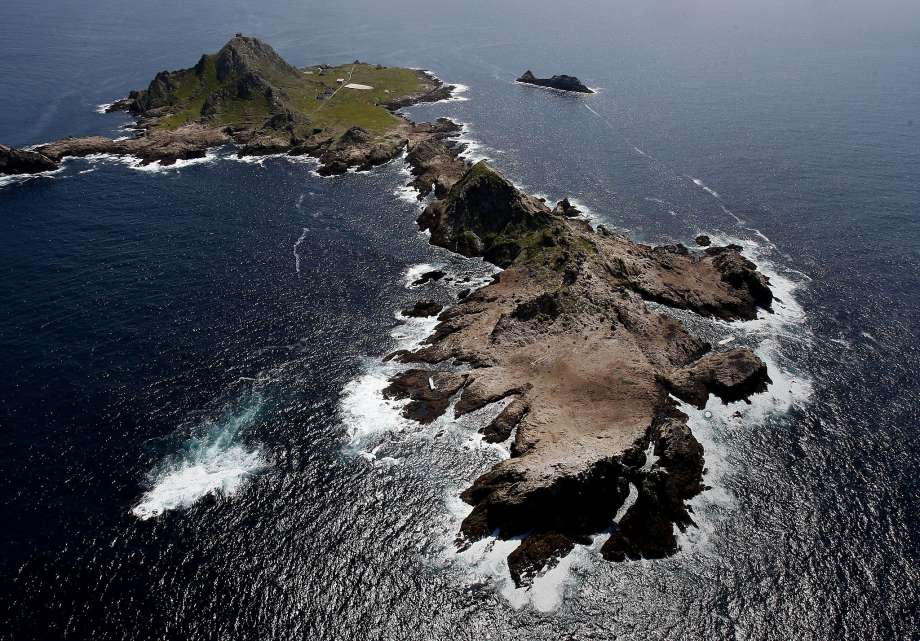
    The islands boast one of the world’s largest breeding colonies for seabirds, including the rare ashy storm-petrel, and their beaches are covered with lolling sea lions and seals. The waters surrounding the islands teem with 18 species of whales and dolphins. The islands also host tens of thousands of house mice — an invasive species that is wreaking havoc on the native ecosystem, according to biologists. The explosive growth in mice has attracted burrowing owls, who not only eat the mice but also prey upon the storm-petrels, a rare bird with a declining population. The federal government contends that the only way to get rid of the mice is to drop 1.5 tons of rat poison pellets from a helicopter onto the islands. But Bay Area conservationists are worried that the poison, an increasingly controversial rodenticide called brodifacoum, will kill other species and make its way up the food chain. “This is a case of using a shotgun to go after an ant,” said Richard Charter of the Ocean Foundation, one of the plan’s fiercest opponents. The U.S. Fish and Wildlife Service, the agency that manages the Farallones, acknowledges that while some non-target species will likely be killed in the process, broadcasting poison over the islands is a tried-and-true method of tackling rodent infestations. Biologists say that the long-term benefits will far outweigh any collateral damage. “If we didn’t believe this option was going to dramatically benefit the islands, and safely and effectively, we wouldn’t be recommending it,” said Doug Cordell, spokesman for the Fish and Wildlife Service. The issue is expected to come to a head on Wednesday, when the California Coastal Commission holds a public hearing on the plan.

    The FWS published a final environmental impact statement in March, a 300-page document more than a decade in the making. Since its draft was published in 2013, more than 34,000 people have signed a Change.org petition objecting to the proposal. Santa Cruz County Supervisor Ryan Coonerty has also spoken out against the plan and urged the Coastal Commission to oppose it. The commission’s staff, however, released a report expressing its support for the project, saying it was consistent with the state’s marine protection and water quality policies. Critics insist there is reason to be wary of brodifacoum, an anticoagulant that causes internal bleeding. Mountain lions in California have been found dead with the rodenticide in their systems after eating small prey that ingested the poison. California outlawed consumer use of the poison in 2014. And a bill that would ban the use of second-generation anticoagulants like brodifacoum on state-owned lands is making its way through the California legislature. The law would not affect federal lands like the Farallones, however. The Farallones rodenticide drop would occur in the late fall of 2020 at the earliest, and would require approval by the Environmental Protection Agency and the National Oceanic and Atmospheric Administration. The mice are a food source for migratory burrowing owls, according to biologists. But when the mouse population crashes in the winter, the owls prey on the ashy storm-petrel, whose population on the islands — where half the world’s storm petrels nest — has been declining since the ’90s. The mice have also spread invasive plant species that crowd out native vegetation. They also feed on the Farallon camel cricket and compete for food with the Farallon arboreal salamander. At peak season, there are nearly 500 mice per acre on the South Farallon Islands — about 59,000 in all. Critics do not refute that the mice need to go. But they do not buy the federal government’s insistence that rodenticide is the best way to get the job done.

    The Fish and Wildlife Service said it looked at dozens of eradication methods, including mouse fertility control, but ultimately found that poison was the best approach because of its proven efficacy. The agency notes that 28 out of 30 mouse eradication projects undertaken worldwide since 2007 have been successful, and that native species in those places have flourished. The Farallon Islands have suffered a long history of human interference and exploitation. In the early 1800s, Russian fur traders harvested blubber from elephant seals and pelts from sea lions. A few decades later during the Gold Rush, when the mice were likely introduced, the new residents of San Francisco needed eggs. So they raided the nests of murres, whose population dropped drastically. The species has seen a revival in recent decades. And between 1946 and 1970, government and private research agencies dumped thousands of 55-gallon drums of low-level radioactive waste into the Gulf of the Farallones. The islands now benefit from several layers of protective status. The Farallones were named a national wildlife refuge in 1974 and are also part of the Farallones National Marine Sanctuary. The islands are off-limits to the public. Supporters of the mouse eradication project say that getting rid of the rodents is an essential step in fully restoring island ecology to the way it was before humans discovered it. And there is a certain urgency to removing the mice, according to Pete Warzybok, a biologist who for the past 20 years has lived part time on the Farallones studying ecosystem conservation. “We don’t want to wait so long that storm petrels are declining to the point that one fantastic event, like an oil spill or a bad winter season, would knock out the entire population,” Warzybok said.

    Critics point to the Fish and Wildlife Service’s 2008 rodent eradication project on Alaska’s Rat Island, where the same poison killed 46 bald eagles. The agency said it learned from its mistakes and has incorporated extra safeguards into the Farallones plan.

    The poison pellets would be dropped by helicopters twice over the span of three weeks, according to the plan. Until risk of poison exposure drops, Fish and Wildlife would scare away seagulls — the species most likely to eat the poisoned mice — using fireworks, predator calls and air cannons, a technique the agency calls “hazing” and has been tested on the islands. Raptors such as owls and hawks that might eat the poisoned mice would be temporarily removed from the sanctuary until risk of poison exposure drops. The potential risk to marine life is low, according to Fish and Wildlife. Seals won’t eat the poison, and any bait that falls into the water will “dissolve quickly or sink to the bottom,” said Cordell, the agency spokesman. Mouse carcasses will be collected by hand, although Fish and Wildlife acknowledges it could not find every dead animal and that some gulls will probably die after eating the rodents. They estimate that fewer than 1,700 gulls will die. More than that number would affect the local gull population over a 20-year span, according to biologists. Critics balk at the idea that gulls, known for their persistence and willingness to eat just about anything, will be deterred by pyrotechnics. They worry that dosed gulls will travel to mainland areas like Point Reyes National Seashore and San Francisco’s Fisherman’s Wharf, where they are known to fly. It’s there that a gull could die and be eaten by a raccoon, which could then become mountain lion prey, said Charter, an advocate for ocean protection issues. “The fear is using a method that poisons the entire food chain and hurts a lot of animals we care about deeply,” Charter said.

    Alison Hermance, director of communications at Wildcare, a wildlife hospital in San Rafael, has seen firsthand how rat poison has affected local species. The organization began testing livers of patients — hawks, owls, foxes, coyotes — about 10 years ago for brodifacoum. They found that 76% of the 600 animals had been exposed to the poison.

    “People don’t recognize that this is a much bigger issue,” said Hermance, who called the Farallones poison plan “ludicrous.”

    Not all animals exposed to brodifacoum die. But research shows that carrying even small amounts of the toxin in their tissue may compromise health. 2018 study by UCLA and the National Park system found that exposure to the rodenticide appeared to weaken bobcats’ immune systems. But scientists say it is unlikely that poison from the Farallones would affect many animals on the mainland. Gulls that eat the dead mice or the poison bait would probably be too sick to fly great distances, according to Hillary Young, a professor of ecology at UC Santa Barbara who has studied other rodent eradication projects. And gulls, which prefer to fly with empty bellies, would have to eat a lot of the poison for it to kill the next animal in the food chain. Young said rodent eradication is “one of the few conservation tools in our toolbox that works for a sustained period of time.” However, she said she recognizes that the death of non-target animals triggers an emotional response. She said that even in the “worst-case scenario” of Rat Island, the native habitat there is now thriving.

    All the costs are front-loaded,” Young said. “You have to wait for the benefits.

    source