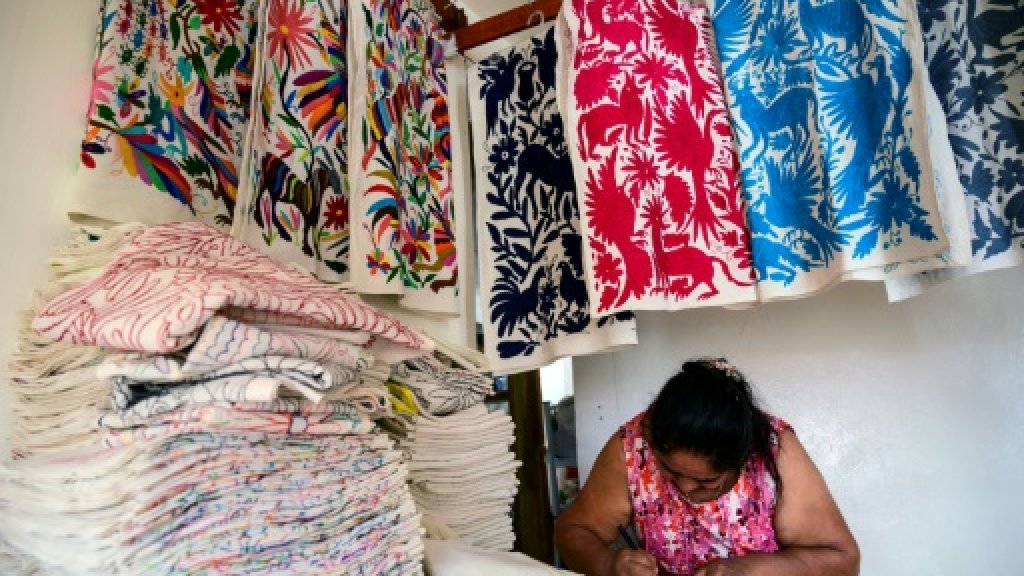
The women embroiderers of the remote Mexican mountain village of Tenango de Doria made worldwide headlines this week when their government went to war with an American designer for “plagiarising” their patterns.
Wes Gordon, the artistic director of the New York label founded by Venezuelan designer Carolina Herrera, found himself accused of cultural appropriation.
The women of the indigenous community in the east of the country told AFP how they felt cheated of their traditional motifs where “each element has a personal, family or community meaning”.
It is the latest in a long line of controversies where multinational brands stand accused of ransacking the cultural heritage of poor villagers.
Four years ago another indigenous Mexican community complained that the French designer Isabel Marant had lifted a 600-year-old Tlahuitoltepec blouse design that symbolises the Mixe people for one of her collections.
Mexico has previously protested about Zara, Mango and Michael Kors designs.
– Tougher copyright laws –
Some of the country’s leaders now want to toughen a copyright law that already protects traditional patterns to punish “plagiarism that different indigenous peoples have suffered”.
It is a suggestion that sent a chill down the spines of some designers at Paris fashion week.
Berluti’s new artistic director Kris van Assche — who headed Dior’s menswear line for 11 years — told AFP that “when I was at fashion school we learned that there was nothing shameful about taking inspiration from other cultures.
“We must be careful not to attack everybody for everything,” the Belgian creator added.
Rising young Spanish star Alejandro Gomez Palomo was more dismissive.
“Cultural appropriation is something we should all forget,” said the designer, who refuses to leave his own Andalusian village where his Palomo Spain label is based.
– ‘It belongs to everyone’ –