Category: Science&Technology

  • Robocrop: world’s first raspberry-picking robot set to work

    Robocrop: world’s first raspberry-picking robot set to work

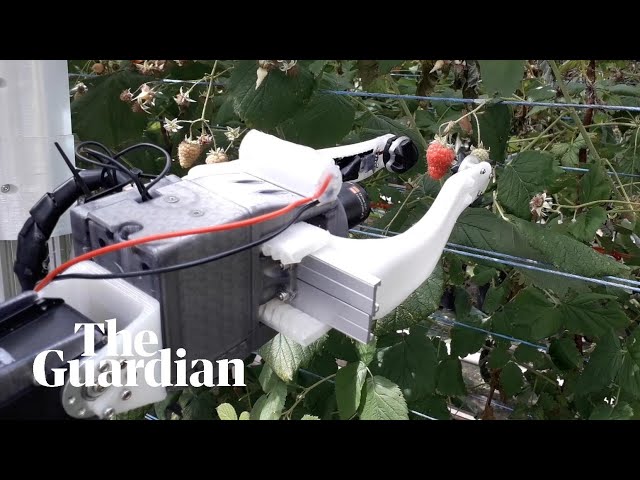
    Quivering and hesitant, like a spoon-wielding toddler trying to eat soup without spilling it, the world’s first raspberry-picking robot is attempting to harvest one of the fruits.

    After sizing it up for an age, the robot plucks the fruit with its gripping arm and gingerly deposits it into a waiting punnet. The whole process takes about a minute for a single berry.

    It seems like heavy going for a robot that cost £700,000 to develop but, if all goes to plan, this is the future of fruit-picking.

    Each robot will be able to pick more than 25,000 raspberries a day, outpacing human workers who manage about 15,000 in an eight-hour shift, according to Fieldwork Robotics, a spinout from the University of Plymouth.

    The robot has gone on trial in the UK, as the farming industry battles rising labour costs and Brexit-related shortages of seasonal workers.

    Numbers of seasonal workers from eastern Europe have diminished, partly due to Brexit fears but also because Romania and Poland’s surging economies have persuaded their own workers to remain in their home countries .

    The robot has been developed in partnership with Hall Hunter, one of Britain’s main berry growers which supplies Tesco, Marks & Spencer and Waitrose. Standing at 1.8 metres tall, the wheeled machine with its robotic arm has begun field trials in a greenhouse at a Hall Hunter farm near Chichester in West Sussex.

    Guided by sensors and 3D cameras, its gripper zooms in on ripe fruit using machine learning, a form of artificial intelligence. When operating at full tilt, its developers say the robot’s gripper picks a raspberry in 10 seconds or less and drops it in a tray where the fruit gets sorted by maturity, before being moved into punnets, ready to be transported to supermarkets.

    The final robot version, expected to go into production next year, will have four grippers, all picking simultaneously.

    Separate field trials in China have shown the robot can pick tomatoes, and it has also been let loose on cauliflower.

    source

  • Scientists uncover exotic matter in the sun’s atmosphere

    Scientists uncover exotic matter in the sun’s atmosphere

    Scientists uncover exotic matter in the sun's atmosphere
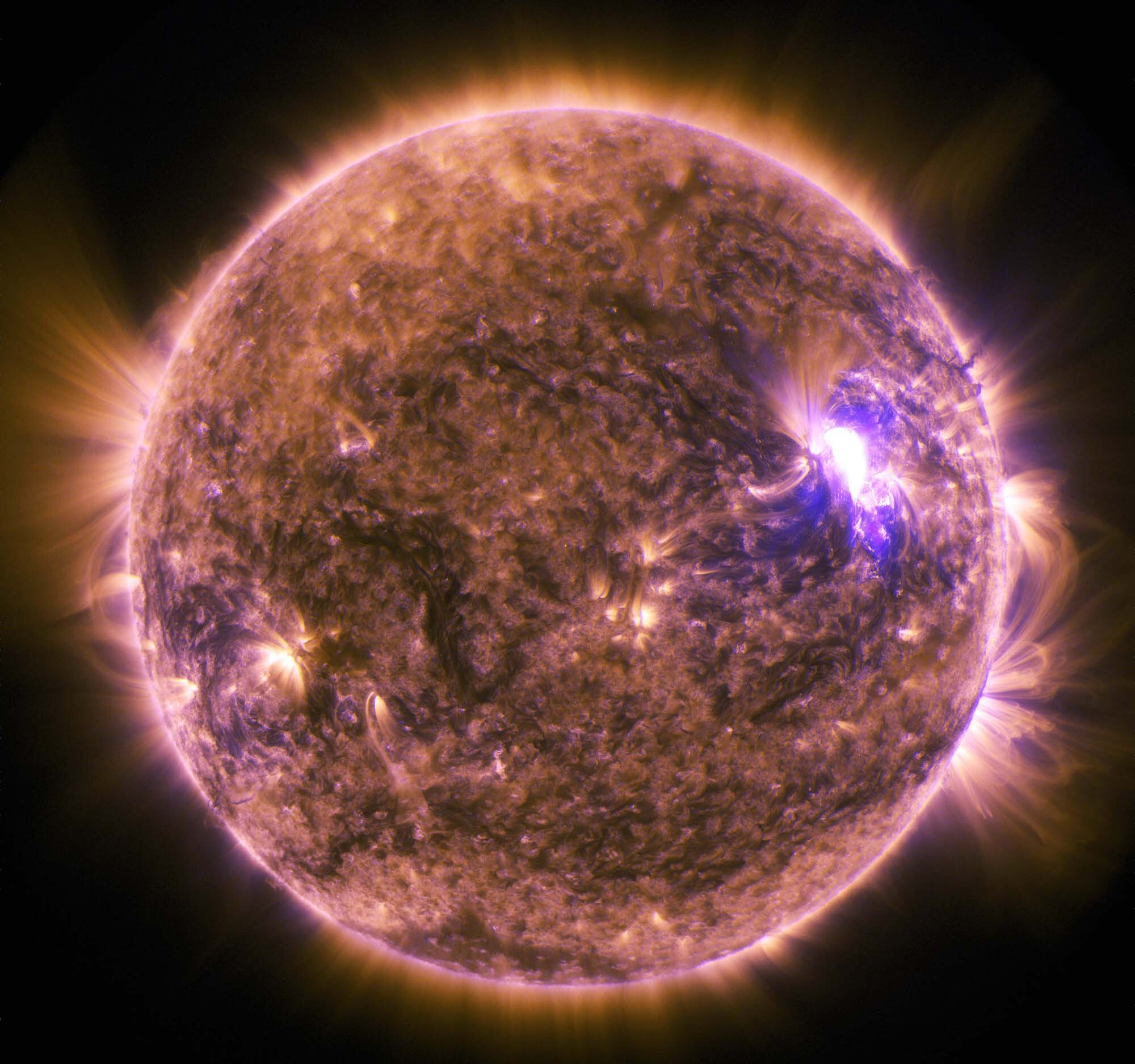
    A solar flare captured by NASA’s Solar Dynamics Observatory in 2015. Credit NASA, SDO. Credit: NASA/SDO.

    Scientists from Ireland and France today announced a major new finding about how matter behaves in the extreme conditions of the Sun’s atmosphere.


    The scientists used large radio telescopes and ultraviolet cameras on a NASA spacecraft to better understand the exotic but poorly understood “fourth state of matter”. Known as , this matter could hold the key to developing safe, clean and efficient nuclear energy generators on Earth. The scientists published their findings in the leading international journal Nature Communications.

    Most of the matter we encounter in our everyday lives comes in the form of solid, liquid or gas, but the majority of the Universe is composed of plasma—a highly unstable and electrically charged fluid. The Sun is also made up of this plasma.

    Despite being the most common form of matter in the Universe plasma remains a mystery, mainly due to its scarcity in on Earth, which makes it difficult to study. Special laboratories on Earth recreate the extreme conditions of space for this purpose, but the Sun represents an all-natural laboratory to study how plasma behaves in conditions that are often too extreme for the manually constructed Earth-based laboratories.

    Postdoctoral Researcher at Trinity College Dublin and the Dublin Institute of Advanced Studies (DIAS), Dr. Eoin Carley, led the international collaboration. He said: “The solar atmosphere is a hotbed of extreme activity, with plasma temperatures in excess of 1 million degrees Celsius and particles that travel close to light-speed. The light-speed particles shine bright at , so we’re able to monitor exactly how plasmas behave with large radio telescopes.”

    “We worked closely with scientists at the Paris Observatory and performed observations of the Sun with a large radio telescope located in Nançay in central France. We combined the radio observations with ultraviolet cameras on NASA’s space-based Solar Dynamics Observatory spacecraft to show that plasma on the sun can often emit radio light that pulses like a light-house. We have known about this activity for decades, but our use of space and ground-based equipment allowed us to image the radio pulses for the first time and see exactly how plasmas become unstable in the .”

    Studying the behaviour of plasmas on the Sun allows for a comparison of how they behave on Earth, where much effort is now under way to build magnetic confinement fusion reactors. These are nuclear energy generators that are much safer, cleaner and more efficient than their fission reactor cousins that we currently use for energy today.

    Professor at DIAS and collaborator on the project, Peter Gallagher, said: “Nuclear fusion is a different type of nuclear energy generation that fuses plasma atoms together, as opposed to breaking them apart like fission does. Fusion is more stable and safer, and it doesn’t require highly radioactive fuel; in fact, much of the waste material from fusion is inert helium.”

    “The only problem is that plasmas are highly unstable. As soon as the plasma starts generating energy, some natural process switches off the reaction. While this switch-off behaviour is like an inherent safety switch—fusion reactors cannot form runaway reactions—it also means the plasma is difficult to maintain in a stable state for energy generation. By studying how plasmas become unstable on the Sun, we can learn about how to control them on Earth.”

    The success of this research was made possible by the close ties between researchers at Trinity, DIAS, and their French collaborators.

    Dr. Nicole Vilmer, lead collaborator on the project in Paris, said: “The Paris Observatory has a long history of making radio observations of the Sun, dating back to the 1950s. By teaming up with other radio astronomy groups around Europe we are able to make groundbreaking discoveries such as this one and continue the success we have in solar radio astronomy in France. It also further strengthens scientific collaboration between France and Ireland, which I hope continues in the future.”

    Dr. Carley previously worked at the Paris Observatory, funded by a fellowship awarded by the Irish Research Council and the European Commission. He continues to work closely with his French colleagues today, and hopes to soon study the same phenomena using both French instruments and newly built, state-of-the-art equipment in Ireland.

    Dr. Carley added: “The collaboration with French scientists is ongoing and we’re already making progress with newly built radio telescopes in Ireland, such as the Irish Low Frequency Array (I-LOFAR). I-LOFAR can be used to uncover new plasma physics on the Sun in far greater detail than before, teaching us about how matter behaves in both plasmas on the Sun, here on Earth and throughout the Universe in general.”

    More information: Eoin P. Carley et al, Loss-cone instability modulation due to a magnetohydrodynamic sausage mode oscillation in the solar corona, Nature Communications (2019). DOI: 10.1038/s41467-019-10204-1

    Journal information: Nature Communications
    Citation: Scientists uncover exotic matter in the sun’s atmosphere (2019, May 24) retrieved 24 May 2019 from https://phys.org/news/2019-05-scientists-uncover-exotic-sun-atmosphere.html
    This document is subject to copyright. Apart from any fair dealing for the purpose of private study or research, no part may be reproduced without the written permission. The content is provided for information purposes only.

    This content was originally published here.

  • An Astounding Amount of Water Has Been Discovered Beneath the Martian North Pole

    An Astounding Amount of Water Has Been Discovered Beneath the Martian North Pole

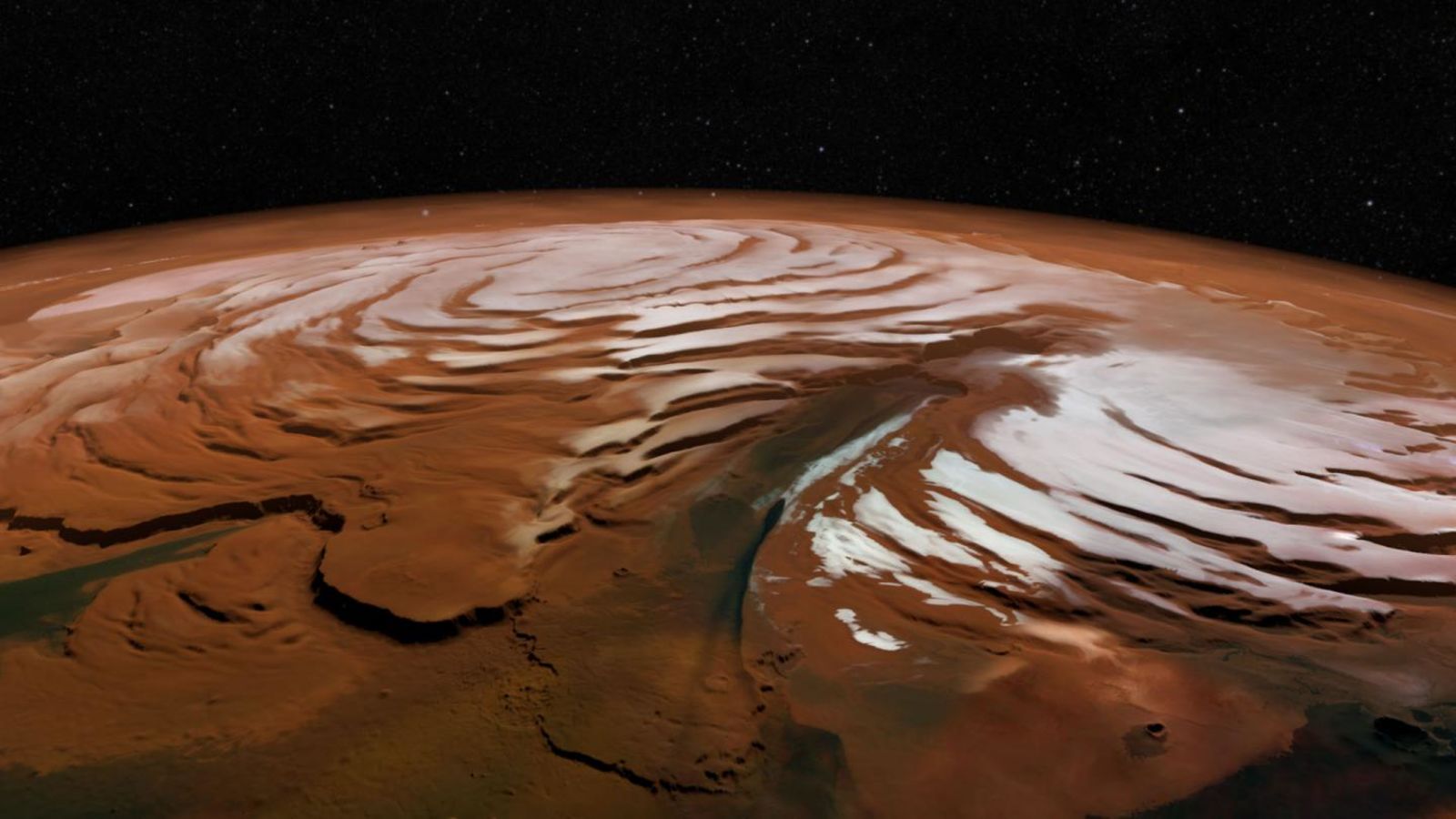
    Using ground-penetrating radar, scientists detected a massive reservoir of frozen water sandwiched by layers of sand beneath the northern polar ice cap on Mars. This reservoir contains so much ice that, if melted and brought to the surface, it would submerge the entire planet.

    “This was a surprise even for us,” Stefano Nerozzi, the lead author of the new paper and a PhD student at the University of Texas at Austin, told Gizmodo in an email.

    The massive reservoir was detected within Mars’ northern cavi unit, a deposit of multiple layers of water ice mixed in with sand that formed over the course of hundreds of millions of years. The cavi unit rests about 2 kilometers (1.2 miles) beneath the Martian north pole, and prior to the new study, scientists figured it was primarily composed of sand dunes and contained less than 50 percent water ice by volume. These estimates were based on observations of visible outcrops, which revealed significant amounts of dark sands intermixed with small amounts of frozen water.

    But now, radar scans from orbit suggests the cavi unit is packed with more water ice than sand, making it possibly the third-largest water reservoir on the Red Planet, followed only by the two polar ice caps. The new paper was published this week in Geophysical Research Letters.

    These new observations were made by the Shallow Radar, or SHARAD, instrument aboard NASA’s Mars Reconnaissance Orbiter. SHARAD emits surface-penetrating radar waves that allowed Nerozzi’s team to discern the internal structures and composition of the cavi unit.

    Observations revealed horizontal slabs rich in ice that were sandwiched by alternating layers of sand. The distribution of water ice ranged from 61 to 88 percent by volume, which means the cavi unit is primarily composed of frozen water. As noted in the press release, if melted and brought to the surface, “the newly discovered polar ice would be equivalent to a global layer of water around Mars at least 1.5 meters (5 feet) deep.” That’s a lot of water.

    SHARAD data showed that the frequency and volume of the ice slabs increased with proximity to the north pole. In one region, for example, the researchers detected two sand sheets over 40 kilometers (25 miles) wide on top of a layer of ice ranging in depth from 50 to 100 meters (165 to 330 feet).

    Advertisement

    These buried structures are the remnants of former ice caps which shrunk and were buried during warm periods, according to the paper. Consequently, this cavi unit contains a historical record of the Martian climate. The layers of ice are like the rings on a tree, showing the growth and retreat of ancient polar caps over the years. Like Earth, Mars has experienced multiple ice ages. During the warm periods, sand enveloped the shrunken ice caps, protecting them from the Sun and in turn preventing the ice from evaporating into the atmosphere.

    “The only hypothesis that can reconcile our results and all the previous studies is that the cavi unit is made of alternating ice sheets, remnants of former polar caps, and sand layers, which acted as protective blanket and prevented the complete retreat of the old polar ice,” Nerozzi told Gizmodo. “This is another big surprise in itself, because it means that we have a new and unexpected record of past polar ice cap growth and retreat that dates back hundreds of millions of years.”

    Prior to the new study, scientists figured the ancient ice caps were lost, but SHARAD data suggests otherwise.

    “These results are significant because it attests to past climate cycles in the north polar region,” Matthew Chojnacki, a planetary scientist at the University of Arizona who was not involved in the new research, said in an email to Gizmodo. “For tens of millions of years, maybe longer, wind built up massive sand deposits which were repeatedly buried with various levels of ice. These intra-dune ice deposits happen on Earth but I’m not aware of such a large example as this north polar cavi unit on Mars.”

    The new finding could also tell us a bit more about water ice located elsewhere on Mars, particularly in the lower latitudes. Jack Holt, co-author of the study and a researcher at the University of Arizona, previously used SHARAD to confirm the presence of massive glaciers in the Martian mid-latitudes—one of which is three times the size of Los Angeles. These glaciers are almost completely comprised of water ice, but they’re obscured by surface materials.

    “Surprisingly, the total volume of water locked up in these buried polar deposits is roughly the same as all the water ice known to exist in glaciers and buried ice layers at lower latitudes on Mars, and they are approximately the same age,” said Holt in the University of Texas press release.

    Mars, as we’re learning, holds a tremendous amount of water. This theoretically bodes well for future colonists in need of the precious liquid.

    “The ice sheets might be very pure, with only a few percent dust impurities. However, this unit is buried underneath a polar ice cap up to 2 kilometers thick, so it is not easy to reach,” said Nerozzi. “It would be much easier to extract nearly pure water from the ice at the surface of the polar cap. To make it drinkable, or process it into fuel for rockets, one would need to filter out the dust impurities and perhaps some salts.”

    Nerozzi is continuing to study this cavi unit and using SHARAD to read the record of past polar cap evolution. Given the geological and climate data how available, he might even be able to reconstruct the entire formation history of the cavi.

    “This would give us precious insights into the past distribution of water on the planet, and thus if any amount of liquid water existed near the equator that could have supported life,” said Nerozzi.

    This content was originally published here.
  • Private Companies Are Building an Exoskeleton Around Earth

    Private Companies Are Building an Exoskeleton Around Earth

    In 1957, a beach-ball-shaped satellite hurtled into the sky and pierced the invisible line between Earth and space. As it rounded the planet, Sputnik drew an unseen line of its own, splitting history into distinct parts—before humankind became a spacefaring species, and after. “Listen now for the sound that will forevermore separate the old from the new,” one NBC broadcaster said in awe, and insistent that others join him. He played the staccato call from the satellite, a gentle beep beep beep.  Decades later, we are not as impressed with satellites. There have been thousands of other Sputniks. Instead of earning front-page stories, satellites stitch together the hidden linings of our daily lives, providing and powering too many basic functions to list. They form a kind of exoskeleton around Earth, which is growing thicker every year with each new launch.

    The newest additions come from SpaceX. The company launched 60 satellites into orbit Thursday night, the first batch of thousands of satellites that will someday beam internet down to Earth. The satellites traveled to space in a big, cozy stack. Once in orbit, they will fan out—“like spreading a deck of cards on a table,” according to Elon Musk—and unfurl solar arrays to soak up the sunlight they’ll use to power themselves. As of early Friday morning, all 60 satellites had come online.  That’s a lot of satellites. Right now, about 5,000 are in orbit around Earth—in total. Only about 2,000 are still functioning. Nearly half belong to the United States, with China and Russia leading the pack with the rest. “I think within a year and a half, maybe two years, if things go well, SpaceX will probably have more satellites in orbit than all other satellites combined,” Musk said. “If things go according to plan—a big if, of course, but it is quite remarkable to think of that being the case.”

    The launch puts Musk ahead of other entrepreneurs with their own internet-satellite ambitions. Jeff Bezos wants to launch thousands through a program under Amazon, and Greg Wyler, the head of OneWeb, which was established for this express purpose, deployed the company’s first six satellites in February.  SpaceX’s initial delivery of satellites is also a bit of a headache for a niche group of conservationists, the people who worry about the growing number of satellites and pieces of debris accumulating over Earth. They warn that a crowded orbit increases the risk of collisions, fast-moving impacts that would generate even more floating junk. A historian once told me that if an avalanche of crashes were to knock out the entire satellite infrastructure, “tentacles of disruption” would unfurl across the globe. Some experts even say that a packed orbit would make it more difficult for space missions to squeeze through and leave Earth altogether.

    source

  • China unveils 600km/h maglev train prototype

    China unveils 600km/h maglev train prototype

    Those involved with the project are optimistic it will completely transform China’s travel landscape, filling the gap between high-speed rail and air transportation.
    “Take Beijing to Shanghai as an example — counting preparation time for the journey, it takes about 4.5 hours by plane, about 5.5 hours by high-speed rail, and [would only take] about 3.5 hours with [the new] high-speed maglev,” said CRRC deputy chief engineer Ding Sansan, head of the train’s research and development team, in a statement.
    While the cruising speed of an aircraft is 800-900 km/h, at present trains on the Beijing-Shanghai line have a maximum operating speed of 350 km/h.
    Maglev trains use magnetic repulsion both to levitate the train up from the ground, which reduces friction, and to propel it forward.
    After nearly three years of technical research, Ding said the team had developed a lightweight and high-strength train body that lays the technical foundation for the development of five sets of maglev engineering prototypes.
    So what comes next? CRRC Qingdao Sifang — a subsidiary of the CRRC — is currently constructing an experimental center and a high-speed maglev trial production center, which are expected to begin operating the second half of this year.
  • At $2.1 million, newly approved Novartis gene therapy will be world’s most expensive drug

    At $2.1 million, newly approved Novartis gene therapy will be world’s most expensive drug

    he Food and Drug Administration on Friday approved the first gene therapy for a type of spinal muscular atrophy, a lifesaving treatment for infants that will also be the most expensive drug in the world.  Known as Zolgensma, the gene therapy treats children under 2 years of age with spinal muscular atrophy, an inherited neuromuscular disease that causes progressive loss of muscle function. The most severe form of SMA causes infants to die or rely on permanent breathing support by the age of 2. The disease is caused by a defect in a gene that makes SMN, a protein necessary for the survival of motor neurons. Zolgensma uses a re-engineered virus to deliver a functional copy of the defective gene so that SMN protein can be produced.

    Novartis is pricing Zolgensma at $2.125 million, or an annualized cost of $425,000 per year for five years, the company said.  Launching Zolgensma will be a big test for Novartis and CEO Vas Narasimhan, now two years on the job. Shareholders expect the gene therapy to deliver blockbuster sales to justify the $8.7 billion that Novartis spent to acquire it last year.  To achieve commercial success, Novartis must persuade doctors who treat SMA patients that the muscle-preserving benefits from a one-time injection of Zolgensma will be durable. Complex payment and insurance reimbursement arrangements required for expensive gene therapies need to be handled deftly.

    source

  • A trail of toxicity: the US military bases making people sick

    A trail of toxicity: the US military bases making people sick

    Over the last 80 years, much of the land surrounding Venetucci Farm was sold to the US army to establish the base now known as Fort Carson, and today it is hemmed in by highways. Still, with its 200 acres of fields, farmhouse and big red barn, it is a beloved institution in Colorado Springs. As the only community urban farm left in the sprawling city, it is a valuable resource, educating thousands of children about agriculture, sustainability and healthy eating and known above all for its annual pumpkin giveaways.  The autumn pumpkin event has taken place for decades, and a local brewer still makes Venetucci Pumpkin Ale, but now the pumpkins are bought elsewhere. The produce is no longer available for public consumption because farming activities have stopped. In 2016, irrigation water was found to be contaminated with elevated levels of perfluorinated compounds (PFCs).  The foundation that runs the farm has joined forces with a local water district to sue the US Air Force, alleging that toxic chemicals used in firefighting foam at a nearby base have tainted the water, perhaps for decades, prompting health worries and causing economic losses.  Similar concerns have been raised about dozens of other bases across the country. But the problem is not limited to areas close to military installations.  PFCs and related human-made chemicals, more generally known as per- and polyfluoroalkyl substances (PFAS), have been virtually unregulated since at least the 1950s. As well as at industrial sites, airports and bases, PFAS have long been used in household products thanks to their grease- and stain-resistant properties. They are everywhere: from fast-food packaging to carpets and furniture, water-repellent clothing and non-stick cookware such as Teflon.

    The extraordinary resilience that led to them being dubbed “forever chemicals” no longer seems such a boon. As more becomes known about their widespread presence in the environment and the potential health risks, activists are urging state and federal regulators take action to increase oversight and even ban PFAS outright.  A 2007 study estimated that PFAS are in the blood of 98% of Americans, while last year an analysis by the not-for-profit Environmental Working Group found that more than 1,500 drinking water systems nationwide could be contaminated by PFAS, affecting as many as 110 million people.  Studies suggest that certain PFAS may affect the growth, learning and behaviour of infants and older children; lower a woman’s chance of getting pregnant; interfere with the body’s natural hormones; increase cholesterol levels; affect the immune system; and increase the risk of kidney and testicular cancer and thyroid problems.

    Mark Favors is convinced that PFAS can cause cancer. The 50-year-old now lives in New York but was born and raised in the Colorado Springs area and went to an army nursing school.  “The veterans are starting to call this Agent Orange 2.0,” he said. Favors told a congressional oversight committee meeting in March that 16 of his family members who have lived in contaminated areas for at least a decade were diagnosed with cancer, seven of them military veterans, and not all blood relatives. Ten died, several from kidney cancer. A 15-year-old cousin required a kidney transplant in 2015 after a sudden failure that doctors determined was not caused by a genetic defect.  “We had four generations that drank contaminated water. We’ve been there since the 70s. My mother grew up on a farm a mile away from Peterson [air force base] and drank well water,” he told the Guardian. “We didn’t think they’d be dumping an odorless, colourless, toxic chemical into our drinking water that would remain in our bodies for five or 10 years at a minimum.”

    source

  • CHEERS!  Israeli Scientists Use Yeast from Ancient Beer to Recreate 5,000-Year-Old Drink

    CHEERS! Israeli Scientists Use Yeast from Ancient Beer to Recreate 5,000-Year-Old Drink

    A team of Israeli scientists extracted yeast used to make beer in biblical times and turned it into a modern drink with a 5,000-year-old taste. Scientists from Hebrew University, Israel’s Antiquities Authority, Tel Aviv University and Bar-Ilan University examined the colonies of yeast specimen that settled in the pores of 5000-year-old pottery debris and successfully created beer with it. Archaeologists gave the scientists shards of pottery that had been used as beer and mead (honey wine) jugs back in ancient times. To their surprise, the yeast found inside survived thousands of years and could safely be removed from the jars. “We dug at Ramat Rachel, the largest Persian site in the Judaean kingdom, and found a large concentration of jugs with the letters J, H, D – Yahud – written on them. In a royal site like Ramat Rachel it makes sense that alcohol would be consumed at the home of the Persian governor,” explained Prof. Yuval Gadot from Tel Aviv University’s Department of Archaeology and Ancient Near Eastern Cultures.

    These jars date back to the reign of Egyptian Pharaoh Narmer (roughly 3000 BCE), to Aramean King Hazael (800 BCE) and to Prophet Nehemiah (400 BCE) who, according to the Bible, governed Judea under Persian rule. Researchers then cleaned and sequenced the entire genetic code of each yeast specimen and turned them over Dr. Amir Szitenberg at the Dead Sea-Arava Science Center for analysis.  Szitenberg discovered that these 5,000-year yeast cultures are similar to modern beer yeast and to those used in traditional African brews, such as Ethiopian honey wine. Local Israeli beer expert Itai Gutman helped the scientists make the beer, which was given a “thumbs up” by international taste testers. Dr. Yitzchak Paz of the Israel Antiquities Authority said the project is the first of its kind.

    “We are talking about a real breakthrough here,” he said. “This is the first time we succeeded in producing ancient alcohol from ancient yeast. In other words, from the original substances from which alcohol was produced. This has never been done before.” “The greatest wonder here is that the yeast colonies survived within the vessel for thousands of years—just waiting to be excavated and grown. This ancient yeast allowed us to create beer that lets us know what ancient Philistine and Egyptian beer tasted like. By the way, the beer isn’t bad.  Aside from the gimmick of drinking beer from the time of King Pharaoh, this research is extremely important to the field of experimental archaeology—a field that seeks to reconstruct the past.  Our research offers new tools to examine ancient methods, and enables us to taste the flavors of the past.”

    source

  • Build your own best friend! Students design $3,000 kit robo-dog that can jump, flip and dance and can be reproduced at home

    Build your own best friend! Students design $3,000 kit robo-dog that can jump, flip and dance and can be reproduced at home

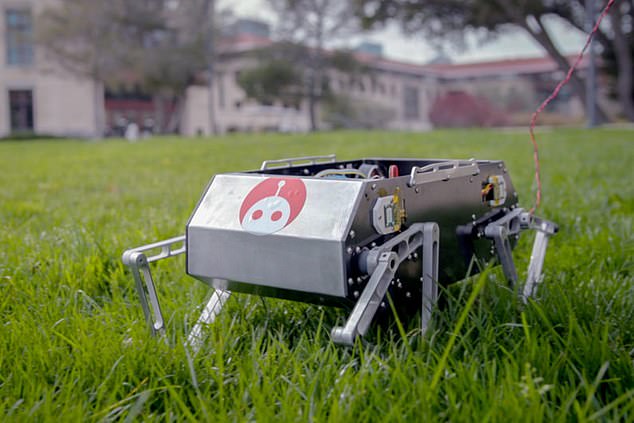
    A robotic dog that can dance, do flips and jump has been created by a team of students – and they are encouraging people to build their own.   The robo-dog senses when it is out of position and uses ‘virtual springs’ to pop upright with precision.   It has been created with the goal of being reproduced by anyone and the team has published their designs and blueprints online to encourage people to make their own robots.        Doggo’s creators wanted to share their joy so much they have made the plans, code and a supply list all freely available on GitHub, a specialist platform for developers to share computer code.  On the Stanford Doggo Project Github blog, the students describe themselves as undergraduate and graduate students in the Stanford Student Robotics club and part of the club’s ‘Extreme Mobility team’. The students wrote: ‘We have been working on legged robots for the last year and a half.  ‘Our latest robot, Stanford Doggo, is a shoebox-sized quadruped robot that can walk, trot, pronk, and jump around.’  Nathan Kau, a 20-year-old mechanical engineering major and lead for Extreme Mobility, said: ‘We had seen these other quadruped robots used in research, but they weren’t something that you could bring into your own lab and use for your own projects.  ‘We wanted Stanford Doggo to be this open source robot that you could build yourself on a relatively small budget.’   Club members estimate the cost of Stanford Doggo at less than $3,000 (£2,364), a figure they say includes manufacturing and shipping costs and that and nearly all the components can be bought directly online.  The four legged robot has been designed to navigate different terrains with the help of motors that sense external forces and determine how much force and torque each leg should apply in response.

    source


  • Gene Therapy Gives Colorado Dogs Longer Lives

    Gene Therapy Gives Colorado Dogs Longer Lives

    It’s a stress no Colorado pet owner ever wants to face — the idea of having to put a pet down. However, Joy Hughes found herself in this position when her dog’s pain was preventing him from being able to stand or get up on his own.

    Hughes wondered how much longer she could allow her Labrador retriever, Tucker, to suffer. He has severe hip dysplasia.

    For years, veterinarians have had to put down animals with chronic pain, especially when they are too uncomfortable to move on their own. Now Colorado dog owners are getting the gift of time thanks to a local study that seems to be doing wonders for pets with arthritis pain.

    Hughes signed Tucker up for the study after seeing CBS4’s story “New Gene Therapy For Dogs Developed In Boulder Could Help Humans” in November. Veterinarians are conducting the gene study only on Colorado dogs and so far they are finding a 100% success rate. Dogs are getting a new lease on life after just one injection. The shot is made up of the Interleukin 10 gene, which the body naturally produces.

    Dr. Rob Landry gave Tucker that shot and now he can run, hike and is pain free.

    source