Category: Science&Technology

  • Industry wants NASA to move ahead quickly on Gateway module

    Industry wants NASA to move ahead quickly on Gateway module

    Phase 1 Gateway Lockheed Martin

    WASHINGTON — In order to meet the goal of landing humans on the moon in 2024, NASA needs to get one element of its proposed lunar Gateway on contract in the near future so it will be ready in time.

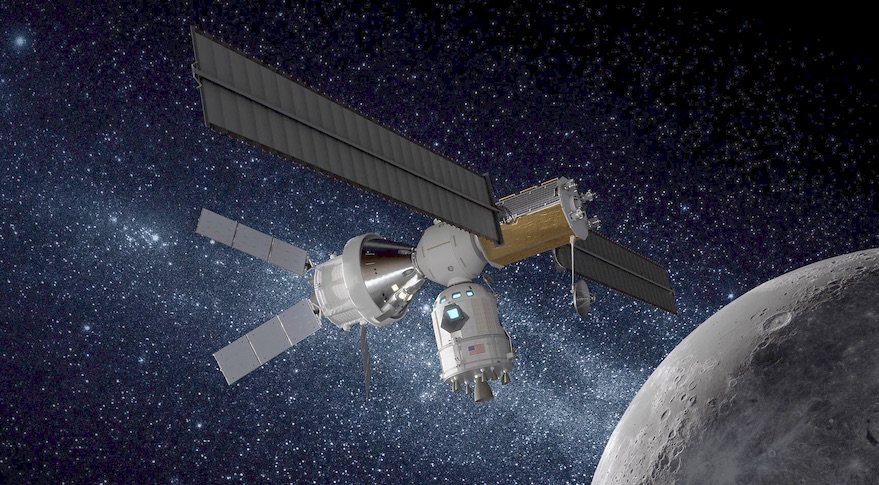
    NASA’s latest plans for getting humans back to the surface of the moon involve the development of a scaled-down or “minimal” Gateway in a near-rectilinear halo orbit around the moon. That initial outpost, which can be scaled up later for future missions, would consist of a Power and Propulsion Element (PPE) and a “mini-hab” or “utilization” module that would have docking ports and serve as a habitat for visiting crews.

    NASA issued a solicitation for the PPE last year and is currently evaluating several proposals from industry, likely based on current commercial satellite buses that will be equipped with high-power electric propulsion systems. NASA could issue awards for the PPE as soon as this month, although agency officials have said recently that the PPE awards would come this summer.

    Less clear is the plan for the utilization module. Several companies are currently working on prototypes of habitation modules as part of NASA’s Next Space Technologies for Exploration Partnerships, or NextSTEP, program. Such concepts will be the likely basis for the module, with modifications to incorporate docking ports.

    To meet NASA’s schedules, the module will likely be based on existing designs, such as International Space Station modules. “If you leverage an existing capability, and the one I throw out there is a station element,” said Peter McGrath, director of global sales and marketing for space exploration at Boeing, “you can easily build something.”

    McGrath and other panelists during a session at the Humans to Mars Summit here May 15 said they believed a utilization module based on existing designs could meet NASA’s schedule. Mike Fuller, a business development manager for NASA programs at Northrop Grumman, said the company is looking at designs based on ISS modules, with a diameter of 4.5 meters, and Cygnus cargo spacecraft modules with a diameter of 3 meters.

    “If you really want to go minimalist, a three-meter pressure vessel would be relatively easy for us to produce on the current production line,” he said.

    To have the module in place in lunar orbit prior to the lunar landing, though, NASA needs to get a design under contract within the next year, they said. “If you want to get the habitat on schedule, you’ve got to move,” McGrath said, emphasizing the need to base the module on existing designs. “If you add a big development curve on it, or wait a year and a half to procure it, you’re going to have a hard time, I think, getting to ’24.”

    He noted that a typical development timeline for an item like the utilization module is three to four years. “So if you’re talking about ’24 and you want to get this up in ’23, that puts you in about a yearlong window of opportunity,” he said. Using heritage designs and hardware would make that schedule less aggressive.

    “I think we’d all say that, technically, we can do it,” said Neeraj Gupta, director of advanced development at Sierra Nevada Corporation. “Contracting mechanisms, and the speed of getting all these things awarded and solidified, that’s the thing I think that’s the tallest pole.”

    Industry officials didn’t have a strong preference for how NASA should procure the module. NASA is using less conventional contracting mechanisms for some parts of its exploration architecture, particularly those elements like the PPE that leverage commercial capabilities.

    Whatever the approach, companies want NASA to press ahead with its procurement of the module as soon as possible. “The sooner we can get on contract, the better,” Gupta said.

    “Yesterday would have been good,” Fuller said.

    SpaceNews.com

    This content was originally published here.

  • 400-Year-Old Rings Transform Into Spheres Used For Astronomy

    400-Year-Old Rings Transform Into Spheres Used For Astronomy

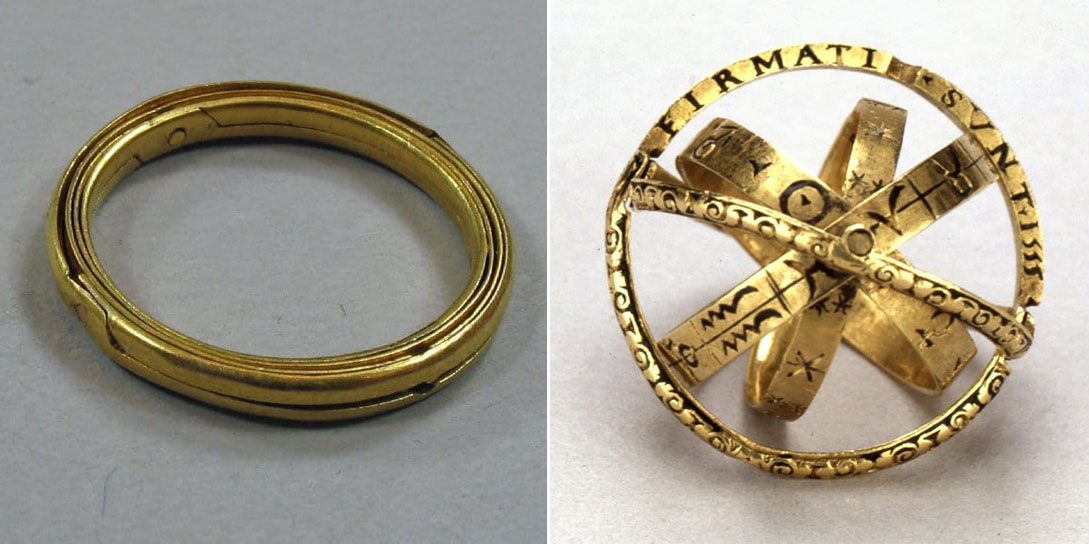
    These armillary sphere rings allow you to wear the entire universe on your finger. Harem rings, also known as ‘puzzle rings’, became a trend in the jewelry industry in 2012. These modern rings consist of multiple interconnected bands that can be separated and formed together as one. It is still unclear where the puzzle ring originated. Some theories claim that it originated in Greece while others argue that the ancient Chinese created it. Both theories may hold true. Because sometime around 190 BC, both countries are developing armillary spheres that represent objects in the sky.

    Armillary spheres consist of spherical framework of rings that represent lines of celestial longitude and latitude. These spherical rings revolve on an axis around a celestial body that serves as a model for either the Sun or Earth. In 17th century, the armillary sphere became a basic tool for astronomers to map constellations and study celestial bodies. To make its application more convenient, these tools were sized down into rings in which astronomers can wear.

    British Museum

    British Museum

    Some of the surviving armillary sphere rings from 400 years ago are exhibited at the British Museum. The collection includes well-preserved and elaborate rings with number of bands ranging from two to eight. All pieces are made of soft high alloy gold, making them retain their luster and permanence for centuries. Some of the pieces of the collection feature plain bands while others have inscriptions and symbols on them.

    British Museum exhibits a collection of ancient armillary sphere rings

    These ancient armillary sphere rings are so well-crafted that you’d wish to bring them home with you. Of course, these historic discoveries are not for sale. But the good news is, a jewelry company offers contemporary armillary sphere rings for sale. Black Adept, a Brooklyn-based jewelry shop is offering 3-band and 4-band armillary sphere rings. Both variants are available in yellow gold, white gold, and platinum materials.

    This content was originally published here.

  • May 20 Is World Bee Day

    May 20 Is World Bee Day

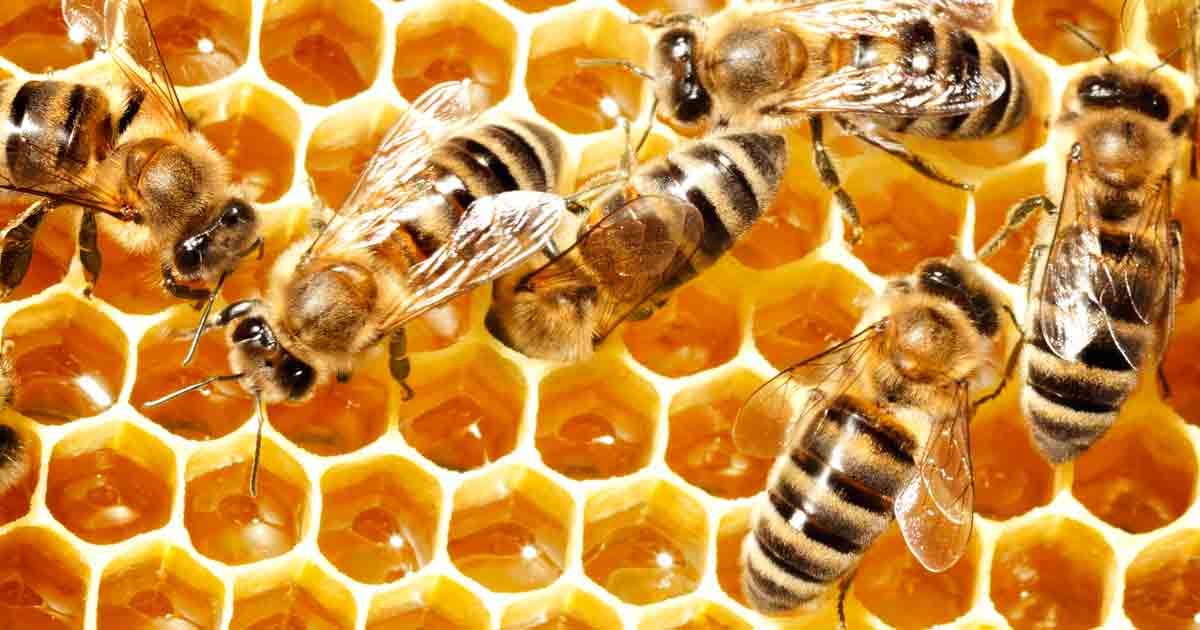
    Two years ago, in December 2017, the United Nations General Assembly declared May 20 of each year as World Bee Day. The resolution was the result of an initiative started in 2015 by the Slovenian Beekeepers’ Association in an effort to raise awareness about the importance of bees and other pollinating insects, all of which are threatened with extinction thanks to a wide range of toxic human activities.

    As explained by the U.N., May 20 was chosen because it “coincides with the birthday of Anton Janša, who in the 18th century pioneered modern beekeeping techniques in his native Slovenia and praised the bees for their ability to work so hard, while needing so little attention.”

    While bumble bees might be the most well-recognized, there are in fact between 25,000 and 30,000 different species of bees across the globe. On the Center for Food Safety’s website you can find a listing of some of the most common species, such as sweat bees, digger bees, carpenter bees, cuckoo bees, long-horned bees and many more.

    More than 75% of the world’s food crops depend on these and other pollinators, either wholly or in part, as do 90% of wild flowering plants. What’s more, in the past 50 years, there’s been a 300% increase in the volume of crops being produced that are dependent on pollination.

    As such, “Caring for bees and other pollinators is part of the fight against world hunger,” the U.N. says. It’s also important to protect and maintain biodiversity among bee species to ensure agricultural resilience.

    Report on Global Biodiversity Warns of Troubling Times Ahead

    The first report on “The State of the World’s Biodiversity for Food and Agriculture” by the U.N. Food and Agriculture Organization’s Commission on Genetic Resources for Food and Agriculture., issued in April 2019, warns that biodiversity is dwindling across the globe, thereby threatening global food production and human survival.

    All forms of life — animals, plants and microorganisms necessary for food, feed, fuel and fibers — are losing diversity. As reported by worldbeeday.org:

    “Of around 6,000 species of agricultural plants, fewer than 200 contribute to global food production, and just nine of them account for 66% of total crop yields. World livestock production is based on approximately 40 animal species, with just a handful providing the vast majority of meat, milk and eggs. The catch quantity is being exceeded for a third of fish stocks, while more than half have reached their limit of sustainability …

    At the meeting of the FAO Commission on Genetic Resources for Food and Agriculture the European Region proposed that the results of this report be included in the strategy of biodiversity being drawn up by FAO.

    Several countries proposed that countries should respond to the main conclusions of the report by including the findings and content in national policies, legislation, programmes and projects in the area of biodiversity in agriculture, forestry and food, in line with their capacities, while there is also an urgent need to formulate further measures to implement the conclusions from the report.

    The report will also be important for discussion on the global framework for biodiversity as part of the Convention on Biological Diversity after 2020 and for achieving the sustainable development goals of Agenda 2030.”

    Another global assessment report on pollinators, pollination and food production, released by the Intergovernmental Science-Policy Platform on Biodiversity and Ecosystem Services (IPBES) in 2016, found an estimated 16% of the vertebrate pollinators around the world are threatened by extinction, as are 30% of island species. According to IPBES vice-chair, Sir Robert Watson::

    “Wild pollinators in certain regions, especially bees and butterflies, are being threatened by a variety of factors. Their decline is primarily due to changes in land use, intensive agricultural practices and pesticide use, alien invasive species, diseases and pests, and climate change.”

    Bee Species Declining Across Northwestern US

    Similarly, researchers at the University of New Hampshire warn there’s been a “dramatic decline” of 14 wild bee species needed for pollination of apples, , and other crops grown in the Northwest. Sandra Rehan, assistant professor of biological sciences, told Science Daily:

    “We know that wild bees are greatly at risk and not doing well worldwide. This status assessment of wild bees shines a light on the exact species in decline, beside the well-documented bumble bees. Because these species are major players in crop pollination, it raises concerns about compromising the production of key crops and the food supply in general.

    We found that wild bee species that once greatly populated more southern areas near sea level are now in decline. While up north in more mountainous areas, like the White Mountains, those same species persist which is an indicator of how climate change is affecting certain populations, especially in the Seacoast area.”

    Using museum data stretching back 125 years (1891 through 2016), the researchers analyzed the prevalence of 119 wild bee species that are native to New Hampshire but also widespread across the Northeast and North America as a whole.

    Fourteen of the species were found to have significantly declined while eight species have significantly increased. Out of the 14 species in decline, 13 are ground nesters and one is a cavity nester. Overall, both declining and increasing species have been migrating northward over the last 125 years, suggesting changes in climate are a driving factor.

    ‘Bee Safe’ Pesticide Is Harmful to Bees, Research Shows

    In related news, the pesticide Sivanto (flupyradifurone), which its maker, Bayer CropScience, claims is completely safe for bees, may not be so safe after all. A yearlong investigation by the University of California (UC) San Diego found Bayer’s testing appears to have excluded common use cases that lead to abnormal behavior and increased mortality in exposed bees.

    Sivanto, developed to replace neonicotinoid pesticides, which are known to contribute to bee die-offs, was registered for commercial use in 2014 and is currently available in 30 countries including the U.S. and countries in Africa, Asia and Europe. Another 65 countries are also expected to give Sivanto the green-light of approval.

    It’s “bee safe” classification permits Sivanto to be sprayed on crops that are in bloom with actively foraging bees. However, according to this study, the pesticide “could in fact pose a range of threats to honeybees depending on seasonality, bee age and use in combination with common chemicals such as fungicides,” the press release states.

    The video above demonstrates the abnormal activity and motor coordination deficits exhibited by exposed bees. As noted in the press release, the researchers:

    “… showed that worst-case, field-realistic doses of Sivanto, in combination with a common fungicide, can synergistically harm bee behavior and survival, depending upon season and bee age. Bees suffered greater mortality — compared with control groups observed under normal conditions — and exhibited abnormal behavior, including poor coordination, hyperactivity and apathy.”

    Importantly, while official guidelines for pesticide risk assessment focus testing on bees inside the hive, the researchers discovered that the foragers are actually more susceptible to harm, in part because they’re more likely to be exposed and in part due to their age. Younger honeybees work inside the colony while the older ones forage outside the hive.

    In the case of Sivanto, the harmful effects were four times greater on foragers than in-hive bees. Needless to say, this still threatens the health of the entire colony. The harm was also greater on both types of worker bees during the summer, compared to spring.

    “According to the authors, the standard measurements of only lethal effects are insufficient for assessing the complexity of pesticide effects,” the press release notes. Lead researcher Simone Tosi, who works at ANSES, the French agency for Food, Environmental and Occupational Health & Safety, commented:

    “This work is a step forward toward a better understanding of the risks that pesticides could pose to bees and the environment. Our results highlight the importance of assessing the effects pesticides have on the behavior of animals, and demonstrate that synergism, seasonality and bee age are key factors that subtly change pesticide toxicity.”

    James Nieh, professor of biological sciences at UC San Diego, added:

    “Because standard risk assessment requires relatively limited tests that only marginally address bee behavior and do not consider the influence of bee age and season, these results raise concerns about the safety of multiple approved pesticides, not only Sivanto.

    This research suggests that pesticide risk assessments should be refined to determine the effects of commonly encountered pesticide cocktails upon bee behavior and survival … The idea that this pesticide is a silver bullet in the sense that it will kill all the bad things but preserve the good things is very alluring but deserves caution.”

    How to Celebrate World Bee Day and Protect Bees Every Day

    On worldbeeday.org, a number of suggestions can be found for how kindergartens and schools can get involved and celebrate World Bee Day with educational activities. For example, schools are encouraged to get together with local beekeeping associations to organize a visit to a local beekeeper where the children can learn about bees and nectar-bearing plants, honey production and how to set up a hive.

    On a more individual basis, there are a number of things you can do to help protect our pollinators, not only on World Bee Day but every day. Following are several suggestions issued by worldbeeday.org:

    Plant nectar-bearing flowers in your garden, yard or balcony to help feed the bees, and be sure to avoid using toxic pesticides and herbicides that might hurt pollinators! If you have a farm, large or small, be sure to incorporate flowers that support the wild bee population. The following video, made by Project Integrated Crop Pollination, demonstrates helpful planting practices.

    Buy honey and other hive products from local beekeepers to help keep them in business.

    Teach your children about the importance of bees and beekeepers.

    Set up a beehive.

    Preserve meadows and sow wildflowers in your garden, making sure the wildflower mix you choose contains flowers native to your area. Non-native plants do not contribute as much toward the care and feeding of local insects, as they are not able to adapt and feed on whatever is available. Hybridized plants also do not provide proper nourishment, and can be likened to “junk food” for insects, as they do not provide much in terms of nourishment.

    Wait to cut meadow grass until the nectar-bearing plants have finished blooming, so as not to rob bees of crucial nourishment.

    Avoid using toxic pesticides and herbicides. Even when using a nontoxic product, make sure to spray it when there’s little to no wind, and either early in the morning or late at night, when bees are not actively foraging.

    Blooming plants and trees that must be sprayed with pesticides should be mulched before spraying to avoid attracting bees.

    This content was originally published here.

  • Air pollution may be damaging ‘every organ in the body’

    Air pollution may be damaging ‘every organ in the body’

    Air pollution may be damaging every organ and virtually every cell in the human body, according to a comprehensive new global review.  The research shows head-to-toe harm, from heart and lung disease to diabetes and dementia, and from liver problems and bladder cancer to brittle bones and damaged skin. Fertility, foetuses and children are also affected by toxic air, the review found.  The systemic damage is the result of pollutants causing inflammation that then floods through the body and ultrafine particles being carried around the body by the bloodstream.  Air pollution is a “public health emergency”, according to the World Health Organization, with more than 90% of the global population enduring toxic outdoor air. New analysis indicates 8.8m early deaths each year – double earlier estimates – making air pollution a bigger killer than tobacco smoking.  But the impact of different pollutants on many ailments remains to be established, suggesting well-known heart and lung damage is only “the tip of the iceberg”.

    “Air pollution can harm acutely, as well as chronically, potentially affecting every organ in the body,” conclude the scientists from the Forum of International Respiratory Societies in the two review papers, published in the journal Chest. “Ultrafine particles pass through the [lungs], are readily picked up by cells, and carried via the bloodstream to expose virtually all cells in the body.”  Prof Dean Schraufnagel, at the University of Illinois at Chicago and who led the reviews, said: “I wouldn’t be surprised if almost every organ was affected. If something is missing [from the review] it is probably because there was no research yet.”  The review represents “very strong science”, said Dr Maria Neira, WHO director of public and environmental health: “It adds to the very heavy evidence we have already. There are more than 70,000 scientific papers to demonstrate that air pollution is affecting our health.”

    She said she expected even more impacts of air pollution to be shown by future research: “Issues like Parkinson’s or autism, for which there is some evidence but maybe not the very strong linkages, that evidence is coming now.”

    source

  • Plans to build 3,000mph plane that will fly passengers from New York to London in 90 minutes

    Plans to build 3,000mph plane that will fly passengers from New York to London in 90 minutes

    Aerospace firm Hermeus has won funding to develop supersonic commercial planes that will fly more than five times the speed of sound within 10 years.

    The company was set up by alumni from Elon Musk’s SpaceX and Jeff Bezos-backed aerospace company Blue Origin – which is planning to fly passengers to the moon.

    Hermeus says its planes would travel at speeds of more than 3,000mph with a range of 4,600 miles, and will be powered mostly by existing technology.

    They will be built using mostly titanium and Hermeus looks to have a functional demo version ready in the next five years.

    The firm hopes the planes would be able to fly passengers from New York to London in less than two hours – quicker than the Concorde flight time of three hours and 15 minutes.

    Hermeus co-founder and CEO AJ Piplica said: “We’ve set out on a journey to revolutionize the global transportation infrastructure, bringing it from the equivalent of dial-up into the broadband era, by radically increasing the speed of travel over long distances.” The company received funding from Khosla Ventures, although the exact amount has not yet been publicly disclosed. “Hermeus is developing an aircraft that not only improves the aviation experience with very reduced flight times, but also has the potential to have great societal and economic impact,” said Vinod Khosla, founder of Khosla Ventures.

    All four Hermeus founders worked together at Generation Orbit, where AJ Piplica served as CEO and Glenn Case, Mike Smayda, and Skyler Shuford served as technical directors. While there, they led the development of the X-60A, a hypersonic rocket-plane and the Air Force’s newest X-Plane.  The company also had an experienced Board of Advisors which includes Rob Meyerson – the former president of Blue Origin.

    source

  • Scientists find choosing whether or not to own a pooch is in-built in your genetic code

    Scientists find choosing whether or not to own a pooch is in-built in your genetic code

    Previous research found if we had a pet as a child we are more likely to like animals and own a pet in adulthood.

    But it was unclear if genetic differences between families contribute to this association.

    Lead author Professor Tove Fall, of Uppsala University, said: ‘We were surprised to see that a person’s genetic make-up appears to be a significant influence in whether they own a dog.

    ‘As such, these findings have major implications in several different fields related to understanding dog-human interaction throughout history and in modern times.

    ‘Although dogs and other pets are common household members across the globe, little is known how they impact our daily life and health.

    ‘Perhaps some people have a higher innate propensity to care for a pet than others.’

    Researchers studied the heritability of dog ownership using information from 35,035 twin pairs from the Swedish Twin Registry.

    It compared the genetic make-up of twins to determine whether dog ownership has a heritable component.

    Identical twins share their entire genome while non-identical twins on average share only half of the genetic variation.

    They used this to determine that how much the twins agree can be used as a gauge for if it is a genetic preference.

    Their findings supported the view that genetics indeed plays a major role in the choice of owning a dog.

    ‘The relationship between humans and dogs is the longest of all the domestic animals.

    ‘Yet the origin and history of perhaps our most iconic companion animal remains an enigma, and a topic of much ongoing scientific debate.

    Decades of archaeological and more recent genetic investigations across the world have so far failed to resolve the fundamental questions of where, when and why wolves formed the transformational partnership with humans that finally resulted in the first domestic dog.

    ‘Over the subsequent millennia this ‘special relationship’ developed apace throughout most cultures of the world and is as strong and complex today as it has ever been.

    ‘Dogs have long been important as an extension to the human ‘toolkit’, assisting with various tasks such as hunting, herding, and protection, as well as for more social activities such as ritual and companionship.

    ‘The diverse roles that dogs fulfilled most likely introduced a range of selective advantages to those human groups with domesticated dogs.’

    Co-author Dr Carri Westgarth, of the University of Liverpool, added: ‘These findings are important as they suggest that supposed health benefits of owning a dog reported in some studies may be partly explained by different genetics of the people studied.’

    source

  • Researchers map symbiotic relationships between trees and microbes worldwide

    Researchers map symbiotic relationships between trees and microbes worldwide

    Mapping microbial symbioses in forests
    Watercolor depicting the relationship between trees, fungi and bacteria globally. Credit: Sora Hasler

    In and around the tangled roots of the forest floor, fungi and bacteria grow with trees, exchanging nutrients for carbon in a vast, global marketplace. A new effort to map the most abundant of these symbiotic relationships—involving more than 1.1 million forest sites and 28,000 tree species—has revealed factors that determine where different types of symbionts will flourish. The work could help scientists understand how symbiotic partnerships structure the world’s forests and how they could be affected by a warming climate.


    Stanford University researchers worked alongside a team of over 200 scientists to generate these maps, published May 16 in Nature. From the work, they revealed a new biological rule, which the team named Read’s Rule after pioneer in symbiosis research Sir David Read.

    In one example of how they could apply this research, the group used their map to predict how symbioses might change by 2070 if carbon emissions continue unabated. This scenario resulted in a 10 percent reduction in the biomass of tree species that associate with a type of found primarily in cooler regions. The researchers cautioned that such a loss could lead to more carbon in the atmosphere because these fungi tend to increase the amount of carbon stored in soil.

    “There’s only so many different symbiotic types and we’re showing that they obey clear rules,” said Brian Steidinger, a postdoctoral researcher at Stanford and lead author of the paper. “Our models predict massive changes to the symbiotic state of the world’s forests—changes that could affect the kind of climate your grandchildren are going to live in.”

    Mapping microbial symbioses in forests
    One of three maps showing the distribution of trees likely to associate with the three major types of symbiotic bacteria or fungi. Credit: Brian Steidinger

    Three symbioses

    Hidden to most observers, these inter-kingdom collaborations between microbes and trees are highly diverse. The researchers focused on mapping three of the most common types of symbioses: , ectomycorrhizal fungi and nitrogen-fixing bacteria. Each of these types encompasses thousands of species of fungi or bacteria that form unique partnerships with different .

    Thirty years ago, Read drew maps by hand of where he thought different symbiotic fungi might reside, based on the nutrients they provide. Ectomycorrhizal fungi feed trees nitrogen directly from organic matter—like decaying leaves—so, he proposed, they would be more successful in cooler places where decomposition is slow and leaf litter is abundant. In contrast, he thought arbuscular mycorrhizal fungi would dominate in the tropics where tree growth is limited by soil phosphorous. Research by others has added that nitrogen-fixing bacteria seem to grow poorly in cool temperatures.

    Testing Read’s ideas had to wait, however, because proof required gathering data from large numbers of trees in diverse parts of the globe. That information became available with the Global Forest Biodiversity Initiative (GFBI), which surveyed forests, woodlands and savannas from every continent (except Antarctica) and ecosystem on Earth.

    The team fed the location of 31 million trees from that database along with information about what symbiotic fungi or bacteria most often associates with those species into a learning algorithm that determined how different variables such as climate, soil chemistry, vegetation and topography seem to influence the prevalence of each symbiosis. From this, they found that nitrogen-fixing bacteria are probably limited by temperature and soil acidity, whereas the two types of fungal symbioses are heavily influenced by variables that affect decomposition rates—the rate at which organic matter breaks down in the environment—such as temperature and moisture.

    Mapping microbial symbioses in forests
    One of three maps showing the distribution of trees likely to associate with the three major types of symbiotic bacteria or fungi. Credit: Brian Steidinger

    “These are incredibly strong global patterns, as striking as other fundamental global biodiversity patterns out there,” said Kabir Peay, assistant professor of biology in the School of Humanities and Sciences and senior author of the study. “But before this hard data, knowledge of these patterns was limited to experts in mycorrhizal or nitrogen-fixer ecology, even though it is important to a wide range of ecologists, evolutionary biologists and earth scientists.”

    Although the research supported Read’s hypothesis—finding arbuscular mycorrhizal fungi in warmer forests and ectomycorrhizal fungi in colder forests—the transitions across biomes from one symbiotic type to another were much more abrupt than expected, based on the gradual changes in variables that affect decomposition. This supports another hypothesis, the researchers thought: that ectomycorrhizal fungi change their local environment to further reduce decomposition rates.

    This feedback loop may help explain why the researchers saw the 10 percent reduction in ectomycorrhizal fungi when they simulated what would happen if carbon emissions continued unabated to 2070. Warming temperatures could force ectomycorrhizal fungi over a climatic tipping point, beyond the range of environments they can alter to their liking.

    Mapping collaboration

    The data behind this map represents real from more than 70 countries and collaboration, led by Jingjing Liang of Purdue University and Tom Crowther of ETH Zürich, between hundreds of researchers who speak different languages, study different ecosystems and confront different challenges.

    “There are more than 1.1 million plots in the dataset and every one of those was measured by a person on the ground. In many cases, as part of these measurements, they essentially gave the tree a hug,” said Steidinger. “So much effort—hikes, sweat, ticks, long days—is in that map.”

    The maps from this study will be made freely available, in hopes of helping other scientists include tree symbionts in their work. In the future, the researchers intend to expand their work beyond forests and to continue trying to understand how climate change affects ecosystems.

    This content was originally published here.

  • This Is Why Mars Is Red And Dead While Earth Is Blue And Alive

    This Is Why Mars Is Red And Dead While Earth Is Blue And Alive

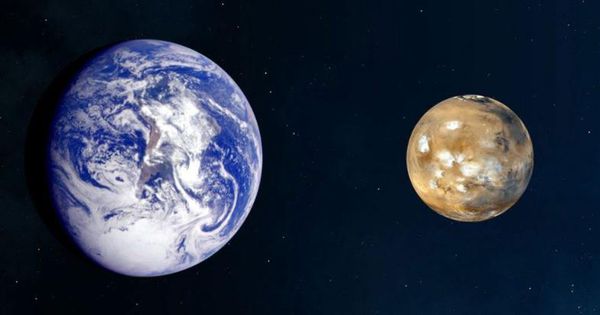
    Mars and Earth, to scale, shows how much larger and more friendly to life our planet is than our red neighbor. Mars, the red planet, has no magnetic field to protect it from the solar wind, meaning that it can lose its atmosphere in a way that Earth doesn’t.

    Imagine the early days of our Solar System, going back billions of years. The Sun was cooler and less luminous, but there were (at least) two planets — Earth and Mars — with liquid water covering large portions of their surfaces. Neither world was completely frozen over owing to the substantial presence of greenhouse gases, including carbon dioxide. Both may have even had primitive life forms in their young oceans, paving the way for a bright, biology-friendly future.

    Over the past few billion years, both planets have undergone dramatic changes. Yet, for some reason, while Earth became oxygen-rich, remained temperate, and saw life explode on its surface, Mars simply died. Its oceans disappeared; it lost its atmosphere; and no life signs have yet been found there. There must be a reason why Mars died while Earth survived. It took decades, but science has finally figured it out.

    Trilobites fossilized in limestone, from the Field Museum in Chicago. All extant and fossilized organisms can have their lineage traced back to a universal common ancestor that lived an estimated 3.5 billion years ago, and much of what’s occurred in the past 550 million years is preserved in the fossil records found in Earth’s sedimentary rocks.

    One of the most spectacular features of Earth is the fact that the history of life on our world is written into the fossil record. Over hundreds of millions of years, sediments have been deposited both on land and in the oceans, with various organisms leaving their telltale imprints within them.

    Of all the sedimentary rocks on Earth, about 10% of them are limestone, which are often composed of the remnants  of marine organisms like coral, amoebas, algae, plankton, and mollusks. Limestone is primarily made of calcium carbonate, while some forms also have magnesium and silicon present.

    The Cretaceous-Paleogene boundary layer is very distinct in sedimentary rock, but it’s the thin layer of ash, and its elemental composition, that teaches us about the extraterrestrial origin of the impactor that caused the mass extinction event. Earth has hundreds of meters worth of sedimentary rock covering its surface practically everywhere, with limestone making up about 10% of the sedimentary rock in total.

    The “carbonate” part, however, is universal to limestone on Earth, as well as other ocean-deposited minerals like the magnesium-rich dolomite. It’s the carbon dioxide in the atmosphere that leads to the formation of carbonate rocks, as

    There are both biological and geochemical origins for the limestone we find on Earth, making it one of the most abundant rocks on Earth’s surface. It’s generally thought that the vast majority of Earth’s early CO2 atmosphere eventually wound up in our surface limestone.

    Seasonal frozen lakes appear throughout Mars, showing evidence of (not liquid) water on the surface. These are just a few of the many lines of evidence that point to a watery past on Mars.

    There is an overwhelming amount of evidence that Mars had a watery past. Seasonal ices can be found not only at the poles, but in various basins and craters dotting the Martian surface. Features like dried-up riverbeds — often featuring oxbow bends like those found on Earth — stream throughout the landscape. Evidence of ancient flows leading into great oceanic basins, possibly even including tidal rhythmites, abounds all over the red planet.

    These features may have been telltale signs of an ancient past where liquid water was abundant, but that’s no longer the case today. Instead, there’s so little atmosphere left on Mars that pure, uncontaminated liquid water is actually impossible at most locations on Mars. There’s simply insufficient pressure at the surface for liquid H2O to exist.

    Oxbow bends only occur in the final stages of a slowly-flowing river’s life, and this one is found on Mars. It would be foolish to conclude that such a feature as this could have formed by glacial flows, erosion, or any means other than freely-flowing liquid water.

    Even before we had rovers exploring the surface of Mars, the evidence of a watery past was very strong. Once we began exploring the surface in earnest, however, the evidence became too strong to ignore. The hematite spheres found by the Mars Opportunity rover all but sealed it. Particularly with the way some of the spheres were seen to be connected to one another, there was no reasonable possibility of forming them without liquid water.

    Since Mars once had a similarly CO2-rich atmosphere to early Earth, it was assumed that limestone and other carbonate rocks would be found on its surface. But there was none found by the Viking landers, nor by Soujourner, Spirit, or Opportunity.

    As discovered by the Opportunity rover, hematite spheres and spherules have been found on Mars. While there may be mechanisms to form them that don’t necessarily involve liquid water, there are no known mechanisms, even in theory, that can form them fused together (as found) in the absence of liquid.

    It wasn’t until the Mars Phoenix lander arrived that any calcium carbonate was found at all, and even that was a small amount: likely produced by an evaporating body of water in its final stages. Compared to the hundreds of meters (or even in excess of a kilometer in places) of carbonate rocks on Earth, there was nothing like it on Mars.

    This was extraordinarily puzzling to Martian scientists. Perhaps 20 years ago, the overwhelming expectation was that Mars would have lost its carbon dioxide the same way Earth did: to its oceans and then to deposition in carbonate rocks. But that’s not what the rovers found. In fact, in place of carbonates, they found something else that was perhaps equally surprising: sulfur-rich minerals. In particular, it was Opportunity’s discovery of the mineral jarosite that completely changed the story.

    Cape St. Vincent, shown here in assigned color, is one of many such capes around the rim of Victoria crater. The stratified layers of ground provide evidence for a sedimentary rock history on Mars, which also implies the past presence of liquid water. Opportunity’s discovery of the mineral jarosite was a game-changer for Martian geology.

    This allowed scientists to paint an entirely different picture of Mars from Earth. On Earth, our oceans are approximately pH-neutral, which is extremely conducive to carbonate rocks precipitating out. Even in a CO2-rich environment, the carbonic acid still leads to a pH that’s high enough that carbonates will precipitate out, leading to the limestones and dolomites found all over Earth’s surface.

    But sulfur changes the story dramatically. If early Mars had an atmosphere rich in not just carbon dioxide but also sulfur dioxide, its surface water could have been affected not by carbonic acid, but by sulfuric acid: one of the strongest acids in all of chemistry. If the oceans were acidic enough, it could have engineered the reverse reaction to what happened on Earth: sucking carbonates out of the land and into the oceans, leaving sulfur-rich deposits in their place.

    Payson Ridge, shown here, is a feature found on Mars by Opportunity whose origin is still unexplained even today. Many of the rocky deposits found on Mars contain sulfur, while relatively few contain carbon. This was one of the great mysteries of the Martian surface for many years.

    This would explain the ocean and surface chemistry of Mars, but would mean we needed an entirely different mechanism to explain where the Martian atmosphere went. Whereas a large portion of Earth’s atmosphere ended up in the Earth itself, that explanation simply wouldn’t fly for Mars.

    Instead of “down,” perhaps the atmosphere went “up” and into the depths of space.

    Perhaps Mars, much like Earth, once had a magnetic field to protect it from the solar wind. But at just half the diameter of Earth and with a lower-density, smaller core, perhaps Mars cooled enough so that its active magnetic dynamo went quiet. And perhaps this was a turning point: without its protective magnetic shield, there was nothing to protect that atmosphere from the onslaught of particles from the Sun.

    The solar wind is radiated spherically outward from the Sun, and puts every world in our Solar System at risk of having its atmosphere stripped away. While Earth’s magnetic field is active today, protecting our planet from these traveling particles, Mars no longer has one, and is constantly losing atmosphere even today.

    Was this correct? Is this really how Mars lost its atmosphere, stripping the planet of its ability to have liquid water at the surface and rendering it cold, sparse and barren?

    That was the whole purpose behind NASA’s MAVEN mission. The goal of MAVEN was to measure the rate at which the atmosphere was being stripped by the solar wind from Mars today, and to infer the rate throughout the red planet’s history. The solar wind is powerful, but molecules like carbon dioxide have a high molecular weight, meaning it’s difficult to get them up to escape velocity. Could the loss of a magnetic field coupled with the solar wind provide a viable mechanism to transform Mars from an atmosphere-rich world with liquid water at its surface to the Mars we know today?

    Without the protection of an active magnetic field, the solar wind constantly strikes Mars’s atmosphere, causing a portion of the particles comprising its atmosphere to be swept away. If we were to infuse Mars, today, with an Earth-like atmosphere, the solar wind would whittle it back down to its present density in a mere few tens of millions of years.

    What MAVEN saw was that Mars loses, on average, about 100 grams (¼ pound) of atmosphere to space every second. During flaring events, where the solar wind becomes much stronger than normal, that increases to about twenty times the typical value. When the atmosphere was much denser, though, the same level of solar wind would strip it away much more quickly.

    Timescales of merely ~100 million years would be sufficient to transform a Mars-sized world, without any protection from the solar wind, from having an Earth-like atmosphere to one akin to what we find on present-day Mars. After perhaps a billion years with liquid water precipitating and flowing freely on the Martian surface, a tiny slice of cosmic history was enough to blow the habitable prospects of Mars completely away.

    Both Mars and Earth had early atmospheres that were heavy, massive, and extraordinarily rich in CO2. While Earth’s carbon dioxide got absorbed into the oceans and locked up into carbonate rocks, Mars was unable to do the same, as its oceans were too acidified. The presence of sulfur dioxide led to Martian oceans that were rich in sulfuric acid. This led to geology of Mars we’ve discovered with rovers and landers, and pointed to a different cause — the solar wind — as the culprit in the mystery of the missing Martian atmosphere.

    Thanks to NASA’s MAVEN mission, we’ve confirmed that this story is, in fact, the way it happened. Some four billion years ago, the core of Mars became inactive, its magnetic field disappeared, and the solar wind stripped the atmosphere away. With our magnetic field intact, our planet will remain blue and alive for the foreseeable future. But for a smaller world like Mars, its time ran out long ago. At last, we finally know why.

    This content was originally published here.
  • Catastrophic meteors: How space scientists hope to protect ‘the only planet we know’ | CTV News

    Catastrophic meteors: How space scientists hope to protect ‘the only planet we know’ | CTV News

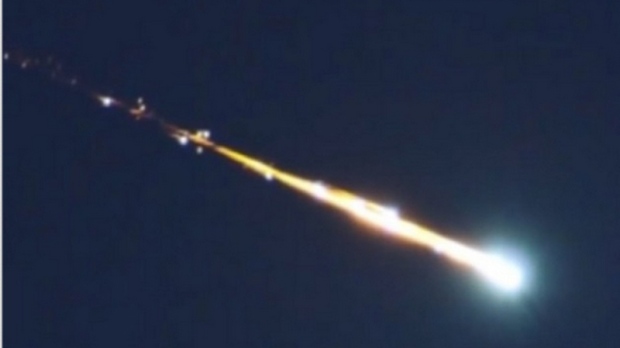
    NASA is warning that meteors pose a major threat to Earth, so agencies are already testing out ways to defend against them by using lasers or by ramming spacecraft into them.

    During a conference last week, NASA administrator Jim Bridenstine explained that not taking meteors seriously could have catastrophic consequences. In 2013, a 20-metre meteor exploded over Russia and the sonic boom caused windows and glass to shatter, injuring more than 1,000 people.

    That relatively small meteor contained more than 30 times the energy of the atomic bomb the United States dropped on Hiroshima during the Second World War.

    “We have to make sure that people understand that this is not about Hollywood, it’s not about movies,” he said during the keynote speech. “This is about ultimately protecting the only planet we know, right now, to host life, and that is the planet Earth.”

    Unfortunately, that wasn’t a one-off event.

    For example, the Tunguska event flattened around 2,000 square kilometres of Siberian forest in 1908 and another was reported in Brazil in 1930. Similar devastating meteor strikes are expected to happen once every 60 years, according to scientific modelling systems.

    And some – those more than 43 metres in diameter — could be large enough to destroy cities. One larger than that could even decimate entire countries.

    Canada hasn’t been exempt. In 2008, a 41-kilogram meteor was seen breaking apart over Alberta, Saskatchewan and Manitoba. And the Manicouagan crater in Quebec was left after an 85-kilometre wide meteor collided with Earth over 200 million years ago.

    Jeremy Wang, CEO of the commercial drone company The Sky Guys, said despite Canada’s size, the country’s population density is sparse enough that the likelihood of personally being affected would be quite low.

    “However, Canada as a country doesn’t have its own planetary defence system,” he told CTV Your Morning. “That’s really more of an international effort that’s collaborated on by NASA, [Canadian Space Agency], the European Space Agency and others.”

    Potential defences range from high-concept ones to others which are fairly possible in the next five to 10 years, Wang said. “Broadly speaking, planetary defence measures come in two flavours: you either destroy the object or you delay or deflect the object.”

    But he explained destroying the object is unfavourable because this could “create multiple objects Earth would need to worry about.” Therefore, deflecting the meteors is the better option.

    These options can include using a laser to nudge their trajectories or by using so-called “gravity tractors” whose gravitational pull will drag the meteor or asteroid off course.

    “But the most feasible one in existence today is the kinetic impactor — so we’re talking about bringing a spacecraft to an incoming object and literally smashing into the side … at more than 10,000 mph,” Wang said.

    In fact, earlier this month, SpaceX was awarded a $69-million government contract to provide launch services for NASA’s Double Asteroid Redirection Test mission, which will test out the ability to deflect an asteroid by colliding a spacecraft into it at high speed.

    Additionally, NASA is currently moving towards a goal of detecting and tracking 90 per cent of near-Earth asteroids larger than 140 metres or more.

    Models indicate there are around 25,000 of these sized objects orbiting Earth, but so far Bridenstine said NASA has only detected 8,000 of them — or less than one third.

    “This is a priority of the United States and we want it to be a priority of the world,” he said. “We want more international partners that can join us in this effort.”

    The day after #2019PDC was spotted, @ESA & @NASA’s impact monitoring systems identify several future dates when the #asteroid could hit. Both systems agree: most likely date is 29 Apr 2027 – with a very low impact probability of abt 1 in 50 000#FICTIONALEVENT #planetarydefense pic.twitter.com/5kksLGnUwz

    — ESA Operations (@esaoperations)

    This content was originally published here.

  • Embryo stem cells created from skin cells — ScienceDaily

    Embryo stem cells created from skin cells — ScienceDaily

    As published in Cell Stem Cell, Dr. Yossi Buganim of HU’s Department of Developmental Biology and Cancer Research and his team discovered a set of genes capable of transforming murine skin cells into all three of the cell types that comprise the early embryo: the embryo itself, the placenta and the extra-embryonic tissues, such as the umbilical cord. In the future, it may be possible to create entire human embryos out of human skin cells, without the need for sperm or eggs. This discovery also has vast implications for modelling embryonic defects and shedding light on placental dysfunctions, as well as solving certain infertility problems by creating human embryos in a petri dish.

    Back in 2006, Japanese researchers discovered the capacity of skin cells to be “reprogrammed” into early embryonic cells that can generate an entire fetus, by expressing four central embryonic genes. These reprogrammed skin cells, termed “Induced Plutipotent Stem Cells” (iPSCs), are similar to cells that develop in the early days after fertilization and are essentially identical to their natural counterparts. These cells can develop into all fetal cell types, but not into extra-embryonic tissues, such as the placenta.

    Now, the Hebrew University research team, headed by Dr. Yossi Buganim, Dr. Oren Ram from the HU’s Institute of Life Science and Professor Tommy Kaplan from HU’s School of Computer Science and Engineering, as well as doctoral students Hani Benchetrit and Mohammad Jaber, found a new combination of five genes that, when inserted into skin cells, reprogram the cells into each of three early embryonic cell types — iPS cells which create fetuses, placental stem cells, and stem cells that develop into other extra-embryonic tissues, such as the umbilical cord. These transformations take about one month.

    The HU team used new technology to scrutinize the molecular forces that govern cell fate decisions for skin cell reprogramming and the natural process of embryonic development. For example, the researchers discovered that the gene “Eomes” pushes the cell towards placental stem cell identity and placental development, while the “Esrrb” gene orchestrates fetus stem cells development through the temporary acquisition of an extrae-mbryonic stem cell identity.

    To uncover the molecular mechanisms that are activated during the formation of these various cell types, the researchers analyzed changes to the genome structure and function inside the cells when the five genes are introduced into the cell. They discovered that during the first stage, skin cells lose their cellular identity and then slowly acquire a new identity of one of the three early embryonic cell types, and that this process is governed by the levels of two of the five genes.

    Recently, attempts have been made to develop an entire mouse embryo without using sperm or egg cells. These attempts used the three early cell types isolated directly from a live, developing embryo. However, HU’s study is the first attempt to create all three main cell lineages at once from skin cells. Further, these findings mean there may be no need to “sacrifice” a live embryo to create a test tube embryo.

    This content was originally published here.