Category: Science&Technology

  • Humans ‘BIOHACKING’ their own bodies with blood transfusions to achieve ‘DIY IMMORTALITY’

    Humans ‘BIOHACKING’ their own bodies with blood transfusions to achieve ‘DIY IMMORTALITY’

    Anti-ageing science has never been more hyped, with breakthroughs in genetic engineering and drug discovery pushing the boundaries of what was once dismissed as science fiction.  Although futurologists have said immortality is possible, most scientists believe delaying the onset of ageing is more ethical — and research into this is booming.  Longevity biotech firms received $800 million in funding in 2017 compared with less than half that in 2014, according to data from cbinsights.com.  The process of taking such a drug through clinical trials takes around seven years — with the majority failing to get approved for safety reasons or because they just don’t work for humans.  And some people — dubbed biohackers — are willing to dabble in DIY anti-ageing medicine and other “hacks” which have not passed these stringent tests, despite the high risks.  “We know biohacking happens all the time,” Lynne Cox, a biochemist at the University of Oxford, told New Scientist. “There’s a lot of DIY,” she added.

    From unregulated blood transfusions to off-label pill-popping, biohackers are putting their health in their own hands rather than those of qualified doctors.  The grim, somewhat vampiric, practice of swapping blood between a young person and an older person is called parabiosis.  Scientists discovered in the 1970s that fusing the circulatory systems of animals together — sometimes for weeks on end — had surprising results.  The younger animal would age prematurely, whereas the older animal was rejuvenated.  But a stark warning was issued by the FDA, who said it feared some Americans were receiving rogue blood transfusions.  The FDA said people seeking parabiosis therapy were being “preyed upon by unscrupulous actors touting treatments of [blood] plasma from young donors as cures and remedies”.  “Such treatments have no proven clinical benefits for the uses for which these clinics are advertising them and are potentially harmful,” it added.

    Other so-called hacks include diabetes drug metformin, which has been shown only to increase the lifespan of some animals.  Similarly, spermididne — yes, it was originally isolated from semen — restores mitochondria function in older mice.  Meanwhile chemotherapy drug dasatinib and dietary supplement quercetin are being probed as a senolytic combination.  Senolytics are believed to destroy aged and worn-out cells before they become dangerous, but there are serious risks taking untested drugs — including death.  “I’m deeply worried about biohackers because if somebody dies taking a senolytic it’s going to damage the field for quite some time,” Prof Cox added.  For those who want to delay the dying of the light without resorting to these crazy and unproven secret hacks, boring but sure methods are exercise and intermittent fasting.

    source

  • Why we need to stop eating fish | TreeHugger

    Why we need to stop eating fish | TreeHugger

    The recent UN biodiversity report states that overfishing is a bigger threat to the world’s ocean than plastic or acidification.

    Few images have filled me with as much dread as the one in George Monbiot’s most recent column. It depicts a grim reaper below the sea, the blade of its scythe a ship floating on the surface. “Stop eating fish. It’s the only way to save the life in our seas,” reads the title.

    Monbiot proceeds to describe the horrific situation that’s playing out underwater. There, according to the latest UN report on biodiversity, life is collapsing faster than on land, and the cause is “not pollution, not climate breakdown, not even the acidification of the ocean. It is fishing.”

    The way in which the oceans are fished is destroying them completely. This is due in part to technology that allows fishers to remove far more than can ever be replenished and that ruins whole ecosystems in the process, though processes like dredging; it’s also caused by lax regulations and non-existent or toothless oversight.

    Our “bucolic fantasy” of what fishing is must be revised. Monbiot writes that 29 percent of the UK’s fishing quota is owned by five families, and a single Dutch company with a vast fleet owns another 24 percent. Small boats “comprise 79 percent of the fleet, but are entitled to catch just 2 percent of the fish.” He goes on:

    “The same applies worldwide: huge ships from rich nations mop up the fish surrounding poor nations, depriving hundreds of millions of their major source of protein, while wiping out sharks, tuna, turtles, albatrosses, dolphins and much of the rest of the life of the seas. Coastal fish farming has even greater impacts, as fish and prawns are often fed on entire marine ecosystems: indiscriminate trawlers dredge up everything and mash it into fishmeal.”

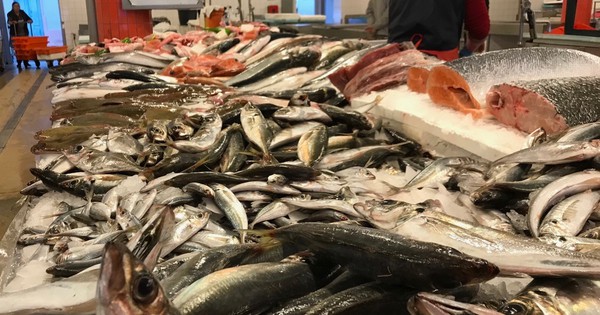
    seafood in Portugal© Lloyd Alter – Seafood at a market in Portugal

    Claims that the waters are safeguarded are bogus. Monbiot calls marine protected areas “a total farce: their only purpose is to con the public into believing that something is being done.” While fishers are legally obligated to comply with quotas, avoid no-take zones, and not overfish, there is no legal requirement for monitoring equipment to be installed on board – something that could be done across the entire UK fleet for a mere £5 million (not much, considering what it would do).

    Marine oceanographer Sylvia Earle put seafood consumption into perspective in a TED article in 2014. She argues that it’s time to think of fish as more than an edible commodity. They play a crucial role in the ecosystem that outweighs their value as food.

    “They’re part of the systems that make the planet function in our favor, and we should be protecting them because of their importance to the ocean. They are carbon-based units, conduits for nutrients, and critical elements in ocean food webs. If people really understood the methods being used to capture wild fish, they might think about choosing whether to eat them at all, because the methods are so destructive and wasteful.”

    Earle points out the absurdity of eating apex predators like tuna and sea bass that can live up to 32 and 80 years, respectively. Bluefin tuna takes 10-14 years to mature, which is radically different from land-based mammals that are slaughtered after a few months (like chickens) or a couple years (cows). By comparison, “think of how many fish have been consumed in a 10-year period to make even a pound of one of those wild ocean carnivores.”

    dried seafood in China© Lloyd Alter – Dried seafood for sale in China

    Except for people living in coastal communities that have limited choices about what to consume, eating wildlife should be viewed as a luxury, not a right. Especially in North America, there’s almost always another choice. In Earle’s words, “[Eating seafood] is never, as far as I can tell, a true necessity, given our access to other food sources.”

    Nor is there any truly ethical seafood. Monbiot points to recent reports of the Marine Stewardship Council’s failure to protect scallop beds and endangered sharks. Fish that we’ve told are safe to consume, like cod and mackerel, have seen their numbers plummet yet again. Aquaculture is contaminating ocean waters with its disease-ridden open pens. The message is clear; the times have changed.

    “It isn’t like 10,000 years ago or 5,000 years ago or even 50 years ago. These days, our capacity to kill greatly exceeds the capacity of the natural systems to replenish.”

    If you care at all about the oceans, worry less about the plastic bags and more about the fish – and keeping them off your plate.

    This content was originally published here.

  • Video: 5G Apocalypse, The Imminent Dangers – Global ResearchGlobal Research – Centre for Research on Globalization

    Video: 5G Apocalypse, The Imminent Dangers – Global ResearchGlobal Research – Centre for Research on Globalization

    What is 5G? We need to know the dangers of this technology.

    A full length documentary by Sacha Stone exposing the 5G existential threat to humanity in a way we never imagined possible!

    Scientists, environmental groups, medical doctors and citizens around the world are appealing to all governments to halt telecommunications companies’ deployment of 5G (fifth generation) wireless networks, which they call “an experiment on humanity and the environment that is defined as a crime under international law.”

    Watch the video below.

    This content was originally published here.
  • World’s first bird brain surgery performed on parrot

    World’s first bird brain surgery performed on parrot

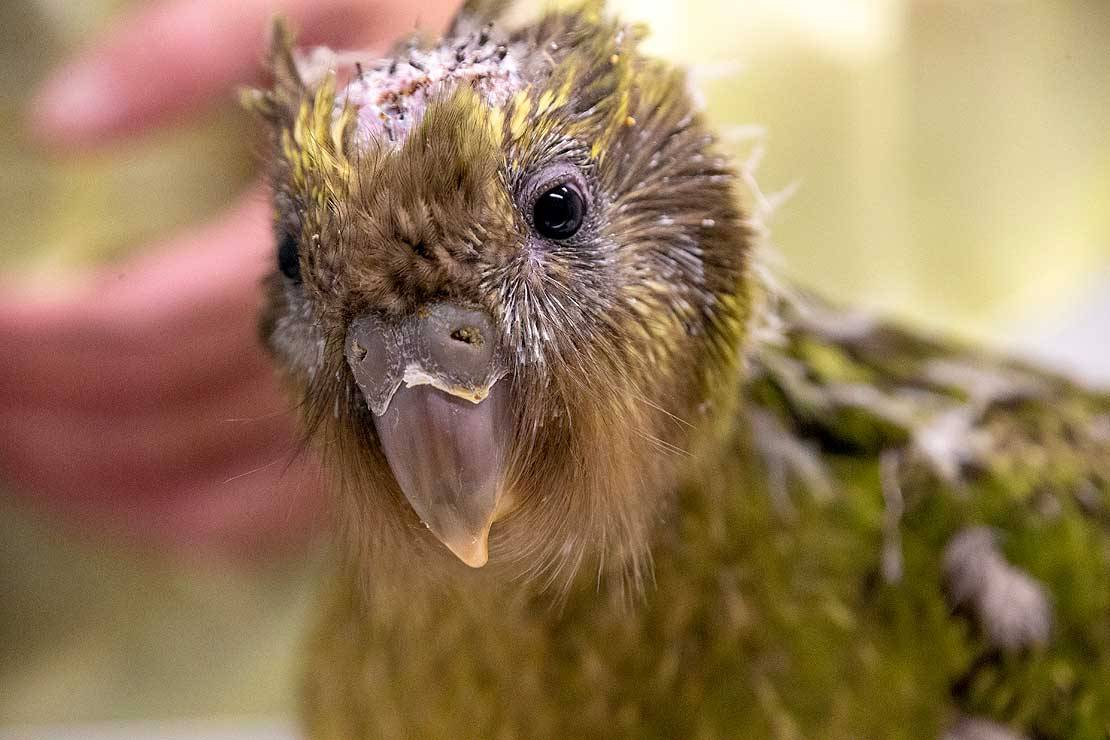
    These human surgeons are for the birds.  When wildlife rangers discovered a strange lump on a “wild-hatched” parrot’s skull, they took action and got it the best medical attention New Zealand could provide. Now the Massey University medical team behind the resulting operation is declaring it the first of its kind for avian medicine.  The 56-day old kākāpō chick, born with a life-threatening skull deformity, was airlifted from the zoo where it lives to Massey’s Wildbase Hospital for emergency brain surgery last week.  The country’s national airline even flew the baby bird, named Espy, for free . “This was only possible because of a national collaboration with vets and conservation workers,” Director of Wildbase Hospital professor Brett Gartrell tells The Guardian. “The plates of its skull had not completely fused and the fontanelle was still open.”  Gartrell says the surgery is risky “and the common complications … in humans include permanent brain damage, continued leakage of cerebrospinal fluid and the possibility of meningitis.”  A national collective of veterinarians from Auckland Zoo, Wellington Zoo and Dunedin Wildlife Hospital convened to determine that surgery was the best way forward for the chick.  Once one of New Zealand’s most common birds, today only 144 of these rare large parrots exist. However, this year 76 kākāpōs were born, a record-breaking breeding season. The surviving birds are beloved in the nation, especially one named Sirocco, who is internet famous.  So far, Espy’s surgery appears to have been a success. The kākāpō is doing well and is back home at Dunedin Wildlife Hospital in the South Island

    source

  • How genetically engineered viruses — and a rotten eggplant — prolonged a teenager’s life

    How genetically engineered viruses — and a rotten eggplant — prolonged a teenager’s life

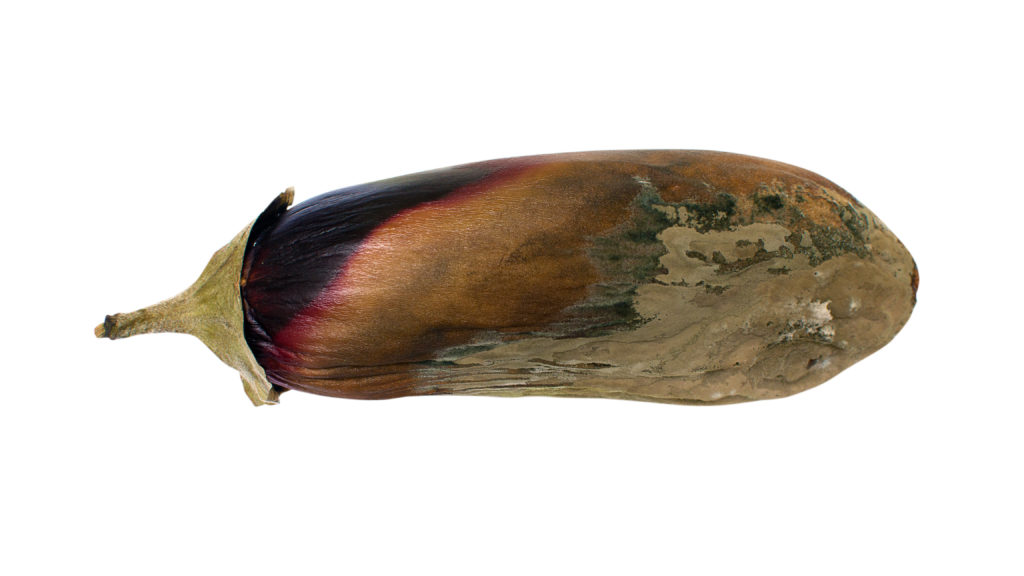
    In 2010, an undergraduate in Durban, South Africa, found herself scraping muck from the underside of a partially decomposed eggplant. It was, in a sense, homework. She was taking a University of KwaZulu-Natal course on viruses that attack bacteria, and a semi-rotten vegetable seemed like a good place to find them. The “enriched soil sample,” she wrote, was dark and moist, wriggling with worms and other spineless lovers of decay.  The sludge proved lively on a microscopic level, too, and the student had soon picked out exactly what she was looking for: a never-before-described bacteriophage virus that kills certain mycobacteria. She named it Muddy and got on with her life, earning more degrees, landing a job at a communications agency. Muddy, meanwhile, landed in a lab freezer in Pittsburgh — one frost-filigreed tube among thousands.

    But then, on Wednesday, a paper published in Nature Medicine pulled Muddy and two other viruses out of their frozen obscurity. These bacteriophages, the authors reported, beat back an antibiotic-resistant infection festering inside a 15-year-old in London. The patient wasn’t completely cured, but after more than six months of injections and topical treatments, she’d gone from bed-bound and tube-fed to school-attending and sushi-eating — a remarkable result given that some elements of her “phage therapy” had not previously been tested in humans.  Of the three viruses that helped, Muddy’s origin story is by far the most conventional. After all, scientists have plucked phages from the dirtiest places imaginable and used them as last-ditch therapies before, harnessing the viruses’ natural bacteria-bursting powers to save patients’ lives. The two other viruses, meanwhile, had to go through a kind of reverse domestication — converted, with genetic engineering, from relatively docile microbial parasites into efficient killers of infection.

    “It is exciting. … This study is the first that we’re aware of using an engineered phage,” said Dave Ousterout, chief scientific officer of Locus Biosciences, a company not involved in the paper that is also working on enhancing the antibacterial capabilities of phages.  For months already, excited whispers about this news have been spreading, with cryptic hints dropped at conferences, rumors passed from biologist to biologist, academic to entrepreneur. “I kept hearing tidbits,” said Jessica Sacher, who runs a directory that connects clinicians and patients looking to try phage therapy as an experimental last resort with the microbiologists who keep collections of the viruses. “Some other researchers were saying, ‘Just wait, there’s going to be the first report of engineered phage in therapy soon.’” But as with all such case reports, the impressive details of how this work was accomplished — on top of the eggplant scraping, it involved a chance encounter in the Republic of Georgia, a close examination of some bird guano, and a loophole in British regulation of genetically modified organisms — make clinicians wonder to what extent the development can be scaled up to help combat the global crisis of antibiotic resistance.

    “I still have real reservations about whether this kind of approach could be developed into something that could be usable on a large scale,” said Dr. Marcia Goldberg, an infectious disease specialist at Massachusetts General Hospital. “The amount of science that needs to go into developing a therapeutic against any single strain is huge.”

    source

  • In Video, Humanoid Robot Crosses Narrow Balance Beam Like A Cakewalk

    In Video, Humanoid Robot Crosses Narrow Balance Beam Like A Cakewalk

    t first glance, a humanoid robot walking between two platforms across several cinder blocks may look like a simple feat.

    How many times, after all, have you crossed a shallow creek by hopping from one stone to another or threaded a narrow path while hiking without toppling over?

    Seems fairly simple, right?

    But the ability to navigate such obstacles by the human body, with its complex joints and natural system for creating balance, is far more difficult to replicate in a machine, especially one that operates autonomously.

    To showcase that difficulty, researchers from The Institute for Human & Machine Cognition in Pensacola, Florida, released a video this month showing their efforts to train a bulky, 165-pound humanoid robot to walk across narrow terrain using autonomous planning. In the three-minute video, the robot – a Boston Dynamics-built Atlas model that uses control, perception and planning algorithms created by IHMC Robotics – carefully moves across a series of narrow cinder blocks and a balance beam, revealing a degree of body control that many humans would struggle to maintain.

    more

  • New Old Spanish coins that predate Christopher Columbus by 200 years found deep in the Utah desert

    New Old Spanish coins that predate Christopher Columbus by 200 years found deep in the Utah desert

    It has long been the belief that Chris did not discover America, but he did make a lasting impression.  What would we do without Columbus Day?

    Spanish treasure that predates the arrival of Columbus by 200 years has been found in a US national park.  The two coins, one minted in Madrid in 1660 and the other made around the 1200s, were found lying on the floor at Glen Canyon National Recreation Area, Utah.  Their presence in the desert remains unexplained and no information has been released about whether they were found with other artifacts.  Spanish explorers arrived in Mexico in the 1500s and began exploring north, although there is no record of them being in America at the time the coins were made.

    Left by settlers or explorers

    This is the most exciting theory as it suggests Spanish settlers could have been in the area as much as 500 years earlier than currently known.  However it is regarded by experts as extremely unlikely, while Spain controlled large swathes of the Southern and Western United States  until the 19th century they did not establish a serious presence until 1519 onwards.  Christopher Columbus set foot in the Americas in 1492.  At present the first presence is recorded in 1765 with the Spanish expedition led by Juan Antonio de Rivera.  However, the coins could record a previously undocumented earlier expedition as one dates back to the 1200s

    Traded with a native American tribe

    There is also a suggestion that the coins may have been traded with a native American tribe that then transported them to the area.  Christopher Columbus reached the Americas in 1492, although other explorers had arrived in the Caribbean beforehand.  It is possible the coins were traded with a native American tribe which traded them with others before they were transported to, and eventually lost, in Utah.

    Brought to America long after they were minted

    It is also possible that the old coins were actually brought to the Americas long after they were minted.  Despite both being made in Spain, one in the 1660s and the second in the 1200s, it is possible they were kept in Spain and transported to the new colonies much later.  After Columbus arrived in 1492, Spaniard settlers began to arrive. When moving to the Americas they took all their possessions with them including – quite possibly – these coins.

    Dropped by a tourist?

    Archaeologists also aren’t ruling out the theory that the coins were dropped by a tourist – as they were found among litter.  This could be the more plausible theory as old coins were a favored souvenir for soldiers returning from the Middle East and in the two World Wars.  With such different minting dates it also seems unlikely that they were in circulation in Spain at the same time

    source

  • NASA Chief Warns That Humans Must Prepare For A Massive Meteor Strike

    NASA Chief Warns That Humans Must Prepare For A Massive Meteor Strike

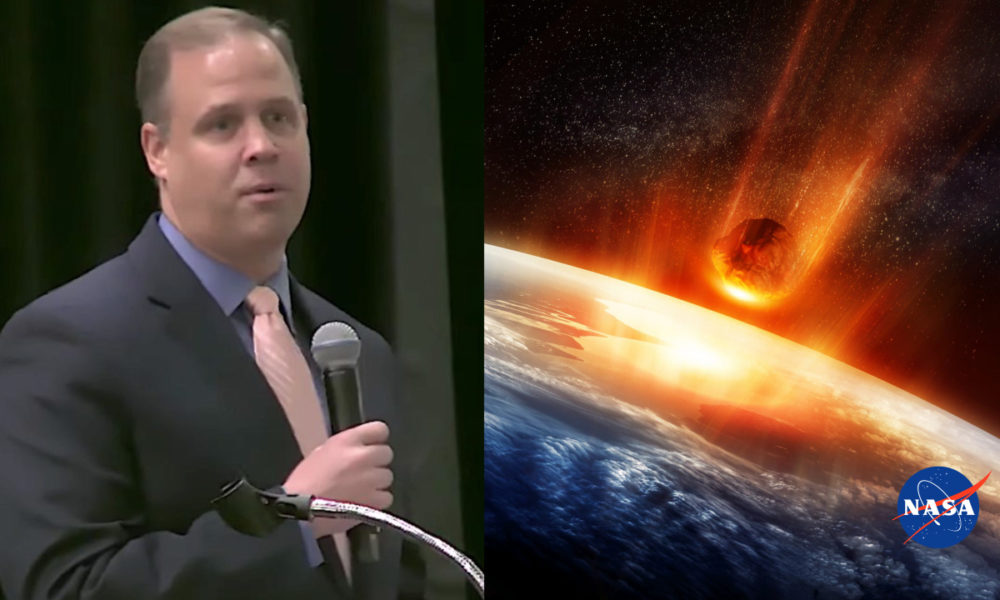
    NASA administrator, Jim Bridenstine, recently warned an audience at the International Academy of Astronautics’ Planetary Defense Conference, about the very real possibility of a large meteor crashing into the earth.

    “We have to make sure that people understand that this is not about Hollywood. It’s not about movies. This is about ultimately protecting the only planet we know right now to host life, and that is the planet Earth,” Bridenstine said.

    Bridenstine reference a large meteor that entered the earth’s atmosphere and exploded over Chelyabinsk, in central Russia, in February of 2013. The meteor measured roughly 20 meters in diameter and was traveling at 40,000 mph.

    “It was brighter in the sky than the sun at that point when it entered Earth’s atmosphere. And people could feel the heat from this object from 62 kilometres away… When it finally exploded 18 miles above the surface…it had…30 times the energy of the atomic bomb at Hiroshima… It damaged buildings in six cities,” Bridenstine said.

    I wish I could tell you that these events are exceptionally unique, but they are not,” he added.

    Bridenstine says that meteors enter the earth’s atmosphere on a regular basis, but those as large as Chelyabinsk only come once every 60 or so years.

    Yet theories about this phenomenon still aren’t taken seriously in many mainstream and establishment circles.

    “We know for a fact that the dinosaurs did not have a space program. But we do, and we need to use it,” Bridenstine said.

    NASA Administrator Jim Bridenstine at the Planetary Defense Conference in Washington, DC. Solar System Exploration Research Virtual Institute / Photo Credit: YouTube screenshot

    Bridenstine is among a growing number of researchers and scientists who are suggesting that governments put more effort into space programs that are specifically tasked with formulating a plan for incoming meteors and space debris.

    On December 18, a massive meteor exploded over in the earth’s atmosphere, but the details of the blast have just been uncovered recently. The fireball reportedly flew over the Bering Sea, in the Pacific Ocean between Russia and Alaska.

    Researchers all over the world survey for signs of disturbance around the clock and many of them initially recorded the blast.

    Peter Brown at the University of Western Ontario, Canada, spotted the meteor in measurements picked up by at least 16 monitoring stations globally, according to NewScientist.

    Alan Fitzsimmons of Queen’s University Belfast, UK said that “It would have been quite spectacular,” to see.

    The meteor was reportedly 10 meters in diameter and had a mass of 1400 tonnes. The meteor impacted with an energy of 173 kilotons of TNT, Peter Brown said on Twitter. The energy caused by the explosion was incredible, registering at nearly ten the force of the blast from an atomic bomb.

    Believe it or not, this type of occurrence is actually fairly common. Blasts like this have been recorded all over the world for the past few decades. The chart below shows fireballs spotted larger than three kilotons in the past several years.

    “When you see these infrasound waves, you know immediately that there has been an impact or a large release of energy,” says Fitzsimmons.

    Fireballs reported by US sensors / Photo Credit: NASA

    This was the third-largest impact in modern history, surpassed by the 2013 Chelyabinsk explosion, and a huge blast in 1908 near Siberia, Russia. In the Chelyabinsk explosion, more than 900 hundred people were injured, mostly by broken glass. The meteor reportedly weighed 10 tons and entered the atmosphere at a speed of at least 54,000 kilometers per hour, exploding between 30 to 50 kilometers above the ground, According to NewScientist.

    There are a large number of videos of the Russian meteor strike because it is common for Russian drivers to use dashboard-mounted cameras to prove liability in car accidents. This video footage gave scientists an unprecedented treasure trove of data for their research.

    Of course, we have far less documentation of the Tunguska event, which occurred near Siberia in 1908 and flattened an estimated 80 million trees over an area of more than 2000 square kilometers. The Tunguska event is the largest impact event on Earth in recorded history.  The explosion registered at seismic stations across Eurasia and air waves from the blast were detected in Germany, Denmark, Croatia, the UK, and as far away as Jakarta and Washington, D.C.

    This content was originally published here.

  • Researchers Find Cocaine In Every Single Shrimp Tested In England’s Waterways

    Researchers Find Cocaine In Every Single Shrimp Tested In England’s Waterways

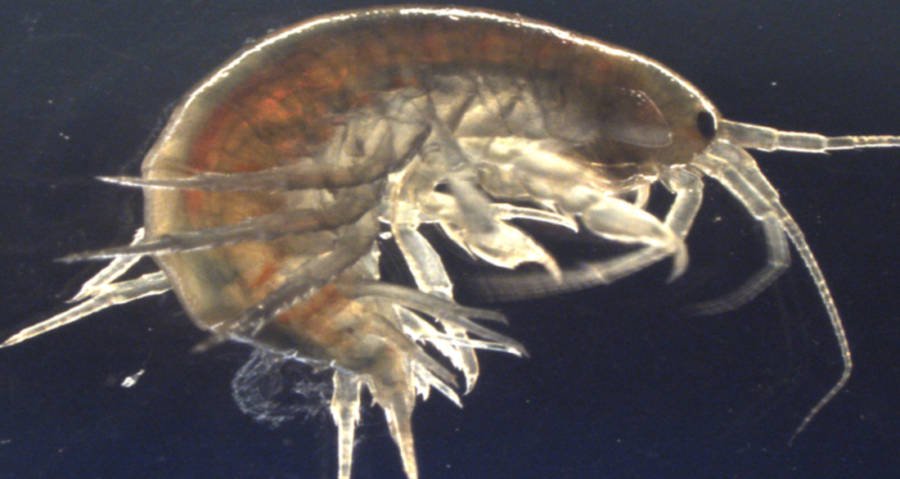
    When two British universities embarked on a study to analyze the presence of micropollutants in aquatic wildlife, they found something they surely didn’t expect.  Researchers from King’s College London and the University of Suffolk found illicit drugs like ketamine and cocaine in the inhabitants of Britain’s waterways. Though the study’s focus did include both illicit drugs and medicines in its quest to assess how consumer products are negatively affecting rivers, freshwaters, and natural environments, finding such drugs was still a shock.  The study, published in the journal Environmental International, revealed just how polluted these waters are — to the point that every single sample of freshwater shrimp (Gammarus pulex) contained trace amounts of cocaine.  “Such regular occurrence of illicit drugs in wildlife was surprising,” Dr. Leon Barron of King’s College confessed. “We might expect to see these in urban areas such as London, but not in smaller and more rural catchments.”  To begin the study, the team collected samples from five catchment areas and 15 various sites across Suffolk County. Rivers used as sample sites included the Alde, Box, Deben, Gipping, and Waveney.  Though cocaine was the only drug found in all collected samples, the presence of ketamine, valium, Xanax, pesticides, and other pharmaceuticals were certainly widespread among the tested shrimp as well.
    read more

  • 7 Ways Hemp Plastic Could Change the World

    7 Ways Hemp Plastic Could Change the World

    Did you know that it takes between 500-1,000 years for plastic to degrade?

    Plastic pollution is destroying our planet by the minute. In fact, so much plastic is thrown away each year it could circle the earth four times. And these numbers are on the rise.

    In the United States alone, Americans throw away 35 billion plastic water bottles every year. This plastic ends up in the land and the sea, devastating natural ecosystems. Worse yet, this same plastic pollution ends up in our bodies.

    It’s estimated that 93 percent of Americans over the age of six test positive for BPA, a chemical in plastic linked to cancer, diabetes, impaired immunity, and much more.

    Clearly, plastic pollution is an environmental and health hazard. But what if hemp could help?

    The basic building blocks of plastic are cellulose. Currently, cellulose is primarily obtained from petroleum. However, petroleum-based plastics are harmful to human health. Not to mention destructive to the environment.

    Hemp, on the other hand, happens to be an excellent source of cellulose and is sustainable.

    Here are 7 ways how hemp plastic could change our planet.

    1. Hemp plastic is completely biodegradable

    One reason plastic is so toxic is because of its long shelf life.

    A water bottle may only be used for a few minutes but will take years to decompose. Account for other plastic wares like grocery bags, tupperware, buttons, packaging, electronics – it’s easy to see why plastic pollution is growing worldwide.

    Meanwhile, hemp plastic can be completely biodegradable when made with biodegradable polymers. Unlike conventional plastics, plastic made from hemp doesn’t contribute to permanent pollution.

    In the right environment hemp plastic takes around 3-6 months to decompose. This is astonishing in comparison to conventional plastics. Hemp plastic can also be recycled indefinitely. While petroleum-based plastic can be recycled, because this type of plastic is chemical-laden, it is a toxic process. Conventional plastics that are recycled still leak harmful substances into the environment such as BPA.

    Plastic made from hemp avoids these toxins completely.

    2. Hemp plastic is non-toxic

    Plastic is toxic to our health.

    Conventional plastics contain endocrine disruptors. Endocrine disruptors, such as BPA, interfere with the endocrine (aka hormone) system in the human body. Once inside the body, endocrine disruptors act like the hormone estrogen.

    Why is this dangerous?

    This hormonal imbalance in the body can stimulate the development of tumors. In fact, endocrine disruptors are linked to birth defects, cancer, learning disabilities, and more.

    The dangers of toxic chemicals from plastic don’t end with digestion. Endocrine disruptors can also leach into the soil and groundwater, devastating the natural environment and our health.

    Yet, hemp plastic is non-toxic. Plastic manufactured from hemp doesn’t contain harmful endocrine disruptors like petroleum-based plastics. Nor does it release toxins into the air during production.

    Why continue to destroy our environment and health when there is an alternative?

    3. Hemp plastic could help save endangered wildlife

    Plastic is polluting the ocean at alarming rates.

    A study by the Commonwealth Scientific and Industrial Research Organization and Imperial College of London found that 60% of seabirds today have plastic in their gut. By 2050, they expect that number could rise to 99%

    How does this plastic end up in wildlife? 

    When plastic is exposed to sunlight, it breaks down into smaller pieces. These small pieces of plastic end up being ingested by marine and other sea life. As plastic disintegrates, it moves down the food chain.

    Animals, like humans, are not designed to consume plastic.

    Ingesting plastic can lead to a number of detrimental health effects. Many of which we are likely still unaware of.

    Hemp plastic, on the other hand, is biodegradable. It is also non-toxic. Instead of filling up our seas with deadly petrochemical plastics, we could create sustainable initiatives to recycle hemp plastic safely.

    4. Hemp plastic is extraordinarily versatile

    Did you know thousands of everyday plastic products could be made from hemp instead of petroleum? Hemp plastic can be molded into almost any shape. Uses of hemp plastic include:

    This list is only a fraction of plastic products that could be made from hemp. Hemp plastic can replace toxic plastic products in every way. And unlike petrochemical plastics, manufacturing hemp plastic is environmentally friendly and cost-effective.

    5. Hemp plastic decreases environmental pollutants

    There is more carbon dioxide in the atmosphere today than at any point in history during the last 80,000 years.

    Rising carbon dioxide concentrations are responsible for the warming of the earth’s atmosphere. Otherwise known as the greenhouse effect. Much of this rise in carbon dioxide can be attributed to the burning of fossil fuels.

    Conventional plastics are made from fossil fuels like petroleum. Therefore, plastic is a big contributor to rising CO2 emissions.

    Hemp plastic and products can actually reduce the greenhouse effect. This is because hemp absorbs carbon dioxide from the atmosphere and converts it into oxygen. In addition, hemp plastic generates zero toxic byproducts.

    Seed to sale, hemp plastic is a sustainable process. This is the complete opposite from the toxic manufacturing process of petrochemical plastics.

    6. Hemp plastic is stronger than petroleum-based plastics

    Plastic made from hemp is five times stiffer and 3.5 stronger than polypropylene, one of the most common types of plastic. It is also a lot lighter. This makes hemp unique from other manufacturing materials.

    Hemp also doesn’t pose the health risks conventional plastics do.

    So not only is hemp plastic stronger, it’s safer. Hemp plastic provides durability and strength while also being lightweight.

    These features combined make hemp plastic a no brainer. Why risk health and safety when there is a perfectly suitable alternative?

    7. Hemp plastic is a renewable resource

    From the moment the seed enters the soil; hemp enriches its environment.

    Hemp is a sturdy plant with deep roots. As such, hemp helps prevent soil erosion, thereby reducing water pollution. Hemp can also be cultivated in the same soil for years without jeopardizing quality.

    Even once hemp is manufactured into plastic, it continues to be sustainable. Hemp plastic is 100% biodegradable. Which means that under the right conditions it will decompose within a few months. (Unlike traditional plastics that take an indefinite amount of time while leeching toxins in the process.)

    Conventional plastics are not worth the risk. The alternative is right in front of us.

    No other natural resource offers the capabilities of hemp. Start to finish hemp is renewable. While hemp certainly isn’t the only answer to our environmental and health concerns, it’s a start.

    Share this article if you agree that hemp plastic is important for our environment…

    Learn from the Top Leaders in Hemp Today

    Green Flower sits down with the leading CEOs, innovators, policymakers, entrepreneurs and experts shaping the future of hemp.

    This content was originally published here.