Category: Business

  • ‘I had to escape this debtors’ prison’: College grad flees U.S. to avoid student loan debt

    ‘I had to escape this debtors’ prison’: College grad flees U.S. to avoid student loan debt

    Eventually, he just couldn’t take it anymore. The rejection, the depression, the mounting bills, it became too much to deal with all on his own, Chad Albright said.   “I had to escape this debtors’ prison,” he said — it felt like there was no other choice. “That’s what America became to me, a prison. So I left.” Albright bought a one-way ticket to China and boarded an airplane, uncertain if he would ever return to the country he once considered home. It was 2011, and Albright was 30 years old, starting over in a country more than 7,000 miles away from his life in Pennsylvania — away from his family, his friends, and far away from the $30,000 he owed in student loans. Borrowing money for college seemed like a sound financial decision at the time. Albright thought his degree would reliably lead the way to a well-paying career.  With tuition comes high debt. And when delivering pizzas was the only job he could find two years post-graduation — with the country’s outstanding student debt rising above $1 trillion, and one million people defaulting on student loans every year — it didn’t seem like it was worth it after all. “I was expected to make a $400 loan payment every month, but I had no money, no sustainable income,” Albright said during a Skype interview. “College ruined my life.”

    In high school, he read books about the American dream, classics like “The Great Gatsby” and “The Grapes of Wrath.” If he worked hard, it would pay off — that’s what he was always told. But, Albright said, he now knows those were just stories. “There was no future for me in the United States,” Albright said. “And the American dream? Yeah, it doesn’t exist.” And few places have higher student debt than Pennsylvania. Average debt per student in the commonwealth is $36,854, one of the highest in the country, compared to the national average of $28,650. To get educated, most students go into debt. About two in three students who graduated in 2017 had student loan debt.

    source

  • In Business: New Virtual Reality Arcade Now Open In Baxter

    In Business: New Virtual Reality Arcade Now Open In Baxter

    A new business in Baxter is bringing a new form of media immersion to the Brainerd Lakes Area. VR Odyssey, a new virtual reality arcade, is the first of its kind in the area and one of the only VR arcades in Minnesota outside of the Twin Cities.

    Stand on the edge of a skyscraper, battle virtual monsters, or hang glide through mountains are just a few of the things you can do all from the comfort of a studio in Baxter thanks to virtual reality.

    “Being able to fly over a city, that’s one of our most popular ones. Some of them are facing down people’s fears. Kind of like standing before a giant spider approaching you,” said VR Odyssey owner Nick Sucik.

    VR Odyssey opened in Baxter in the beginning of June and during open hours, patrons can visit the parlor and try out the technology.

    “I was in Washington state where somebody had opened one of these and I was telling my folks back home about how it was unlike anything else I’ve ever done,” explained Sucik. “And they said maybe we should bring that to Brainerd. I thought they were joking and four months later, here we are.”

    Virtual reality uses a headset to simulate and create immersive environments that make the user feel as if they are actually there. The headsets have two screens that trick your brain and create and authentic, 3D experience.

    “When you move your head, you are moving your head in an actual digital space and it hijacks the brain. You become convinced that you’re in that space facing whatever entity or creature, or whatnot, is before you,” added Sucik.

    When people try virtual reality for the first time, many say it is unlike anything they have ever experienced.

    “I liken it to when a little kid is watching a scary movie and you say, “It’s just a movie, it’s not real,” well you’re back in that place again. Your brain is going to be taken over by this visual sensory experience and you have to intellectually tell yourself it’s not real,” Sucik said. “Because your instincts are screaming at you.”

    The possibilities for the future of virtual reality are endless, and VR Odyssey hopes to be able to make it possible for people in the Brainerd Lakes Area to be in the forefront of the new and evolving technology.

    “In addition to running, hopefully, a successful business, we are looking forward to being a way to engage with the community in offering, not just a glimpse of a new technology but a way to get on to a new rising technological phenomena,” said Sucik.

    This content was originally published here.

  • Supreme Court Rejects Atheists’ Attempt To Remove ‘In God We Trust’ From U.S. Currency | Daily Wire

    Supreme Court Rejects Atheists’ Attempt To Remove ‘In God We Trust’ From U.S. Currency | Daily Wire

    The U.S. Supreme Court has rejected a case filed by atheists to remove the phrase “In God We Trust” from all currency issued by the Department of Treasury.

    The phrase, which has become the national motto, was first stamped on a 2-cent U.S. coin in 1864 and was officially added to both coins and paper money in 1955 after Congress passed legislation.

    The high court on Monday declined to take up the case, which means the finding from the last court to hear the case stands. The 8th U.S. Circuit Court of Appeals dismissed the case in 2018.

    The case was brought by Michael Newdow, an activist who also sought to scrub the phrase “under God” from the Pledge of Allegiance. He had argued that Congress’ decision to put the phrase “In God We Trust” on currency violated the First Amendment because it was tantamount to a government endorsement of religion.

    The Establishment Clause of the First Amendment says “Congress shall make no law respecting an establishment of religion.”

    “The lawsuit also argued that the phrase violated the Fifth Amendment’s due process clause and the 1993 Religious Freedom Restoration Act because it forces ‘Petitioners (who are Atheists) to bear and proselytize that Montheistic message,’” the Free Beacon reported.

    Representing clients and groups that identify as atheist, Newdow said that “by mandating the inscription of facially religious text on every coin and currency bill,” the U.S. government turned his clients into “political outsiders on the basis of their fundamental religious tenet.”

    “Petitioners are Atheists,” the suit said. “As such, they fervidly disagree with the religious idea that people should trust in God. On the contrary, their sincere religious belief is that trusting in any God is misguided. Thus, by mandating the inscription of facially religious text (i.e., ‘In God We Trust’) on every coin and currency bill, Defendants have turned Petitioners – among whom are nine children – into ‘political outsiders’ on the basis of their most fundamental religious tenet.

    “Moreover, Defendants have conditioned receipt of the important benefit of using the nation’s sole ‘legal tender’ upon conduct proscribed by Petitioners’ Atheism (i.e., upon Petitioners’ personally bearing – and proselytizing – a religious message that is directly contrary to the central idea that underlies their religious belief system),” the suit said.

    The lawsuit was filed by the groups Atheists for Human Rights, the Saline Atheist & Skeptic Society, and 27 individuals, including nine children.

    One child petitioner wrote this, the suit says: “The government won’t give me money that doesn’t have god things on them, so I have to use their god money and say it is my money, that says things I don’t believe in, and forces me to give this message I don’t believe in to other people when I give them my money. The government is asking me to pretend that I believe it, they are asking me to lie just so I can use their god money and help them spread a message about a god I don’t believe in. The government shouldn’t make kids and grown ups says things they don’t mean and do bad things that are not right. That is not a good government to make kids like me lie when we are always supposed to tell the truth.”

    But in its 2018 ruling, the 8th U.S. Circuit Court of Appeals said the phrase “does not compel citizens to engage in a religious observance.” The Supreme Court’s rejection of the case means that ruling stands.

    Newdow has brought numerous suits before, challenging what he says is the federal government’s unconstitutional endorsement of religion. His fight in 2004 to remove “under God” from the Pledge of Allegiance failed before the Supreme Court.

    He also sought to block Chief Justice John Roberts from using the phrase “So help me God” as he administered the presidential oath of office to President Obama in 2009 and 2013, and President Trump in 2017. All of those cases failed, too.

    This content was originally published here.
  • Walmart service to deliver groceries inside

    Walmart service to deliver groceries inside

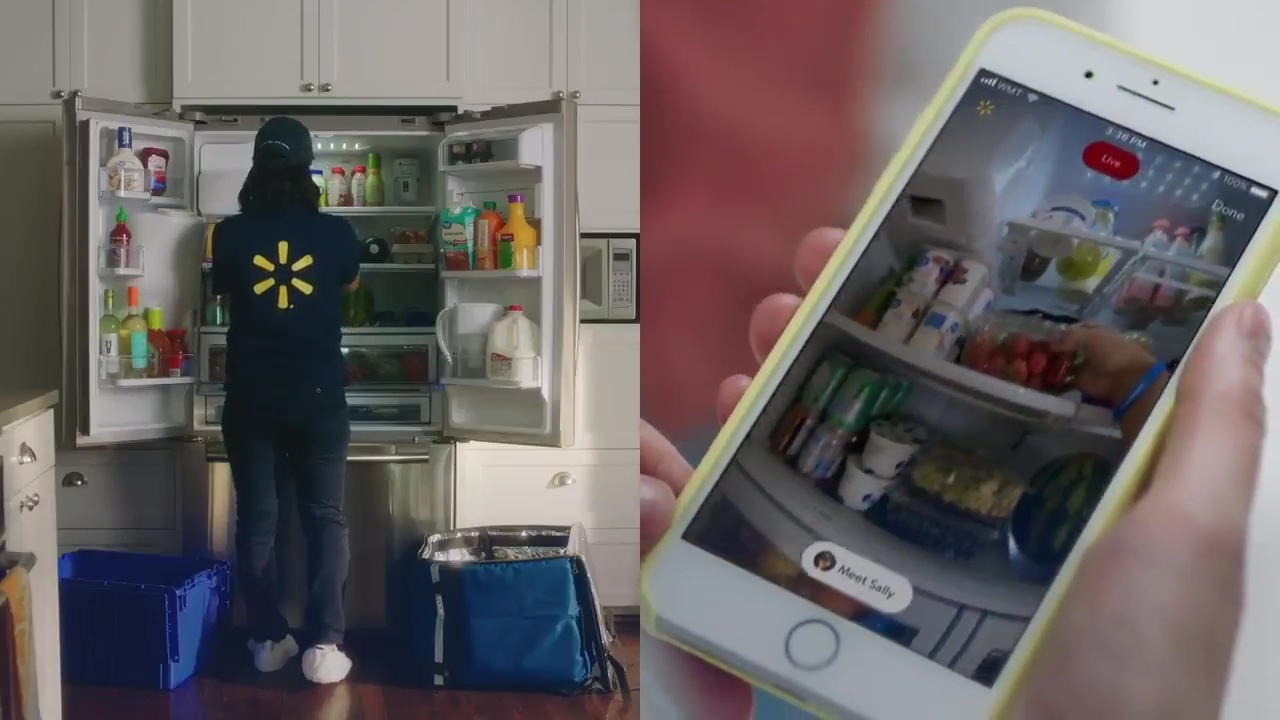
    Walmart is now offering to have one of its employees deliver fresh groceries and put them in your refrigerator when you’re not home. The nation’s largest grocer said Friday that it will be offering the service this fall for more than one million customers in three cities: Pittsburgh, Kansas City, Missouri, and Vero Beach, Florida. Later this year, the service, called InHome Delivery, will also accept returns for items purchased on Walmart.com. Two years ago, Walmart tested a similar service in the Silicon Valley area but teamed up with delivery startup Deliv and worked with August Home, makers of smart locks and smart home accessories. That test has since been stopped. The new service is part of Walmart’s drive to expand its shopping options that include curbside pickup and online grocery delivery.

    Amazon offers a similar service in certain cities, dropping off packages inside homes, garages or car trunks. But the service is not for groceries. With Walmart’s new service, customers place a grocery delivery order online and then select InHome Delivery and a delivery day at checkout. Walmart workers will use smart entry technology and a proprietary wearable camera to access the customer’s home. That allows shoppers to control access into their home and give them the ability to watch the delivery remotely. Walmart said that the workers will go through an extensive training program that would prepare them for things like how to select the freshest groceries and how best to organize the refrigerator. Walmart declined to give specifics on the technology. It said it will share the fee details ahead of the fall launch. “Now, we can serve customers not in just the last mile, but in the last 15 feet,” wrote Marc Lore, CEO of Walmart’s U.S. e-commerce division, in a corporate blog post.

    With Amazon’s service, customers need to be an Amazon Prime member and they have to buy a camera and a Wi-Fi-connected lock from the Seattle-based company that starts at $250. Shoppers will then be able to select in-home delivery on the Amazon app. When the delivery person shows up, he or she will knock first and scan the package, then Amazon will make sure the delivery person is at the right home and unlock the door. No codes are needed and the indoor camera will record the in-home delivery.

    source

  • With Venezuela in collapse, towns slip into primitive isolation

    With Venezuela in collapse, towns slip into primitive isolation

    At the once-busy beach resort of Patanemo, tourism has evaporated over the last two years as Venezuela’s economic crisis has deepened and deteriorating cellphone service left visitors too afraid of robbery to brave the isolated roads.

    Gone are the vendors who once walked the sands of the crescent-shaped beach hawking bathing suits and empanadas – a traditional savory pastry.

    These days, its Caribbean shoreline flanked by forested hills receives a different type of visitor: people who walk 10 minutes from a nearby town carrying rice, plantains or bananas in hopes of exchanging them for the fishermen’s latest catch.

    With bank notes made useless by hyperinflation, and no easy access to the debit card terminals widely used to conduct transactions in urban areas, residents of Patanemo rely mainly on barter.

    It is just one of a growing number of rural towns slipping into isolation as Venezuela’s economy implodes amid a long-running political crisis.

    From the peaks of the Andes to Venezuela’s sweltering southern savannahs, the collapse of basic services including power, telephone and internet has left many towns struggling to survive.

    The subsistence economy stands in stark contrast to the oil boom years when abundance seeped into the most remote reaches of what was once Latin America’s richest nation.

    “The fish that we catch is to exchange or give away,” said Yofran Arias, one of 15 fishermen who have grown accustomed to a rustic existence even though they live a 15-minute drive from Venezuela’s main port of Puerto Cabello.

    “Money doesn’t buy anything so it’s better for people to bring food so we can give them fish,” he said, while cleaning bonefish, known for abundant bones and limited commercial value.

    In visits to three villages across Venezuela, Reuters reporters saw residents exchanging fish, coffee beans and hand-picked fruit for essentials to make ends meet in an economy that shrank 48% during the first five years of President Nicolas Maduro’s government, according to recent central bank figures.

    Venezuela’s crisis has taken a heavy toll on rural areas, where the number of households in poverty reached 74% in 2017 compared with 34% in the capital of Caracas, according to an annual survey called Encovi carried out by private Venezuelan universities.

    Residents rarely travel to nearby cities, due to a lack of public transportation, growing fuel shortages and the prohibitive cost of consumer goods.

    source

  • CA Power Company Restores Power to Northern California Customers

    CA Power Company Restores Power to Northern California Customers

    Pacific Gas & Electric (PG&E) has restored power to more than 20,000 customers in Northern California after the company shut it off over the weekend to guard against wildfires.

    The utility company turned off electricity on Saturday to prevent outbreaks of deadly wildfires caused by high winds blowing down power lines.

    The company explained further on their website, “We know how much our customers rely on electric service and that there are safety risks on both sides. We understand and appreciate that turning off the power affects first responders and the operation of critical facilities, communications systems and much more.”

    PG&E’s preventive action arises from the recent fire that completely burned down the town of Paradise.

    CBN News previously reported on those conditions, “It was just constant explosions…cars are trying to go around the side and bursting into flames and people are getting out of their cars and running down the middle of the road,” Allyn Pierce said about his terrifying escape from Paradise, California in 2018.

    The California Department of Forestry and Fire Protection released a statement in May determining the cause of the fire. The investigation reveals that the “Camp Fire” was caused by electrical transmission lines owned and operated by PG&E.

    Over the weekend, a brush fire broke out in Yolo County. The “Sand Fire” grew to 2,200 acres and about 125 people have been evacuated.

    KTXL-TV in Sacramento said, despite challenges fire crews were beginning to make progress. By Sunday night, the fire was 20 percent contained and a Red Flag Warning for Yolo County and other parts of Northern California had expired.

    source

  • YouTube Under Fire from Independent Creators over #VoxAdpocalypse

    YouTube Under Fire from Independent Creators over #VoxAdpocalypse

    Vox writer and video host Carlos Maza recently called for conservative commentator Steven Crowder to be removed from YouTube, claiming that Crowder repeatedly directed homophobic slurs at him. Maza took to Twitter to call Crowder out and pressure YouTube to take action, claiming that despite being used to “online harassment,” Crowder had been “bothering him.”

    Crowder defended himself stating that his comments were jokes and “harmless ribbing” in a video he released earlier this week. However, critics still called for him to be banned from the platform. YouTube was quiet about the situation for some time but has finally responded, stating that although Crowder’s language was “hurtful,” it did not violate the site’s policies.

    But one day later, YouTube reversed its previous statements by demonetizing Crowder’s account, preventing him from making money from ads placed on his videos. In a tweet, YouTube said “We have suspended this channel’s monetization. We came to this decision because a pattern of egregious actions has harmed the broader community and is against our YouTube Partner Program policies.”

    But the demonetization of Crowder was only one part of a much larger campaign by YouTube, which included demonetizing independent journalist Ford Fischer, banning a history teacher who posted Nazi propaganda speeches for educational use, and banning or demonetizing a wide variety of left-wing and right-wing channels.

  • VIDEO: Home Security Camera Catches Mail Carrier Pepper-Spraying Dog In The Face

    VIDEO: Home Security Camera Catches Mail Carrier Pepper-Spraying Dog In The Face

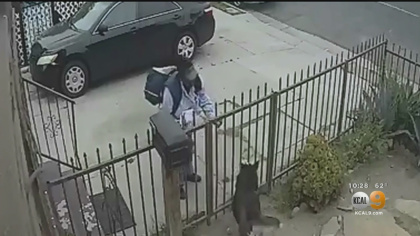
    Security video captured what first looks like routine mail delivery, but in seconds flips to what appears to be a disturbing case of animal cruelty. The video captured a mail carrier reaching into her bag and then dropping something. Moments later, she picks up the object and then sprays the dog in the face. Jose Amezcua, the dog’s owner, says his 4-year-old Siberian husky Coco was acting strangely on Monday when he came home from work. That’s when Jose checked his security cameras and saw what had transpired.

    source

  • Amazon says drones will be making deliveries in ‘months’

    Amazon says drones will be making deliveries in ‘months’

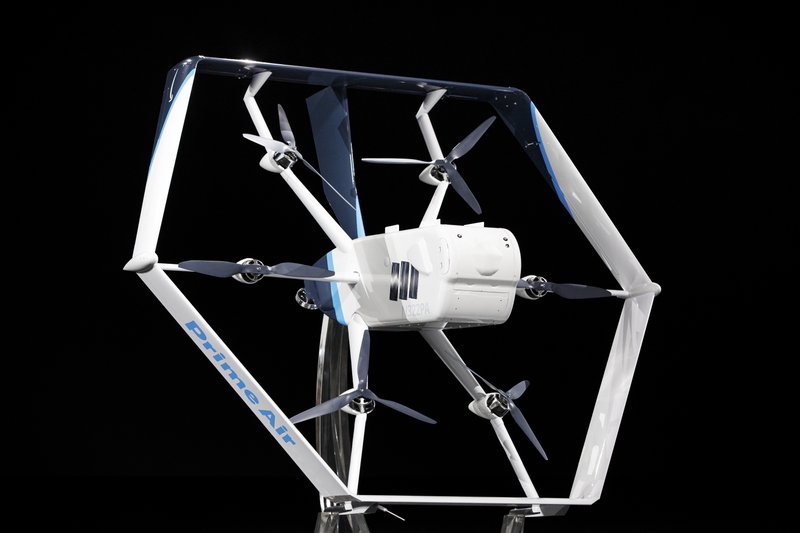
    Amazon said Wednesday that it plans to use self-piloted drones to deliver packages to shoppers’ home in the coming months. The online shopping giant did not give exact timing or say where the drones will be making deliveries. Amazon said its new drones use computer vision and machine learning to detect and avoid people or clotheslines in backyards when landing. “From paragliders to power lines to a corgi in the backyard, the brain of the drone has safety covered,” said Jeff Wilke, who oversees Amazon’s retail business. Wilke said the drones are fully electric, can fly up to 15 miles (24 kilometers), deliver in 30 minutes and carry goods that weigh up to 5 pounds (2.3 kilograms), like a paperback or toothpaste.

    Amazon has been working on drone delivery for years. Back in December 2013, Amazon CEO and founder Jeff Bezos told the “60 Minutes” news show that drones would be flying to customer’s homes within five years. But that deadline passed due to regulatory hurdles. The Federal Aviation Administration, which regulates commercial use of drones in the U.S., did not immediately respond to a request for comment Wednesday. In April, a subsidiary of search giant Google won approval from the FAA to make drone deliveries in parts of Virginia. Wilke said that the company is working with several regulatory agencies to get approval. “We expect to do it within months,” he said

    source

  • U.S. home flippers are cashing out before profits get slimmer

    U.S. home flippers are cashing out before profits get slimmer

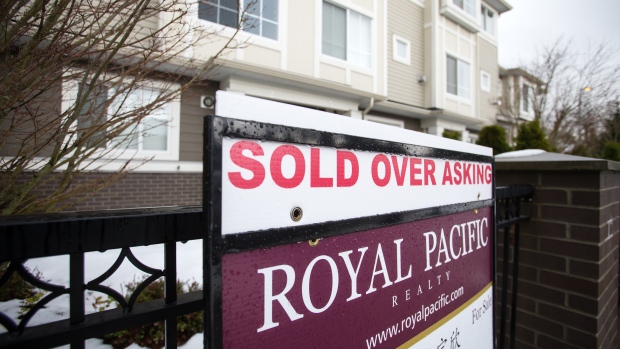
    Here’s one consequence of the slowing U.S. housing market: Home flippers are heading for the exits. Homes that were resold within 12 months after being purchased made up 7.2 per cent of all transactions in the first quarter, the biggest share since the start of 2010, Attom Data Solutions reported Thursday. Meanwhile, the average return on investment, not including renovations and other expenses, dropped to 39 per cent, an almost eight-year low. Speculators are on the housing market’s front lines, where softening price growth, waning demand and longer times to sell can turn quickly into shrinking profits, or even losses. Purchases of previously owned homes fell 4.4 per cent in April, the 14th straight year-over-year decline, according to the National Association of Realtors. “Investors may be getting out while the getting is good,” Todd Teta, chief product officer at Attom Data Solutions, said in the report. “If investors are seeing profit margins drop, they may be acting now and selling before price increases drop even more.”

    source