Category: Business

  • How important is an entrepreneur?

    How important is an entrepreneur?

    Lets face it. Were long past the point in history where pulling yourself up by your bootstraps is a more distant option than wed like. Traditional entrepreneurs are a dying breed as more and more people turn to the 9-to-5 career workday.
    Luckily, all hope is not lost! The incredible advances in communication and technology we as a society have made over the past decades have opened new routes, new methods to gaining success as your own businessman.
    Well start with the basics. To be an entrepreneur is more than just running a business. It involves organizing, promoting, marketing, and operating- all while taking financial risk to do so.
    Its a person who will strive for growth, even when it means it could all come tumbling down with one misstep. To Fundbrella, thats exactly the kind of person were looking for. When youve got an idea that sticks- were here for you. Your dreams are our dreams, and were committed to minimizing the risk you take looking to secure funding.
    Thats not to say that risk is bad, in fact, Fundbrella specializes in finding capital for groups that dont have another option. More risk means more success should plans play out. Like we said, your dreams are our dreams.
    Ironically, finding funding for your startup and moving ahead can turn the standard work model on its head. Instead of reporting to a superior, now EVERYONE is your superior. Your business decisions will be influenced by customer response, overall cash flow, sales performance, and just about every metric you can think of.
    When youre the person in charge, youve got to branch out and think of more than just business as usual. For upward movement to occur, there NEEDS to be risk taken. Bold moves must be made to grow your business steadily and strongly. This can be anything from a new piece of equipment, to new facilities, and even to acquiring new staff.
    Failure happens too. Dont let anyone tell you otherwise. Its rare to find a business owner who hasnt experienced their share of upsets, their share of less-than-stellar results. Heres the thing. When failure is involved, youve got two options. First, you can let it consume you and run your business into the ground. Second, though, is the option we like. When failures strike, dont let it get you down. Find the problem, correct it, and move forward. Use these things as learning experiences, and you can find yourself well-rewarded for your persistence.
    I dont mean to put you off of it entirely. The road is often bumpy and full of twists, but with hard work, passion, and persistence, anyone can be successful at what they love. The one thing that can improve this process just happens to be the proper partner, willing and able to navigate the tumultuous world of business alongside you.

    This content was originally published here.
     

  • Emotional support dog bites flight attendant

    Emotional support dog bites flight attendant

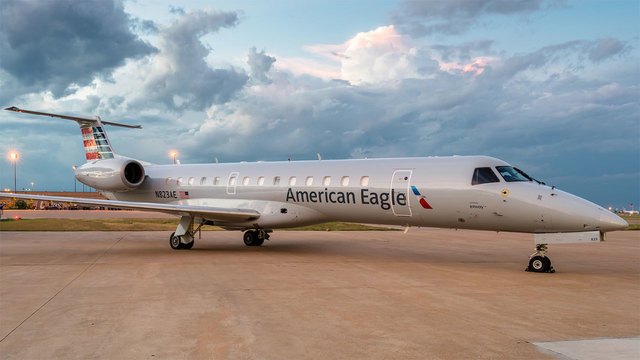
    A union that represents flight attendants is calling an incident where an emotional support dog bit a flight attendant as “unacceptable and inexcusable.” It happened Monday on an American Airlines flight from Dallas to Greensboro, North Carolina that was being operated by Envoy Air, a wholly-owned regional airline subsidiary of American Airlines. The Association of Flight Attendants-CWA (AFA) say an Envoy Air flight attendant was bitten on the flight but it was unclear the extent of their injuries. The union says it supports the role trained animals can provide to passengers in the cabin, but it has called for standards for emotional support animals.

    “We need the Department of Transportation to take action now, so events like the one that happened yesterday do not continue to occur on our planes. This is fundamentally about maintaining safety, health and security for passengers and crew, while ensuring accessibility for those who need it,” the AFA said. No information about the breed of the dog or what happened before the attack was immediately available. In March, American Airlines made changes to its service and emotional support animal policy that limited emotional support animals to dogs and cats.

    Last year, Delta Airlines announced a ban on emotional support animals on longer flights.

    view

  • Massachusetts police ask residents to refrain from crime until after the heat wave passes

    Massachusetts police ask residents to refrain from crime until after the heat wave passes

    It’s dangerously hot across much of the country this weekend — so hot, in fact, that police in Braintree, Massachusetts, are imploring would-be criminals to hold off on illegal activity until Monday. The Braintree Police Department asked the community to put a pin in crime until the heat wave passes in a Facebook post Friday. It is straight up hot as soccer balls out there,” the department wrote in the post, which has racked up more than 106,000 shares since Friday.

    Heat wave holds more than 150 million Americans in stifling grip this weekend

    Heat wave holds more than 150 million Americans in stifling grip this weekend Yes, a police department really used the phrase “hot as soccer balls.” The department confirmed to CNN Saturday that the post is, indeed, legit. The heat is criminal enough. The National Weather Service issued an excessive heat warning for parts of the eastern United States, including Braintree in eastern Massachusetts.
    While temperatures in the area could reach 102 degrees, it’ll likely feel even worse: The heat index, or the more accurate temperature your body feels when air temperature and humidity are both factored in, could be as high as 115 degrees, the weather service said.
    That’s simply too hot for lawbreaking, Braintree police said.
    Committing a crime in this sort of weather is “next level henchmen status,” the department said, not to mention dangerous to the offender’s health.
    In the post, the department suggested everyone wait out the heat wave indoors and suspend the illegal stuff until things cool down.
    “Stay home, blast the AC, binge Stranger Things season 3, play with the face app, practice karate in your basement,” police said. “We will all meet again on Monday when it’s cooler.”
    The message is signed, “The PoPo.”
    In a postscript, the police pleaded with people not to spoil the plot of the Netflix series’ new episodes. According to the post, Braintree police are just finishing up the second season of “Stranger Things.”

    Seriously, though: Heat waves are dangerous

    Heat waves are no joke. This weekend’s extreme temperatures are set to impact more than 150 million people.
    The National Weather Service has urged residents in affected areas from the Great Plains to the East Coast to take the heat seriously and avoid outdoor activities during mid-afternoon and early evening hours, the most dangerous parts of the day, according to the agency.
  • Toys ‘R’ Us is coming back to the United States

    Toys ‘R’ Us is coming back to the United States

    Toys “R” Us’ long-awaited comeback is finally official.

    Its owner, Tru Kids Brands, announced Thursday that Toys “R” Us is being reborn in the United States with two new stores. The return comes more than a year after the chain collapsed, resulting in the closure of all 700 of its American stores.
    The new stores will be smaller than their predecessors. Tru Kids described them as a “highly engaging retail experience designed for kids, families and to better fit within today’s retail environment.”
    The new Toys “R” Us stores will be open before the holiday shopping season later this year at The Galleria in Houston and in Westfield Garden State Plaza in Paramus, New Jersey. They will sell toys, but fewer of them.
    Unlike the rows of shelves that cluttered old Toys “R” Us stores, the new locations will have interactive and playground-like environments for toy brands.
    They’re being developed with b8ta, a company that designs interactive and technology-focused retail locations. The stores will let brands “design custom experiences and branded shops to help them create memorable experiences for parents and children,” Tru Kids said.
    The company, which bought the brand last October, said it plans to open more Toys “R” Us stores in “prime, high-traffic retail markets” next year. “We have significant interest about how to bring the brand back to the US,” Richard Barry, the CEO of the new company, previously told CNN Business. Toys “R” Us still has 900 stores open in Europe, Asia and India. It plans to open another 70 stores overseas — mostly in Asia — by the end of the year.
  • A Bank With $49 Trillion In Derivatives Exposure Is Melting Down Before Our Eyes

    A Bank With $49 Trillion In Derivatives Exposure Is Melting Down Before Our Eyes

    Authored by Michael Snyder via The Economic Collapse blog,

    Could it be possible that we are on the verge of the next “Lehman Brothers moment”? 

    Deutsche Bank is the most important bank in all of Europe, it has 49 trillion dollars in exposure to derivatives, and most of the largest “too big to fail banks” in the United States have very deep financial connections to the bank.  In other words, the global financial system simply cannot afford for Deutsche Bank to fail, and right now it is literally melting down right in front of our eyes.  For years I have been warning that this day would come, and even though it has been hit by scandal after scandal, somehow Deutsche Bank was able to survive until now.  But after what we have witnessed in recent days, many now believe that the end is near for Deutsche Bank.  On July 7th, they really shook up investors all over the globe when they laid off 18,000 employees and announced that they would be completely exiting their global equities trading business

    It takes a lot to rattle Wall Street.

    But Deutsche Bank managed to. The beleaguered German giant announced on July 7 that it is laying off 18,000 employees—roughly one-fifth of its global workforce—and pursuing a vast restructuring plan that most notably includes shutting down its global equities trading business.

    Though Deutsche’s Bloody Sunday seemed to come out of the blue, it’s actually the culmination of a years-long—some would say decades-long—descent into unprofitability and scandal for the bank, which in the early 1990s set out to make itself into a universal banking powerhouse to rival the behemoths of Wall Street.

    These moves may delay Deutsche Bank’s inexorable march into oblivion, but not by much.

    And as Deutsche Bank collapses, it could take a whole lot of others down with it at the same time.  According to Wall Street On Parade, the bank had 49 trillion dollars in exposure to derivatives as of the end of last year…

    During 2018, the serially troubled Deutsche Bank – which still has a vast derivatives footprint in the U.S. as counterparty to some of the largest banks on Wall Street – trimmed its exposure to derivatives from a notional €48.266 trillion to a notional €43.459 trillion (49 trillion U.S. dollars) according to its 2018 annual report. A derivatives book of $49 trillion notional puts Deutsche Bank in the same league as the bank holding companies of U.S. juggernauts JPMorgan Chase, Citigroup and Goldman Sachs, which logged in at $48 trillion, $47 trillion and $42 trillion, respectively, at the end of December 2018 according to the Office of the Comptroller of the Currency (OCC). (See Table 2 in the Appendix at this link.)

    Yes, the actual credit risk to Deutsche Bank is much, much lower than the notional value of its derivatives contracts, but we are still talking about an obscene amount of exposure.

    And this is especially true when we consider the state of Deutsche Bank’s balance sheet.  According to Nasdaq.com, as of the end of last year the bank had total assets of 1.541 trillion dollars and total liabilities of 1.469 trillion dollars.

    In other words, there wasn’t much equity there at the end of December, and things have deteriorated rapidly since that time.  In fact, it is being reported that a billion dollars a day is being pulled out of the bank at this point.

    I know that most Americans don’t really care if Deutsche Bank lives or dies, but as the New York Post has pointed out, the failure of Deutsche Bank could quickly become a major crisis for the entire global financial system…

    But the important fact to remember is that Deutsche Bank traded these derivatives with other financial firms. So, is this going to be another Lehman Brothers situation whereby one bank’s problems becomes other banks’ problems?

    Pay close attention to this.

    If the situation gets out of hand, the Federal Reserve and other central banks will have no choice but to cut interest rates even if it’s not the best thing for the world economies.

    In particular, some of the largest “too big to fail banks” in the United States are “heavily interconnected financially” to Deutsche Bank.  The following comes from Wall Street On Parade

    We know that Deutsche Bank’s derivative tentacles extend into most of the major Wall Street banks. According to a 2016 reportfrom the International Monetary Fund (IMF), Deutsche Bank is heavily interconnected financially to JPMorgan Chase, Citigroup, Goldman Sachs, Morgan Stanley and Bank of America as well as other mega banks in Europe. The IMF concluded that Deutsche Bank posed a greater threat to global financial stability than any other bank as a result of these interconnections – and that was when its market capitalization was tens of billions of dollars larger than it is today.

    Until these mega banks are broken up, until the Fed is replaced by a competent and serious regulator of  bank holding companies, and until derivatives are restricted to those that trade on a transparent exchange, the next epic financial crash is just one counterparty blowup away.

    As long as I have been doing this, I have been warning my readers to watch the global derivatives market.  It played a starring role during the last financial crisis, and it will play a starring role in the next one too.

    The fundamental structural problems that were exposed during 2008 and 2009 were never fixed.  In fact, many would argue that the global financial system is even more vulnerable today than it was back during that time.

    And now it appears that the next “Lehman Brothers moment” may be playing out right in front of our eyes.

    Now more than ever, keep a close eye on Deutsche Bank, because it appears that they could be the first really big domino to fall.

    This content was originally published here.

  • City hopes ‘Baby Shark’ song will drive homeless away

    City hopes ‘Baby Shark’ song will drive homeless away

    Officials in West Palm Beach are hoping a continuous loop of children’s songs played throughout the night will keep homeless people from sleeping on the patio of a city-owned rental banquet facility. West Palm Beach parks and recreation director Leah Rockwell tells the Palm Beach Post they’re trying to discourage people from sleeping outside the glass-walled Waterfront Lake Pavilion, which she says rakes in some $240,000 annually from events. The loop of “Baby Shark” and “Raining Tacos” is a temporary fix to keep homeless people off the patio. Rockwell says the city wants to formalize hours for the facility, which should make trespassing laws easier to enforce.

    view

  • Fashion for hire: Americans embrace clothing rental services

    Fashion for hire: Americans embrace clothing rental services

    Remember when you bought an expensive evening gown for an event, only to ever wear it once or twice? Or picked up a trendy T-shirt, only to leave it gathering dust in the closet? Those days are over for more and more American women, who are embracing clothing rental services as a way to freshen up their wardrobes — but the growing sector could threaten the traditional fashion industry. “Rental is the current buzzword in retail,” says Kayla Marci, a market analyst at research firm Edited. Just a decade ago, clothing rentals were for special occasions. But the business has since transformed and is raking in $1 billion in sales worldwide, according to a study published in April by business consulting firm Grand View Research. Cosmetics executive Jacqueline Jackson had her eureka moment when she realized that a monthly unlimited subscription for Rent The Runway, the leader in the American sector, would cost less than for her to rent one dress she wanted to wear to a wedding.

    “It was just nice to have the option to have this kind of unlimited closet and be able to wear things that I wouldn’t be able to own necessarily because a lot of the items are pretty expensive,” said Jackson, a mother of two young children. “I don’t have any time to shop.” Like many of its competitors, Rent The Runway (RTR) — which has more than 11,000 monthly subscribers — offers ready-to-wear pieces from luxury labels like Victoria Beckham, Proenza Schouler and Phillip Lim. Each item would cost several hundred dollars to buy. For $89 a month, a subscriber can get four pieces at a time from the company, now valued at $1 billion. RTR also offers an unlimited subscription for $159 a month. Seattle-based start-up Armoire, which already has several thousand subscribers, offers a plan at $149 a month. Once a Rent The Runway client has worn an item and wants to swap it for something else, they can send it back via UPS or drop it off at a bricks-and-mortar store. The company handles cleaning.

    Customers also have the option to buy the item at a reduced price. “When you’re buying your own wardrobe, you think ‘What are the chances I would have to wear this thing? Am I going to get a lot of use out of it?’” Jackson says. “So you tend to buy things that are more basic colors, not wanting to spend money on something that might be too trendy that you might only wear for one or two seasons. Here, you can wear the trendy things and even if you wear them one time, then it doesn’t matter.” The various clothing rental platforms currently on offer, which only cater to women for the time being, process the data they receive from users about preferences and measurements. They then use artificial intelligence to propose pieces they believe subscribers would want to wear. “We’ll show her items that we know she’ll like but we can slowly push her outside her comfort zone and introduce items that she wouldn’t normally pick for herself, that she wouldn’t normally wear,” says Lili Morton, who is in charge of community development at Armoire.

    – A move away from ‘fast fashion’ – The other trump card for clothing rental services is its sustainability and rejection of excessive consumption — themes that resonate for their clientele. Swedish furniture giant IKEA is moving into furniture rental, a service already provided in the United States by start-up Fernish. “I think people like the idea of buying less fast fashion, things that you buy and are good enough quality to wear for one season,” says Jackson. “It’s nice to have less of that junk in your closet and spend money to wear quality clothes.” According to several industry sources, most pieces are used about 15 times before they are taken out of rotation. Armoire has reached a deal with non-profit organization Dress for Success, which offers free professional attire to women in need. For some labels, rentals are providing a gateway to new customers. But more generally, it is offering competition to traditional ready-to-wear sales. As the sector takes off, several platforms like Haverdash are launching low-cost options. Traditional brands like American Eagle, Ann Taylor and Urban Outfitters are following suit. “These platforms are disrupting the fashion industry and changing the way we shop,” says Marci. Since she subscribed to RTR, Jackson says she has bought fewer items and more basics.

    “Renting is really like sharing. You’re not just buying, buying, buying,” she adds.

    view

  • China imports from US plunge in June amid tariff war

    China imports from US plunge in June amid tariff war

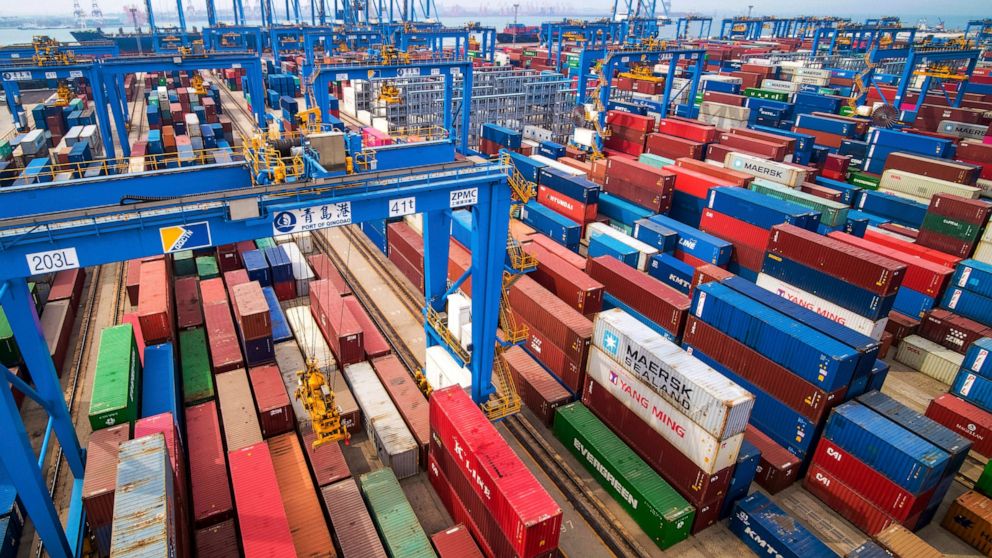
    China’s trade with the United States plunged in June amid a tariff war with Washington over Beijing’s technology ambitions that has battered exporters on both sides.

    Interested in China?

    Imports of U.S. goods fell 31.4% from a year earlier to $9.4 billion, while exports to the American market declined 7.8% to $39.3 billion, customs data showed Friday. China’s trade surplus with the United States widened by 3% to $29.9 billion, potentially giving its critics ammunition to demand Washington take a hard line with Beijing.

    Presidents Donald Trump and Xi Jinping agreed in June to resume talks on the fight over U.S. complaints about Beijing’s trade surplus and plans for government-led development of technology industries. That helped to calm financial markets but economists say the truce is fragile because the conflicts that caused talks to break down in May persist.

    Trade has weakened since Trump started hiking tariffs on Chinese goods last June. Beijing retaliated with its own penalties and ordered importers to find non-U.S. suppliers.

    Envoys talked by phone Tuesday in their first contact since Trump and Xi met in Japan, the Chinese Commerce Ministry said. It gave no details or a date for more contacts.

    “Our base case remains that trade talks will break down again before long,” said Julian Evans-Pritchard of Capital Economics in a report.

    China’s global exports sank 1.3% to $212.8 billion while imports fell 7.3% to $161.9 billion.

    Trade weakness has added to pressure on Xi’s government to shore up economic growth and avoid politically dangerous job losses.

    Washington is pressing Beijing to roll back plans for government-led creation of Chinese global competitors in robotics, electric cars and other technologies. The United States also wants other changes including cuts in subsidies to Chinese industry.

    Beijing agreed last year to narrow its trade surplus with the United States by buying more American natural gas and other exports but scrapped that plan after one of Trump’s tariff hikes. The Chinese government said in June that any purchases must be at a reasonable level, suggested Beijing was becoming more cautious about making big commitments before it sees what Washington offers in exchange.

    Trump accused Beijing on Thursday of backsliding on promises to buy more American farm goods. He said on Twitter that “China is letting us down.”

    Trump’s statement “highlighted how more speed bumps may remain in the road ahead,” said Craig Orlam of OANDA in a report. “While a deal makes sense for both sides this year, it’s far from guaranteed and could hit many more snags.”

    Chinese leaders express confidence their economy can survive the tariff fight.

    Importers of American soybeans and other goods are trying to switch to Brazilian, Russian and other sources, but supplies are limited and costs are higher. Farmers who use soybeans as animal feed have been told to switch to other grains.

    While American exporters have been hit hardest, Chinese industries including electronics that Beijing sees as its economic future have suffered double-digit declines in sales to the United States, their biggest market.

    Economists say even if a settlement with the U.S. is reached, China’s exports this year will be lackluster due to weak global demand, putting pressure on manufacturers that support millions of jobs.

    This content was originally published here.

  • Metro Phoenix home prices hit new record, still no signs of crash

    Metro Phoenix home prices hit new record, still no signs of crash

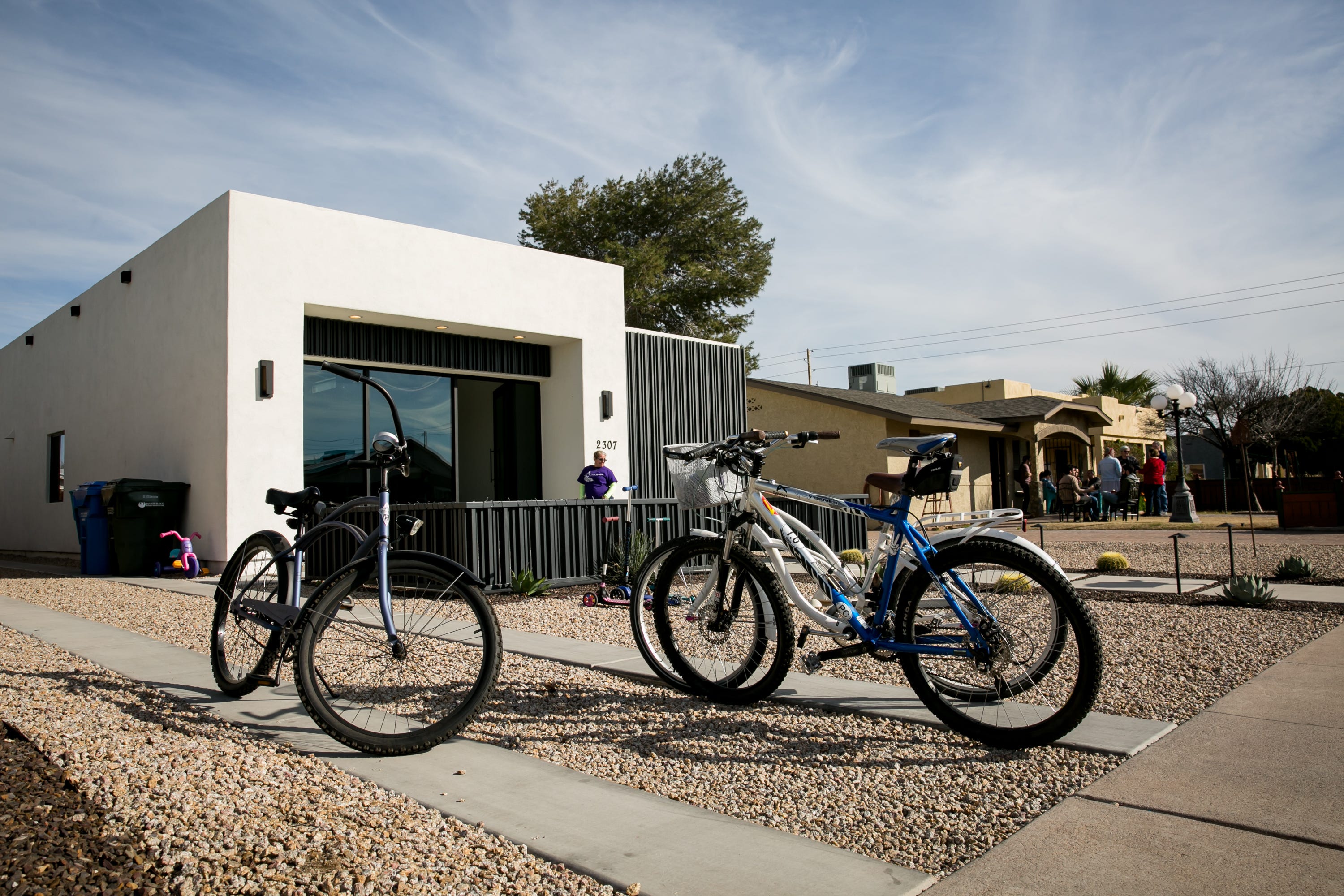
    Metro Phoenix home prices set new record, still no signs of a crash

    Catherine Reagor Arizona Republic
    Published 9:15 AM EDT Jul 13, 2019

    Buyers hoping for metro Phoenix home prices to fall this year as they are in some other U.S. cities have been disappointed.

    The Valley’s housing market is still hot with prices setting new records and sales soaring.

     Real estate experts don’t see signs of a crash looming.

    “It’s not happening” said Tina Tamboer, senior housing analyst with the Cromford Report, about a potential plummet in the area’s home prices.

    She told nearly 200 Valley HomeSmart real-estate agents Tuesday that, thanks in part to lower interest rates, demand for metro Phoenix homes began climbing again in March.

    Still a sellers’ market

    Metro Phoenix’s median home price hit a new record of $278,000 in May and likely climbed to $280,000 or more in June, according to the latest report from the Information Market, owned by the Arizona Regional Multiple Listing Service.

    Valley home sales hit 10,341 in May, the highest monthly tally since the housing boom in 2005.

    Mortgage interest rates are down from nearly 5% last November to 3.75%.

    And the supply of Valley homes for sale priced below $400,000 is down, after climbing in January.

    “It’s still a sellers’ market, but people need to be reasonable and not crazy about pricing their home,” said veteran agent Bobby Lieb, who held the HomeSmart meeting.

     He has seen several Arizona real-estate cycles and doesn’t see a crash coming either.

    No housing crash looming

    In June, I was in a Phoenix doctor’s office and overheard two women talking about how the housing market was “crashing again.”

    While I waited, I couldn’t help but listen as one woman told the other that her home’s value could fall like it did during the crash of 2009. I sent a text to some of my top sources joking that the conversation alarmed me more than the breast cancer diagnosis that put me in the doctor’s office that day.

    The overheard conversation made me anxious to get back to work this week and write this column.

    85006/Central Phoenix, including historic neighborhoods Coronado and Garfield — $211,500 to $255,000 — 21%
    Melissa Fossum/Special for The Republic

    A little housing perspective

     Valley home prices shot up 50% in two years during the boom in 2005 and 2006. Home prices have climbed at a far more modest 6% to 8% the past few years. 

     The U.S. median home price did fall in April, and cities on the East and West coasts are seeing declines. But metro Phoenix’s home prices are still much lower than those areas.

    Housing expert Tom Ruff with the Information Market, who I texted that day, said he gets “nauseous” when he looks back on the steep increases and all the subprime loans in 2006. 

    “Current (mortgage) underwriting standards and the elimination of crazy money are two of the main reasons I subscribe to the ‘were not in a bubble’ theory. The differences between the boom and now are significant,” he said.

    But he, like Tamboer and many of us market watchers, will keep checking to make sure the Valley’s housing market isn’t headed for another crash.

     Reach the reporter at Catherine.Reagor@arizonarepublic.com or 602-444-8040. Follow her on Twitter @Catherinereagor.

    Support local journalism. Subscribe to azcentral today.

    This content was originally published here.

  • Warning shot to world economy as Singapore slumps, China exports drop

    Warning shot to world economy as Singapore slumps, China exports drop

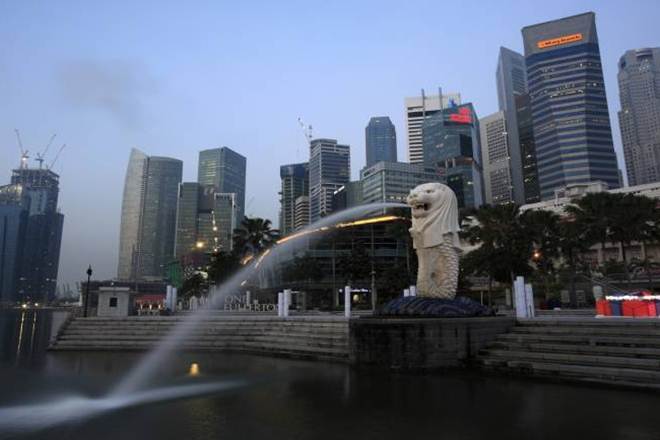
    Singapore’s complicated integration in regional and global supply chains makes it vulnerable to a slowdown in world growth and tariff wars. (Reuters)

    An unexpected contraction in Singapore’s economy and a slump in China’s exports sent a warning shot to the world economy as simmering trade tensions wilt business confidence and activity. Gross domestic product in export-reliant Singapore shrank an annualized 3.4% in the second quarter from the previous three months, the biggest decline since 2012. China trade figures showed exports fell 1.3% in June from a year ago and imports shrank a more-than-expected 7.3%.

    Like South Korea’s economy — which already contracted in the first quarter — Singapore is often held up as a bellwether for global demand given its heavy reliance on foreign trade. China’s quarterly GDP numbers on Monday are expected to show a clear weakening in the economy.

    “Singapore is the canary in the coal mine, being very open and sensitive to trade,” said Chua Hak Bin, an economist at Maybank Kim Eng Research Pte in Singapore. The data “points to the risk of a deepening slowdown for the rest of Asia.”

    Across Asia and Europe, factory activity shrank in June while the U.S. showed only a meagereconomic expansion. Asia is the world’s growth engine and contributes more than 60% of global GDP, according to the International Monetary Fund.

    Singapore’s complicated integration in regional and global supply chains makes it vulnerable to a slowdown in world growth and tariff wars. Exports — which amount to 176% of GDP — have already taken a big hit over the past few months, with shipments plunging in May by the most since early 2013.

    “I thought the numbers would be bad, but this is ugly,” Chua said. “The whiff of a technical recession is real. We thought it might be shallow, but the risk now is that it might be deeper.”

    Singapore isn’t expecting a full-year recession yet but the government is “monitoring the situation closely,” Finance Minister Heng Swee Keat said in a Facebook post. The government has said it will likely revise its growth forecast range of 1.5%-2.5% for this year.

    The Singapore dollar fell as much as 0.1% to 1.3588 against the U.S. dollar after the data.

    A global slowdown and the U.S.-China trade tensions are rippling across the region. A restart to U.S.-China trade negotiations has done little to convince economists that the global economy can recover. Morgan Stanley analysts last month cut both their 2019 and 2020 growth forecasts by 20 basis points each, to 3% and 3.2%.

    “With a resolution of the U.S.-China trade conflict and a rebound in the global tech cycle both still elusive, the downside risks to growth in the region are mounting,” said Krystal Tan, an economist at Australia & New Zealand Banking Group Ltd. in Singapore.

    Aside from trade tensions, a cooling technology boom is weighing on the outlook of electronics manufacturers like Singapore. About 40% of the city state’s exports are integrated circuits alone, according to Tuuli McCully, head of Asia-Pacific economics at Scotiabank in Singapore.

    “The downturn in the global semiconductor sector is reflected in Singapore more than in most countries in the region,” McCully said.

    What Bloomberg Economists Say –

    “As weak as Singapore’s standstill in 2Q GDP was, 2H will probably be much worse without a rapprochement in U.S.-China trade relations. Our forecast for a 0.2% year-on-year contraction in 2019 remains on course,” said Tamara Henderson, Asean economist.

    Weaker growth may prompt Asian central banks to step up policy action to bolster growth. Of the 16 economists surveyed by Bloomberg, half expect the Bank of Korea to lower its benchmark interest rate by 25 basis points next week. The Monetary Authority of Singapore, which uses the exchange rate as its main tool, could also ease in October after leaving policy settings unchangedin April.

    Get live Stock Prices from BSE and NSE and latest NAV, portfolio of Mutual Funds, calculate your tax by Income Tax Calculator, know market’s Top Gainers, Top Losers & Best Equity Funds. Like us on Facebook and follow us on Twitter.

    This content was originally published here.