Category: Business

  • This Woman Brings Smiles To Children’s Faces By Making Custom Dolls That Match The Disabilities Of Their Owners

    This Woman Brings Smiles To Children’s Faces By Making Custom Dolls That Match The Disabilities Of Their Owners

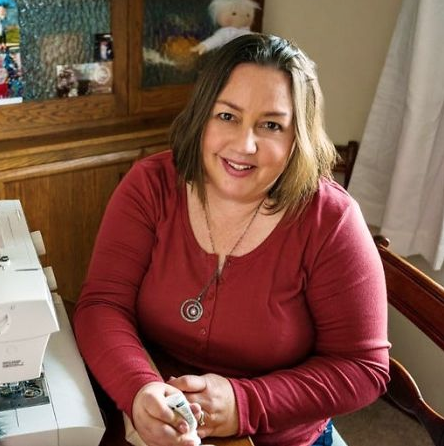
    Amy Jandrisevits, from Wisconsin, is an owner of a small business with a very beautiful mission. A doll collector since childhood, Amy has created A Doll Like Me.

    The aim of this project is to create dolls that would have the same characteristics as their owners with disabilities and/or rare conditions. It was a lack of diversity in the dolls that pushed Amy to begin creating dolls like no other, in turn, making the children feel needed and included. And so, 4 years ago, having worked as a social assistant in pediatric oncology unit for years, Amy felt the urge to start creating representative toys for children.


    On her personal Facebook account she says, “Even when I was a social worker, I thought it was important to have dolls available to the kids because everyone should have something to hold. Everyone should have a doll that looks like them.

    Not only beautiful, the dolls created by A Doll Like Me make a difference in the lives of hundreds of children.

    More info: Facebook | Instagram | ca.gofundme.com

    Jandrisevits goes beyond and above in order to make each doll resemble the child it’s intended for as closely as possible. To do so, she has learned to replicate everything from birthmarks to limb differences. Each doll is unique, yet they still have one thing in common – all dolls wear a smile.

    “It’s so difficult to tell a kid ‘you’re beautiful just the way you are, but you’re never going to see a doll that looks like you.” – says a 45-year-old Amy, founder of A Doll Like Me.

    A Doll Like Me has provided over 300 dolls so far which have been shipped to children all around the world. Amy’s ultimate goal is to turn her small business into an official non-profit organization where every child in need could get their one-of-the-kind doll free of charge.

    And many people are responding kindly to her mission, as she has already reached $38.000 out of $50.000 goal on GoFund.me. Consequently, now many of the dolls are funded by donations!

  • There’s a huge oil boom happening in Texas right now — where a single oilfield is set to overtake Iran in production.

    There’s a huge oil boom happening in Texas right now — where a single oilfield is set to overtake Iran in production.

    If you’ve got a driver’s license and a pulse, you could be making $100,000 a year in the West Texas oil boom

    The U.S. is on track to become the world’s biggest oil producer by next year, and in West Texas, home to the most active oilfield in the world, the oil boom has resulted in a modern-day gold rush.

    The Permian Basin is set to overtake Iran in output in just a few months as oil prices pick up from 2015’s rock bottom. To keep up with production, thousands of workers from every part of the country are heading to the scorching Texas desert, where entry-level oilfield jobs regularly pay over $100,000 a year.

    They all want a piece of what people in Midland, the Permian Basin’s major town, are hailing as a new gold rush.

    “All the major oil companies and exploration companies are moving out here. They’re selling their assets everywhere else,” said Josh Garcia, an operations manager at a company that supplies chemicals for drilling. “At this point, it’s just a matter of numbers: Companies need to fill those spots, and they’ll train you. You can rewrite your story out here if you want to.”

    That’s exactly what 22-year-old Mike “Snowflake” Smith is counting on. In Austin, he was a high-school dropout. But in the oilfield, he’s a welder-in-training working 14 hours a day in 110-degree heat — for a hefty paycheck. And he has the goods to prove it: new truck, Apple watch, almost-new RV, ostrich-leather work boots, and some very expensive tattoos.

    Snowflake’s so in demand that he can pick and choose between jobs. The day we met, he’d just quit over a late overtime request.

    “I hire in with another company in the morning. In my phone right now there are 30 or 40 people I can call and get a job in ten minutes,” said Snowflake.

    He’s not alone. By some estimates, Midland currently has 20,000 unfilled positions, and the town is in need of as many as 40,000 additional homes to accommodate the influx of people.

    In the meantime, thousands of oilfield workers sleep and eat in “man camps” — rows of converted containers or trailers that extend over as much as 40 acres of rocky land that’s useless for drilling or grazing.

    The geologists, engineers, and executives, on the other hand, have found themselves locked in bidding wars that have caused escalating prices on Midland’s housing market, which was just named the hottest in the country.

    Oil is a rollercoaster economy, notorious for its ups and downs, but even so, = things haven’t been this good for a very long time.

    In the early 2000s, following a long, slow decline in oil production that began after the last record-breaking years of the late 1960s, analysts started writing obituaries for American oil. In the Permian, where wells had been gushing crude for almost 100 years, the flow was looking more like a trickle. Big companies sold leases and moved on.

    Then fracking changed everything.

    The technology, which was already over 50 years old when it became commercially viable in the last decade, suddenly meant vast deposits of oil trapped between layers and pores of underground rock were open for business. In April of this year, 22 percent of all the drilling rigs in the world could be found punching holes in the Permian.

    Texans, who’ve seen a century of booms and their fair share of busts hope the good times are here to stay.

    Josh Garcia, who remembers the last bust, is cautiously excited. “You would see these guys with $80,000 trucks and sports cars, being sold for half price before they got repossessed. But I’m not worried about the bust. It’s just too good right now,” he said.

  • Portland median home prices fall for first time in nearly 7 years

    Portland median home prices fall for first time in nearly 7 years

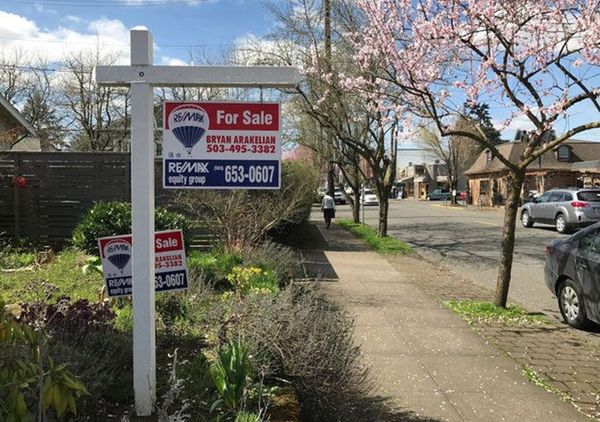
    The year-over-year median home sale price dropped in January for the first time since February 2012 in metro Portland, according to new numbers from the Regional Multiple Listing Service.

    The month’s median sale price of $384,900 represented a 1.3 percent decline from a year earlier. While home prices typically drop in the winter, it’s been nearly seven years since they fell on an annualized basis.

    “The aggressive price increase we saw in the past few years simply became unsustainable as too many potential homeowners were priced out of the market,” said Tim Duy, a University of Oregon economist. “Prices just became too high.”

    Mortgage rates also spiked in the waning months of 2018, which further curbed buying power. And the end of the year also brought a great deal of economic uncertainty, including a tumbling stock market and the shutdown of parts of the federal government.

    The red-hot housing market of two years ago — which saw prices climbing by 10 percent annually — has cooled dramatically. Home price gains have been slowing since 2017, and sales have slowed, too. The listing service said 1,451 homes were sold in January, a 10.9 percent decline from a year earlier.

    And recently homes on the market have been stacking up. There were more than 4,700 homes for sale in January, representing a 3.3-month supply. Though that’s a slim inventory by historic standards and suggests a seller’s market, it’s the highest observed in Portland since 2015.

    Sellers are feeling their power erode, with homes sitting on the market longer and more of them selling for less than the listed price. The typical home sold in January was on the market for 76 days, from listing to the day an offer is accepted.

    The real estate brokerage Redfin reported a dramatic decline in bidding wars over houses over the past year. Its brokers faced competing bids for 19 percent of their homebuyer clients’ offers in January, a decline from 53 percent at the same time last year. (Despite the decline, Portland remained one of the most competitive markets by that metric.)

    Daryl Fairweather, the real estate company’s chief economist, said buyers backed off as homes got too unaffordable, and prices dropped as a result.

    “That’s good because that means buyers might come back to the table, and they’ll have more homes that are affordable to them,” she said.

    New listings continued to hit the market in January, suggesting home sellers haven’t lost faith. (Most have gained tens of thousands of dollars in equity in recent years from price appreciation alone, even with January’s decline.)

    Duy said the price decline is surprising but likely reflects a flattening of price gains rather than a market reversal.

    “We forget how abnormal this market had gotten,” Duy said. “You got very, very low inventory for a couple of years, and it wasn’t the same conditions driving the housing boom of the last decade. There is much more real money flowing in.”

    And unlike the 2008 financial crisis, price declines are unlikely to send the market spiraling into a morass of defaults and foreclosures, Duy said. Most homeowners have a significant amount of equity in their home, and loan qualifications are far more strict.

    The report covers the Oregon side of the metro area, including Multnomah, Washington, Clackamas, Columbia and Yamhill counties.

    — Elliot Njus

    January saw a 1.3 percent year-over-year decline, the first recorded in the Portland metro since April 2012.

    source: https://www.oregonlive.com

  • These 3 stocks witness sharp jump in open interest ahead of weekly expiry

    These 3 stocks witness sharp jump in open interest ahead of weekly expiry

    The weekly expiry in Nifty Bank has seen the high interest of traders in the recent past. It helps to gauge the trend for bigger returns. As we get closer to the main expiry of Nifty and Nifty Bank due next week, we see this weekly expiry witnessing strong momentum in few stocks.

    The highest addition in open interest (OI) was seen in 10,750 CE (call option) and 10,650 PE (put option) in the weekly options. Both the options gained significant open interest considering the possibility of trading in this range.

    The Nifty50 surged 131 points on Thursday, rising more than 1 percent to 10,735. The S&P BSE Sensex jumped 403 points to close at 35,756. The major index that drove the market higher is Nifty Metal index which closed approximately 3 percent higher to 2,765 level. The candlestick formation on the benchmark indices shows “Morning Star” pattern illustrating bullish sentiment.

    The weekly expiry on the benchmark indices shows the market trend. The swings around the weekly expiry determine the strength and weakness of various stocks.

    JSW Steel: The stock has witnessed a rise in OI from an average of 5 lakhs to 7 lakhs. The stock rose 3.72 percent to end at Rs 277.15 in futures. The overall data reveals Rs 260 –Rs 280 to be the trading range. A further rise and if stock conquers Rs 280 levels, then a fresh rally towards Rs 295 and Rs 301 cannot be ruled out. The overall data suggest long build up with an uptrend view.

    Jubliant Foodworks: The previous three sessions witnessed a fall in OI from 29 lakhs to 27 lakhs, however; price did not predict any specific trend. A cut of approximately 4 percent with stock retracing towards previous low of Rs 1,275 indicates a weak trend. If broken then may head towards Rs 1,240 levels.

    Oil India: The stock surged from Rs 170 to Rs 178 till the previous session, without a convincing rise in OI. Yesterday, the jump of 1.50 percent to Rs 180 level added 21 percent OI to 7 lakhs. A significant rise in OI with a strong price rise indicates bullish sentiment. The scenario depicts long positions build up with a positive view. It may further rise towards Rs 185 and Rs 192 levels.

    Stock Market Investor keep informed with good reads from Amazon.

    Read more about These 3 stocks witness a sharp jump in open interest ahead of weekly expiry on Business Standard. The highest addition in OI was seen in 10,750 CE (call option) and 10,650 PE (put option) in the weekly options.


  • Labor Market Crisis: Wages Not Rising With Inflation

    Labor Market Crisis: Wages Not Rising With Inflation

    As we reported last week, a record 7 million Americans have fallen 90 days or more behind on their auto loan payments.

    That’s 1 million more than the previous peak in auto loan delinquencies in 2010. But as Wolf Street points out, there is a big difference between then and now.

    “Serious auto-loan delinquencies are now on par with Q2 2009 when millions of people had lost their jobs and when the economy was in free-fall. But today unemployment is low and the economy appears to be humming. What gives? “

    Currently, there is about $1.3 trillion in auto loans outstanding. Looking at auto loan delinquencies in terms of a percentage of the total outstanding, the number hit 4.5% at the end of 2018. This is the same percentage as in the second quarter of 2009 as the economy was feeling the full effect of the 2008 crash.

    Wolf Richter of Wolf Street highlighted some of the reasons for the surge in auto loan delinquencies in a recent episode of the Wolf Street Report.

    In the first place, a lot of Americans are struggling with their jobs.

    “While the unemployment rate is at around 4% and has been as low as 3.7%, there are many pockets of weakness in the labor market. A lot of people have gig work. A lot of people are underpaid. Their wages have not gone up with inflation. People have been discouraged and they’re not participating in the labor force anymore, and so they don’t show up in unemployment figures. So, there are many weaknesses in this labor market.”

    Even so, Richter said it’s still the “cleanest dirty shirt of the labor market” we’ve had in a number of years, so the labor market itself cannot completely explain the surge in auto loan delinquencies.

    A second issue is the rapidly rising cost of new cars. The average price of a new vehicle is now around $36,000. This represents a significant increase in the cost of vehicles and there has not been a corresponding rise in wages. Subprime borrowers face a double whammy. They not only have to pay the higher price; they also get hit with a higher interest rate.

    A third, and according to Richter probably the most significant issue, is the number of subprime lenders who have plowed into the auto business over the last 10 years. This is an extremely profitable business for the lender, but an extremely risky position for the borrower.

    “These are precisely the kind of customers who can’t afford those payments, and cannot afford to make those payments based on high-interest rates, and they can’t even afford that expensive of a car.”

    The auto business actually looks a lot like the subprime housing market we saw blow up in the years leading up to the 2008 crash. These companies make risky loans. They use sloppy underwriting techniques. And then they package the loans together in auto loan-backed securities and sell them.

    By 2018, the air was coming out of the auto bubble. A number of these specialized subprime auto lenders had already collapsed. Richter said now we’re starting to see many of these companies curtail their lending.

    Of course, it’s not just specialized companies making subprime loans. According to Richter, about 25% of the auto loans on the books of big banks are subprime. Credit unions have also gotten into the business.

    The big difference between the subprime auto loan market today and the subprime housing market in the years before the crash is one of scale. A collapse in the subprime auto market will cause some pain, but it won’t likely bring down financial institutions.

    Read more source:  www.infowars.com

  • Sears and Kmart Remove Trump Products from Websites

    Sears and Kmart Remove Trump Products from Websites

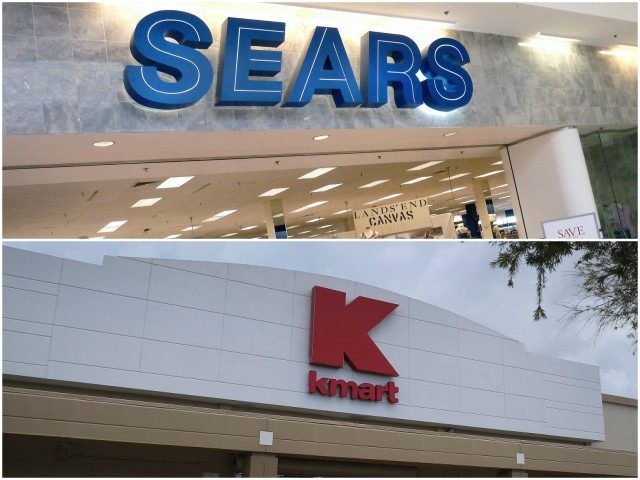
    Items from Trump Home, which is part of the Trump Organization, were reportedly not available on both websites and did not appear in a search of either website as of Friday.

    Sears sold 19 Trump Home items on their website and Kmart sold 13 Trump Home items on their website as of Tuesday, according to brand strategist Shannon Coulter, who started the #GrabYourWallet Trump boycott.

    Coulter has been tracking which retailers do business with the Trump family on the Grab Your Wallet website since October.  Read more…

    It’s interesting that this report comes after Nordstrom dropped Ivanka Trump’s merchandise and TJ Maxx pulled advertising for her products.  Sears claims that this isn’t intentional against Trump but that it’s merely a way for them to streamline which products are most profitable. I think it’s obvious that this is more than a coincidence though.