
Category: Business

  • Chicago Cardinal Cupich Will Allow Pro-Abortion Politicians To Receive Holy Communion | Daily Wire

    Chicago Cardinal Cupich Will Allow Pro-Abortion Politicians To Receive Holy Communion | Daily Wire

    Chicago Cardinal Blase Cupich will allow Illinois state politicians who helped pass a law guaranteeing women the right to abortion to receive what Catholics believe to be the body and blood of Jesus Christ in the form of Holy Communion.

    Speaking with Catholic News Agency, Cupich said that barring pro-abortion Catholic politicians from receiving Holy Communion would be “counterproductive.”

    “I think it would be counterproductive to impose sanctions, simply because they don’t change anybody’s minds, but it also takes away from the fact that an elected official has to deal with the judgment seat of God, not just the judgment seat of a bishop. I think that’s much more powerful,” Cupich told CNA. “I have always approached the issue saying that the bishop’s primary responsibility is to teach, and I will continue to do that.”

    Senate Bill 25 — a.k.a., the “Reproductive Health Act” — passed the Illinois State Senate by a 34-20 vote and essentially guarantees that the state will enshrine abortion rights into law should Roe v. Wade be overturned by the U.S. Supreme Court. It even expressly states that the “fertilized egg, embryo, or fetus does not have independent rights.” Democrat Gov. J.B. Pritzker signed the bill into law this past Wednesday.

    According to Catholic Canon Law 915, people who publicly express grave sin are not to be admitted to Holy Communion. The Catholic Church has always taught abortion to be intrinsically evil and that people who either procure or support the practice are in grave error that can only be reconciled through the sacrament of Confession.

    Cardinal Cupich did, however, tell Catholic News Agency that the “Reproductive Health Act” is “pernicious” by denying the humanity of the unborn child.

    “What’s pernicious about this law, and what’s so very difficult, is that it says that the unborn child has absolutely no claim on rights,” Cupich said. “It says that human life is cheap. That’s the message that we send—that human life is cheap in the State of Illinois.”

    Cardinal Cupich’s decision to give pro-abortion politicians Holy Communion stands in direct contrast to another bishop in Illinois – Bishop Thomas John Paprocki of Springfield, who expressly forbid all priests under his governance to give Holy Communion to politicians that supported the “Reproductive Health Act.”

    “In accord with canon 915 of the Code of Canon Law … Illinois Senate President John Cullerton and Speaker of the House Michael J. Madigan, who facilitated the passage of the Act Concerning Abortion of 2017 (House Bill 40) as well as the Reproductive Health Act of 2019 (Senate Bill 25), are not to be admitted to Holy Communion in the Diocese of Springfield in Illinois because they have obstinately persisted in promoting the abominable crime and very grave sin of abortion as evidenced by the influence they exerted in their leadership roles and their repeated votes and obdurate public support for abortion rights over an extended period of time,” Paprocki wrote in a statement.

    In 2017, the American Catholic hierarchy elected Kansas City Archbishop Joseph Naumann to head the U.S. Bishops’ Committee on Pro-Life Activities, who expressly stated that bishops should bar pro-abortion politicians from receiving Holy Communion.

    This content was originally published here.
  • How Almonds Went From Deadly To Delicious | Valley Public Radio

    How Almonds Went From Deadly To Delicious | Valley Public Radio

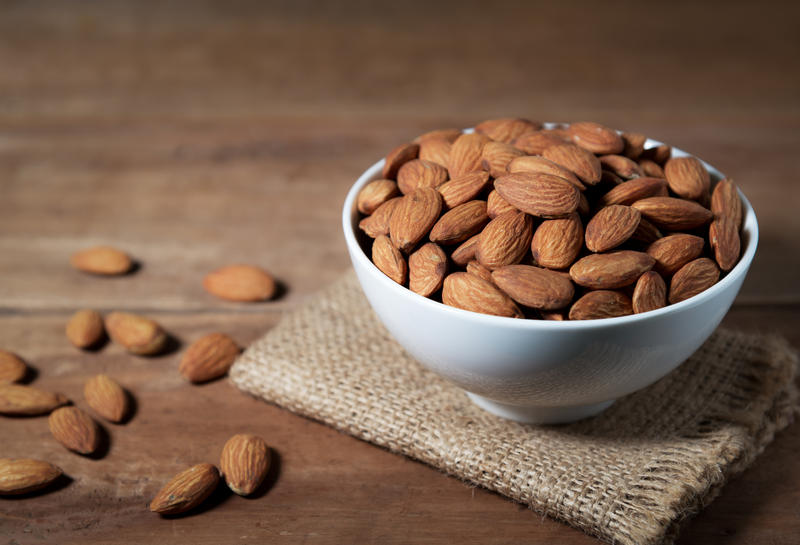
    St. Basil’s Hexaemeron, a Christian text from around the fourth century, contains a curious botanical instruction: Pierce an almond tree in the trunk near its roots, stick a “fat plug of pine” into its center — and its almond seeds will undergo a remarkable change.

    “Thus the … bitter almonds … lose the acidity of their juice, and become delicious fruits,” the text reads. “Let not the sinner then despair of himself. … If agriculture can change the juices of plants, the efforts of the soul to arrive at virtue, can certainly triumph over all infirmities.” The cause of this change, scientists later theorized, was stress: Jamming pine wood into the almond tree’s core may have halted production of the toxins.

    We don’t need pine wood to turn almonds sweet anymore. Most almonds produced today are naturally tasty and safe to eat. Back then, though, many were bitter and poisonous. Even today, consuming 50 — or fewer — wild, bitter almonds could potentially kill an adult, and just a handful contain enough cyanide to be lethal to a child.

    Over time, farmers have bred domesticated almond trees to produce mostly sweet seeds. But wild almonds helped us out — and now we know just how they went from deadly to delicious. A study published this week in the journal Science sequenced the almond genome and shows that a single genetic mutation “turned off” the ability to make the toxic compound thousands of years ago — a key step before humans could domesticate almonds.

    The bitterness and toxicity of wild almonds come from a compound called amygdalin. When ingested, this compound breaks down into several chemicals, including benzaldehyde, which tastes bitter, and cyanide, a deadly poison. Wild, bitter almond seeds serve as amygdalin storehouses, keeping predators away with their nasty taste and poisonous effect.

    But at some point thousands of years ago, a mutation occurred in a wild almond. This mutation inhibits the production of amygdalin almost completely. Sweet almonds still have trace amounts of amygdalin but not enough, by any reasonable measure, to produce dangerous amounts of cyanide.

    “Wild almonds are bitter and lethal, even in tiny amounts, because [they have] this amygdalin,” says study co-author Stefano Pavan, a professor in agricultural genetics and plant breeding at the University of Bari in Italy. (Pavan’s primary co-author was Raquel Sánchez-Pérez, a senior biochemistry researcher at CEBAS-CSIC, an agricultural research center in Spain.) “This mutation is very important because it’s the mutation that allowed almond domestication.”

    Sometime after the almond mutation occurred, according to the researchers, humans discovered this sweet variant. When exactly this happened, though, is still unknown. Almond trees are widely believed to be among the world’s first domesticated trees. Archaeological evidence of cultivated almonds dates back to 3,000 B.C. But some geneticists think that humans probably started cultivating sweet mutated almonds much earlier than that, around 12,000 years ago.

    What we do know: Once humans started encountering these new, tasty almonds, we embraced them with gusto. From Greece to California, we planted almond trees in droves and picked our trees carefully for the “sweet” allele — which is dominant over the “bitter” allele anyway. Over time, domesticated almonds lost almost all of their amygdalin.

    Today, many people have never even heard of poisonous almonds, much less come across one in the wild — though some folks still eat bitter almonds in small doses. In Tunisia, for instance, people still make orgeat syrup with bitter almonds.

    Dianne Velasco, a postdoctoral researcher in plant genetics at the University of California, Davis, whose work focuses on almonds and peaches, says that the research could potentially be put to use “very quickly” in helping plant breeders raise almonds more efficiently.

    She says that right now, the earliest that almond breeders can assess the bitterness of their almond varieties is when their trees ripen and produce almonds, at three to five years of age. Knowing what mutation causes bitterness, she says, could potentially allow breeders to select the sweet varieties before they plant them. “This cuts into how much land usage [breeders] need, as well as cost,” she says.

    Copyright 2019 NPR. To see more, visit https://www.npr.org.

    This content was originally published here.

  • Fiverr shares climb 90% in first day of trading – TechCrunch

    Fiverr shares climb 90% in first day of trading – TechCrunch

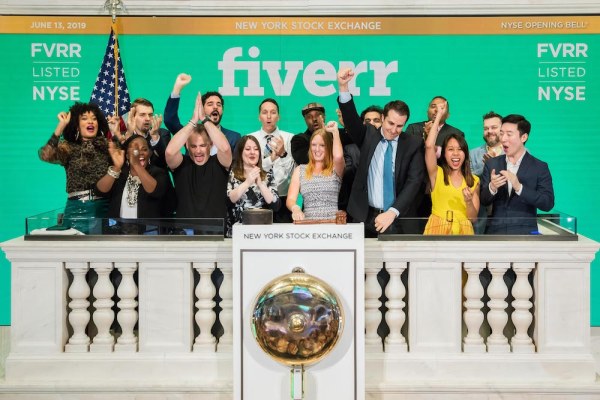
    Freelance marketplace Fiverr had a good first day on the New York Stock Exchange.

    The company priced its IPO at $21 per share last night, raising around $111 million. It then started trading this morning at $26, with shares climbing for most of the day and closing at $39.90 — up 90% from the IPO price.

    Fiverr is one of the most well-known companies facilitating the so-called gig economy. When it filed to go public last month, the company said it has facilitated 50 million transactions between 5.5 million buyers and 830,000 freelancers.

    Investors seem willing to bet on the company despite the fact that it’s losing money, reporting a net loss of $36.1 million on revenue of $75.5 million in 2018. In an interview this afternoon, founder and CEO Micha Kaufman noted that the company’s negative EBITDA is shrinking (at least when you compare the first quarter of 2019 to Q1 2018).

    “We are on the path to profitability,” Kaufman said. “That’s the balance we’re trying to keep — focusing on growth while building a business that would be profitable in the long term.”

    I’ll have a full story on our interview tomorrow morning.

    This content was originally published here.
  • Corn Farmers Face Possibility of Scrapping Whole Season

    Corn Farmers Face Possibility of Scrapping Whole Season

    The cool, wet spring has been a disaster for local farmers. The mud and the rain keeping them from planting their crops, many for the whole season.

    The growing season for corn and soy beans is already a tight one in Northern Michigan. Any delay in the spring or early frost in the fall cuts it even tighter. This summer may be a lost cause.

    “We just don’t see planting this late and being successful,” says MSU Extension Field Crops Educator Paul Gross, “So yeah, we’re kind of plowing new ground.”

    Northern Michigan farmers have been ready to plant corn and soybeans for weeks now. They just have not gotten reprieve from the rain. And it doesn’t look to be getting better.

    “To plant or not to plant?” says Gross, “Until things dry out, it just kind of standing at the end of the shed waiting.”

    Now the wait may be over with the decision made for them.

    “At this point, we’re in a situation where people are not probably going to plant corn,” says Gross.

    It’s not going to catch up. The corn is not going to mature at this point so now the farmers have to decide what are they going to grow and how much can they get out of it.

    “They’re still expected to manage that parcel to keep the weeds under control,” says Gross, “A lot of them will look to put some kind of cover crop on.”

    Hay, oats, wheat or even corn, knowing it won’t mature, all can be used to feed livestock at the very least. They can turn their backs on their cash crops because of their insurance. It should be able to tide them over to try again next year.

    “There is a silver lining in this a little bit where we will reduce some of our inventory so we strengthen our price,” says Gross, “So having a normal year next year, the pricing opportunities are going to be much better.”

    This content was originally published here.

  • Cramer: Hershey’s turnaround came at the right time

    Cramer: Hershey’s turnaround came at the right time

    VIDEO3:4603:46
    Cramer: Hershey’s turnaround came at the right time, and sent the stock up 28%

    CNBC’s Jim Cramer praised Hershey leadership for engineering a turnaround story for the iconic sweets company — a turnaround he says came at exactly the right time.

    The stock has had a “magnificent” 28.96% run in 2019, but could be nearing a peak, Cramer said. Still, the household name is worth keeping on the shopping list.

    “I salute CEO Michele Buck for masterminding this tremendous turnaround,” the “Mad Money” host said. “But with Hershey at $138 and investors no longer craving safety, I think you should wait for a pullback before you pull the trigger.”

    After trading flat at around $100 per share for years, Hershey staged a comeback by diversifying its core business, cutting costs, focusing on the best foreign markets and promoting Buck from chief operating officer, Cramer said. The stock gained more than $20 per share in 2019, partly due to Wall Street concerns of an economic slowdown, which sends investors buying up defensive stocks.

    “The company’s relatively new management team has been executing on a very smart turnaround plan for the past couple of years, and their moves are finally paying off,” Cramer said. “When everyone was worrying about a possible recession, Hershey was the perfect safe-haven. A nice, consistent, domestically-focused candy company with a solid yield currently at 2.1%.”

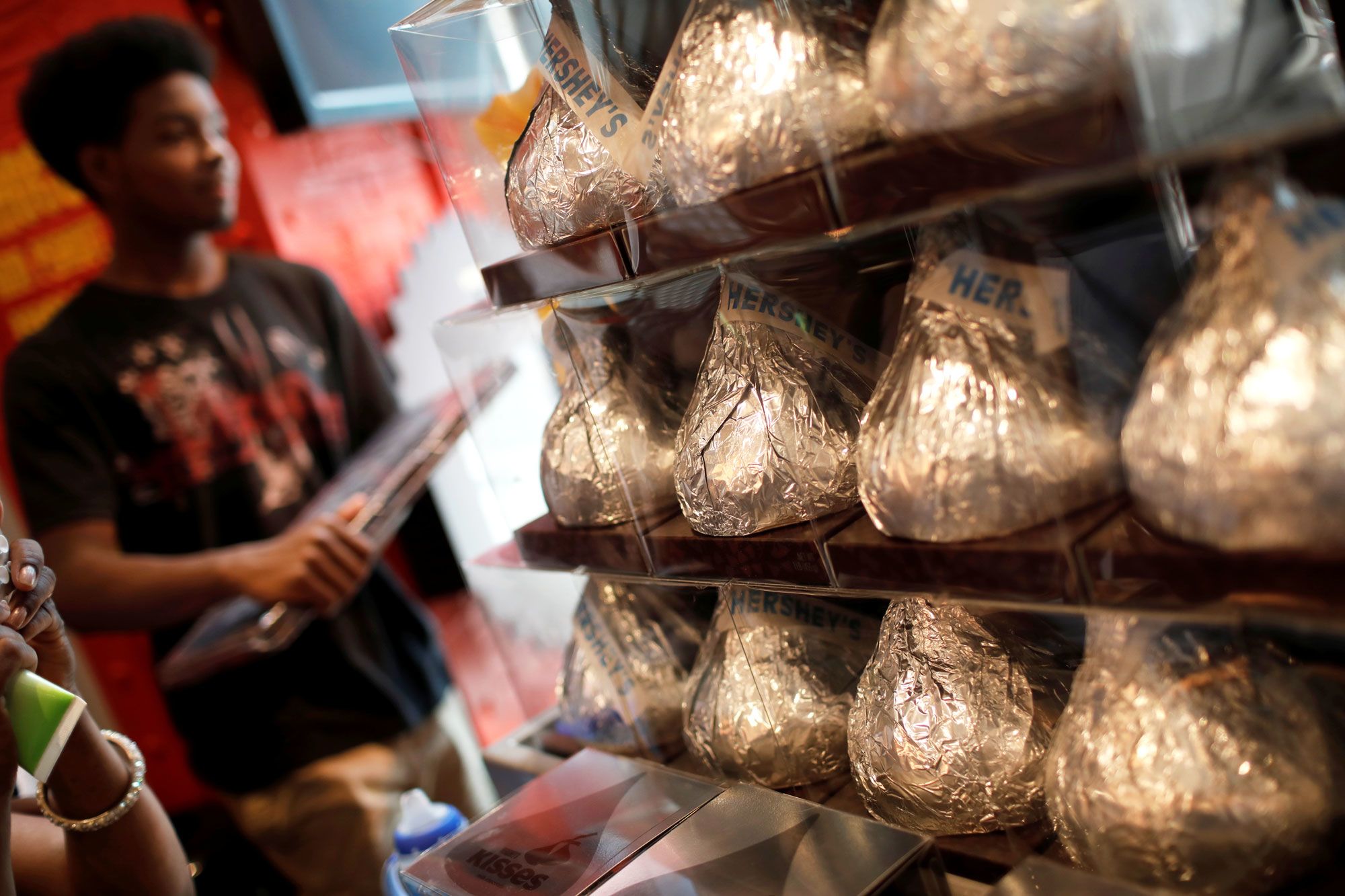
    The centenarian candy corporation counts Reese’s, Kit Kat, Almond Joy and Twizzlers brands under its umbrella. The company added several snack brands to its portfolio, as well, as cocoa costs climbed and consumer tastes changed. Hershey owns brands including Pirate Booty-maker Pirate Brands and SkinnyPop popcorn producer Amplify Snack Brands.

    Buck, Cramer highlighted, said in February “these brands add additional depth and incrementality to our already amazing portfolio of brands.” A string of acquisitions allowed Hershey to find modest single-digit revenue growth, the host added.

    In its April quarterly report, Hershey delivered shareholders a top- and bottom-line beat, with 2% organic sales growth and nearly 13% earnings growth. SkinnyPop alone grew at an 11% clip, Cramer noted.

    Cramer said Hershey, currently valued at more than $37 billion, can keep innovating as it does with new variations of Reese’s Peanut Butter Cups to stay on top.

    Hershey saw growth in its latest quarter “because management executed better than they’d predicted and the company had a very strong Easter, which matters because they own the distribution rights for Cadbury,” he said.

    WATCH: Cramer talks Hershey’s turnaround story
    VIDEO10:2810:28
    Cramer: Hershey’s turnaround came at the right time, and sent the stock up 28%

    Want to take a deep dive into Cramer’s world? Hit him up!
    Jim Cramer TwitterFacebookInstagram

    Questions, comments, suggestions for the “Mad Money” website? madcap@cnbc.com

    This content was originally published here.

  • Jet Airways share price slumps over 23% on report NSE to remove stock from F&O trading from June 28

    Jet Airways share price slumps over 23% on report NSE to remove stock from F&O trading from June 28

    Jet Airways share price slumped in early trade today after NSE said shares would be pulled out of Futures and Options trading from June 28. Jet Airways share price slumped over 23%  to 84.80 level compared to the previous close of 110.40 on BSE. Jet Airways share opened at a loss of 9.96% at 99.40 and fell to a fresh 52-week low of 84.80 on BSE.

    Its market capitalisation fell to Rs 986.03 crore with 15.61 lakh shares changing hands on BSE. The stock has been losing for the last nine days and fallen 40.30% in the period.

    Jet Airways share price has lost 77.48% during the last one year and fallen 68.22% since the beginning of this year.

    The stock is trading below its 50-day and 200-day moving averages of 142.81 and 224.15 level.

    The National Stock Exchange of India (NSE) said shares of Jet Airways would be pulled out of F&O trading, citing the embattled carrier’s failure to respond to queries about rumours in the market Jet’s securities will now be moved to the trade for trade segment with effect from June 28 as a “preventive surveillance measure”, from the current rolling segment, which allows daily trading, the stock exchange said in a circular

    “There are concerns with regard to continuity of flow of information about the company which is very vital for the appropriate price discovery in the scrip,” NSE said, adding that trading in the stock may not reflect the actual status of the company

    NSE also cited the company’s failure to submit its financial results for the year ended March 31 as well as observations made by the airline’s auditor as reasons for the move. On Tuesday, the stock closed 10.58% or 13.25 points lower at Rs 111.95 amid reports that London-based Hinduja Group has decided to stop talks to buy a stake in the ailing airline, while Etihad Airways of Abu Dhabi has also stalled its plan to infuse more funds into the Mumbai-based airline.

    Negative sentiment has hit the stock this week on news that its two operational creditors-Shaman Wheels and Gaggar Enterprises-took it to the insolvency court National Company law Tribunal (NCLT) seeking bankruptcy proceedings against the airline. 

    The development came at a time when banks are looking to resolve the once premier airline’s debt issues outside the insolvency process.

    Jet Airways owes more than Rs 8,000 crore to a consortium of banks led by the State Bank of India, which now run the airline, while it has a much larger debt pile by way of accumulated losses to the tune of Rs 13,000 crore and vendor dues of over Rs 10,000 crore and salary dues of over  Rs 3,000 crore.

    The banks have appointed SBI Capital Markets as the investment banker to find an investor to scout an investor for the company.

    Bankers, after taking over the airline late March had invited bids on April 8 to sell up to 75 percent stake in the crippled carrier that formally stopped operations on April 17. Though it had received initial bids from parties- Etihad Airways, two private equity players TPG Capital and Indigo Partners, and the sovereign wealth fund NIIF, none of them chose to submit the final bids.

    Edited by Aseem Thapliyal

    This content was originally published here.
  • Why is Andreessen Horowitz (and everyone else) investing in Latin America now? – TechCrunch

    Why is Andreessen Horowitz (and everyone else) investing in Latin America now? – TechCrunch

    Investments by U.S. venture capital firms into Latin America are skyrocketing and one of the firms leading the charge into deals is none other than Silicon Valley’s Andreessen Horowitz.

    The firm that shook up Silicon Valley with potentially over-generous term sheets and valuations and an overarching thesis that “software is eating the world” has been reluctant to test its core belief… well… pretty much anywhere outside of the United States.

    That was true until a few years ago when Andreessen began making investments in Latin America. It’s the only geography outside of the U.S. where the firm has committed significant capital and the pace of its investments is increasing.

    Andreessen isn’t the only firm that’s making big bets in companies south of the American border. SoftBank has its $2 billion dollar investment fund, which launched earlier this year, to invest in Latin American deals as well. (Although the most recent SoftBank Innovation Fund investment in GymPass is likely an indicator that the fund, much like SoftBank’s “Vision” fund, has a pretty generous interpretation of what is and is not a Latin American deal.)

    This content was originally published here.

  • Chemistry teacher who founded pharma firm now worth $10.8 billion, East Asia News & Top Stories – The Straits Times

    Chemistry teacher who founded pharma firm now worth $10.8 billion, East Asia News & Top Stories – The Straits Times

    HONG KONG (BLOOMBERG) – Zhong Huijuan quit her job teaching chemistry to teenagers and got into the drug business.

    The career switch has paid off handsomely.

    Her Hansoh Pharmaceutical Group, China’s largest maker of psychotropic drugs, is poised to go public on Friday (June 14) in Hong Kong with a market value of US$10.4 billion (S$14.2 billion). Ms Zhong holds a 68 per cent stake, giving her a US$7.9 billion (S$10.8 billion) fortune, according to the Bloomberg Billionaires Index.

    Ms Zhong, 58, is not even the richest person in the family. Her husband Sun Piaoyang, 60, is worth US$9.3 billion, due to the success of his Jiangsu Hengrui Medicine Co, a maker of anti-tumour drugs whose stock has returned about 16,300 per cent since it went public in Shanghai almost two decades ago.

    They are poised to be among the world’s richest pharma families, with a combined fortune that rivals the Sacklers, who made a fortune selling opioids, and the Bertarellis of Switzerland.

    Healthcare spending in China has surged to 5.9 trillion yuan (S$1.1 trillion) last year from 3.5 trillion yuan in 2014, and is projected to top 9.4 trillion yuan in 2023, Hansoh said in a prospectus for the offering.

    Mr Cen Junda, a long-time investor of the Lianyungang, Jiangsu-based company, is also a billionaire with a stake valued at about US$1.7 billion.

    Ms Iris Luo, a spokesman for Hansoh, declined to comment on their fortunes.

    The initial public offering will make Ms Zhong China’s third-richest woman, after two real estate moguls: Country Garden Holdings co-chairman Yang Huiyan, and Longfor Group Holdings chairman Wu Yajun, who are worth US$21.4 billion and US$10 billion, respectively.

    Ms Zhong graduated with an undergraduate degree in chemistry from Jiangsu Normal University in July 1982 and taught chemistry at Yan’an middle school in Lianyungang in the early 1990s, according to the website of All-China Women’s Foundation. She founded Hansoh in 1995.

    The company, which researches and produces drugs for six major therapeutic areas, reported 1.9 billion yuan in profit in 2018, an 18 per cent increase from a year earlier, the prospectus shows. The drugmaker gets almost half of its revenue from cancer treatments.

    “We believe its R&D will focus on making generics as soon as possible to take the first-mover advantage, a strategy many leading pharma companies applied in the past,” said Hong Kong-based analyst Zhang Jialin of ICBC International Research.

    Hansoh’s cornerstone investors include Singapore’s sovereign wealth fund GIC and Hillhouse Capital, Asia’s biggest private equity buyer, helping to draw more market interest in Friday’s IPO.

    The company said on Thursday that the retail portion of the offering was 12 times covered. Hengrui’s earlier success also may help bolster investor confidence in Hansoh.

    “The synergies between Hengrui and Hansoh, particularly in R&D and distribution, will bring the latter advantages over industry competitors,” said Bloomberg Intelligence analyst Mia He.

    This content was originally published here.

  • 3 Things to Know in the Housing Market Today!

    3 Things to Know in the Housing Market Today!

    A lot is happening in the world, and it’s having a direct impact on the housing market. The reality is this: some of it is positive and some of it may be negative. Some we just don’t know yet.

    The following three areas of the housing market are critical to understand: interest rates, building materials, and the outlook for an economic slowdown.

    1. Interest Rates

    One of the most important things to consider when buying a home is the interest rate you will be charged to borrow the money. In our recent post we posed the question, “Are Low Interest Rates Here To Stay?” The latest information from Freddie Mac makes it appear they are. We are currently at a 21-month low in interest rates.

    2. Building Materials

    Talk of tariffs could also affect the housing market. According to a recent article, the National Association of Home Builders reports that as much as $10 billion in goods imported from China are used in homebuilding. Depending on the outcome of the tariff and trade discussions between several countries, there could be as much as a 25% boost in the cost of building materials.

    3. Economic Slowdown

    In a prior blog post on this topic, we began the year with many economic leaders thinking we could expect a recession in late 2019 or early 2020. As spring approached, we reported that economists had started to push that projection past 2020.  Now, three leading surveys indicate that it may begin in the next eighteen months.

    Bottom Line

    We are in a strong housing market. Wages are increasing, home prices are appreciating, and mortgage rates are the lowest they have been in 21 months.  Whether you are thinking of buying or selling, it’s a great time to be in the market.

    This content was originally published here.
  • Pinterest Listed Top Pro-Life Site as Porn, “Bible Verses” Censored

    Pinterest Listed Top Pro-Life Site as Porn, “Bible Verses” Censored

     Insider: Search Term “Christian” Won’t Auto-Complete, Others Can’t Trend, No Notifications, or Recommendations
     Pinterest Blacklisted Pro-Life Group LiveAction.org, Classified as “Pornography,” Cannot Link to Site
     Leaked “Sensitive Terms List” Includes “bible verses” and “christian easter”
     Ben Shapiro Commentary Censored in “zero tolerance moment,” Slack Messages Reveal
     Planned Parenthood Undercover Videos Marked as “harmful” Conspiracy
     Veritas Calls On More Silicon Valley Insiders to Come Forward
    UPDATE 1: Pinterest REACTS. LiveAction.org is no longer on their “Porn Domain Blacklist”
    UPDATE 2: Pinterest REACTS AGAIN. LiveAction’s Pinterest Account has been permanently suspended.
    UPDATE 3: A Pinterest spokesperson has provided a statement in response to our request for comment: “Religious content is allowed on Pinterest, and many people use our service to search for and save Pins inspired by their beliefs. To protect our users from being targeted based on personal characteristics such as their religion, we have policies in place so that ads and recommendations don’t appear alongside certain terms.” 

    source