Category: Business

  • April pending home sales fall unexpectedly

    April pending home sales fall unexpectedly

    Home shoppers signed 1.5% fewer contracts to buy existing homes in April compared with March, according to the National Association of Realtors’ Pending Home Sales Index. Sales were 2% lower compared with April 2018, the 16th straight month of annual declines.

    Pending sales are an indicator of future closings and are therefore the most timely measure of activity in home sales. The expectation had been for a small monthly gain after a large gain in March.

    “Though the latest monthly figure shows a mild decline in contract signings, mortgage applications and consumer confidence have been steadily rising,” said Lawrence Yun, chief economist for the NAR. “It’s inevitable for sales to turn higher in a few months.”

    Buyers this spring have had the benefit of lower mortgage rates. The average rate on the 30-year fixed soared above 5% last November, but sank closer to 4% in March and then held steady right around 4.3% for most of April, when these contracts were signed.

    Buyers are also seeing home prices cool, which carries both negative and positive implications for the market. Prices are still higher than they were a year ago, but the gains have been shrinking with each month. While that helps with affordability, it also fuels fears that, in some markets, a home bought today will actually fall in value over the coming year.

    This is especially true in overheated markets like Seattle, Denver, Los Angeles and San Francisco, where the supply of homes for sale is rising.

    “Home price appreciation has been the strongest on the lower-end as inventory conditions have been consistently tight on homes priced under $250,000. Price conditions are soft on the upper-end, especially in high tax states like Connecticut, New York and Illinois,” said Yun.

    New tax laws have limited the deduction homeowners can take for property taxes. That has hit housing markets in higher tax states disproportionately.

    As a comparison, there is just a 3.3-month supply of homes for sale priced under $250,000 nationally, but an 8.9-month supply of homes priced $1 million and above.

    Regionally, the Realtors’ pending home sales index in the Northeast declined 1.8% monthly and was 2.1% below a year ago. In the Midwest, the index rose 1.3% monthly but was 2.4% lower annually. In the South it fell 2.5% monthly and 1.8% annually. In the West it dropped 1.8% monthly and was 1.5% below a year ago.

    This content was originally published here.

  • Did the Iranians create fake U.S. social media accounts and pose as GOP politicians?

    Did the Iranians create fake U.S. social media accounts and pose as GOP politicians?

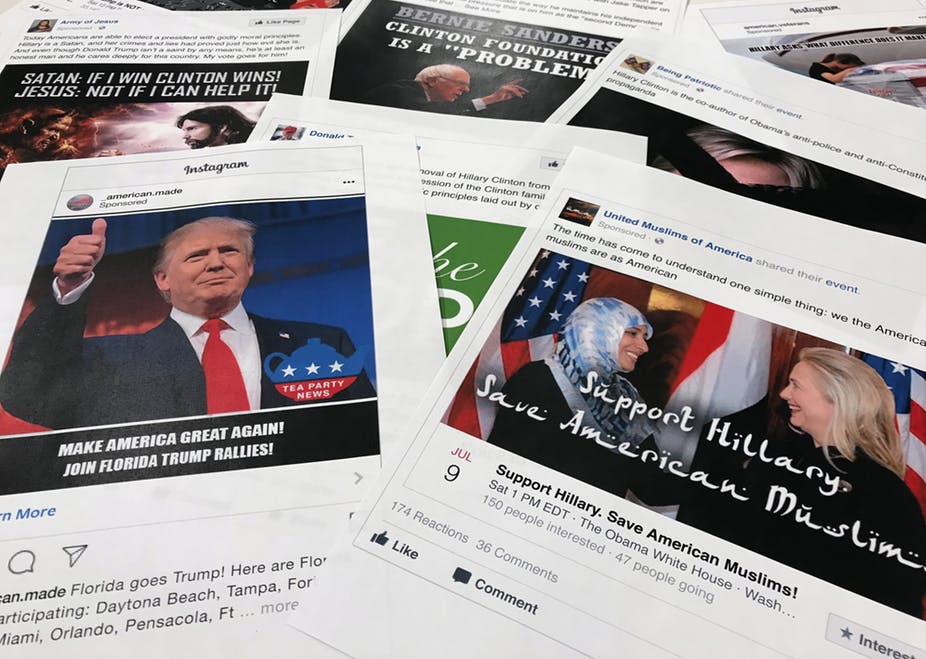
    Starting in April 2018, a group of anonymous people created fake American social media accounts to pose as journalists, plant letters to newspapers and impersonate Republican candidates for Congress — all in an apparent effort to promote Iranian interests. Was this the work of an Iranian intelligence service? A third country? A band of pranksters? It’s not completely clear who was behind the campaign, according to reports released Tuesday by Facebook and a leading cybersecurity company, FireEye. But what it shows, the companies say, is that the tech-fueled media environment which makes the United States a global beacon for free expression has also opened American consumers to exploitation and manipulation. And there is yet no good answer for what to do about it.

    “This demonstrates that actors who engage in this type of influence activity leverage all manner of different tactics and techniques that stretch across a wide variety of media and platforms,” Lee Foster, who leads FireEye’s intelligence team, said. “This is a societywide issue that we really have to come to terms with and figure out a way to effectively tackle.” “We risk the U.S. information space effectively becoming a free-for-all for foreign interference,” he added. The FBI declined to comment, pointing NBC News to a statement by Director Christopher Wray, who told Congress on May 7, “On the counterintelligence side, we’re facing a uniquely challenging time in terms of foreign investment, foreign influence; China, Russia, North Korea, Iran. I could go on and on there.”

    Based on a tip from FireEye, Facebook said Tuesday it removed 51 Facebook accounts, 36 pages, seven groups and three Instagram accounts involved in what it called “coordinated inauthentic behaviorthat originated in Iran.”

    source


  • Horses keep dying at Santa Anita racetrack

    Horses keep dying at Santa Anita racetrack

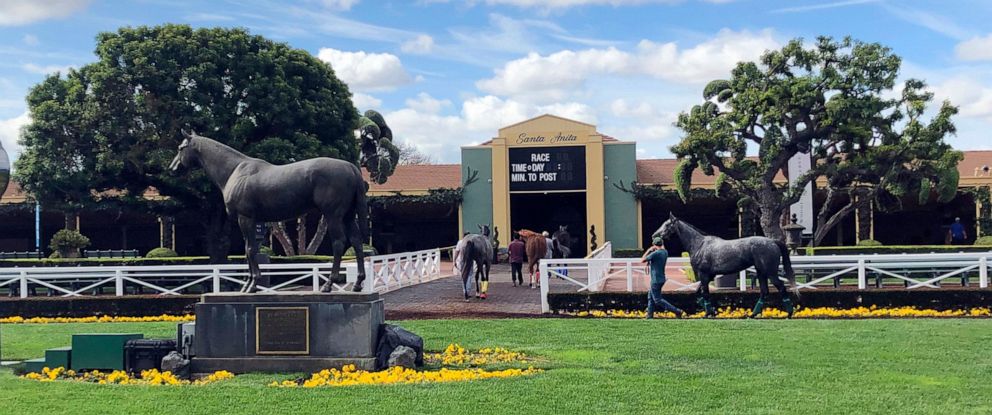
    Animal rights activists are again calling for races to be suspended at Santa Anita Park amid a string of horse deaths that forced the park to temporarily shut down earlier this year.  The famed Arcadia, California, racecourse, which will play host to this year’s Breeders’ Cup World Championships in November, recorded its 26th death since December when Kochees was injured during a race Saturday. The 9-year-old gelding had to be put down Sunday. Track spokesman Stefan Friedman told CNN the track is safe and there will be consequences in Kochees’ death. He would not go into detail but said the rules at Santa Anita require that every horse who races be seen by a trainer’s veterinarian and by the track’s vet. He said two trainers also got the boot last week, again declining to provide details. “Everybody’s got to be pointed at the fact that the horse comes first,” he said. “If you do not put the safety of the horse first at this track, you will not be welcome here.”

    source

  • Trump Doubles Down on Ineffective Tariffs, Further Harming U.S. Farmers and Consumers – Reason.com

    Trump Doubles Down on Ineffective Tariffs, Further Harming U.S. Farmers and Consumers – Reason.com

    Last week, President Donald Trump announced he would impose new tariffs on hundreds of billions of dollars of goods produced in China. Many of those tariffed goods—just like the U.S. goods China has imposed retaliatory tariffs on—are farm products. Consequently, this latest round of tariffs is expected to add to the already higher prices Americans are paying for a variety of foods.

    U.S. agricultural exports to China totaled $20 billion in 2017. Those exports come in about as broad a range as you could imagine. China’s retaliatory tariffs have hit U.S. farmers hard.

    Soybean farmers, pork producers and a growing number of other agricultural interests across a range of states—including cherry producers, corn growers, and lobstermen—have complained that they are collateral damage caught in the middle of the escalating trade battle,” the Washington Post reported this week.

    The CEO of Del Monte, makers of popular canned produce, said this week that the company was forced to raise prices on U.S. consumers by 10 percent due to Trump’s tariffs.

    “Since China imposed tariffs last fall, [Indiana soybean and corn farmer Brent] Bible has nowhere to sell his soybean and corn crops,” NPR reported this week. “And that situation just got worse, because the futures trading market started planning for higher tariffs earlier this week.” Bible told NPR the tariffs had cost him $50,000 over just the past three days.

    Earlier this week, Reason‘s Eric Boehm suggested that the most likely winner of the ongoing trade skirmishes between Trump and China would probably be bacteria, roaches, and rats, the appetites of which will be tested by all the food grown by American farmers that tariffs would cause to rot in warehouses rather than be sold.

    Trump, who gave billions to subsidize U.S. farmers (and, um, Brazilian criminals) who were impacted by his earlier tariffs, has already proposed billions of new bailout dollars to help them deal with the inevitable fallout from his latest tariffs.

    Does that make any sense?

    It does to Trump, who loves tariffs. Last year he famously dubbed himself Tariff Man. In his 2011 New York Times bestseller, Time to Get Tough: Make America Great Again!, Trump writes that “a true commander in chief would sit down with the Chinese and demand a real deal, a far better deal. Either China plays by the rules or we slap tariffs on Chinese goods. End of story.”

    But it’s not the end of the story.

    Back in March, Trump hailed the “substantial progress” he says he’d made on trade with China. Those days are over.

    [A]fter weeks of optimistic statements by Trump and members of his administration about how trade talks were progressing, Trump abruptly escalated tariffs on $200 billion of Chinese goods last week and opened the door to even more,” CNN reported this week. The network also noted that U.S. farmers are pissed over the move. That includes farmers such as this guy, who says he voted for Trump.

    Trump’s attempts to calm farmers came in the form of a typical Word Salad that was anything but soothing.

    Our great Patriot Farmers will be one of the biggest beneficiaries of what is happening now,” Trump tweeted earlier this week. He also let those “great Patriot Farmers” know that his administration “will be making up the difference”—the income shortfall Trump’s tariffs have wrought on those same great Patriot Farmers—out of “the massive Tariffs being paid to the United States for allowing China, and others, to do business with us.

    Well, um, er, not exactly.

    “White House economic adviser Larry Kudlow on Sunday acknowledged that the Chinese do not directly pay tariffs on goods coming into the U.S.,” CNBC reported this week, “contradicting President Donald Trump’s claims that China will pay for tariffs imposed by the U.S.”

    Kudlow also admitted something Trump, to my knowledge, has not: the very real harm that American tariffs inflict on American consumers.

    Walmart, the country’s largest grocer, says the latest round of tariffs will force the retailer to hike prices for consumers in the United States.

    China is not paying the cost of tariffs,” Washington Post columnist Mark Thiessen, who supports the tariffs, wrote this week. “American businesses and consumers are paying.

    “Trump is taxing consumers to bolster farmers, a core part of his political base,” wrote Washington Post columnist Philip Bump this week.

    Those taxes add up. One recent scholarly assessment of the impact of Trump’s tariffs says they’ll add roughly $500 to $800 in new costs to every American household, and will cost the U.S. economy tens of billions of dollars over the next year.

    As messy as things are, they could get uglier still. An editor at a Chinese state-owned media company suggested “that China might cease purchases of U.S. agricultural products” altogether.

    There are a lot of moving parts here—tariffs, bailouts, reprisals, tough messaging, pleas, calls for restraint, threats, and promises—seemingly with new ones added each day. I’m not an economist. Even if I were, though, I’d have a hard time comprehending what every move meant to the bottom line of U.S.-China trade.

    Nevertheless, the whole is clear. Tariffs are bad for American and Chinese consumers, farmers, and food producers. In short, tariffs make things worse, not better. 

    This content was originally published here.
  • Cuba forced into rationing as US sanctions and Venezuela crisis bite | World news | The Guardian

    Cuba forced into rationing as US sanctions and Venezuela crisis bite | World news | The Guardian

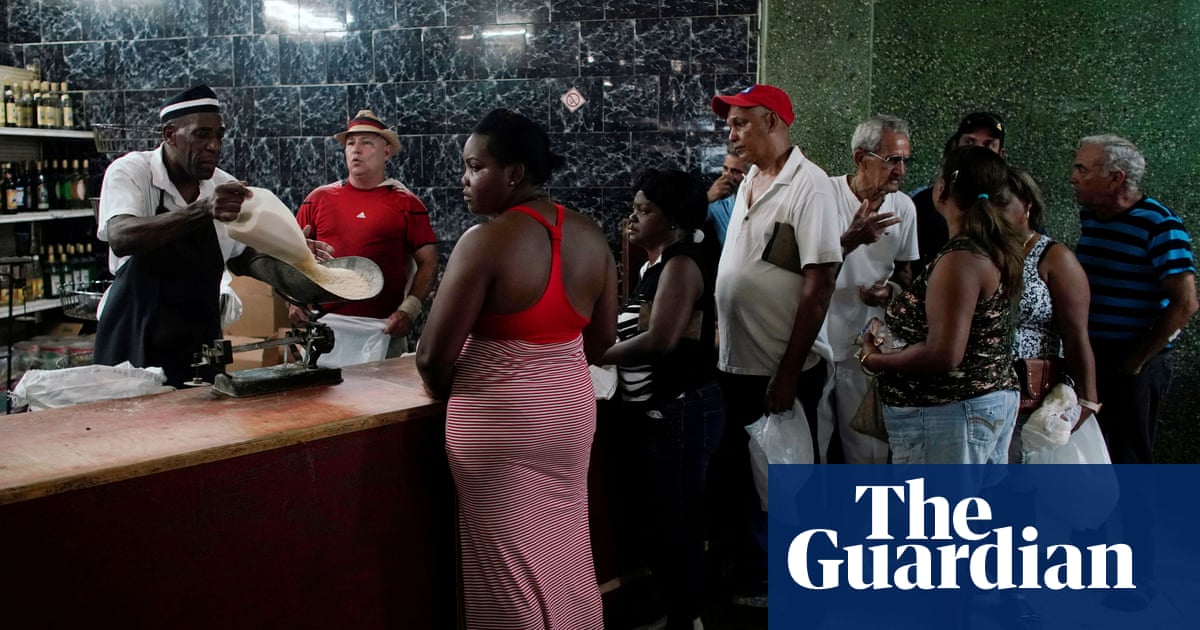
    The Cuban government has announced that it is launching widespread rationing of chicken, eggs, rice, beans, soap and other basic products in the face of a grave economic crisis.

    Betsy Díaz Velázquez, the commerce minister, told the state-run Cuban News Agency that various forms of rationing would be employed in order to deal with shortages of staple foods. She blamed the hardening of the US trade embargo by the Trump administration.

    Economists give equal or greater blame to a plunge in aid from Venezuela, where the collapse of the state-run oil company has led to a nearly two-thirds cut in shipments of subsidised fuel that Cuba used for power and to earn hard currency on the open market.

    “We’re calling for calm,” Díaz said, adding that Cubans should feel reassured that at least cooking oil would be in ample supply. “It’s not a product that will be absent from the market in any way.”

    Shop shelves on the Caribbean’s largest island have been increasingly empty of late with scarcity of basic products such as eggs, flour and chicken, and massive, hours-long queues for them whenever they come into stock.

    Cubans have been flooding social media with photos of the queues they are in, under the hashtag #lacolachallenge (queue challenge) to highlight the problem.

    Cuba imports 60% to 70% of its food. A handful of agricultural reforms in recent years have failed to boost output and it also suffers from a decades-old US trade embargo.

    A decline in aid from key ally Venezuela and lower exports have left it struggling to find the cash to import. More US sanctions since Donald Trump became president have worsened its liquidity crisis.

    Diaz said another problem was hoarding by Cubans worried about whether products would disappear and speculators aiming to resell goods on the black market.

    As a result Cuban supermarkets would from now on limit how much each person can buy of certain products like chicken and soap, she said. Other products such as eggs, rice, beans and sausages, would only be available to purchase with the ration card, and limited to a certain quantity each month.

    “Our mission is to fracture all the measures the US government imposes, and today we are setting priorities,” Diaz said on the midday state-run news broadcast.

    Some Cubans, particularly those on low state salaries and pensions who cannot afford black market prices, expressed relief.

    “These measures are important for those Cubans most in need,” said pensioner Elizabeth Ortega, 72.

    Others said it highlighted the mismanagement of the economy.

    “These measures are a temporary remedy but they do not resolve Cubans’ problems in the long run,” said Ihosvany Perez Rodriguez, 34, who runs a small shop in Havana. “The country produces too little and so does not have enough money.”

    The head of the Communist party, Raúl Castro, introduced a series of reforms around a decade ago in the hope of opening up and boosting the economy, which is one of the world’s last Soviet-style command economies.

    However that reform drive has tapered off in recent years partly due to discontent with some of its consequences such as rising albeit still low inequality and less state control.

    The move on Friday represents a setback to one of the proposed reforms, to end the universal rationing system, introduced just after the 1959 revolution.

    This content was originally published here.
  • CrossFit quits Facebook, Instagram, accuses social media giant of censorship, being ‘utopian socialists’

    CrossFit quits Facebook, Instagram, accuses social media giant of censorship, being ‘utopian socialists’

    CrossFit, the branded workout regimen, accused Facebook of being “utopian socialists” and left the platform after the social network deleted a group dedicated to a diet.

    The move to quit both Facebook and Instagram came in the wake of the decision to delete “without warning or explanation the Banting7DayMealPlan,” a group that advocated a diet aimed at eating “food that is as close to its natural state as possible — free from processing, additives, preservatives and sugar.”

    he group suspension was later overturned, but CrossFit issued a lengthy statement announcing the end of their presence on the platform.

    “All activity on CrossFit, Inc.’s Facebook and Instagram accounts was suspended as of May 22, 2019, as CrossFit investigates the circumstances pertaining to Facebook’s deletion of the Banting7DayMealPlan and other well-known public complaints about the social-media company that may adversely impact the security and privacy of our global CrossFit community,” the statement read.

    source

  • California doctor vacationing on Maui identified as victim of fatal shark bite

    California doctor vacationing on Maui identified as victim of fatal shark bite

     A 65-year-old California man has died after suffering an apparent shark bite while swimming off Maui, officials said Saturday.  On Sunday, Maui Police spokesman Lt. Gregg Okamoto confirmed the identity of the victim as Thomas Smiley, who was visiting from Granite Bay, Calif.  California media said Smiley was an optometrist who had just retired this year.  According to information from the Maui Fire Department along with the state Department of Land and Natural Resources, Smiley was swimming about 60 yards from shore near the Kaanapali Shores resort Saturday.  “They pulled the man up. He looked unconscious when they transferred him to the other gurney. And we could see that they were trying to do CPR on him,” said witness Allison Keller.  But they could not revive him. Witnesses said it was a traumatic situation.  As we got closer, I saw some blood on his stomach and then I got looking a little bit more and his wrist, it looked like the skin on his wrist was just torn off,” Keller said.  “And then I got looking closer and his entire left leg from his knee down was just missing. There was no blood or anything.” Keller says the victim was vacationing on Maui with his wife. Dr. Gary Taxera was his best friend and knew him for more than 40 years. He says Smiley was scheduled to fly home the next day. “He was just in the wrong place, at the wrong time, doing something in a place he loved, doing something that he was extremely comfortable and loved,” Taxera said. He said Smiley left an impact on everyone he encountered. “He had a personality bigger than life in a really good way … He was a good-hearted man and people who didn’t get to know him, really missed out,” Taxera said. Smiley leaves behind a wife, three children and six grandchildren. The incident is the first fatal shark bite in the islands since 2015. There have been five fatal shark attacks off Hawaii since 2004, and all five happened in Maui waters, according to the DLNR. The DLNR put up shark warning signs in the area. It’s unclear what type of shark was involved in the incident.

  • The Wealth Detective Who Finds the Hidden Money of the Super Rich

    The Wealth Detective Who Finds the Hidden Money of the Super Rich

    Gabriel Zucman started his first real job the Monday after the collapse of Lehman Brothers. Fresh from the Paris School of Economics, where he’d studied with a professor named Thomas Piketty, Zucman had lined up an internship at Exane, the French brokerage firm. He joined a team writing commentary for clients and was given a task that felt absurd: Explain the shattering of the global economy. “Nobody knew what was going on,” he recalls.

    At that moment, Zucman was also pondering whether to pursue a doctorate. He was already skeptical of mainstream economics. Now the dismal science looked more than ever like a batch of elaborate theories that had no relevance outside academia. But one day, as the crisis rolled on, he encountered data showing billions of dollars moving into and out of big economies and smaller ones such as Bermuda, the Cayman Islands, Hong Kong, and Singapore. He’d never seen studies of these flows before. “Surely if I spend enough time I can understand what the story behind it is,” he remembers thinking. “We economists can be a little bit useful.”

    A decade later, Zucman, 32, is an assistant professor at the University of California at Berkeley and the world’s foremost expert on where the wealthy hide their money. His doctoral thesis, advised by Piketty, exposed trillions of dollars’ worth of tax evasion by the global rich. For his most influential work, he teamed up with his Berkeley colleague Emmanuel Saez, a fellow Frenchman and Piketty collaborator. Their 2016 paper, “Wealth Inequality in the United States Since 1913,” distilled a century of data to answer one of modern capitalism’s murkiest mysteries: How rich are the rich in the world’s wealthiest nation? The answer—far richer than previously imagined—thrust the pair deep into the American debate over inequality. Their data became the heart of Vermont Senator Bernie Sanders’s stump speech, recited to the outrage of his supporters during the 2016 Democratic presidential primary.

    Zucman and Saez’s latest estimates show that the top 0.1% of taxpayers—about 170,000 families in a country of 330 million people—control 20% of American wealth, the highest share since 1929. The top 1% control 39% of U.S. wealth, and the bottom 90% have only 26%. The bottom half of Americans combined have a negative net worth. The shift in wealth concentration over time charts as a U, dropping rapidly through the Great Depression and World War II, staying low through the 1960s and ’70s, and surging after the ’80s as middle-class wealth rolled in the opposite direction. Zucman has also found that multinational corporations move 40% of their foreign profits, about $600 billion a year, out of the countries where their money was made and into lower-tax jurisdictions

    source

  • Alabama Sets Record for Adoption, Shattering Common Pro-Choice Argument

    Alabama Sets Record for Adoption, Shattering Common Pro-Choice Argument

    Alabamians adopted a record number of foster children in their state during the 2018 fiscal year, AL.com reports.  According to the Alabama Department of Human Resources (DHR), 710 foster children were adopted last year, up from 509 in the 2017 fiscal year and 502 in 2016.  “It sends a strong, wonderful message to all the foster care children in our state,” Gov. Kay Ivey said when announcing the accomplishment.  DHR Commissioner Nancy Buckner said about 70 percent of foster children return to their biological families. “But those that don’t, they need their own loving, caring, permanent family and that’s what it’s all about,” she explained.  Buckner said the increase in adoptions last year was partly due to the involvement of juvenile courts, judges, and the DHR.  “We recognize that children need permanency. We all need family. We need family connection. And we’ve all gotten together. We’re doing some partnership things together. So, we’re all on the same page and we’re trying to push permanency through,” the commissioner said.  Alabama’s adoption record is getting attention weeks after Gov. Ivey signed a law that virtually outlaws all abortions in that state.  Pro-abortion advocates criticized the state for allegedly being anti-women and only caring about children before they are born.  However, Alabama families have shown to have an interest in protecting the well-being of children both in and outside the womb from their latest adoption statistics. ‘

    TO HAVE YOUR VOICE HEARD ON ABORTION GO HERE TO PROTECT THE UNBORN.


  • McDonalds Opens A Tiny Restaurant For Bees

    McDonalds Opens A Tiny Restaurant For Bees

    Bee colonies around the world are dying at alarming rates. No more so than in the USA, where it is estimated the 44% of colonies were lost in 2016 alone. There are many reasons for this alarming decline, most of which are down to us.

    Things like overuse of pesticides, diesel fumes, intensive farming practices and parasites from introduced species have contributed, and if things don’t improve soon we could face a major collapse in our food supply. Because you see, these tiny, hard-working creatures are an integral part of many ecosystems and pollinate up to 80% of our crops, and if they were to continue dying at these rates we can say goodbye to many of the plants that we rely on, as well as a whole plethora of other creatures that need them too.

    Some Mcdonald’s in Sweden are doing their bit to help our vitally important friends, by hosting beehives on the roofs of their restaurants. Some are also planting flowers outside too, providing a bee-friendly environment that has helped to boost the population in the Scandinavian country. Pretty cool right?

    more