Author: Truth & Hammer

  • Steal This Look: The Ultimate Summery Outdoor Kitchen

    Steal This Look: The Ultimate Summery Outdoor Kitchen

    I’ve always been a skeptic when it comes to outdoor kitchens (who needs anything more than a grill and a set of tongs?). I’m revising my thinking, however, after spotting—and swooning over—the ultimate setup from the Netherlands.

    From WWOO Outdoor Kitchens comes the perfect combination of stylish design and Dutch practicality. Composed of modular components, WWOO kitchens offer systems that range from barely-beyond-basic to well-equipped. Add-ons include a pizza oven, a steel fireplace, and a stainless firebox. WWOO showrooms are located throughout the Netherlands, as well as in Paris; Stuttgart, Germany; Prague; and newly stateside in California.

    Here we’ve deconstructed some of the key elements of the WWOO outdoor kitchen for those with a DIY spirit.

    Appliances


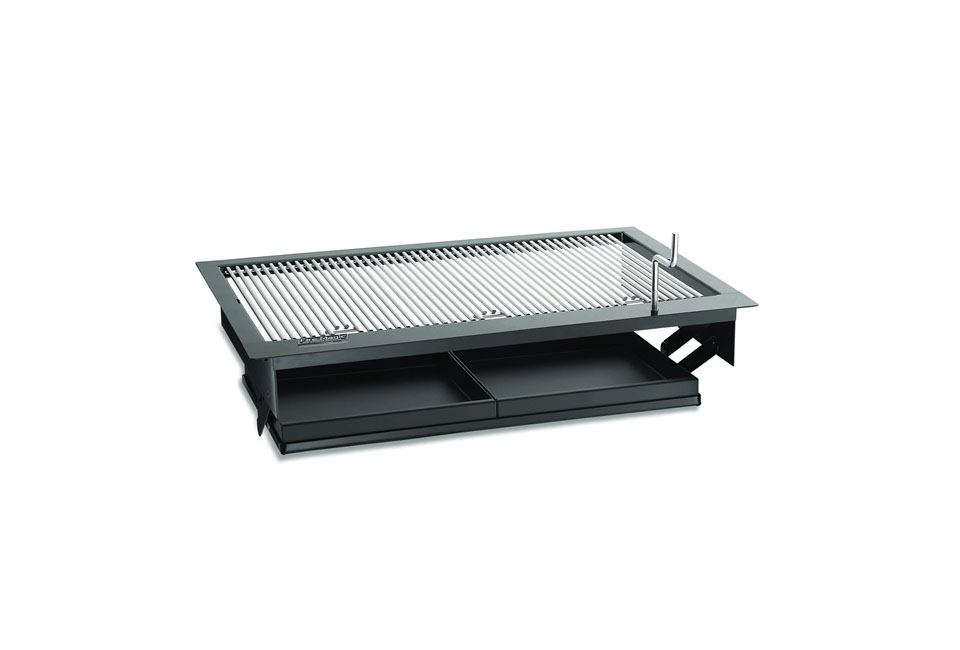
    For a flush counter grill, consider the Fire Master Classic Drop-in Countertop Charcoal Grill; from $407.15 for the 24 by 18 inch version, at Woodland Direct.
    Above: For a flush counter grill, consider the Fire Master Classic Drop-in Countertop Charcoal Grill; from $407.15 for the 24 by 18 inch version, at Woodland Direct.
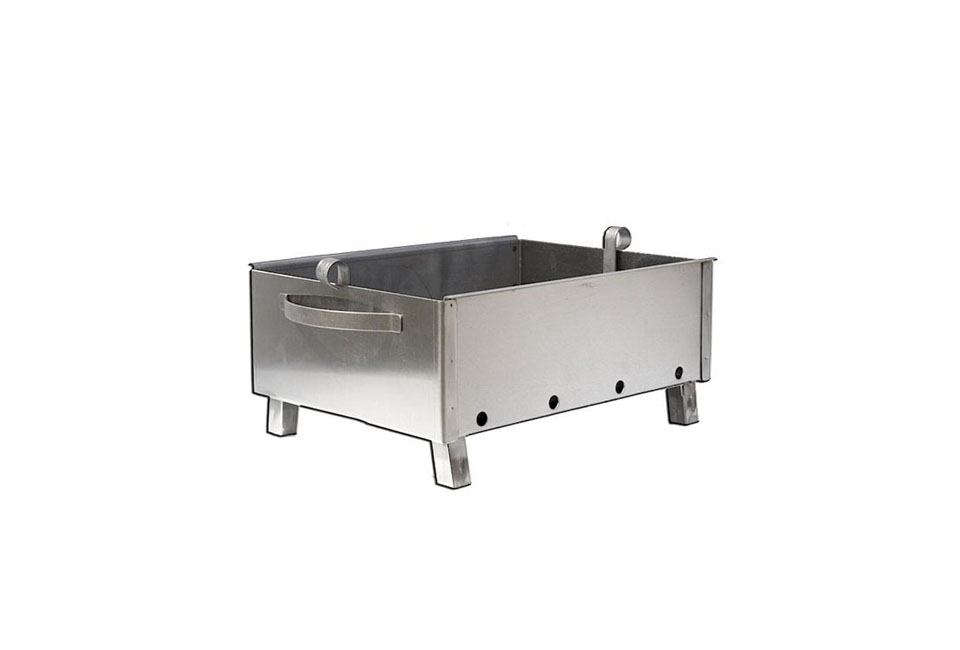
    For a countertop option, the stainless steel Kavkaz Mini Grill measures 16 inches wide and 12 inches deep (larger sizes available); $219.99 on Amazon. An optional top grate is available.
    Above: For a countertop option, the stainless steel Kavkaz Mini Grill measures 16 inches wide and 12 inches deep (larger sizes available); $219.99 on Amazon. An optional top grate is available.


    This content was originally published here.

  • Decorating Your Yard Enclosed by Split Rail Fence

    Decorating Your Yard Enclosed by Split Rail Fence

    Once your split rail fence is designed, installed, and officially complete you can now get in to the fun stuff! Decorating Your Yard will enhance the overall design and style of your backyard space. It’s time for the fun part! You are adding flowers, seating areas, birdhouses, pavers, and much more. Adding decorations to your backyard can make your space feel more inviting and cozy.

    Decorating Your Yard with Flowers and Landscaping

    The first thing that comes to mind when you think about decorating an outdoor space is landscaping. Trees, mulch, rocks, and flowers are the perfect way to liven up your backyard. Plant flowers that run alongside your split rail fence to not only give you some extra privacy but to help make your fence stand out. You can also plant trees or vines that stand aside from the posts the hold the rails together, creating the illusion that your fence is all plants. Once the vines grow and continue to do so, they will eventually drape along the side and stretch the whole distance of the fence in time. Using mulch and rock underneath your split rail fence will help keep animals in and unwanted animals out by creating a barrier with less room to get in through, plus it leaves a beautiful aesthetic.

    Add a Garden

    When you first install your split rail fence and are designing it, you can implement a portion of it that is boxed in, where you can use as a gardening space. You can use this space to plant and grow flowers, fruits, vegetables, and herbs. Of course, to keep animals out, you can put weld wire across the portion of your split rail fence that is your garden, if you choose not to have it along the whole fence. You can even use your leftover rails and posts from your fencing job as planter boxes or dividers in the garden to help keep the crops separated. With a little bit of acrylic paint or paint markers, you can create some designs and add color to your yard as well as a label where you planted what fruits and veggies, so they are easier to find!

    Birdhouses are a Great Way of Decorating Your Yard

    A unique way to add some wildlife in your backyard without putting your little ones or pups in danger, is to build a birdhouse that can sit alongside your split rail fence on the posts. This is an excellent opportunity to make a craft day for your kiddos and teach them a little bit about wildlife. There are plenty of different designs of birdhouses with some that have feeders on the sides, places for a small birdbath, and of course a space for the mama bird to lay her eggs and raise her chicks. Being able to watch the little birds in their daily life and having some extra decoration on your fence is the best of both worlds!

    Mailboxes and Name Plates

    Some homeowners also choose to outline the front of their property with a split rail fence in the front of their house, which gives the ability to use the posts for your mailbox and nameplates. Most homes have their mailboxes in which you can put yours on a post within your split rail fence, rather than having to add posts in the front of your home, adding more clutter. The fun thing about mailboxes when you own a home is that you can decorate it and give your home a touch of your personality. Something that isn’t for everyone but some people add to the front of their home is a nameplate with their last name listed and the year in which the name was established. These are both small ways you can utilize your split rail fence in a different way.

    Address Numbers

    When it comes to the placement of the address numbers, you have to put them in a place that is easy for people to see and identify. Your split rail fence usually runs right up to the end of your property line, which is the perfect place for your address numbers. They typically are on the front of the home close to the front door, but if you can place them closer to the street and more natural to identify, it would benefit you and your guests!

    These are just a few of the ways you can spice up your split rail fence once it is installed, but your imagination is the only limit!

    The post Decorating Your Yard Enclosed by Split Rail Fence appeared first on Rocky Mountain Forest Products.

    This content was originally published here.

  • Trump on demoting Fed Chair Jerome Powell: ‘Let’s see what he does’

    Trump on demoting Fed Chair Jerome Powell: ‘Let’s see what he does’

    President Donald Trump, asked if he still wants to demote Federal Reserve Chairman Jerome Powell, told reporters Tuesday, “Let’s see what he does.”

    Trump’s remarks came a day before the Fed was set to announce its next decision on interest rates.

    The president added that he wants a “level playing field” from the central bank.

    Bloomberg News reported Tuesday morning that the White House had looked into demoting Powell in February. Top White House economic advisor Larry Kudlow told reporters that the Trump administration was not currently considering such a move.

    The Fed will make a decision on interest rates on Wednesday at 2 p.m. ET, concluding a two-day meeting. The central bank is not expected to make any policy changes, but investors are hoping for the central bank to signal a rate cut as soon as July. Powell will be holding a news conference Wednesday following the decision.

    Stocks have rallied this month in part because investors expect the Fed to ease its monetary policy stance. The S&P 500, Dow Jones Industrial Average and Nasdaq Composite are all up more than 6% for June through Tuesday’s close. Traders are pricing in a more than 80% likelihood that the Fed will cut rates next month, according to the CME Group FedWatch tool.

    Trump in recent days has pressured the Fed under Powell not to raise rates, claiming that comparatively lower interest rates for the euro give other countries an advantage over the U.S.

    This line of attack is not new: Trump has claimed the seven Fed interest rate hikes in 2017 and 2018 — from the near-zero levels that followed the financial crisis — have held back U.S. economic growth.

    On Tuesday morning, Trump lashed out at European Central Bank President Mario Draghi for his comments signaling openness to more monetary stimulus in Europe, which could lower the euro’s value compared to the dollar.

    Draghi’s comments “immediately dropped the Euro against the Dollar, making it unfairly easier for them to compete against the USA. They have been getting away with this for years, along with China and others,” Trump tweeted.

    “If you look at what’s going on with the euro, they have a much diff stance than our folks do,” Trump told reporters outside the White House on Tuesday afternoon. “As you know they did something today that was very dramatic, and frankly, it helped that part of the world.”

    “I want to be given a level playing field. And so far I haven’t been,” the president added.

    Trump spoke to reporters outside while en route to Orlando, Florida, where he will officially launch his 2020 reelection bid.

    –CNBC’s Marc Rod and Jacob Pramuk contributed to this report.

    This content was originally published here.

  • Data Indicate There’s No Need to Panic About Rising Seas

    Data Indicate There’s No Need to Panic About Rising Seas

    Those who argue human greenhouse gas emissions are causing dangerous climate change regularly point to rising seas as one of the most certain and devastating impacts on human communities.

    According to environmental activists, mainstream media outlets and some scientists—who routinely cite Intergovernmental Panel on Climate Change (IPCC) reports—unless governments take drastic action to transform the world’s economic system, including ending the use of fossil fuels for energy in a very short period, entire island nations will disappear beneath the seas and low-lying coastal cities will be swamped, forcing a great migration of populations inland.

    The threat of rising seas to various communities is not, in the words of the immortal Shakespeare, “Much Ado About Nothing.” However, alarming claims made about humanity’s contribution to rising seas by government bureaucrats, environmental lobbyists and scientists with a vested interest in imposing their socialist vision of society on a largely unwilling public are, also in the words of Shakespeare, “tale[s] told by …  idiot[s], full of sound and fury, signifying nothing.”

    The IPCC asserts it is “very likely” sea level rise has accelerated since the middle of the twentieth century in response to warming caused by rising greenhouse gas emissions, and “it is very likely that the rate of global mean sea level rise during the 21st century will exceed the rate observed during 1971–2010 … due to increases in ocean warming and loss of mass from glaciers and ice sheets.”

    However, hard data show, contrary to IPCC claims, ocean levels are not rising at either an unusually rapid rate on average globally, nor by an abnormal amount in historical terms.

    A new report by Drs. Craig Idso, David Legates, and S. Fred Singer, released by The Heartland Institute, proves this point beyond any doubt. The scientists examined long-term data from tidal gauges and other sources and concluded the amount of sea-level increase Earth has experienced over the past century is not unusual historically, nor has the rate of rise increased significantly over the past few decades. As Idso, Legates, and Singer put it, “the highest quality coastal tide gauges from around the world show no evidence of acceleration since the 1920s.”

    The disconnect between data recorded by the global tidal gauge system and projections made by IPCC is due, according to the authors, to the fact that “[l]ike ice melting, sea-level rise is a research area that has recently come to be dominated by computer models. Whereas researchers working with datasets built from long-term coastal tide gauges typically report a slow linear rate of sea-level rise, computer modelers assume a significant anthropogenic forcing and tune their models to find or predict an acceleration of the rate of rise.”

    A 2017 report released by The Heartland Institute, authored by geophysicist Dennis Hedke, analyzed data collected from 10 coastal cities with relatively long and reliable sea-level records, including Ceuta, Spain; Honolulu, Hawaii; Atlantic City, New Jersey; Sitka, Alaska; Port Isabel, Texas; St. Petersburg, Florida; Fernandina Beach, Florida; Mumbai/Bombay, India; Sydney, Australia; and Slipshavn, Denmark. Hedke found there was no correlation between changes in sea levels at these locations and rising carbon dioxide levels.

    For some cities, the rate of sea level rise has remained virtually constant, neither increasing nor declining appreciably from the rates experienced before humans began adding substantial amounts of greenhouse gases to the atmosphere. By contrast, some cities, such as Ceuta, Spain, have experienced very little sea-level rise over the past century, exhibiting almost a flat trend line, below the historic rate of global sea level rise of approximately seven inches per century. Other cities, such as Sitka, Alaska have actually experienced falling sea levels. Still other cities, such as Atlantic City, have experienced a large, rapid increase in sea levels.

    The point is that different areas around the world are having different experiences with sea levels, none of which correspond well either with the projections made by IPCC based on computer models or the steady increase in atmospheric greenhouse gas concentrations. Rather than responding to rising greenhouse gas levels, changes in sea levels seem to reflect localized conditions.

    Matt Vespa

    Although, on average, global sea levels have risen by approximately 400 feet since the beginning of the end of the most recent ice age—approximately 20,000 years ago—the rate of sea level rise has risen and fallen at various times, slowing and increasing on the order of tens, hundreds, and thousands of years over the past 20,000 years, having nothing whatsoever to do with human activities.

    Human activities, such as the construction of barriers, the channelization of rivers, installing pumps, the conversion of coastal wetlands to densely populated metropolitan areas, filling in shallow water bays, replenishing eroded beaches and the draining of coastal aquifers for human consumption have undoubtedly contributed to making some coastal regions and populations more vulnerable to rising seas and other cities and populations less vulnerable. However, when analyzing the causes and consequences of changing sea levels, there is little evidence increased greenhouse gas emissions are contributing to higher ocean levels.

    Our knowledge of previous interglacial cycles indicates seas are going to continue rising unless and until the next ice age comes, notwithstanding any efforts humanity makes to stem the rising tides; like the efforts of the apocryphal story of King Canute, they are bound to fail.

    It makes sense to prepare for rising seas by hardening coastal areas, discouraging poorly designed coastal development, and making people living along coasts aware it is hazardous and investments made there could be swallowed by rising water. However, ending the use of fossil fuels, and giving ever larger government increasing power over peoples’ lives will not stop seas from rising, but instead will only serve to make the world’s people poorer and less free.

    This content was originally published here.

  • Soaring Temperatures Speed Up Spring Thaw on Greenland’s Ice Sheet

    Soaring Temperatures Speed Up Spring Thaw on Greenland’s Ice Sheet

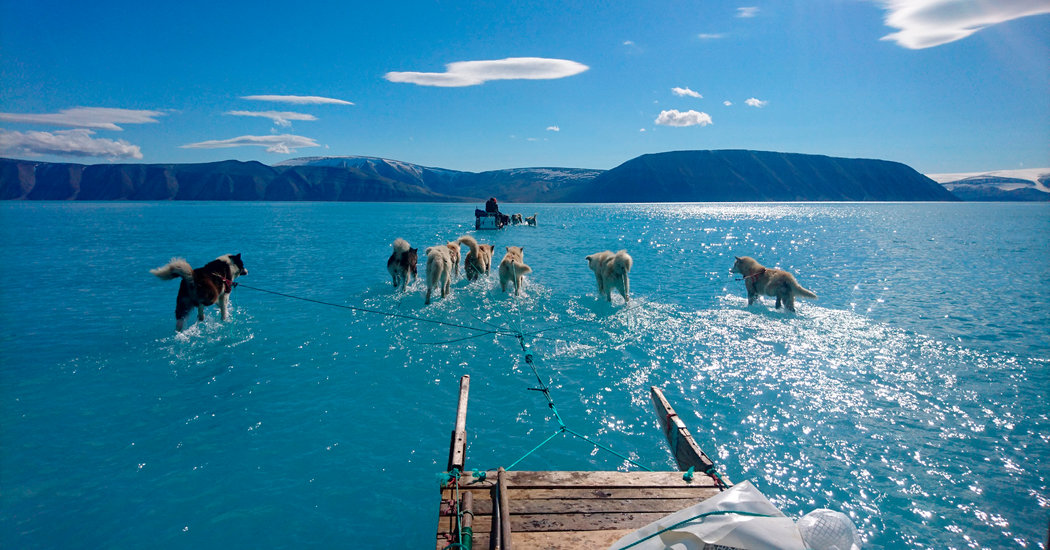
    Melting this early in the season generally does not contribute to sea level rise immediately, as most of the water remains near the surface of the ice sheet. As the warm season continues, however, the hydrology of the ice sheet changes and melt water drains down through the ice and eventually out to the ocean. Dr. Tedesco likened it to clearing clogs in a plumbing system.

    As for Arctic sea ice conditions, a warm May had reduced ice extent from its maximum of 5.7 million square miles in March to 5 million square miles at the end of the month. (As of Sunday, it was down to 4.2 million square miles.) Sea ice loss contributes to the amplification of Arctic warming, as the darker water of open ocean absorbs more sunlight than ice.

    The average sea ice extent in May is nearly half a million square miles below the average for 1981-2010, according to the National Snow and Ice Data Center. Parts of the Arctic, including the Bering Sea off western Alaska, have had exceptionally low ice cover for months.

    Dr. Scambos said that Arctic sea ice loss can be linked to temperatures in Siberia. “It’s setting up fairly dramatically right now,” he said. “There’s a lot of warmth in Siberia.”

    Still, whether this year will break the record for minimum sea ice extent — 1.3 million square miles, also in 2012 — is anyone’s guess. Conditions can change between now and the end of the summer thaw. “July and August will be pretty interesting,” Dr. Scambos said.

    For more news on climate and the environment, follow @NYTClimate on Twitter.

    This content was originally published here.
  • How to do less laundry | TreeHugger

    How to do less laundry | TreeHugger

    Take a moment to assess the ‘dirty’ garment before tossing it in the basket. You could save yourself some work.

    A friend with stepchildren recently commented on the amount of laundry I must do on a weekly basis. “You’re probably doing a load a day!” she exclaimed, describing how overwhelming her step-kids’ laundry is when they visit on weekends.

    It got me thinking about my own laundry habits and the amount of dirty clothing generated by my three young children. As strange as this may sound, I don’t feel all that overwhelmed, nor do I put on a load a day. In fact, now that the youngest is out of cloth diapers, it’s more like three loads per week, including one of bedsheets.

    I strive to minimize my family’s laundry for a number of reasons. It’s an energy-intensive process that uses a lot of water. (I hang dry whenever possible.) It creates wear and tear on garments that shortens their lifespan and, in the case of synthetic fabrics, releases plastic microfibres into the environment (although I do toss a

    I have a few key strategies for keeping that laundry from piling up:

    1) Buy more natural fabrics.

    These do not hold onto odor nearly as much as synthetics. A pair of wool socks, for example, can be worn 3-4 days in a row, without smelling, as can a wool, hemp, or cotton shirt. I try to avoid polyester blends whenever possible because these smell faster and have to laundered more frequently.

    2) Air them out.

    This is an amazingly effective step that too often gets overlooked. Hanging clothes on an indoor laundry rack and leaving them overnight can make them smell much fresher the next day. Obviously this doesn’t work if the item stinks like B.O. and needs laundering, but if a shirt just has that ‘worn’ smell but doesn’t have a bad odor or visible dirt, it can work wonders.

    3) Spot-wash.

    So many of the spots my kids get on their clothing can be quickly wiped away with a wet cloth. Because they’re still too young to perspire, this extends the use of the garment by an extra day or two. I do the same to my own clothes, wiping marks on my jeans and t-shirts, rather than throwing the whole thing in the laundry basket.

    4) Rethink your standards.

    To be clear, I expect my children (and myself) to look presentable and to smell good. I would never allow them to go to school in clothing that smelled or looked visibly dirty, and I expect them to change their underwear and socks every day without exception. However, I do think that our society’s standards of laundry hygiene are a bit over the top. There’s nothing wrong with wearing a shirt that’s still clean, but not just cleaned.

    It’s also time we brought back the notion of play clothes, of dressing kids in rattier clothes that allow them to engage in messy outdoor play without the parent worrying about the inevitable laundry.

    5) Own fewer clothes.

    This may sound counterintuitive, but when you have only a handful of items in the closet that you really like wearing, you’re more inclined to stretch the time between washes. I’ve realized this while living in a rental house with a single suitcase-worth of clothing, whereas when I’ve got more clothes kicking around, I tend to toss them in the laundry immediately.

    These strategies won’t work for everyone, nor are they a replacement for laundering when it’s actually needed, but they’re meant to be a reminder that laundering is not always the first solution. Stop, sniff, scan – and then scrub if you need to.

    This content was originally published here.
  • Which Bathroom Vanity Will Work for You?

    Which Bathroom Vanity Will Work for You?

    Washstand

    A traditional-style washstand offers timeless, elegant ambience in an all-white bathroom. In this bathroom by ARCHWRIGHT, classic tubular chrome legs with towel rails have been finished off with the palest gray marble top for a sculptural look that blends in unobtrusively with the vintage-look bathroom. The washstand has no drawers or cabinets, so you’d need to use another wall for your storage.

    Single Sink

    Sometimes a single vanity is all you need — or can fit. This modestly sized bathroom is just big enough to fit in a good-size sink with practical cabinet space beneath to ensure that surfaces are kept clutter-free. To further maximize space, choose wall-mounted faucets, too, which enhance the streamlined aesthetic.

    Freestanding

    The curvaceous vanity in this design by Armstrong Keyworth feels more like an elegant piece of furniture than a practical bathroom necessity. The freestanding vanity has a seamlessly molded sink with handy side “wings” for storing and displaying bathroom essentials, plus a black lacquered cabinet underneath to hide the remaining odds and ends. Stick to monochrome for a timeless bathroom design, and highlight with a bright accent for extra pizzazz.

    Perch on a Plinth

    If your storage needs are already covered, your choice of vanity doesn’t need to revolve around umpteen cupboards and drawers. Instead, you can pick a striking piece that emphasizes aesthetics. In this bathroom by Sims Hilditch, a pair of modern sculptural sinks sits on a thick, wall-hung plinth, and the result is a light and airy visual feast. The shelf below is perfect for stashing fresh towels.

    For Kids

    You can never have enough storage when it comes to kids — and that definitely applies to the bathroom. If the younger members of the family are lucky enough to have their own separate bathing area, then try to squeeze in as much cabinet and drawer space as possible. The rainbow stripes on this long, lean vanity by LDa Architecture & Interiors add a sense of fun.

    Big Storage

    If a wall-to-wall fitted bathroom unit is too kitchen-y for your tastes, consider compromising with a sizable vanity equipped with wide, deep drawers beneath. Opt for pure white cabinets, a pale stone top and acrylic handles so the piece doesn’t overwhelm the room, then fill it up with your toiletries for a clean and clear bathroom in minutes.

    Petite

    A vanity can become the star of the powder room if you seek out one with the right dimensions. This Victorian-style number in a design by Jamie Hempsall offsets a traditional sink and faucet with an ornate metal cupboard for a serious dash of vintage style. The graphic wallpaper adds a cool contrast.

    Custom

    You can’t beat a vanity that’s tailor made to fit your space and style. This handsome and luxurious wooden creation designed and built by Chalet is topped with a slab of marble and two inset white sinks. But don’t forget that all real-wood units need to be treated to make them water repellent and resistant to humidity. Avoid direct, prolonged contact with water and make sure the bathroom is well ventilated.

    Wall Mounted

    A “floating,” or wall-mounted, vanity is perfect for compact bathrooms, as the clear space underneath promotes a light and airy look and is easy to keep clean. Choose handleless door fronts with a neat, recessed grip to enhance the streamlined silhouette, as was done in this bathroom by Ellis Architects.

    This content was originally published here.

  • Japanese company introduces insanely cute Snorlax sofa

    Japanese company introduces insanely cute Snorlax sofa

    It is low-key one of the most marketable Pokemon in an ever expanding cavalcade of merchandise.

    Cellutane, the Japanese furniture company that created a bread-shaped sofa, is back at it again.

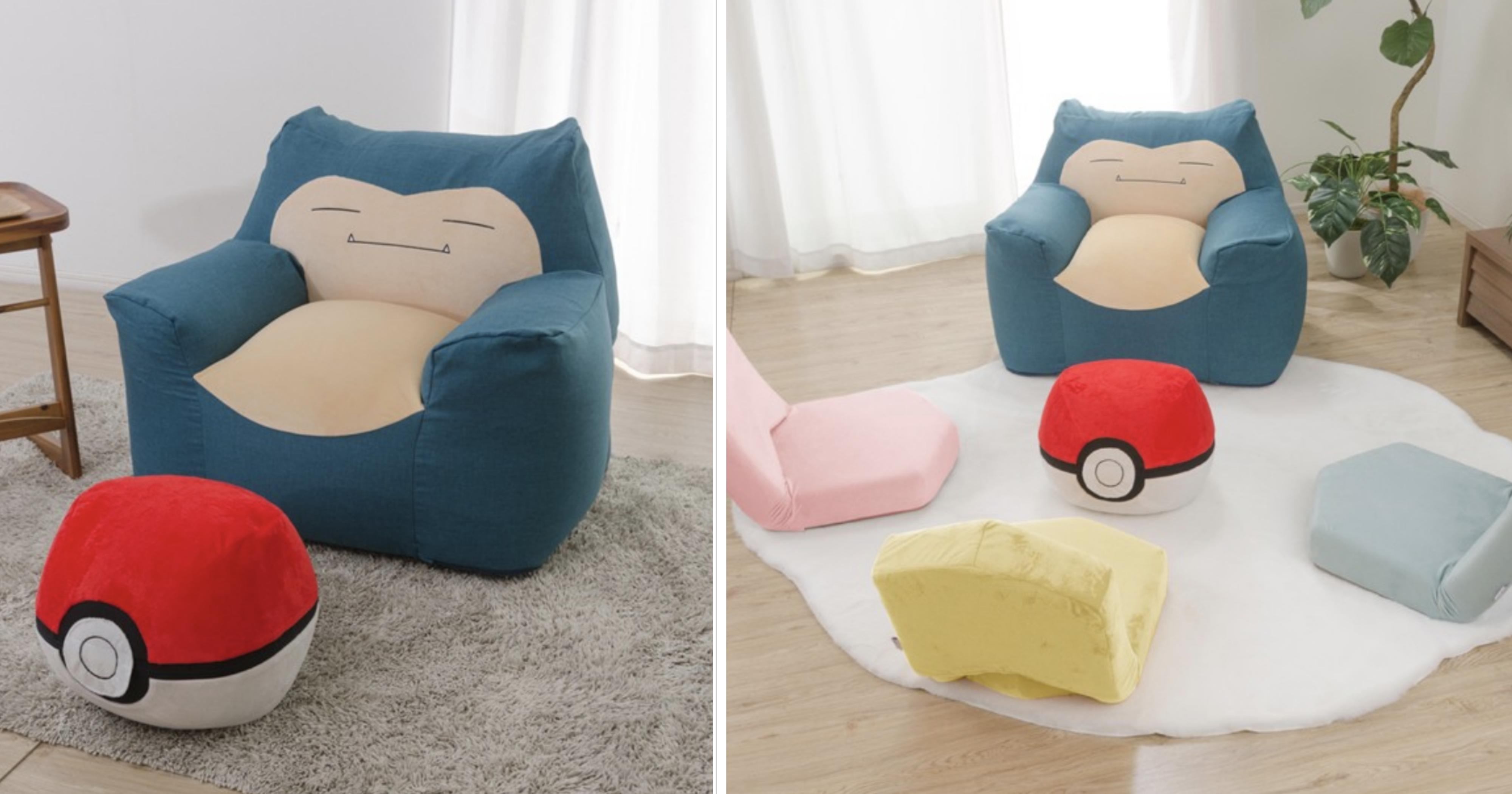
    Here’s their Snorlax sofa.

    Here’s how you are supposed to relax on the Snorlax sofa.

    Here’s a nice little Pokeball to rest your feet on.

    Here are the specs of the Snor-fa and Pokeball cushion.

    And here is how you show three of your friends how much better than them you are.

    Here are the prices.

    The sofa and Pokeball set will cost you 34,599 Yen (S$436.54) while the Snorlax sofa alone is 24,800 Yen (S$312.90).

    However, it doesn’t appear to be shipping to Singapore anytime soon.

    This content was originally published here.

  • As More California Kids Drop Medi-Cal Coverage, Experts Seek Answers

    As More California Kids Drop Medi-Cal Coverage, Experts Seek Answers

    This is an interesting question:  What happened to the 152,000 children that left Medi-Cal in 2018?  It could be they got out of poverty, left the State for a cheaper State, deported—most are illegal aliens.  It is interesting to note the Assembly Democrats and Guv Newsom have agreed to spend $98 million MORE for illegal aliens to get free health care.  But Senate Democrats have not agreed yet.  Oh, while spending more on illegal aliens, they will NOT help honest California seniors—they will not get increased benefits.  That means the Democrats are financing health care for illegal aliens by DENYING better health care for honest California seniors.

    “It’s not yet clear whether these children have lost health insurance coverage altogether, or enrolled in private insurance plans. Health policy advocates and the report’s authors say it’s likely that at least some of decline is a result of wary immigrant families pulling eligible children out of government health insurance programs. Federal attempts to undermine Affordable Care Act reforms, such as by removing the individual mandate for people to enroll in health insurance, may also play a role, they said.

    “The loss is alarming,” said Michael Odeh, health policy director for Children Now, a children’s health advocacy group. “We’ve seen an uptick in the number of uninsured kids from other data, so this declining enrolment and lowering of participation in Medi-Cal is truly concerning.”

    What is alarming is that Democrats prefer to use your tax dollar to help here illegally, while holding back care for honest citizens—that is alarming.  It is also alarming that the media refuses to tell the public about Democrat Priorities.

    By Claudia Boyd-Barrett, California Health Report,  6/5/19   

    More than 150,000 California children dropped out of federally funded health insurance programs in 2018, a trend some experts blame on the Trump administration’s anti-immigrant policies and efforts to upend the Affordable Care Act.

    Enrollment in California’s low-income health program, called Medi-Cal, and the low-cost Children’s Health Insurance Program (CHIP) dropped 3 percent in 2018, according to a report by the Georgetown University Center for Children and Families. That’s a total of 152,515 children leaving the two programs.

    The enrollment drop follows stagnation in California’s uninsured rate among kids in 2017, reversing years of growth in health coverage rates following implementation of the Affordable Care Act.

    It’s not yet clear whether these children have lost health insurance coverage altogether, or enrolled in private insurance plans. Health policy advocates and the report’s authors say it’s likely that at least some of decline is a result of wary immigrant families pulling eligible children out of government health insurance programs. Federal attempts to undermine Affordable Care Act reforms, such as by removing the individual mandate for people to enroll in health insurance, may also play a role, they said.

    “The loss is alarming,” said Michael Odeh, health policy director for Children Now, a children’s health advocacy group. “We’ve seen an uptick in the number of uninsured kids from other data, so this declining enrolment and lowering of participation in Medi-Cal is truly concerning.”

    California’s loss of young Medicaid and CHIP enrollees is part of a national trend. Across the country, more than 820,000 children left the programs last year, the Georgetown report found.

    The California Department of Health Care Services attributed the decline to improvements in the economy and the state’s low unemployment rate. In a statement, department spokesman Anthony Cava said it’s likely more families are gaining job-based health insurance and earn too much to qualify for Medi-Cal.

    “Medi-Cal enrollment is typically counter cyclical.  During economic downturns, enrollment rises as individuals may see declines in income and/or the loss of jobs that provide for health care coverage. This can create a demand for Medi-Cal coverage,” he wrote. “Conversely, during economic expansions, the demand for Medi-Cal coverage declines, as job opportunities and incomes increase.”

    But report co-author Edwin Park, aresearch professor at Georgetown University’s McCourt School of Public Policy, said economic growth is not enough to explain the drop in enrollment. Although enrollment in Medi-Cal and CHIP typically slows during a strong economy, it’s unusual for it to go down, he said. What’s more, the loss of children in the programs is happening across the country, even in states where the unemployment rate is stagnant or has increased, Park added.

    “There weren’t any particularly noteworthy changes in economic indicators in (2018) that could explain a sudden reduction in the number of people eligible or a big increase in alternative forms of coverage like employer-sponsored insurance,” he said.

    Pending bills in the state legislature to reinstate the individual mandate and to make health insurance more affordable could help keep more children insured, Park said. The state should also double down on outreach to low-income and immigrant families to reassure them it’s safe to enroll their children in Medi-Cal and to educate them on the benefits of having health care, he and Odeh said.

    Nevertheless, Park said the data shows California can “only do so much,” in the face of hostile federal policies.

    “The national headwinds were hard and likely were contributing to the Medicaid and CHIP enrolment decline in 2018,” he said.

    Kids without insurance “may end up in poor health, do worse in school and over the long term have poorer health and other life achievement outcomes than they would if they had health coverage,” he said. “These are all very troubling, worrisome signs.”

    Share this:

    This content was originally published here.

  • 47 members of Jimmy Buffett fan club fall ill vacationing in the Dominican Republic

    47 members of Jimmy Buffett fan club fall ill vacationing in the Dominican Republic

    Over the last year, at least seven Americans have died and hundreds more have fallen violently ill while visiting Dominican Republic hotels and resorts. That includes a group of Jimmy Buffett super fans who got sick while vacationing in Punta Cana this past April.

    According to PEOPLE, of the 114 “Parrotheads” who checked into the Hotel Riu Palace Macao, 47 experienced “diarrhea, vomiting, dizziness, and headaches.”

    Dana Flowers, a member of the Central Oklahoma Parrothead Association (who also serves as the group’s travel agent), told PEOPLE that everyone who became sick either swam in one specific pool or drank at the swim-up bar. When they sought medical treatment, the resort’s on-site doctor prescribed a medicine for parasites. [They] didn’t do any testing, they just automatically gave them medicine for parasites,” Flowers said. Upon returning home from the trip, two members of the group tested positive for salmonella.

    Flowers herself claims to have lost 14 pounds due to the illness. She said many fellow Parrotheads still aren’t feeling “normal” months after the trip.

    In a statement, Hotel Riu Palace Macao said, “We are aware that three guests staying last April at this hotel and coming from the same group … were attended by a possible case of gastroenteritis in our doctor’s office. These events occurred after an external activity of this group outside the hotel, so we can not determine the exact origin of the stomach upset. … No more similar cases were registered by other guests during the indicated date above.”

    Meanwhile, the FBI and CDC have launched investigations into the ongoing health crisis in the Dominican Republic.

    This content was originally published here.