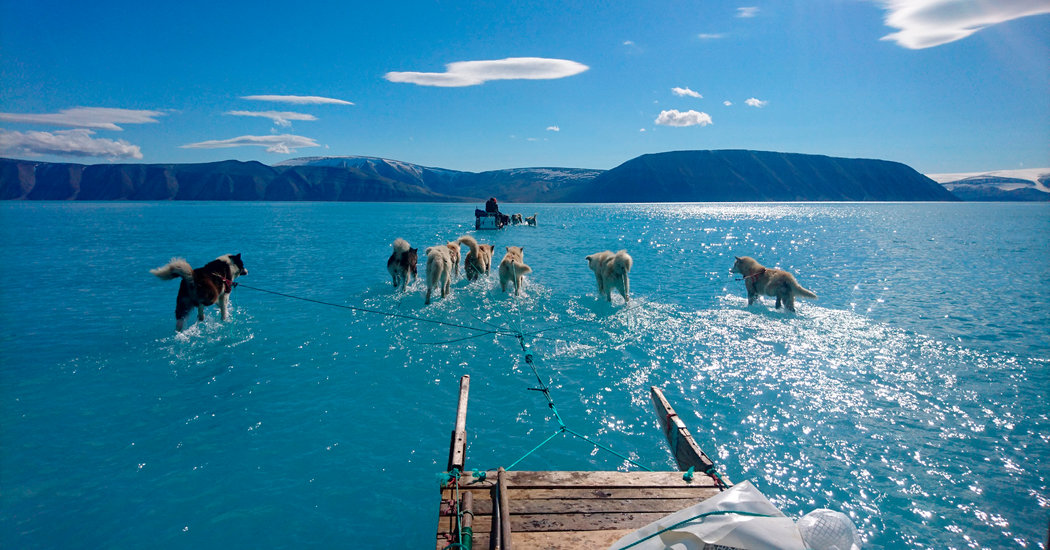
Melting this early in the season generally does not contribute to sea level rise immediately, as most of the water remains near the surface of the ice sheet. As the warm season continues, however, the hydrology of the ice sheet changes and melt water drains down through the ice and eventually out to the ocean. Dr. Tedesco likened it to clearing clogs in a plumbing system.
As for Arctic sea ice conditions, a warm May had reduced ice extent from its maximum of 5.7 million square miles in March to 5 million square miles at the end of the month. (As of Sunday, it was down to 4.2 million square miles.) Sea ice loss contributes to the amplification of Arctic warming, as the darker water of open ocean absorbs more sunlight than ice.
The average sea ice extent in May is nearly half a million square miles below the average for 1981-2010, according to the National Snow and Ice Data Center. Parts of the Arctic, including the Bering Sea off western Alaska, have had exceptionally low ice cover for months.
Dr. Scambos said that Arctic sea ice loss can be linked to temperatures in Siberia. “It’s setting up fairly dramatically right now,” he said. “There’s a lot of warmth in Siberia.”
Still, whether this year will break the record for minimum sea ice extent — 1.3 million square miles, also in 2012 — is anyone’s guess. Conditions can change between now and the end of the summer thaw. “July and August will be pretty interesting,” Dr. Scambos said.
For more news on climate and the environment, follow @NYTClimate on Twitter.
This content was originally published here.