It’s second nature: When your Uber or Lyft pulls up, you hop in the back seat. Sure, you check that the license plate and driver photo match what’s on the app. But should you also pull out hand sanitizer and sit up front to be safer? Maybe you should, research shows. Concerns about cleanliness and the dangers of sitting in the back could give you pause the next time your ride rolls up to the curb. Experts say that riding in the back seat of a ride-hailing vehicle is germier than a toilet seat and potentially more dangerous than sitting in front. As millions of Americans embrace ride-hailing apps – and Uber gets ready to become a publicly traded company – the health and safety risks of back-seat riding are becoming clearer. According to a study by insurance company Netquote, the average rideshare vehicle has about 219 times as many germs as the average taxi, which is cleaned regularly. It’s nearly three times germier than the average toothbrush holder and more than 35,000 times germier than the average toilet seat. John Chung’s recent Lyft ride probably qualified. Chung, a Philadelphia-area resident, was visiting Cleveland on a business trip this month when he hopped into the back seat and discovered fingernail clippings and questionable residue. “I try not to touch too much, but what are you going to do?” he said, adding that he often feels like he doesn’t have viable alternative options.
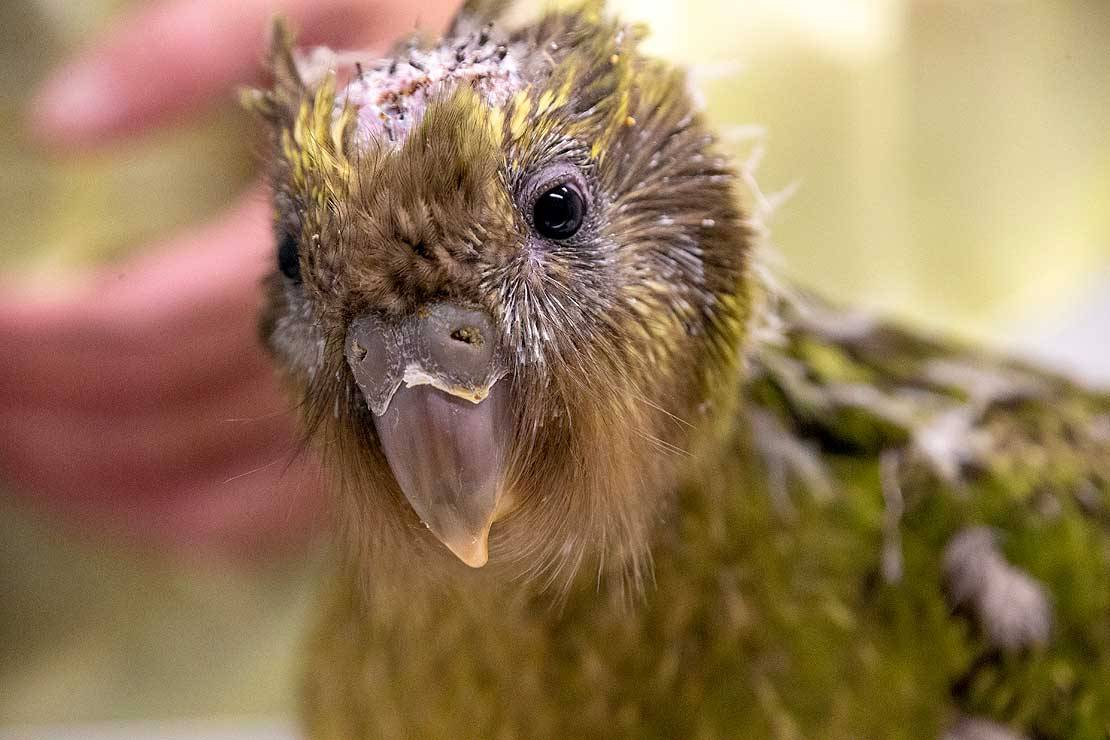
These human surgeons are for the birds. When wildlife rangers discovered a strange lump on a “wild-hatched” parrot’s skull, they took action and got it the best medical attention New Zealand could provide. Now the Massey University medical team behind the resulting operation is declaring it the first of its kind for avian medicine. The 56-day old kākāpō chick, born with a life-threatening skull deformity, was airlifted from the zoo where it lives to Massey’s Wildbase Hospital for emergency brain surgery last week. The country’s national airline even flew the baby bird, named Espy, for free . “This was only possible because of a national collaboration with vets and conservation workers,” Director of Wildbase Hospital professor Brett Gartrell tells The Guardian. “The plates of its skull had not completely fused and the fontanelle was still open.” Gartrell says the surgery is risky “and the common complications … in humans include permanent brain damage, continued leakage of cerebrospinal fluid and the possibility of meningitis.” A national collective of veterinarians from Auckland Zoo, Wellington Zoo and Dunedin Wildlife Hospital convened to determine that surgery was the best way forward for the chick. Once one of New Zealand’s most common birds, today only 144 of these rare large parrots exist. However, this year 76 kākāpōs were born, a record-breaking breeding season. The surviving birds are beloved in the nation, especially one named Sirocco, who is internet famous. So far, Espy’s surgery appears to have been a success. The kākāpō is doing well and is back home at Dunedin Wildlife Hospital in the South Island
He told Collider that he thought about making Pikachu sound like a “hardened” detective from Brooklyn to make him sound like what people might recognize as a detective’s voice. But the movie producers told him, “Just do Ryan Reynolds,” and that was that.
We’ve seen Detective Pikachu, and Reynolds definitely nailed it in regards to his voice-acting performance as Pikachu. He is charismatic, silly, and emotional where it suits, and the end result is Reynolds’ performance being one of the strongest elements of the film.
Also in the interview, Reynolds talked about a potential Detective Pikachu sequel. He said, “The sequel doesn’t even have to have detective pikachu in it. The Pokemon universe is pretty friggin expansive. They could do a lot of stuff. I would love to do it again. I had so much fun.”
With the advent of nuclear technologies – the threat to everyone is unfortunately very real. If you are truly going to prepare for the nuclear threat, you must understand all the possible outcomes to be best prepared.
When you hear the words nuclear disaster, most people start thinking about a nuclear strike from a foreign country.
However, the threat of a nuclear disaster is much more than just nuclear weapons and war. In fact, you could have a serious nuclear threat right in your backyard.
If that’s the case, you need to know how to react and what you need on hand to stay alive through the radiation and fallout.
Top 3 Known Threats Of Nuclear Disaster
1) Nuclear Power Plants
There are nearly a hundred active nuclear power plants in our nation. These power plants supply millions of Americans with power each day and they are simply benign in the landscape and in how they affect our daily lives.
However, the greatest nuclear disasters of the 21st century did not happen on the battlefield.
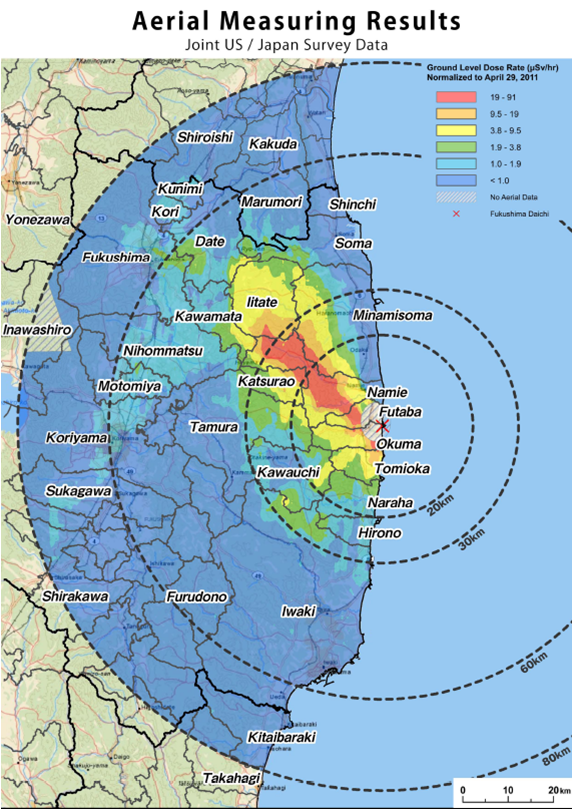
Rather, they happened at a nuclear powerplant in Japan (Fukushima in 2011), and of course Chernobyl in 1986. Both are catastrophic nuclear accidents that have left irreparable damage to their surrounding areas.
Experts estimate it will take 20,000 years before the 19-mile radius around Chernobyl is safe for habitation by humans.
2) Terrorists
While the threat of terrorists is very real, their current capacity seems to be limited to things like guns and trucks. Do you think it will be that way forever? Sad to say, but the day may come when we see an American city attacked by a dirty bomb.
The dirty bomb is an explosive device that contains radioactive material and is used to spread that radiation over a small area. It pales in comparison to the destruction and affect of a nuclear bomb but in a small crowded area the dirty bomb can do plenty of damage.
The time may come when terrorists figure out how to incorporate nuclear capabilities into their arsenal, so take note.
3) War
Of course, we are still facing the threat of nuclear war. Even after all these years and the understanding that an all-out nuclear war could mean the end of humanity. Its hard not to envision a future war where both sides are pushed to the brink and start lobbing nukes at one another.
Whether we are facing the growing contingent of radical dictatorial leaders or some other nation state, nuclear war is far from a thing of the past.
How Far Reaching Is Nuclear Fallout?
We all need to get real when it comes to the conversation of radioactive fallout. While it can be very dangerous, fallout itself requires the right conditions. Of the various nuclear threats we face only one version is going to produce a large cloud of nuclear fallout.
According to Dave Jones, a long-time military man and expert in the field, a surface detonated nuclear bomb is the only tool that is going to send that plume of radiated material high enough into the sky that it will rain down for miles.
Dave also mentions that the most likely form of detonation in a large city, in America, would be in a delivery truck at ground level. So, there is validity in being prepared for fallout depending on how far from a city you might be.
One of the best ways for a civilian to understand the affect or radioactive fallout on their town is to use NUKEMAP. This is a free service that allows you to simulate a detonation of powerful nuclear weapons across a map of your area.
Aside from offering up information on immediate damage it also shows the full scope and direction of radioactive fallout. You can detonate powerful weapons in the most populated city or army base in your area and see if the fallout reaches your home. You may be out of range of this threat altogether.
What Happens If You Are Exposed To Nuclear Fallout?
As bad as nuclear fallout sounds, you may be surprised at the simple methods that can be used to mitigate the risk and exposure.
If you find yourself exposed to nuclear fallout (ash, rain, radiation, etc.) – it can be managed by simply removing your clothes and leaving them outside or in a rubber made container and promptly taking a soapy shower. Doing this with a protective respirator on will assure the fallout doesn’t get inside the body.
Once you have been washed off you are free of the debris that has been touched by the radiation. Thus, the radioactive fallout is gone. Only when you are trapped outside in the fallout does it really become an issue.
Symptoms Of Radiation Sickness
If you or someone you love has been affected by nuclear fallout you should know how to identify the symptoms. You are going to be feeling a lot of things in a nuclear disaster. Feeling sick from stress, emotional drain and downright terror could all make you feel like sick.
This is a list of symptoms attributed to radiation sickness.
Extreme fatigue
Ringing in your ears
Frequent colds or increased infections
Unexplained bleeding or small red spots on your skin
Fever or burns
Headache or confusion
Nausea, vomiting, or bloody diarrhea
Setting Up A Radiation Shelter In Your Home
While you might think that the only way to survive the effects of nuclear fallout is buried deep in an emergency shelter, you are wrong. In fact, every American is completely capable of setting up their own in-home fallout shelter and waiting out the radiation.
Just to be clear I am talking about surviving nuclear fallout, not a nuclear blast. If you find yourself in the blast area, unfortunately, there is nothing you can do to survive.
Beyond the blast radius, radiation from a blast will not last forever. Contrary to popular belief. In fact, levels can seriously decrease in a matter of hours. Check out FEMA’s guidelines on the 7:10 rule.
The 7:10 Rule of Thumb states that for every 7-fold increase in time after detonation, there is a 10-fold decrease in the exposure rate. In other words, when the amount of time is multiplied by 7, the exposure rate is divided by 10. For example, let’s say that 2 hours after detonation the exposure rate is 400 R/hr. After 14 hours, the exposure rate will be 1/10 as much, or 40 R/hr.
As you can see radiation will decrease over time, but you need to be insulated from it during the decrease period. The best way to do this is to think about insulation. Things like mattresses, cushions, and thick blankets can provide you with this insulation. Even plastic sheeting taped along doors, windows, and any other opening to the outside will provide substantial protection.
You will want to find a location near the core of your home, away from windows and air flow from the outside world. Here you can create an insulated shelter in a closet or hallway that will put the maximum distance between yourself and the fallout outside.
Into this shelter, you should bring things like food, water, entertainment, and an emergency radio. As you can see, you might be holed up in there for a while to avoid as much radiation as possible!
So be prepared for that. Listen to the radio so you can stay on top of radiation levels and how your area is being affected. These broadcasts will also tell you when it’s safe to go outside again.
Addressing Demands That Follow A Nuclear Disaster
A nuclear disaster is a very scary thought! Depending on the size and scope of nuclear disaster we could see a variety of failures in public service. These will have the biggest impacts on life after the disaster. If we see critical infrastructure like water treatment, power and waste management services disrupted you will quickly feel the effects.
Contrary to popular belief, a nuclear blast (assuming it is a single event) is much more manageable afterward than other types of events. In situations like Chernobyl and Fukushima – radioactive waste is dumped for days at a time, or longer, in massive quantities.
Bombs and power plant disasters are two very different things. If you are in an area facing a meltdown of a power plant, you must leave immediately. The condition of the land and water will be so bad, it is irrelevant.
However, if you find yourself managing fallout from a nuclear blast you should consider these 4 things to be best prepared.
Food and Water
You can count on your sealed food and water in a nuclear disaster (like these). They will be fine to eat and drink. Don’t grab food from your garden or water from your rain barrels. These will have nuclear particles on them for some time.
Backup Power
The effect on your local power grid is going to be substantial. Multiple city blocks will be obliterated. Don’t look for power to be back on for some time. The same can be said for WIFI signals. Be sure that you have other options like solar or a generator.
Security
Unfortunately, in times of severe distress people may act in their own self interest and try to take things. Even a nuclear bomb won’t keep the bad people away. You need to have a means to secure that food, water and backup power.
I will let you decide how you plan to do that, but my first option is a 12-gauge shotgun deterrent.
First Aid
Emergency services are going to be busy, to say the least. The more self sufficient you can be when treating illness and injury the better off you will be. This doesn’t mean avoiding the proper care if you need it but just be prepared to be turned away and have another option. Consider reading this if you have a medical condition.
5 Nuclear Specific Preps
There are certain preps that really lend themselves to prepping for a nuclear disaster. Take a minute to explore these 5 below. You might find that you are more prepared for a situation like this than you thought.
1) Potassium Iodide Tablets (PI Tabs)
These tablets find a home in the nuclear disaster kits of most preppers. These small pills are used to saturate your thyroid which will keep your body from allowing radiation to spread throughout it. These tabs are cheap and are easy to get your hands on. They are not top-secret stuff anymore – be sure you have enough for your family and maybe some extra to spare. The benefits of these tablets are immeasurable immediately after a nuclear disaster.
2) Radiation Counters
A much larger investment than the PI Tabs a radiation counter or radiation measurement device is going to tell you exactly how much radiation is in the air. There will be no guessing here. While these are expensive preps, I think if you are near a nuclear power plant it might be worth having. You never know when you might need it.
3) Baking Soda
Baking soda or soap and water are the key to radiological decontamination. You know, its not like you need a secret serum to decontaminate yourself. You will need something to scrub your hair and body with. Baking soda is a pretty common prep and you are likely storing it already.
4) Respirator Masks
While fallout on the body can be washed away, fallout in the body is going to do serious damage. If you inhale micro fallout particles it’s going to affect your lungs first and your whole body over time. A quality respirator is a very important prep to have on hand in case of a nuclear disaster. Check out these respirators to add to your stash.
5) Eye Protection
Eyes are another area that can be affected by fallout. Maybe you rub your eyes with a sleeve and not understand what you are doing. This is very dangerous and will spread that material throughout your body, as well. Be sure to have something to cover your sensitive parts immediately after a nuclear event.
Make Sure You Are Ready NOW!
The threat of a nuclear disaster is more complex than most people think. Every radiological disaster is different. The most important takeaway is to understand what items you need to add to your inventory to assure you can respond to such a disaster.
The one thing that all nuclear disasters have in common is that they inflict serious damage either from blast radius, radiation or both. No matter what the situation, you must act in a nuclear disaster.
Having the knowledge and the right preps will help but in most instances of fallout and radiation you are going to fall back on two major skills. The first being patience. You can safely wait out radioactive fallout. That is the best move if you are on the outskirts of the disaster.
The other skill is going to be your evacuation or bugout skills. If you are too close to an area and the radiation is hazardous, well, you have no choice but to leave.
For those in the blast radius of a modern-day nuclear weapon, well, there aren’t really any preps that will help you. The best thing you can do is be prepared for the worst and hope and pray for the best!
What a fun idea! This could help you in so many ways with guests or extra family. Have a little property and it needs a house? Why not? This is a great way to build a little cabin and afford it! Add a chemical toilet. Low cost and takes up little space. A corner curtain can provide privacy.
Inside Floor Area: 113 Sqf – 9’1″ deep x 12’5″ wide
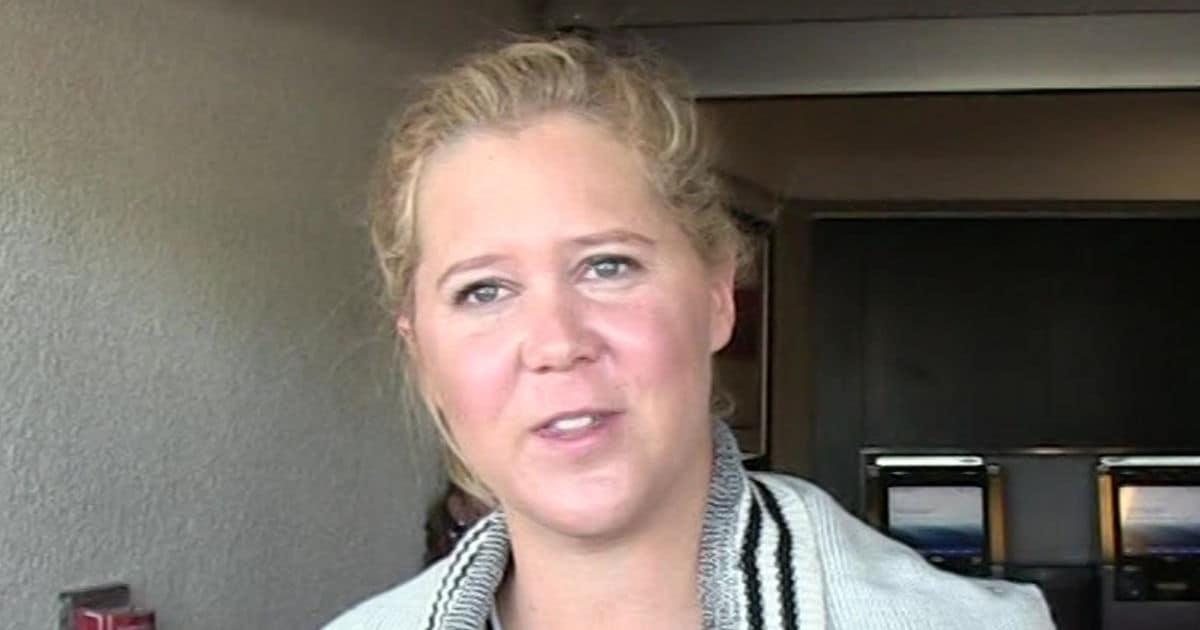
Amy Schumer has given birth to her first child ever with her husband, Chris Fischer — which ends what’s been a bumpy pregnancy for the comedian over the past 9 months.
Amy announced the birth Monday, saying she popped overnight around 10:55 PM.
She posted a photo of her, her husband and the new kid on Instagram with the caption … “10:55 pm last night. Our royal baby was born.”
No word on a name yet — much like Meghan and Harry — but we’re sure that’ll come soon. She didn’t release the baby’s weight stats either.
Like we said — it’s been a rough ride for Amy these past several months, which included multiple episodes of sickness … and yacking. You’ll recall, Amy was even hospitalized at one point for hyperemesis — aka severe morning sickness — which forced her to cancel a comedy show.
They are fun, convenient, and always updating! They are perfect for the brain and easy for you to play with. You can play with a pet, create a city and any number of activities to enjoy and reduce the stress of a boring moment in your life. We used to call it TV until too many commercials took over.
The average American video gamer is 33 years old, prefers to play on their smartphone and is spending big on content — 20 percent more than a year ago and 85 percent more than in 2015, a report showed on Thursday. The annual research from the Entertainment Software Association (ESA) comes as more American households rethink how to set limits for kids who love gaming and how to allocate their entertainment budgets in the streaming era. The $43.4 billion spent in 2018 was mostly on content, as opposed to hardware and accessories. Of pay-to-play games, “Call of Duty: Black Ops III”, “Red Dead Redemption II” and “NBA 2K19” took the top spots for most units sold but the list did not include free games such as “Fortnite.” “Games are striking an important chord with American culture,” said Stanley Pierre-Louis, ESA’s acting president and chief executive officer. “That’s what makes it the leading form of entertainment today.” Nearly 65 percent of U.S. adults, or more than 164 million people, play games. The most popular genre is casual games, with 60 percent of players gaming on their smartphones, though about half also play on personal computers and specialized consoles. Parents are limiting screen time for their kids and using video game ratings to screen content, and 87 percent of parents require permission for new game purchases, the study showed.
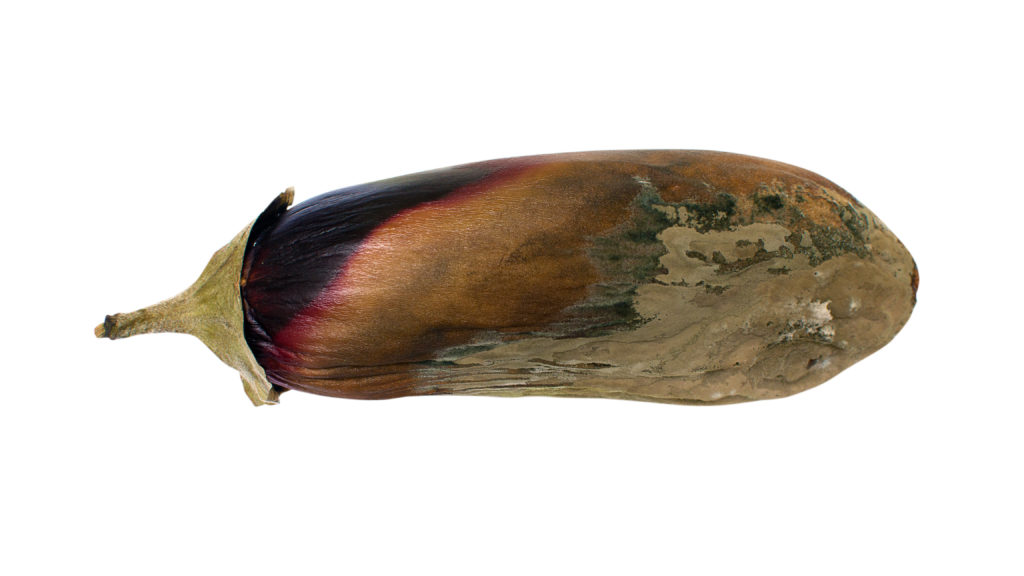
In 2010, an undergraduate in Durban, South Africa, found herself scraping muck from the underside of a partially decomposed eggplant. It was, in a sense, homework. She was taking a University of KwaZulu-Natal course on viruses that attack bacteria, and a semi-rotten vegetable seemed like a good place to find them. The “enriched soil sample,” she wrote, was dark and moist, wriggling with worms and other spineless lovers of decay. The sludge proved lively on a microscopic level, too, and the student had soon picked out exactly what she was looking for: a never-before-described bacteriophage virus that kills certain mycobacteria. She named it Muddy and got on with her life, earning more degrees, landing a job at a communications agency. Muddy, meanwhile, landed in a lab freezer in Pittsburgh — one frost-filigreed tube among thousands.
But then, on Wednesday, a paper published in Nature Medicine pulled Muddy and two other viruses out of their frozen obscurity. These bacteriophages, the authors reported, beat back an antibiotic-resistant infection festering inside a 15-year-old in London. The patient wasn’t completely cured, but after more than six months of injections and topical treatments, she’d gone from bed-bound and tube-fed to school-attending and sushi-eating — a remarkable result given that some elements of her “phage therapy” had not previously been tested in humans. Of the three viruses that helped, Muddy’s origin story is by far the most conventional. After all, scientists have plucked phages from the dirtiest places imaginable and used them as last-ditch therapies before, harnessing the viruses’ natural bacteria-bursting powers to save patients’ lives. The two other viruses, meanwhile, had to go through a kind of reverse domestication — converted, with genetic engineering, from relatively docile microbial parasites into efficient killers of infection.
“It is exciting. … This study is the first that we’re aware of using an engineered phage,” said Dave Ousterout, chief scientific officer of Locus Biosciences, a company not involved in the paper that is also working on enhancing the antibacterial capabilities of phages. For months already, excited whispers about this news have been spreading, with cryptic hints dropped at conferences, rumors passed from biologist to biologist, academic to entrepreneur. “I kept hearing tidbits,” said Jessica Sacher, who runs a directory that connects clinicians and patients looking to try phage therapy as an experimental last resort with the microbiologists who keep collections of the viruses. “Some other researchers were saying, ‘Just wait, there’s going to be the first report of engineered phage in therapy soon.’” But as with all such case reports, the impressive details of how this work was accomplished — on top of the eggplant scraping, it involved a chance encounter in the Republic of Georgia, a close examination of some bird guano, and a loophole in British regulation of genetically modified organisms — make clinicians wonder to what extent the development can be scaled up to help combat the global crisis of antibiotic resistance.
“I still have real reservations about whether this kind of approach could be developed into something that could be usable on a large scale,” said Dr. Marcia Goldberg, an infectious disease specialist at Massachusetts General Hospital. “The amount of science that needs to go into developing a therapeutic against any single strain is huge.”
Why does anyone bother with laws, regulations, and boarders? Why are we at war with other countries and people and are being invaded here in the US and do nothing to stop these people. If they are arrested, put them in self sustaining camps. Teach them English, practical working skills, and when they have paid their bill to live in this camp and graduated with sufficient english and working skills they are free to leave and be a citizen of the US. Why do they get all the breaks, handouts, freebies, and our people do not. There are any number of homeless that might like to join them, or elder folks as well, or that matter other immigrants not just the ones south of us.
She revealed the numbers to senators Wednesday during a high-stakes hearing in which she and other immigration officials pleaded with Congress for more money and more legal tools to try to stop the surge of illegal immigrants. Nearly 110,000 were nabbed at the southwestern border in April, including nearly 100,000 caught by the Border Patrol trying to sneak into the U.S. The other 10,000 were encountered when they showed up at ports of entry demanding to be let in, despite lacking permission. That total is the highest in more than a decade. Still more troubling is the number of illegal immigrants traveling as families, which neared 62,000 in April alone. That shattered the all-time monthly record and represented a doubling of the number from just three months earlier.
That surge is being fueled by lax U.S. policies, and particularly a court ruling in 2015 that illegal immigrant parents who travel with children must be released within 20 days. That is too little time to complete a court case, meaning the government has no choice but to set the families free on the vain hope that they return for deportation hearings. “They have received the message loud and clear: Bring a child, you will be released,” said Carla Provost, chief of the Border Patrol. A staggering 1% of the populations of Guatemala and Honduras have made the journey north to the U.S. and jumped the border in just the past seven months, acting Homeland Security Secretary Kevin McAleenan said this week. If the trends continue, that number will be 2% by the end of this fiscal year in September. Democrats doubted Chief Provost’s claim.
Sen. Richard J. Durbin, Illinois Democrat, said the problem is not U.S. legal protections for illegal immigrants but rather U.S. drug consumption, sales of weapons and the cash that flows into the Central American countries, fueling violence there. He blamed President Trump for fueling the chaos, saying his upheaval at Homeland Security has left the department spinning, with four heads of the department so far. He also said Mr. Trump’s threats to shut down the border are spurring more people to make the trip now. “It’s cruel, it’s unpredictable and it’s ineffective,” Mr. Durbin said. The senator also said there is “zero evidence” that the 2015 court ruling is a factor in the surge. The experts told him that just wasn’t so. Chief Provost said her agents interview the migrants they apprehend, and most say they are not fleeing violence but rather seeking jobs — and they know to bring children. “From interviews that we have done with the families we are apprehending, they are hearing that message loud and clear. They are hearing that from the smugglers, they are hearing that from the media down in the Northern Triangle,” she said.
She said agents have caught 3,500 “fraudulent” families so far this fiscal year, which began Oct. 1. Those include groups in which an adult brings a niece, nephew, grandchild or other relative and poses as a parent; in which an adult brings a child who is 18 or older and claims to be a juvenile; and even cases in which unrelated children are kidnapped, borrowed or sold to help someone pose as a parent. Chief Provost said her agency just encountered such a case. “The child admitted to basically being sold by his father,” she testified. Mr. Durbin downplayed family fraud, saying even with 3,500 cases it was only a few percentage points of the total number of families. Chief Provost countered that those were only the ones they detected. A recent intensive enforcement by ICE found three in 10 families were suspect, Ms. Asher testified“The fraud, the exploitation, is rampant, and it’s not stopping,” she said. The witnesses asked Congress to change the 2015 court ruling so families can be detained, to alter a law to allow unaccompanied illegal immigrant children from Central America to be quickly deported, to add more beds to hold people awaiting deportation and to change the standards to cut down on asylum abuse.
Republican lawmakers have promised legislation dealing with those issues. Mr. Durbin said Democrats will counter with their own bill next week that would siphon money to Central America for nation-building, allow for migrants to apply for asylum from outside the U.S., crack down on smuggling cartels and surge immigration judges to try to hear cases faster. Ms. Asher, though, said more judges won’t work unless Congress also pumps money into ICE for more prosecutors. She said it takes three lawyers to handle enough cases for every immigration judge and that unless ICE has space and power to detain people, they are difficult to deport.
t first glance, a humanoid robot walking between two platforms across several cinder blocks may look like a simple feat.
How many times, after all, have you crossed a shallow creek by hopping from one stone to another or threaded a narrow path while hiking without toppling over?
Seems fairly simple, right?
But the ability to navigate such obstacles by the human body, with its complex joints and natural system for creating balance, is far more difficult to replicate in a machine, especially one that operates autonomously.
To showcase that difficulty, researchers from The Institute for Human & Machine Cognition in Pensacola, Florida, released a video this month showing their efforts to train a bulky, 165-pound humanoid robot to walk across narrow terrain using autonomous planning. In the three-minute video, the robot – a Boston Dynamics-built Atlas model that uses control, perception and planning algorithms created by IHMC Robotics – carefully moves across a series of narrow cinder blocks and a balance beam, revealing a degree of body control that many humans would struggle to maintain.