Category: Survival Prepper

  • Heat causes aluminum to ‘leach foil’ to food leading to Alzheimer’s and cancer

    Heat causes aluminum to ‘leach foil’ to food leading to Alzheimer’s and cancer

    While steel and iron often come to mind, it’s actually Aluminum that is the most used and distributed metal on the planet.

    When you think about it, it’s everywhere!  You can find it in such everyday household products like cookware, foil, baking soda, cake-mixes, non-dairy creamers, aspirin, flour, deodorant and even water.

    Also, common food additives such as E173, E520, E521, E523, E541, E545, E554, E555, E556 and E559 contain aluminum. But did you know that aluminum causes alzheimer’s , dementia, and other serious health problems?

    With so much Aluminum in our society, one would think it was established and proven to be harmless, it’s not.  Unlike iron and other metals and minerals, the body does not need or want Aluminum.

    Thus, it is a foreign object to our body and we have no mechanism to process it or use it.  So, what happens to the Aluminum we intake?  It, like many other toxic chemicals from plastics and pesticides, gets stored by the body and (sine we can’t process it) builds and accumulates over time.

    The kidneys, brain, lungs, liver and thyroid are all susceptible to damage from Aluminum buildup.

    Below are the Most Important Reasons to Eliminate  Aluminum From Your Life:

    #1.  Aluminum Damages the Central Nervous System

    Damage from Aluminum buildup can be seen in both children and adults.  In children, it has been linked to Autism.

    Baby’s are often exposed to high levels of Aluminum (when compared to their body size) from drinking water (tap water most often).  Children have also presented with bone and kidney diseases.

    In adults, the neurological affects are signs of pre-mature aging, especially cognitively.  The neurological disorders from Aluminum resemble Alzheimer’s.

    #2. Brain Damage

    Researchers are pointing to high levels of oxidative stress in brain tissue when patients present with high levels of Aluminum.  Since your brain is one of the main places our body stores Aluminum, it tends to be most affected.

    The results can be MS, Chronic fatigue, epilepsy, ADD and other cognitive disorders. Aluminum causes alzheimer’s and dementia.

    #3. Aluminum Robs the Body of Essential Minerals

    Though Aluminum is not needed by the body, magnesium, calcium and iron are.  Unfortunately, Aluminum robs the body of these much-needed substances.  “Trace aluminum levels cross the blood-brain barrier and progressively accumulate in large pyramidal neurons of the hippocampus, cortex, and other brain regions vulnerable in Alzheimer’s disease.

    More aluminum enters the brain than leaves, resulting in a net increase in intraneuronal aluminum with advancing age. Aluminum is responsible for two main types of toxic damage in cells.

    As a pro-oxidant, aluminum causes oxidative damage both on its own and in synergy with iron.  Aluminum also competes with, and substitutes for, essential metals-primarily Mg2+, iron and Ca2+ ions-in or on proteins and their co-factors.”

    #4. Aluminum Can Weaken Bones and Tissues

    It is also believed to contribute to osteoporosis.

    #5. Aluminum Can Cause Premature Aging

    Due to the oxidative stress on cellular DNA.

    How to Reduce Aluminum Intake

    Since it is the most widely distributed metal on the planet, avoiding it completely will be difficult.  You can greatly reduce your intake by purchasing products free of Aluminum.  Especially products such as cookware, personal hygiene and processed foods.

    To help your body reduce Aluminum already consumed, try adding Spirulina to your daily life.  By eating spirulina you will boost your red blood cells and their capacity to transport oxygen.

    More oxygen means a more efficient body to detox! I personally take about 10 gr per day that I add to my food.  I mix the Spirulina powder into smoothies, juices, sauces, dips and pretty much anything else.

    Spirulina, in addition to helping detox the body of heavy metals, is a great energy booster and loaded with proteins, Amino acids, Vitamins, Minerals and Chlorophyll for helping balance pH levels in the body.

    This content was originally published here.

  • 4 principles behind designing a backyard food forest

    4 principles behind designing a backyard food forest

    It’s not like other forms of gardening. Here’s why.

    Remember that awesome video showing the first three years of a backyard food forest? Even with the slideshow explaining how Dan from Plant Abundance turned a litter-strewn yard into an urban oasis, I have to admit that a Lazivore like me was still intimidated.

    That’s why I was delighted to see that Dan just posted a new video explaining the simple principles behind his method of gardening. Here’s a summary:

    2. Layering is central to everything: The most basic premise behind any food forest is the idea that we can maximize our yield if we learn to use all layers of the garden—using the vertical space above and below ground to cram in a much larger harvest than if we only rely on what grows at ground level. By using root crops, ground cover crops, herbaceous plants, shrubs, small trees, canopy trees and vines, Dan is able to more efficiently take advantage of all the space available to him.

    3. Symbiosis doesn’t necessarily mean self-sustaining: Dan points out that he’s growing in a small urban yard, and manages the land accordingly. While a multi-acre food forest might be—by both necessity and design—largely hands off, Dan has to regularly prune back his trees and perform other management in order to maintain an optimal yield. He could let it go and it would probably still thrive, but his yield wouldn’t be quite so large nor so diverse.

    4. Understanding sunlight is crucial: The downside of layering your plants is that you now have to manage which plants shade what. (This is one of the main concerns folks have about vertical farms too.) So first understanding how sun falls on your property, and then designing your garden with spacing in mind, is critical to success. As Dan showed in his first three years video, though, it’s OK for some plants to eventually get shaded out. You just need to plan for that—perhaps planting more annuals in the early years, until your shrubs, small trees and canopies really start to mature.

    Obviously, there’s more to all this than these four simple principles—and as someone who has dabbled and failed at much of what’s here, I am still in awe of what Dan has achieved. but this seems like a useful primer for anyone interested in giving this a go. Check out Plant Abundance for more great videos.

    This updated article was originally published in 2017.

    This content was originally published here.

  • How to take over your town: the inside story of a local revolution

    How to take over your town: the inside story of a local revolution

    A quiet revolution has begun in the Devon town of Buckfastleigh. Its compact high street, functional-looking industrial estate and population of 3,300 suggest a place modestly getting on with business. But, while it may go unnoticed by those whooshing past on the A38, or tourists at nearby Buckfast Abbey, there is something happening in Buckfastleigh.

    That something is a radical reinvention of the way that power works at a local level, based on a kind of politics that has nothing to do with the traditional party system. And it is authored not in a Whitehall ministry, but in towns, villages and neighbourhoods – where it is having a real impact on some of the services people most care about.

    Pam Barrett is a 50-year-old civil servant who has lived in the town for 12 years and talks with a mixture of breathless passion and fearsome expertise. Her political biography begins with the local outdoor pool and park, for which she managed to bring in about £300,000 of outside funding – including big donations from Sport England. Saving the pool from closure – and upgrading it and the park – may sound like the most local of issues, but it broadens into a story centred on one key subject: 10 years of cuts, and what austerity has done to a town with high levels of what politicians call social exclusion.

    “It felt to me as if we had a properly depressed town,” she says. “The carpet factory here had closed, and loads of people had lost their jobs. All our services were cut. Our buses have been hacked right back and the fares are through the roof. And when the district council said it was going to close the pool, the town council’s view was just: ‘Oh gosh – there goes another thing.’

    “I was furious that we were left here with nothing. It takes an anger to do what we have done.”

    By 2015, Barrett had joined a loosely affiliated group of local people trying to parry the worst of the cuts – but, she says, they repeatedly hit a wall of obstruction and resistance, not least at Buckfastleigh’s town council. “It was almost as if [they were saying]: ‘This is none of your business,’” she says. There were 12 seats on the council, but there had not been an election for at least 20 years. In that year’s local elections, they challenged the incumbents with the Buckfastleigh Independent Group (BIG).

    Pinterest

    Promising to make the council more open and inclusive, and to concentrate on solving the town’s problems, nine BIG candidates were elected, meaning they gained control of the council. They increased the local council tax precept (the small share of council tax that goes to town and parish councils), so people in the highest council-tax band paid nearly £2 a week. And they built up an impressive list of achievements: a new Citizens Advice bureau on Friday mornings, floodlights for the football pitch, a new “town ranger” (“Kind of an outdoor caretaker,” says Barrett) and a school-holiday activity service for local young people called Hello Summer – all things woven into people’s everyday lives.

    To make all this possible, they made huge changes to the way the town council operates. For a start, its activities are chronicled on Facebook. People who are not elected councillors are free to join in with the monthly agenda at council meetings. “For the first time, we are able to say: ‘We have this amount of money and this is where it goes,’” says the councillor Andy Stokes, who is also Buckfastleigh’s mayor.

    Barrett also has plans to widen the bounds of what the council can do. Similar new political groupings have materialised in a handful of nearby towns and villages. This, she says, will lead to sharing resources, so that vitally important but expensive services – health and safety provisions or child protection – can be shared. She thinks that would open the way to a model of running everything from youth services to buses.

    Buckfastleigh is not alone. This kind of local uprising has started to occur all over the country. At the May local elections in England, one of the most noticeable changes was the huge increase in the number of independent councillors elected to local authorities, whose numbers increased nearly threefold. Tangled up in that is the proliferation of organised groups, such as BIG, that reject traditional party labels and seek control of the lowest tier of government – town and parish councils – where creative possibilities have tended to be lost in a sea of protocol and tradition.

    Councils at this very local level may be associated with parks, allotments, bus shelters and litter bins. But, thanks to the Localism Act 2011, they can – in theory, at least – do whatever they like, within the limits of the law.

    Pinterest

    Many of the people inspired by this growing mood of local assertiveness are looking to one town that stands as the crucible of this new movement: Frome, in Somerset (my adopted home town), where a group called Independents for Frome took power in 2011, kicking out the Tories and Liberal Democrats to take all 17 seats on the town council. The group has since introduced a new town hall, a publicly funded food bank, electric charge points for cars and a vehicle-sharing scheme. The group’s modus operandi was turned into a manual for radically changing communities, written by the council’s one-time leader Peter Macfadyen, and titled Flatpack Democracy. Some 4,500 copies have been distributed; a sequel will be published this year.

    Macfadyen reckons there are between 15 and 20 town and parish councils being run along the lines of the Frome model, “with a non-confrontational way of working and a participatory approach to democracy”. They include a large number in the south-west, places in Yorkshire and County Durham, and even New Zealand. Another 20 similar groupings, he says, have taken seats, but are yet to assume local power.

    Why does he think the idea is spreading so fast? “Every other system of so-called democracy is now totally dysfunctional and non-representative,” he says. “And with Brexit, and what’s happening in central government, that is bound to have an impact downwards; people thinking: ‘My voice is not being heard in any way.’”

    We’re passionate about our environment and we know what the issues are, and how to sort the problems out

    Down the road from Buckfastleigh is Dartmouth, a picturesque place on the Dart estuary, which attracts thousands of tourists. But beyond the half-timbered buildings clustered around the harbour is a community laid low by cuts, whose problems are worsened by the fact that Dartmouth is too big to be a village, but not sizeable enough to merit many of its own public services.

    In May’s town council elections, 11 of its 16 seats were won by the new Dartmouth Initiative Group (DIG). Its most vocal representative is Dawn Shepherd, who moved there from Wolverhampton 15 years ago. Her journey to public office began when she started the local food bank. “There’s a lot of poverty here,” she says. “And, on top of that, where we are is like an island. We have no jobcentre, so it is £6 each time on the bus. Having to go somewhere else for everything adds to the poverty.”

    The new political grouping was mentored by Pam Barrett from Buckfastleigh. “We didn’t understand how the process worked. The only access we had was going to the council meetings and having 15 minutes to put questions to the mayor,” says Shepherd. “Pam told us that we could make a difference; nothing was set in stone. We could run the council.”

    While the makeup of the old town council was disproportionately male, 10 of DIG’s candidates were women. This diversity extends to the group’s mixture of party politics. As with all the independents I meet, they insist that orthodox party divides have no relevance to politics at the most local level. “If you look at our 16 candidates, we have got leftwing people and we have got a supporter of the Brexit party,” says another DIG councillor, Ged Yardy. “We have not been elected on the basis of our previous politics. Party politics is not in the room.”

    Pinterest

    It would be easy to think of the new wave of independently run town and parish councils as something of a non-urban trend – but there is at least one shining exception. Queen’s Park in west London sits on the outer edge of the City of Westminster, and has a population of about 13,000. Almost a decade ago, a group of residents began to work towards making their area the first part of London to have a parish council in 80 years.

    Two years later, their idea won a local referendum – and, in 2014, the first elections for its 12 seats were held. Although insiders are quick to point out that starting a council from scratch has hardly been a breeze, the informal grouping of people (none of whom has a party label) now in charge of an annual budget of about £150,000 have an array of achievements to their name. They include funding a youth centre blighted by cuts, bringing a disused park back into use, starting new annual festivals and creating a befriending project to support isolated and lonely older people.

    Ray Lancashire, 54, has been a Queen’s Park councillor for just over a year. Since the age of 10, he has lived on the Mozart estate, where any ideas of the city of Westminster being synonymous with wealth and privilege give way to a much more complex reality. His path to holding public office was defined by his work on air pollution, which local surveys have found to be well above legal limits.

    Westminster council, he says, tends to understand pollution in terms of “main roads and trunk roads”, rather than “areas that don’t have high traffic, but are still really affected”. (The council says that it focuses air quality monitoring on “roads that we know are pollution hotspots, as this has the biggest knock-on effect”.) Queen’s Park’s grassroots councillors are now doing in-depth pollution studies, blazing a trail for temporary car-free “play streets” and pushing the authorities to take drastic action. “We are at ground level,” he says. “We’re passionate about our environment and we know what the issues are, and how to sort the problems out. And we’re enthusiastic. That’s why our council is important.”

    Pinterest

    Perhaps the most unlikely example of the new local democracy is in Alderley Edge in Cheshire. The de facto capital of the north-west’s footballer belt – at various times, the home of Posh and Becks, Cristiano Ronaldo and Peter Crouch – is a remarkably affluent place: on the day I visit, the Barnardo’s charity shop is selling a pair of Christian Louboutin shoes for £150, while Marie Curie has an Alexander McQueen dress for £200. Local people regularly complain about super-rich football stars parking on double yellow lines because they think that the fines are chump change. But recently, even here there were rising complaints about the state of the public realm.

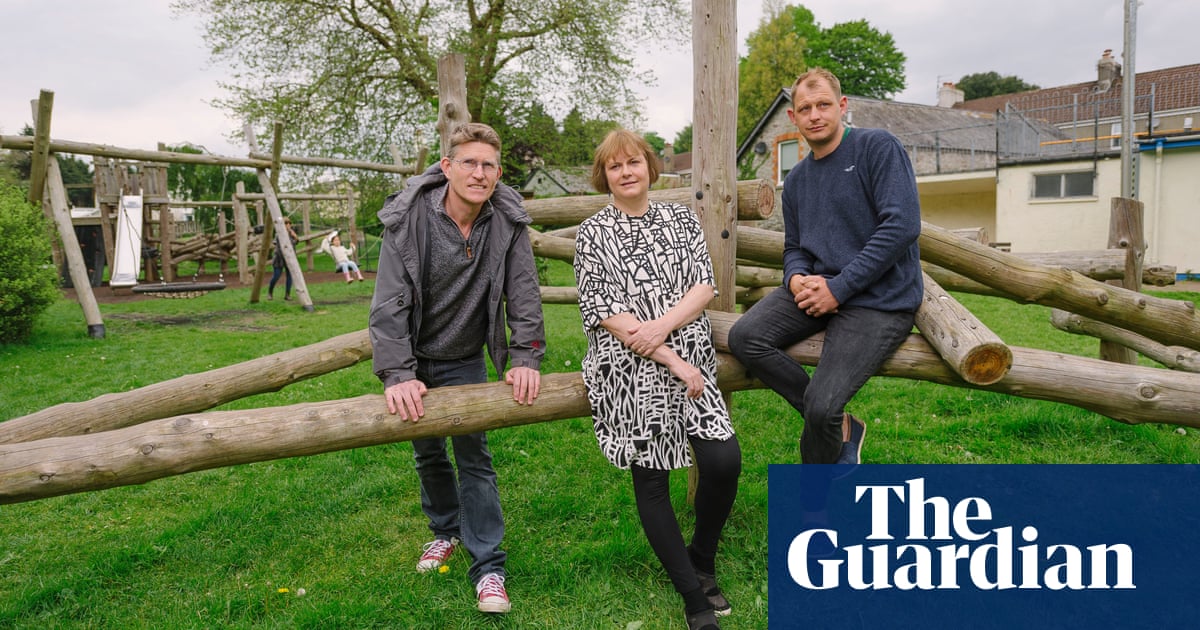
    These complaints led to the rise of Alderley Edge First, whose tagline is “people before party”. On a hot Tuesday afternoon, I meet three of their prime movers in the local Caffè Nero: Mike Dudley-Jones, Geoff Hall and Rachael Grantham, whose family has run a grocery business here going back five generations. “When you came to Alderley Edge not so long ago,” says Dudley-Jones, “it was shaky at the edges: weeds in the pavement; the whole thing just looked run down. A one-horse town. And there was no one saying: ‘It doesn’t need to be like this.’”

    Alderley is traditionally, solidly Tory – its MP is the Tory leadership hopeful Esther McVey. Until 2015, the Conservatives held all nine seats on its parish council, most of which had long been uncontested. But that May, a near miracle happened. Alderley Edge First won every single one. Since then, its councillors have radically upgraded the local park, completed work on the village’s trouble-plagued new health centre, saved allotments the old parish council wanted to turn into a car park, kept the local library open for an extra afternoon every week and made good on their pledge to spruce up the place – self-watering flower installations pepper the main street.

    When I mention party politics, all three members bristle. “It’s so irrelevant at this level,” says Grantham. “For me, it’s a realisation that normal people want to make a difference in their areas. There is a real feeling of people saying: ‘We can make a real difference in our patch.’ That is snowballing.”

    Four years ago, as well as aiming at control of the parish council, Alderley Edge First also put up a candidate for Cheshire East council, the big local authority until recently run by the Tories, and dogged by allegations of misconduct, some of which are being investigated by the police. Against formidable odds, Craig Browne – who also sits on the parish council – beat the Tories; after being re-elected a month ago, he became Cheshire East’s deputy leader. Something very striking, he says, now lurks among the champagne, expensive shoes and international hotshots: a revived sense of community spirit. “It was always there, but it was latent,” he says. “What we have done is encourage it. If people see councillors who are prepared to get their hands dirty, they think: ‘If they’re doing it, I’ll do it as well.’ That has been the biggest change.”

    This content was originally published here.

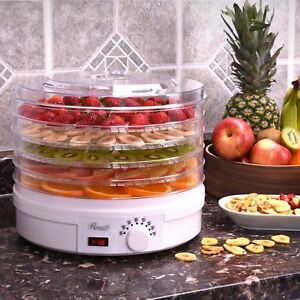
  • Rosewill Countertop Portable Electric Food Fruit Dehydrator Machine with Adjustable Thermostat, BPA-Free 5-Tray RHFD-15001

    Rosewill Countertop Portable Electric Food Fruit Dehydrator Machine with Adjustable Thermostat, BPA-Free 5-Tray RHFD-15001

    click here to order


    A fast & easy way to make delicious, healthy and natural snacks like banana chips, fruit roll-ups, beef jerky, and dried meats Great for drying vegetables & herbs. Make tea with flowers, seeds, leaves, and herb stems. Use for drying-crafts: flowers, apple wreaths, and more. Adjustable thermostat lets different foods dry at the proper temperature Thermostat range: 95 -155 Degrees F Accessories: 2 herb trays and 2 roll trays


  • North America freeze dried food  Market: Market Drivers, Restraints and Opportunities-2017 to 2022

    North America freeze dried food Market: Market Drivers, Restraints and Opportunities-2017 to 2022

    The North-America freeze-dried food market is estimated to grow from US$XX in 2017 to US$XX in 2022, at a CAGR of XX% during the forecast period. Freeze drying technically known as cryodesiccation is a dehydration procedure to preserve a perishable material or to make the material easier to transport. It works by freezing the material and then reducing the surrounding pressure to allow the frozen water in the material to sublime directly from the solid phase to the gas phase. It is achieved in four steps namely pre-treatment, freezing, primary drying and secondary drying. The final products have greatly reduced water content which inhibits the growth of microbes and hence remain unspoilt for a long time. But the nutritional value, flavour, smells also remain intact in the process.The end users are various departmental stores, trekking base camps, military camps etc.The market in the North-American region is mainly spread over the three countries USA, Canada and Mexico with USA being the major consumer followed by Canada and Mexico.

    Market Dynamics:
    Market Drivers:
    The primary driving of the freeze-dried food market is the superior quality of its final product compared to other drying technologies. The final product enjoys a shelf-life(upto 25 years) without any externally added preservative.The final products are lightweight which makes it convenient for transportation.Busy life in those countries (especially the US) is encouraging them to shift to these freeze-dried food products due to their long shelf life, quick rehydration, high nutritional value and superior sensory quality.It is especially popular with the trekker and the hikers because these foods could be stored for many days and need not be cooked.

    Request For Free Sample-https://www.kennethresearch.com/sample-request-10064854

    Market Restraints:
    The relatively lower costs of the other available freeze drying market( spray drying and fluid bed drying) is the major restraining factor especially for the small and middle scale industries.
    Market Opportunities:
    Market opportunities mainly lie in the technological advances and the development of super foods such as beetroot and elderberry. Newer technologies would also bring down the high processing and setup costs for this method.
    Market Segmentation:
    The North-America freeze dried food market can be segmented into the following categories:By product type:
    Freeze-dried fruits
    Vegetables
    Beverages
    Tea
    Coffee
    Fruit
    Meat and sea food
    Dairy products
    Prepared foods
    Key Players:
    Some of the major players in the market are:
    Nestle
    Mondelez International, Inc.
    OFD Foods, Inc.
    Uniliver
    Mountain House
    Recent Industry Insights
    Report ContentsRegional AnalysisReport Highlights
    Market segments
    Market Drivers, Restraints and Opportunities
    Market Size & Forecast 2016 to 2022
    Supply & Demand Value Chain
    Market – Current Trends
    Competition & Major Companies
    Technology and R&D Status
    Porters Five Force Analysis
    Strategic and Critical Success Factor Analysis of Key Players

    Request for customization-https://www.kennethresearch.com/customization-request-10064854

    North America
    US
    Canada

    This report is an elaborate aggregation of primary inputs from industry experts and participants across the supply chain. It provides details on market segmentation which is derived from several product mapping exercises, macroeconomic parameters and other qualitative and quantitative insights. The impact of all such factors is delivered across multiple market segments and geographies.

    Detailed Historical Overview (Market Origins, Product Launch Timeline, etc.)
    Consumer and Pricing Analysis
    Market dynamics of the industry
    Market Segmentation
    Estimated Market Sizing in terms of volume and value
    Recent trends in Market and impact
    Research Status and Technology Overview
    Extensive Industry Structure Coverage

    About Us

    Kenneth Research is a reselling agency providing market research solutions in different verticals such as Automotive and Transportation, Chemicals and Materials, Healthcare, Food & Beverage and Consumer Packaged Goods, Semiconductors, Electronics & ICT, Packaging, and Others. Our portfolio includes set of market research insights such as market sizing and market forecasting, market share analysis and key positioning of the players (manufacturers, deals and distributors, etc), understanding the competitive landscape and their business at a ground level and many more. Our research experts deliver the offerings efficiently and effectively within a stipulated time. The market study provided by Kenneth Research helps the Industry veterans/investors to think and to act wisely in their overall strategy formulation

    Contact Us

    Name: Kenneth research

    Email:sales@kennethresearch.com

    Phone: +1 313 462 0609

    The post North America freeze dried food Market: Market Drivers, Restraints and Opportunities-2017 to 2022 appeared first on America News Hour.

    This content was originally published here.

  • THE SOUND OF SECURITY | Harvest Right™ | Home Freeze Dryers | Freeze Dried Food Storage

    THE SOUND OF SECURITY | Harvest Right™ | Home Freeze Dryers | Freeze Dried Food Storage

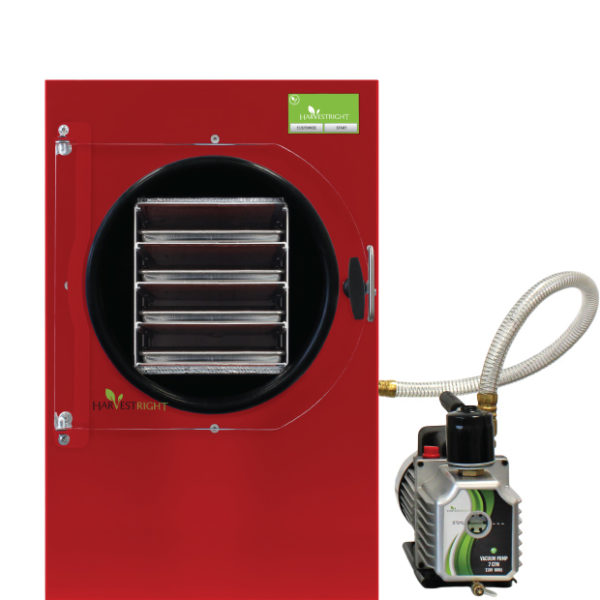
    One of the most common topics amongst freeze dryer owners is whether or not the machine is “noisy”. While every person has a different tolerance for noise, it is safe to say that we live in noise saturation in today’s world. It can be eerily silent when there is a power outage, and people report not being able to sleep, or feeling very uncomfortable with the silence.

    While some report that they keep their machine in the garage or basement to maintain the quiet in the home, others don’t seem to mind.

    During the freeze cycle, the machine is acting as nothing more than a little freezer, and that is exactly how it sounds. There is a quiet hum. You may hear it, but it isn’t distracting.

    When the vacuum pump kicks on, it settles quickly into white noise. It is noticeable, and you may turn the television up one more click, but it certainly won’t keep you from hearing your phone ring or stop your kids from hearing their music. In my mind, it reminds me of a dishwasher. You know it is there, but it won’t drive you away.

    Our machine originally was to be placed in a side room off of our kitchen, but we decided to keep it in the center of the house for a while so we could monitor it and learn how it operated. Our dining room opens into the family room, and also has French doors into our master bedroom. Our sitting area and television are less than fifteen feet from the machine. We still hear the television, and we talk all evening. Our bed is literally eight feet from the machine, yet if we close the doors, we sleep like babies. 

    On several occasions, I have asked my husband if he would like me to move the unit into that back room, but he has told me repeatedly that he isn’t bothered at all by the noise, and he does like having it where we can hear it run.

    Every load we run in our machine is another step toward food security. There is something amazing about knowing that when our machine shuts down after each batch, the end result is a shelf stable, lightweight, nutritionally intact product that will be there for us when we need it – whether that is 2 years or 25 years. We have never been concerned that the noise wasn’t worth the end result. 

    The freeze dyer is amazing technology. Harvest Right is continually improving their product, and someday it may be a quieter process. For most of us who own one, it really doesn’t matter. The quiet whirring of the compressor and the hum of the pump are simply the sounds of security.

    If you wonder what food security sounds like, buy a freeze dryer and find out. You won’t regret it.

    This content was originally published here.
  • Survival beans they’re good for your heart

    Survival beans they’re good for your heart

    Originally posted 2017-04-11 18:40:52.

    Beans, beans.  The magical fruit!  The more you eat, the more you.. need to stock more.    Beans are an excellent addition to your food supply for an emergency.  They last practically forever if stored correctly, and can provide you with a nutritional punch that is very hard to match for the price you pay for them.  I’m going to cover a couple of the varieties of survival beans and why you should consider adding them to your emergency pantry.

    Beans have been a human staple for thousands of years.  A member of the legume family, beans have been cultivated the world over both as food for people and livestock.  In fact, evidence in Thailand points to beans having been cultivated since the early seventh millennium BCE, which actually predates the creation of ceramic pottery.

    In terms of using beans as a food storage item, you have a LOT of choices.  The most common beans you’ll find in most US grocery stores include:

    Pinto beans

    Probably the most famous of the beans, pinto beans are widespread in Mexican cooking (commonly seen as refried beans)  They are high in protein, iron, and several micronutrients and of course provide you with needed fiber.  Pinto beans are also  great cheap survival beans, and can be purchased in bulk without hurting your wallet.  And, as the children’s rhyme goes, they actually are good for your heart.

    Black Beans

    Commonly available in canned form or dried in packs, the black bean is a little smaller than the pinto bean, but actually has a lot more flavor and are just a little more interesting to the pallete, in my personal opinion.  There is research suggesting that black beans can help reduce your risk of certain types of cancers.  With some lime and cilantro flavored rice and black beans, you’re well on your way to a survival beans burrito in no time.

    Kidney Beans

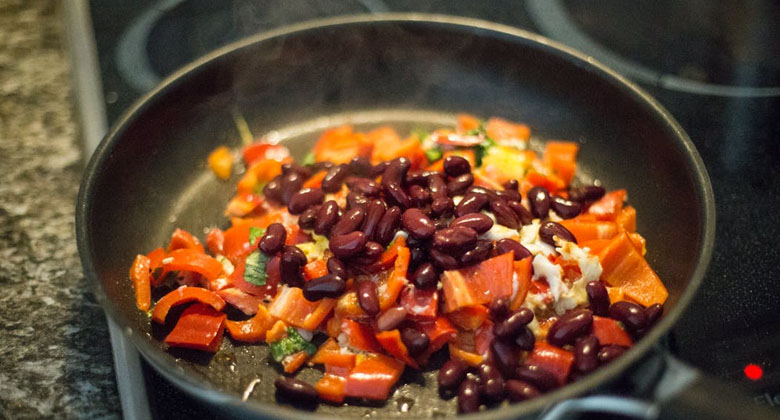
    My mother used to make this weird kidney bean relish and when I was a kid, I absolutely hated it.  As I grew older, though, I became more health conscious and came to love the kidney bean.  Taking its name from the shape of our internal kidneys, these red beans are a welcome addition to any prepper’s pantry. Like it’s pinto and black cousins, the kidney bean is high in molybdenum, folate, fiber, copper, manganese, phosphorus, protein and fiber.  Kidney beans tend to be a little more expensive than the previously mentioned varieties, but they have a unique flavor and can add a hearty element to any meal.

    Mixed survival beans for soup

    Anyone else remember having 15 bean soup?  It’s such an easy meal to make, and if you can throw in some ham or bacon, it’s freaking delicious!  Plus, there’s lots of different variants of this classic meal that you can throw together in no time.   the beans take on any different flavorings or spices you may mix with them, and if nothing else the colors make it a fun dish to prepare.

    Grow your own survival beans

    Of course it’s easier to just buy a bag of survival beans and throw it in your cupboard, but if you’re like me, you like to see if you can produce your own!  Beans are a pretty easy crop to grow for the beginning gardener, and there are many dozens of beautiful varieties to choose from.  Some of these beans can be eaten while still in the pod (think regular old green string beans)  and some can be left to dry until the beans themselves are husked from the pod at harvest.  Some have the ability for both.  If you don’t have some bean seeds, you should get some.  You might even get lucky and grow a giant bean stock and find a golden goose!

    This content was originally published here.
  • Estwing Tomahawk – A badass axe at your side

    Estwing Tomahawk – A badass axe at your side

    Originally posted 2017-05-10 07:46:57.

    Well, Estwing, you’ve really done it.  You’ve gone and made a functional, cool looking tomahawk axe at an affordable price?  You savages.   The Estwing Tomahawk is my first ever tomahawk axe, and I love everything about it.  It’s got functionality and style wrapped into a sleek tactical package – what more could one ask for?

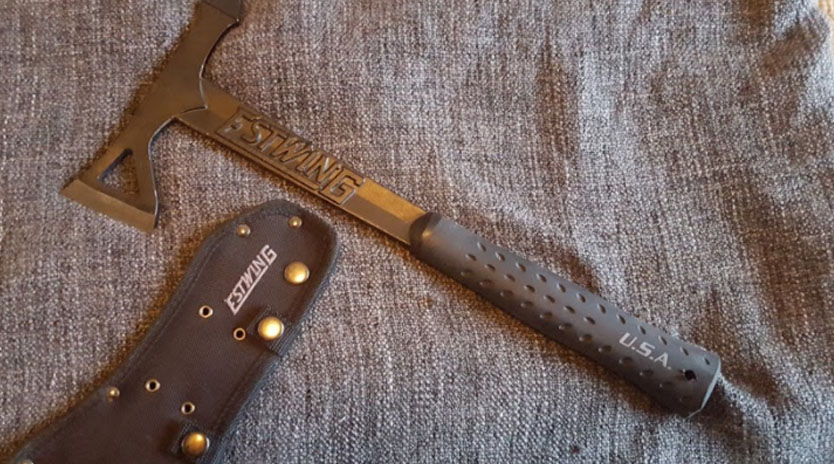
    Estwing has been in the business of creating hand tools since 1923, and prides themselves on creating products out of one solid piece of hardened tool steel, giving them incredible strength and durability.  While most of their products focus on tools for contractors like hammers or pry bars, they have journeyed into the camping / survival realm with various types of knives and axes.  One of my favorite features of the Estwing tomahawk is the handle, which is made out of a high quality rubber and provides a sure grip so you can feel comfortable while you are swinging it.  The handle is also designed to absorb a good deal of shock from impacting, which will save your hands on longer cutting jobs.  I’ve taken the Estwing tomahawk with me on many a hike and camping trip and I love the feeling of security it provides.  It’s actually made in the United States, as well so it gets some points for being locally produced!  It’s available in multiple colors, from flat black, to desert camo, to the leather wrapped handle version you see above.


    The Estwing tomahawk is fairly light, it weighs in at just under two pounds, making it an easy addition to your camping or bug out equipment.  The axe blade itself is bladed on one side, and has a puncturing tool on the other, which could be used to breach glass or other surfaces.  It comes equipped with a nylon carry case that covers up the axe head, and you can affix it to a belt or MOLLE compartment pretty easily – and the axe is easily removed by popping a couple snap on buttons off of the case.  Overall, if you’re looking for a high quality axe that looks awesome and isn’t going to wreck your wallet, look no further than the Estwing Tomahawk.

    This content was originally published here.

  • How to do less laundry | TreeHugger

    How to do less laundry | TreeHugger

    Take a moment to assess the ‘dirty’ garment before tossing it in the basket. You could save yourself some work.

    A friend with stepchildren recently commented on the amount of laundry I must do on a weekly basis. “You’re probably doing a load a day!” she exclaimed, describing how overwhelming her step-kids’ laundry is when they visit on weekends.

    It got me thinking about my own laundry habits and the amount of dirty clothing generated by my three young children. As strange as this may sound, I don’t feel all that overwhelmed, nor do I put on a load a day. In fact, now that the youngest is out of cloth diapers, it’s more like three loads per week, including one of bedsheets.

    I strive to minimize my family’s laundry for a number of reasons. It’s an energy-intensive process that uses a lot of water. (I hang dry whenever possible.) It creates wear and tear on garments that shortens their lifespan and, in the case of synthetic fabrics, releases plastic microfibres into the environment (although I do toss a

    I have a few key strategies for keeping that laundry from piling up:

    1) Buy more natural fabrics.

    These do not hold onto odor nearly as much as synthetics. A pair of wool socks, for example, can be worn 3-4 days in a row, without smelling, as can a wool, hemp, or cotton shirt. I try to avoid polyester blends whenever possible because these smell faster and have to laundered more frequently.

    2) Air them out.

    This is an amazingly effective step that too often gets overlooked. Hanging clothes on an indoor laundry rack and leaving them overnight can make them smell much fresher the next day. Obviously this doesn’t work if the item stinks like B.O. and needs laundering, but if a shirt just has that ‘worn’ smell but doesn’t have a bad odor or visible dirt, it can work wonders.

    3) Spot-wash.

    So many of the spots my kids get on their clothing can be quickly wiped away with a wet cloth. Because they’re still too young to perspire, this extends the use of the garment by an extra day or two. I do the same to my own clothes, wiping marks on my jeans and t-shirts, rather than throwing the whole thing in the laundry basket.

    4) Rethink your standards.

    To be clear, I expect my children (and myself) to look presentable and to smell good. I would never allow them to go to school in clothing that smelled or looked visibly dirty, and I expect them to change their underwear and socks every day without exception. However, I do think that our society’s standards of laundry hygiene are a bit over the top. There’s nothing wrong with wearing a shirt that’s still clean, but not just cleaned.

    It’s also time we brought back the notion of play clothes, of dressing kids in rattier clothes that allow them to engage in messy outdoor play without the parent worrying about the inevitable laundry.

    5) Own fewer clothes.

    This may sound counterintuitive, but when you have only a handful of items in the closet that you really like wearing, you’re more inclined to stretch the time between washes. I’ve realized this while living in a rental house with a single suitcase-worth of clothing, whereas when I’ve got more clothes kicking around, I tend to toss them in the laundry immediately.

    These strategies won’t work for everyone, nor are they a replacement for laundering when it’s actually needed, but they’re meant to be a reminder that laundering is not always the first solution. Stop, sniff, scan – and then scrub if you need to.

    This content was originally published here.

  • Goal Zero Nomad 20 Solar Panel

    Goal Zero Nomad 20 Solar Panel

    Order here


    Goal Zero Nomad 20 Solar Panel

    • Built-in junction box with smart-charging chip, allows you to power handheld USB and 12 Volt gear from the sun
    • Patented chaining technology combines Goal Zero Nomad panels for faster charge times
    • Highly efficient mono-crystalline solar pumps out more power per square inch. Optimal Operating Temp: 0-120 F (-17-48 C)
    • Pair with any Goal Zero power pack (sold separately) and charge gear day or night
    • Foldable and portable for use anywhere