Category: Home & Garden

  • Cedar waxwings are social nomads, controllers of pests

    Cedar waxwings are social nomads, controllers of pests

    I was in first grade when American goldfinches got me excited about birds. They were so yellow. Nothing in my crayon box could match their brilliance. I had to stand on my tiptoes to peer out the window to see them.

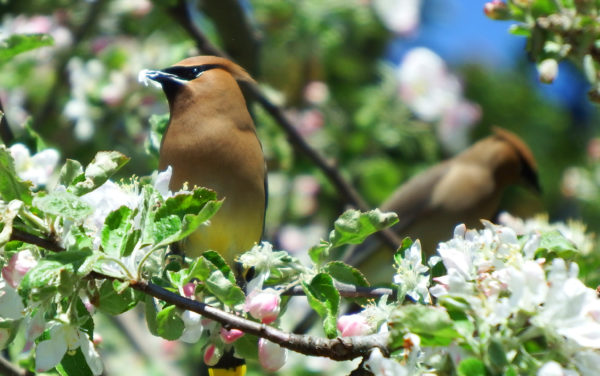
    But if goldfinches were the bait, it was cedar waxwings that set the hook. There were mountain ash trees outside the children’s library that I frequented in grammar school. The waxwings returned every winter to pluck the orange berries outside the window. They were splendid birds, adorned with a crest. They were a creamy gray color, but with a peach complexion around the head, a black mask and a yellowish belly. They had red tips along the wing feathers and yellow tips on the tail feathers that made them appear as if they had been delicately dipped in sealing wax. I was smitten.

    I still am. Even their social habits are intriguing. Cedar waxwings are highly gregarious. They do not defend territories while breeding. They’ve been known to groom each other and to sit on a berry branch and pass food down the line to hungry compatriots. Over much of the year, they wander in large flocks, settling down wherever food is plentiful. They leave the flock only long enough to nest, raising two broods per year. Once the young have fledged, the whole family rejoins the flock. You can identify the youngsters in the crowd because they are streaky along the breast, a remnant of the camouflage that kept them inconspicuous on the nest.

    Cedar waxwings whistle. It’s a high, reedy sound that they frequently make while flying, but they’ll also whistle while just sitting in the tree, nibbling fruit. I usually hear them before I see them. It’s typical for social birds to make a lot of noise while flying. It keeps the group together. Finches also vocalize on the wing.

    Cedar waxwings are romantic. Their courtship displays are tender, as they hop toward each other on a branch, alternately bending and bowing to one another. Often they exchange gifts, such as a berry or flower petal. The male will initiate the exchange, bringing the token to the female. She may hop away with it, then return and pass the gift back. This can happen several times before she ultimately eats it. Both mates explore nesting sites together, but she makes the final decision.

    Cedar waxwings are opportunistic. They feed mostly on fruit, but are quick to dine on flying insects whenever a major hatch fills the air. Although they are not as nimble as swallows, they can still climb, hover and swoop swallow-like, snatching bugs from the air. It’s common to see them feasting above a Maine river in summer. They also glean insects from vegetation, including spruce budworms.

    Cedar waxwings even eat fruit before it’s fruit. They devour the petals of blossoming trees this time of year. It’s not an unusual behavior, as cardinals, finches, mockingbirds, blue jays and grouse do it, too. Cardinals, in particular, relish forsythia flowers. The petals provide enough nutrition until the actual berries emerge. In another couple of weeks, I expect to see waxwings foraging on the ground, gobbling all the wild strawberries they can find.

    Cedar waxwings are among the latest species to nest. While most songbirds time their baby-making to coincide with spring’s insect boom, waxwings wait until the trees have filled with fruit. They begin feeding their hatchlings insects, which provides the protein chicks need to grow quickly. Then they switch to berries, giving the kids the energy they need to keep up. Only a few seed-eaters nest later than waxwings.

    Cedar waxwings roam the continent. In summer, they breed throughout the northern United States and southern Canada. After that, they may go anywhere, ranging as far south as Costa Rica. Wherever fruit has ripened, they may pop up. Their name stems from a fondness for cedar berries where they were first identified.

    Some Maine fruit is too hard, even when fully mature. The freeze-thaw of winter ultimately turns such berries to edible mush. One moment, waxwings may be completely absent from the state. The next, hundreds can arrive just as the crabapples have softened sufficiently. America’s fondness for planting ornamental trees has benefited fruit-eating birds, and the population of cedar waxwings has remained steady or increased.

    So there you have it: a beautiful bird, a social nomad, a controller of pests and disperser of seeds and a hopeless romantic. That makes an impression on a fourth-grader.

    Bob Duchesne serves as vice president of Maine Audubon’s Penobscot Valley Chapter. He developed the Maine Birding Trail, with information at mainebirdingtrail.com. He can be reached at duchesne@midmaine.com.

    This content was originally published here.

  • Wood Siding

    Wood Siding

    When it comes to the outside look of your home or curb appeal, the first thing people notice is the condition that the exterior is in. Home buyers often look for specific colors and styles surrounding the exterior of the home. The exterior is the first impression people get when they see a house and it sets the mood for the inside. If the outside is in bad condition or has a dated look to it, people are less likely to make their way inside. Most homes are built with a wood siding exterior; the shade and profile of your siding are very important when it comes to designing the exterior of your home. Luckily there are plenty of options when it comes to the colors, profiles, and species of wood siding.

    Wood Siding Species

    When it comes down to picking the ideal species of wood, there are a couple of things to consider. The first thing is the climate where you live; some wood siding works well in specific environments, as opposed to others when something like cedar will work in almost any climate. Another thing to think about is what species will look the best with your home design-build, décor, and the other homes around yours. Each species of wood siding has its own attributes when it comes to color and the vibe that it gives off. It helps add movement and variety in the design, but can often be tricky to fully determine how the end result will look. The most common species of wood sidings are Beetle Kill/Blue Stain, Pine SPF, Cedar, Aspen, and Exotic Hardwood.

    Siding Profiles

    Now step two to choosing what type of wood siding is the best for your home is the profile. Besides the shade of your siding, this is one of the most important components because it sets the full look of your home. Each profile is one of a kind and has its characteristics that make it different from the others. The available profiles are Distinctive Channel, Classic Bevel, Shiplap, Tongue and Groove, and Log Lap. Below are some pictures that show the unique difference between them all…

    Now that you have been able to see the differences between the different profiles physically, it is probably much easier to determine which one would look the best on the exterior of your home.

    The Best Of Them All

    Of course, the design of your wood siding is important, but all of the things that go on behind the scenes such as installation, upkeep, and the initial functionality of the wood siding is also a big deal. Wood siding is easy to install with very little upkeep; installation is as simple as fitting the boards in a pattern that creates a flow you love and securing them in place. When it comes to maintenance there is little to none. Make sure your boards are installed and sealed correctly and all that would be needed is an occasional board replacement, which is super simple since each piece of wood siding is installed individually.

    One thing that makes wood siding a fun material to work with is that you can mix and match species or profiles to add some uniqueness to your home. Of course, this isn’t for everyone, but it would give your home a different look to it that is not commonly found, creating more interest for potential home buyers.

    Last but not least, wood siding is a completely green product. Since wood siding is made of wood and not composite materials, it is 100% biodegradable, which means there is no harm to the environment when elements aren’t used or are eventually replaced.

    Wood siding is versatile and functional when it comes to the exterior of your home. Wood siding doesn’t have to be used just on the surface of your home. It can be used as the exterior on a shed, a playhouse for the kids, a detached garage, or even on the inside of your home as an accent piece on the wall, an island in your kitchen, or even as a backsplash with the right sealant. No matter the style, feel, or overall vibe in your home, wood siding can fit in anywhere.

    The post Wood Siding appeared first on Rocky Mountain Forest Products.

    This content was originally published here.

  • Follow These Tips for Choosing and Planting Ground Cover – Planting Ground Cover? 10 Dos and Don’ts to Heed | Bob Vila – Bob Vila

    Follow These Tips for Choosing and Planting Ground Cover – Planting Ground Cover? 10 Dos and Don’ts to Heed | Bob Vila – Bob Vila

    Not all areas of your yard are conducive to a grassy lawn—and that’s where ground cover comes in. Defined as a grouping of usually low-growing plants that spread over an entire area, ground cover creates a carpet of foliage while squeezing out weeds as a bonus. These hardy plants can often thrive in shady spots to add color and texture, as well control erosion on a slope or embankment.

    Hundreds of plants can be used as ground cover—including vines, grasses, plants with spectacular blooms, even low-growing shrubs—and they’re perennial, meaning they come back every year from their roots. Still, different types of ground cover are suited to different locales and require different care. Read on to learn the dos and don’ts of choosing the right plants for your property and understand where, when, and how to get the best results.

    • Banish existing weeds, either by pulling or spraying with an herbicide and then preparing the soil for planting.

    • Do not till steep slopes, because loose soil can lead to even more erosion. Instead, after removing weeds dig a hole for each plant the same depth as the plant’s root ball and twice as wide. Center the plant in the hole and fill with good potting soil that contains an all-purpose fertilizer.

    This content was originally published here.

  • Pronounced HOO-gul-kul-tur – Resilience

    Pronounced HOO-gul-kul-tur – Resilience

    Originally appeared in the Kildare Nationalist newspaper. Photo courtesy of Mark at Permaculture.com.au. 

    A while back I wrote about how we built raised beds for our garden, and when they rotted, rebuilt them in brick. Many permaculture gardeners, however, build a different kind of raised bed, one that involves using no walls at all.

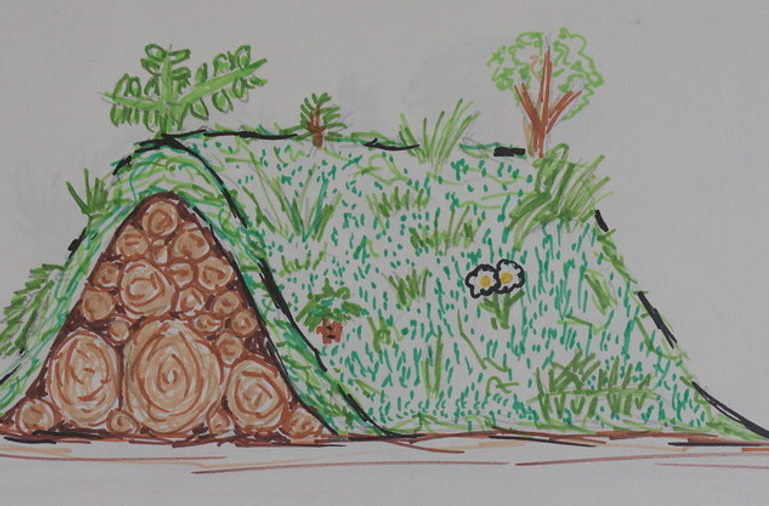
    The technique, called hugelkultur (HOO-gul-kul-tur), has the advantage of being simple to understand and easy to make, and lasting a long time. Hugelkultur beds basically involve piling wood – usually dried logs of various sizes – into a single ridge, piling vegetation, cardboard or newspaper over that, and finally a layer of soil on top.

    As the wood at the centre is slowly consumed by fungi, it absorbs and holds dozens of times its weight in water, creating a reservoir for the plant roots around it. As it decomposes it releases heat, extending the growing season. The decomposing wood, looking like a fine Swiss cheese under the soil, helps aerate the ground as well. Finally, as the wood breaks down into nutrients, its slow decay feeds the soil and anything growing on it.

    Since the soil and garden plants are draped over logs, they also greatly increase the surface area for a garden, allowing gardeners to grow many more plants on the same ground. They also greatly increase the types of plants that can be grown near each other, as the top of the ridges will better suit sun-loving plants, while thirsty plants that can tolerate flooding will be more suited to the hollows between ridges. Such ridges are also an excellent way to stave off erosion and flooding, if you build them on a slope parallel to the side of the hill.

    One risk in a hugelkultur is that the rotting wood might lock up nitrogen, so many gardeners prefer using large logs, buried deeply, so that the decay and nitrogen loss will be more gradual. Some also add high-nitrogen crops like nettles or comfrey over the logs and below the soil to offset the loss, or plant legumes or other nitrogen-fixing plants. Permaculture gardeners say that large ridges built over sizeable logs, or several logs, can offer a constant supply of nutrients for two decades.

    Be careful what woods you plant; if it is aggressive coppice tree, like willow, make sure it is well dead and dried, or you’ll get willow sprouting from your ridge. Also, most texts on the subject warn against using woods loaded with natural pesticides, anti-fungal chemicals and the like – cedar, black walnut, black locust – but you’re not likely to find those in Ireland anyway.

    Creating hugelkultur takes carbon out of the atmosphere in a few ways; it takes trees that are mostly carbon sucked out of the atmosphere, and sequesters them underground; and it encourages the growth of many plants that will, themselves, suck more carbon out of the air. In other words, it’s a win-win for the climate.

    Hugelkultur beds can be built quite high, and some gardeners said they built theirs more than two metres tall, piling up the wood almost vertically and draping vegetation and soil over it. Some bolster the sides with pallets to keep them in place, but I wouldn’t recommend using them as the basis for the ridge, tempting as that might be – pallet wood is often sprayed with chemicals that you don’t want in your food.

    Raised beds like this are more work at the beginning, but a lot less as time goes on, and can largely be left alone for years. Some gardeners recommend planting mostly perennials, which can keep producing crops year after year – and can keep building up the ridge as parts of the plants die off and become soil again. The plants’ roots also keep the soil in place, so rain doesn’t collapse the ridge.

    Best of all, this garden uses scrap material that many people already have on their property, and are often trying to get rid of. Many of us clear brush or have to cut down trees or branches on our property, weeds and grass clippings they want to use, and spare soil not good enough for the regular garden. Hugelkultur uses all these things and combines them into something useful that can benefit your garden for years to come.

    This content was originally published here.

  • 5 Ideas for Using Rustic Lighting in the Backyard

    5 Ideas for Using Rustic Lighting in the Backyard

    We hope you like the products we recommend. Just so you are aware, Freshome may collect a share of sales from the links on this page.

    Rustic chic accents were practically made for the backyard, as their bucolic feel fits well with a natural setting. And if you want to add some instant rustic ambiance and class to your backyard, the fastest way to do it is to add outdoor rustic lighting using string lights. Immediately, this may strike you as fairly unclassy. You might picture plastic tiki string lights or out-of-season Christmas lights.
    But backyard lights can bring subtle mood lighting and still keep things looking thoroughly rustic chic. You simply need to know the right styles of lights to use, which we’ll cover below.

    Rustic Lighting Bulb Style

    Rustic exposed bulbs can add plenty of soft light to a backyard. Image: funkyteddy/Shutterstock

    Rustic Exposed Bulbs

    An instant way to get a rustic chic look is to opt for a classic exposed filament bulb style, like the rustic lighting in the photo above. Old-style bulbs give off something of an antique look. But they still add plenty of ambient lighting, thanks to the softer glow of their light source versus certain LED types.

    You can see in the photo above how great classic bulbs look when used as string lighting outdoors. You could easily hang them from trees to juxtapose the natural plant life with the industrial-style light source. They could also look great hanging over eating areas or patios to light up where people socialize.

    Rustic Lighting String Lights

    Combine light styles for plenty of visual interest. Image: Steven Robertson Photo/Shutterstock

    Combining Light Types

    Another idea for rustic lighting is to go for an exposed bulb style combined with more traditional string lighting. You can see in the photo above how the idea was used to maximum effect by stringing bulbs to the tree. Then, that light source is accented with small string lights around the branches themselves. The whole style leads to an enchanted forest feel.

    This idea works best with small string lights in either white or a cool color like green. Bolder colors like multicolor styles, red or orange might look too seasonal, like they belong on a Christmas tree. But white and cool-color lights will give a timeless, clean feel to your outdoor rustic accent lighting.

    Rustic Lighting Cage Style

    String light styles fit well with classic items like these birdcages. Image: Amlan Mathur/Shutterstock

    Use Rustic Accents

    You could also combine your outdoor lighting with other rustic-inspired accent items. An example is the old-style wire birdcages in the photo above. The white string lights around the tree light up the area beautifully. And the lighting on the tree draws attention to the rustic accent of the birdcages hanging nearby.

    Another classic idea that fits into rustic chic styles is an old-style lantern. These can either hang next to string lights or be their own light source. Lanterns with rustic lighting in them, like flameless candles, are also popular for outdoor rustic chic styles. These fit well hanging or on table settings as accents.

    Rustic Lighting Globe Lights

    Hang rustic light sources from plant life for added natural appeal. Image: Oleksandr Kavun/Shutterstock

    Combine Natural Elements and Rustic Lighting

    Another idea is to combine rustic lighting sources with accents from nature. An example is the hanging globe lights with tea candles in them in the photo above. Candles are great for adding an instant classic appeal and the globe design shows them off well. And hanging those globe lights from a natural garland design is a classy way to bring in the rustic appeal of natural textures.

    You could do this in a few different ways. You could go with a natural arch and hang the globe lights from the top, like in the photo. Lights like these could sit within natural wreaths on a table setting. Or you could hang lights like these along the length of a garland.

    Something like this would work especially well for an outdoor wedding. And if you have fire hazard concerns, you can always use LED tea lights.

    Rustic Lighting Distressed Wood

    Distressed wood and exposed bulbs give the perfect rustic vibe. Image: Alex Levine Photography/Shutterstock

    Hang Rustic Lighting Close to Natural Wood

    The photo above shows how great exposed bulbs look when hung along a rustic wood item, like a fence. The old-style bulbs and lightly aged wood combine to look delightfully bucolic and classic. If you can, it can also help to include an accent of plant life nearby to further add to the rustic, natural look.

    You can use this idea in a few different ways, as well. For instance, you might hang exposed bulbs like these outside a barn-style shed. Or you might hang string lights over a distressed, reclaimed wood patio table. This idea allows for creativity and personal inspiration.

    The post 5 Ideas for Using Rustic Lighting in the Backyard appeared first on Freshome.com.

    This content was originally published here.

  • How to Remove Hard Water Stains from Glass

    How to Remove Hard Water Stains from Glass

    We’ll all been there. We pull out a water glass or gaze out a window, and there it is – a hard water stain. Deciding how to remove hard water stains from glass can be a frustrating experience, and if we don’t know which cleaning products make the best DIY glass cleaners for hard water, we can find ourselves cleaning and cleaning without removing the unsightly hard water stains.

    To keep our glass beautiful, we need to know the best ways for cleaning water spots on glass. In this guide, we dive into household cleaners to find the top methods to remove water stains. We show you which liquid cleaners will get the job done, and we also explore the best non-liquid cleaners for when you need a little extra cleaning power.

    Finally, we take a look at some preventative measures that you can choose to keep future hard water stains from forming. With our help and some elbow grease, you’ll soon have your household glass sparkling.

    Remove Hard Water Stains from Glass Surfaces

    Liquid Cleaners To Clean Water Stains

    You can accomplish most glass-cleaning tasks with the right liquid cleaner. Liquid cleaners should be your first go-to when dealing with how to clean hard water stains from glass because of how easily you can scratch glass. Liquid cleaners usually only contain mild abrasives that won’t harm your glass, so you can use them for cleaning hard water stains without worrying about damage from harsh chemicals.

    This section examines the different liquid cleaners and highlights each cleaning solution’s advantages. We look at a wide range of DIY cleaners, including vinegar, ammonia, and even water and salt. Most hard water stains won’t be able to stand up to your liquid cleaning products, which make them a safe choice when cleaning water spots on glass.

    Use Ammonia

    Ammonia is one of the most effective household cleaners around and deserves a spot on your checklist for your bathroom cleaning routine. You can use ammonia to clean clothes and unclog drains, and it’s one of the best ways to get rid of hard water stains on glass. With a little water and a scrub brush, you can turn ammonia into your most reliable glass cleaner.

    Ammonia Glass Stain Cleaner

    Pour the liquid ingredients into the bottle, and spray the stain until soaked. Allow the mix to sit on the stain for a minute, and scrub the area with the brush. Rinse the spot with clean water and dry it with the cloth.

    You can also use ammonia to make a dynamite homemade shower spray. Because ammonia is a strong cleaner, you should always wear proper gear, including gloves and safety glasses, when handling it.

    Open all doors, and turn on the bathroom fan. If you are still concerned about ventilation, be sure to wear a respirator.

    Clean the Spot with Water and Salt

    Good old salt and water is a remarkably versatile and powerful cleaning option. You can use these two kitchen staples to remove water rings from wood, and they clean stains off countertops and iron railings better than rubbing alcohol or steel wool in many circumstances.

    They’ll do a number on your hard water stains, too. Because salt has abrasive properties, test this option on an inconspicuous spot before applying it to the stain.

    Clean Stains with Salt and Water 

    Pour the water into a container, add the salt and stir until it dissolves. Wet the sponge in the mixture, and scrub the stain. Repeat until the stain is gone. Rinse the glass with clean water and wipe it down with the cloth.

    Try White Vinegar For Hard Water Stains

    If you’ve spent any time on home and garden sites, you already know about vinegar’s remarkable cleaning power. Vinegar contains acetic acid, which supercharges vinegar’s effectiveness and makes it the best way to clean glass shower doors with hard water stains. Vinegar window cleaner is a proven winner, and you can use that same power on all of your household class.

    Vinegar Water Stain Glass Cleaner 

    Fill the spray bottle with the water and vinegar. Take the top off the spray bottle, and heat the bottle in the microwave for about twenty seconds. The added heat will increase the solution strength and let it cut through the stain.

    Replace the spray bottle top, and spray the stain with the vinegar solution until the area is soaked. Let it sit for a minute or so, and scrub the stain with the brush. Repeat until the stain is gone, rinse the area with water, and dry the glass with the cloth.

    Clean Your Hard Water Stains with Lemon Juice

    Like vinegar, lemon juice contains acetic acid and makes a fantastic glass cleaner when you need to find ways to get rid of hard water stains on glass. And, lemon juice has a beautiful fresh scent to accompany its cleaning action, which makes it an excellent choice for cleaning everything from the toilet bowl to countertops, and it will do a number on mineral buildup.

    Lemon Juice Cleaning Solution 

    Combine the lemon juice and water in the spray bottle, and shake to mix the solution. Spray the stain until thoroughly wet, and allow to sit for at least a minute. Then, scrub the stain away with the brush.

    Repeat until the stain is gone, and rinse the area with clean water. Dry the glass with the cloth to avoid further stains. You can also prevent stains from occurring by spraying lemon juice on your glass shower door after each use.

    Rinsing Agent for Dishes

    Removing hard water stains from drinking glasses can be a nightmare and cost you hours of labor if you don’t know how to clean them quickly and effectively. Hard water spots will make your clean glasses seem dingy and unattractive, so it’s essential to understand how to clean hard water spots from glasses and dishes.

    Fortunately, dishwasher rinsing agents don’t just prevent hard water stains but can remove water spots, too. Jet-Dry and other rinsing agents eat away at hard water deposits and leave your dishes sparkling and beautiful. Add a rinsing agent to your dishwasher’s rinse compartment, and let the washer and rinsing agent do all the work.

    Non-Liquid Glass Cleaners For Stains

    Sometimes liquid cleaners won’t do the trick. If you’ve scrubbed and scrubbed and still have water spots, you might need to break out the big guns. While liquid cleaners are marvelous and get your glass surfaces clean most of the time, you’ll occasionally run across a stain that needs a non-liquid cleaning solution.

    This section takes a look at the most effective non-liquid solutions for cleaning water stains from glass. We go over DIY options, commercial products, and we close with the best way to scrape your stain away when all else fails. If your liquids fail you, one of these options will get you where you need to be.

    Clean with Toothpaste

    Believe it or not, non-gel toothpaste is a fantastic cleaning choice for any number of situations, including hard water stains on glass. Toothpaste cuts through watermarks and soap scum with the same force it uses on tooth stains, and it is gentle enough to keep your glass looking its best.

    You can also use baking soda and a little water in place of toothpaste. Be sure to test the toothpaste cleaning option on a hard-to-see spot first to avoid any damage.

    Toothpaste Water Stains Cleaning Option

    Apply the toothpaste to a cloth and spread it on the stain. Allow the toothpaste to sit for at least five minutes. Combine the vinegar and water in the spray bottle, and spray the area to rinse it. Repeat as needed, and then, rinse the area with water and dry the glass with a cloth.

    Hit the Stains with a Commercial Cleaning Paste

    If toothpaste didn’t do the trick, you might need to select a commercial paste cleaner. Paste cleaners such as Bar Keepers Friend don’t leave streaks like liquid cleaners do, which makes them perfect for cleaning glass. You can find commercial glass cleaners at any home improvement store.

    While the company’s guarantee backs commercial cleaning pastes, you can leave foggy spots on your glass if you don’t properly clean off the paste after you use it. Make sure to check the manufacturer instructions and follow them to the letter to prevent damage to your glass.

    Use a Razor to Clean Your Glass

    If you’ve exhausted your cleaning products, you might have better luck with brute force and sharp steel. A razor blade, when used correctly, will scrape away any mineral deposits on your glass doors or mirror and won’t damage the glass. Because razor blades are very sharp, you should exercise extreme care when handling them. Never use a razor blade on tempered glass, as you can damage it.

    Razor Blade Glass Cleaning 

    Wearing the gloves, carefully hold the razor blade, and gently scrape the stain. Don’t exert too much pressure; slow and steady is the key. Continue until the stain lifts, rinse the area with water, and wipe it dry.

    We hope that you enjoyed this guide on how to remove hard water stains from glass. The cleanest home still looks shabby when your glass has spots, so it’s crucial to know the best ways to clean your glassware, glass windows, shower door, and mirrors. Our guide gives you all of the tools you need to make your home shine and keep it that way.

    Thanks very much for reading our hard water stain removal guide. If you found our tips on how to remove hard water stains from glass to be helpful, we’d love it if you’d share this guide to glass cleaning with your family and friends on Pinterest and Facebook.

    This content was originally published here.

  • Why planting shade trees helps reduce the temperature of urban heat islands

    Why planting shade trees helps reduce the temperature of urban heat islands

    Many of the landscape trees adorning urban cityscapes in Southern California are at or close to the end of their lifespans.

    While several species of oak, maple, crape myrtle, ficus, magnolia and other common shade trees have a life expectancy of 50-80 years or longer in unstressed environments, few reach their full potential in cities and urban areas.

    Why? In order to accommodate growing populations, cities have large areas of paved concrete and asphalt surfaces that create ‘urban heat islands (UHI)’.These hard surfaces absorb large amounts of heat that builds up during the day and is released at night, leading to much higher night temperatures in cities than in surrounding areas.

    The good news is that trees offer many benefits that offset the impacts of UHIs. Cities with larger tree canopies are a testament to this fact and have fewer adverse impacts from UHIs than do cities with low tree canopies.

    Trees reduce the impact of UHIs by releasing heat back into the atmosphere faster than do concrete and asphalt surfaces. In addition, well-placed trees produce shade that cools the surrounding environment and reduces air conditioning needs. They also cool the air through transpiration and absorb and store carbon which moderates the impacts of pollution from fossil fuels.

    Trees reduce temperatures in parking lots and other urban heat islands’ and ‘A well placed shade tree can reduce cooling costs in homes and buildings. Photo by Janet Hartin.

    Planting trees that withstand UHIs today is crucial for tomorrow. University of California Division of Natural Resources researchers are identifying landscape tree species that can remain healthy under adverse urban conditions. In one study, 12 species of underplanted but promising landscape trees in the greater Los Angeles basin that currently grow well in desert climates are being evaluated at UC Riverside. Similarly, the health and longevity of trees currently performing well in Riverside and San Bernardino are being assessed in coastal areas. The idea is that trees growing well now in warmer climate zones will be good choices for cooler zones that are becoming warmer over time.

    Reducing impacts of UHIs and maximizing life expectancies of currently planted urban trees that are not so resilient is just as important as looking into alternative species. In fact, research and education on sustaining these trees is critical to maintain and expand tree canopies as trees age. Even the loss of one front yard shade tree can significantly reduce shade, increase the surrounding temperature, and diminish energy savings.

    Furthermore, trees subjected to UHIs can easily become heat and drought stressed leading to a downward spiral. Trees already declining due to one stress often fall prey to other stressors such as disease-forming pathogens or insect outbreaks. Identifying the cause of the tree’s decline is crucial. Applying a pesticide to a tree that has no biotic disorder but is unhealthy due to lack of water does not solve the problem and can kill beneficial organisms important for keeping actual pests at bay.

    Fortunately, there are many free online search engines that allow consumers to select trees based on multiple criteria such as climate zone, pest resistance, drought tolerance, ability to withstand high temperatures. These engines also provide ‘fact sheets’ for each species that provide information on the species’ ultimate size and space requirements. One reliable and reputable searchable index is Urban Forest Ecosystem’s found here: https://selectree.calpoly.edu/.

    Trees reduce temperatures in parking lots and other urban heat islands’ and ‘A well placed shade tree can reduce cooling costs in homes and buildings. Photo by Janet Hartin.

    Since many long-lived species (such as magnolia and ficus) become large at maturity, they offer excellent shade potential and can mitigate UHIs better than smaller growing species. However, they require up to 2,500 to 3,000 cubic feet of root space and should not be planted close to sidewalks and structures. Doing so can result in significant damage.

    For more information on selecting and caring for urban trees, contact your local UC Cooperative Extension Master Gardener helplines.

    Here’s how to contact the University of California Cooperative Extension Master Gardener helplines in your area.

    Los Angeles County:  626-586-1988; http://celosangeles.ucanr.edu/UC_Master_Gardener_Program/

    Orange County: 949-809-9760; http://mgorange.ucanr.edu/

    Riverside County: 951-683-6491 ext. 231; https://ucanr.edu/sites/RiversideMG/

    San Bernardino County: 909-387-2182; http://mgsb.ucanr.edu/

    This content was originally published here.
  • Pollinator Gardens: 8 Easy Steps to Design a Landscape with Native Plants – Gardenista

    Pollinator Gardens: 8 Easy Steps to Design a Landscape with Native Plants – Gardenista

    When it comes to pollinator gardens, not all are created equal. In fact, we were surprised to learn that many plants advertised as “pollinator friendly” actually do more harm than good, either because they do not support the entire life span of pollinators and threaten native species that do, or because they are grown with toxic pesticides that can remain for years. For the conscientious garden, a chemical-free, native pollinator garden is the best choice.

    With the help of New England Wild Flower Society, we are learning more about effective native pollinator gardens through the program Pollinate New England, an initiative made possible by a grant from the Institute of Museum and Library Services. I attended one of the society’s lectures and demonstrations to learn all about how to plant my very own native pollinator garden. (Though the organization is New England–based, their native gardening practices can be applied throughout the world.)

    Photography by Justine Hand for Gardenista.

    Why plant a native pollinator garden?

    Pollinators are essential because they allow plants to reproduce. Yet, throughout the world this vital group is in crisis. Habitat loss, fragmentation, and the widespread use of chemical pesticides are threatening the insects, birds, and bats that are a crucial part of our ecosystems. Among these, native pollinators are among the most sensitive to these environmental and man-made pressures, because they require specific plants to survive, which are also threatened by habitat loss and invasive species.

    Fortunately, even the smallest native garden can help. From urban rooftop gardens to vase country estates, all you need is a small plot to help struggling native pollinators.

    1. Choose native plants to help native pollinators.

    This content was originally published here.
  • Green therapy: how gardening is helping to fight depression | Society | The Guardian

    Green therapy: how gardening is helping to fight depression | Society | The Guardian

    Sydenham Garden feels out of step with its surroundings in urban south London. Fringed by houses on most sides, with a school on its doorstep, it is hard to imagine that this small patch of green space is bringing a new lease of life to people struggling with their mental health.

    The site, run by the Sydenham Garden charity trust, is just under an acre and boasts a wellbeing centre with gardens, a nature reserve and activity rooms. Therapeutic gardening sessions are held weekly, and are run by experienced staff, who are in turn supported by a team of volunteers.

    Christine Dow, 63, was originally referred to the garden by her GP to help overcome her depression. After a year of “green” therapy, she became a volunteer; for the past decade she has spent a few hours every week supporting others referred to the project.

    “I’ve lived in Sydenham for 42 years and my husband was born here, but we never realised the garden was here,” she says.

    “My GP referred me to the garden years ago when I had depression. It was quite mild, but he thought gardening would be good for me. He was right. I came here for a year and saw all the seasons change,” she recalls. “It’s an oasis of calm. You can come here and, for however long you are here, the outside world stays outside.”

    During 2017-2018, Sydenham Garden received 313 patient referrals from health professionals. A typical referral will be between six and 12 months. “I know from our stats that people are going to get as good mental health benefits from us as talking therapies,” says Sydenham Garden director Tom Gallagher. “On top of that, you can also get physical, social and physiological benefits from gardening.”

    The majority of people referred will score in the low wellbeing category – according to the Warwick-Edinburgh scale – when starting, but score in the moderate wellbeing category upon completion.

    Sydenham Garden is part of a growing movement devoted to increasing the role that gardening and other forms of “green” therapy can play in patient recovery and rehabilitation settings.

    It is one of the 1,500 organisations signed up to Growing Health, a national scheme set up seven years ago by the charity Garden Organic and the membership organisation Sustain, the alliance for better food and farming.

    “Gardening is not for everyone,” says Maria Devereaux, a project officer at Sustain. “But, increasingly now, we’ve got evidence that even people who aren’t gardeners are able to reap the benefits of being outside, working with nature and all the things that come with it.”

    Growing Health’s original remit was to evaluate research into how gardening can impact on health, but it also set out to discover how food growing and other green projects could work more closely with the health service.

    From the evidence it collated, it found that simply viewing a green space through a window can help people relax and reduce stress levels. Other evidence confirmed that the physical activity of gardening can improve mental wellbeing.

    Growing Health is also keen to spread best practice by publishing case studies illustrating how organisations got to where they are, and how they forged links with other services.

    “Collating all that information together [means that] other projects can use it to work with the health service,” says Devereaux.

    GPs have been keen for years to adopt various forms of “social prescribing” – referring patients to non-clinical activities in a bid to improve their physical or mental health, says Prof Helen Stokes-Lampard, chair of the Royal College of GPs.

    “GPs and our teams will see over a million patients today across the country, and for some of them, the underlying reason they are visiting their GP is not principally medical,” she says. But it is only recently that the social prescribing option has been taken more seriously.

    “Some people might mock the idea of recommending a gardening group or exercise class to patients, but learning new skills, meeting people and being active can have a really positive impact on a patient’s physical and emotional health and wellbeing,” says Stokes-Lampard.

    Devereaux agrees: “It’s an exciting time; there are a lot of gardens out there and it’s about accessing those for people’s wellbeing.

    Pinterest

    Experience: ‘The real learning is connecting with people’

    Becoming a community garden volunteer helped retired dancer Mikloth Bond manage mental illness. Interview by Debbie Andalo

    I was diagnosed with paranoid schizophrenia 40 years ago. Two years ago I decided to look into gardening and get close to nature. That was me saying: “Well, mental health services haven’t worked.” It was time for me to take my own health in hand.

    I wanted to connect with nature. I had an instinct that it would help my mental health if I could connect with the seasons, to live in nature’s time. I wanted to spend time with other gardeners, because they are special people.

    I started as a volunteer for Spitalfields farm and it really inspired me. The gardeners would sit and talk about the plants and what they were doing and it just motivated me – I thought I’d like some of that.

    When its funding ended I came to Core Landscapes, where I am a volunteer support worker twice a week. I support people on the project by just engaging with them, and in that way they support me. I’ve learned about different soils, how to do cuttings and how to plant seeds.

    But that isn’t the real learning. The real learning is in connecting with people and becoming confident in yourself and just feeling part of nature; that is the real learning, especially for people with mental health issues.

    I enjoy the company and look forward to going every week because it’s a close group, a group that care for one another and help each other and whose expectations of one another are not too great.

    When you are gardening you get very involved, because of all the elements and the seasons. You can’t run away from it; you can’t feel superior. And by watching things grow, you realise that it isn’t always the fault of the plant if things don’t work – it’s about the seasons and the weather. It’s the same with mental health issues: it’s not always your fault.

    I am also a peer support tutor at the Recovery College in Tower Hamlets, where I co-produce courses for students [recovering from mental ill health] and for health professionals as well.

    I am hoping to combine my two roles in the future, as there is talk about co-producing a three-day horticultural course in partnership with Core Landscapes.

    This content was originally published here.

  • The Moment When Peonies Bloom

    The Moment When Peonies Bloom


    It’s a beautiful thing when peonies bloom. The following ode to peonies was first published in Yankee Magazine in 1991.

    peonies

    “The Moment of Peonies” | Yankee Magazine, 1991

    Pixabay

    It is the month of peonies – the week, the day, and the hour of peonies. In late March their red asparagus-like shoots begin to push towards the intensely blue spring sky with its scudding clouds. Through April and May the stalks gained height and turned green; buds formed and swelled tantalizingly. Ants crawled over the veined globes with gathering excitement, and now, at last, comes the hot day after warm rain when the flowers open. And we are blessed, we are undone by them.

    Five years ago we made a big change in the yard here. We dug up the hosta lilies that grew along the porch, which had been planted when three or four large elms grew in the yard, shading the front garden. In the years since Dutch elm disease destroyed the trees, the hosta had been getting too much sun, burning up every summer.

    So we moved the hosta to a raised bed under the maples (where the hummingbirds continue to patronize them), and that fall I planted seven peonies in their place – Festiva Maxima – from my favorite mail order nursery in Connecticut. I dig labor-intensive holes for them, taking out the subsoil and replacing it with compost and peat. I added prodigious amounts of bonemeal and mixed it up with the compost. I did everything right for these flowers, mulching them after the ground was frozen, fertilizing them in the spring when the shoots had grown a couple of inches, even drenching them with Captan, against fusarium wilt and against my principles. The first year they made a modest but respectable beginning, with three or four blossoms to a plant, and every year they have gained in stature.

    This year the plants exceeded every expectation. Suddenly they’ve come into their full adult beauty, not strapping, but statuesque – the beauty of women, as Chekhov says, “with plump shoulders” and with long hair held precariously in place by a few stout pins. They are white, voluminous, and here and there display flecks of raspberry red on the edges of their fleshy, heavily scented petals.

    peonies

    Peonies | The Official Flower of Summer

    Pixabay

    These are not Protestant-work-ethic flowers. They loll about in gorgeousness; they live for art; they believe in excess. They are not quite decent, to tell the truth. Neighbors and strangers slow their cars to gawk. Yesterday violent thunderstorms battered Hillsborough county, to the south, and I heard on the car radio that three-quarter-inch hailstones were falling there. All I could think about was getting home to my peonies. I floored it and imagined myself saying to the man in the broad-rimmed tan felt hat, “But officer, this is an emergency!” We in Merrimack county had no hail, as it turned out, but rain bent the heavy-headed flowers over the wire supports and shattered many blossoms.

    This morning petals whiten the ground as if snow had fallen in the night or as if a swan had molted in the garden. The smaller, ancillary buds have yet to bloom, but the great display is over. Some gardeners pinch out these small side buds so that the plant’s energy will go into a few huge blooms, but I never have the heart. At least my little ones are left – my debutantes.

    I suppose if I had to declare a favorite flower, it would be peonies, and here I find myself in the moment just after their great, abandoned splurge. They seem like the diva in her dressing gown after the opera – still glistening, but spent. “Death is the mother of beauty,” the poet Wallace Stevens tells us. Maybe never again will all the elements conspire to make another such marvelous moment of flowers. I’m glad I wasn’t away from home or, as the Buddhists say, asleep.

    Do you look forward each year to the moment when peonies bloom?

    Excerpt from “The Moment of Peonies,” Yankee Magazine, June 1991.

    This content was originally published here.