Category: Health

  • The World’s Fittest Grandma Celebrates Her 82nd B-Day

    The World’s Fittest Grandma Celebrates Her 82nd B-Day

    The 82-year old Ernestine Shepherd is the world’s oldest female bodybuilder and the fittest grandma you will see.

    She claims that she wakes up every morning at 2:30 and says her devotions and then has breakfast, which is usually 10 egg whites, a handful of walnuts, and 16 oz of water.

    She also broke a world record and fulfilled a major goal in her life and did not just do for herself, but for her sister too. Continue reading the article to learn more about this amazing woman’s story.

    The Life Story of Ernestine Shepherd

    She and her sister, Mildred Blackwell were inseparable and one day, when she was 56, Ernestine was trying on clothes with her sister. Unfortunately, they did not like how to clothes fitted them and so Mildred suggested exercising.

    Soon enough, they began training together and this became a major part of their lives.

    Mildred proposed a new and bigger goal for them to achieve so that they can be in the Guinness Book of World Records as the two oldest bodybuilders.

    She also mentioned that if anything were to happen to her, she wants her sister to keep going.

    When they started exercising for their new goal, Ernestine did not know about her sister’s health issues. Consequently, Mildred died from a brain aneurysm.

    Ernestine, after the loss of her beloved sister, begun struggling with numerous health issues, including hypertension, depression, acid reflux, and panic attacks.

    She explains that she was losing the will for exercising until she had a dream of her sister saying to her “Get up and do what I asked you to do!”

    Eventually, she got back in the gym and worked on her body to make it suitable for a bodybuilding showcase competition where she got the first place in her age category.

    And, only a month afterwards, she was added in the Guinness Book as the oldest competitive female bodybuilder in the world. This was the dream of her sister and she fulfilled it…

    For now, Ernestine is teaching a weight training class that begun with 10 students only and the number was growing and growing. She no longer deals with the medical issues from the past and feels less depressed and anxious.

    To learn more about this amazing woman, do not forget to check out the video below…


    Sources:

    BLACK DOCTOR

    HEALTHY FOOD HOUSE

    The post The World’s Fittest Grandma Celebrates Her 82nd B-Day appeared first on Best Folk Medicine.

    This content was originally published here.

  • Are allergies linked to anxiety and depression?

    Are allergies linked to anxiety and depression?

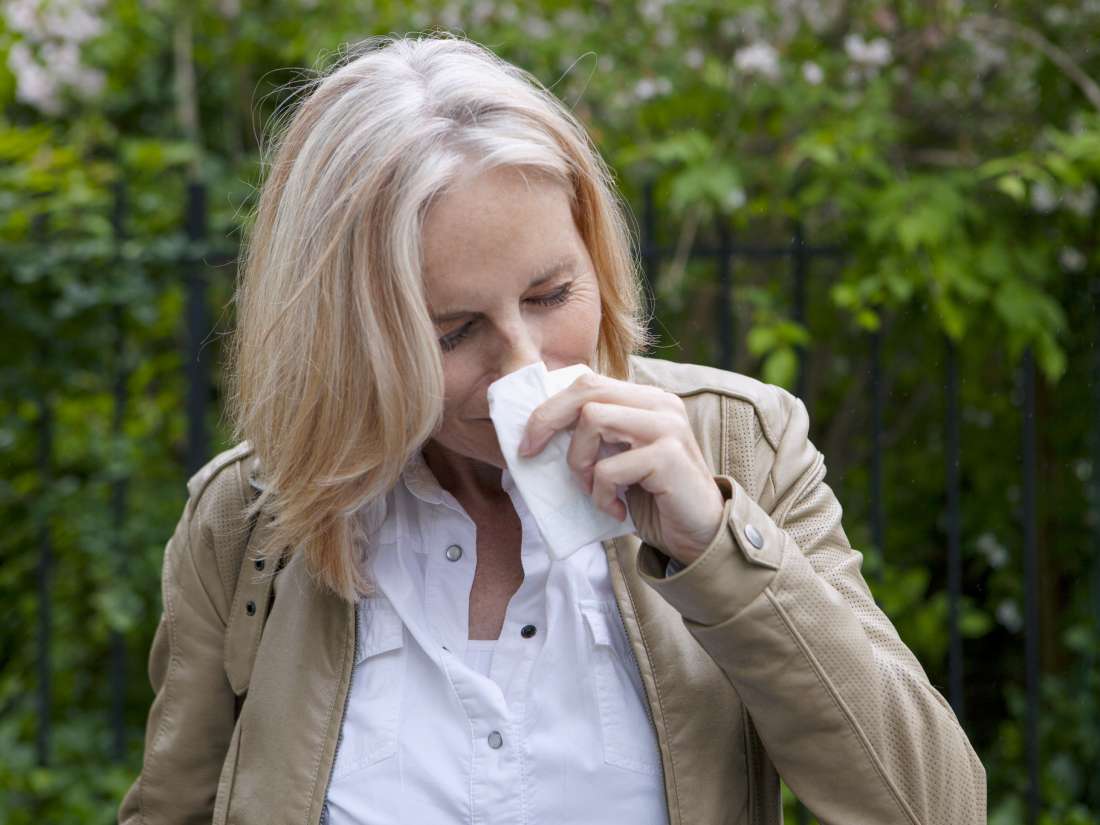
    older woman suppressing a sneeze
    New research identifies an association between generalized anxiety and the presence of seasonal allergies.

    According to data from the Centers for Disease Control and Prevention (CDC), “allergies are the sixth leading cause of chronic illness in the [United States],” leading to healthcare costs in excess of $18 billion each year.

    Moreover, the CDC note that more than 50 million people in the U.S. have an allergy. Across Europe, about 150 million people have an allergy, according to the European Academy of Allergy and Clinical Immunology.

    Some research has suggested that certain allergic conditions can affect a person’s mental health. For instance, one study that Medical News Today covered last year found that having asthma, allergic rhinitis, or atopic dermatitis (eczema) could increase a person’s risk of developing a mental illness.

    Now, researchers from the Technical University of Munich (TUM) in Germany have collaborated with investigators from other German and Swiss institutions to investigate this association further. The team recruited 1,782 participants and aimed to find out if there were any links between mental health conditions, such as anxiety and depression, and different types of allergy.

    The study participants were between the ages of 39 and 88 years, with 61 years being the average age, and they all lived in the Augsburg area of Germany.

    For their study, the findings of which appear in the International Archives of Allergy and Immunology, the researchers only took into account cases of self-reported type 1 allergies.

    These are allergies that cause an immediate reaction following exposure to the allergen, and they can result in symptoms of varying severity. They range from eczema and hay fever, also called allergic rhinitis, to conjunctivitis and anaphylaxis.

    Seasonal allergies tied to anxiety

    In the study, the investigators differentiated between participants according to their type of allergy (or lack thereof), splitting them into four distinct groups:

    Within the entire cohort, 27.4% of the individuals reported having an allergy. More specifically, 7.7% of participants said that they had a perennial allergy, 6.1% had a seasonal allergy, and 13.6% reported having another type of allergy.

    After asking the participants additional questions about their mental health — focusing on markers of depression, generalized anxiety disorders, and stress — the researchers concluded that individuals who lived with generalized anxiety also tended to have seasonal allergies.

    This association was not present in people with perennial allergies. However, the study showed that individuals with year-long allergies were more likely to have depression instead.

    It remains unclear why there is a positive association between anxiety and seasonal allergies but not between this mental health condition and perennial allergies. The researchers are also unsure why the latter more often link to depression.

    In the future, the researchers note, scientists should conduct further studies to find out which way the association lies — whether specific allergies increase the risk of certain mental health problems or vice versa — and why it exists in the first place.

    Study limitations and aims for the future

    Other limitations of the current research include the fact that it did not account for some potentially modifying factors, such as age, biological sex, and smoking status, or the existence of any hereditary predispositions to allergic reactions.

    “We have a relatively high average age of 61 years, so younger people are rather underrepresented here,” notes first author Katharina Harter, who works at TUM.

    “The findings are also based on personal reports rather than official allergy diagnoses,” Harter continues. “But, we have blood samples from all participants and intend to scientifically verify this point.”

    Despite these limitations, the study authors emphasize that their findings finally confirm that there is some kind of relationship between seasonal allergies and the experience of anxiety and that doctors need to pay more attention to their patients when they point out such associations.

    There are studies that focus on the psychological components of skin diseases or allergic asthma. For the first time, we are now able to show a connection with seasonal allergies.”

    This content was originally published here.

  • Studies link too much heavily processed food to early death | Science | The Guardian

    Studies link too much heavily processed food to early death | Science | The Guardian

    People who eat large amounts of heavily processed foods, from breakfast cereals and ready meals to muffins and ice-cream, have a greater risk of heart attack, stroke and early death, according to two major studies.

    The findings, from separate teams in France and Spain, add to a growing body of evidence that foods made in factories with industrial ingredients may have a hand in an array of medical disorders such as cancer, obesity and high blood pressure.

    In the French NutriSanté study, researchers at the University of Paris gathered details on the diets and health of more than 105,000 people. Over five years of follow-up, those who consumed the most “ultra-processed” food were most at risk of stroke, heart attack and other cardiovascular problems. When the amount of ultra-processed food in the diet rose 10 percentage points, for example from 10% to 20%, the risk of the diseases rose 12%.

    The study, published in the British Medical Journal, does not prove that ultra-processed foods cause disease. Nor does the effect appear particularly large, even in the most enthusiastic junk food consumers. The results suggest that 277 cases of cardiovascular disease would arise each year in 100,000 heavy consumers of ultra-processed foods, versus 242 cases in the same number of low consumers.

    But Mathilde Touvier, a member of the French team, said there was sufficient evidence for public health authorities to apply the precautionary principle and advise people to cut down. “The public should avoid these foods as much as they can,” she said. “We need to go back to more basic diets.”

    Classification of processed foods

    The Nova system for classification of processed foods was created in 2010 and updated in 2016. It divides different foodstuffs into categories based on the level of processing involved.

    Examples of unprocessed or minimally processed foods:

    Fruit, vegetables, legumes, milk (whole, semiskimmed, and non-fat), eggs, meats, poultry, fish and seafood, fermented milk as yogurt, grains (white rice, pasta), natural juice, coffee, and water 

    Processed culinary ingredients

    Salt, sugar, honey, vegetable oils (olive, sunflower, corn), chilli, butter, and lard

    Processed foods

    Condensed milk, cream milk, cheeses, cured traditional ham, bacon, canned and bottled fruit, breads (white and whole), beer, and wine

    Ultra-processed foods

    Custard, ice cream, ham, salami,sausage, hamburger, pate, foie gras, meatballs, potato chips, breakfast cereals, pizza,, margarine, biscuits, muffins, doughnuts, croissants and other non-handmade pastries, cakes, chocolate, marzipan, carbonated drinks, artificially sugared beverages, fruit drinks, milkshakes, instant soups, mayonnaise, alcoholic drinks produced by fermentation followed by distillation such as whisky, gin, and rum 

    Was this helpful?

    Ultra-processed foods tend to be formulated from industrial ingredients, blending starches, sugar and saturated fats with additives such as preservatives, binders, bulkers, sweeteners, flavourings and “sensory enhancers”. In the UK, the foods are so popular they make up half of the national diet, more than any other country in Europe.

    For the second study, also in the BMJ, a team at the University of Navarra in Pamplona monitored the eating habits and health of nearly 20,000 Spanish graduates from 1999 to 2014. Over the course of the study, 335 participants died. Once factors such as age, sex, body mass index and whether or not people smoked were taken into account, the trend was clear. The top quarter consumers of ultra-processed foods – who had more than four servings a day – were 62% more likely to have died than those in the bottom quarter, who ate less than two portions a day. For each additional serving, the risk of death rose 18%.

    Maria Bes-Rastrollo, who led the Spanish study, said the fact that the death rate rose with increased consumption strongly suggested that ultra-processed foods were to blame. She said it was important to learn how to recognise the foods, adding: “Ultra-processed foods are made predominantly or entirely from industrial substances and contain little or no whole foods. They are ready to heat, drink, or eat.”

    Touvier said it was unclear how ultra-processed foods may harm health. Even when its poor nutritional value is taken into account, consumption is still linked to more disease and death, she said. One suspicion is that it displaces healthier, more nutritious foods, but additives and perhaps contaminants from processing and packaging may play a role too.

    Prof Corinna Hawkes, director of food policy at City University London and one of the lead researchers in the government-funded obesity policy research unit, said: “Governments must do more to comprehensively reduce the availability, affordability, and appeal of processed foods high in fats, sugars and salt.”

    “It is critical to pursue further research on the connection between food and health,” she added. “There is a lot we do know but also a lot we have yet to learn. We need more and more studies to build up a bigger picture.”

    In an accompanying editorial, Mark Lawrence and Phillip Baker, who work on food and nutrition policy at Deakin University in Australia, write: “The dietary advice is relatively straightforward: eat less ultra-processed food and more unprocessed or minimally processed food.”

    This content was originally published here.

  • Napping More Often Can Boost Heart and Brain Health, Reduce Stress and Much More

    Napping More Often Can Boost Heart and Brain Health, Reduce Stress and Much More

    It’s about time that naps were taken more seriously.

    It’s no lie that in a modern society, many of us are sleep deprived, so much so that power naps may actually be of benefit to us all.

    Napping could so effective that it may help boost our brains, improving problem solving, verbal memory, perceptual learning, object learning and statistical learning. This in turn will improve our reaction time, help with math, logical reasoning, treat fatigue and of course, improve our moods.

    The benefits don’t end there – this aids to alleviate stress, assists in weight management, better heart health and lowers blood pressure.

    Based on the National Sleep Foundation, naps can be put into three different categories:

    — Planned napping (also known as preparatory napping) involves taking a nap before one actually gets sleepy. This technique can be used to prevent tiredness and fatigue, or when one knows that he will be up later than the normal bed time

    — Emergency napping occurs when one suddenly feels very tired and cannot go on with the activity he was engaged in at that time. This nap type often helps to treat drowsy driving or fatigue while using heavy and dangerous machinery.

    — Habitual napping is a routine practiced when a person takes a nap at the same time each day. Young children usually fall asleep at about the same time every afternoon, or adults take a short name every day after lunch.

    A Greek study found that adult men who napped 3 times a week were 37% less likely to die from heart related illness compared to others who didn’t nap.

    Many countries customarily nap too. Think of the famous siesta in Spain. The USA and UK likewise are not very supportive of napping in the afternoons and both countries suffer the most heart attacks worldwide as the leading cause of death.

    Not only do naps improve mental function, they also provide physiological benefits, boosting rejuvenation.

    In 1995, NASA came forth with a groundbreaking study in which they evaluated the effects of 747 pilots taking naps, allowed 40 min a day. The findings revealed vigilance performance improvements from 16% in median reaction time to 34% in lapses compared to the No-Rest Group.

    In 2008, studies showed that naps actually work better than caffeine when it comes to improving mental functioning.

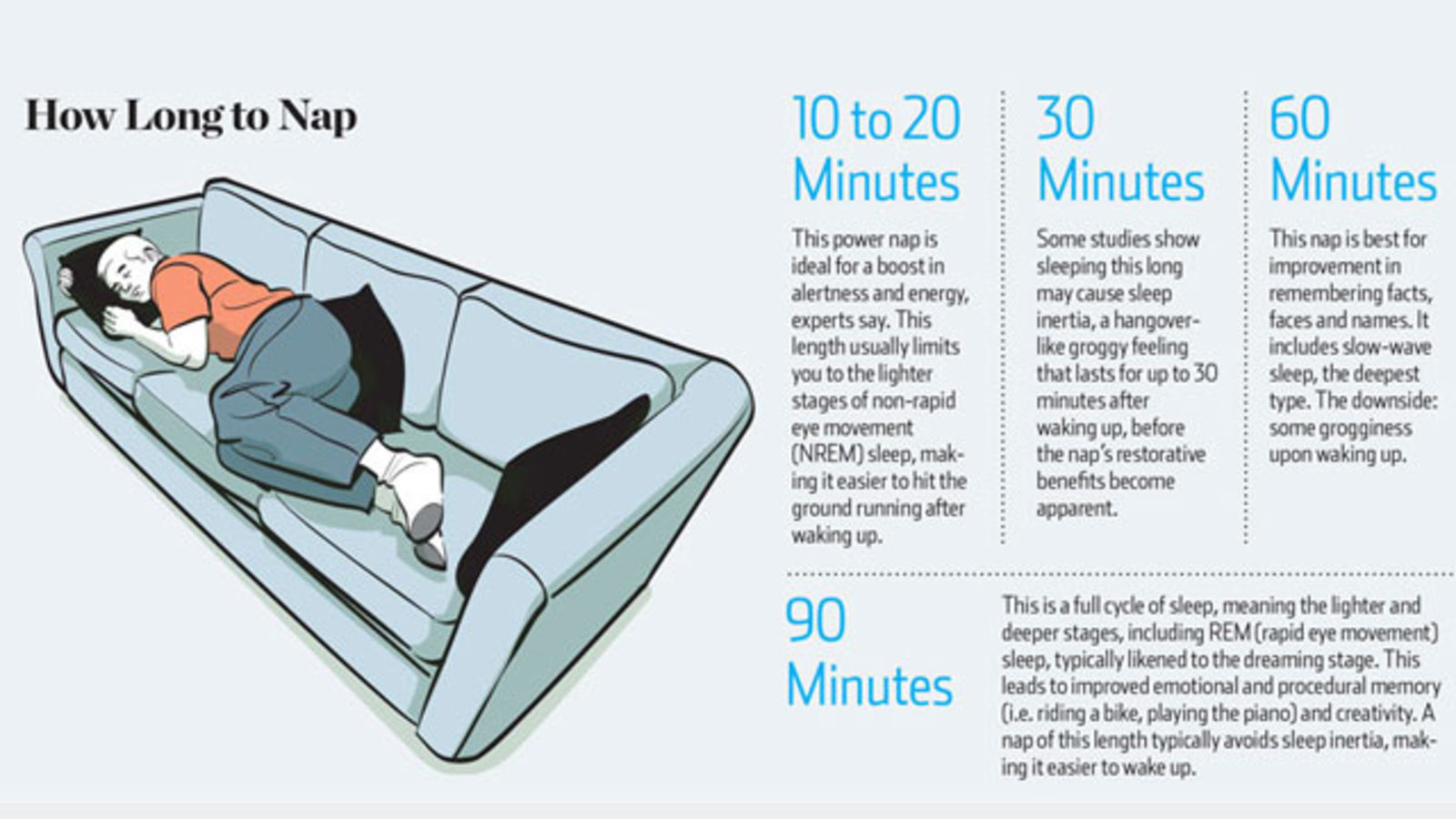
    A short nap has many benefits, the length will determine the benefits you’ll experience:

    20 Minute Nap – It enhances memory, mental alertness, and motor learning skills.

    20 To 30 Minute Nap – It boosts creativity and boosts memory.

    30 To 60 Minute Nap – It enhances decision-making skills and memory

    60 To 90 Minute Nap – It ensures REM (Rapid Eye Movement) sleep, so it is the most beneficial nap type. It helps you reset the brain, and has a dramatic effect on the problem-solving skills.

    Therefore, we could all definitely benefit from a nap during the day, unless you suffer from a sleeping disorder – you may find that napping could hinder your already trying sleeping pattern.

    If you enjoyed this article please SHARE it.
    And if you haven’t already please help us reach 3 million Facebook fans by following us HERE

    My Name is Kasim Khan and I am the founder of Educate Inspire Change. I have just returned from a 1 week stay at the world’s first medically licensed plant medicine retreat, it’s called Rythmia and is in the beautiful country of Costa Rica. During this week I had the most profound and transformational experience of my life and it’s not only me . . .over 95% of people who embark on this journey at Rythmia reports that they too had a life changing miracle. This magical place had such a profound effect on me that I am now dedicating my time to sharing this healing opportunity of a lifetime with you all.

    Please click HERE to find out more information and book yourself in for the most magical week of your life.

    The post appeared first on Educate Inspire Change.

    This content was originally published here.
  • Colorado becomes first state in nation to cap price of insulin

    Colorado becomes first state in nation to cap price of insulin

    Diabetics in Colorado who use insulin to control their blood sugar levels won’t pay more than $100 per month for the drug starting in January thanks to a bill signed into law by Gov. Jared Polis on Wednesday.

    “Today, we will declare that the days of insulin price gouging are over in Colorado,” Polis said in his office as he signed the bill, according to CBS Denver.

    Insulin has been around for nearly a century, but the price that patients with Type 1 and Type 2 diabetes pay for the drug has doubled since 2012, according to the Healthcare Cost Institute. The cost of insulin can creep up toward $1,000 for those whose health care coverage requires significant cost-sharing.

    The sudden spike in insulin prices lead to congressional inquiries and public outrage, but Colorado is the first state to implement a cap on what its residents can be charged for the medication. The law doesn’t limit what insulin manufacturers can charge insurance companies, and it’s expected those insurers will pay the difference.

    Rep. Dylan Roberts, D-Avon, told The Denver Post earlier this year that the projections he saw showed the price of health care plans increasing by “a couple of cents, per person, per month.”

    The new law also requires Attorney General Phil Weiser to investigate why drug manufacturers started rapidly raising the price of insulin in recent years, and it tasks the Department of Law with issuing a report of his findings by November 2020.

    This content was originally published here.

  • Why You Should Take Home Ventilation Seriously

    Why You Should Take Home Ventilation Seriously

    Residence 950 is pre-certified LEED-Platinum property set above San Francisco with stunning views of the San Francisco Bay, the East Bay Bridge, Alcatraz, Angel Island, Downtown San Francisco and Coit Tower.

    A newly built home in San Francisco, Residence 950, takes indoor air quality very seriously. Built in 2018 by Troon Pacific, the 9,500-square foot home on Russian Hill has hospital grade air filtration via a Zehnder whole-house ventilation system, which changes all the air in the home every two hours; a central whole-house vacuum system that keeps all areas allergen and dust-free and a below-grade air barrier to keep out all allergens and mitigate dust.

    Ventilation, it seems, “is the new frontier for making houses healthy,” says Carl Seville, whose Atlanta-based SK Collaborative does green building consulting and certification. The EPA cites indoor air quality (IAQ) as one of the top five environmental risks to public health. And, a recent study shows that people spend 90% of their time indoors – whether in houses, offices, schools, cars. And, recent Berkeley Labs IAQ findings on ventilation suggest that when lots of people gather together in a small space, the CO2 they expel into the air can impact their health and cognitive performance. (So, you might not be able to blame the beer for your actions when you and your friends are packed into your kitchen.) Along with CO2, according to the National Environmental Education Foundation, indoor air is polluted with lead, dust mites, mold, radon, pests, carbon monoxide, pet dander, mold, and second hand smoke. Throw in some humidity and you encourage mold to grow.

    Think about that as you take your next breath of indoor air and know that before the day is over you will breathe approximately 2,500 gallons of the stuff. It’s all enough to make you gasp for fresh air.

    While the top-of-the-line Zehnder products can be upwards of $10,000, we mere mortals, or at least those of us who don’t have $45 million for a luxury mansion, can still get fresh air into our homes. As Seville points out though, it’s not just about bringing in outdoor air but bringing in air from the right places. You don’t want to pull in air from your garage, for example.

    A chef-inspired gourmet kitchen features custom Boffi cabinetry and island, Calacatta marble countertops, Mandarin white limestone floors and integrated Gaggenau appliances, including both gas and induction cooktops, and three ovens, including a plumbed in steam oven.

    What most older houses have now for ventilation are bathroom fans and kitchen range hoods to remove the bad air. Older homes may be leaky, so while you are getting some fresh air, you have no control over where it’s coming from. On top of that, your HVAC system won’t work efficiently. Newer homes are more tightly built. So, yes, they’re more efficient from an energy standpoint, but you may not be getting the fresh air you need.

    Enter the HRV and ERV. Although they’ve been around a while, many people don’t know about them. But you should get to know them because you’re going to be hearing about them a lot in the next few years as more people focus on IAQ. Basically, these devices pull out the bad air and replace it with good air. (If you have an older home, the first thing you’d need to do is tighten it up for either of these to do their best work.)

    An HRV, Heat Recovery Ventilation system, uses the heat from the stale indoor air that’s being exhausted to warm up the incoming fresh air; the two air streams merely pass by each other in the HRV’s core so they never mix. Overall, you are using less energy to bring the outside air to room temp.

    The ERV, Energy Recovery Ventilation system, does things a little differently. It captures both heat and moisture, your indoor humidity. In winter, the system transfers the humidity from the indoor air being extracted to the incoming fresh (and dry) air. In summer, it pulls the humidity out of the outside air before it gets inside. You save energy by reducing the load on your air conditioning system and/or dehumidifier.

    Talk with an HVAC professional to determine which system will work best in your house, in your climate and for your lifestyle. HRV costs, not including installation, run anywhere from $600 to $1,100 for a mid-size system (this assumes you already have ducts and a central HVAC system.) Similar-sized ERVs may cost $150 to $200 more.

    Of course, if you do have a bigger budget for air scrubbing, you can invest in some of these other things that Troon included at Residence 950:

    This content was originally published here.

  • There’s a Victoria’s Secret perfume that repels mosquitoes – It’s a Southern Thing

    There’s a Victoria’s Secret perfume that repels mosquitoes – It’s a Southern Thing

    Want to smell good but also repel those pesky summertime mosquitoes? Get you a perfume that can do both with Bombshell, Victoria’s Secret best-selling fragrance.

    Quartz reports that the popular perfume, which has a scent that’s a mix of floral and fruity, is almost as good as DEET insect repellent at keeping mosquitoes away. That’s based on a 2014 research study experiment conducted by New Mexico State University.

    The experiment indicated that Bombshell perfume kept the disease-carrying insects away for about two hours. The study results were convincing enough for the LSU Tigers baseball team, which recently revealed they spritz themselves in the stuff so they can keep the bugs away and smell good, according to The Daily Advertiser.

    Want to score a bottle of the stuff for yourself? Victoria’s Secret has a full line of Bombshell-scented products, but the original perfume is available here in a 1.7 fluid ounce bottle for $55 and 3.4 fluid ounce bottle for $68.

    This content was originally published here.
  • How to help get rid of ticks on your property | TreeHugger

    How to help get rid of ticks on your property | TreeHugger

    Or, a lesson in learning to love opossums.

    Biting bugs suck, so to speak – they are a nuisance and carry diseases. Deer ticks, in particular, are vexing. They put the ick in tick. They bring us Lyme disease, the bacterial infection anaplasmosis, the parasitic infection babesiosis and the Powassan virus, all of which can be serious (and even fatal) at times. And in general, tick populations are expanding their turf.

    Most of us know to take precautions when we’re out and about and to check for ticks that have hitched on for a dinner cruise.. But if only there were less ticks out in the wild. Like, if only there were an animal that really really liked to eat ticks. Oh wait, there is!

    Natural pest control is a beautiful thing. Even if the controller is an animal that many consider less than beautiful. Case in point, the animal that makes more people skittish than most, the tick’s biggest enemy, the opossum.

    Dr. Rick Ostfeld, author of a book on Lyme disease and a senior scientist at the Cary Institute of Ecosystem Studies, sees opossums as walking tick vacuums.

    “Many ticks try to feed on opossums and few of them survive the experience,” Ostfeld writes for the Cary Institute. “Opossums are extraordinarily good groomers it turns out – we never would have thought that ahead of time – but they kill the vast majority, more than 95 percent, of the ticks that try to feed on them. So these opossums are walking around the forest floor, hoovering up ticks right and left, killing over 90 percent of these things, and so they are really protecting our health.”

    Opossums seem to have a knack for ticks. According to numbers calculated from a study published by the Proceedings of the Royal Society B, a single opossum can consume between 5,500 and 6,000 ticks per week.

    I, for one, adore opossums – give me an underdog, or undermarsupial as the case may be, and I’m its biggest fan. But opossums are often vilified; they tend to freak people out a bit. OK, maybe the “giant beady-eyed rat” thing is a little off-putting – or the whole “terrifying when playing dead” act (see photo below) – but they are neither dirty nor threatening as many believe. In fact, they are tidy self-cleaners with strong immune systems. One study published in the American Journal of Public Health found that opossums are around eight times less likely to be carrying rabies than feral dogs. And wait, there’s more!

    Opossum playing dead“My super fearsome death grimace will fool them, I’m sure of it.” (Wikimedia Commons)/CC BY 2.0

    “Although by most standards he is not a pretty fellow, our much-maligned marsupial, the Virginia opossum, should be viewed as the great ‘groundskeeper,’” notes Texas’ DFW Wildlife Coalition. “Silently and without cost, he fulfills his role in the natural world, tending to it diligently and without fail. When left alone, the opossum does not attack pets or other wildlife; he does not chew your telephone or electric wires, spread disease, dig up your flower bulbs or turn over your trashcans. On the contrary, the opossum does a great service in insect, venomous snake, and rodent control.”

    While misperceptions may lead to people shunning opossums rather than encouraging them; they can be your allies.

    If you have opossums, consider not calling critter control or trying to get rid of them. Don’t scare them away, don’t follow tips for discouraging them. The Cary Institute goes so far as to recommend building opossum nesting boxes to entice them to stick around. You may not like them at first, but for the pest control and potential disease prevention alone, they’re so worth learning to love … beady eyes, fearsome death grimace, and all.

    This updated article was originally published in 2015.

    This content was originally published here.

  • The forgotten art of untucking the tail

    The forgotten art of untucking the tail

    A tiny detail we’ve lost since the hunter-gatherer times and how to fix it
    I’ve been spending most of my time lately learning about biomechanics, healthy alignment and how movement affects our bodies on cellular level. The research from the last few years shows that the way we move affect us not only mechanically, as it was previously thought, but also causes biochemical changes in our cells, changing us from inside out. This process of the body adapting to and being shaped by movement is called mechanotransduction.


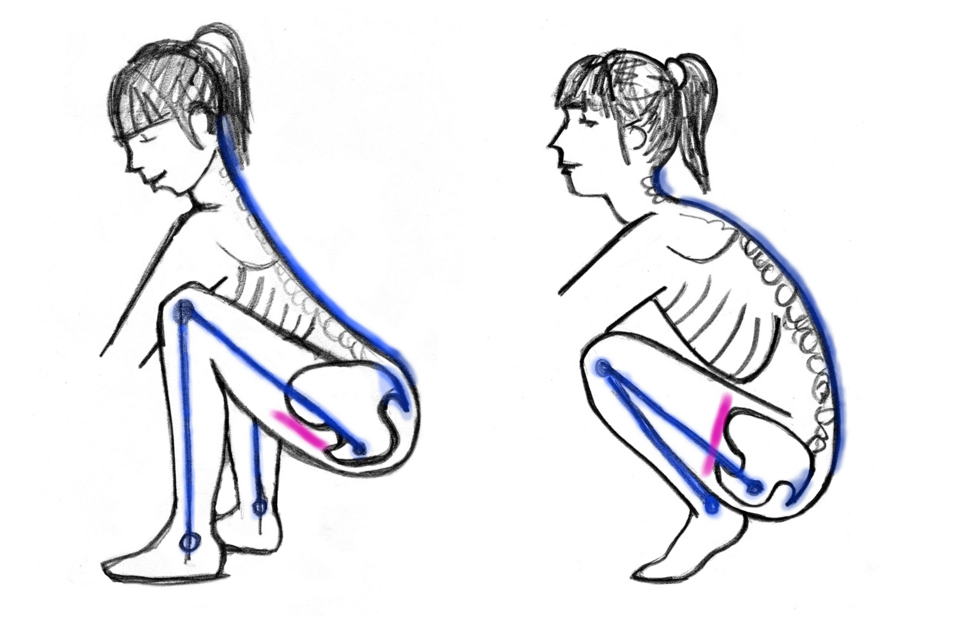
    We seem to be living in the world that encourages sitting with the tail tucked under.


    The furniture we use sitting all day is optimised for comfort and convenience, but usually not ergonomically adapted for pelvic floor health. Who would even think about that?
    There is a well spread myth in our society that pelvic floor issues are a normal consequence of ageing or child birth. But we would rarely think of looking for a cause a bit deeper, in the way we have been living and moving before that.
    Did you know that the anatomic function of our remnant of a tail is, amongst others, to control opening and closing of the pelvic outlet? If you look at a dog or a another tailed animal you can see that they keep their tail up happily wagging when they are in a good mood. And this is the default. When you see a dog wearing his tail down between his back legs, it’s usually a sign that the dog is on the fight or flight mode and his pelvic floor is tense as a part of his whole body reacting to danger.
    Even though we now have only a tiny part of what was once a real mammalian tail, it behaves the same. Untucking the tailbone opens the pelvic outlet, tucking it closes it — tightening the pelvic floor. The dog with his tail down between his legs is an equivalent of you sitting on your sacrum, the back supported by a chair or a couch. If you spend multiple hours a day in this position, your pelvic floor doesn’t really have a chance to release and allow the muscle fibres to regain their natural length at resting state. So gradually it shortens.
    In his book Pelvic Power, dance educator Eric Franklin compares natural movement of the pelvic floor to a kite. As you stand up the pelvic floor slightly lifts and narrows, similarly to a kite picking the wind and taking off. Reversely, as you sit down (with untucked tail, using your sit bones) the pelvic floor widens and releases to its full length, like a kite descending down, opening and landing. But what if we never allow it to release?


    Tight muscle does NOT equal a strong muscle.


    Biomechanist Katy Bowman compares an optimally functioning pelvic floor to a trampoline. It supports the weight of all our pelvic organs and allows any extra load to just bounce off its healthy, elastic fibres, tensing and releasing naturally. Keeping the muscles in the shortened position all the time doesn’t let them perform their function optimally. And further on, as our bodies adapt to the way we use them, we gradually end up with shortened muscles.
    This is why pelvic floor exercises (Kegels) can only be a short term fix. Practising contractions of a muscle isolated from the rest of the body and without allowing it to ever fully release you get a muscle that is tight and locked short. A tight muscle does NOT equal a strong muscle. A strong muscle is able to both fully contract and fully release.
    So why am I telling you all this now? Reading Katy Bowman’s last book — Move Your DNA , I’ve started to incorporate more variety movement into my life other than and independently from exercising. And especially, I’ve started to squat more, when playing with my toddler, picking things off the floor and going to the toilet.
    Learning how to untuck my tail has made me finally realise why I still had to push my baby out and not bear it gently down, letting the gravity do the job, in spite of all the birth preparations and beautiful relaxation techniques I mastered beforehand.


    To “breathe the baby out” you have to first untuck your tail.


    Anatomically, in order for the baby to come out the pelvic floor has to release, but you can’t possibly release the pelvic floor with the tailbone tucked under. You can only use the strength of your muscles (transverse abdominals and diaphragm as they instruct you to hold your breath and “puuuuussssh!”) against your pelvic floor. And that’s a sure way to end up with a nice tear and possibly a pelvic floor disfunction. I was lucky that this mad pushing in my case ended without any serious damage. The body just took over at the last moment and jumped on a dining chair in a strange half-squat with untucked pelvis, fully opening the pelvic outlet. The tucked squats and kneeling with rounded back would have probably taken me to an assisted delivery.
    “Modern birthing science has placed a large burden on secreted hormones (like relaxin) to prepare the body for needed mobility.” Katy Bowman says. Yes, relaxin is useful in letting the body open up for the birth, but it’s not enough, unless we have strong, yielding muscles that can fully contract, but also fully release.
    And there is one more thing that we might be missing nowadays.


    In order to have bodies able to smoothly perform all their biological functions, we need to build a whole-body endurance.


    A great way to develop endurance as well as a strong pelvic musculature and a responsive pelvic floor is to walk a lot. You can gradually build up the mileage and frequency of walking in the day. Up the hill, down the hill. Not just on flat pavements but on a variety of terrains and ideally in a shoe that allows your feet to experience and respond to them.
    It’s about building up towards more movement, but also more variety of movement. Gradually adding more and more little movements into your life will allow the body to adapt to them, building capacity to make them easy.
    So, the bottom line is: we really need to get off our tails and sit on the sit bones instead and walk more, squat more, move more. It’s all about really using the body. Reintroducing a frequent and varied movement in our day-to-day life we can gradually reclaim the lost ranges of movement and functional strength.
    Reference list:


    • Donald E. Ingber, MD, PhD — Tensegrity and Mechanotransduction, Journal of Bodywork and Movement Therapies Volume 12, Issue 3, July 2008, Pages 198–200
    • Katy Bowman, MA — Move Your DNA: Restore Your Health Through Natural Movement, Propriometrics Press, September 2014
    • Katy Bowman — Natural Mama, blog post from 3 January 2012 http://nutritiousmovement.com/natural-mama/
    • Eric Franklin — Pelvic Power: Mind/Body Exercises for Strength, Flexibility, Posture, and Balance for Men and Women, Elysian Editions, November 2003
    • Doug Keller — Yoga as Therapy Ground breaking insights into the use of yoga as therapy (Volume One: Foundations), Do Yoga Productions, 2008
    • Katy Bowman, MA — Alignment Matters: The First Five Years of Katy Says, Propriometrics Press, 2013
    •  


    This content was originally published here.

     

  • Why every desk at your office should have a plant

    Why every desk at your office should have a plant

    Call it green energy — by giving every employee a plant, engineer Mike Robinson created an environment where both humans and their leafy friends thrive. Plus, 9 recommendations for hardy, hard-to-kill plants to call your own.

    This post is part of TED’s “How to Be a Better Human” series, each of which contains a piece of helpful advice from someone in the TED community; browse through all the posts here.

    Besides a paycheck and reasonable hours, what else does a person need to thrive at work? Decent space, adequate supplies and tools? Yes. Lunch breaks, sick days, time off to recharge? Sure. A plant? Well …

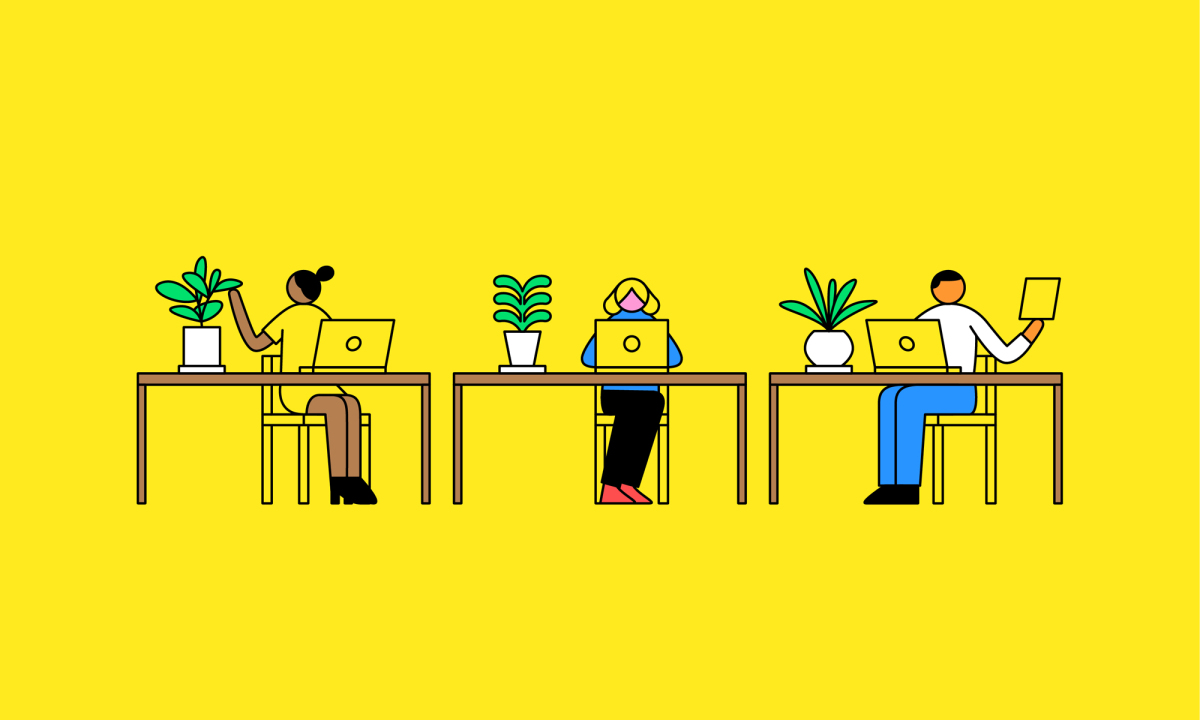
    Such an idea had never occurred to engineer Mike Robinson. He owns a small company based in British Columbia, Canada, that designs and builds windbreaks and other control structures. One day, his wife, Suzanne, who runs the company with him, said: “I think we should give every person in the office a plant for their desk.”

    Robinson was skeptical. He thought that plants would be distracting and a drain on people’s time. “The average staff member would probably spend about five minutes a day either looking after the plant or admiring it,” as he puts it in a TEDxWhiteRock talk. Upon his wife’s insistence, however, he agreed to give it a try.

    He and Suzanne bought 20 plants for their 20 employees. Then, they did something a bit different. Instead of handing them out, they asked each employee to approach the tableful of plants and choose their own — but from the perspective of the plant.

    Think of it like a human-plant speed-date. Robinson explains, “So you have to put yourself in the spot of the plant, as it were, and say, ‘Which person do I want to be my new friend?’” Employees then received a small sign on which they wrote ‘My friend is …’ and their own name, stuck it in the soil, and brought it into their personal workspace.

    Over time, Robinson realized that the plants were having a positive impact. He says, “I did my own mathematics, and I reckoned that we might be doing about 30 percent more business per staff [member].” Of course, this is far from a scientific study. There’s no control group or double-blind — just a company filled with happy plant lovers excelling at their jobs. And maybe that’s enough.

    Another sign that something is going right: After 5 years, not a single plant has died. Robinson guesses that since each was hand-selected and bears the employee’s name on the label, they’re well-tended because “this is your friend and you care about your friend.” As he explains, “Our office is a more contented place, a relaxed place, and a place that I’m proud to be to be a part of, and a big part of that is the personal plant.”

    But what plant is right for your desk? Perhaps you’ve gotten one and felt the warm glow of human-plant friendship — only to see it wither before your eyes. We asked Rebecca Bullene, New York City horticulturist, cofounder of Greenery Unlimited and the person who designed and tends the greenery at the TED NYC offices, to recommend hardy plants for different light conditions. Note: Almost all of these plants are available in desktop sizes, but if you want them to stay that way, you will need to prune them.

    Plants for low light

    Sansevieria plant, or snake plant: “They’re an architectural plant; I usually use them in spaces that have a more modern aesthetic,” says Bullene.

    ZZ plant, or emerald palm: “This plant has very deep glossy leaves and a kind of two-tone coloring. It’s a softer plant.”

    Aglaonema, or Chinese evergreen: “It has very beautiful patterning on the leaves, and it’s a larger-leafed plant. It is a welcoming plant.”

    Plants for medium light

    Monstera deliciosa, or Swiss cheese plant: “It’s a fabulous name for a fabulous plant. The leaves have a really interesting texture, and this plant is a fast grower.”

    Schefflera arboricola: “it’s very cute. It’s one of my favorites, and it’s easy to take care of.”

    Anthurium, or laceleaf plant: “This is one of my favorite flowering plants. I prefer them to orchids because orchids can be difficult to care for and their blooms only last for about six weeks, whereas the anthurium puts up new flowers year-round.”

    Plants for high light

    Ficus audrey, or banyan fig: “While the fiddle-leaf fig is the most popular ficus, the ficus audrey is gaining. I think it’s just as beautiful, if not more so. It has very velvety leaves, and its growth habit is more restrained.”

    Philodendron selloum, or philodendron hope selloum: “This was popular in the 1970s and the 1980s and fell out of favor, but it’s having a resurgence now. These plants have large tropical leaves with really deep cuts in them and a lovely, ruffle-like texture. This is not one that you’d have on your desk — it’s large — but next to it.”

    Succulent plants, such as aloe vera, pincushion or zebra plant: “These are very popular right now. They’re best on a sunny windowsill rather than away from natural light. Most need water every 7 to 10 days, but touch the soil first — if it’s damp, don’t water it. They really like to dry out between waterings.”

    : “This is a flowering succulent that’s good in high light. They put out these long stems with bell-shaped flowers.”

    But what if you’re in a space that has no windows or a window facing a stairwell? “The sansevieria and aglaonema can survive in a room with no windows, although they won’t flourish. But people without natural light should known that grow lights have come far in the past three years,” says Bullene. “They screw into any fixture and they provide the same kind of light to work by, but they’re actually introducing a full spectrum of light for plants. I’ve seen plants respond really well to them.”

    What about air plants? “These generally require more care and attention than people are willing to give. When I’ve gone into a store and the sales people are like, ‘Oh, you don’t need to do anything with them,’ it breaks my heart,” says Bullene. “One of the fundamentals of plant care is to think about a plant’s native habitat and how to recreate it so the plant will be happy. Air plants grow in extremely high humidity environments that are full of life; they get their nutrients from the air.” She recommends either putting them near a humidifier (and misting them regularly) or soaking them for 20 minutes at a time in a bowl of water. Air plants like bright, indirect light.

    Last but not least: Don’t overwater. “There’s a direct proportional relationship between light and water. The less light a plant gets, the less water it should receive; the more light, the more water,” explains Bullene. “Often, people think they should water every day, and that’s the kiss of death. In a low light environment, you should water plants every 10 days or so.“

    What’s confusing is the signs of overwatering and underwatering are largely the same — yellow leaves, wilting — and most of us respond by adding water. Says Bullene, “I’d say 80 percent of the time plants are receiving too much water, and the correct response would be to withhold it for a little bit longer.”

    Watch Mike Robinson’s TEDxWhiteRock talk now:

    This content was originally published here.