Author: Truth & Hammer

  • Understanding retaining walls in the landscape

    Understanding retaining walls in the landscape

    Adding in structures to a space to create a focal point is a common practice for professional landscapers, and a very popular item to create is a retaining wall.

    Retaining walls can be used to help customers overcome sloped areas in their yard and often add in visual interest to a landscape while serving a functional purpose. Retaining walls can also be used to increase the amount of usable land available in a yard, and they can even provide environmental benefits such as protecting areas from saturation and soil erosion reduction.

    If you find yourself in the midst of a retaining wall installation project in the coming months, take a look at a few tips you can keep in mind when creating this eye-catching piece.

    Specifics when building

    When working with steeper slopes, some techniques you can utilize are the use of interlocking concrete blocks, riprap (loose rock) areas, wood retaining walls, rock retaining walls and terracing. Keep in mind that if you do choose to use wood, it’s a good idea to treat the wood with a preservative to prevent rotting.

    If you know the wall will be higher than 3-4 feet, an engineer will be required to assist with the project because of zoning codes and regulations.

    The wall should lean into the hill at a minimum of 1 inch for every 12 inches of height in order to maintain a safe load on the wall. This can also help with the drainage when the soil becomes saturated. It’s also possible to redesign the grade of the slope before installing the wall, as this can help direct water away from the wall and could also decrease the amount of slope needed.

    To help keep water build-up at bay in poorly draining soils, consider placing drainage tiles behind the wall, but be sure to construct these tiles with a 12-inch-deep layer of backfill that is freely drained, such as gravel.

    The cost, height and function of the wall will all depend on what materials your customer chooses for the project, but if the wall is being used strictly as a decorative piece in the yard, almost any kind of material will do the job.

    For walls that will be serving the purpose of supporting larger loads, you will need to use long-lasting, durable materials that will be suited for the conditions of the site.

    In areas where the wall’s height will be less than 4 feet tall, wood and solid concrete walls are recommended. Keep in mind that wooded walls will deteriorate faster, and concrete walls will have drainage issues that could cause water saturation conditions to occur above the wall.

    Keep an eye out for…

    When maintaining your customer’s landscape, look for areas in need of a retaining wall.

    One area of concentration to focus on is the slopes present in the yard. If you see an area with a slope greater than 3:1, be sure to consult with an engineer. If the slope is over 2:1, it will require structures or specialization techniques.

    Ask yourself and your customer how much freezing or frost will both the wall and soil it’s holding come in contact with, and always check the wall’s drainage to see if it’s functioning properly. If it looks like the water will flow heavily on the wall and soil, you may need to add in some drainage.

    Take stock of the type of soil in your customer’s yard, as soil with heavy clay content won’t draw water well, but it is less prone to erosion. Sandy soil, on the other hand, will have opposite characteristics.

    Check for other structures near the site where a retaining wall might be needed, and if there are existing structures around, consider how they will be affected if or when a retaining wall is installed.

    Also remember that if you’re located in an area where earthquakes are prevalent, talk to an earthquake engineer to analyze the wall and make it more earthquake-resistant.

    Types of retaining walls

    Once you’ve determined that your customer’s yard does need a retaining wall, the time comes to determine which type of wall your customer needs.

    Gravity walls will hold the earth by the weight of the wall’s material. They can be formal pavers or even a stack of large rocks, but they can fall easily and should be used for short slopes of 3 feet or less.

    Anchored walls are the strongest type and can be combined with other techniques. An anchor is wrapped around the wall, and a base is placed deeper into the hill, which provides the stabilization.

    Piling walls use long piles, or poles, that go deep into the soil and above it. Pilings can be made of metal or treated lumber, and they have a good capacity to hold the soil back.

    Cantilever walls are similar to piling walls, however, they get added strength from a sort of “arm” that extends back into the hill. This can increase its capacity to stabilize pressure.

    This content was originally published here.

  • 5 Best Electric Lawn Mower Options, Corded and Cordless | Bob Vila

    5 Best Electric Lawn Mower Options, Corded and Cordless | Bob Vila

    Photo: istockphoto.com

    If you’re ready to upgrade to a new lawn mower but aren’t sure you want a traditional gas-powered model, consider going electric. Not only would you be able to bid goodbye to jerking a pull cord, replacing fouled spark plugs, and storing flammable fuel, you’d be doing your part to reduce carbon emissions. But electric mowers do have their downsides when it comes to power, price, and even safety. So read on to understand the pros and cons, figure out what features to look for when shopping, and get the 411 on our three picks for the best electric lawn mower according to all of the reviews.

    So read on to understand the pros and cons of electric mowers, to figure out what features to look for when shopping, and to find out why we chose the following five models as the best choices for today’s homeowner:

    Photo: istockphoto.com

    Why You Might Want an Electric Mower

    Electric mowers cut the grass the same way gas-powered mowers do: Spinning rotary blades chop off the top of the grass leaves as you push the mower across the lawn. While gas mowers operate via small combustion engines, electric lawn mowers rely on power from either extension cords or rechargeable batteries. Corded electric mowers have been around for years, and they’re great for mowing small lawns, but with recent advances in battery power storage, cordless electric mowers—the new kids on the block—are carving a niche in residential lawn care.

    If you’re accustomed to operating a gas mower, you may be pleasantly surprised by an electric model’s benefits and options. But you’ll find a few drawbacks as well.

    + No engine maintenance, such as changing spark plugs, engine oil, or filters.

    + No flammable gasoline stored in your garage or shed.

    + Whether using a plug-in or battery model, it will cost between $5 and $10 to operate an electric lawn mower for a single four- to six-month growing season. Fuel to operate a similar size gas mower costs between $15 to $25 per season.

    + Environmentally friendly electric mowers do not produce carbon dioxide, hydrocarbons, or other fossil-fuel fumes.

    + Quiet. An electric lawn mower produces 65 to 75 decibels of noise, which is equivalent to a washing machine or a two-person conversation. Gas mowers generate between 95 to 100 decibels of noise, comparable to a loud motorcycle.

    Corded electric mowers are limited to the length of the cord, typically about 100 feet from an exterior power outlet.

    Mowing time for cordless models depends on how long the batteries hold a charge. Typically, you can operate a battery powered mower for between half an hour to an hour before it requires a recharge, and it takes approximately eight to 12 hours to recharge. If your yard is large, you could be charging the battery halfway through.

    Electric lawn mowers, not quite as powerful as gas mowers, can be challenged by thick lawns, where the carpet of grass is so dense you can’t see soil when you separate the top of the blades. Thick grass creates more resistance, causing the mower blades to bog down or leave entire clumps uncut. To compensate, electric mower owners raise the mowing height or mow more often (every two to three days), cutting off only the top quarter, or less, of the grass blades.

    Electric mowers should not be operated in wet grass due to the risk of shock.

    Inadvertently mowing over the cord could cause electric shock.

    Cordless electric mowers tend to be more expensive, on average, than gas mowers. The average push gas mower runs $100 to $350, while the average cordless electric mower runs $200 to $450. Corded electric models are the least expensive, however, ranging from $90 to $150.

    Photo: istockphoto.com

    Shopping Considerations for the Best Electric Mower

    While most models within the category offer similar options, a few features are really worth paying attention to when distinguishing the best electric lawn mowers from the competition.

    The Best Electric Mowers

    With the help of reviewers who’ve already discovered the benefits of electric mowers, we’ve identified five of the best electric lawn mower models on the market today. Keep reading for tips on where to begin your shopping.

    Photo: amazon.com

    1. BEST ELECTRIC MOWER FOR SMALL- TO MEDIUM-SIZED YARDS: Greenworks 16-inch Cordless Lawn Mower ($267.88)

    With a 16-inch swath cut and a 40-volt Lithium-ion battery system, the Greenworks 16-inch Cordless Electric Lawn Mower will mow up to 7,000 sq. ft. on a single charge, suiting it perfectly for small- to medium-sized yards. The mower features a push-button start and graduated wheel size (6-inch front wheels and 7-inch back wheels) to make maneuvering the mower a snap; plus, it offers both mulching and rear-bagging. Grass-cut height is adjustable from 1¼- to 3⅜-inch, and its SmartCut technology speeds up the blades when the machine senses thicker-than-average grass. At the end of an afternoon’s work, the handle folds down for easy storage, and its G-MAX battery can be charged to use next time or with other G-MAX yard tools. Amazon buyers rate the Greenworks mower 4.4 out of 5 stars for quality, the ability to cut easily through dense grass, and for quiet operation.

    Available from Amazon.

    Photo: amazon.com

    2. BEST ELECTRIC MOWER FOR LARGE YARDS: Yard Force 22-inch 3-in-1 Cordless Mower ($829.99)

    Give away that old gas-guzzling mower, toss out those fuel cans, and throw out that oil-changing pan—you won’t have any need for them when you have the Yard Force 22-inch 3-in-1 Cordless Mower. Designed with a generous 22-inch swath cut, the Yard Force will make quick work of larger yards and will mow up to a half-acre of lawn on a single charge. The mower comes with two 120-volt lithium-ion batteries (to be used at the same time) for superior turf-cutting power. Amazon buyers award this powerful mower an enthusiastic 4.8 stars, citing its self-propulsion (which is rare for electric mowers), high-quality design, and wide swath width. This powerful mower comes with a push-button start, single-lever height adjustment from 1½ to 4 inches, and a folding handle for easy storage. Rear-bagging, side-discharge, and mulching options are available.

    Available from Amazon.

    Photo: amazon.com

    3. BEST BUDGET ELECTRIC MOWER: Earthwise 14-inch Corded Electric Mower ($102.79)

    Going green—and keeping your yard looking great—is affordable when you choose the Earthwise 14-inch Corded Electric Mower. This budget-friendly corded mower features the option of discharging grass clippings to the side or mulching. Its 14-inch swath cut makes it a good option for small yards; just remember that you’ll be restricted by the length of the extension cord you use. The Earthwise features a push-button start, and it comes with a secure cord retention hook that manages excess cord so it doesn’t get tangled or in the way of the mower. The mower’s handle folds down for compact storage and Amazon buyers, who give the Earthwise mower 4.3 stars, find the machine is lightweight, easy to push, and powerful enough to cut through dense grass.

    Available from Amazon.

    Photo: amazon.com

    4. OVERALL BEST CORDED MOWER: Greenworks 18-inch Corded Mower ($147.53)

    With enough power to effortlessly cut through tall grass and an ample 18-inch swath width, the Greenworks 18-inch Corded Mower takes top honors in our corded category and earns an enviable 4.6 stars from Amazon buyers. The mower offers seven cutting heights, ranging from 1¾ to 3¾ inches and it comes with oversized 7-inch wheels that make maneuvering a cakewalk. It also features a push-button start and a cord-retention hook. The Greenworks will make fast work of small yards, mowing distance is limited to the length of your extension cord. Side-discharge and mulching options are available, and the mower’s handle folds down for compact storage.

    Available from Amazon.

    Photo: amazon.com

    5. OVERALL BEST CORDLESS MOWER: Greenworks 21-inch Cordless Mower ($499)

    If you’re looking for a powerful cordless electric mower with a generous swath cut, you’ll love the Greenworks 21-inch Cordless Mower. It uses two 80-volt G-MAX lithium-ion batteries (included, and compatible with other G-MAX powered lawn tools) and will power through nearly an acre of lawn on a single charge. This electric mower turns on easily with a push-start button, and it features the brand’s SmartCut technology, which senses when the grass becomes denser and speeds up the blades. Large, 7-inch front wheels and 10-inch rear wheels make it easy to mow and maneuver. More than 500 Amazon buyers endorse the Greenworks mower, giving it a resounding 4.4 stars for its ability to cut through tall grass without bogging down and for maneuverability.

    Available from Amazon.

    This content was originally published here.

  • How to Create Your Own “Fairy Gardens” to Add a Little Magic to Your Home

    How to Create Your Own “Fairy Gardens” to Add a Little Magic to Your Home

    Fairy Garden

    Stock Photos from Jenn Huls/Shutterstock
    This post may contain affiliate links. If you make a purchase, My Modern Met may earn an affiliate commission. Please read our disclosure for more info.

    Want to bring a little whimsy to your home? You don’t need to wish upon a star—just make yourself a fairy garden! This enchanting DIY project is a decorative miniature garden that features a playful arrangement of plants and accessories like tiny homes and figurines. It’s similar to a terrarium because you are creating a habitat for your plants, but you don’t have to worry about glass enclosures. Fairy gardens are created in open pots that can be live either indoors or outdoors.

    Create your own fairy gardens with these supplies.

    Part of the fun of fairy gardens is creating them yourself. In doing this, you get full control; you get to decide on the plants and accessories that will accompany them. Although the sky’s the limit for this activity, here are the basic supplies you’ll need to get started.

    Fairy Garden Ideas Ideas DIY

    Stock Photos from Jenn Huls/Shutterstock

    A vessel for your fairy garden — You can use any pot you like. Depending on the style you’re going for, you might want to opt for something like a wine barrel or galvanized metal tub. But don’t overlook a broken pot. Some of the most magical looking fairy gardens utilize pieces of a broken pot as “steps” into a house.

    Potting soil — Your plants need somewhere to take root. Will it be indoors or outdoors? Look for a potting soil that is appropriate for the placement of your pot and type of plants that you have.

    Peat moss — This all-natural moss is optional, but it will help with aeration and drainage in potting mixtures. It also helps the soil retain moisture.

    Gardening trowel — Don’t worry about dirt under your nails when you use a gardening trowel.

    Plants — What would a fairy garden be without plants? Again, you’ll want to assess exactly where your garden will grow. How much light will it get? How often do you need to water it? Plants can be a challenge to maintain, and you’re setting yourself up for success if you select vegetation that is meant to thrive in your given environment. When you’re ready to order, check out the ample selection of plants on Amazon or these online plant stores.

    Figurines or other miniatures – This is part of the fun of making a fairy garden! Add some whimsy to your potted creation when you adorn plants with tiny houses, winged figurines, mythical creatures, or even miniature cups of coffee from Starbucks.

    Pebbles, sea glass, shells, and other decorative elements — Incorporating these pieces will add some dazzle to your fairy garden while serving a more practical purpose. Using small stones, for instance, offers drainage for pots that don’t have any.

    Next: How to Construct Fairy Gardens

    The post How to Create Your Own “Fairy Gardens” to Add a Little Magic to Your Home appeared first on My Modern Met.

    This content was originally published here.

  • Ultrafun Survival Grenade Emergency 550 Paracord Kit 34 Feet Cord includes Compass, Carabiner, Fishing Kit, Fire Starter, Whistle for Outdoor Hiking Fishing

    Ultrafun Survival Grenade Emergency 550 Paracord Kit 34 Feet Cord includes Compass, Carabiner, Fishing Kit, Fire Starter, Whistle for Outdoor Hiking Fishing

    • All in 1 Emergency Survival Kit: Includes aluminum foil, fire starter, cotton tinder, bandages, knife blade, fishing kit and other emergency aids.
    • Portable Design: The grenade shape survival kit is handy to clip on to your backpack, key ring or belt loops with a sturdy carabiner chain.
    • Practical: 34 feet paracord compacting survival kit has compass and carabiner outside, can be stuffed with as many survival items as you can inside.
    • Highly Resistant: Made of 7 strands 550 paracord, Rated Load 350 Pounds. You can use it from stabilize a tent to build a shelter, create hunter traps.
    • Outdoor Essentials: Small size and lightweight gadget, perfect for those who loves outdoors & activities such as hiking, trekking, fishing, hunting, etc.
    Click Here for More Information

  • Solar Camping Light

    Solar Camping Light

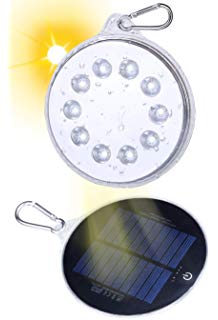
    AIDIER Solar Camping Light, USB Solar Panel Lights Magnetic Lantern Hanging Lights with Hook (Charge Phone, Waterproof),Portable Emergency Flashlight LED Lamp Light for Outdoor Indoor Exploration

    • [Solar Energy & USB Dual Charging] – This solar LED light not only can be charged by solar energy, but also can be charged via USB. Your power bank or other power can be the source of this light lamp. The solar panel lights with 10pcs LEDs in total are recharged by solar panels under sun light, automatic charging anywhere anytime, both human-based and environmentally friendly!
    • [Multipurpose LED Light With Power Bank Function] – This extensive use camping lantern can charge your cell phone or other devices under emergency case. A battery output connector is included. This portable solar lighting is a perfect camping accessory for outdoor activities, emergency lighting, garden tent party decoration, walking at night, fixing the car roadside assistance…
    • [Magnetic IPX7 Waterproof Solar Lights] – The strong magnetism can allow the solar flashlight attach to any iron product. The hanging solar lights come with a stout hook for convenient placement in no iron condition. IPX7 waterproof design with high quality Waterproof PVC materials bring you no worries when submerged or water splashed on the led solar lights especially in heavy weather rain or snow.
    • [Long-lasting Light with Simple Design] – The long span working life is 30000-50000 hours. One-button control start and close as well as four Lighting modes: Night light, Normal, Bright and SOS Flashing modes. Suitable for sleeping, reading, daily lighting. At night light mode the solar lights can last up to 120 hours after fully charged under direct sunlight. Bright 90Lumens and 15 square meters of lighting are enough for you in emergencies such as hurricane,earthquake,power outage…
    • [100% SATISFACTION GUARANTEED] – We are so confident that you’ll love these camping lights that we offer the BEST guarantee on the market. If you aren’t happy with your solar lights outdoor indoor for ANY reason, please contact us.
    Click Here for More Information

  • Paracord Keychain Lanyard Tactical Bushcraft Survival Gear

    Paracord Keychain Lanyard Tactical Bushcraft Survival Gear

    •  BE PREPARED FOR ANY OUTDOOR EMERGENCY: Start a campfire, fish your next meal or set up your tent with our all-in-one paracord keychain lanyard, which includes a ferro rod, a fishing kit and cotton!
    • ✅ MILITARY-GRADE 550 PARACORD FOR MAXIMUM STRENGTH: Unlike other cheaply-made men’s paracord lanyards, our heavy-duty keychain is made from army-grade 550 parachute cord, which can endure any abuse.
    • ✅ FISHING HAS NEVER BEEN EASIER: This life-saving paracord key chain features a complete fishing set, which includes 2 x fishing hooks, 2 x fishing swivels, 4 x fishing weights and fishing line.
    • 🎁 SPOIL YOUR DAD, HUSBAND OR BOYFRIEND: If you are looking for a thoughtful Father’s Day, birthday, retirement or anniversary gift for your boyfriend, husband, father or grandfather look no further!
    • ✅ 100% SATISFACTION OR YOUR MONEY BACK: Our satisfaction guarantee is just like our parachute cord lanyard, no-nonsense. If you are not 100% thrilled with your keychain, we will offer you a refund!
    Click Here For More Information

  • A growing number of Chinese consumers are switching from Apple’s iPhone

    A growing number of Chinese consumers are switching from Apple’s iPhone

    Huawei is winning over more and more Apple fans in China as the escalated trade tensions have stoked “nationalist sentiment,” according to the South China Morning Post.  China’s consumers are increasingly favoring their domestic brands after the U.S. stepped up its action against Huawei, the paper said. The article cited a few anecdotes where people switched to Huawei smartphones from their beloved iPhones to show their support for the country and Chinese brands.  “It’s kind of embarrassing to pull an iPhone out of your pocket nowadays when all the company executives use Huawei,” Sam Li, who works at a state-owned telecom company in Beijing, told the South China Morning Post. He added his company offers employees a Huawei discount.  The nationalist rhetoric has gotten louder in China after President Donald Trump blacklisted Huawei, effectively halting its ability to buy American-made parts and components. Comments like “support Huawei” and “hang in there” have become increasingly popular on Chinese social media platforms and some people said Google’s decision to cut ties with Huawei is like “cutting the ground from under one’s foot,” according to the Hong Kong-based newspaper.

    Now the anti-Apple sentiment in China is creating more headaches for the tech giant, which is already suffering from the slowing iPhone demand. Shares of Apple have tumbled more than 13% in the past month as trade tensions intensified. The U.S. hiked tariffs on $200 billions worth of Chinese goods earlier in May. China retaliated by raising duties on $60 billion worth of U.S. imports to as high as 25%.  Goldman Sachs said Wednesday that if Apple’s products were banned in mainland China, its earnings could drop by 29%.  The trade worries have prompted many Wall Street analysts to cut their projections for Apple. HSBC reduced its price target on the tech giant to $174 per share from $180, while Credit Suisse also said Apple’s earnings per share would drop by about 15 cents a share for every 5% drop in greater China sales

    — Click here to read the original story from the South China Morning Post.


  • A trail of toxicity: the US military bases making people sick

    A trail of toxicity: the US military bases making people sick

    Over the last 80 years, much of the land surrounding Venetucci Farm was sold to the US army to establish the base now known as Fort Carson, and today it is hemmed in by highways. Still, with its 200 acres of fields, farmhouse and big red barn, it is a beloved institution in Colorado Springs. As the only community urban farm left in the sprawling city, it is a valuable resource, educating thousands of children about agriculture, sustainability and healthy eating and known above all for its annual pumpkin giveaways.  The autumn pumpkin event has taken place for decades, and a local brewer still makes Venetucci Pumpkin Ale, but now the pumpkins are bought elsewhere. The produce is no longer available for public consumption because farming activities have stopped. In 2016, irrigation water was found to be contaminated with elevated levels of perfluorinated compounds (PFCs).  The foundation that runs the farm has joined forces with a local water district to sue the US Air Force, alleging that toxic chemicals used in firefighting foam at a nearby base have tainted the water, perhaps for decades, prompting health worries and causing economic losses.  Similar concerns have been raised about dozens of other bases across the country. But the problem is not limited to areas close to military installations.  PFCs and related human-made chemicals, more generally known as per- and polyfluoroalkyl substances (PFAS), have been virtually unregulated since at least the 1950s. As well as at industrial sites, airports and bases, PFAS have long been used in household products thanks to their grease- and stain-resistant properties. They are everywhere: from fast-food packaging to carpets and furniture, water-repellent clothing and non-stick cookware such as Teflon.

    The extraordinary resilience that led to them being dubbed “forever chemicals” no longer seems such a boon. As more becomes known about their widespread presence in the environment and the potential health risks, activists are urging state and federal regulators take action to increase oversight and even ban PFAS outright.  A 2007 study estimated that PFAS are in the blood of 98% of Americans, while last year an analysis by the not-for-profit Environmental Working Group found that more than 1,500 drinking water systems nationwide could be contaminated by PFAS, affecting as many as 110 million people.  Studies suggest that certain PFAS may affect the growth, learning and behaviour of infants and older children; lower a woman’s chance of getting pregnant; interfere with the body’s natural hormones; increase cholesterol levels; affect the immune system; and increase the risk of kidney and testicular cancer and thyroid problems.

    Mark Favors is convinced that PFAS can cause cancer. The 50-year-old now lives in New York but was born and raised in the Colorado Springs area and went to an army nursing school.  “The veterans are starting to call this Agent Orange 2.0,” he said. Favors told a congressional oversight committee meeting in March that 16 of his family members who have lived in contaminated areas for at least a decade were diagnosed with cancer, seven of them military veterans, and not all blood relatives. Ten died, several from kidney cancer. A 15-year-old cousin required a kidney transplant in 2015 after a sudden failure that doctors determined was not caused by a genetic defect.  “We had four generations that drank contaminated water. We’ve been there since the 70s. My mother grew up on a farm a mile away from Peterson [air force base] and drank well water,” he told the Guardian. “We didn’t think they’d be dumping an odorless, colourless, toxic chemical into our drinking water that would remain in our bodies for five or 10 years at a minimum.”

    source

  • Amazon Is Working on a Device That Can Read Human Emotions

    Amazon Is Working on a Device That Can Read Human Emotions

    Amazon.com Inc. is developing a voice-activated wearable device that can recognize human emotions.  The wrist-worn gadget is described as a health and wellness product in internal documents reviewed by Bloomberg. It’s a collaboration between Lab126, the hardware development group behind Amazon’s Fire phone and Echo smart speaker, and the Alexa voice software team.  Designed to work with a smartphone app, the device has microphones paired with software that can discern the wearer’s emotional state from the sound of his or her voice, according to the documents and a person familiar with the program. Eventually the technology could be able to advise the wearer how to interact more effectively with others, the documents show. It’s unclear how far along the project is, or if it will ever become a commercial device. Amazon gives teams wide latitude to experiment with products, some of which will never come to market. Work on the project, code-named Dylan, was ongoing recently, according to the documents and the person, who requested anonymity to discuss an internal matter. A beta testing program is underway, this person said, though it’s unclear whether the trial includes prototype hardware, the emotion-detecting software or both.  Amazon declined to comment. The notion of building machines that can understand human emotions has long been a staple of science fiction, from stories by Isaac Asimov to Star Trek’s android Data. Amid advances in machine learning and voice and image recognition, the concept has recently marched toward reality. Companies including Microsoft Corp., Alphabet Inc.’s Google and IBM Corp., among a host of other firms, are developing technologies designed to derive emotional states from images, audio data and other inputs. Amazon has discussed publicly its desire to build a more lifelike voice assistant.  The technology could help the company gain insights for potential health products or be used to better target advertising or product recommendations. The concept is likely to add fuel to the debate about the amount and type of personal data scooped up by technology giants, which already collect reams of information about their customers. Earlier this year, Bloomberg reported that Amazon has a team listening to and annotating audio clips captured by the company’s Echo line of voice-activated speakers.

    source

  • IQ rates are dropping in many developed countries and that doesn’t bode well for humanity

    IQ rates are dropping in many developed countries and that doesn’t bode well for humanity

    People are getting dumber. That’s not a judgment; it’s a global fact. In a host of leading nations, IQ scores have started to decline.

    Though there are legitimate questions about the relationship between IQ and intelligence, and broad recognition that success depends as much on other virtues like grit, IQ tests in use throughout the world today really do seem to capture something meaningful and durable. Decades of research have shown that individual IQ scores predict things such as educational achievement and longevity. More broadly, the average IQ score of a country is linked to economic growth and scientific innovation.

    So if IQ scores are really dropping, that could not only mean 15 more seasons of the Kardashians, but also the potential end of progress on all these other fronts, ultimately leading to fewer scientific breakthroughs, stagnant economies and a general dimming of our collective future.  As yet, the United States hasn’t hit this IQ wall — despite what you may be tempted to surmise from the current state of the political debate. But don’t rush to celebrate American exceptionalism: If IQs are dropping in other advanced countries but not here, maybe that means we’re not really an advanced country (too much poverty, too little social support).

    Or — just as troubling — if we are keeping up with the Joneses (or Johanssons and Jacques) in terms of national development, that means we are likely to experience similarly plummeting IQs in the near future. At which point, the U.S. will face the same dangers of intellectual and economic stagnation.

    source