Author: Truth & Hammer

  • When The Grid Goes Down

    When The Grid Goes Down

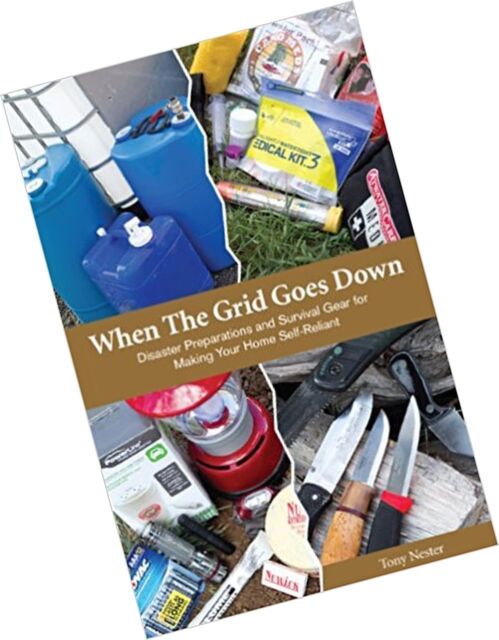
    When The Grid Goes Down, Disaster Preparations and Survival Gear For Making Your Home Self-Reliant

    Disasters come and go each year. It is through developing a self-reliant mindset, having essential survival gear, and possessing a handful of critical skills that will enable you and your family to prevail in an urban crisis. Jammed with field-tested information from real-world applications, survival instructor Tony Nester covers how to prepare for both short-term survival ranging from 24-72 hours as well as long-term situations resulting from a grid-down emergency or pandemic.

    When the Grid Goes Down will show you how to make your home and lifestyle more self-sufficient and the critical gear needed along the way.

    Topics Include: 
    The 6 Key Areas for Creating a Self-Reliant Home
    Water Storage and Purification Methods
    Alternative Water Sources At Home
    Creating a Water Map for Your Region
    The 3 Essential Food Types to Stock Up On
    Designing an Off-Grid Medical Kit
    Home Security and Personal Defense Measures
    Safeguarding the Exterior and Interior of Your Home
    Heating, Cooling and Lighting When the Power Goes Out
    Alternative Sanitation and Hygiene Methods.

    Click Here For More Information

  • Emergency Survival Shelter

    Emergency Survival Shelter

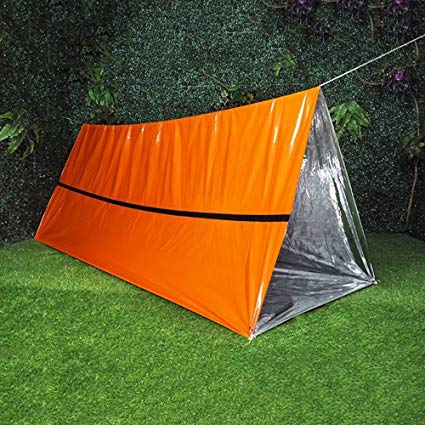
    Go Time Gear Life Tent Emergency Survival Shelter – 2 Person Emergency Tent – Use As Survival Tent, Emergency Shelter, Tube Tent, Survival Tarp – Includes Survival Whistle & Paracord

    • KEEPS YOU DRY, WARM AND ALIVE IN EXTREME CONDITIONS: The Life Tent is a waterproof and windproof 2-person tube tent constructed from extra-thick tear & puncture resistant polyethylene material that locks out rain, wind, and snow. Engineered to be your layer of protection against harsh weather, the interior reflects up to 90% of your body heat keeping your warm, dry, and protected from the elements
    • PARA-SYNCH TECHNOLOGY PARACORD DRAWSTRING & SURVIVAL WHISTLE: Engineered for emergencies and survival, use the 120-decibel survival whistle to cut through wind and trees to alert rescuers up to 1-mile away. The 550lb nylon core Para-Synch Technology drawstring can be used to tie down or repair gear. In an emergency, your tools are the difference between life and death. The Life Tent stacks the deck in your favor and is perfect for your bug out bag, hiking pack, survival gear, or car survival kit
    • FAST & EASY TO SET UP: Just run the 20ft rope of 550lb nylon core paracord through both ends of the tube tent and tie between two trees or sturdy objects 3-4 ft off the ground. Use rocks or gear to anchor the tent’s corners. If there’s nowhere to tie the paracord, the 8×5 foot mylar tube tent can also be used as an emergency sleeping bag, emergency bivy sack, pup tent, space blanket, or thermal bivvy
    • ULTRA LIGHTWEIGHT COMPACT SURVIVAL SHELTER: Weighing just 8.7 ounces and packing up into a 5.25” x 3.25” inch stuff sack, your Life Tent is constructed of heavy-duty 28um extra-thick mylar material with a tear and puncture resistant coating to protect you in a survival situation. Durable enough for repeated use, it can be folded up and placed back inside the Nylon stuff sack. The Life Tent is an essential tool for you to escape the elements and stay alive in an emergency
    • GO TIME GEAR ADVANTAGE: Better design. Better quality. World-class customer service. That’s the Go Time Advantage. We got tired of low-quality survival gear and cheaply-constructed, unreliable, survival tents. We needed a high-quality survival tent for life-threatening survival situations that didn’t break the bank. It didn’t exist. So we built it. Grab a Life Tent today for your bug out bag, hiking gear, earthquake kit, and survival gear kit so you are ready to escape to safety in an emergency
    CLICK HERE FOR MORE INFORMATION

  • Go! Towel

    Go! Towel

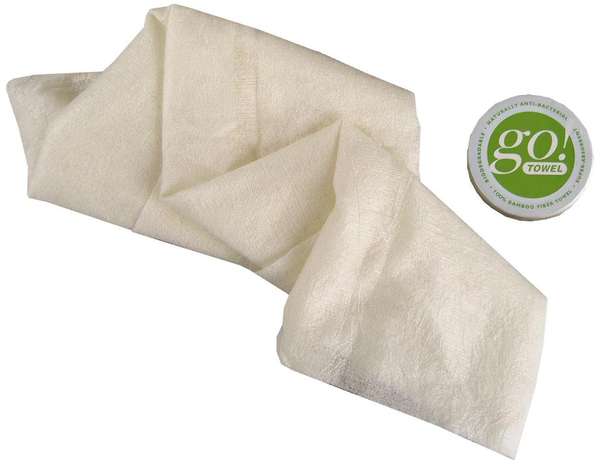
    • VERSATILE WITH HUNDREDS OF USES: first aid kit, camping, hiking, biking, travel bag, backpack, picnics, emergency kit, car glove box, jacket pocket, purse, make-up removal, bathroom, kitchen, survival gear, bug out bag, go bag, gifts, rescue workers, working out, health clubs and gyms, hotels, fishing, schools, airplanes, musicians on tour, can even be used as coffee filter in a pinch! Put it around your neck to cool you down! Perfect for parents on the go!
    • SOFT, COMPACT CLOTH, EASY AND FAST TO OPEN: each poker chip weighs less than 2 grams but quickly opens into a soft and sturdy towel 12 x 20 inches. Open with only a few drops of water. Unbleached, undyed, and naturally anti-bacterial. Soft enough to use on all parts of the body. Not scratchy. Great for cleaning surfaces and dusting; makes a great kitchen rag.
    • GO GREEN WITH THE GO TOWEL: extremely biodegradable. Will breakdown in about 4-6 weeks in a composting bin; bamboo is a very eco-friendly product because it is a sustainable crop that does not need replanting! 30 DAY “THRILLED CUSTOMER” GUARANTEE: If you are not thrilled with your Go! Towel, please contact the seller to receive your money back! So versatile and handy you will wonder how you ever lived without it!
    • SAVES YOU TIME AND STRESS: now you will be ready in every situation! Relief is right in your pocket or bag! Go! Towel saves you time in stressful, messy, and emergency situations. Perfectly compact, just toss them in your bag or pocket.
    • REUSABLE TO SAVE YOU MONEY: hang it to dry when done, dries nice and soft not stiff and crunchy. Go! Towels are machine washable if put in a mesh/delicates washable bag on a gentle setting. Hand rinsing in hot water and air drying is best.
    CLICK HERE FOR MORE INFORMATION

  • Everyone affected by cancer should have access to patient-centered affordable healthcare

    Everyone affected by cancer should have access to patient-centered affordable healthcare

    During the last few weeks there has been a lot of attention around healthcare reform as Congress moves to repeal and replace the Affordable Care Act. As a long-standing advocate for affordable, patient-centered cancer care, we at LIVESTRONG are following developments closely and working to make the following basic tenents central to the healthcare reform effort, ensuring that Americans affected by cancer have access to the services they need:


    • Access to Affordable Care: Congress should ensure that steps are taken to ensure access not only to care, but to affordable, patient-centered care.
    • Pre-existing Conditions: The prohibition against insurance companies from denying coverage based on preexisting conditions must remain in place.
    • Young Adults: Allowing young adults up to age 26 to be covered on their parent’s insurance policy also has bipartisan support.
    • Incentivize Enrollment. Individuals should be incentivized to enroll in health plans and given greater flexibility to find coverage that meets their needs.
    •  


    While a replacement plan has not been put forward yet, we believe everyone affected by cancer should have access to the patient-centered, affordable healthcare services they need to fight the disease. As Congress debates ways to reform our healthcare system, LIVE STRONG is advocating for changes that support that principle and avoid disruptions in care.
    Greg Lee is President of the LIVESTRONG Foundation , based in Austin, which serves people affected by cancer and advocates for funding and policies that increase access to quality care for cancer patients and survivors.


    This content was originally published here.


  • 4 Reasons Sleeping Naked Makes You Healthier And Wealthier

    4 Reasons Sleeping Naked Makes You Healthier And Wealthier

    What if I told you in just 10 seconds a day, you can sleep better, make more money, reduce stress, and lose weight? Sleeping naked can do all these things and more. All you have to do is take off your clothes. While there are countless strategies floating around out there to help you improve in these areas, none is as simple—and many are less effective—as stripping down before you go to sleep.

    Since only 8% of people sleep naked, most everyone can discover the benefits of sleeping in the buff. This may sound far-fetched, but hear me out before you throw those cozy flannel pajamas on.

    1. You Sleep Better Naked

    We’ve always known that quality sleep is good for your brain, but recent research from the University of Rochester demonstrates exactly how so. The study found that when you sleep your brain removes toxic proteins from its neurons that are by-products of neural activity when you’re awake. The catch here is that your brain can only adequately remove these toxic proteins when you have sufficient quality sleep. When you don’t get high-quality, deep sleep, the toxic proteins remain in your brain cells, wreaking havoc and ultimately impairing your ability to think. This slows your ability to process information and problem solve, kills your creativity, and increases your emotional reactivity (something you can measure with an emotional intelligence test).

    Researchers at the University of Amsterdam found that lowering your skin temperature increases the depth of your sleep and reduces the number of times you wake up in the night. Stripping down to your birthday suit is a great way to lower your skin temperature without changing the temperature of the room.

    2. Sleeping Naked Reduces Stress

    We all know that prolonged stress is bad news. It suppresses your immune system and increases your risk of heart disease, depression, and obesity in addition to decreasing your cognitive performance. Stress throws your cortisol levels out of whack. Proper rest helps to restore normal cortisol levels, which improves your stress level regardless of what’s happening around you. As described in the section above, sleeping naked will help you to get a better night’s sleep.

    3. Sleeping Naked Is Healthier

    Sleeping naked has a slew of health benefits, including helping you to lose weight. A study conducted by the U.S. National Institutes of Health found that keeping yourself cool while you sleep speeds the body’s metabolism because your body creates more brown fat to keep you warm. Brown fat produces heat by burning calories (300 times more heat than any organ in the body), and this boosts your metabolism all day long to help you lose weight. In addition to the metabolic effects of sleeping in the buff, removing your clothes improves blood circulation, which is good for your heart and muscles. The quality sleep you’ll enjoy also increases the release of growth hormone and melatonin, both of which have anti-aging benefits.

    4. Sleeping Naked Builds Confidence

    Confidence doesn’t just feel good; it’s the pillar of success. It pushes you to try new things, take on challenges, and persevere in the face of adversity. A University of Melbourne study found that confident people earn higher wages and get promoted more often than their less confident counterparts. Sleeping naked makes you more comfortable in your own skin. As your comfort with your body increases, so does your self-esteem and confidence.

    Bringing It All Together

    The benefits of sleeping naked are many—so many that you owe it to yourself to give it a try.

    Did you know there was so much to gain from sleeping naked? Please share your thoughts in the comments section below, as I learn just as much from you as you do from me.

    This content was originally published here.

  • Why Attitude Is More Important Than IQ

    Why Attitude Is More Important Than IQ

    When it comes to success, it’s easy to think that people blessed with brains are inevitably going to leave the rest of us in the dust. But new research from Stanford University will change your mind (and your attitude).

    Psychologist Carol Dweck has spent her entire career studying attitude and performance, and her latest study shows that your attitude is a better predictor of your success than your IQ.

    Dweck found that people’s core attitudes fall into one of two categories: a fixed mindset or a growth mindset.

    With a fixed mindset, you believe you are who you are and you cannot change. This creates problems when you’re challenged because anything that appears to be more than you can handle is bound to make you feel hopeless and overwhelmed.

    People with a growth mindset believe that they can improve with effort. They outperform those with a fixed mindset, even when they have a lower IQ, because they embrace challenges, treating them as opportunities to learn something new.

    uncaptionedCommon sense would suggest that having ability, like being smart, inspires confidence. It does, but only while the going is easy. The deciding factor in life is how you handle setbacks and challenges. People with a growth mindset welcome setbacks with open arms.

    According to Dweck, success in life is all about how you deal with failure. She describes the approach to failure of people with the growth mindset this way,

    “Failure is information—we label it failure, but it’s more like, ‘This didn’t work, and I’m a problem solver, so I’ll try something else.’”

    Regardless of which side of the chart you fall on, you can make changes and develop a growth mindset. What follows are some strategies that will fine-tune your mindset and help you make certain it’s as growth oriented as possible.

    Don’t stay helpless. We all hit moments when we feel helpless. The test is how we react to that feeling. We can either learn from it and move forward or let it drag us down. There are countless successful people who would have never made it if they had succumbed to feelings of helplessness: Walt Disney was fired from the Kansas City Star because he “lacked imagination and had no good ideas,” Oprah Winfrey was fired from her job as a TV anchor in Baltimore for being “too emotionally invested in her stories,” Henry Ford had two failed car companies prior to succeeding with Ford, and Steven Spielberg was rejected by USC’s Cinematic Arts School multiple times. Imagine what would have happened if any of these people had a fixed mindset. They would have succumbed to the rejection and given up hope. People with a growth mindset don’t feel helpless because they know that in order to be successful, you need to be willing to fail hard and then bounce right back.

    Be passionate. Empowered people pursue their passions relentlessly. There’s always going to be someone who’s more naturally talented than you are, but what you lack in talent, you can make up for in passion. Empowered people’s passion is what drives their unrelenting pursuit of excellence. Warren Buffett recommends finding your truest passions using, what he calls, the 5/25 technique: Write down the 25 things that you care about the most. Then, cross out the bottom 20. The remaining 5 are your true passions. Everything else is merely a distraction.

    Take action. It’s not that people with a growth mindset are able to overcome their fears because they are braver than the rest of us; it’s just that they know fear and anxiety are paralyzing emotions and that the best way to overcome this paralysis is to take action. People with a growth mindset are empowered, and empowered people know that there’s no such thing as a truly perfect moment to move forward. So why wait for one? Taking action turns all your worry and concern about failure into positive, focused energy.

    Then go the extra mile (or two). Empowered people give it their all, even on their worst days. They’re always pushing themselves to go the extra mile. One of Bruce Lee’s pupils ran three miles every day with him. One day, they were about to hit the three-mile mark when Bruce said, “Let’s do two more.” His pupil was tired and said, “I’ll die if I run two more.” Bruce’s response? “Then do it.” His pupil became so angry that he finished the full five miles. Exhausted and furious, he confronted Bruce about his comment, and Bruce explained it this way: “Quit and you might as well be dead. If you always put limits on what you can do, physical or anything else, it’ll spread over into the rest of your life. It’ll spread into your work, into your morality, into your entire being. There are no limits. There are plateaus, but you must not stay there; you must go beyond them. If it kills you, it kills you. A man must constantly exceed his level.”

    If you aren’t getting a little bit better each day, then you’re most likely getting a little worse—and what kind of life is that?

    Expect results. People with a growth mindset know that they’re going to fail from time to time, but they never let that keep them from expecting results. Expecting results keeps you motivated and feeds the cycle of empowerment. After all, if you don’t think you’re going to succeed, then why bother?

    Be flexible. Everyone encounters unanticipated adversity. People with an empowered, growth-oriented mindset embrace adversity as a means for improvement, as opposed to something that holds them back. When an unexpected situation challenges an empowered person, they flex until they get results.

    Don’t complain when things don’t go your way. Complaining is an obvious sign of a fixed mindset. A growth mindset looks for opportunity in everything, so there’s no room for complaints.

    Bringing It All Together

    By keeping track of how you respond to the little things, you can work every day to keep yourself on the right side of the chart above.

    Do you have a growth mindset? Please share your thoughts in the comments section below as I learn just as much from you as you do from me.

    Watch on Forbes:

    This content was originally published here.
  • The KKK started a branch just for women in the 1920s, and half a million joined

    The KKK started a branch just for women in the 1920s, and half a million joined

    Not long after American women won the right to vote, a woman in Greene County, Indiana received an invitation to hear a lecture. All “the better known and educated women” had been asked to come, so naturally, she accepted. The topics ranged from the Bible and the importance of education, to upholding “the American way.” The lecturer, also a woman, then asked the group if they would like to join a secret society dedicated to protecting those things.
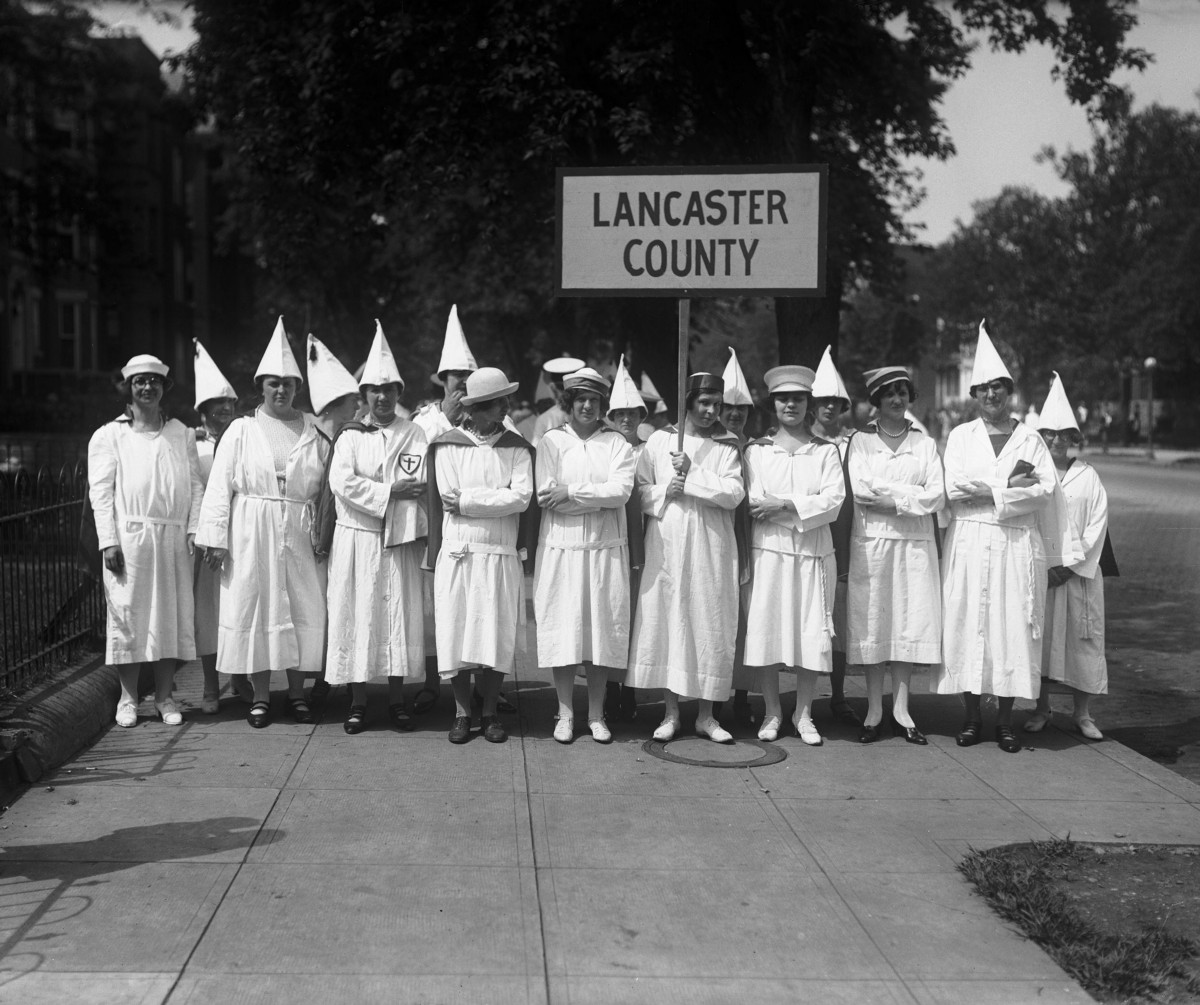
    “Why not,” the woman would later recall thinking. “It seemed a fun thing to do with our friends.” They were then given white robes and pointed white hoods that obscured their faces. One night they met and marched silently down the road, an enormous cross engulfed in flames looming in the darkness behind them.
    Women have long been overlooked and under credited, and their contribution to horror is no exception. The 1920s marked the heyday of the Women of the Klu Klux Klan — the autonomous arm of the notorious white supremacist group — springing, in a strange twist, out of a climate of hopefulness after suffrage when women felt emboldened to take part in civic life. Headquartered in Little Rock, Arkansas, with delegates in every state, the organization’s numbers reached half a million during this decade.
    While the Greene County woman may have been naive, her fellow WKKK members were savvier. “Women were major actors in the klan, responsible for some of its most vicious, destructive results,” writes Kathleen Blee in Women of the Klan . According to Blee, the organization was chillingly effective — perhaps even more so than their male counterparts — in large part because they were better at public relations. (One of the women involved in the founding of the WKKK had originally been enlisted by the KKK to help clean up its image).
    If the WKKK was more successful in advancing their xenophobic agenda, it was because they were better than the men’s group at hiding their white supremacist mission behind a facade of social welfare. “Are you interested in the Welfare of our Nation? As an Enfranchised woman are you interested in better government? Should we not interest ourselves in better education for our children?” their pamphlets read. They organized parades and food drives, with the benefits often funneled directly to Klan families. Drawing from the church-supper tradition, their gatherings could, on first glance, be mistaken for sorority events. One Indiana woman Blee interviewed described them as “a way to get together and enjoy.” But simultaneously they lobbied for national quotas for immigration, racial segregation, and anti-miscegenation laws — and proselytized the “eternal supremacy” of the white race as an opposition to the “rising tide of color.”
    The WKKK served to normalize the extremist actions of the men’s KKK, but also advanced a version of the white Protestant agenda that was all their own. As increasing numbers of immigrants crossed the United States borders simultaneous with women’s suffrage, the WKKK’s nativism mingled with a strange breed of feminism. Their pamphlets announced “new days of freedom” for women. The male KKK wasn’t on board. They fiercely opposed changes in gender roles and used the symbol of the white damsel in distress to galvanize racist fury. Black men were a threat to their pure, Protestant women, and the KKK would protect them. This trope was most starkly captured by the scene of D.W. Griffith’s 1915 pro-KKK film, Birth of a Nation , where a white woman heroically leaps off a cliff to avoid being tainted by a black man (played by a white actor in blackface). In 1871, the KKK’s first Grand Wizard told a crowd, “Ladies were ravished by some of these negroes, who were tried and put in the penitentiary, but were turned out in a few days afterward.” Now the WKKK wanted to “stand alongside our men and help with protecting” instead of being “patted on the head and told not to worry.”
    The WKKK recruited gentile, female, native-born citizens older than 18, so long as they were not Catholic, socialists, or communist. They needed to be a resident in a Klan jurisdiction for six months and endorsed by at least two Klanswomen. Blee explains that contrary to the stereotype of right wing extremists, members of the WKKK were not socially marginal, from the “downwardly mobile sectors of society who focus their resentments against society on racial, ethnic, and religious minorities.” In fact, many came from stable, middle-class communities.
    Like their male counterparts, the WKKK made a fetish of cultish flamboyance and ritual: they referred to themselves as an “invisible empire,” and had a language all their own. The world outside Klan activities was the “alien world.” Days of the week were not Monday, Tuesday, and Wednesday, etc., but “desperate, dreadful, desolate, doleful, dismal, deadly, and dark.” There were similarly melodramatic codes for months of the year, and they reorganized historical time to relate the American Revolution and the Klan’s birth.
    As the 1920s came to a close, the racism and violence of both the KKK and WKKK became harder to conceal. As one WKKK leader admitted in The New York Times , “the actual working out of the ideals has not been so good.” By the end of the decade, the organization had dispersed, though no doubt, the women continued to channel their xenophobic ideologies into other forms of civic engagement such as PTAs, school boards, and local and national politics. As Blee noted, “the political lesson of Klan history for those working toward a more just and egalitarian society, is the ease with which racism and intolerance appealed to ordinary people in ordinary places.”
    This article is part of our White Terror U.S.A. collection , covering the shameful history of white supremacy in America.
    History shapes the world around us — from national elections to cultural debates to marches in cities across the country. At Timeline , we spread knowledge of the past to help shape a better future. If you want to do the same, please share this and other Timeline stories and join us on Facebook and Twitter .


    This content was originally published here.


  • New Ghostbusters Film Favoring Practical Effects Over CGI

    New Ghostbusters Film Favoring Practical Effects Over CGI

    New Ghostbusters film favoring practical effects over CGI

    Dan Aykroyd dropped another nugget of info regarding the upcoming Ghostbusters sequel that is guaranteed to delight fans the world over. In a recent interview with 660 News (via JoBlo) the actor revealed that the crew of the new film is keen to use practical effects over CGI whenever possible.

    “I’m always urging to use puppets,” Aykroyd said. “I’m always urging to go back to the mechanicals. But CGI is so efficient and easy to use but I think that all of us are on board with the idea of maybe doing mechanicals and puppets where we can.”

    The cast for the currently-untitled new Ghostbusters movie includes Finn Wolfhard (Stranger Things, IT), Mckenna Grace (Annabelle Comes Home, Captain Marvel) and Carrie Coon (Fargo, Avengers: Infinity War, Gone Girl).

    Jason Reitman will direct the upcoming Ghostbusters threequel, taking up the mantle from his father Ivan Reitman who directed the original Ghostbusters (1984) and Ghostbusters 2 (1989). Jason also had a memorable cameo in the second film. Reitman will be co-writing the script with Gil Kenan (Monster HousePoltergeist), who is no stranger to ghost stories.

    The new Ghostbusters will drop in theaters on July 10, 2020.

    The post New Ghostbusters Film Favoring Practical Effects Over CGI appeared first on ComingSoon.net.

    This content was originally published here.

  • Photos: Before avocado toast, the young people of the 1970s were buying avocado kitchens

    Photos: Before avocado toast, the young people of the 1970s were buying avocado kitchens

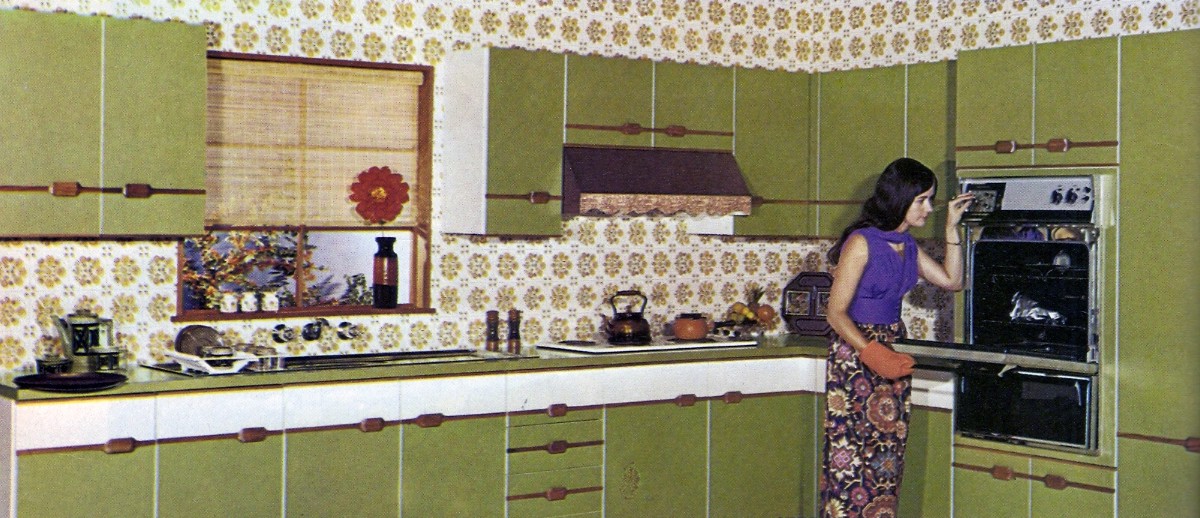
    America has enough to handle with the politics of avocado toast, much less devoting an entire kitchen theme to the creamy stone fruit. But in the late 1960s to mid-1970s, consumers demanded shades of yellow-green in everything from ovens to countertops to bathtubs. Better yet, designers recommended pairing the color scheme with coffee brown ceilings and low lighting for a “cozy” effect. It’s almost as if young homeowners had square footage to spare…
    The first colorful kitchen appliances emerged around 1955 in shades of dusky pink, aqua, and yellow, according to a JCPenney instructional pamphlet . But in the year the tract published, 1968, the hue du jour was avocado, best paired with wood tones, copper, and gold. Throw in a few walls of plaid green wallpaper, a macramé owl hanging, and “matching” paisley hand towels while you’re at it.
    Color coordination was so important during this era that advertisers even encouraged homemakers to match their house gowns, children’s play clothes, and hors d’oeuvres to their interior design, according to Pantone: The Twentieth Century in Color.
    However, by the end of the 1970s, brightly hued appliances and wallpaper fell out of favor. When one piece needed to be replaced, colors like burnt orange and golden olive were simply too difficult to match. Instead, people turned to brighter, cleaner palettes — you know, like “parrot green” and “sweet lime.” Shrug.


    This content was originally published here.
     

  • Four in 10 Americans Embrace Some Form of Socialism

    Four in 10 Americans Embrace Some Form of Socialism

    Americans today are more closely divided than they were earlier in the last century when asked whether some form of socialism would be a good or bad thing for the country. While 51% of U.S. adults say socialism would be a bad thing for the country, 43% believe it would be a good thing. Those results contrast with a 1942 Roper/Fortune survey that found 40% describing socialism as a bad thing, 25% a good thing and 34% not having an opinion.  The Roper/Fortune survey is one of the oldest trend questions measuring attitudes on socialism in the U.S. Gallup’s update of the question in an April 17-30 survey finds Americans more likely to have an opinion on the matter now, as well as a smaller gap in the percentage calling socialism a bad thing vs. a good thing.  Previous Gallup research shows that Americans’ definition of socialism has changed over the years, with nearly one in four now associating the concept with social equality and 17% associating it with the more classical definition of having some degree of government control over the means of production. A majority of Democrats have said they view socialism positively in Gallup polling since 2010, including 57% in the most recent measure in 2018.

    Outlook on Socialism Around the World

    The April 17-30 survey also updates another historical question on socialism. Gallup first asked Americans in 1949 about their outlook on the spread of democracy over the next 50 years. At that time, seven in 10 Americans (72%) predicted that most countries in the world would have a democratic government. It’s important to note that in much of the political rhetoric of the time, the terms democracy and capitalism were more intimately intertwined than they are today, perhaps synonymous to many.

    source