“Alabama will not stand for the loss of life in our state, and with this heinous crime, we must respond with punishment,” the statement said. “These four victims deserved a future, and Mr. Samra took that opportunity away from them and did so with no sense of remorse. This evening justice has been delivered to the loved ones of these victims, and it signals that Alabama does not tolerate murderous acts of any nature.”
Alabama currently has 176 more prisoners awaiting execution. All but two of them were convicted of murder; 65 have been on death row for more than 20 years.
While death penalty opponents like Ms. Cox wonder how Christian conservatives like the governor can oppose abortion but uphold execution, others say the two stances become coherent when viewed through a lens of innocence and guilt.
“In a sense, it’s perfectly comprehensible,” said Mark Silk, a professor of religion at Trinity College. “Their view is that unborn babies and fetuses are innocent life. They’ve done nothing to merit the death penalty. Whereas murderers have done something to merit the death penalty. It’s an eye for an eye, a tooth for a tooth. It’s how they look at the world.”
Professor Silk said that white evangelicals in particular, who make up more than half the electorate in Alabama, may run into difficulty when men or women “find their way to Jesus” while on death row.
“So much of evangelicalism has to do with conversion,” he said. “That’s such a core experience for them. A murderer or rapist finding their way to God is as powerful a manifestation of conversion that you can find.”
Ms. Cox said she found the argument that life is something to be protected only when it is innocent to be “flimsy.”
“People should be still held accountable, but there should be more nuance,” she said. “You are not the sum of the worst thing you’ve ever done.”
The Catholic Church’s teachings oppose both abortion and capital punishment on similar grounds.
“Pro-life values are meaningless when they are inconsistent,” said Krisanne Vaillancourt Murphy, executive director of the Catholic Mobilizing Network, a group working to end capital punishment. “The sanctity of human life applies to each and every person, innocent and guilty,” she said, adding that the church teaches that a person’s God-given dignity “is not lost even after the commission of very serious crimes.”
“As Pope Francis has said, ‘There is no just penalty that is not open to hope,’” Ms. Murphy said. “That is why the death penalty is neither Christian nor human.”
A scholar of evangelical Christianity said that most evangelicals in Alabama probably feel no tension between support for the death penalty and opposition to abortion.
“Most conservative evangelicals wouldn’t think twice about executing someone and then going to a pro-life march the next day,” said John Fea, a history professor at Messiah College. He said their views have often been shaped by the political battles that have raged over social issues in recent decades, so that, for example, they also tend to oppose spending tax money on government programs that might reduce the number of unwanted pregnancies.
Progressive evangelicals see the issues differently, Mr. Fea said, but “they are a minority in the state of Alabama and most of the evangelical South.”
The Southern Baptist Convention, the largest evangelical denomination, says its support of the death penalty has roots in biblical teachings. “Imposing the death penalty can help the murderer restore the broken relationship with their creator, not just with humankind,” says an article posted by an arm of the convention that addresses public issues. “While we have an interest in a criminal’s return to society, we should be even more concerned with the state of their soul.”
I have a new favorite phrase from our kids: “Mommy, will you lay with me?” Why is this my favorite? Let me tell you.
Do you hear this every night, as I do? Our children want me to lie down with them every night. This question is always on their minds because they love to spend time with you. I know that our goal is to teach them to sleep through the night, so they are well-rested, but these few minutes BEFORE your child falls asleep, and even before you say “Good Night” make all of the difference.
UPDATE: THIS POST WAS ORIGINALLY WRITTEN YEARS AGO, BUT IT’S ALWAYS A GREAT REMINDER TO MYSELF (and hopefully others), SO I WANTED TO RESHARE IT TODAY.
Ps- Yes, “Lie down” is the correct term, but our son has always said: “lay with me”… so that is how I quoted him. 🙂 Thanks!
Several years ago, a friend of the family’s son passed away, after several hours of sleep, while he was asleep in his room. A week later, another seven-year-old boy passed away, only one town away, unexpectedly, while he was outside playing. One year later, another child passed away at only 36 months of age, in the middle of the night after he was put to sleep in his own bed.
This is hard for me to think about, talk about, write about, or share today. At the time of their passing, our children were very close in age to several children that had passed away. (We have four kids: born in ’06, ’08, ’10 and ’12)
Do you know what one of our kids asks me every single night as I am tucking him into bed… “Mommy, will you lay with me?” I am sad now thinking that most nights my answer is this:
“Just for a second, sweetie.
I have to make sure that your sister and brothers are all tucked in.
I have to clean up the kitchen.
I have to work on my notes for work.
Daddy and I are going to eat dinner since we didn’t get to eat as early as you tonight, so stay in bed….”
whatever the reason, they all say the same thing to him: “Just for a second. Other things are coming first.”
I know, I know… as parents, we don’t want to start any sort of sleep problems, and many of us do not have a family bed or bed sharing (we don’t), but this is different. This happens as you are putting them to bed. When our son is going to sleep in his own room, while we are tucking him in, we just talk.
I know that we can’t lie there all night. Our son would expect this, as would all of our kids. “You give an inch, they take a mile”. We think we will lie down for 5 minutes; they want 20. We give 20; they want 40. (To be honest… our youngest child be happiest if I stayed 12 hours in her bed every night!)
There is a catch.
This is when the good stuff comes out.
This is when I hear all of those details that teenagers and almost-teens don’t tell their moms anymore.
“So & So told me that I was cute today. How disgusting. Right, Mom?”
“Today we had a math test, and I got them all right… I was really distracted though and thought I might miss one because out in the hallway, the kids were setting up for the play. Did I tell you about the play?”
“I miss our dog. Do all dogs die of cancer? When do you think we can get another one?”
“Do you remember when I had that toddler bed, and I slept with that blue stuffed animal? Do you think I’ll give it to my kids one day?”
“Mom, you know how you told me that during wrestling practice I should try to help both brothers uplifted? Cheer them on and run with them? Today I did. I ran right beside them, just like you and Dad told me. I think it made them feel better. Beau said that his stomach hurt from running and I told him that if he wanted to slow down, I would slow down with him, even though running that slow is REALLY boring, Mom!”
These are the things that happen when we put aside everything else. These are things that happen when we forget about whatever else we have to do or want to do.
My grandma used to tell me to enjoy our kids when we had them. She would say that she didn’t know why people would have kids if they didn’t get to spend time with them. She said that she loved raising her kids and that she knew I would be the same way.
My parents and my husband’s parents remind us that one day, they won’t want to spend so much time with us. It breaks my heart to think of this, but you know what? …
That day IS NOT TODAY.
Today, I will lie down with him when he asks me to, and with all four of our children. I will sing Toora Loora Loora and Que Sera Sera (their favorite songs).
And do you know what?
If this new bedtime routine adds ten minutes onto the end of our night, when our patience is low and our exhaustion is high, that is ten more minutes that I was lucky enough to have spent with our children…. listening, encouraging, telling them the unspoken words that say: TODAY, RIGHT NOW, YOU ARE THE MOST IMPORTANT THING TO ME.
As I look in at my child sleeping, I think about how time goes by so quickly and how I am so glad to have these little moments now. In ten years, those unspoken words will come back to me when he is grown, getting ready to head off to start his own life and I ask him to stop what he is doing and sit with ME for a moment… and he does.
We only have a few years to really be present in their lives. Let’s spend these years wisely.
ps- I want to invite you to sign up for my FREE e-mail series called One on One time. It is completely free & I will send you this calendar to get you started. 🙂
If you are having trouble keeping your CHILD IN BED or helping them to SLEEP THROUGH THE NIGHT, these posts will be helpful:
A FEW MORE PARENTING POSTS YOU MIGHT LIKE:
Success! Now check your email to confirm your subscription.
There was an error submitting your subscription. Please try again.
Do you know how to properly plant shrubs? Planting trees and is a great and natural way to update your landscape and the look of your home. Every season presents a fresh, new look from blooming shrubs to lush green foliage. For your gardening success, we have some tips on properly planting shrubs.
Check out this step by step video outlining the process for growing your newly planted shrubs!
Preparing the Ground for Planting Shrubs
First, it is very important to properly prep the native soil before planting. To start, always be safe! Have the city come label where gas and water lines are in your garden, and check for rocks and debris in your planting area.
Next, start tilling to gently loosen the surrounding soil. This will help break up the clay in the soil and create air pockets for healthy root growth. Then, add the proper soil amendments like Calloway’s Tree & Shrub Mix. Repeat the tilling process and begin planting!
For more information on properly prepping your soil, check out our video here!
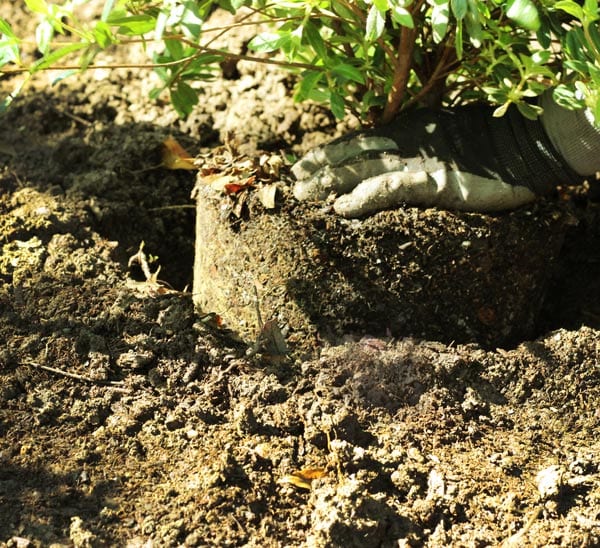
After you finish prepping the soil, it is time to dig a hole for the tree or shrub. Digging enough space so the planting hole is twice the size of the root ball and same depth.
Mix in equal parts of the Calloway’s Tree & Shrub Mix with the native soil. Remove the shrub from its container and gently loosen up the root ball. Place the plant in the planting hole and press the soil around the plant to secure your plant.
Cover everything to the top of the root with a layer of mulch and water in thoroughly, saturating the root ball and surrounding soil. Keep your newly planted shrubs well-watered.
Spacing Your Shrubs When Planting
When you are planting shrubs, whether new or established, proper spacing is vital. The shrubs need room to grow and if placed too close together, your landscape could look wildly overgrown.
Shrubs grow well when spaced about one half the spread of the mature size of the neighboring shrub. Shrubs that have a wide growth habit naturally need more space around them. For example, if your mature shrub is 4 feet wide, then it is safe to plant it 2 feet from the widest part of another shrub. Take care when planting not to eliminate air pockets in the soil that you formed in your soil preparation.
When Should You Plant Shrubs?
You can start planting from early spring and on; it all depends on your plant selections. A shrub can bloom at many different times of the year, depending on its bloom time. Plant shrubs in your landscape with different bloom times for continual color all year long! This time of year is the best time to plant shrubs, especially summer-blooming shrubs. Planting shrubs that love the heat is ideal for your Texas garden and for the season.
5 Examples of Shrubs to Plant Now
1. Abelia
Abelia is a sun-loving, evergreen shrub that sparkles with small, white flowers. This impressive compact shrub has brilliant yellow gold and deep green variegated foliage and lovely white flowers in summer and fall; it is resistant to leaf fade and scorch. Abelia is a good choice for attracting birds, bees, and butterflies to your yard.
2. Althea
Althea, also known as Rose of Sharon, is a tall, stiffly upright shrub with extremely showy bluish-purple double flowers which appear throughout summer, the flowers are individually beautiful; a very adaptable garden shrub, but does best in full sun. Butterflies and hummingbirds love Althea plants.
3. Buddleia
Buddleia, or Butterfly Bush, a compact garden plant with large, soft flowers with orange eyes on sturdy stems; attracts butterflies; may treat as a perennial and cut it back to the ground each spring as it regrows vigorously and blooms on new wood. Under ideal conditions, this shrub can be expected to live for approximately 20 years.
4. Texas Sage
Texas Sage is a compact, mounded shrub with bright silvery foliage; showy hot pink flowers in summer; a great water conservation plant, good for dry, hot, rocky sites; must have well drained, alkaline soil; prune lightly to maintain fullness; must have full sun. Texas Sage is best pruned in late winter once the threat of extreme cold has passed and it is highly tolerant of urban pollution and will even thrive in inner city environments.
5. Yucca
Yucca is a stately succulent plant has arching grassy looking foliage that is leathery to the touch; the linear olive foliage has fibrous strands along the edge; tall spikes covered with showy rose to pink flowers are long blooming; perfect as a garden accent. This is a great plant for attracting hummingbirds. Plant this shrub in an area of your landscape that receives full sunlight throughout the day.
How Deep Do Shrub Roots Grow?
Root growth in a shrub develops in a more lateral sense. Think of the leafy canopy of a shrub, for example, the ground level area underneath is called the drip line. The roots generally grow parallel to the drip line because it helps the top of the root to properly absorb water and nutrients.
Can Shrubs Damage Your Foundation?
When gardening, it is a good rule of thumb to avoid planting vegetation that will vine or grow on the exterior walls of your house. Always ensure the planting hole is placed appropriately based on its mature size. That will help you determine how much space to account for your planting hole and planting shrubs. Leave a pathway between the plant and your home.
When watering trees and shrubs near your home, keep a fairly uniform moisture level in the surrounding soil. Using a soaker hose and applying a layer of mulch can help.
Tips For Planting Potted Shrubs
Planting shrubs in a container is really no different than any other container creation. The key factor to consider is dry out. Generally, plants in pots or containers require more frequent watering. Calloway’s Premium Potting Soil is ideal due to its water-retaining capabilities. It is important to choose a potting soil that can maintain the moisture levels in the soil for healthy root growth. Select pottery that is large enough for the shrub with room to grow. Think about your pottery selection and placement in your yard.
Check out our blog here for tips and inspiration on your next container garden and creation.
Feed Your Plants
In order for your shrubs to stay vibrant and beautiful, they need proper nourishment. Feed your plants with quality ingredients and do it naturally. Try Calloway’s Natural Garden Food. Our new and improved formula is perfect for lawns, flowerbeds, vegetables, fruits, trees, and shrubs. It is enhanced with Jobe’s Biozome® and Archaea, which is a unique blend of beneficial microorganisms, which breaks down complex minerals to improve long-term soil quality. This highly enriched fertilizer also contains helpful mycorrhiza, a healthy bacteria that stimulates growth above and below the soil. This 10-0-2 formula contains the most nitrogen you will get from a natural fertilizer.
For new plants, mix the food into the soil at the planting location. For established shrubs, mix food into the soil underneath plant, along the drip line. Follow the instructions on the packaging, based on the selection of plants you are feeding and whether or not the plants are new or established and mature, or in a container or raised bed.
Planting a shrub, or many shrubs, will add beauty, texture, color, and character to any landscape. Shrubs help make a home, look like a home that is welcoming and personable. Shrubs provide color all year long, whether the rich green in the leaves or dazzling with blooms. Spend some time outdoors with your family and revel in the warm seasonal breeze. Stop by our store today to pick up quality shrubs and supplies.
Questions? Ask our Texas Certified Nursery Professionals, available at every store location. Don’t feel like planting? Try our Pick & Plant Garden Services, available at every store location. You pick your plants, and we plant them for you!
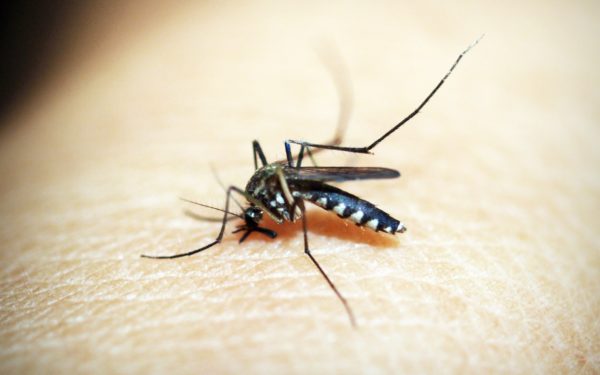
If you think mosquitoes are particularly drawn to you when you are working hard in the garden or in the yard, you are not delusional. All that sweating (and breathing) is especially attractive to the biting bugs.
“Mosquitoes are attracted to heat and carbon dioxide,” said Jim Dill, pest management specialist at the University of Maine Cooperative Extension. “If you’re outside working doing something fairly strenuous, breathing fairly hard, that means you can attract more mosquitoes that if you’re sitting on your porch and sipping a cool drink.”
Mosquitoes also tend to think certain people are tastier than others.
“Each person has got their own physiology,” said Joseph Conlon, technical advisor at the American Mosquito Control Association Conlon explained that how we digest food, the smells that we give off during digestive processes, the oils our skin exudes and even the bacteria on our skin emit chemicals that are either attractive or repellent to mosquitoes.
Physiology is not fate when it comes to attracting mosquitoes, though.
“Other chemicals that you use — a hairspray, shampoo or deodorant — can attract mosquitoes,” Dill said.
In the same vein, your personal choices — like the repellant you choose to apply, the clothes you choose to wear and the way you tend to your yard — make a difference when it comes to repelling mosquitoes.
“We’re the final and probably best line of defense against mosquitoes,” Conlon said. “Mosquito control practices have their place in it but personal protective control measures are certainly important.”
When, where and why to watch out for mosquitoes
Besides being a nuisance, mosquitoes carry debilitating and sometimes fatal diseases, even throughout the United States. West Nile virus and the Eastern equine encephalitis virus are the most common mosquito-borne diseases that are prevalent in the United States.
“Every state in the United States has a vector-borne disease related to mosquitoes,” Conlon said, and not just the ones that make national news. Conlon said that during the zika craze that captured the media’s attention in 2016, more than 4,000 Americans died from the West Nile Virus with hardly any fanfare.
“It’s funny how people react to vector-borne diseases,” Conlon said.
Both West Nile Virus and Eastern equine encephalitis have been found in Maine.
“The most recent case of West Nile virus in a human was three or four years ago [in Maine],” Dill said. “Usually what we do is we find it in animals. That kind of gives us a warning.”
The mosquito issue is not as prevalent in Maine as it is in other parts of the United States, though, especially when compared to swampy southeastern states, such as Florida.
“We probably have fewer actual diversity in species [of mosquitoes] than some of the other states,” Dill said. “Some of the other states have more obnoxious mosquitoes in terms of biters or disease. We’re fairly fortunate here in Maine that we don’t have a lot of issues related to disease and mosquitoes.”
Mosquito populations tend to congregate around standing bodies of water. The population density can vary from year to year depending on the amount of rainfall in the area.
“It depends on the year,” Dill said. “Mosquitoes for the most part are very standing water dependent. If you have a drought season, you may have less mosquitoes than if you have a wet season. It’s a very localized situation. One year you can get carried away by them, and the next year you might not have any..”
“Climate change will have an impact on that — slow, but demonstrable,” Conlon said. “To the extent that we have water left as residue from storms and rainfall, you’re going to have a larger mosquito population.”
Regardless of the year, mosquito populations tend to peak in the spring and fall.
“The peak is early [in the spring], but most of the any type of diseases that show up don’t show up until late August or September,” Dill said. “Summer can be dry, but if it’s a fairly wet summer you have them all year round.”
Which mosquito repellents work best?
When it comes to protecting yourself from mosquitoes, Conlon and Dill agree that topical repellents are your best bet.
Dill explained that the most common mosquito repellents are made with diethyltoluamide, otherwise known as DEET, or picaridin.
“DEET is the gold standard by which all other repellents are judged,” Conlon said. “DEET used to have serious cosmetic issues, like a greasy feel and it stunk really bad, but manufacturers have [fixed that].”
Conlon recommended a 25 to 30 percent formulation of DEET. A 100 percent formulation, he said, will give you longer, but not better, protection.
Picaridin, a synthetic derivative of the pepper plant, is the most broadly selling mosquito repellent abroad.
“I suggest a formulation of 15 percent or above,” Conlon said. “It will not only repel mosquitoes but ticks as well.”
Some consumers may be wary about using synthetic chemicals on their skin or for the sake of the environment, but Condon and Dill agreed that these fears are overblown. The Environmental Protection Agency (EPA) has determined that DEET and picaridin do not pose a significant threat to human or environmental health.
Conlon said those who are still concerned about using a synthetic repellent should just be careful not to buy one that does not have an EPA registration number on the bottle.
There are some natural mosquito repellents. Conlon said that catnip is a “bonafide repellent to mosquitoes.”
“However, I don’t know if they’ve engineered the cat attractant out of it or not,” he said with a laugh.
Lemongrass, citronella and oil of lemon and eucalyptus also works, but it needs to be applied much more often than synthetic repellents — every 30 minutes as opposed to every two hours for DEET or picaridin, Dill said.
“They are easily removed through sweating,” Dill said. “They work, but you have to keep applying it.”
Conlon said to try 40 percent formulation of lemon and eucalyptus, and also warned that you should not apply it to children less than 3 years of age.
“Even though it’s a natural product, it’s more toxic than the synthetics,” he explained.
For that reason, Conlon and Dill also warned to be wary with other natural repellent methods.
“[Essential oils] have a very inconsistent track record in terms of repellency,” Conlon said. “People are under the delusion that they’re all harmless. They’re not.”
For example, Conlon said that oil of cloves at a concentration of 15 to 20 percent will repel mosquitoes — but it will also burn a hole right through your skin.
“People have to be very wary of the natural repellents that they use,” he said.
Conlon and Dill also said that many old wives’ natural remedies for mosquito repellents, such as garlic, apple cider vinegar and vitamin B12 supplements are basically bunk.
“If you use pure garlic oil and rub it on your skin, it will give you about 20 minutes of protection,” Conlon said. “Vitamin B12 does not work either. If apple cider vinegar were a really good repellant, the people manufacturing it would be advertising it.”
“It you ate enough garlic to repel mosquitoes you’re going to be repelling everyone else in the area too,” Dill said.
Likewise, rosemary and lavender have very weak repellency properties.
“If you’re going to rely on that to keep mosquitoes off you, I’m afraid you’re going to be disappointed,” Conlon said.
Conlon added that thers that have been debunked include absinthe, basil, billygoat weed, cedar, cypress, blue eucalyptus, Chinese ginger and geranium.
“They have been tested and found wanting in that regard, and there are a number of them that have toxicity issues,” Conlon said. “People think that just because they’re natural means they’re nontoxic. You really have to be very very careful in these things.”
As for laundry sheets as mosquito repellent?
“Absolute nonsense,” Conlon said.
How else can you prevent mosquitoes from biting you?
Timing matters when it comes to avoiding mosquitoes.
“For the most part, mosquitoes are most active in the morning and the evening,” Dill said. “They’re what we call a crepuscular insect. If you’re going to be outside and doing any activities, those are the times to avoid.”
You can also dress for the occasion. Cover up as much as possible. Mosquitoes are attracted to dark colors, so keep your clothing long and light. Conlon said to wear loose layers to prevent mosquitoes from being able to bite through taut fabric. Dill recommended using a tightly-woven fabric as well.
Dill said that there are full suits made out of mosquito netting material with long pants, a long sleeve shirt and a head net. You can also purchase clothes that are impregnated with permethrin, a synthetic product derived from chrysanthemum. Conlon said they worked like a charm during the 25 years he spent in the Navy.
Dill said that he has not seen clip-on ultrasonic mosquito repellents that work very well, but Conlon said if you are sitting on your porch taking a break from your hard yard work, you can also use a simple fan to help keep mosquitoes at bay.
“Mosquitoes are poor flyers,” Conlon said. “They can’t navigate a stiff breeze.”
You can also purchase a mosquito trap, which contains a chemical attractant or UV light to draw mosquitoes in a suck them up with a vacuum where they will dehydrate and die, though such traps tend to cost a couple hundred dollars and run on propane.
“Some people say they work really well,” Dill said. “Some people are willing to go that way. I see at as a last resort.”
How can you avoid attracting mosquitoes to your yard?
Mosquitoes breed in standing water, so make sure all stagnant pools, no matter the size, have been drained from your property.
“If you’re a gardener and you use five-gallon plastic buckets, always empty those,” Dill said. “Even bird baths, make sure you empty those at least once a week.”
Make sure your neighbors do the same.
“You have to try to convince your neighbors if you have a mosquito problem to do the same thing,” Dill said. “If you’re the only one that’s doing it it doesn’t help a lot. There are usually plenty of mosquitoes around, and they fly quite a distance looking for blood meal.”
Conlon and Dill said that you cannot really plant anything that will keep mosquitoes at bay. Lawn maintenance, however, matters.
“Trim [your bushes] back,” Conlon said. “Mosquitoes will utilize the bushes and high grasses and weeds as hiding places during the day. They don’t like to be out in direct sunlight.”
Even if it takes some experimentation, it is essential to find the mosquito repelling method that works best for you if you are going to be spending considerable amounts of time outside.
“Mosquitoes have been around for 170 million years and not because they’re stupid,” Conlon said. “They’re adaptable, and they’re far and away the most dangerous creature on Earth. Take repelling them seriously.”
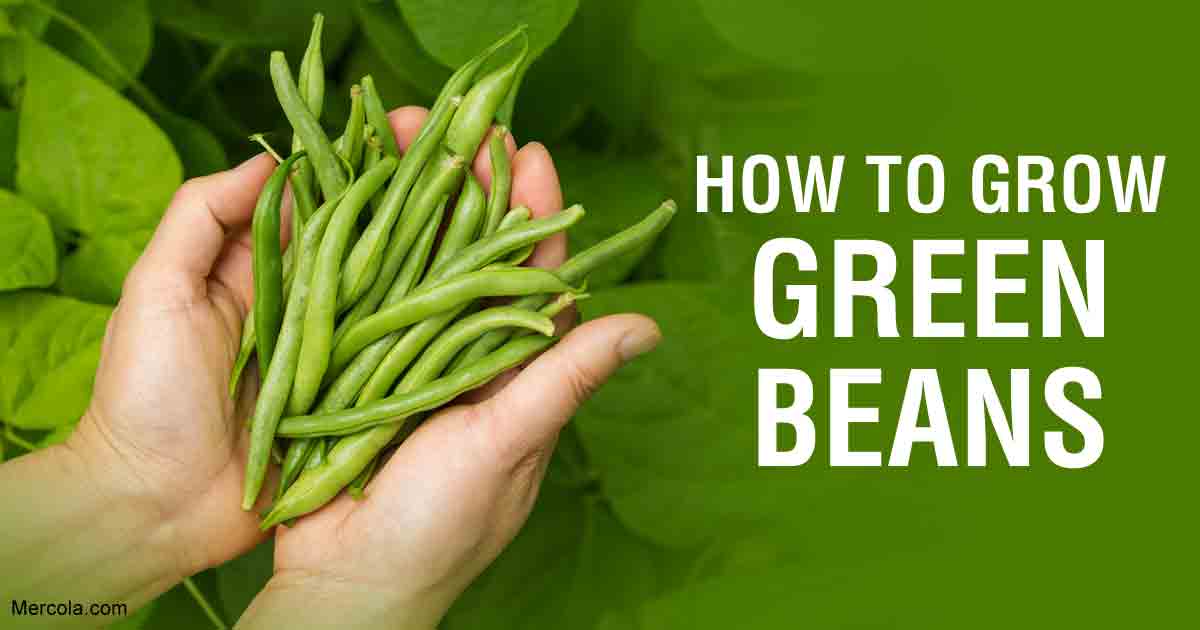
Enjoy the health benefits of green beans (Phaseolus vulgaris) all year-round when you discover how to grow green beans in your garden, containers and even indoors. Green beans were originally grown in Central and South America. The vegetable was introduced to the Mediterranean region and cultivated around Italy, Greece and Turkey by the 17th century.
Today, backyard farmers grow green beans around the world as they are easy to grow and you may enjoy a large harvest from a limited space. Green beans come in varieties that may need support (pole beans), or may grow on their own without support (bush beans).
Although growing green beans in your own vegetable garden may seem challenging, as long as you provide some of the basic requirements, you’ll be reaping a bountiful reward whether your beans are planted indoors or out.
Those rewards also extend to the health benefits of green beans, which include being high in , low in calories and having repeatedly demonstrated the ability to lower your risk of chronic illness.
Prepare Before Planting a Garden or Container of Green Beans
Green beans are annual plants so you’ll be planting new green beans each year. The plants enjoy a slightly acidic pH, near 6.0 to 6.2, and moderately rich soil. Prepare your soil before planting green beans seeds by adding organic compost. The seeds may be sown directly outside after the danger of frost is gone.
Plant the seeds about an inch deep and water immediately. Keep the soil moist by watering regularly. The most important factor for a good harvest is ensuring the soil is warm, as cool, damp soil will rot the plants.
Sow the seeds for pole beans close together and then thin to about 6 to 10 inches apart after germination. Bush beans may be thinned to 3 to 6 inches apart after germination. Both may be started indoors before the last frost; transplant 3-inch seedlings to your garden or container after the threat of frost has passed.
If you choose container gardening, the green beans will need at least an 8-inch pot. However, for best results, the container should be 12 inches or larger. The larger the container, the less they will need to be watered. However, the container should have good drainage soil and about an inch of gravel at the bottom to encourage drainage and reduce the potential for root rot.
Green beans enjoy full sun, so whether in the garden or in a container, they should be placed where they’ll receive at least eight hours of direct sunlight each day. Bush beans planted in containers need more space around them than pole varieties for airflow and to reduce the potential for fungal growth.
On the other hand, pole beans require more vertical space and a stake or trellis to support their growth. Once the seedlings are 3 inches or taller, add mulch around the plants to retain moisture and discourage weeds.
Green beans are not heavy feeders. When grown in garden soil an initial addition of compost and a side dressing of organic fertilizer midway through the growing season is usually enough to produce a hearty harvest of beans. In containers, the vegetables may benefit from monthly organic fertilizer.
Growing Green Beans Indoors Takes the Sting Out of Winter
You may also consider growing green beans indoors, especially if you enjoy the flavorful addition to your recipes all year long. As it is a relatively quick growing plant and quite pretty, it can make a visually appealing addition to your windows.
When growing indoors, the seeds may be planted any time of the year. However, it is helpful to remember the plants continue to have certain environmental requirements, such as plenty of sunlight. Alternatively, consider using grow lights if you don’t have a window receiving at least six hours of direct sunlight each day.
The plants are warm weather plants and enjoy a spot where the temperature will be at least 50 degrees Fahrenheit (F) and up to 85 degrees F. However, excessive heat and humidity may trigger a variety of problems. Since they are an annual plant, you’ll get the same number of harvests grown indoors as you would outside.
Fill your containers with the same type of soil as you would have used outdoors — enriched with compost, well-draining, with a pH of 6 to 6.2. Avoid using soil rich in nitrogen. When the seedlings begin to appear and are 3 inches tall, add mulch to retain moisture.
As with outdoor containers, a light feeding of organic fertilizer once a month may help your harvest. Whether grown indoors or out, most varieties will be fully grown and ready to begin harvesting within 50 to 60 days.
The Determinacy of Your Green Bean Seeds Predicts Your Harvest
As you begin to choose your green bean varieties, it’s helpful to remember your harvest will be determined on whether your plant is determinate or indeterminate. These are botanical terms identifying basic growth patterns. In general terms, bush beans tend to be determinant, while pole beans tend to be indeterminate.
Indeterminate plants grow and produce until the first frost hits and kills the plant. Indeterminate growth also refers to sequential flowering on a plant, on which the production of beans relies. In your vegetable garden, the most common plants having determinate or indeterminate seeds are , cucumbers, peas, beans and strawberries.
For the most part, your seed packets will be identified as determinate or indeterminate. In either case, by consistently harvesting your beans as they mature, you’ll increase production. Usually, the first crop will be the largest and the subsequent crops will come in at a reduced number.
Gardeners who like to harvest green beans all summer long may prefer to use indeterminate plants. On the other hand, by stagger planting your green beans you’ll get similar results with larger harvests.
Some crops may also be semi-determinate, which means they’ll stop producing but may be coaxed into a second round of production by regularly harvesting the beans as they’re produced.
Pay close attention to the type of seeds you plant as it affects the type of pruning you may consider. As shared by the Daily Garden, indeterminate plants may be pruned of unwanted shoots, which then directs nutrients to the area of the plant you’d like it to go. On the other hand, determinate plants will perform better if they’re not pruned excessively.
Types of Green Beans You May Grow in Your Garden
There are slight variations in the shape and size of green bean varieties and they are called different names depending upon the geographical region, such as fine beans, snap beans, string beans or French beans. However, despite the varying names they are all green beans.
Throughout the world there are approximately 150 varieties in all shapes and colors, but despite the differences in appearance, the health benefits are similar. As such, most green beans are more or less interchangeable in any recipe you find. The variations may come in the time it takes to cook or the texture. According to The Spruce, some of the more common varieties include:
Green beans, string beans or snap beans — These are long, rounded and green. Heirloom varieties may have a fibrous string running down their sides, but since this has proved inconvenient for most cooks, it has been bred out of varieties sold in the grocery store. Kentucky Wonder is an old pole variety with good taste and Bountiful produces stringless heirloom bush beans.
Wax beans — These are identical to green beans except they’re yellow. Since this is the only difference, use wax beans in your recipes in much the same way you would use green beans. The Golden Wax Bean is a soft textured, yellow bush bean.
Haricot vert — Also known as French green beans or filet beans. Although these look nearly identical to green beans, they’re usually very thin, slightly more tender and higher priced at the grocery store. Many consider them to have a better flavor than regular green beans. Triomphe de Farcy is an heirloom haricot vert bush bean.
Long beans — These are sometimes called yard-long beans and are from a different family than green beans. They’re similar in flavor and look, but are extraordinarily long. They may grow over 24 inches, but for those with the best flavor and texture, look for long beans less than 18 inches.
Purple string beans — These are simply a purple variety of a classic green bean or wax bean. However, while they have a unique color, it’s lost during cooking. Consider lightly steaming them with an immediate ice bath to preserve as much color as possible. Royal Burgundy is an early producing bush bean.
Romano beans — Also called Italian green beans or flat beans, these are wide and need a little more cooking than other pole beans. The smaller ones are tender, while larger ones have more beans.
Take Care of Pests and Disease in Your Bean Garden Naturally
Insects and four-footed animals enjoy beans as much as you do. Deer and groundhogs may eat the entire plant so it is necessary to use fencing to deter them.
By giving the plants plenty of air circulation and keeping the ground moist but not soggy, you may help prevent fungal diseases thriving in damp conditions. Some of the more common pests described by Clemson Cooperative Extension, include:
• Aphids — These soft-bodied insects are usually green but may appear to be yellow, brown or black. Although aphids are most prevalent during cool dry weather, they may appear at any time during the summer. Heavy populations may stunt your plant growth and treatment should be started anytime you find them on your plant.
You may control aphid populations by taking advantage of their weakness. Beneficial bugs, such as lacewings and ladybugs, may be attracted to the garden by planting , mint and nearby. A strong spray of water may dislodge a light infestation, or spraying the plants with a solution of several drops of dish soap and water.
• Thrips — These small insects measure one-eighth inch or shorter. They commonly feed on beans and peas and may negatively affect your harvest when they’re present on early bloom flowers. As thrips affect pollination, if you have three or more thrips for every flower it may result in defectively shaped pods.
Prune your plants to get rid of any injured area of the plant. Garlic is a powerful way to remove these insects. Blend two cloves in 2 cups of water. Cover and let it rest for 24 hours and then filter with cheesecloth. Put two drops of the liquid in 12 cups of water and spray your plants.
• Mexican bean beetle — This beetle is up to one-third inch long and yellow to brown in color. The wings have eight small black spots. After feeding for one to two weeks the female deposits yellow eggs on the underside of the leaves, which hatch up to two weeks later. Both adults and larvae feed on the undersides of the leaves.
Natural predators include several species of tiny parasitic wasps. Hand pick the adults and larvae, and squash egg clusters off with your fingers. Interplant companion plants between beans using petunias or potatoes to deter the beetle.
• Spider mites — These are tiny eight-legged creatures more closely related to spiders than insects. They appear on the underside of the leaves and a light infestation shows up as whitish stippling. A heavy infestation turns the leaves yellow or bronze. You’ll find the underside of the leaves covered with silk and webs.
A strong spray from your garden hose may be enough to knock off a light infestation. The plants may be sprayed with a mixture of 3 tablespoons of dish soap to a gallon of water.
• Slugs — Slugs eat any part of your plant touching the damp ground, which means they may cause more damage to your bush beans than your pole variety. Fortunately, there are a number of organic home remedies you may use to get rid of slugs.
One of the more popular is a beer trap. Bury half a cup in the soil near your plants and fill it halfway with beer. The slugs will be tempted by the smell and drown in the beer.
Harvesting, Cleaning and Storing Your Green Beans
Harvesting is an ongoing adventure in your garden and the more you pick, the more beans the plant will likely set. Most varieties are ready for harvest between 50 and 60 days. Your green bean pods may be ready to harvest once they reach a length of 4 to 7 inches in diameter and are a little fatter than a pencil.
Some gardeners prefer determining the time of harvest based on the texture of the green bean and not the size. They should be firm, crisp and show no visible signs of bulging in the bean.
However, since the plants continue to produce beans, it’s important you take care not to damage the plant as you’re harvesting. Use two hands to pick them and keep from ripping the vine as you use a twist and snap motion to remove the bean.
Once harvested, your green beans may be stored on the kitchen counter with the stems on. Once you remove the stems, they must be moved to the refrigerator. The stems usually snap easily and you may also be able to remove any fibrous strip running along the length of the pod at the same time.
Your green beans may also be stored in the freezer for up to a year. Prior to freezing, add them to boiling water for two minutes and then directly into an ice bath. This blanching process helps the beans retain their bright green color. Place them in an airtight container prior to freezing.
Green beans may also be canned to preserve them over the winter. Only can fresh beans to ensure a better tasting bean later. Green beans need to be pressure canned since they are a low acidic food and pressure canning reduces the risk of botulism. Take care while using a pressure canner as they may be dangerous if not handled properly. Fermenting your green beans is another excellent and tasty choice that will make them last longer.
Health Benefits of Green Beans
Green beans are a rich source of vitamins A, C, K and manganese, fiber and folate. The combination of these nutrients make green beans helpful in the reduction of heart disease and colon cancer. The boost to your immune system helps reduce your risk of colds, and the nutrients contribute to helping you control diabetes.
Fiber helps to regulate your digestive process and the nutrients also provide benefits to your eyes and bones. Folate present in green beans is important during pregnancy as it helps to prevent birth defects and is needed for the healthy growth and development of the infant. Read more about green bean food facts in my previous article “What Are Green Beans Good For?“
How to Cook Green Beans to Perfection
Green beans have graced tables around the world for decades. Especially popular during the holiday seasons, green beans are available year-round and are a wonderful fresh treat straight from your garden. Green beans contain natural toxins produced by the plant to defend against predators or threats, such as bacteria or fungi.
However, the type of toxin is different from other beans and not as dangerous, especially in small amounts in your salad or as a quick snack. Most green bean recipes start out with cleaning and preparing the beans for cooking. What’s Cooking America offers these ideas on washing and preparing your beans:
First, wash them thoroughly with clear, cool water to rid them of any dirt or garden debris. And then rinse again. Break off both ends as you wash them and then either leave them whole or cut them into your desired length. They can be cut crosswise, diagonally or French cut.
You’ll get the sweetest-tasting crisp beans when you cut them as little as possible. Beans can be boiled, steamed or sautéed. Cooking as little as possible in the smallest amount of water is the best way to preserve nutrients.
Some green bean recipes call for blanching the beans, where they are first added to boiling water for a few seconds to one minute and then immediately removed and placed in an ice bath. This sets the color and keeps the texture. Green beans can also be steamed using a steamer basket that keeps your green beans over boiling water, but not in it.
Green beans may also be sautéed by first boiling or steaming for one to two minutes, tossed with coconut oil or avocado oil and garlic powder and then added to a skillet over medium heat for several minutes. Salt and pepper the beans to taste and enjoy!
Recent showers combined with warmer weather will create the perfect habitat for pesky summer bugs. Here are some effective ways to prevent the common bites, stings and nuisances.
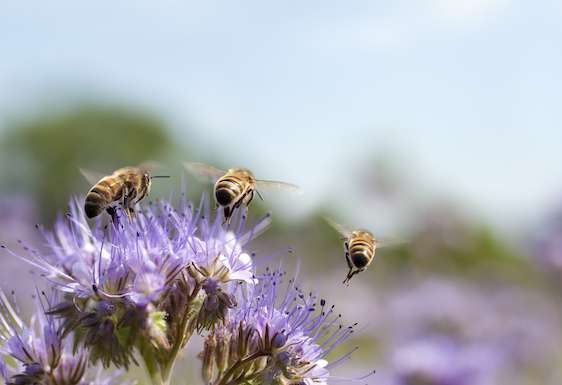
To prevent bees from establishing a colony in or around your house, it’s important to remember these three things: food, water and shelter — bees’ keys to life.
As with any other summer bug, stagnant water must be kept to a minimum. Drain pots and repair any faulty irrigation systems. And if you have bird baths or pet bowls outside, mixing in 2 tablespoons of vinegar per gallon of water will discourage any bees from setting up shop near your house.
Plan an exterior inspection and eliminate any potential nesting sites. Cover holes, chimneys and animal burrows. Make sure windows and screens are tightly fitted and sealed. If you have any debris in your yard, such as old tires, cardboard boxes or old appliances, throw them out. Bees seek out such items for nesting sites.
Removing flowers as a source of food is not recommended. In fact, it’s very important for bees to pollinate many plants, including crops. If you have a colorful garden, not to worry. As long as you have their other two resources tamed to a minimum, you’re in tip-top shape for the summer.
Gnats
Although relatively harmless, these small creatures create quite the inconvenience with their constant swarming. Plus, you never know what germs they may be carrying as they travel from place to place.
If you garden, you want to make sure your fruits and veggies are staying fresh outside. If you happen to notice rotting or mold, act fast and pluck them out, then turn your soil or mulch to allow any moldy layers to dry out.
As with mosquitoes, be diligent in draining any standing water and drying out any moisture. With Texas humidity, the drying process may take a while. In this case, sprinkle a bit of sand on top of your soil, something very discouraging to gnats.
Unfortunately, Texas’ No. 1 culprit is here to stay. Aside from the traditional insect repellants and home remedies, it’s best to treat this problem at its source — water.
Turn over empty pottery to prevent from collecting water, drain plant saucers and fix any leaking outdoor faucets. Mosquitoes often lay their eggs in stagnant water, so the less the better.
Like humans, slugs seek out shade on sunny days. And like many other bugs, they love moist areas.
To prevent slugs from damaging your plants and leaving their slimy evidence, get rid of any hiding places. Think cool, dark and moist. Try irrigating your lawn in the morning instead of the evening, allowing plenty of time for plants and soil to dry before the sun sets.
To protect plants, spray surrounding areas with soap and water. You can also create barriers around your plants, such as rocks, wire or anything rough and abrasive to slow them down.
Lastly, slugs have no bones. Therefore, they can fit in any crack or crevice they set their eyes on. Seal any cracks and cover any holes you notice throughout your house. By doing so, you not only eliminate the potential for slugs, but for other bugs as well.
If you’re experiencing bug problems not addressed here, contact your local nursery for expert advice.
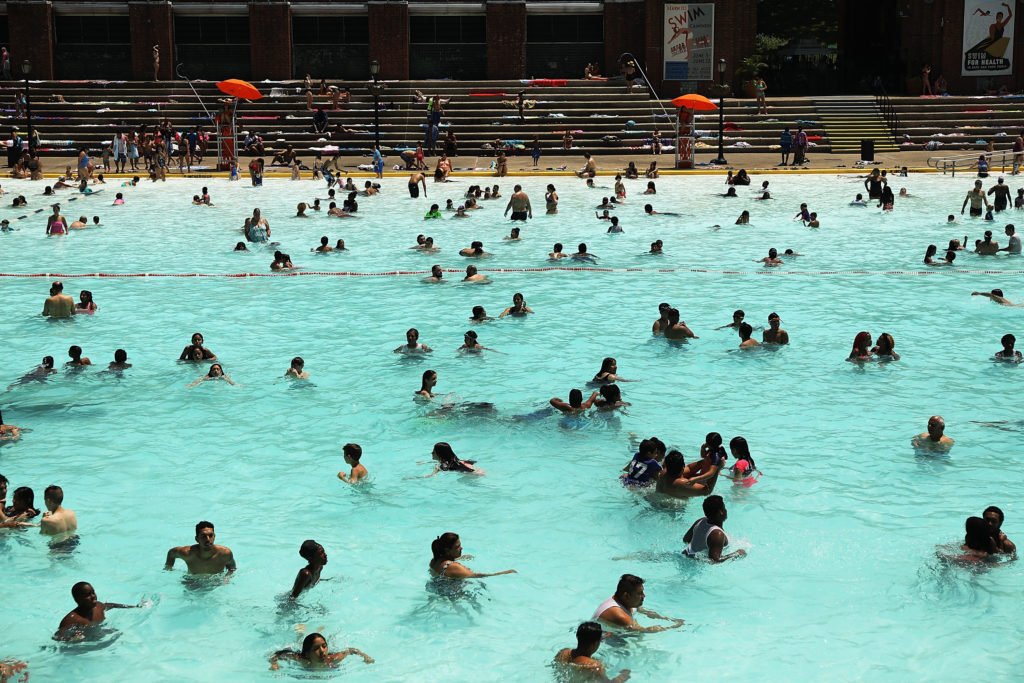
First, people ain’t washing their legs in the shower and now this chile! @CBSnews reports that a survey found that more than half of U.S. adults use a swimming pool as a substitute for showering, or use the pool to rinse off after exercise or yardwork.
Now, I can’t be the only one wondering who was actually surveyed for this, and to make matters worse, the survey revealed even more triflin’ information.
Of the two-thirds of those surveyed admitting to using a swimming pool as a bath, they said they do so even knowing that pool chemicals do not eliminate the need to shower before swimming.
With summer around the corner, this kind of info will make you think twice before you jump into the water as the report exposes that these bad habits contribute to dirty swimming pools.
“When dirt, sweat, personal care products, and other things on our bodies react with chlorine, there is less chlorine available to kill germs,” Dr. Chris Wiant, chair of the Water Quality & Health Council, said in a statement. “Rinsing off for just one minute removes most of the dirt, sweat, or anything else on your body.”
The report, which was conducted online by Sachs Media Group, surveyed 3,100 American adults. The report also found 40% of Americans admit to peeing in the pool as an adult.
Experts warn that urine reacts with chlorine, reducing the amount of the chemical available to kill germs.
“The bottom line is: Don’t pee in the pool,” said Michele Hlavsa, chief of the CDC’s Healthy Swimming program. “Swimming is a great way to be physically active and not peeing in the pool is a key healthy swimming step.”
It gets worse, though. The survey also revealed that almost a quarter of Americans said they’d go in a swimming pool within one hour of having diarrhea and 48% said they never shower before swimming.
The CDC advises that all swimmers stay out of the pool if they have diarrhea, as this can contaminate the pool with feces and germs, which can make others sick. They also advise that everyone should rinse off before entering a swimming pool.
What are y’all thoughts on this one, Roommates? Let us know!
Gardeners can grow their own food, even in the smallest of areas. Dwarf fruit trees offer one wonderful way for gardeners to make the most of the space they have available.
Many small garden owners imagine that it would be completely impossible for them to consider a fruit tree in such a small area. But a fruit tree could be an amazing addition to your small garden, or even simply a patio or balcony. You just have to choose the right one, or ones, for your space. Today, we are fortunate that there are many dwarf fruit tree varieties to choose from.
Why Choose Dwarf Fruit Trees?
If you choose the right dwarf fruit tree for the location and situation where you live, you could be enjoying fresh fruit from your garden for years to come. They can be grown in even the smallest of growing areas. Many can even be grown in large pots or containers.
The fruit can be harvested without ladders or special equipment making it ideal for getting children involved and accessible for older gardeners, too.
Aside from a bountiful harvest of fresh and nutritious fruit, these trees enjoy beautiful blossoms making them an attractive addition to your garden.
Below, dwarf trees are listed according to the climate in which they can be grown. It is worth considering the fact, however, that choosing a tree and growing it in a container could allow you to grow a fruit tree that would not usually thrive in the climate where you live.
It would be possible to grow your fruit trees indoors, or to bring it indoors during the coldest months of the year. It could also allow you to grow your trees in a greenhouse or hoop house, or to move them into an undercover growing area once the weather turns. You might even be able to grow some varieties even if you only have a balcony, or no outside space at all.
Alternatives to Dwarf Fruit Trees
Before you choose a dwarf fruit tree, it is worthwhile considering alternative ways to incorporate fruit trees in small spaces. If you have a small garden, or courtyard space, you could still consider a full-sized fruit tree rather than one on a dwarf rootstock.
Fruit trees do not need to take up a huge amount of space. They can be trained into a fence-like structure or a fan shape, or espaliered and trained to spread out flat against a fence or wall. A full-size espaliered tree could be something to consider.
Horizontal espalier fruit tree trained on stone wall
Dwarf fruit trees can be productive and provide a worthwhile yield, but the yield is likely to be higher from a full-sized specimen trained against a wall. So,this is something to think about before you definitely decide that a dwarf fruit tree is right for you.
Instead of (or in addition to) growing dwarf fruit trees, small space gardeners could also consider growing other fruits. Many other fruits are also ideal for growing in containers, or in small growing areas. Options that you might like to consider include:
Red currants
Black currants
White currants
Golden currants
Gooseberries
Cranberries
Honeyberries
Cape Gooseberries
Of course you can also grow vining plants and canes up against a fence or wall, where they will take up little space. You could include, for example:
Blackberries
Kiwi
Grapes
Fruit growing is something that can be done even in the smallest of spaces.
How To Choose Dwarf Fruit Trees
If you have decided that you would like one or more dwarf fruit trees for your garden, it is time to delve a little deeper and decide which ones to buy. Before you start to look at your options, it is important to consider:
The climate in your area, and microclimate of your particular garden.
Patterns of sunlight, wind and water in the location where you want to place your dwarf fruit trees.
The fruits that you, your family and friends will actually want to eat.
Whether the fruit trees are self fertile and can go it alone, or need to be purchased with another tree with which they can pollinate.
The Best Dwarf Fruit Trees for a Cooler Temperate Climate
First off, let’s take a look at some options for dwarf fruit trees in a temperate climate, where chilly weather and frosts can be expected during the winter months. Within the temperate climate zone, conditions can still vary wildly, and have a huge bearing on which dwarf fruit trees you can grow. However, broadly speaking, these are some of the best options:
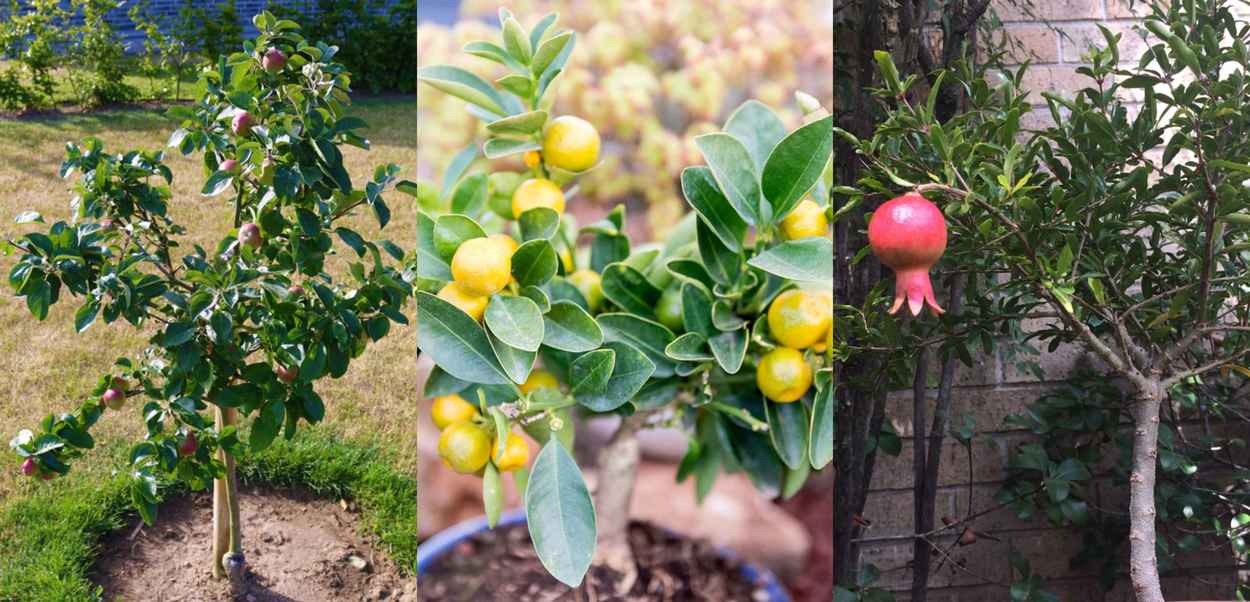
1. Apples
Apples are one of the most common garden fruits in temperate climes – and for good reason. An apple a day keeps the doctor away, and there are plenty of delicious varieties to choose from. It is always sensible to opt for an apple tree from a local plant nursery, as these are more likely to be suitable for the conditions where you live.
The size of a dwarf apple tree is determined by its rootstock. There are extreme dwarfing rootstocks (such as M27), dwarfing rootstocks (such as M9 and M26) and semi-dwarfing. It is worthwhile looking at which rootstock has been used for your dwarf apple. This will help you determine whether its eventual size will suit you and your backyard.
2. Pears
Pears are another popular choice for some temperate climate gardens, and can also be placed on a dwarfing rootstock in order to ensure that the tree does not get too big. ‘Concorde’ and ‘Conference’ are two popular pear varieties that can be grown as self-fertile, dwarf trees.
Interestingly, in Europe dwarfing pears are often grafted onto quince rootstock and not a pear one – sometimes with an ‘interstem’ of a pear variety that works well with the rootstock from the quince. The most common rootstock used for dwarfing is ‘Quince C’. In the US, the dwarfing rootstock for pears is often ‘Eline Quince’. Quince rootstocks are also used for dwarfing on a number of other fruiting trees. Pyrodwarf is one option that does use Pyrus rootstock.
3. Quince
Dwarf quinces will usually be supplied in a 4 ltr pot and, depending on the size of the container in which they are grown, reach an eventual height of around 1.5-2m.
Quinces have a high level of pectin which makes them ideal for making a range of jams and jellies and other preserves. The fruits will ripen perfectly when grown in a sunny location and though they have a long growing season, can be grown even in northern areas when positioned against a sunny, south facing wall.
4. Plums
While there are no extreme dwarfing rootstocks for plum trees, there are a number of semi dwarfing rootstock options which help to limit the size of these trees for smaller gardens. These include Pixy, Plumina, and VVA-1.
Dwarf plums in a range of varieties can be grown in pots and will reach an eventual height of no more than 2m, often considerably less, depending on the size of the container. You can also find fruits in the same family, such as gages, damsons and Mirabelles grafted onto the same rootstocks to create small-tree options.
5. Cherries
Cherries come in a range of sweet and sour cherry varieties that are suitable for many temperate climate gardens. Sweet cherries are delicious straight from the tree, while sour cherries are best cooked into jellies or other preserves or cooked into sweetened desserts.
Cherries can be made less vigorous through the use of the Gisela 5 rootstock. If grown in the ground, cherries on this rootstock will tend to grow to around 2.4-3m tall. However, their size can be limited through growing in a container, and through judicious pruning.
6. Medlar
Medlars are not usually eaten raw but are excellent for making jellies or for use in a wide range of desserts. Left to soften (blet) on the tree, the fruit mellows and is a traditional, if unusual treat. These trees will do best in sunny, sheltered sites and thrive in deep, fertile and well-drained soil.
When grafted onto the right rootstock, however, medlars can also be a dwarf or patio tree option. Depending on the size of the container in which they are placed, they will reach an eventual height of around 1.5-2m.
7. Mulberry
Mulberries cannot commonly be bought from the shops, so growing your own is likely to be the best way to source these fruits. The trees are not only a source of food. They can also make for interesting architectural features in gardens, with their gnarled shapes.
Mulberries can be grown against walls if space is limited. But since these trees are more bush-like in shape,size and habit, their growth can also be curtailed by growing them in containers. You can prune the trees for size after the fruits are harvested in the fall.
In addition to growing the above, gardeners in this climate type may also be able to grow some or all of the dwarf fruit trees in the next section. Having access to indoors space, or an undercover growing area in which to place tender trees in winter, will dramatically increase the number of dwarf fruit trees that it is possible to grow in a cold or cool climate.
Dwarf Fruit Trees for a Warmer Temperate Climate
In a warmer temperate climate, varietals of all of the above trees are likely to be available to you. However, the warmer weather (and a longer growing season) can also make it easier to also grow all of the following dwarf fruit tree options:
8. Apricots
Apricots blossom early in the year and so can fall prey to late frosts if grown outside in cooler temperate regions. In warmer temperate regions, however, or when grown under cover or in a sunny, sheltered spot, these trees can thrive, even when grown in containers.
Wavit, a plum rootstock, is sometimes used for apricots, and will create a tree up to 3m tall if grown in the ground. Container apricot trees will always be grown on a suitable rootstock. When restricted in size by a large container, and through careful pruning, they can be an ideal choice for smaller spaces.
9. Peaches
Peaches of a medium to small size are also sometimes grown on a Wavit rootstock. The size of peach trees can also be curtailed if they are grown in containers. Peach trees can also easily be trained to fit into a smaller space,and carefully pruned for shaping and size.
Peaches will be ready to pick when they are fully colored and the flesh close to the stalk feels soft. Cup each fruit in the palm of your hand and then lift gently. You will need to harvest over a long period as not all the fruits will develop at once. Do not leave picked fruits uneaten for too long. Peaches are at their best eaten fresh, straight from the tree.
10. Figs
The size of fig trees will often be determined by the variety rather than by a particular rootstock. Fig trees grow large if planted in the ground in optimal conditions, however, they can be kept much smaller and in check when grown in small spaces in containers. In fact, figs will fruit better if grown in containers to curtail non-fruiting growth. ‘Celestial’ is one popular dwarf fig variety.
Fig trees will produce two crops of figs in a year in a warmer temperate climate. The first crop can be harvested in late spring or early summer and the second, the maincrop, in late summer or early fall. (In cooler climes, usually only one crop of figs will come to fruition.)
11. Persimmons
Dwarf persimmons are much smaller than standard persimmon trees. It should be noted, however, that they can still reach around 3-4m in height if grown in the ground, left unchecked and not pruned. Fortunately, like many of the other fruit trees on this list, persimmons can also be grown in containers, which will curtail their growth.
There are astringent and non-astringent varieties of persimmons. Astringent varieties,such as Hachiya and Eureka, need to be perfectly ripe to be edible. Non astringent types such as Fuya and Jiro can be eaten crisp, like an apple, and are sometimes called ‘sweet persimmons’. There are some smaller varieties to choose from, but even standard trees can easily be kept in check.
12. Pomegranates
Pomegranates are another good choice for warmer temperate climate gardens. The fruits have an edible pulp. When grown in containers, dwarf pomegranates can be found which will grow no more than 2-3ft in height.
Punica granata ‘Nana’ is a dwarf pomegranate variety which will produce ornamental orange flowers followed by edible fruit. If you were planning to grow it indoors, however, you would have to hand pollinate, as insects are usually needed for pollination.
13. Citrus Trees
Citrus trees such as oranges, lemons, limes and grapefruit all lend themselves well to container growing. These trees can all easily be grafted onto a dwarfing rootstock and grown in small garden beds or containers. Nearly every worthwhile variety of edible citrus is now available to home gardeners on a dwarfing rootstock.
As long as they get enough warmth, sunshine and water, and a suitable growing medium, dwarf citrus trees will fruit just as well as larger trees of these types. Careful pruning can allow you to shape your trees and keep them within bounds.
Dwarf Fruit Trees for a Subtropical Climate
In a subtropical climate you will have a different range of growing challenges to those who live in a temperate climate. However, you may still be able to grow a number of the dwarf fruit tree options mentioned above. It will likely be easier to grow those more suited to a warmer climate – though varietals of cooler weather trees are sometimes available for subtropical climes.
However, the different weather patterns mean you can consider a range of subtropical and tropical fruit tree options. Some dwarf fruit tree options for subtropical areas are:
14. Mango
While they may be much trickier to grow in cooler climates with shorter growing seasons, mangos can be a staple in a subtropical climate garden. Dwarf mango trees grow around 2-4m tall if grown in the ground and can also be grown in containers.
Irwin and Nam Doc Mai varieties are said to be the best mango trees for container growing. But you could also try other varieties, such as King Thai, Glenn, Cogshal, Palmer and Carrie. Mangos are delicious eaten straight from the tree and dwarf varieties can fruit just as well as their larger counterparts.
15. Avocado
Avocado trees produce a healthy super fruit full of essential fats and nutrients. You could grow your own at home, even if you only have space for a small avocado tree.
Regular avocados can grow up to 80ft tall, but ‘Little Cado’, the ‘Wurtz’ avocado, is a true dwarf variety, typically reaching no more than 10ft in height. Grafted trees will usually start fruiting within two years of planting.
16. Lychees
There are a range of dwarf and semi-dwarf lychee varieties available. These can be grown in pots, though can sometimes be a little temperamental when not grown in the ground. Lychees are tangy, sweet and juicy, with semi-translucent flesh and rough, scaly skins in pinks or reds.
‘Emperor’ and ‘Wai Chee’ dwarf lychee trees are available,and these can produce abundant crops in a subtropical climate. These trees often take little effort to grow in the ground, but many require a bit more care and attention if grown in containers.
17. Pawpaw
A member of the same family as the standard pawpaw, Asimina triloba, dwarf pawpaw, Asimina parviflora is a much smaller tree or shrub. It is a member of the custard apple family. Native to the Southeastern United States, it also produces an edible fruit, though smaller than the standard pawpaw.
Due to its smaller size, the dwarf pawpaw could be a much better choice for small-space subtropical gardens. It can even be grown in containers. Fresh pawpaw are hard to transport and store, and so rarely found in stores – all the more reason to consider growing it in your own garden.
18. Jaboticaba Fruit
Native to Brazil, Jaboticaba fruit is little known outside of its native range. But this member of the Myrtle family could be a good choice for your subtropical garden. These trees are slow growing and the Myrciaria tenella subspecies grows into shrubby plants around 3 1/2- 4 ½ ft high. Other types of jaboticaba tree can grow around 12-15 ft high outside its native range, and perhaps up to 45 ft in ideal growing conditions.
Weirdly, the grape-like fruits of jaboticaba can be produced in clusters, or singly, all up and down the main trunk and branches. Trees can fruit up to five times each year. The fruits taste a little like certain muscadine grapes and can be eaten fresh or turned into jellies, or wine.
19. Cherry Guava
Psidium cattleanum, known as cherry guava or strawberry guava, is another small tree native to Brazil that could be considered for many subtropical gardens as well as for tropical locations. It is another member of the Myrtle family and since it can be considered as a large shrub rather than a tree, can be ideal as a sort of dwarf fruit tree for smaller spaces.
Fruits can be eaten, and are often used to make jelly or other preserves. The skin is often removed to provide a sweeter flavour. Interestingly, although native to the tropics, this plant can be frost hardy. It can also be grown in containers.
Note – in Hawaii, this tree is a biocontrol hazard and threatens native forest.
20. Loquats
Sweet and juicy, loquats are similar in taste to apricot or plum. Rare in many parts, these could be an interesting choice for a subtropical garden. Dwarf loquat fruit trees are rare but available, and these can be grown in the ground or in containers.
‘Advance’ is a Japanese group loquat that is a natural dwarf, growing to around 5ft in height. However, it is self-infertile and will need to be planted with other loquat varieties. Certain varieties can be grown as container trees.
The options mentioned above should show you that there are plenty of dwarf fruit trees to choose from, wherever you live. So don’t make a lack of space an excuse. Start growing your own food right away – including plenty of fresh fruit!
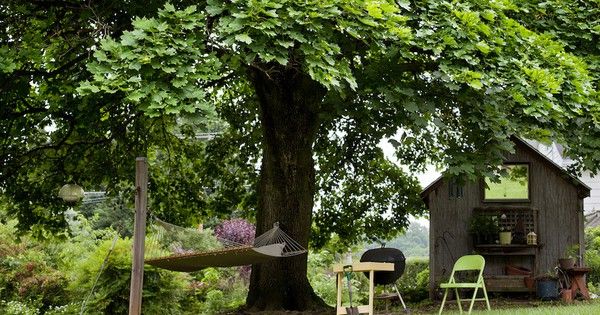
Planting shade trees will help keep your home and yard cooler in the summer heat, saving you both money and energy, while adding wildlife habitat to the neighborhood.
The free solar energy that hits the Earth each day can keep us warm, light our homes, grow our food, and generate clean renewable electricity, so we often invite it into our lives. But when the weather heats up in the summer, the sun can actually cause us to use more energy, because we then need to run air conditioners to cool us back down.
Keeping the sun off of our homes and windows during the summer can end up saving us both money and energy, because we can avoid some of the heating effects and keep our homes cooler to begin with, so less energy is required to keep them comfortable. And one of the best ways to do that is by planting shade trees in the right location around our home, where they can block the sun from streaming in our windows and heating our walls and roofs during certain times of the day.
Trees that can serve to cast shade come in all shapes and sizes, and for many different climates and planting zones, so there are plenty of options to choose from. However, because most of us are very impatient, one of the most common requirements that people have in choosing varieties is that they be fast growing shade trees.
Here are 7 of the most popular fast growing varieties of trees that can add shade to your property:
1. Hybrid Poplar: One of the most recommended fast growing shade trees is the hybrid poplar, which can grow up to 8 feet per year, and mature at about 40′ to 50′ high. There are various types of hybrid poplars, but the Arbor Day Foundation recommends the Populus deltoides x Populus nigra variety, which is a “cottonless hybrid” and a little less messy in the yard than some other varieties.
2. Nuttall Oak: This fast growing shade tree, also called red oak or pin oak, is said to be the fastest growing variety of oak, and can provide not only a leafy canopy, but a steady supply of acorns each year, which are devoured by squirrels, deer, and turkeys.
3. Northern Catalpa: The large showy flowers of the catalpa, also known as the cigar tree or the catawba, are an added attraction to having this fast growing shade tree in your yard (and great for bees), but the real magic comes from its thick canopy of large leaves.
4. Red Maple: Along with casting shade, the red maple also adds a burst of color in the fall, with the leaves turning a vibrant red before dropping. The growth rate of the red maple is about 3 to 5 feet per year, topping out at about 40′ high, and can rapidly create privacy and shade for your home or yard.
5. Weeping Willow: This iconic shade tree also happens to be a fast grower, with growth rates of anywhere from 3 feet to 8 feet per year. While weeping willows will grow especially well near water, there are a variety of hybrids available that can be better suited to drier conditions.
6. Paper Birch: The paper birch, aside from being a fast growing shade tree, also features a white bark that can add to the look of any yard, especially in winter when the leaves have dropped. Birches can also be tapped for their sap, which can be made into birch syrup (although you’d need quite a few trees to make it worth your while).
7. American Sycamore: This fast growing tree, sometimes referred to as the American planetree, also has a whitish mottled bark, and can grow to be quite large. While sycamores are often found near rivers and ponds, they can also be grown in an urban yard, and may grow as much as 6 feet per year and reach heights of 70 feet or more.
Not all of these shade trees will be well suited to your yard, as the length of the growing season, the frost dates, the temperatures, the annual rainfall, and the type of soil in your yard will all vary by location. The best way to find the fast growing shade trees that are best for your specific region is by asking a local expert, such as at a nursery or through a local Cooperative Extension, as they can steer you toward proven varieties and away from nuisance, invasive, or exotic varieties of trees.
This updated article was originally published in 2014.
Today the PM claimed she had done all she could to take Britain out of the EU with a deal, saying: “Ever since I first stepped through the door behind me as Prime Minister, I have striven to make the United Kingdom a country that works not just for a privileged few, but for everyone. And to honour the result of the EU referendum. “If you give people a choice you have a duty to implement what they decide. I have done my best to do that. “Sadly I have not been able to do so. I tried three times – I believe it was right to persevere even when the odds against success seemed high.” Her voice cracking, she attempted to defend her legacy and insisted she has helped to fix Britain’s “burning injustices”. Mrs May concluded: “I will shortly leave the job it has been the honour of my life to hold – the second female Prime Minister, but certainly not the last. “I do so with no ill will but with enormous and enduring gratitude to have had the opportunity to serve the country I love.” After her speech, the PM and Philip May drove off to spend the Bank Holiday weekend at their home in Sonning, Berkshire.