Author: Truth & Hammer

  • Xeriscaping: The Art and Science of Low Water Gardens

    Xeriscaping: The Art and Science of Low Water Gardens

    You may not have heard of xeriscaping before, but it’s probably something you see almost every day as it’s just a style of landscape design that requires little to no irrigation or maintenance. And while the concept of xeriscaping definitely came about because of people who wanted gorgeous outdoor spaces, but lived in drought-affected areas, in fact, it really makes sense for almost all landscapes. Read on to find out why a low water garden might be the right choice for you.

    Why Should I Consider Installing a Low Water Garden?

    Over 50 percent of the water used by residential Americans is used watering lawns and keeping landscapes alive. Even if you don’t live in a place where water conservation is mandatory, you can still help save our most valuable resource by switching to a low water garden.

    Veronica Boyer, architect designer and owner of EcoDesignSD, says your plants that are native to where you live will also thrive and look a lot better in your garden. “It’s not necessarily about a drought,” she says. “It’s about being low maintenance. It’s hard for a plant to adapt to an environment it’s not from. You can’t plant succulents in the mountains or tropical flowers in the dessert and expect them to do well. It’s a matter of placing the right plant in the right place.”

    Having a low water garden also helps reduce pollution and negative effects on the environment, as you don’t need gas lawn mowers or chemical fertilizers and pesticides and native plants may also foster a healthy wildlife habitat.

    But I Really Love My Lawn

    Yes, it’s true that with low water landscapes, the lawn is usually the first thing to go. But it doesn’t mean you don’t have to have a lawn at all. Boyer recommends buffalograss, which can survive with very little fertilizer, water, or mowing and recovers well after not being irrigated. “You can also use artificial turf,” she says. “The new ones are good; they last a long time and look very real.”

    Will I Have to Change My Irrigation System?

    Since your high-maintenance lawn is gone, Boyer suggests people making this change get rid of their sprinkler system in favor of a drip irrigation system. “That way you aren’t wasting water and watering areas that don’t need it,” she says. A drip irrigation system delivers water directly to the base of the plant, so there’s less evaporation, pooling, and erosion.

    Do I Have to Get Rid of Everything in My Garden?

    The point of a low water garden is to improve the environment, not create more destruction, so Boyer says she tries to keep as much as she can and work with what’s there. “I try to save and reuse materials and be conscious about what’s being thrown away and what’s being kept.” Yes, some things may have to go, but it may also just be a matter of moving a plant or tree to a location in your yard or garden where it will have a better chance of succeeding.

    You may also want to look at things you don’t like in your garden anymore and see if there’s a way they can be repurposed. “I had a client who had a fountain they didn’t use anymore,” Boyer says. “They were sick of cleaning it and taking care of it. So we turned it into a succulent planter and now it’s a focal point in their garden. They love it because it’s not a lot of work and it looks beautiful.”

    Tell Me More About This “Not a Lot of Work” Thing

    One of the biggest benefits of xeriscaping is that it’s low maintenance. “You’re going to save a lot of time,” Boyer says. “If you have plants that are native, you’re not going to have to work so hard for those plants to survive and look beautiful. You can go out of town for three weeks and not worry about your garden. And you’ll save money because you won’t have to keep putting money in to ensure the plant survives.”

    Why Should I Hire a Professional to Help Me Design My Low Water Garden or Landscape?

    It’s always important to talk to the right people to help you achieve something you may not know a lot about as you’ll just get better quality work. Boyer points out that if you don’t know what you’re doing, you may also end up spending a lot more money. “I think it’s important to hire a professional for anything you’re going to do if you’re not an expert,” she says. But in this case, it’s also about finding someone who can help with the planning and design, soil analysis, plant selection, irrigation, and show you how to maintain it all. “Their advice and help will make your life a lot easier,” she says. An expert will also help you establish a timeline depending on how big your outdoor space is and what you want to change and will ensure you stick to your budget.

    Remember, a xeriscape garden doesn’t mean your garden has to be barren or lacking color. A professional will help ensure that it’s the exact opposite and full of gorgeous native plants that will fit your aesthetic and thrive. And best of all, it will be easier on you and better for the environment.

    Veronica Boyer is an architect designer and owner of EcoDesignSD in San Diego. You can also find her on Thumbtack.

    This content was originally published here.

  • Thank you Amazon Alexa

    Thank you Amazon Alexa

    A MAN in the US has been arrested after Amazon’s Alexa called the police while he allegedly beat his girlfriend. He was shouting and threatening his girlfriend with a firearm while house-sitting in the small town of Tijeras when he yelled at her: “Did you call the sheriff?” It was this sentence that an Amazon Alexa smart speaker in the home recognized as a voice command – prompting it to  call emergency services. The New York Post reports that representatives from the Bernalillo County Sheriff Department arrived on scene shortly after the call was placed, taking the woman and her daughter to safety. Deputy Felicia Romero, a spokesperson for the department, said the woman sustained injuries but she was not taken to hospital. But according to the arrest warrant, she feared for her life during the violent attack.

    According to the police statement, Barros was upset over a text message the woman had received – he was violently beating his girlfriend before making the accidental voice command. The arrest warrant said: “Barros told her she was not going anywhere and he was going to kill her. “When 911 called her phone, Barros saw the caller ID and threw her to the floor. “Barros then kicked her while on the ground at least 10 times in the face and stomach. “Barros told her he could not believe the cops had been called and he was not going back to prison and that she knew he was a felon. “The victim stated she thought she was going to be killed or shot.”

    The couple’s daughter, who was in the house at the time of the attack, was not hurt.

    view

  • Self-cloning ticks that suck animals’ blood dry spark concern humans may be next

    Self-cloning ticks that suck animals’ blood dry spark concern humans may be next

    Self-cloning super-ticks are sparking worry in some as the insects recently were linked with killing five cows by sucking their blood dry in North Carolina. Asian long horned ticks were first found in the U.S. in 2017. Earlier this year, an article published in the journal Clinical Infectious Diseases noted that the first man was bitten by one of the pests in New York State. Dr. Bobbi S. Pritt, director of the Clinical Parasitology Laboratory in Mayo Clinic, said the finding was “extremely worrisome for several reasons,” she wrote in a commentary for the journal Clinical Infectious Diseases, as reported by Arts Technica. Although ticks are common in the U.S., the Asian long horned species has sparked concern as females can lay eggs and reproduce without mating, as stated by the CDC. An individual animal may have thousands of ticks on it at one time.

    Ticks carry multiple infections and viruses outside the U.S., but to date the ticks have not been found carrying any diseases in the country. However, bites from the ticks have made people in other countries seriously ill, according to the CDC, which has sparked concern as the ticks were found responsible for the death of five cattle. The North Carolina Department of Agriculture and CS Veterinary Division shared an advisory to livestock owners to watch out for the ticks after five cows were ruled dead by acute anemia — which occurs when there is an “abrupt drop” in red blood cells, typically caused by acute hemorrhage or the destruction of red blood cells.

    “Ticks attack people, domestic animals and wildlife. Prevention remains the best method to deter tick-borne illnesses. Protect yourself while outdoors by wearing long clothing, wearing permethrin-treated clothing, and using DEET, picaridin, and other EPA-approved repellants. It is also good practice to shower immediately once you return home. Checking for ticks can help deter tick attachment or allow for early removal. For domestic animals, talk to your veterinarian about effective options to treat your pets and livestock for ticks,” the advisory read. So far, Asian long horned ticks have been found in Arkansas, Connecticut, Kentucky, Maryland, North Carolina, New Jersey, New York, Pennsylvania, Tennessee, Virginia and West Virginia.

  • In Paris, cars forced to make way for the two-wheel revolution

    In Paris, cars forced to make way for the two-wheel revolution

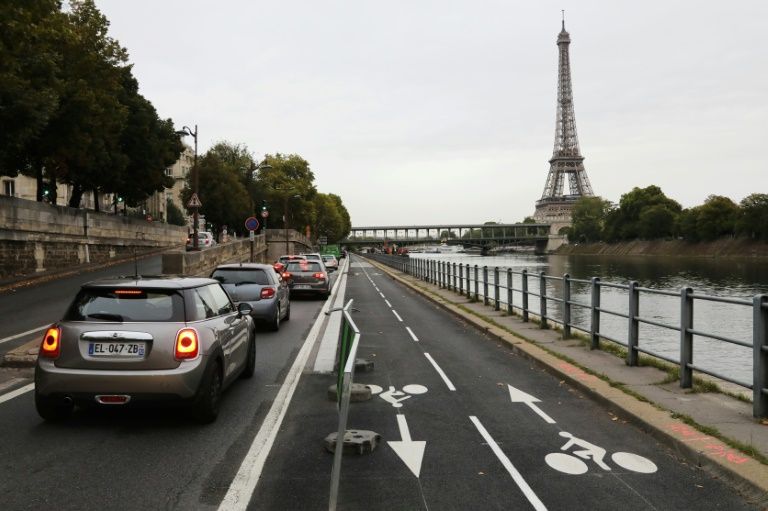
    Paris (AFP) – With the wind rushing through their hair, they zip past on bikes, electric scooters and mono-wheels, effortlessly passing lines of hot-and-bothered drivers stuck in the endless Paris traffic.

    In the French capital, the new mobility revolution has caught on fast, with locals and tourists embracing the growing array of app-based ways to get around.

    And with climate change bringing frequent heatwaves and more peak pollution alerts, Paris is beginning to push back against the dominance of the car.

    Not only is the city upgrading its public transport system offering of interurban trains, buses and the metro, it is also enjoying an unparalleled explosion of alternatives.

    “Our cities have been colonised by cars. They get into the smallest gaps, today we need to put them back into their proper place,” says Christophe Najdovski, the city’s deputy mayor who has responsibility for transport.

    “In Paris, they are only used for 10 percent of daily trips but they take up 50 percent of the public space.”

    – Car crush –

    But the city has been at the forefront of innovation, setting up a pioneering bike-share service back in 2007.

    Known as Velib’, it has since been copied across the globe, from London to Chicago.

    Then came the Autolib’ electric car-sharing scheme which was followed by a flood of dockless bikes, and then the overnight appearance of e-scooters that exploded onto the streets in the summer of 2018.

    And that’s without mentioning other private mobility devices such as two-wheeled e-hoverboards or electric unicycles.

    But is there enough space?

    Not according to the taxi drivers, who are already infuriated with the growing demands on their space and the planned 1,000-kilometres (600 miles) of bike lanes that are due to be completed by 2020.

    And the estimated 15,000 e-scooters on the streets have also triggered a backlash, with riders initially dumping them randomly on pavements, cluttering the curb and creating a nuisance for pedestrians.

    “I’d like to slap them,” fumes Nordine, a woman in her 40s walking through the Marais district, muttering furiously about “the lack of public spirit”.

    “Paris is a great playing field but the space is saturated. They need to bring it back down to two or three operators, like San Francisco, which has just two,” says Najdovski from the mayor’s office.

    At its height, Paris had 13 companies running scooter fleets, but that number dropped to around seven earlier this month after the city brought in a raft of demands for operators.

    – 37% of Parisians own a car –

    Every day, there are some 41 million trips made in the Paris region, of which 15 million are by car and 10 million by public transport.

    Since July 1, all diesel vehicles registered before 2006 have been banned from entering the city, but should the authorities go further and shut the entire city centre to cars?

    Today, just over a third — 37 percent — of Parisian homes have a car, and that drops to one in five in the city centre, according to the mayor’s office.

    “The priority is to enable city dwellers to get around,” says Jean-Pierre Orfeuil, an engineer who specialises in urban mobility.

    “Generally speaking, those who are using these new means of transport are people who used to use the metro,” he said.

    “So they haven’t played a role in easing the traffic.”

    – Dumping diesel, passing on petrol –

    To get away from fuel-powered vehicles, the focus should be on electric bikes, which could potentially help those living in the suburbs, he says.

    But even there, the infrastructure is lacking.

    “In France, we are two or three times worse off than Germany or the Netherlands” in terms of the number of electric bikes, he said.

    Although car-sharing has been slow to take off in France compared with its neighbours, one way to encourage this could be shared lanes, notably on the city’s choked peripherique, its 34-kilometre ring road.

    “At rush hour, you have an average of 1.1 people in every car. If you increased that to 1.7 it would get rid of the congestion,” Nadjovski said.

    But these new forms of transport don’t work for everyone, notably raising questions for those with families.

    And for many city dwellers, the car is a private space akin to their living room which offers a certain form of intimacy, says Orfeuil.

    “You can make private calls, you can listen to music.”

    For Mireille Apel-Muller, a sociologist who heads the City on the Move Institute, mobility is about more than just transport.

    “It’s a way of life,” she said.

    “All these new forms of transport require a smartphone and applications which you have to master. Otherwise, it becomes exclusive.”

  • Eternally stinky city? Rome garbage crisis sparks health fears

    Eternally stinky city? Rome garbage crisis sparks health fears

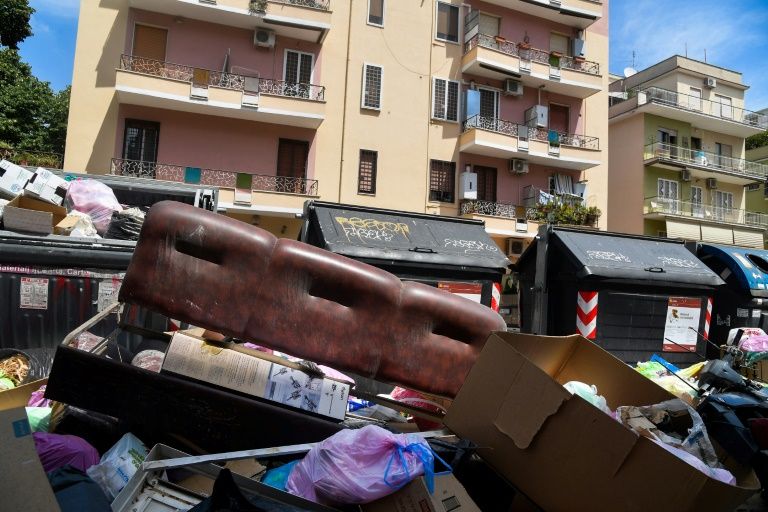
    Rome (AFP) – Landfills in flames and rats feasting on waste in the streets have sparked health fears in Rome, as doctors warn families to steer clear of disease-ridden curbside garbage and locals launch a disgusting dumpster contest online.

    Crowds of summer tourists are forced to navigate overflowing bins in the stifling heat, as the pungent perfume of neglected garbage draws scavenging animals and the threat of disease to the Eternal City and locals fume over the city’s refuse management.

    Rome’s chief physician Antonio Magi has issued a “hygiene alert”, telling AFP this could be upgraded to a health warning, with disease spread through the faeces of insects and animals banqueting on rotting waste.

    His warning prompted local prosecutors to open an investigation this week into the city’s refuse collection.

    In the meantime, furious Rome residents have launched a contest on Twitter to find the most fetid dustbins.

    Discarded pizza boxes or the remains of spaghetti lunches and fruit rinds draw opportunistic seagulls, rats and even wild boars to the streets of Rome, with wolves also spotted closer to the city’s outskirts than ever before.

    Adding to the indignation of Rome residents is the steep price they are paying for their garbage to rot in the streets.

    The city spent more than 597 euros ($670) per inhabitant on household waste treatment in 2017 — by far the highest in the country, ahead of Venice (353 euros) and Florence (266 euros), according to a report by the Openpolis Foundation.

    But the city lacks infrastructure: of its three main landfills, one has closed and the others were ravaged by fire in recent months.

    And two biological treatment sites have reduced their activities for maintenance work.

    – ‘Degradation and abandonment’ –

    Some residents make matters worse by simply dumping their old mattresses, fridges and sofas next to garbage bins.

    But local Salvatore Orlando, 50, told AFP the council was entirely to blame.

    “Of course it’s the mayor’s fault. You certainly can’t blame the citizens,” he said.

    “They produce waste, they have to throw it away, and the public services have to collect it. It’s simple. We pay taxes for it”.

    Rome’s mayor and the president of the Lazio region both assured Italy’s environment minister Tuesday that the crisis would be resolved “within 15 days”.

    But to do so, more of the city’s 5,000 tons of daily waste will have to be sent for incineration elsewhere.

    “Everyone complains about waste but no one wants an incinerator. Instead, we take the waste abroad, to Austria, to Germany!”, another aggrieved resident said, declining to give his name.

    Even Pope Francis has commented on the decline, lamenting in June Rome’s “degradation and abandonment”.

    Italy’s Interior Minister Matteo Salvini, head of the far-right League, has jumped on the chance to use the crisis as a political weapon against mayor Virginia Raggi, who hails from the anti-establishment Five Star Movement (M5S).

    The stench and sticky pavements have given him ammunition ahead of the next municipal elections, scheduled for 2021.

    But in a city where key sectors are riddled with inefficiency and corruption, residents will wonder whether Salvini has a magic recipe for resolving a situation that has stumped parties over the years across the political spectrum.

    In the meantime, rubbish is just one more daily challenge in a city with countless potholes, trees that topple at the first gust of wind and buses that catch fire — if their engines start at all.

    source

  • This Kid Is Streaming Fortnite For Over 10 Hours A Day To Raise Money For His Dad’s Cancer Treatment

    This Kid Is Streaming Fortnite For Over 10 Hours A Day To Raise Money For His Dad’s Cancer Treatment

    Sure, there are all kinds of news about many misfortunes all over the Internet. But you know something’s really wrong with this world when something comes up, like Canadians who can’t pay for their healthcare anymore. Something unheard of, isn’t it? But it all makes sense since this story involves a man with cancer and we all can imagine how costly the treatment could be even for those living in one of the most developed countries in the world. Having this in mind, his son came up with a great idea to help make ends meet. Scroll down to find out about his genius idea!

    source

  • Protesters Remove U.S. Flag, and add a Mexican Flag Outside ICE Facility In Aurora

    Protesters Remove U.S. Flag, and add a Mexican Flag Outside ICE Facility In Aurora

    Oh yeah, these are really the people we want here in our country.  Does anyone want to deal with the fact that the families were united till they invaded the US?  Does anyone want to attempt to answer why it matters more that they put their own families in jeopardy when coming to the US?  What does that say about the parents of these families?

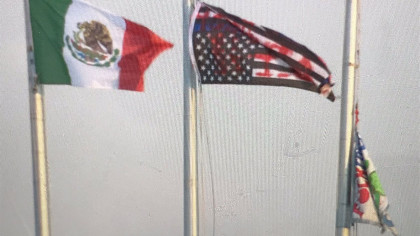
    Hundreds of protesters gathered in Aurora on Friday evening to march to the ICE detention facility where illegal and undocumented immigrants are being housed. They also removed the U.S. flag, replaced it with a Mexican flag, and spray painted graffiti on a Blue Lives Matter flag before it was seen flying upside down on the flag pole. This comes before planned ICE raids in Denver and 10 other cities nationwide. The protesters say they are demonstrating against the treatment of the people living inside. The Blue Lives Matter flag was vandalized with “Abolish ICE” in spray paint.

    The original flags outside the ICE facility, including the U.S. flag and Colorado flag were placed on the flag poles after the crowd dispersed. The Mexican flag and spray painted Blue Lives Matter flag were removed. ICE had originally planned to arrest and deport families in 10 cities in late June, according to a senior immigration official. In addition to Denver, the raids were expected in Atlanta, Baltimore, Chicago, Houston, Los Angeles, Miami, New Orleans, New York and San Francisco. Operations are now expected to begin in all of those cities on Sunday except for New Orleans, which is currently being impacted by tropical storm Barry.

    source

  • Visualizing A 2º C Increase In Temperature In Major World Cities & Melting Of Thwaites Glacier In Antarctica.

    Visualizing A 2º C Increase In Temperature In Major World Cities & Melting Of Thwaites Glacier In Antarctica.

    Published on July 11th, 2019 | by Steve Hanley

    Visualizing A 2º C Increase In Temperature In Major World Cities & Melting Of Thwaites Glacier In Antarctica. 

    July 11th, 2019 by  

    A team of researchers at ETH Zurich headed by Jean-Francois Bastin has produced a report that shows how a 2º C rise in temperature would affect cities around the world. “We wanted to know what’s the most conservative estimate of what the climate will be for 520 major cities in 2050,” said Tom Crowther, a researcher at ETH Zürich. “The changes we found are huge,” he says according to a report by National Geographic.

    Credit: Copyright Bastin et al., via PLOS.org

    What is the purpose of this study? The authors believe people can better visualize and understand the impact of a warming planet if they can compare where they live now to another city they are familiar with. They say it does little good to demonize climate skeptics. It’s better to describe the predicted future in terms that are comprehensible to the audience.

    [Note: The materials below and the graphic  shown above are copyright Bastin, et als, and are taken from a study published by PLOS.org. This is an open access article distributed under the terms of the Creative Commons Attribution License, which permits unrestricted use, distribution, and reproduction in any medium, provided the original author and source are credited.]

    The gap between the scientific and public understanding of climate change, referred to as the “Consensus Gap”, is largely attributed to failures in climate change communication [which is] Often limited to ad-hoc reporting of extreme weather events or intangible, long-term climate impacts such as changes in average temperature by 2100.

    Despite an exhaustive list of risks associated to climate change such as heat stress, air and water quality, food supply, distribution of vectors of diseases, social factors, the intangible nature of reporting on climate change fails to adequately convey the urgency of this issue to a public audience on a consistent basis.

    It is hard for most people to envision how an additional 2°C of warming might affect daily life. This ineffective communication of climate change facts, compounded by uncertainty about the extent of expected changes, has left the door open for widespread misinterpretation about the existence of this global phenomenon.

    History has repeatedly shown us that data and facts alone do not inspire humans to change their beliefs or act. Increased scientific literacy has no correlation with the acceptance of climate change facts. A growing body of research demonstrates that visualization — the ability to create a mental image of the problem — is the most effective approach for motivating behavior change.

    As iconic locations, cities are associated with distinct sets of environmental conditions. As such, shifts in the climate conditions of these urban areas could provide a unique opportunity for people to visualize the impacts of climate change, and to establish effective response strategies to address the effects.

    Several studies and press reports have shown that the use of ‘cities geographic shift’ or “city analogues” can help to understand and visualize the effects of climate change. In particular, cities can serve as useful climate analog, enabling people to visualize their own climate future via comparison with other cities that currently experience those climate conditions.

    Specifically, we aim to test three questions: (i) What proportion of the world’s major cities of the future most closely resemble their own current climate conditions vs. the climate conditions of other cities in different geographic regions? (ii) What proportion of cities will experience novel climate conditions that are outside the range experiences by cities today? (iii) If cities do shift their climate conditions, is this spatial shift uniform in direction across the planet?

    Tom Crowther, one of the study authors, has created an interactive map that allows viewers to mouse over a city to see what other urban area today most closely approximates what that city will be like in 2050.

    The study results suggest several things.

    “77% of future cities are very likely to experience a climate that is closer to that of another existing city than to its own current climate. In addition, 22% of cities will experience climate conditions that are not currently experienced by any existing major cities.

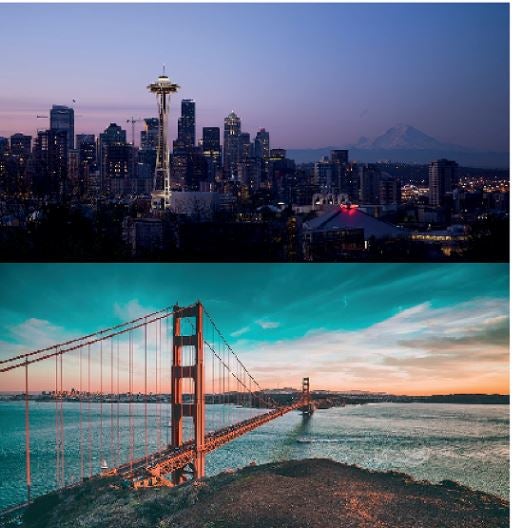
    “As a general trend, we found that all the cities tend to shift towards the sub-tropics, with cities from the Northern hemisphere shifting to warmer conditions, on average ~1000 km south and cities from the tropics shifting to drier conditions. We notably predict that Madrid’s climate in 2050 will resemble Marrakech’s climate today, Stockholm will resemble Budapest, London to Barcelona, Moscow to Sofia, Seattle to San Francisco, Tokyo to Changsha.”

    Professor Bastin of ETZ Zurich says, “We want to help people visualize the impact of climate change in their own city, within their lifetime.” It should be noted that the calculations made by the researchers are based on a more or less optimum assessment of where average global temperatures will be by 2050 assuming a 2º C rise in average global temperatures by that date.

    Many climate scientists believe up to 4º C is likely with some predicting an increase of as much as 7º C is possible. Using the best case scenario helps to offset the yapping of climate deniers like Andrew Wheeler, head of the EPA, that climate scientists are focusing only on extreme scenarios.

    The likely temperature increases are quite similar regardless of which scenario is used, but after 2050 the increase in average temperatures sky rockets if the more aggressive scenario is followed to its logical conclusion according to preeminent climate scientist Michael Mann of Penn State University. That’s why the US government now limits all discussion of future temperatures to 2050 or sooner.

    Will Antarctica Be The New Europe?

    An aerial view of Thwaites glacier, which shows growth of gaps between the ice and bedrock. Photo credit: NASA/OIB/Jeremy Harbeck/Handout/EPA

    Regardless of which climate change model you choose — the best case scenario preferred by the current administration or the worst case scenario that some scientists argue is not extreme enough — a new study by NASA finds the Thwaites Glacier in Antarctica is melting faster than anyone predicted. Never heard of the Thwaites Glacier? Here’s a little perspective, courtesy of The Guardian.

    Antarctica has nearly eight times more land-based ice than Greenland and 50 times more than all mountain glaciers combined. The Thwaites glacier alone contains enough ice to increase global sea levels by about 50 centimeters. Sea level rise linked to warming has already been linked with increased coastal flooding and storm surges. 50 centimeters, in case you live in the US and are not familiar with the metric system, is just about 19 inches — enough to endanger many world cities.

    It is not possible to estimate the effect of rising sea and air temperatures on Thwaites because the land beneath it is impossible to study accurately as it has always been covered by ice in modern times. Yet studies show that if the entire West Antarctica ice shelf melts, sea levels will rise 16 feet, dooming many coastal cities. While it may take hundreds of years for that to happen, the point, NASA scientists say, is that Antarctica will soon reach a tipping point after which catastrophic melting will proceed no matter how much global carbon emissions are reduced.

    Given that the world community has failed to reduce emissions significantly even knowing the emergency confronting it, the prospect of actually doing so in the future is unlikely at best. Another study published recently finds that melting of the Antarctic ice sheet suddenly picked up speed in 2014 for reasons no one knows. Since then, satellite data shows Antarctica lost as much sea ice in four years as the Arctic lost in 34 years.

    Sea ice does not contribute directly to sea level changes, but when it melts, the dark water underneath absorbs more heat from the sun, heat that previously was radiated back into the atmosphere by the reflectivity of the ice. Warmer seas lead to more melting which lead to warmer seas. It is this feedback loop effect that many climate deniers do not understand.

    The Takeaway

    Whether the discussion is about warming cities or rising seas, it is clear that something is going on with the world we live in. Evolutionary theory suggests that land creatures, including humans, evolved from aquatic species. If things continue as they are going, someday humans may need to grow flippers, fins, and gills again as the seas close over the land. Maybe that’s what Rex Tillerson meant when he said we will just adapt to changes in climate. The problem is biological changes require thousands of years to happen. We simply don’t have the luxury of that much time. 
     

    Steve writes about the interface between technology and sustainability from his home in Rhode Island and anywhere else the Singularity may lead him. His motto is, “Life is not measured by how many breaths we take but by the number of moments that take our breath away!” You can follow him on Google + and on Twitter.

    This content was originally published here.

  • There’s a Strange Whistling Coming From The Caribbean Sea That Can Be Heard From Space | Spirit Science

    There’s a Strange Whistling Coming From The Caribbean Sea That Can Be Heard From Space | Spirit Science

    The University of Liverpool ocean scientists found an area of the ocean that is reverberating with ‘oscillations of the Earth’s gravity field’ in such a way that they can be ‘heard’ from space.

    Despite all of the noise coming from the ocean worldwide, there is a region in the Caribbean Sea where the synchronistic waves are allowing a whistle like effect that is blowing very loudly.shutterstock_369078077

    The Caribbean Sea is south-east of the Gulf of Mexico and is part of the Atlantic Ocean. This area has the Caribbean islands, Central America, and South America surrounding it.  The region is a very large area of around 1,063,000 square miles (2,754,000 km2).

    By measuring the various pressures and sea level readings from the bottom of the ocean in combination with ocean activity spanning over 50 years and observing satellite measurements of gravity the university was able to discover what they are calling the ‘Rossby Whistle’.

    The `Rossby Whistle’

    This strange phenomenon, or whistle, is created when a large wave moves slowly across the ocean in a westward direction and interacts with the seafloor.  While normal waves would cancel each other out this wave is able to die out on the west side of the basin and then reappear on the east side.

    This strange wave system is named the ‘Rossby wormhole’ and they are able to hold together and oscillate for a sharply-defined period of time.

    A-flat Tone

    The water moves in and out of the basin in a cycle that takes 120 years. The massive movement of this wave also changes the shutterstock_391714783Earth’s gravity field in such a way that we can measure it from a satellite. The whistling itself is actually a very low octave tone far below what we can normally hear and is playing an A-flat.

    “We can compare the ocean activity in the Caribbean Sea to that of a whistle. When you blow into a whistle, the jet of air becomes unstable and excites the resonant sound wave which fits into the whistle cavity. Because the whistle is open, the sound radiates out so you can hear it.” –Professor Chris Hughes, who is an expert of Sea Level Science.

    “Similarly, an ocean current flowing through the Caribbean Sea becomes unstable and excites a resonance of a rather strange kind of ocean wave called a ‘Rossby wave’. Because the Caribbean Sea is partly open, this causes an exchange of water with the rest of the ocean which allows us to ‘hear’ the resonance using gravity measurements.”

    When you speed up the footage and audio recorded from the ocean it actually makes it high-pitched enough that you can hear what is going on. In the video clip below you can see the measured pressure changes across the region and also hear the tone it produces repeating several times.

    Listen to the Whistle Below:

    Coastal flooding from this wave

    “This phenomenon can vary sea level by as much as 10 cm along the Colombian and Venezuelan coast, so understanding it can help predict the likelihood of coastal flooding.”

    As we are able to gather more data about the large-scale cycles of the earth we are more able to predict big weather changes that haven’t happened since before everyone on earth was born.

    These seemingly small sea level changes can actually create a great deal of flooding in Colombia. Sometimes it only takes a sea level change of 20 cm in order to create a huge problem for us.

    The scientists who studied this phenomenon believe that it may also have an effect on the Northern Atlantic ocean since the Caribbean Current flows in that direction turning into the Gulf Stream. This may be a big core part of the ocean’s climate engine.

    Sources-

    This content was originally published here.
  • Meghan Markle’s Outfit For Archie’s Christening 2019 | POPSUGAR Fashion

    Meghan Markle’s Outfit For Archie’s Christening 2019 | POPSUGAR Fashion

    Meghan Markle Is Simply Stunning in a White Dior Outfit For Archie’s Christening

    Meghan Markle was the picture of elegance in a Dior dress at her son Archie’s christening on July 6. The new mom, joined by husband Prince Harry and their family members, smiled for an official portrait and we couldn’t help but gaze at this glimpse of her gorgeous outfit.

    Much like her sister-in-law, Kate Middleton, Meghan stuck to tradition and wore white for the christening. This color is a symbol of purity and new beginnings — perfect for Archie’s special day. She paired the three-quarter sleeve dress with a matching hat and, of course, her sparkling engagement ring.

    Harry, on the other hand, went with a similarly light color palette and wore a grey suit, blue tie, and brown shoes. Little Archie wore the same gown his cousins Prince George, Princess Charlotte, and Prince Louis all wore for their respective christenings. Get a peek at the family’s simply spot-on outfits in the photos above and below.

    This content was originally published here.