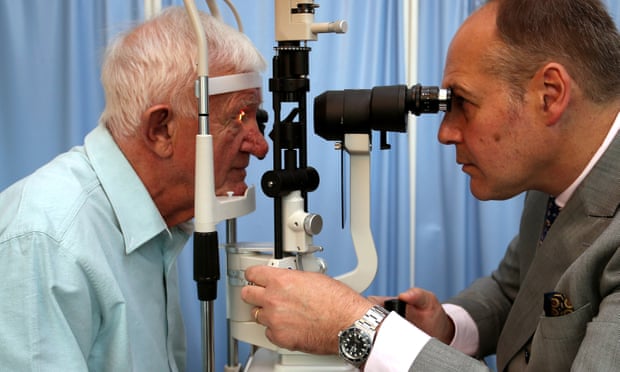
Partial sight has been restored to six blind people via an implant that transmits video images directly to the brain. Some vision was made possible – with the participants’ eyes bypassed – by a video camera attached to glasses which sent footage to electrodes implanted in the visual cortex of the brain. University College London lecturer and Optegra Eye Hospital surgeon Alex Shortt said it was a significant development by specialists from Baylor Medical College in Texas and the University of California Los Angeles. “Previously all attempts to create a bionic eye focused on implanting into the eye itself. It required you to have a working eye, a working optic nerve,” Shortt told the Daily Mail. By bypassing the eye completely you open the potential up to many, many more people. “This is a complete paradigm shift for treating people with complete blindness. It is a real message of hope.”
The technology has not been proven on those born blind. The US team behind the study asked participants, each of whom has been completely blind for years, to look at a blacked-out computer screen and identify a white square appearing randomly at different locations on the monitor. The majority of the time, they can find the square. Paul Phillip, who has been blind for almost a decade, says that when he wears the glasses to go on his evening walks with his wife, he can tell where the pavement and grass meet. He also can tell where his white sofa is located. “It really is amazing to be able to see something even if it is just points of light for now,” Phillip said. Study leader and neurosurgeon Daniel Yoshor said his team was “still a long way from what we hope to achieve”.
“This is an exciting time in neuroscience and neurotechnology, and I feel that within my lifetime we can restore functional sight to the blind,” Dr Yoshor said.
Digital technology has an invisible environmental impact, but researchers suggest it might actually be very, very size-able, so you better get your hands off your laptop if you don’t want to be a climate criminal.
Watching adult films accounts for over 4 per cent of all carbon dioxide emissions associated with digital technologies, says a new study.
“Climate crisis: The unsustainable use of online video”, a report published by French think-tank The Shift Project, highlights that pornography makes up 27 per cent of all videos viewed online.
Furthermore, online videos – one of the most common forms of online entertainment – are said to generate 60 per cent of world data traffic, based on 2018 estimates.
In other words, it means that they account for 300 million tonnes of CO2 emissions per year (resulting from energy consumption), with porn ‘emitting’ just under 100 million tonnes – nearly as much as Belgium and Kuwait.
The authors point out that “viewing pornographic videos in the world in 2018 generated carbon emissions of the same magnitude as that of the residential sector in France”.
Meanwhile, video-on-demand services such as Netflix or Amazon Prime reportedly generated the same volume of greenhouse gas emissions as the entire economy of Chile.
Digital technologies are estimated to be consuming 9 per cent more energy every year, but the situation is only going to get worse with the wider spread of ever-higher-resolution videos.
The authors propose to practice ‘digital sobriety’ – namely to reduce the use and the size of videos. This would require certain regulations to be put in place, which should be preceded by a public debate.
They write: “From the standpoint of climate change and other planetary boundaries, it is not a question of being “for” or “against” pornography, telemedicine, Netflix or emails: the challenge is to avoid a use deemed precious from being impaired by the excessive consumption of another use deemed less essential. This makes it a societal choice, to be arbitrated collectively to avoid the imposition of constraints on our uses against our will and at our expense.”
Cravings are largely considered something to avoid. We’ve been taught that if you’re craving a particular food, you probably shouldn’t eat it. But it turns out that a craving can simply be your body letting you know that you’re running low on something. Once you’re able to identify why you’re craving that food, it can be a very easy fix.
Jennifer Sygo is a registered dietitian and performance nutritionist for both Athletics Canada and the Toronto Raptors who says that cravings can come from a few different place. “Cravings certainly can come from habit, because if you have a routine of eating a doughnut in the afternoon then you will likely keep craving that same doughnut. Cravings can also come from external cues, there’s a reason cinnamon buns smell so good from far away. But cravings can also come from your body asking for something it doesn’t have.”
In Sygo’s experience, runners crave chocolate, salty foods like chip and fries and carbohydrate-based foods. “If you’re craving sugar or carbohydrates it usually means your blood sugar is low. If you’ve been sweating a lot, then salt is a very common craving to have because you’re low on electrolytes. If your body wants chocolate, it’s possible you’re low on magnesium.”
Sygo says it’s very important for runners who are craving something to allow themselves to have that food, “People who are active, runners in particular, may feel badly that they’re craving carbs for example. But this craving usually just means that their body is looking for something they’re low on.”
Beyond being low on one particular food, Sygo says that denial can also breed very strong cravings. “Avoiding denial is crucial. For example, if you’re craving carbohydrates and you eat a sandwich, you need to avoid feeling guilty after eating that sandwich. Acknowledge that you’re feeling depleted and craving carbs. An extra serving of potatoes at dinner is alright. Fighting the cravings only makes them worse.”
However, there is a type of craving that can be curbed, and that’s the habit-based craving. This is the kind of craving that’s derived from routine as opposed to need. “When you’ve built an association with something it’s a hard habit to break. If you’re looking to break this habit, the first thing you have to do is change the circumstances around that food or time of day. If you’re used to going down at 3 p.m. everyday with friends and eating a doughnut, the last thing you should do is walk down with friends and try to not eat a doughnut. Take yourself out of the situation instead. Go for a walk, have a snack you brought from home or get a healthier snack from a different store.”
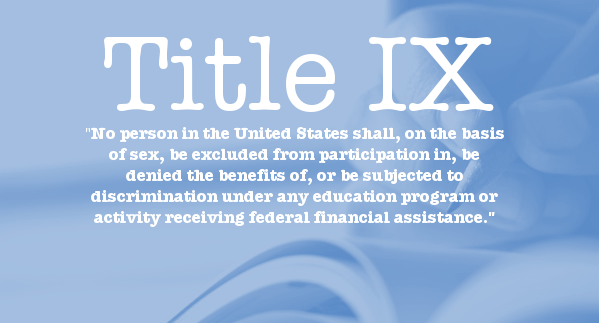
Nearly three dozen religious institutions of higher learning have asked the federal government to waive laws that protect LGBT students, according to government documents obtained by The Column. The schools are asking the U.S. Department of Education to waive portions of Title IX that might apply to students and staff who are transgender or who are in same-sex relationships. Twenty-seven schools have been granted a waiver from Title IX by the department in the last year, many with the help of conservative religious organizations. Another nine have applications pending.
When Title IX was passed in 1972 to combat discrimination based on sex, Congress added a small but powerful provision that states that an educational institution that is “controlled by a religious organization” does not have to comply if Title IX “would not be consistent with the religious tenets of such organization.”
These “right-to-discriminate” waivers were relatively rare until the last year. A handful were requested in the 1980s and 1990s, many by religious schools who wanted to ensure they could prevent women from being hired in leadership roles without running afoul of discrimination laws.
That changed in 2014 when the Obama administration issued guidance that the Title IX discrimination prohibition “extends to claims of discrimination based on gender identity or failure to conform to stereotypical notions of masculinity or femininity,” meaning that entities receiving federal funding could not discriminate against transgender and gender nonconforming people.
In response to that guidance, and several lawsuits, conservative Christian leaders have begun positioning the schools to expel transgender students.
Add to the mix the Supreme Court decision that effectively legalized same-sex marriage in 2015. Leadership at Christian schools have begun to worry that they will be forced to house legally married same-sex couples, and have been positioning themselves to withstand discrimination challenges.
The Department of Education has granted a waiver to 27 religious colleges and universities in 17 states over the last 18 months. The total enrollment of these schools tops 80,000 students, and nearly $130 million in federal research grants and student aid flowed to these institutions of higher learning in 2014. Those waivers are coming in at a rapid clip, and another 9 are pending as of August 2015. Though they span the United States, almost all are in the South or West.
Click on the interactive map for in-depth information for each college and university.
Thus far 36 schools have asked for the waiver. According to documents obtained in response to a Freedom of Information Act request filed by The Column in July, these schools have asked the federal government for these waivers not only to deny enrollment to or expel transgender students, but the broad-based waiver requests have also targeted gay, lesbian, and bisexual students and staff. In some cases schools have even asked for, and been granted, a waiver to allow them to expel women who have been pregnant outside of marriage.
Banning transgender students
News that schools were requesting such waivers first surfaced in July 2014, when Inside Higher Ed reported that three Christian colleges — George Fox University in Oregon, Spring Arbor University in Michigan, and Simpson University in California — had requested and received a waiver from the federal government’s Title IX.
In the case of George Fox University, a transgender student had been denied housing at the Quaker school, and subsequently filed a complaint with the Department of Education’s Office of Civil Rights. That complaint was dismissed as George Fox had already been granted a waiver to Title IX, and could discriminate against transgender and gender nonconforming students. But, the case generated headlines and petitions, and the university made some small concessions including allowing transgender students who had undergone gender affirmation surgery to live in gender segregated housing. The university has since softened its stance to provide “housing units with private restrooms and living spaces will be provided for students identifying as transgender where possible.”
In 2013, Biola University in La Mirada, Calif., began crafting language barring transgender students at the same time a fellow Christian college, California Baptist University, was facing a lawsuit after expelling a transgender student. Biola’s new ban on transgender students read, in part, “In employment and in student life, we regard sex at birth as the identification of the given biological sex of each member of our constituency. We will not accept as valid alterations of one’s sex at birth based on experiential variation or medical intervention.” The school reached that theological conclusion because “Jesus Christ himself affirmed this in his teaching correcting abuses of divorce stating at the beginning the Creator ‘made them male and female.’”
Biola then filed its request for a waiver on Nov. 14, 2014. “Our request for exemption is limited to the recent interpretation that ‘sex’ under Title IX also includes gender identity to the extent that such matters conflict with Biola’s religious tenets,” Biola wrote to the U.S. Department of Education. Biola’s waiver was not approved by the department, however. The school did not prove that it was controlled by a religious entity. Biola has the option of providing more information to DOE.
But Biola didn’t craft the discriminatory language it used for the anti-transgender portions of its handbook nor for the application for the waiver. Those were crafted by the Christian Legal Society as a “sample policy” and used by Biola verbatim.
Though Biola’s waiver still pending, dozens of other schools have had waivers approved. Anderson University based in South Carolina sent a letter to the U.S. Department of Education on January 7, 2015 asking the department to waive “provisions of Title IX to the extent application of those provisions would not be consistent with the Convention’s religious tenets regarding marriage, sex outside of marriage, sexual orientation, gender identity, pregnancy, and abortion.”
The department granted that request in full. “The University is exempt from these provisions to the extent that they prohibit discrimination on the basis of marital status, sex outside of marriage, sexual orientation, gender identity, pregnancy, or abortion and compliance would conflict with the controlling organization’s religious tenets,” the response, dated Feb. 11, 2015, stated.
Anderson University used language in its waiver that is similar to 15 other schools affiliated with the Southern Baptist Convention. Those schools used nearly identical language that says they are seeking exemption from Title IX “to the extent application of those provisions would not be consistent with the Convention’s religious tenets regarding marriage, sex outside of marriage, sexual orientation, gender identity, pregnancy, and abortion.”
Click to view the full list of schools applying for Title IX waivers.
Several Catholic schools are among those that have been granted waivers. Belmont Abbey College wrote in its request: “Our request for exemption is limited to the recent interpretation that “sex” under Title IX also includes gender identity.” Belmont was approved a waiver along with fellow Catholic colleges Franciscan University of Steubenville and St. Gregory’s University.
Bethel College, part of the Christian Missionary Church denomination, even appears to want to be able to tamper with maternity leave.
The Indiana-based school requested an exemption from Title IX if it “would require the College to allow males and females to reside in the same housing, to visit within the housing of the opposite sex without restrictions, to allow an unmarried male and female to live together, or to allow a person with gender identity issues to be treated as a member of the sex which they have assigned to themselves…” or “would require that the College not discriminate in discipline, admissions, hiring, and employment decisions, in matters such as employment leaves for pregnancy, childbirth, and elective termination of pregnancy, or on the basis of pre-marital sex, unmarried pregnancy, extramarital sex, or homosexual activity.”
Training schools to discriminate
The rapid increase in schools that have applied for Title IX exemptions comes at the same time conservative Christian groups are hosting trainings and providing documents that schools can use to prove their “sincerely held religious beliefs” about LGBT people.
On Sept. 3, 2015, the Christian Legal Society hosted a webinar with the Council for Christian Colleges and Universities, the Association of Christian Schools International, and the Association for Biblical Higher Education.
Jim Davids, a law professor at Pat Robertson’s Regent University, listed the perceived threats against Christian schools including “two former students dismissed for lesbianism” who sued a Christian school and “a young man who thought he was a woman sued California Baptist University, when the school dismissed him for lying on his admission application that he was female.”
“Within the last couple of years two students claiming to be a different gender than their anatomy have filed complaints against CCCU schools,” Davids added.
Shapri LoMaglio, Vice President for Government and External Relations at the CCCU, called the Supreme Court decision legalizing same-sex marriage “a sea change” for housing issues at Christian colleges, and noted the Department of Education’s extension of sex discrimination to include gender identity. She told attendees that the best offense is a good defense, and one defense is to gain exemption from Title IX.
“There is an ability for Christian colleges and universities to apply for an exemption from the Department of Education to this specific requirement of Title IX and the institution can do that by writing a letter to the Department of Education detailing the specific provision in Title IX they would like exemption from and their theological beliefs that create conflict with their ability to execute that specific provision.”
She added, “What’s most important to know is that there is an exemption and it is highly advisable to apply for one.”
Davids and LoMaglio, as well as Christian Legal Society’s Kim Colby and John Cooley of the CooleySublettPLC law firm, also provided guidance to college and universities on how to legally discriminate against LGBT students, faculty, and staff.
In addition to the webinar, the CLS has developed sample language for schools to include in their official policies; if a school hasn’t yet developed a student handbook policy about its “sincerely held religious beliefs” about transgender students, they can copy CLS’. Many schools have done just that.
In addition to CLS, the CCCU has been hosting trainings and conferences since late 2014 that delve into the issue of Title IX exemptions.
Entire denominations are issuing resolutions in order to keep LGBT students out of their affiliated colleges and universities. For example, Baptist General Convention of Texas adopted a resolution in February on the “transgender agenda.” That resolution was aimed directly at garnering schools a Title IX exemption.
“Some of our institutions may desire to seek a religious exemption to the Title IX requirement, and they asked that the convention speak specifically to the issue,” Ferrell Foster, director of ethics and justice for the Texas Baptist Christian Life Commission, said in statement at the time “The resolution approved by the Executive Board represents both the truth of the biblical testimony regarding gender and the love of Christ for all people.”
In fact, “the request to consider the resolution came from several Texas Baptist university presidents” who said they needed to apply for a Title IX exemption in order to deny accommodations for transgender students, the Convention website stated. That resolution stated “great concern with the emergence of the transgender agenda and the notion that one’s gender is determined psychologically, not biologically” and “some people today are expressing a desire to identify themselves with the gender, which differs from their biological gender… Some of these persons are seeking to function in the broader society as if they are members of the gender that differs from their biological gender.“
Responding to the Exemptions
“The trend of religiously affiliated, but publicly financed, colleges receiving exemptions from the U.S. Department of Education in order to discriminate against LGBTQ students and employees is disturbing,” attorney Paul Southwick told The Column. “While we are seeing increased protections for transgender, intersex and LGB students through Title IX, we are also seeing the protections of Title IX gutted at the very institutions where students need those protections the most.”
Southwick has represented students who have filed action against Christian schools after having been expelled for being LGBT.
For students that do find themselves being disciplined or expelled from a college or university simply because of their LGBT identity, there are actions those students can take.
“First, if there is still time, students should file an internal appeal of any decision to expel, suspend or discipline them,” he said. Most institutions have an appeal process, but Southwick notes that some students may want to hire a lawyer for assistance with appeals.
“Additionally, students should file a Title IX complaint with the U.S. Department of Education’s Office of Civil Rights. Southwick said. “This is important and should always be done. Even if their college has a religious exemption from Title IX, the exemption may not apply or it may not stick after being challenged.”
He also suggests that students file a complaint with accreditation institutions, and to check state and local nondiscrimination laws.
Shane Windmeyer, Executive Director of Campus Pride, an organization that works with students and schools to create more LGBT-inclusive campuses, said that “anti-LGBTQ religion-based bigotry and intolerance is not a Christian teaching or belief.”
“Discrimination is never okay,” Windmeyer told The Column. “For these schools to espouse that their religion sanctions discrimination against any young person is careless and life-threatening. This list needs to be made public every time a school files for a Title IX exemption. It is shameful and wrong.”
He said exposing schools that apply for the Title IX exemptions is important for families and prospective students. “Families deserve to know that this list of schools are not loving, safe spaces for any young person to live, learn and grow — and taxpayers should definitely not have to pay for a private college to openly discriminate against anyone.”
Windmeyer was referring to the nearly $130 million in annual taxpayer funds flowing to these schools through grants and student aid, something Southwick says that money should come with strings attached.
“If a college receives public funding, it should have to follow public laws,” he said. “The government would be perfectly within its rights to make taxpayer funded aid to these colleges contingent on compliance with generally applicable nondiscrimination laws.”
He added, “If a college wished to continue discriminating against LGBTQ students and employees, it could do so on its own dime.”
Correction: A previous version of this referred to Anderson University in Indiana as having applied for a Title IX waiver. Another Anderson University, one in South Carolina, applied for a waiver to Title IX. We regret the error.
Here’s the entire data set obtained from the U.S. Department of Education:
“Cause peace and love ain’t so far If we nurse our wounds before they scar.”
–Alicia Keys
I can vividly remember certain times in my life when I have been deeply hurt, shamed, excluded, or violated by someone.
I clearly remember wanting the violators to understand the pain they caused, offer me a genuine apology, and hear them pledge to never do it to anyone else.
That happened once.
All the other times, there was either no resolution or no remorse. I walked away from the painful experiences feeling angry, conflicted, hopeless, and confused.
When my daughters began coming to me with their own hurtful experiences, I felt a familiar wave of unsettledness. In a few cases, there was somewhat of a resolution. But most of time, resolution did not happen. The person who inflicted the pain was either unremorseful, unaware, or unchanged. My children’s hurt was their hurt to bear and to deal with as best they could. As we talked through it, I wondered, is this it? Is this all we can do when someone hurts us?
Then last spring, I came across a powerful perspective offered by renowned author and speaker for young people, Kari Kampakis. Kari wrote:
“Everyone in your life serves a purpose. Everyone has something to teach you.
And while people who are kind and friendly help teach you who you do want to be, those who are not kind and friendly teach you who you don’t want to be.
So when you encounter someone who hurts your feelings, lean into that feeling. Ask yourself what they did to make you feel that way. Was it the words they chose? Their tone? The way they picked favorites and then ignored everyone else?
Whatever they did, make a pledge. Promise yourself that you’ll never treat anyone the way they treated you. This is how you become a kinder and more compassionate person. This is how you learn from their mistakes.
And when you meet someone you really like, lean into that feeling, too. Ask yourself what they did to make you feel so good. Then make a pledge to yourself to be more like them. This is also how you become a kinder and more compassionate person.
Regardless of how anyone treats you, you stand to benefit. While some people teach you who you do want to be, others teach you who you don’t want to be. And it’s the people who teach you who you don’t want to be that provide some of the most lasting and memorable lessons on social graces, human dignity, and the importance of acting with integrity.”
That’s it! I thought hopefully. This empowering perspective was the resolution I’d been searching for all these years. Kari’s perspective—that even hurtful, unresolved experiences can feel resolved by viewing them as a learning experience—was both empowering and liberating.
Just when you think there isn’t anything you can do, there is.
That hurtful person can teach you how to be a more compassionate human being who someday makes someone else’s life better with that knowledge.
I knew I’d be using Kari’s wisdom in my own life and with my daughters – little did I know the very day I read her words, they would be needed.
As we were driving home from swim team practice, my younger daughter, who was nine at the time, said something happened at school that made her very sad. She has given me permission to share.
When she told her friend she was going to have to have surgery, the friend immediately went into worse surgeries people she knew have had.
My daughter further explained that each time she shares either bad news or good news with this friend, she treats it like a competition and tries to “outdo” my daughter.
Talking to her friend about how her response made her feel only caused her friend to become defensive and angry.
“She walked away mad, Mama,” she said sadly.
After talking for a few minutes about what that response says about her friend’s own insecurities and how one friend typically can’t meet all our needs, I had something empowering to offer.
“Take a moment and envision this person as a teacher. While she may seem like an unlikely teacher or an unqualified one, see this person as someone here to teach you something. What did she teach you today?”
My daughter thought for a moment. Then she said, “To be happy for other people’s good news and not be jealous. And to give comfort when people tell me they are scared or when they share bad news.”
“Yes, exactly!” I said. “I’m very sorry you had that experience today. It doesn’t sound like that friend is going to change anytime soon, but all hope it not lost because you can be the change! Now when someone tells you something bad or good going on in his or her life, you can respond with the compassion you would have liked to receive today.”
I told her it might be a good idea to make a pledge of what she’s going to do, as Kari mentioned in her article. When we got home, we made a pledge book. We both agreed to use it whenever an unlikely teacher taught us something through a hurtful experience.
Some of our pledges include:
I pledge to try and remember to ask others, “how are doing?” and really listen.
I pledge to be honest.
I pledge to pick up guests on time when they travel a long way.
I pledge to be nice to people who are lost.
I pledge never to say, “You owe me,” after I do something nice for someone.
I pledge to support someone’s dream no matter how farfetched it is.
I pledge not to judge someone based on appearance.
I pledge to give my full attention when someone is talking to me.
I pledge to consider who I might be excluding.
I pledge not to dismiss someone’s feelings just because I deal with things differently.
I pledge not to talk about someone’s weight.
I pledge not to jump to conclusions.
I pledge to make it easy for people to be themselves around me.
Our pledge book has been very cathartic for us. Taking hurts and offenses and turning them into positive intentions feels empowering and healing. I even revisited some of my unresolved past hurts and made them into pledges. I was surprised at the relief and closure that mere action brought to my soul.
But I must say, the pledge book has been most helpful to us right now, in a time of great divisiveness and pain in our country. Recently, my daughter’s pledge reflected what I have been seeing amongst some adults. She gave me permission to share.
I pledge not to call people bad names just because they have a different opinion.
She had been hurt. And when she told the person that the name-calling hurt her feelings, she was met with anger and opposition. While the tendency might have been to:
Lash out
My daughter did something better.
She pledged to stop the hurt rather than perpetuate it.
She pledged to be the change she wanted to see.
She pledged to take a negative and turn it into a positive.
And I am seeing it. I am seeing the pledges in her book come to life through her actions and words–and mine too.
You might say the pledge book sitting on my dresser is A Playbook for Bettering Humanity.
Just imagine for a moment, if we all had one.
When hurtful words are thrown like confetti,
When harsh judgements are made in a couple of keystrokes,
When pain cuts deep and resolution is nowhere near,
We could pause and ask ourselves: What is this person here to teach me?
And from that unlikely teacher, a painful experience could become a heartfelt pledge, igniting hope for all of humanity.
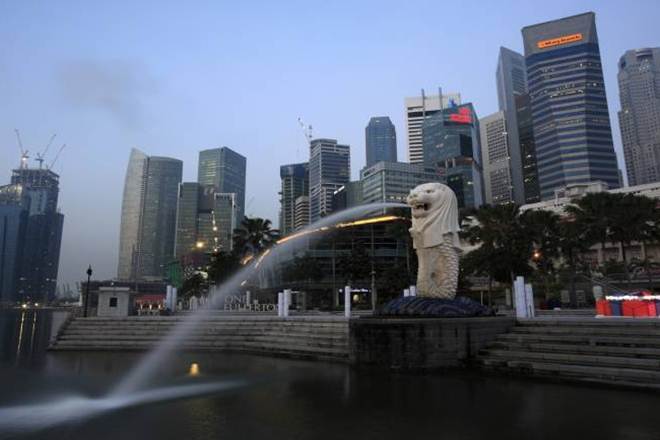
Singapore’s complicated integration in regional and global supply chains makes it vulnerable to a slowdown in world growth and tariff wars. (Reuters)
An unexpected contraction in Singapore’s economy and a slump in China’s exports sent a warning shot to the world economy as simmering trade tensions wilt business confidence and activity. Gross domestic product in export-reliant Singapore shrank an annualized 3.4% in the second quarter from the previous three months, the biggest decline since 2012. China trade figures showed exports fell 1.3% in June from a year ago and imports shrank a more-than-expected 7.3%.
Like South Korea’s economy — which already contracted in the first quarter — Singapore is often held up as a bellwether for global demand given its heavy reliance on foreign trade. China’s quarterly GDP numbers on Monday are expected to show a clear weakening in the economy.
“Singapore is the canary in the coal mine, being very open and sensitive to trade,” said Chua Hak Bin, an economist at Maybank Kim Eng Research Pte in Singapore. The data “points to the risk of a deepening slowdown for the rest of Asia.”
Across Asia and Europe, factory activity shrank in June while the U.S. showed only a meagereconomic expansion. Asia is the world’s growth engine and contributes more than 60% of global GDP, according to the International Monetary Fund.
Singapore’s complicated integration in regional and global supply chains makes it vulnerable to a slowdown in world growth and tariff wars. Exports — which amount to 176% of GDP — have already taken a big hit over the past few months, with shipments plunging in May by the most since early 2013.
“I thought the numbers would be bad, but this is ugly,” Chua said. “The whiff of a technical recession is real. We thought it might be shallow, but the risk now is that it might be deeper.”
Singapore isn’t expecting a full-year recession yet but the government is “monitoring the situation closely,” Finance Minister Heng Swee Keat said in a Facebook post. The government has said it will likely revise its growth forecast range of 1.5%-2.5% for this year.
The Singapore dollar fell as much as 0.1% to 1.3588 against the U.S. dollar after the data.
A global slowdown and the U.S.-China trade tensions are rippling across the region. A restart to U.S.-China trade negotiations has done little to convince economists that the global economy can recover. Morgan Stanley analysts last month cut both their 2019 and 2020 growth forecasts by 20 basis points each, to 3% and 3.2%.
“With a resolution of the U.S.-China trade conflict and a rebound in the global tech cycle both still elusive, the downside risks to growth in the region are mounting,” said Krystal Tan, an economist at Australia & New Zealand Banking Group Ltd. in Singapore.
Aside from trade tensions, a cooling technology boom is weighing on the outlook of electronics manufacturers like Singapore. About 40% of the city state’s exports are integrated circuits alone, according to Tuuli McCully, head of Asia-Pacific economics at Scotiabank in Singapore.
“The downturn in the global semiconductor sector is reflected in Singapore more than in most countries in the region,” McCully said.
What Bloomberg Economists Say –
“As weak as Singapore’s standstill in 2Q GDP was, 2H will probably be much worse without a rapprochement in U.S.-China trade relations. Our forecast for a 0.2% year-on-year contraction in 2019 remains on course,” said Tamara Henderson, Asean economist.
Weaker growth may prompt Asian central banks to step up policy action to bolster growth. Of the 16 economists surveyed by Bloomberg, half expect the Bank of Korea to lower its benchmark interest rate by 25 basis points next week. The Monetary Authority of Singapore, which uses the exchange rate as its main tool, could also ease in October after leaving policy settings unchangedin April.
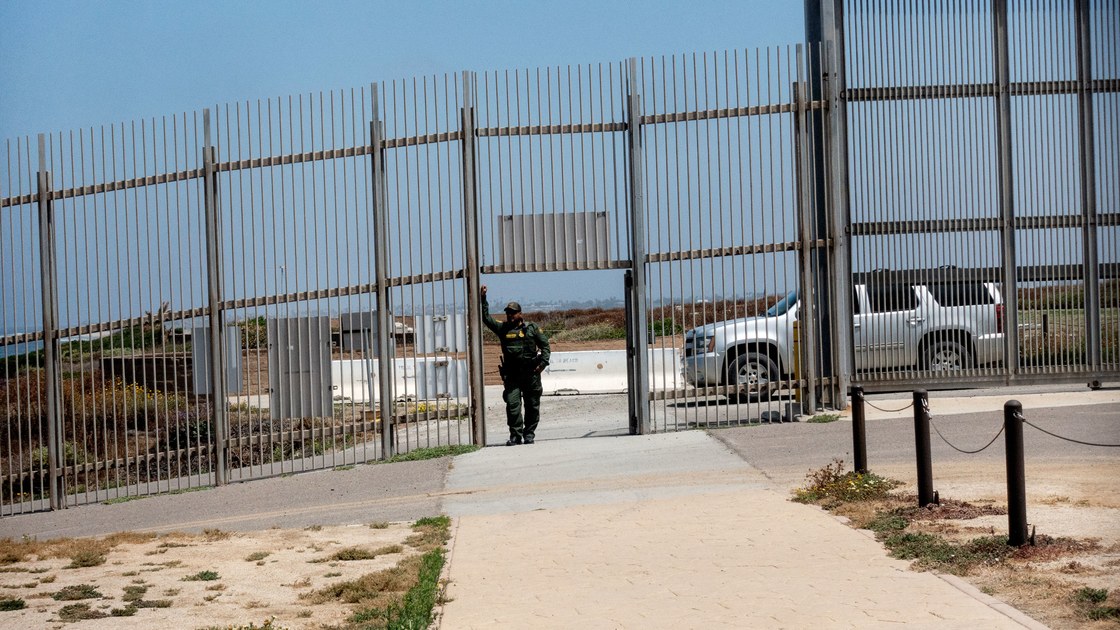
Early next week, according to a D.H.S. official, the Trump Administration is expected to announce a major immigration deal, known as a safe-third-country agreement, with Guatemala. For weeks, there have been reports that negotiations were under way between the two countries, but, until now, none of the details were official. According to a draft of the agreement, which The New Yorker has obtained, asylum seekers from any country who either show up at U.S. ports of entry or are apprehended while crossing between ports of entry could be sent to seek asylum in Guatemala instead. During the past year, tens of thousands of migrants, the vast majority of them from Central America, have arrived at the U.S. border seeking asylum each month. By law, the U.S. must give them a chance to bring their claims before authorities, even though there’s currently a backlog in the immigration courts of roughly a million cases. The Trump Administration has tried a number of measures to prevent asylum seekers from entering the country—from “metering” at ports of entry to forcing people to wait in Mexico—but, in every case, international obligations held that the U.S. would eventually have to hear their asylum claims. Under this new arrangement, most of these migrants will no longer have a chance to make an asylum claim in the U.S. at all. “We’re talking about something much bigger than what the term ‘safe third country’ implies,” someone with knowledge of the deal told me. “We’re talking about a kind of transfer agreement where the U.S. can send any asylum seekers, not just Central Americans, to Guatemala.”
From the start of the Trump Presidency, Administration officials have been fixated on a safe-third-country policy with Mexico—a similar accord already exists with Canada—since it would allow the U.S. government to shift the burden of handling asylum claims farther south. The principle was that migrants wouldn’t have to apply for asylum in the U.S. because they could do so elsewhere along the way. But immigrants-rights advocates and policy experts pointed out that Mexico’s legal system could not credibly take on that responsibility. “If you’re going to pursue a safe-third-country agreement, you have to be able to say ‘safe’ with a straight face,” Doris Meissner, a former commissioner of the Immigration and Naturalization Service, told me. Until very recently, the prospect of such an agreement—not just with Mexico but with any other country in Central America—seemed far-fetched. Yet last month, under the threat of steep tariffs on Mexican goods, Trump strong-armed the Mexican government into considering it. Even so, according to a former Mexican official, the government of Andrés Manuel López Obrador is stalling. “They are trying to fight this,” the former official said. What’s so striking about the agreement with Guatemala, however, is that it goes even further than the terms the U.S. sought in its dealings with Mexico. “This is a whole new level,” the person with knowledge of the agreement told me. “In my read, it looks like even those who have never set foot in Guatemala can potentially be sent there.”
At this point, there are still more questions than answers about what the agreement with Guatemala will mean in practice. A lot will still have to happen before it goes into force, and the terms aren’t final. The draft of the agreement doesn’t provide much clarity on how it will be implemented—another person with knowledge of the agreement said, “this reads like it was drafted by someone’s intern”—but it does offer an exemption for Guatemalan migrants, which might be why the government of Jimmy Morales, a U.S. ally, seems willing to sign on. Guatemala is currently in the midst of Presidential elections; next month, the country will hold a runoff between two candidates, and the current front-runner has been opposed to this type of deal. The Morales government, however, still has six months left in office. A U.N.-backed anti-corruption body called the CICIG, which, for years, was funded by the U.S. and admired throughout the region, is being dismantled by Morales, whose own family has fallen under investigation for graft and financial improprieties. Signing an immigration deal “would get the Guatemalan government in the U.S.’s good graces,” Stephen McFarland, a former U.S. Ambassador to Guatemala, told me. “The question is, what would they intend to use that status for?” Earlier this week, after Morales announced that he would be meeting with Trump in Washington on Monday, three former foreign ministers of Guatemala petitioned the country’s Constitutional Court to block him from signing the agreement. Doing so, they said, “would allow the current president of the republic to leave the future of our country mortgaged, without any responsibility.”
The biggest, and most unsettling, question raised by the agreement is how Guatemala could possibly cope with such enormous demands. More people are leaving Guatemala now than any other country in the northern triangle of Central America. Rampant poverty, entrenched political corruption, urban crime, and the effects of climate change have made large swaths of the country virtually uninhabitable. “This is already a country in which the political and economic system can’t provide jobs for all its people,” McFarland said. “There are all these people, their own citizens, that the government and the political and economic system are not taking care of. To get thousands of citizens from other countries to come in there, and to take care of them for an indefinite period of time, would be very difficult.” Although the U.S. would provide additional aid to help the Guatemalan government address the influx of asylum seekers, it isn’t clear whether the country has the administrative capacity to take on the job. According to the person familiar with the safe-third-country agreement, “U.N.H.C.R. [the U.N.’s refugee agency] has not been involved” in the current negotiations. And, for Central Americans transferred to Guatemala under the terms of the deal, there’s an added security risk: many of the gangs Salvadorans and Hondurans are fleeing also operate in Guatemala.
In recent months, the squalid conditions at borderland detention centers have provoked broad political outcry in the U.S. At the same time, a worsening asylum crisis has been playing out south of the U.S. border, beyond the immediate notice of concerned Americans. There, the Trump Administration is quietly delivering on its promise to redraw American asylum practice. Since January, under a policy called the Migration Protection Protocols (M.P.P.), the U.S. government has sent more than fifteen thousand asylum seekers to Mexico, where they now must wait indefinitely as their cases inch through the backlogged American immigration courts. Cities in northern Mexico, such as Tijuana and Juarez, are filling up with desperate migrants who are exposed to violent crime, extortions, and kidnappings, all of which are on the rise.This week, as part of the M.P.P., the U.S. began sending migrants to Tamaulipas, one of Mexico’s most violent states and a stronghold for drug cartels that, for years, have brutalized migrants for money and for sport.
Safe-third-country agreements are notoriously difficult to enforce. The logistics are complex, and the outcomes tend not to change the harried calculations of asylum seekers as they flee their homes. These agreements, according to a recent study by the Migration Policy Institute, are “unlikely to hold the key to solving the crisis unfolding at the U.S. southern border.” The Trump Administration has already cut aid to Central America, and the U.S. asylum system remains in dire need of improvement. But there’s also little question that the agreement with Guatemala will reduce the number of people who reach, and remain in, the U.S. If the President has made the asylum crisis worse, he’ll also be able to say he’s improving it—just as he can claim credit for the decline in the number of apprehensions at the U.S. border last month. That was the result of increased enforcement efforts by the Mexican government acting under U.S. pressure.
There’s also no reason to expect that the Trump Administration will abandon its efforts to force the Mexicans into a safe-third-country agreement, as well. “The Mexican government thought that the possibility of a safe-third-country agreement with Guatemala had fallen apart because of the elections there,” the former Mexican official told me. “The recent news caught top Mexican officials by surprise.” In the next month, the two countries will continue immigration talks, and, again, Mexico will face mounting pressure to accede to American demands. “The U.S. has used the agreement with Guatemala to convince the Mexicans to sign their own safe-third-country agreement,” the former official said. “Its argument is that the number of migrants Mexico will receive will be lower now.”
RUMOURS of a rift between the Sussexes and the Cambridges have been swirling since last year, but Kate and Meghan appeared to put those to bed at Wimbledon today.
The two duchesses put on a united front as they took their seats next to one another in the Royal Box joined by Kate’s sister Pippa Middleton to watch Serena Williams lose to Simona Halep in the Ladies Final.
Meghan joined Kate in the royal box to watch the Ladies Final at Wimbledon todayGetty – ContributorBody language expert Judi James claims that Kate was acting as a “hostess” to MegAP:Associated Press
And body language expert Judi James says that the occasion provided Kate with the opportunity to act as “hostess” to Meghan, making an active attempt to include her in conversation.
Speaking to Fabulous Digital she said: “Sitting Meghan in between Kate and Pippa looks like a very active attempt to both host her and include her in a way that hasn’t quite occurred since she married Harry.”
Judi remarks that while Meghan is facing away from her, Kate continues to lean in to engage in conversation in what is seen as a “friendly” gesture.
She continues: “While Meghan sits with her torso facing front Kate leans in to engage her in conversation, using some illustrative gestures and then even a hand to her hair just behind the ear which is a partial cut-off ritual that implies confiding during a friendly chat.
Judi says that Kate placing her hand behind her ear suggests that she is confiding in MeghanPA:Press AssociationBy seating Meghan in between herself and sister Pippa, Kate is making an effort to “include” her sister-in-lawGetty Images – GettyJudi says that this is the first time Kate has attempted to properly include Meghan “since she married Harry”Getty – Contributor
“There is a lot of eye contact between the sisters-in-law here too, which, along with the laughter, should be seen as a sign they want to be seen as friendly together.”
There was no sign of any-feud between between the sisters in law as they smiled, chatted and clap before the big match.
It’s the first time the royal women have stepped out, just the two of them, since they joined crowds at centre court together last year.
Kate uses “illustrative gestures” throughout the chatGetty – ContributorJudi remarked that there was a lot of eye contact between the DuchessesPaul Edwards – The SunShe says that their laughter suggests they want “to be seen as friendly”Getty – Contributor
The speculated feud has even seen the palace deliberately try to avoid “diary clashes” between Harry, Meghan, William and Kate to prevent “competition”, a royal author claimed.
Kate, wearing a short-sleeved green Dolce and Gabbana dress with gold buttons, waved to cheering tennis fans ahead of the match on Centre Court.
The duchess met with Marion Regan, owner of Hugh Lowe Farms, the official supplier of strawberries to the tournament, with the pair sharing gardening tips.
MOST READ IN FABULOUS
VAGI-NOPE
Putting GARLIC in your vagina to treat thrush could be deadly, doctor warns
SHARING THE LOVE
Bride marries in £35 dress she found in charity shop day after engagement
‘LAUGHED OFF’
Woman says endometriosis feels like ‘razor blades scraping inside’ her
HANG ON
Bride makes DIY bridesmaids’ hangers for 46p but is mocked for a hilarious fail
MAKING A POINT
Meghan ‘was a nightmare’ during Wimbledon visit to see Serena, official says
FORK OFF
Parents slam £13 toy Forky from Toy Story 4, claiming it’s cheaper to make it
The Middleton’s have been regular fixtures in SW19 this tournament, with Kate’s sister Pippa and brother James both attending to watch matches last week.
While the Duchess of Sussex was spotted in the Royal Box earlier in the tournament to watch close pal Williams in action.
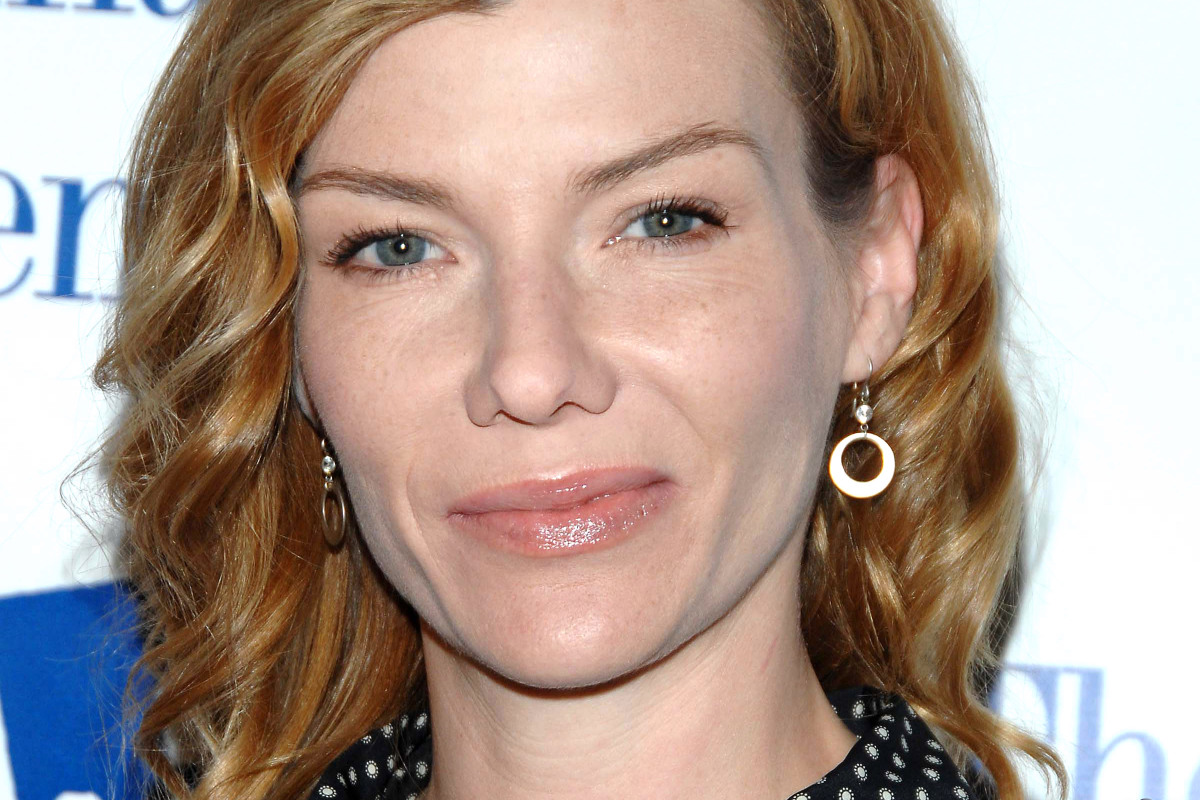
EVERWOOD actress Stephanie Niznik has died at the age 52, according to reports.
The star, who also appeared in Star Trek: Insurrection, passed away unexpectedly on June 23 in Encino, California, according to Variety.
The Mega Agency
Everwood actress Stephanie Niznik has reportedly died at the age 52[/caption]
Stephanie is perhaps best known for her role as Nina Feeney in Everwood, the drama that ran for four seasons from 2002 to 2006 on The WB.
She also appeared on popular TV shows like Grey’s Anatomy, Life is Wild, CSI: Miami, NCIS, Lost and The Twenty.
The actress also played Perim in the 1998 movie Star Trek: Insurrection.
In 2017, Stephanie was among the Everwood stars that reunited at the Television Critics Association in honor of the show’s 15th anniversary.
Originally from Bangor, Maine, in the US, Stephanie was a graduate of Duke University, according to Variety, and studied Genetics in addition to Theatre and Russian.
MOST READ IN SHOWBIZ
WON’T CONTROL HIS FURY
Tommy Fury’s ex warns Molly-Mae he’s ‘aggressive & will cheat’
PRICE OF FAME
Ed Sheeran says he’s cut off all but FOUR pals due to his crippling anxiety
CURTIS-Y CALL
Amy Hart messaged Curtis Pritchard’s brother AJ after leaving Love Island
FLACK ATTACKED
Love Island’s Francesca called Caroline Flack a ‘dirty paedo’ to her face
‘LIFE WASN’T WORTH LIVING’
Anthea Turner’s sister was ‘homeless’ amid cash row with sibling
IT’S OCCURIN’!
First look at new Gavin and Stacey as cast start filming in Barry Island
Friends from her time at Duke have paid heartbreaking tributes to the star, describing her as “so kind”.
She attended Cal Arts for a master’s degree before starting to land acting roles in Hollywood.
Stephanie is survived by her mother and stepfather, brother and sister-law, her niece and nephews, aunt and uncle, and her dogs, Nucleus and Jake.
Warner Bros
Stephanie is perhaps best known for her role as Nina Feeney in Everwood[/caption]