Imagine something that is a cosmic trapdoor from which neither light nor matter can escape!
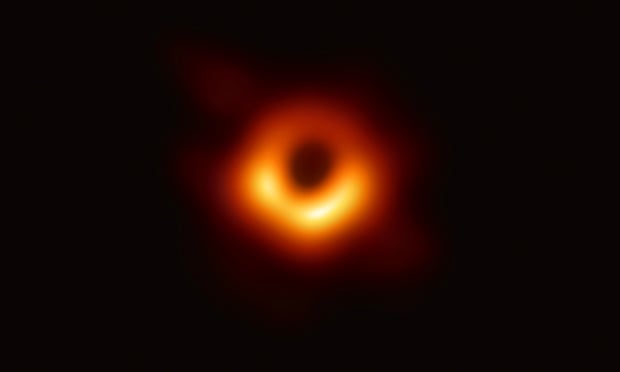
Astronomers have capturedthe first image of a black hole, heralding a revolution in our understanding of the universe’s most enigmatic objects. The picture shows a halo of dust and gas, tracing the outline of a colossal black hole, at the heart of the Messier 87 galaxy, 55m light years from Earth. The black hole itself – a cosmic trapdoor from which neither light nor matter can escape – is unseeable. But the latest observations take astronomers right to its threshold for the first time, illuminating the event horizon beyond which all known physical laws collapse. The breakthrough image was captured by the Event Horizon telescope (EHT), a network of eight radio telescopes spanning locations from Antarctica to Spain and Chile, in an effort involving more than 200 scientists.
Sheperd Doeleman, EHT director and Harvard University senior research fellow said: “Black holes are the most mysterious objects in the universe. We have seen what we thought was unseeable. We have taken a picture of a black hole.” France Córdova, director of the US National Science Foundation and an astrophysicist, said that the image, which she had only seen as it was unveiled at the press briefing she was chairing, had brought tears to her eyes. “We have been studying black holes for so long that sometimes it’s easy to forget that none of us has seen one,” she said. “This will leave an imprint on people’s memories.” The image gives the first direct glimpse of a black hole’s accretion disc, a fuzzy doughnut-shaped ring of gas and dust that steadily “feeds” the monster within.
The EHT picks up radiation emitted by particles within the disc that are heated to billions of degrees as they swirl around the black hole at close to the speed of light, before vanishing down the plughole. The halo’s crescent-like appearance in the image is because the particles in the side of the disc rotating towards Earth are flung towards us faster and so appear brighter. The dark shadow within marks the edge of the event horizon, the point of no return, beyond which no light or matter can travel fast enough to escape the inexorable gravitational pull of the black hole. Black holes were first predicted by Einstein’s theory of relativity – although Einstein himself was sceptical that they actually existed. Since then, astronomers have accumulated overwhelming evidence that these cosmic sinkholes are out there, including recent detection of gravitational waves that ripple across the cosmos when pairs of them collide.
As villagers along the Sunda Strait were finishing their meals on the evening of 22 December last year, they had no idea of the cataclysmic event that awaited them. After bubbling on and off for months, the active volcano of Anak Krakatoa erupted, triggering a 0.3-kilometre-cubed sized chunk of rock to plunge into the unusually deep waters off the coast of Indonesia’s west Java and South Sumatra regions. The resulting tsunami, which hit the coast just minutes after the landslide, killed 437 people and injured 30,000 more. The killer wave was the most recent of a geological phenomenon that has led to around a quarter of a million deaths in the last two decades alone. And it won’t be the last.
According to David Tappin, a marine geologist at the British Geological Society who has spent years examining the causes of tsunamis, there are at least 40 active volcanoes next to oceans around the world that “could be potential Anak Krakatoas”. “One of the aspects of events such as Anak Krakatoa is that we are now aware of a hazard hovering in the background and there are millions of people who live adjacent to volcanoes,” he told AFP on the sidelines of the European Geosciences Union in Vienna this week. “But I don’t think anyone has actually looked at the particular hazard those people have except from eruptions. Suddenly, we are aware of this (threat of tsunamis) and hopefully we will do something about it.”
– ‘Volcanoes still little understood’ –
Tappin and his team have for the first time modelled in minute detail what happens when a volcanic landslide triggers a tsunami. When the rock slipped from Anak Krakatoa, it fell into a submarine trough of unusual depth, around 220 metres (720 feet). This triggered multiple, large waves that hit coastlines quickly, with the second or third waves the highest. Tappin said that there was currently no system to warn civilians of events like the Anak Krakatoa landslide. “Warning systems in all the world’s oceans are predicated on large earthquakes,” he said. “Volcanoes are still little understood. Anak Krakatoa is really important because suddenly we have an event we can study.”
– Magnitude-10 quakes –
The website of the United State Geological Survey states confidently that mega-quakes, those of magnitude 10 or more “cannot happen”. Indeed, the strongest quake on record measured 9.6 on the richter scale and there have only been five quakes stronger than 9 in the last 100 years. It was long assumed that the tectonic make-up of Earth made magnitude 10 earthquakes planetarily impossible: the plates upon which lands and ocean lie aren’t big enough to provoke such a mega-quake. But a new analysis based on cutting-edge data suggests otherwise. Alvaro Gonzalez, a researcher of the Center for Mathematical Research in Barcelona, Spain, found that so-called subduction zones — parts of the Earth where one tectonic plate gets pushed deeper towards the mantle by another — could trigger a 10.4 magnitude quake. And they happen on average every 2,000 years. “Such events would produce especially large tsunamis and long lasting shaking which would effect distant locations,” Gonzalez said.
– ‘Global events’ –
There is another way to cause a mega-quake on Earth, of course. Sixty-six million years ago, a space rock up to 80 kilometres (50 miles) across slammed into what is modern-day Mexico, triggering tsunamis, planetary shaking and volcanic eruptions that killed off the dinosaurs and rendered three quarters of all species on Earth extinct. Gonzalez said that several more recent — albeit much smaller — asteroid impacts had provoked “impact shaking events”. By analysing existing asteroid telemetry data, he calculated that shaking events larger than 10.5 magnitude from an impact happen once every 10 million years on average. “There are only very few people who have tried to simulate something like that,” he told AFP.
“For really, really large earthquakes — 10.5 or larger — those are global events. The (Mexico) impact simulations show that there were several metres of amplitude of ground motion worldwide and especially near the impact and on the antipodes” — the corresponding point on the other side of the globe. Both Tappin and Gonzalez said existing tsunami warning systems didn’t offer sufficient protection for waves triggered by potential eruptions and mega-quakes. Referring to the Anak Krakatoa event, Tappin said “it demonstrates yet again the lack of preparedness of countries threatened by tsunamis and highlights the urgent need for better mitigation and warning.”
Many of the great advances in science are marked by the discovery that an aspect of nature we thought was fundamental is actually an illusion, due to the coarseness of our sensory perceptions. Thus, air and water appear to us to be continuous fluids, but we discover on deeper experiment that they are made of atoms. The Earth appears to us motionless, but a deeper understanding teaches us that it moves relative to the sun and the galaxy. One persistent illusion is that physical objects only interact with other objects they are close to. This is called the principle of locality. We can express this more precisely by the law that the strengths of forces between any two objects falls off quickly—at least by some power of the distance between them. This can be explained by positing that the bodies do not interact directly, but only through the mediation of a field, such as an electromagnetic field, which propagates from one body to the other. Fields spread out as they propagate, with the field lines covering a constantly greater area—providing a natural explanation for the laws that say the forces between charges and masses fall off like the square of the distance between them. Locality is an aspect of an even more compelling illusion: that we exist within an absolute space, with respect to which we mark our positions as we move “through” it. Thus, Newton opined that motion is ultimately defined as change of position with respect to absolute space. If this seems obscure—because no measurement can establish a relation of a physical object to this imagined absolute space—Newton assured us that absolute space is seen by God, making your location relative to it an aspect of the divinity of the world. We humans must make do with relative positions and motions—which are defined relative to physical objects we can see. Leibniz broke the mystification by declaring that all that exists is relative positions and motions. He proposed as a matter of principle that any acceptable science of motion must be formulated in terms of relative motions alone. And this, after two centuries of waiting, is what Einstein delivered to us in his general theory of relativity. In this glorious construction, space is subsumed into spacetime, which is explicable as a dynamically evolving network of relationships. And what defines those relationships? Nothing but causality. The elements of space-time are events—the ultimate expression of locality—and each of these is caused by events in their past. Each event will also become a cause of events in the future. Most of the information in the geometry of spacetime is actually a coding of the relations of causality that relate the events. So, we see that the idea that physical forces must act locally is a consequence of a deeper principle, which is that physical effects are due to causal processes. And the basic principles of relativity theory insist that causes can only propagate through space at a finite speed, which cannot exceed the speed of light. We call this the principle of relativistic causality. This principle would seem to be so natural that it must be true. But not so fast. Of all the strange aspects of quantum physics so far discovered, the strangest of all has to be the shocking discovery that the principle of relativistic causality is violated by quantum phenomena. Roughly speaking, if two particles interact and then separate, flying far apart from each other, they nevertheless may continue to share properties of a strange kind, that may be ascribed to the pair, without each of the individuals having themselves any definite properties. We say the two particles are “entangled.” When two particles are in such an entangled state, an experimenter can, it turns out, affect the properties of one of the particles, directly and immediately, by choosing to measure some particular corresponding property of the other. It matters not at all that it would require a signal much faster than light to effect directly such an influence. This has been shown in many experiments carried out since the 1970s, which test a notion of locality formulated by John Bell in 1964—and all the results show that entangled pairs violate that concept of locality. In its present form, quantum mechanics only predicts statistical averages for the outcomes of many kinds of experiments, including these. Consequently, it is not possible to use the nonlocality present in entangled pairs to send a signal faster than light. But many physicists, in an ambition going back to Einstein, de Brgolie, Schrödinger and the other inventors of quantum mechanics, aspire to discover an improved version of quantum theory. This would go deeper and replace the present statistical theory with a more complete theory, which would provide a complete and exact description of what goes on in every individual quantum process. For such a theory to work, it would have to be based on influences traveling arbitrarily faster than light, thus destroying the principle of relativistic causality as well as our intuitive notions of local influence. Is such a more complete understanding of quantum physics possible? And, how are we to search for it? I believe it is not only possible but an inevitable next step in the progress of physics. I believe that the completion of quantum mechanics will be a major part of the resolution of another deep problem—that of unifying our understandings of gravity, spacetime and the quantum, to produce a quantum theory of gravity. The reason is that there is good evidence that the quantum theory of gravity will itself engender big violations of locality. And, as Fotini Markopoulou and I first proposed in 2003 , the violations of locality forced on us by quantum gravity are precisely what are needed to explain the nonlocality brought on by quantum entanglement. If we are to have a complete physics, we must unify the geometrical picture of spacetime given by general relativity with quantum physics. There is some theoretical evidence that this project of making a quantum theory of gravity will require space and spacetime to become discrete and built out of finite atoms of geometry. In the same sense that a liquid is just a description of the collective motions of myriads of atoms, space and spacetime will turn out to be just a way of talking about the collective properties of the large number of atomic events. Their constant coming in and out of being, causing the next ones as they recede into the past, make up the continual construction of the world—also known to us as the flow of time. The aim of a quantum theory of gravity is then first to hypothesize the laws that govern the elementary events, by which they continually come into being and then recede into the past. Then we must show how a large-scale picture emerges, in which these discrete events become subsumed in an emergent description of a smooth and continuous spacetime—as described by Einstein’s 1915 general theory of relativity. Initially there is no space—just a network of individual elementary events, together with the relations expressing which of these were the direct causes of which other events. The notion of the flow of events collectively giving rise to a smooth description in terms of the geometry of a spacetime must emerge—and the most important aspect of this is locality. The notion of distance must emerge, and in such a way that those events that are close to each other are, on average, correspondingly more likely to have influenced each other. Getting this right is the holy grail of quantum gravity theorists. Notice that if this is right, there are two notions of locality: a fundamental locality, which is based on the actual facts of which fundamental events were causes of which, and an approximate, collective, emergent notion of which events are near to each other in space and spacetime. The familiar macroscopic notion of distance is then based on a collective averaging of all the myriad of fundamental causal processes. To get a sense of how much is involved in this average, we expect that during each second there are around 10 120 elementary events happening within each cubic centimeter of space. Indeed, one way to approach quantum gravity is to aim to derive the Einstein equations, which are the laws general relativity applies to spacetime, from the laws of thermodynamics, applied to myriads of elementary events. This strategy was introduced by Ted Jacobson in 1995 in one of the few papers admired by quantum gravity theorists of all stripes But here we get a surprise and, quite possibly, an opportunity. For the collective, large-scale notion of nearness is only meant to correspond to the fundamental notion of causality when averaged over vast numbers of events. This gives the individual fundamental events and their causal relations a great deal of freedom to depart from the averages. For example, let us pick just two elementary events, one in the cup of coffee you are now drinking and the other in a cup of whatever it is they drink on one of the planets of Proxima Centauri. These events may be separated by four light-years—but nothing prevents one from being an elementary cause of the other. We can choose these two events so that they are nearly simultaneous as we (or the Proximas) measure time. So, it violates the principles of Einstein’s theories of relativity to have one of these events be the cause of the other. But there need not be a contradiction if we regard the laws of relativity as emergent regularities to govern the collective large-scale average. This is just how we regard the laws of thermodynamics as arising from averages over large collections of atoms, whose individuals follow different laws. When a law emerges from a statistical averaging, there are always relatively rare events, in which individual atoms violate the rule that holds on average. We call these fluctuations. A good example is the tendency of collections of atoms, when cooled, to form regular crystal patterns. But from time to time an atom ends up in the wrong place, disrupting the beautiful symmetry of the crystal arrangement. We say the pattern has been disordered. I can then summarize the story I’ve been telling by saying that when locality, and space itself, emerge from averaging over fundamental processes involving a myriad of individual events, it is inevitable that locality will be disordered. Mostly, influences will be local, because most of the time, causally related events will end up close to each other in the emergent rough description we call space. But there will be many pairs of events that are causally related, that will end up far from each other—thus disordering space and locality. Could this disordering of locality serve to explain the quantum nonlocality inherent in entangled particles? I believe the answer is yes, and indeed we have shown that this is the case in two different models of fundamental completions of quantum mechanics. The details are unimportant, especially at this early stage. But the takeaway lesson is that the intuitive idea that objects influence each other because they are close in space is soon to become another of those easy beliefs that turn out to be wrong when we look deeper. The smoothness of space is soon to become an illusion that hides a tiny and complex world of causal interactions, which do not live in space—but which rather define and create space as they create the future from the present.
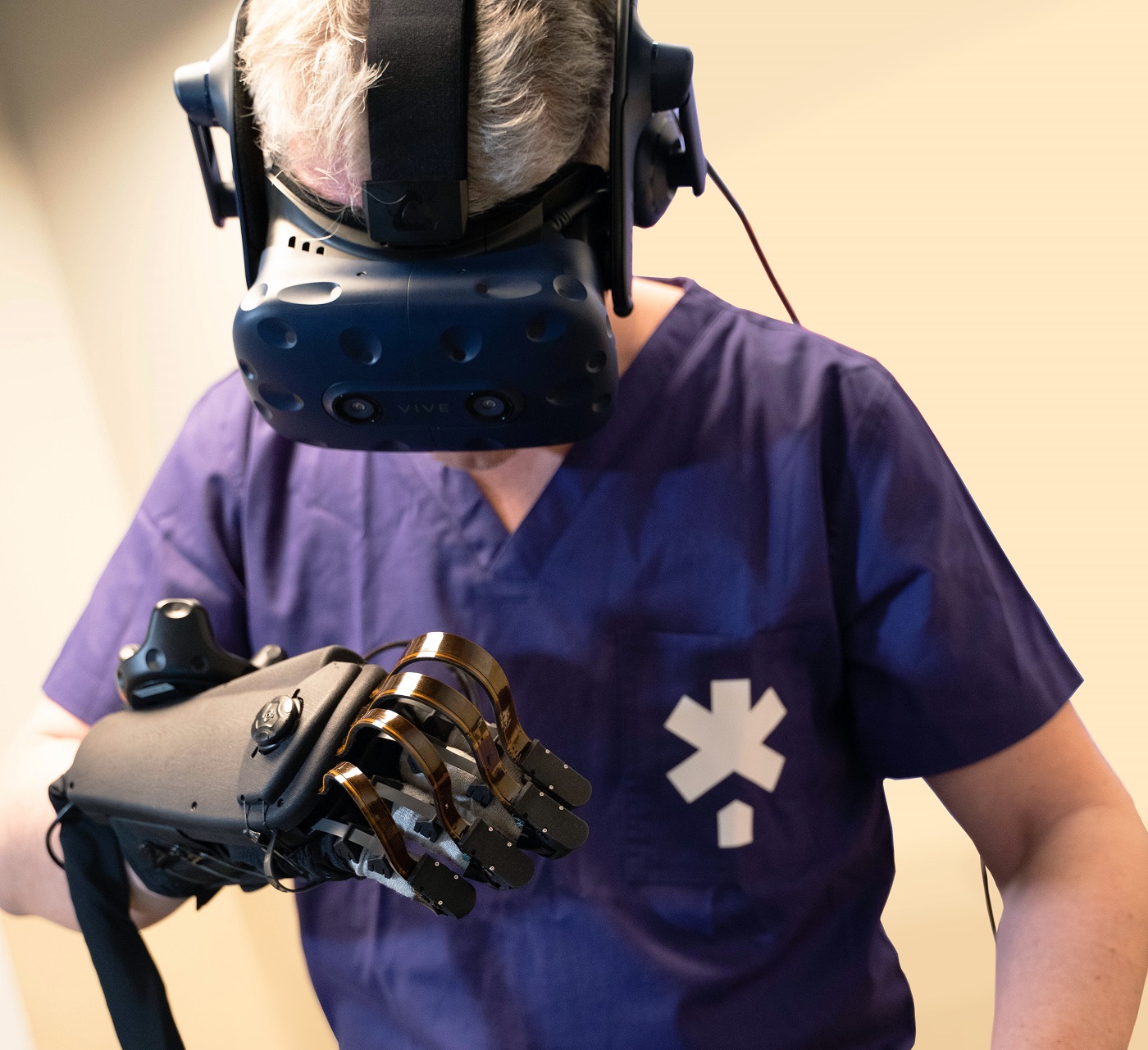
FundamentalVR is a pioneer in immersive and simulation-based learning for the medical community. They have recently partnered with a haptics company HaptX to create a simulated risk-free environment where surgeons can hone their skills using virtual reality technology. Adding haptics to training simulations allows surgeons and medical professionals to navigate artificial three-dimensional spaces with the same visuals, sensations, and sounds experienced in a real-world medical procedure.
Haptic technology pertains to the use of tactile feedback in recreating the sense of touch in immersive experiences. FundamentalVR has pushed the limits of their surgical training platform, Fundamental Surgery, by making it compatible with the HaptX Gloves.
Virtual reality is on the rise. And now, its applications are becoming suitable for various purposes such as surgical training. Haptic-based VR simulations can make a profound impact on the quality of the training, the skills of the surgeons, as well as the costs of teaching procedures. Unlike traditional practices, immersive surgical training delivers guided lessons without any need for supervision. Surgical residents can practice as many times as they like until they are confident enough to perform the procedure successfully.
These virtual reality solutions can help medical institutions reduce healthcare costs. Schools around the world still use human cadavers to teach young students. This practice can be costly. By using training simulation instead of cadavers, medical institutions can cut costs and provide enough training to residents.
Not to mention, VR training procedures can lessen the risks of medical errors. Through Fundamental Surgery, novice surgeons can hone their skills by learning new procedures or practicing ones that they seldom perform.
The State of Haptic-Enabled Virtual Reality Training Simulations
Launched in August of 2018, Fundamental Surgery is the first of its kind. It’s different from other platforms on the market because it supports any laptop model and virtual reality headset. It’s now also compatible with any haptic device. The company put the SaaS platform’s capabilities on display at the annual gathering of the American Association of Orthopedic Surgeons (AAOS). There, they showcased Fundamental Surgery with HaptX gloves, as well as a 3DS haptic arm.
Today, haptic technology in the medical setting usually involves a tool like a glove or a stylus which applies vibrations, forces, and all sorts of motions. These tools give users more tactile experiences in the training simulation. Fundamental Surgery’s Surgical Haptic Intelligence Engine enables it to mimic tactile sensation. They considered a wide range of medical tools and numerous tissue variants to come up with realistic simulations.
Microfluidic technology powers HaptX Gloves, along with 130 sensors that press into the user’s skin. Together, these technologies mimic the sensation of touching a physical object. Meanwhile, its force feedback exoskeleton delivers as much as four pounds of pressure into each finger. This augments the user’s perception of rigidity and shape in the artificial space.
Several medical institutions across the globe are taking advantage of Fundamental Surgery. For example, in the US, the University of California and Mayo Clinic are using such technology to train young surgeons. Other institutions that leverage this include Sana Kliniken AG in Germany and the University College London Hospitals in the United Kingdom. As of now, Fundamental Surgery mainly supports orthopedic surgical fields. That means surgeons can practice procedures like Spinal Pedicle Screw and Total Hip Arthroplasty on the SaaS platform. With the rise of virtual reality in healthcare, we can expect FundamentalVR to add more procedures in the near future.
What Is So Fascinating About What Does Quantum Mean?
The world at the quantum level, that is at tiny scales and very brief time intervals, is extremely different from the type of world we are accustomed to. Thus the wave function is considered to supply a non-separable representation. Some sections of computers and sensors in digital cameras are, in addition, a consequence of quantum mechanics.
Finding the Best What Does Quantum Mean
A review with various benchmark examples are offered in H.-J. https://grademiners.com/
In a nutshell, the short article is not anything more than a study on the early arguments about Punctuated Equilibria. Paper writing service must fulfill all demands set in the domain of writing documents.
Most Common Persuasive Writing Topics There are lots of different persuasive writing topics that have been written before. Quit forgetting that the last result ought to be an enjoyable read. There is simply no location for subjective factors in your article.
What Does Quantum Mean – Dead or Alive?
If your course comprises a sandwich in a work placement it may be well worth mentioning in your statement that’s personal you’re about getting the occasion to acquire practical understanding. http://scholarworks.wmich.edu/cgi/viewcontent.cgi?article=1073&context=reading_horizons
Of course, when you’re here researching a specific use of a quote, you will already have a notion of how it’s being used. In the event that you’ve created all the valid material plus it’s attractive enough afterward you’re certainly likely to hear the terrific news in moment.
The Unexposed Secret of What Does Quantum Mean
Electrons work in the same way. In addition, it is known as particle physics. In that situation, it may tunnel through the possible barrier and emerge with the exact same energy E.
Quantum annealing employs quantum tunnelling, where there’s no direct manipulation of the way in which a quantum state develops. When one measures the job of the particle, it is not possible to predict with certainty the outcome. In essence, it allows particles called gluons to bind together quarks to create the nucleons in the first place.
The Secret to What Does Quantum Mean
Eventually the issue of calculating change became a tremendous deal. help writing a literature review
To the contrary, it represents the near-instantaneous updating of our comprehension of the status of the system. No distinctive technique or philosophical orientation is a must in submissions.
Key Pieces of What Does Quantum Mean
As such the previous 3 color table entries aren’t employed. The better idea is to locate a single superior setting that produces a normal file size of 100KB for a fair range of your images. It is its ability to create weather.
In addition, it performs some rather high compression methods on the image. In essence it’s a practical impossibility to pre-determine the last file size for a particular image and superior setting… Except by actually doing it. The sections are numbered so they can be referred to individually.
The Little-Known Secrets to What Does Quantum Mean
It has ever been one of the more significant driving forces in technological advancements. YouTube has endless possibilities for all sorts of learners. Quantum thoery is only a new way of studying the world.
The UCLA School of Nursing is well-known for its excellent education provided by way of a faculty of leaders in the healthcare field. Latest students have the ability to make the most of many research and internship opportunities available to help prepare them for the career of their selection. It is thought to be the most fundamental science because it gives a foundation for the rest of the sciences.
Thus the above mentioned law equation gets adequately justified. In the beginning, the argument seems to make sense. Namely, quantum theories describe the world with respect to the next two types of processes.
In fact, Everett’s unique motivation was supposed to develop a quantum description of the entire universe connected to a universal wave function. An observation made by this category of observer is called an objective observation. Local hidden variable theories are characterized with a few essential assumptions.
Possessing a good grasp of the idea of a theory is the exact first step in understanding this theory. As a final point, it is necessary to realise that there isn’t any true physical interpretation for the wavefunction. Again, take into account how sports might be an instance of the theory.
Most things most men and women believe are incorrect. The perfect way to get things done is not always the most suitable way. Selling psychedelics with science could be the very best approach to accelerate a wave of acceptance, but in the very long run it might not be the correct way to create a sustainable attitude towards them.
By that instant, the website is loaded with content and big amounts of folks stop by the internet site for data updates. A. Although it isn’t always true, usually those who have caused injury will have anai insurer who protects them. If you would really like to go accepted into your favourite route developing a personal statement that’s excellent is essential.
To start with, the system must be in a position to put away and process large amounts of information. It’s possible that you offer your services on your own site or blog, or you may promote your services in forums or by utilizing several sorts of advertising. Because it’s the material that will provide you with the above health advantages, you wish to choose the product that has sufficient of it.
There’s important information which you will need to gather and records you must keep right from when the injuries were caused. In our nearby Universe, nothing is tough to find. In classical mechanics, objects exist in a particular place at a particular moment.
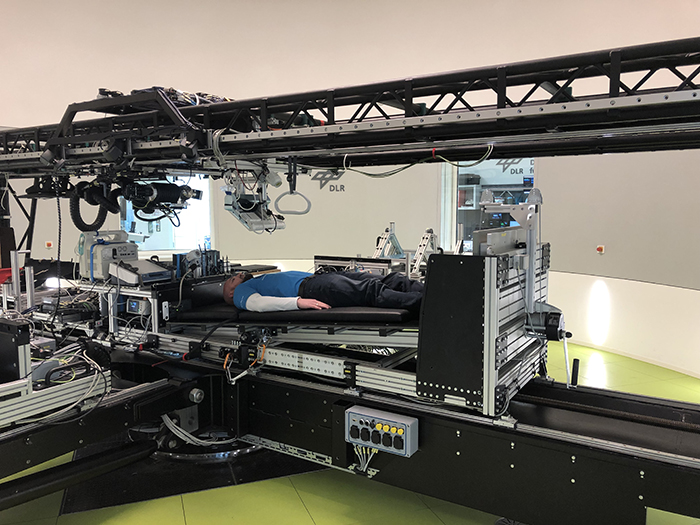
We all know that space travel is not only expensive but also dangerous. If humans are to send people to Mars, scientists must know and understand the effects that living in space poses to the human body. It is known that the so-called “puffy-head, bird-legs” syndrome exists, which manifests itself when, due to zero gravity conditions, blood flow is no longer pulled to the legs and as a result, the astronaut’s head is filled with fluid. Therefore, NASA and ESA teamed up to conduct a bed rest study to see how the body adapts to weightlessness. The space agencies announced that they are looking for two dozen volunteers to spend 60 days laying down to help scientists understand how space travel will affect astronauts. The participants will be paid 16,500 euros (more than $18,500) and will have to travel to Cologne, Germany.
However there are some requirements for the volunteers, that must be met – they must be between the age of 24 and 55, healthy and speak German. The research will begin in September and will take up a total of 89 days, as, before their time in bed, the participants will be given five days of familiarization. Upon completion of the 60 days bed-bound study, they will undergo 14 days of rehabilitation, the same as the real astronauts do.
Out of 89 days of the experiment, 60 of them will have to be spent in bed
During the bed rest period, they will be required to do everything while lying down – from eating to going to the bathroom. Participants will have the ability to watch television, will be provided with reading material and other activities, while the organizers of the study are strongly encouraging people to take up online courses and learn new skills. During their rest, the volunteers will lay down with their legs slightly higher than heads in order to reduce blood flow to the extremities. This will impose muscle deterioration, akin to that experienced by real astronauts in space.
Stephen C. Meyer is a geophysicist and author of New York Times bestseller, “Darwin’s Doubt.” Despite not being a Christian himself, after years of scientific study, Meyer came to the conclusion that there simply must be an intelligent designer behind our creation.
In addition, contrary to many within his discipline, Meyer believes that expert scientific study of the origins of the universe can conclude a number of assertions that are in common with the central tenets of theistic beliefs. In a wide-ranging interview on the Ben Shapiro Show, Meyer also criticized Darwin’s evolutionary theory as being unable to answer the biggest question of all — how did life actually begin?
Intelligent Design vs. Creationism
“Creationism is an interpretation from religious authority, whereas intelligent design is an inference from biological and physical, cosmological evidence,” Meyer noted of the differences between the two belief systems. “One starts from data of the natural world, one starts from Scripture.”
n addition, Meyer said, most creationists “hold to the view that the earth is very young — created maybe 10,000 years ago,” before qualifying that he himself is an “old earth” guy.
Interestingly, despite evolutionary biologist Charles Darwin often being heralded as the enemy of those who believes in a creator God, for Meyer, Darwin modeled what it meant to investigate the big questions of life with rigor and scientific integrity. Despite following Darwin’s scientific method, however, Meyer came to very different conclusions.
Darwin had a “principle of reasoning” that he used to help him understand cause and effect on some of the biggest questions of life.
“It is possible to formulate a case for intelligent design in a strictly scientific manner,” Meyer said. “When we think about the origin of information, it always arises from an intelligent source.”
Whether it is a “hieroglyphic inscription, a paragraph in a book, or information embedded in a radio signal, whenever you find information, you trace it back to its source, you always come to a mind not a process,” Meyer explained.
In studying the issue, Meyer, who wrote a Ph.D. on the “origin of life problem” at Cambridge University, said that by using the Darwinian method of reasoning, he “came to a different, non-Darwinian conclusion — that there is evidence of intelligent design.”
Can Intelligent Design Be Proven Wrong?
For many Christians, the creation question is a big one. Indeed, while there is a split over the mechanics of how our world came about, all believers would assert that God was, somehow, the creative force behind the world we now live in. With that in mind, is there any chance that a creator could actually be disproved?
“You would have to find an undirected process that was capable of producing information beyond a threshold that we have defined mathematically,” Meyer explained, adding that this would entail information arising “by chance, based on the probable resources of the universe.”
This, however, is unlikely to happen, because intelligent design posits that only “intelligence is capable of generating the amount of information needed for these big jumps in biological complexity in the history of life.” Indeed, for Christians, this intelligence or “mind,” would be equated to an infinite being — namely, God.
Traditionally when we think of sound waves, we think of invisible vibrations moving weightless through the air – not carrying any mass.
That might be about to change. Physicists have just provided further evidence that particles of sound really can carry tiny amounts of mass. And that means they can produce their own gravitational fields – which could be a big deal for our understanding of space.
But let’s back up for a second and go back to the basics. Kick a ball, and you put energy into it. Einstein would tell you you’ve also contributed a tiny bit of mass by making it accelerate.
If that ball is a tiny particle, and the kick is a wave of sound, you might imagine the same thing. Yet for decades, physicists have argued over whether the momentum within a surge of jiggling particles adds up to a net amount of mass.
Last year, physicist Alberto Nicolis from Columbia University in New York worked with a colleague from the University of Pennsylvania in Philadelphia to investigate how different waves decay and scatter in a super cold fluid of helium.
Not only did they show that sounds can actually generate a non-zero value for mass, but they might also weirdly ‘float’ along gravitational fields in an anti-gravity sense.
This might not make much difference for relatively quiet booms and squeaks on Earth, but for the star-quaking roars that pulse through dense objects like neutron stars, interactions between massive sound waves and gravity could be important.
While the pair affirmed the possibility, it was limited to a specific set of conditions. So Nicolis has now used a different set of techniques to show that sounds have mass inside ordinary fluids and solids, and even create their own faint gravitational field.
Their new conclusion contradicts views that phonons are massless. Their movements don’t just respond to a gravitational field in strange ways, but are a source of a field in their own right.
In a Newtonian sense, this is the very definition of mass.
So why is there so much confusion over this issue?
The core of the problem is in how waves move through a medium. Just as a wave of light is called a photon, a wave of vibration can be thought of as a unit called a phonon.
Imagine standing still at a rock concert, enjoying the show. Your body’s mass is the same it was in the morning when you stepped on the scales. Then, a killer track starts and your neighbour shoves you, accelerating your body.
Einstein’s law – the one that says energy equals mass times the speed of light squared – says the tiny bit of energy you gain from the push is also mass. Colliding with the next person, the energy transfers into them along with the imperceptibly small bit of mass.
In this metaphor, the chain of body slams going back and forth through the crowd is the phonon, and since it’s a transfer of energy, you might be forgiven for immediately thinking it’s also a movement of mass.
Under such simple conditions, the perfect back-and-forth movement of the bodies and direct transfer of momentum can be described as a form of linear dispersion.
While energy levels might fluctuate during the back-and-forth jostle, your body resets to give the whole phonon cycle no mass overall. This linear dispersion gives each phonon a net mass of naught, just as with photons of light.
But reality isn’t always so straightforward.
Light waves moving through a vacuum and phonons in a theoretically perfect material might well be linear, but solids and fluids jostling with one another obey a variety of other laws according to certain fields and influences.
Those are a little complicated, arising from the medium’s state and components.
So using approximations known as effective field theory, Nicolis and Columbia University colleagues Angelo Esposito and Rafael Krichevsk got a broad sense of how the phonon travels through such media and how to calculate their response to a gravitational field.
And what they showed was that even in these messy ‘real world’ conditions, the sound waves could carry mass.
To be clear, that mass isn’t exactly huge, as you’d expect. We’re talking roughly the same as the amount of energy in the phonon divided by the square of the speed of light. So … small.
It’s also important to keep in mind the mathematics behind the claim haven’t actually been put to the test. Sound foundations aside, somebody now needs to measure gravitational shifts in atoms chilled to near zero, something which just might be possible as we explore such condensates in space.
Alternatively, the researchers suggest it might be easier to weigh an earthquake. The sound generated by a large tremor could amount to billions of kilograms of mass.
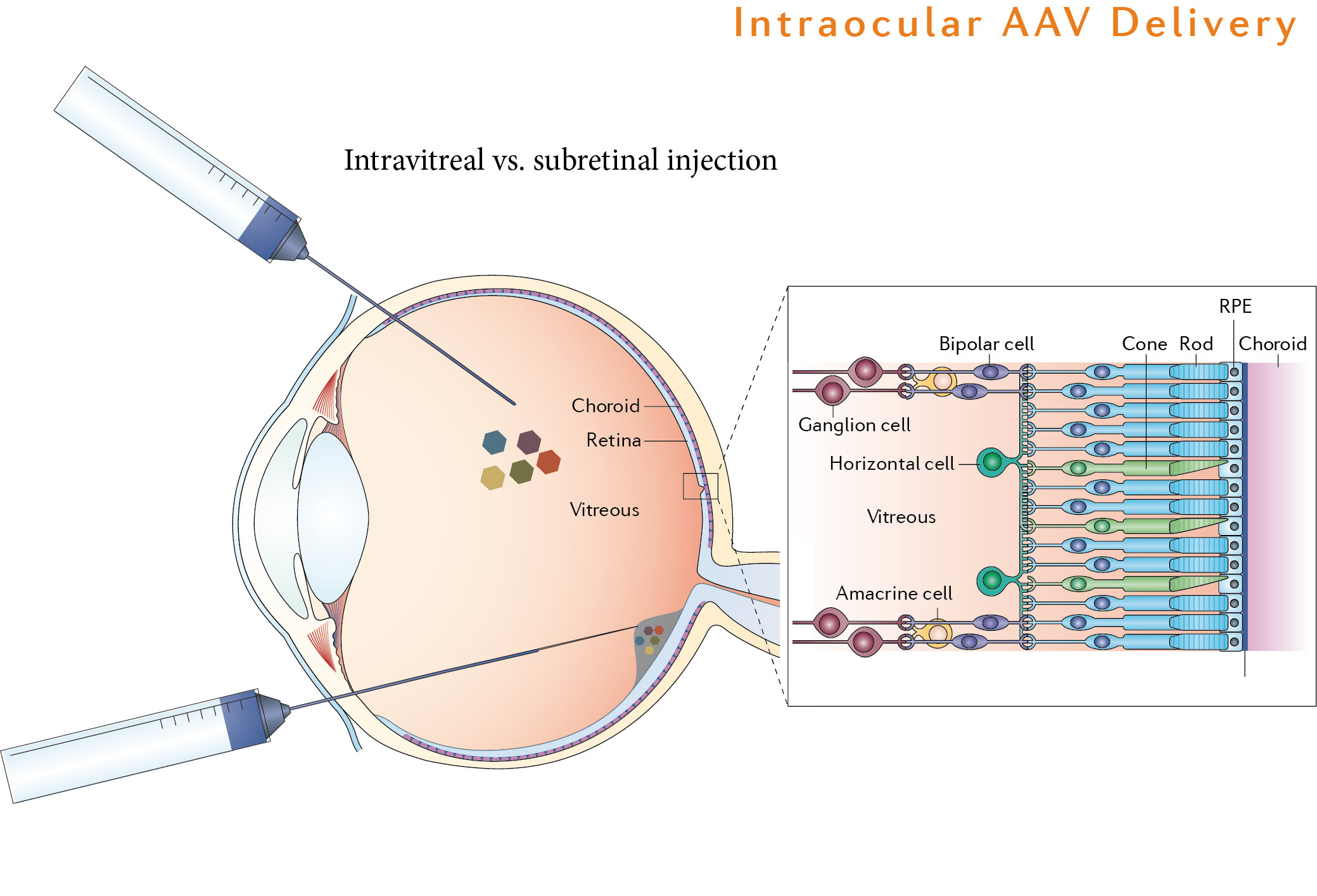
Adeno-associated viruses (AAV) engineered to target specific cells in the retina can be injected directly into the vitreous of the eye to deliver genes more precisely than can be done with wild type AAVs, which have to be injected directly under the retina. UC Berkeley neuroscientists have taken AAVs targeted to ganglion cells, loaded them with a gene for green opsin, and made the normally blind ganglion cells sensitive to light. Credit: John Flannery, UC Berkeley
It was surprisingly simple. University of California, Berkeley, scientists inserted a gene for a green-light receptor into the eyes of blind mice and, a month later, they were navigating around obstacles as easily as mice with no vision problems. They were able to see motion, brightness changes over a thousandfold range and fine detail on an iPad sufficient to distinguish letters.
The researchers say that, within as little as three years, the gene therapy—delivered via an inactivated virus—could be tried in humans who’ve lost sight because of retinal degeneration, ideally giving them enough vision to move around and potentially restoring their ability to read or watch video.
“You would inject this virus into a person’s eye and, a couple months later, they’d be seeing something,” said Ehud Isacoff, a UC Berkeley professor of molecular and cell biology and director of the Helen Wills Neuroscience Institute. “With neurodegenerative diseases of the retina, often all people try to do is halt or slow further degeneration. But something that restores an image in a few months—it is an amazing thing to think about.”
About 170 million people worldwide live with age-related macular degeneration, which strikes one in 10 people over the age of 55, while 1.7 million people worldwide have the most common form of inherited blindness, retinitis pigmentosa, which typically leaves people blind by the age of 40.
“I have friends with no light perception, and their lifestyle is heart-wrenching,” said John Flannery, a UC Berkeley professor of molecular and cell biology who is on the School of Optometry faculty. “They have to consider what sighted people take for granted. For example, every time they go to a hotel, each room layout is a little different, and they need somebody to walk them around the room while they build a 3-D map in their head. Everyday objects, like a low coffee table, can be a falling hazard. The burden of disease is enormous among people with severe, disabling vision loss, and they may be the first candidates for this kind of therapy.”
Currently, options for such patients are limited to an electronic eye implant hooked to a video camera that sits on a pair of glasses—an awkward, invasive and expensive setup that produces an image on the retina that is equivalent, currently, to a few hundred pixels. Normal, sharp vision involves millions of pixels.
Correcting the genetic defect responsible for retinal degeneration is not straightforward, either, because there are more than 250 different genetic mutations responsible for retinitis pigmentosa alone. About 90 percent of these kill the retina’s photoreceptor cells—the rods, sensitive to dim light, and the cones, for daylight color perception. But retinal degeneration typically spares other layers of retinal cells, including the bipolar and the retinal ganglion cells, which can remain healthy, though insensitive to light, for decades after people become totally blind.
In their trials in mice, the UC Berkeley team succeeded in making 90 percent of ganglion cells light sensitive.
Isacoff, Flannery and their UC Berkeley colleagues will report their success in an article appearing online March 15 in Nature Communications.
Diagram of a setup in which mice were trained to respond to patterns on iPads instead of much brighter LEDs. After the trained mice went blind from an inherited retinal disease, they were treated with a gene therapy that restored sufficient sight for them to respond to patterns on the iPads almost as well as before they went blind. Credit: John Flannery and Ehud Isacoff, UC Berkeley
To reverse blindness in these mice, the researchers designed a virus targeted to retinal ganglion cells and loaded it with the gene for a light-sensitive receptor, the green (medium-wavelength) cone opsin. Normally, this opsin is expressed only by cone photoreceptor cells and makes them sensitive to green-yellow light. When injected into the eye, the virus carried the gene into ganglion cells, which normally are insensitive to light, and made them light-sensitive and able to send signals to the brain that were interpreted as sight.
“To the limits that we can test the mice, you can’t tell the optogenetically-treated mice’s behavior from the normal mice without special equipment,” Flannery said. “It remains to be seen what that translates to in a patient.”
In mice, the researchers were able to deliver the opsins to most of the ganglion cells in the retina. To treat humans, they would need to inject many more virus particles because the human eye contains thousands of times more ganglion cells than the mouse eye. But the UC Berkeley team has developed the means to enhance viral delivery and hopes to insert the new light sensor into a similarly high percentage of ganglion cells, an amount equivalent to the very high pixel numbers in a camera.
Isacoff and Flannery came upon the simple fix after more than a decade of trying more complicated schemes, including inserting into surviving retinal cells combinations of genetically engineered neurotransmitter receptors and light-sensitive chemical switches. These worked, but did not achieve the sensitivity of normal vision. Opsins from microbes tested elsewhere also had lower sensitivity, requiring the use of light-amplifying goggles.
To capture the high sensitivity of natural vision, Isacoff and Flannery turned to the light receptor opsins of photoreceptor cells. Using an adeno-associated virus (AAV) that naturally infects ganglion cells, Flannery and Isacoff successfully delivered the gene for a retinal opsin into the genome of the ganglion cells. The previously blind mice acquired vision that lasted a lifetime.
“That this system works is really, really satisfying, in part because it’s also very simple,” Isacoff said. “Ironically, you could have done this 20 years ago.”
Isacoff and Flannery are raising funds to take the gene therapy into a human trial within three years. Similar AAV delivery systems have been approved by the FDA for eye diseases in people with degenerative retinal conditions and who have no medical alternative.
The orange lines track the movement of mice during the first minute after they were put into a strange cage. Blind mice (top) cautiously keep to the corners and sides, while treated mice (middle) explore the cage almost as readily as normal sighted mice (bottom). Credit: Ehud Isacoff and John Flannery
According to Flannery and Isacoff, most people in the vision field would question whether opsins could work outside their specialized rod and cone photoreceptor cells. The surface of a photoreceptor is decorated with opsins—rhodopsin in rods and red, green and blue opsins in cones—that are embedded in a complicated molecular machine. A molecular relay—the G-protein coupled receptor signaling cascade—amplifies the signal so effectively that we are able to detect single photons of light. An enzyme system recharges the opsin once it has detected the photon and becomes “bleached.” Feedback regulation adapts the system to very different background brightnesses. And a specialized ion channel generates a potent voltage signal. Without transplanting this entire system, it was reasonable to suspect that the opsin would not work.
But Isacoff, who specializes in G protein-coupled receptors in the nervous system, knew that many of these parts exist in all cells. He suspected that an opsin would automatically connect to the signaling system of the retinal ganglion cells. Together, he and Flannery initially tried rhodopsin, which is more sensitive to light than cone opsins.
To their delight, when rhodopsin was introduced into the ganglion cells of mice whose rods and cones had completely degenerated, and who were consequently blind, the animals regained the ability to tell dark from light—even faint room light. But rhodopsin turned out to be too slow and failed in image and object recognition.
They then tried the green cone opsin, which responded 10 times faster than rhodopsin. Remarkably, the mice were able to distinguish parallel from horizontal lines, lines closely spaced versus widely spaced (a standard human acuity task), moving lines versus stationary lines. The restored vision was so sensitive that iPads could be used for the visual displays instead of much brighter LEDs.
“This powerfully brought the message home,” Isacoff said. “After all, how wonderful it would be for blind people to regain the ability to read a standard computer monitor, communicate by video, watch a movie.”
These successes made Isacoff and Flannery want to go a step farther and find out whether animals could navigate in the world with restored vision. Strikingly, here, too, the green cone opsin was a success. Mice that had been blind regained their ability to perform one of their most natural behaviors: recognizing and exploring three-dimensional objects.
They then asked the question, “What would happen if a person with restored vision went outdoors into brighter light? Would they be blinded by the light?” Here, another striking feature of the system emerged, Isacoff said: The green cone opsin signaling pathway adapts. Animals that were previously blind adjusted to the brightness change and could perform the task just as well as sighted animals. This adaptation worked over a range of about a thousandfold—the difference, essentially, between average indoor and outdoor lighting.
“When everyone says it will never work and that you’re crazy, usually that means you are onto something,” Flannery said. Indeed, that something amounts to the first successful restoration of patterned vision using an LCD computer screen, the first to adapt to changes in ambient light and the first to restore natural object vision.
The UC Berkeley team is now at work testing variations on the theme that could restore color vision and further increase acuity and adaptation.
More information: Michael H. Berry et al, Restoration of high-sensitivity and adapting vision with a cone opsin, Nature Communications (2019). DOI: 10.1038/s41467-019-09124-x
Citation: With single gene insertion, blind mice regain sight (2019, March 15) retrieved 17 March 2019 from https://medicalxpress.com/news/2019-03-gene-insertion-mice-regain-sight.html
This document is subject to copyright. Apart from any fair dealing for the purpose of private study or research, no part may be reproduced without the written permission. The content is provided for information purposes only.