Source
https://phys.org/news/2019-03-nasa-captures-unprecedented-images-supersonic.html

https://phys.org/news/2019-03-nasa-captures-unprecedented-images-supersonic.html
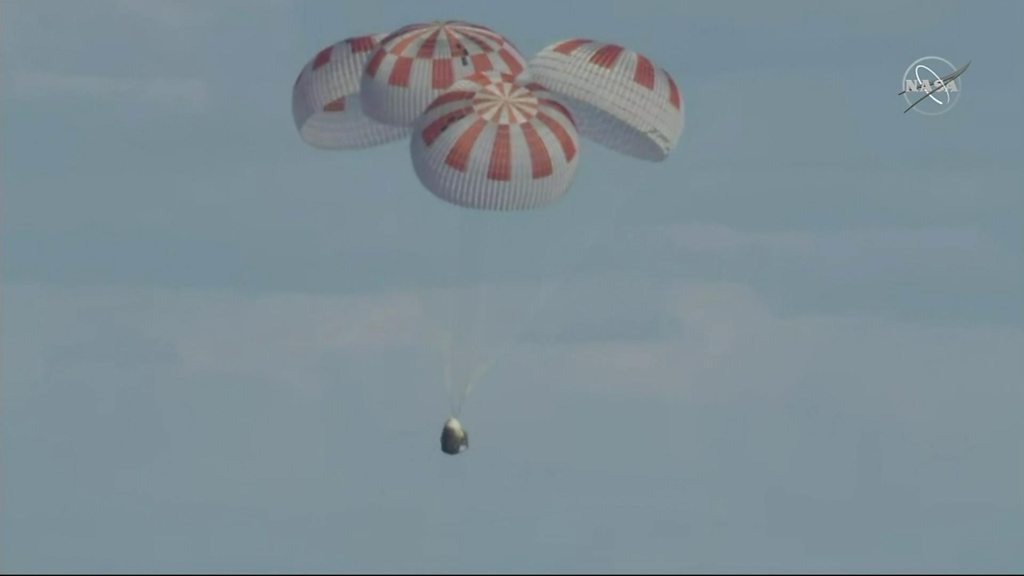
America’s new commercial astronaut capsule has completed its demonstration flight with a successful splashdown in the Atlantic Ocean.
The SpaceX Dragon vehicle left the International Space Station, where it had been docked this past week, and re-entered Earth’s atmosphere.
It had a heat-shield to protect it from the high temperatures of re-entry.
Four parachutes brought it into “soft contact” with water about 450km from Cape Canaveral, Florida.
Splashdown occurred at about 08:45 EST (13:45 GMT). A boat, called GO Searcher, was waiting to recover the capsule.
There were cheers at mission control as the capsule landed in the Atlantic.
The mission – which had no humans aboard, only a dummy covered in sensors – went according to the script.
The Dragon will set the stage for the US space agency Nasa to approve the vehicle for crewed flights.
The first of these could occur as soon as July, although this target date may slip into the summer as engineers work through the post-flight analysis.
The Dragon’s owner, SpaceX chief executive Elon Musk, had previously expressed some anxiety about how the capsule would cope with re-entry, given that the vehicle’s backshell, or heatshield, has a somewhat irregular shape that could lead to a roll instability at hypersonic speeds.
Not since the shuttles has America been able to send its own astronauts into orbit. It’s had to rely instead on Russia and its Soyuz spacecraft, launching from Baikonur Cosmodrome in Kazakhstan.
Nasa hopes to bring this near-eight-year gap in capability to an end with the introduction of two new commercial transportation systems.
As well as SpaceX, the agency has seed-funded Boeing to produce a capsule of its own called the Starliner.
This vehicle is scheduled to have its uncrewed demonstration flight in April or soon after.
Ultimately, Nasa will be purchasing seats in both systems to take its astronauts to the ISS. But the commercial nature of the relationship means the companies will be free to sell rides to secondary customers.
These will no doubt include the space agencies of other nations, but perhaps some private space companies and individuals too.
Nasa has already selected its first astronauts to fly aboard a crewed Dragon.
Bob Behnken and Doug Hurley have been busy training with the SpaceX team, learning all about the capsule’s operation and what to do if there is an emergency.
One problem that could occur is a failure of the Dragon’s carrier rocket during the ascent to orbit.
The demonstration capsule’s lift-off last Saturday was picture perfect, but some kind of booster anomaly can never be discounted.
In such a scenario, a Dragon’s powerful thrusters would push it away from the launcher to safety.
SpaceX will practise this very procedure shortly.
The team plans to take the current Dragon after its return and put it on another rocket and launch it out of the Kennedy Space Center. A minute into this flight, a deliberate abort will be commanded.
The timing is significant because it’s when the vehicle is experiencing maximum aerodynamic pressure.
If the Dragon can stably depart in such circumstances, it ought be able to handle an escape at any stage in a flight.
As with the present demo, no-one will be aboard for this hazardous test.
https://www.bbc.com/news/science-environment-47477617
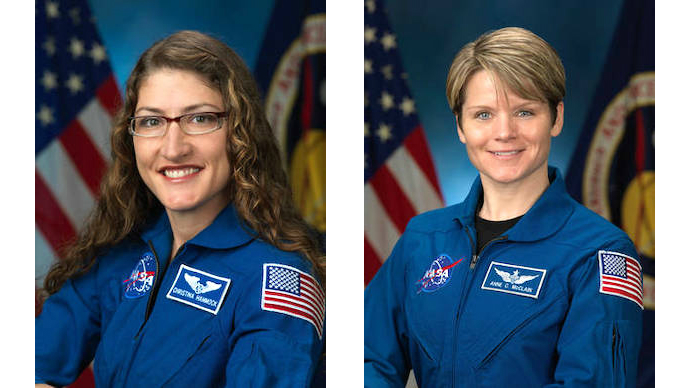
The first-ever all-female spacewalk is scheduled for March 29, featuring astronauts Anne McClain and Christina Koch.
They will be supported by women on the ground, including flight director Mary Lawrence and control team member Kristen Facciol.
I just found out that I’ll be on console providing support for the FIRST ALL FEMALE SPACEWALK with @AstroAnnimal and @Astro_Christina and I can not contain my excitement!!!! #WomenInSTEM #WomenInEngineering #WomenInSpace
— Kristen Facciol (@kfacciol) March 1, 2019
NASA, meanwhile, seems less excited about this historic event.
“As currently scheduled, the March 29 spacewalk will be the first with only women,” NASA spokeswoman Stephanie Schierholz told CNN in an emailed statement—the only mention of the all-female excursion.
“It was not orchestrated to be this way,” she continued. “These spacewalks were originally scheduled to take place in the fall.”
So it’s just a coincidence that this momentous occasion transpire at the end of Women’s History Month.
McClain will also join Nick Hague for a March 22 outing.
Holy smokes, my twitter exploded with excitement over women doing awesome things in space and I LOVE that. But here’s hoping this will be the norm one day!
Also hi new friends! Let’s be unapologetically excited about space and life together! ♥️
— Kristen Facciol (@kfacciol) March 2, 2019
Soviet cosmonaut Valentina Tereshkova became the first woman to fly into space in 1963. But it would be nearly two decades before another lady left Earth’s atmosphere.
NASA opened the space program to female applicants in 1978. Five years later, Sally Ride launched with the seventh Space Shuttle mission, becoming the US’s first woman in space.
She helped pave the way for femmes like Judith Resnik and Christa McAuliffe (who died in the 1986 Challenger explosion), as well as Kathryn Sullivan (the first American woman to walk in space) and a growing number of female explorers around the world.
But it’s ridiculous to think that, in the nearly 60-year history of sending humans to space, no two women have ever embarked on a spacewalk together—even coincidentally.
Better late than never, though.
Koch and McClain’s seven-hour spacewalk will be broadcast on NASA TV later this month.
The pair, along with Hague, were members of NASA’s 2013 astronaut class, which consisted of 50 percent women.

The people behind a would-be space hotel called Aurora Station say the space tourism getaway will spare no expense, according to a new BBC feature — it’ll even import its own water from Earth, so that guests won’t be forced to drink recycled urine like astronauts do on the International Space Station.
The project, by a startup called Orion Span, has a hyper-ambitious vision for selling 12-day journeys to space for $9.5 million each. But critics say the company is going to face enormous challenges before it even makes it off the ground.
The people behind Aurora Span claim guests will be able to participate in space gardening and use a “holodeck” — you know, like on “Star Trek” — while they lounge in orbit.
But experts say that space tourism is still a fraught blend of genuine possibility and savvy marketing.
“At the moment space tourism is a field where reality, hoaxes, and science fiction are mixed up in such a way that it makes [it] difficult to distinguish between reality and wishes,” Robert Goehlich, a professor at Embry-Riddle Aeronautical University, said in an interview with the BBC.
Goehlich also warned that the stakes are enormously high in an actual space mission. Any company offering commercial space travel will need NASA-like contingencies to keep its passengers safe in the deadly vacuum of space.
“You cannot execute a space mission, in particular a commercial manned one, ‘a little bit’ or on a ‘let’s try and see if it works’ basis,” Goehlich told the BBC. “You need safe operation of the spaceships, an environmentally friendly operation, and ultimately an economically profitable operation.”
READ MORE: Would you want to stay in a space hotel? [BBC]
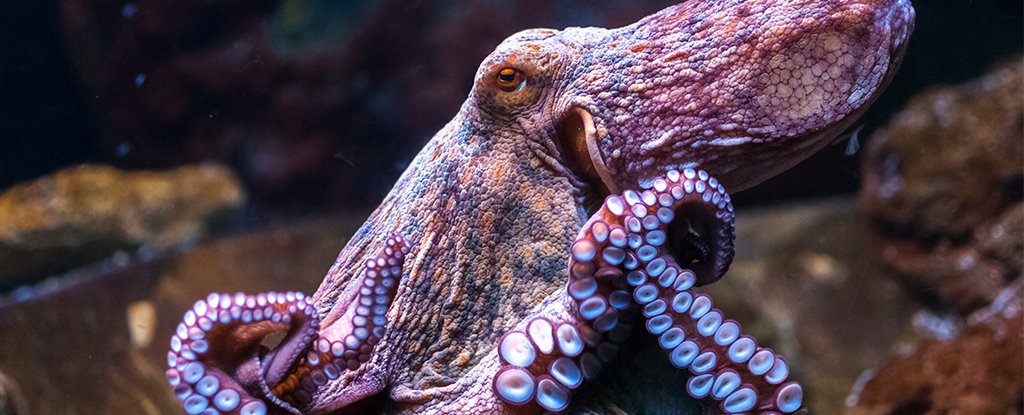
Just when we thought octopuses couldn’t be any weirder, it turns out that they and their cephalopod brethren evolve differently from nearly every other organism on the planet.
In a surprising twist, in April 2017 scientists discovered that octopuses, along with some squid and cuttlefish species, routinely edit their RNA (ribonucleic acid) sequences to adapt to their environment.
This is weird because that’s really not how adaptations usually happen in multicellular animals. When an organism changes in some fundamental way, it typically starts with a genetic mutation – a change to the DNA.
Those genetic changes are then translated into action by DNA’s molecular sidekick, RNA. You can think of DNA instructions as a recipe, while RNA is the chef that orchestrates the cooking in the kitchen of each cell, producing necessary proteins that keep the whole organism going.
But RNA doesn’t just blindly execute instructions – occasionally it improvises with some of the ingredients, changing which proteins are produced in the cell in a rare process called RNA editing.
When such an edit happens, it can change how the proteins work, allowing the organism to fine-tune its genetic information without actually undergoing any genetic mutations. But most organisms don’t really bother with this method, as it’s messy and causes problems more often that solving them.
“The consensus among folks who study such things is Mother Nature gave RNA editing a try, found it wanting, and largely abandoned it,” Anna Vlasits reported for Wired.
But it looks like cephalopods didn’t get the memo.
In 2015, researchers discovered that the common squid has edited more than 60 percent of RNA in its nervous system. Those edits essentially changed its brain physiology, presumably to adapt to various temperature conditions in the ocean.
The team returned in 2017 with an even more startling finding – at least two species of octopus and one cuttlefish do the same thing on a regular basis. To draw evolutionary comparisons, they also looked at a nautilus and a gastropod slug and found their RNA-editing prowess to be lacking.
“This shows that high levels of RNA editing is not generally a molluscan thing; it’s an invention of the coleoid cephalopods,” said co-lead researcher, Joshua Rosenthal of the US Marine Biological Laboratory.
The researchers analyzed hundreds of thousands of RNA recording sites in these animals, who belong to the coleoid subclass of cephalopods. They found that clever RNA editing was especially common in the coleoid nervous system.
“I wonder if it has to do with their extremely developed brains,” geneticist Kazuko Nishikura from the US Wistar Institute, who wasn’t involved in the study, told Ed Yong at The Atlantic.
It’s true that coleoid cephalopods are exceptionally intelligent. There are countless riveting octopus escape artist stories out there, not to mention evidence of tool use, and that one eight-armed guy at a New Zealand aquarium who learned to photograph people. (Yes, really.)
So it’s certainly a compelling hypothesis that octopus smarts might come from their unconventionally high reliance on RNA edits to keep the brain going.
“There is something fundamentally different going on in these cephalopods,” said Rosenthal.
But it’s not just that these animals are adept at fixing up their RNA as needed – the team found that this ability came with a distinct evolutionary tradeoff, which sets them apart from the rest of the animal world.
In terms of run-of-the-mill genomic evolution (the one that uses genetic mutations, as mentioned above), coleoids have been evolving really, really slowly. The researchers claimed that this has been a necessary sacrifice – if you find a mechanism that helps you survive, just keep using it.
“The conclusion here is that in order to maintain this flexibility to edit RNA, the coleoids have had to give up the ability to evolve in the surrounding regions – a lot,” said Rosenthal.
As the next step, the team will be developing genetic models of cephalopods so they can trace how and when this RNA editing kicks in.
“It could be something as simple as temperature changes or as complicated as experience, a form of memory,” said Rosenthal.
A version of this story was originally published in April 2017.
Just when we thought octopuses couldn’t be any weirder, it turns out that they and their cephalopod brethren evolve differently from nearly every other organism on the planet.

Scientists have revealed for the first time the natural weapon used by marigolds to protect tomato plants against destructive whiteflies.
Researchers from Newcastle University’s School of Natural and Environmental Sciences carried out a study to prove what gardeners around the world have known for generations — marigolds repel tomato whiteflies.
Publishing their findings today (1 March) in the journal PLOS ONE, the experts have identified limonene — released by marigolds — as the main component responsible for keeping tomato whiteflies at bay. The insects find the smell of limonene repellent and are slowed down by the powerful chemical.
Large-scale application
The findings of the study have the potential to pave the way to developing safer and cheaper alternatives to pesticides.
Since limonene repels the whitefly without killing them, using the chemical shouldn’t lead to resistance, and the study has shown that it doesn’t affect the quality of the produce. All it takes to deter the whiteflies is interspersing marigolds in tomato plots, or hang little pots of limonene in among the tomato plants so that the smell can disperse out into the tomato foliage.
In fact, the research team, led by Dr. Colin Tosh and Niall Conboy, has shown that may be possible in to develop a product, similar to an air freshener, containing pure limonene that can be hung in glasshouses to confuse the whiteflies by exposing them to a blast of limonene.
Newcastle University Ph.D. student Niall said: “We spoke to many gardeners who knew marigolds were effective in protecting tomatoes against whiteflies, but it has never been tested scientifically.
“We found that the chemical which was released in the highest abundance from marigolds was limonene. This is exciting because limonene is inexpensive, it’s not harmful and it’s a lot less risky to use than pesticides, particularly when you don’t apply it to the crop and it is only a weak scent in the air.
“Most pesticides are sprayed onto the crops. This doesn’t only kill the pest that is targeted, it kills absolutely everything, including the natural enemies of the pest.”
Limonene makes up around 90% of the oil in citrus peel and is commonly found in household air fresheners and mosquito repellent.
Dr. Tosh said: “There is great potential to use limonene indoors and outdoors, either by planting marigolds near tomatoes or by using pods of pure limonene. Another important benefit of using limonene is that it’s not only safe to bees, but the marigolds provide nectar for the bees which are vital for pollination.
“Any alternative methods of whitefly control that can reduce pesticide use and introduce greater plant and animal diversity into agricultural and horticultural systems should be welcomed.”
The researchers carried out two big glasshouse trials. Working with French marigolds in the first experiment, they established that the repellent effect works and that marigolds are an effective companion plant to keep whiteflies away from the tomato plants.
For the second experiment, the team used a machine that allowed them to analyze the gaseous and volatile chemicals released by the plants. Through this, they were able to pinpoint which chemical was released from the marigolds. They also determined that interspersing marigolds with other companion plants, that whiteflies don’t like, doesn’t increase or decrease the repellent effect. It means that non-host plants of the whiteflies can repel them, not just marigolds.
A notorious pest
Whitefly adults are tiny, moth-like insects that feed on plant sap. They cause severe produce losses to an array of crops through transmission of a number of plant viruses and encouraging mold growth on the plant.
Dr. Tosh said: “Direct feeding from both adults and larvae results in honeydew secretion at a very high rate. The honeydew secretion that covers the leaves reduces the photosynthetic capacity of the plant and renders fruit unmarketable.”
Further studies will focus on developing a three companion plant mixture that will repel three major insect pests of tomato — whiteflies, spider mites, and thrips.
Longer term, the researchers aim to publish a guide focussing on companion plants as an alternative to pesticides, which would be suitable across a range of horticultural problems.
Story Source:
Materials provided by Newcastle University. Note: Content may be edited for style and length.

Incredible new nanotechnology could one day enable us to see in the dark. It works on mice, and there’s little to say it wouldn’t be equally effective on other mammals. The only drawback – how are you with needles to the eyeball?
Research led by the University of Science and Technology of China produced particles that adhere to light-detecting cells in the retina and help them respond to near-infrared (NIR) wavelengths.
The back of our eye, which is where the retina is, acts as a television screen in reverse. As the full spectrum of light falls on its cells, some wavelengths trigger chemical reactions we perceive as either color or intensity.
Rod-shaped cells tell our brain how bright it is. They react strongly to light waves around 500 nanometres in size but struggle to respond to anything above 640 nanometres, well into the red part of the spectrum.
We also have three types of tapering ‘cone’ shaped photoreceptor cells, each sensitive to their own parts of the spectrum. Combined, they provide our brains with the detail needed to tell colors apart.
But those cones also fail to detect light longer than around 700 nanometres, which means anything beyond the red part of the spectrum is completely invisible to us.
That’s a shame. What looks like darkness to us is often washed in low-energy, low wavelength parts of the spectrum. A number of animals, such as snakes and frogs, have evolved ways to tap into these wavelengths to track prey or see better at night.
Unfortunately, mammals never managed to evolve what it takes to see even the edge of this infra-red spectrum. We, humans, have it relatively lucky. Mice only have rods and two types of cone cells, which all top out at wavelengths a little under ours.
There are quirks of chemistry that can help us glimpse a flash of NIR light, but generally speaking, an infra-red landscape is strictly off limits to us humans.
Bulky night vision goggles can capture this radiation and amplify it in wavelengths we can see, but wearing such tech is cumbersome and it can’t be used under daylight conditions.
The nanoparticles developed by the researchers in this latest innovation act like miniature night vision devices – only these ones sit directly on the actual light-sensitive cells.
Called retinal photoreceptor-binding upconversion nanoparticles, they’re a protein built to adhere to both rod and cone photoreceptors and transduce long wavelengths into shorter ones.
The result is a nanoscale device that acts like a tiny antenna, soaking up invisible NIR radiation and turning it into a color that is more likely to trigger rods and cones into action, painting the world in hues of green.
Injected into mice, the whole process seems to work brilliantly. The nanoantennae were shown to not only stick to photoreceptors, but an LED shining weakly at 980 nanometres elicited retinal responses that were demonstrated to affect the brain’s visual cortex.
In a more practical experiment, the treated mice were able to differentiate simple shapes such as triangles and circles illuminated by the LED under various conditions. Best of all, they were still able to see just fine under normal daylight conditions.
The vision change didn’t come with awful side effects either. The only issue the team found was cloudiness in the eyes of the mice.
The mouse visual system is similar enough to humans that we might expect a version of this method could potentially work for us, too. In fact, there’s even a weird sort-of precedent.
A few years ago, biohackers rigged a similar process using a light-sensitive substance called Chlorin e6 to make the retina generally more sensitive to light. Applied as eye drops, subjects could allegedly see longer distances under low light conditions.
Whether this promises genuine technology or was simply an overhyped experiment is up for debate. Eye drops would certainly be better than an injection into the eyeball, but this new nanotechnology has far more rigorous science to back it up.
It’s not hard to come up with cool uses for such tech. Military applications aside, who wouldn’t want to see better at night? Astronomers, for one.
“We may have the capability to view all the hidden information from NIR and IR radiation in the Universe which is invisible to our naked eyes,” says biochemist Gang Han from the University of Massachusetts Medical School.
But there are also serious research benefits in the form of experimental tools that can investigate visual processes on new levels.
“With this research, we’ve broadly expanded the applications of our nanoparticle technology both in the lab and translationally,” says Han.
“These nanoantennae will allow scientists to explore a number of intriguing questions, from how the brain interprets visual signals to helping treat color blindness.”
This research was published in Cell.
Incredible new nanotechnology could one day enable us to see in the dark. It works on mice, and there’s little to say it wouldn’t be equally effective on other mammals. The only drawback – how are you with needles to the eyeball?
source: https://www.sciencealert.com
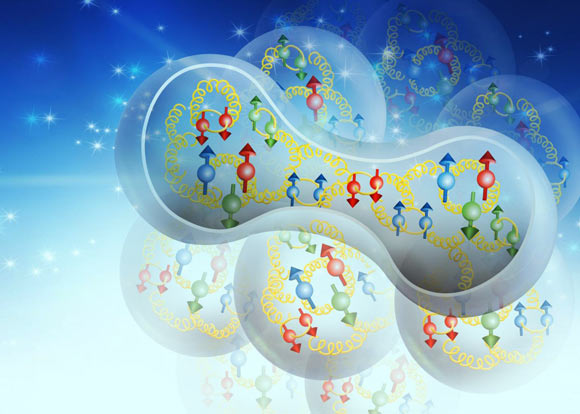
The atomic nucleus is made of protons and neutrons, which are themselves composed of quarks and gluons. The latter two are far smaller and operate at much higher energy levels than the protons and neutrons in which they are found. Physicists have therefore assumed that a quark should be blithely indifferent to the characteristics of the protons and neutrons, and the overall atom. But in 1983, the European Muon Collaboration (EMC) at CERN observed what would become known as the EMC effect: in the nucleus of an iron atom containing many protons and neutrons, quarks move significantly more slowly than quarks in deuterium (an isotope of hydrogen containing a proton and neutron in its nucleus). Now physicists from the CLAS (CEBAF Large Acceptance Spectrometer) Collaboration have found that a quark’s speed depends on the number of protons and neutrons forming short-ranged correlated (SRC) pairs in an atom’s nucleus.
Schmookler et al develop a universal function that suggests that proton-neutron pairs in the nucleus, shown here, may be responsible for the EMC effect. Image credit: DOE’s Jefferson Lab.
“There are currently two main models that describe the EMC effect,” said Dr. Douglas Higinbotham, a staff scientist at the Thomas Jefferson National Laboratory and a member of the CLAS Collaboration.
“One model is that all protons and neutrons in a nucleus [and thus their quarks] are modified and they are all modified the same way.”
“The other model, which is the one that we focus on in the study, is different. It says that many protons and neutrons are behaving as if they are free, while others are involved in short-range correlations and are highly modified.”
“An atom’s protons and neutrons can pair up constantly, but only momentarily, before splitting apart and going their separate way,” said Dr. Axel Schmidt, a postdoctoral researcher at MIT.
“During this brief, high-energy interaction, quarks in their respective particles may have a ‘larger space to play’.”
“In quantum mechanics, anytime you increase the volume over which an object is confined, it slows down. If you tighten up the space, it speeds up. That’s a known fact.”
The team analyzed data from an experiment that was carried out at Jefferson Lab’s CLAS detector.
The instrument produced a 5.01 GeV beam of electrons to probe nuclei of carbon, aluminum, iron, and lead as compared to deuterium.
The experiment ran for several months and in the end amassed billions of interactions between electrons and quarks.
The physicists calculated the speed of the quark in each interaction, based on the electron’s energy after it scattered, then compared the average quark speed between the various atoms.
By looking at much smaller scattering angles, corresponding to momentum transfers of a different wavelength, they were able to ‘zoom out’ so that electrons would scatter off the larger protons and neutrons, rather than quarks.
SRC pairs are typically extremely energetic and would, therefore, scatter electrons at higher energies than unpaired protons and neutrons, which is a distinction the researchers used to detect SRC pairs in each material they studied.
“We see that these high-momentum pairs are the reason for these slow-moving quarks,” said team member Dr. Or Hen, also from MIT.
In particular, they found that the quarks in foils with larger atomic nuclei (and more proton-neutron pairs) moved at most 20% slower than deuterium, the material with the least number of pairs.
“These pairs of protons and neutrons have this crazy high-energy interaction, very quickly, and then dissipate,” Dr. Schmidt said.
“In that time, the interaction is much stronger than normal and the nucleons have significant spatial overlap. So we think quarks in this state slow down a lot.”
Their data show for the first time that how much a quark’s speed is slowed depends on the number of SRC pairs in an atomic nucleus.
Quarks in lead, for instance, were far slower than those in aluminum, which themselves were slower than iron, and so on.
“Understanding how quarks interact is really the essence of understanding the visible matter in the Universe,” Dr. Hen said.
“This EMC effect, even though 10 to 20%, is something so fundamental that we want to understand it.”
The results appear in the journal Nature.
source: http://www.sci-news.com

NASA announced on Sunday that an iceberg twice the size of New York City is about to break off of Antarctica’s Brunt Ice Shelf, making it the largest to break off the ice shelf in years.
“Cracks growing across Antarctica’s Brunt Ice Shelf are poised to release an iceberg with an area about twice the size of New York City,” NASA said in a statement. “It is not yet clear how the remaining ice shelf will respond following the break, posing an uncertain future for scientific infrastructure and a human presence on the shelf that was first established in 1955.”
Cracking across Antarctica’s Brunt Ice Shelf is set to release an iceberg w/ an area about 2x the size of NYC. The splitting could result in an uncertain future for the shelf’s scientific research & human presence.
— NASA (@NASA) February 24, 2019
“The cracks are apparent by comparing these images acquired with Landsat satellites,” NASA explained. “The Thematic Mapper (TM) on Landsat 5 obtained the first image (left) on January 30, 1986. The second image (right), from the Operational Land Imager (OLI) on Landsat 8, shows the same area on January 23, 2019.”
The crack along the top of the January 23 image—the so-called Halloween crack—first appeared in late October 2016 and continues to grow eastward from an area known as the McDonald Ice Rumples. The rumbles are due to the way ice flows over an underwater formation, where the bedrock rises high enough to reach into the underside of the ice shelf. This rocky formation impedes the flow of ice and causes pressure waves, crevasses, and rifts to form at the surface.
The more immediate concern is the rift visible in the center of the image. Previously stable for about 35 years, this crack recently started accelerating northward as fast as 4 kilometers per year.
January 23, 2019
The detailed view shows this northward expanding rift coming within a few kilometers of the McDonald Ice Rumples and the Halloween crack. When it cuts all the way across, the area of ice lost from the shelf will likely be at least 1700 square kilometers (660 square miles). That’s not a terribly large iceberg by Antarctic standards—probably not even making the top 20 list. But it may be the largest berg to break from the Brunt Ice Shelf since observations began in 1915. Scientists are watching to see if the loss will trigger the shelf to further change and possibly become unstable or break up.
Joe MacGregor, a glaciologist at NASA’s Goddard Space Flight Center, said in the statement that the “near-term future” of the ice shelf “likely depends on where the existing rifts merge relative to the McDonald Ice Rumples,” another area on the ice shelf.— NASA Earth (@NASAEarth) February 21, 2019
“If they merge upstream (south) of the McDonald Ice Rumples, then it’s possible that the ice shelf will be destabilized,” MacGregor added.
NASA announced on Sunday that an iceberg twice the size of New York City is about to break off of Antarctica’s Brunt Ice Shelf, making it the largest to break off the ice shelf in years.
source: https://theguardiansofdemocracy.com

At an age when most kids are focused on beating the next level in a video game, or working toward actually hitting the ball in their baseball game on Saturday, William is consumed with becoming an astrophysicist.
Most kids dream of becoming a firefighter, a doctor, maybe an astronaut or a teacher, but William isn’t just dreaming of becoming an astrophysicist, he’s already becoming one.
The boy from Pennsylvania, graduated high school in May of 2016, at the age of 9. After attending community college classes, he enrolled at Carnegie Mellon University last fall.
According to his father, Peter Maillis, William began speaking in full sentences at just seven months old. He was doing addition at 21 months, and multiplication by the age of two — a time when he was also reading children’s books, and writing his own nine-page book, “Happy Cat.” At four years old, he was learning algebra, sign language and how to read Greek, and when he was five, he read an entire 209-page geometry textbook in one night and woke up solving circumference problems the next morning.
William’s desire to become an astrophysicist is rooted in his strong faith beliefs. He disagrees with some of Einstein and Hawking’s theories on black holes and has his own ideas to prove the existence of the universe.
The son of a Greek Orthodox Priest, William wants to prove that an outside force is the only thing capable of creating the universe, which means that “God does exist.”
Stephen Hawking, however, who passed away today at the age of 76, held a much different assertion. “Before we understood science, it was natural to believe that God created the universe, but now science offers a more convincing explanation,” once said the renowned physicist. “What I meant by ‘we would know the mind of God’ is we would know everything that God would know if there was a God, but there isn’t. I’m an atheist.”
William’s parents say they have never pushed him toward his studies or this God-proving endeavor, but rather that he’s a pretty “normal” 11-year-old.
“We’re normal people,” Peter explained. “And he’s a normal kid. You can’t distinguish him from other 11-year-olds. He likes sports, television shows, the computer and video games like everyone else.”
But still, distinct from other kids his age, William’s ultimate life passion is perfectly clear. When asked what his “dream” is, the child prodigy had no hesitation in his response.
“I want to be an astrophysicist so that I can prove to the scientific world that God does exist,” William said in a recent interview with Hellenic College Holy Cross.
When asked why he felt the need to prove it to scientists, his answer was even more profound:
“Well because there are these atheists that try to say that there is no God when in reality it takes more faith to believe that there’s no God than it does to believe that there is a God… Because it makes more sense that something created the universe than that the universe created itself. It takes more faith to say the universe created itself than to say something others created the universe because that is more logical.”
Well I don’t know about you, but I’m pretty pumped to see this “normal,” God-fearing boy unravel the theory of one of the most prolific scientific minds of all time — for as stated by the great scientist Matthew Maury, “The Bible is true and science is true, and therefore each, if truly read, but proves the truth of the other.”
source: faith.com

