Category: Science&Technology

  • Breakthrough research to revolutionise internet communication

    Breakthrough research to revolutionise internet communication

    A team of University of Otago/ Dodd-Walls Centre scientists have created a novel device that could enable the next generation of faster more energy efficient internet. Their results have been published in the world’s premier scientific journal Nature this morning.
     
    The internet is one of the single biggest consumers of power in the world. With data capacity expected to double every year and the physical infrastructure used to encode and process data reaching its limits there is huge pressure to find new solutions to increase the speed and capacity of the internet.

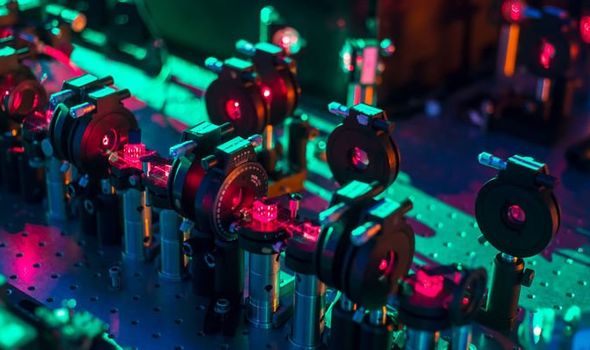
    Principal investigator Harald Schwefel and Madhuri Kumari’s research has found an answer. They have created a device called a microresonator optical frequency comb made out of a tiny disc of crystal. The device transforms a single colour of laser light into a rainbow of 160 different frequencies – each beam totally in sync with each other and perfectly stable. One such device could replace hundreds of power-consuming lasers currently used to encode and send data around the world.

    The work was born out of Schwefel’s previous research at the prestigious Max Planck Institute in Germany and his collaboration with Alfredo Rueda who did some of the preliminary research.

    The internet is powered by lasers. Every email, cell phone call and website visit is encoded into data and sent around the world by laser light. In order to cram more data down a single optical fibre the information is split into different frequencies of light that can be transmitted in parallel.

    Kumari says the current infrastructure is struggling to cope with demand as internet consumption increases significantly.

    “Lasers only emit one colour at a time. What this means is that, if your application requires many different colours at once, you need many lasers. All of them cost money and consume energy. The idea of these new frequency combs is that you launch one colour into the microresonator a whole range of new colours comes out,” Kumari says.

    “It’s a really cool energy saving scheme,” says Schwefel, “It replaces a whole rack of lasers with small energy efficient device.”

    He expects the devices to be incorporated in sub-oceanic landing stations where all the information from land-based fibres is crammed into the few sub-oceanic fibres available in less than a decade, perhaps within a few years.

    “To develop the device for the telecommunications industry we will need to start working with major telecommunications companies,” Schwefel explains. “We have started the process by collaborating with a New Zealand-based optical technology company.”

    This is the first milestone in a government-funded collaboration between scientists at the University of Otago and the University of Auckland who are part of the Dodd-Walls Centre for Quantum and Photonic Technologies – a virtual organisation gathering New Zealand’s top researchers working in the fields of light and quantum science. The research project has been awarded nearly one million dollars of Marsden Fund money to develop and test the potential of microresonator frequency combs.

    The optical frequency combs are based on a very unusual optical effect that happens when the intensity of light builds up to extremely high levels. You send a single colour of visible light into the crystal disc along with a microwave signal and because the crystal disc is such high quality, the light and microwave radiation gets trapped inside. 

    The light and microwave radiation keep pouring in and bouncing around and around inside the crystal. In most situations light never changes colour but in this case, the intensity becomes so high that the light and the microwave radiation start merging and making different colours. The phenomenon is known as a non-linear effect and it has taken the team many years to optimise.

    “This is a very exciting project to be working on,” says Kumari. “Optical frequency combs have literally revolutionised every field of applications they have touched. You can use them for vibrational spectroscopy, distance measurement, telecommunications. I’m looking forward to seeing how we can use ours.”

    This content was originally published here.
  • Cornell scientists create ‘living’ machines that eat, grow, and evolve

    Cornell scientists create ‘living’ machines that eat, grow, and evolve

    The field of robotics is going through a renaissance thanks to advances in machine learning and sensor technology. Each generation of robot is engineered with greater mechanical complexity and smarter operating software than the last. But what if, instead of painstakingly designing and engineering a robot, you could just tear open a packet of primordial soup, toss it in the microwave on high for two minutes, and then grow your own ‘lifelike’ robot?

    If you’re a Cornell research team, you’d grow a bunch and make them race.  Scientists from Cornell University have successfully constructed DNA-based machines with incredibly life-like capabilities. These human-engineered organic machines are capable of locomotion, consuming resources for energy, growing and decaying, and evolving. Eventually they die.  That sure sounds a lot like life, but Dan Luo, professor of biological and environmental engineering in the College of Agriculture and Life Sciences at Cornell, who worked on the research, says otherwise. He told The Stanford Chronicle:

    Basically, the Cornell team grew their own robots using a DNA-based bio-material, observed them metabolizing resources for energy, watched as they decayed and grew, and then programmed them to race against each other. We would have made them compete in a karaoke competition, but Cornell’s application is also impressive.  As unbelievable as it sounds, the team is actually just getting started. Lead author on the team’s paper, Shogo Hamada, told The Stanford Chronicle that “ultimately, the system may lead to lifelike self-reproducing machines.”  This work is still in its infancy, but the implications of organically grown, self-reproducing machines are incredible. And the debate over whether robots can be “alive” will likely have an entire new chapter to discuss soon.

    For a deeper dive you can read the research paper here.


  • A long-distance relationship in femtoseconds

    A long-distance relationship in femtoseconds

    Brad Baxley

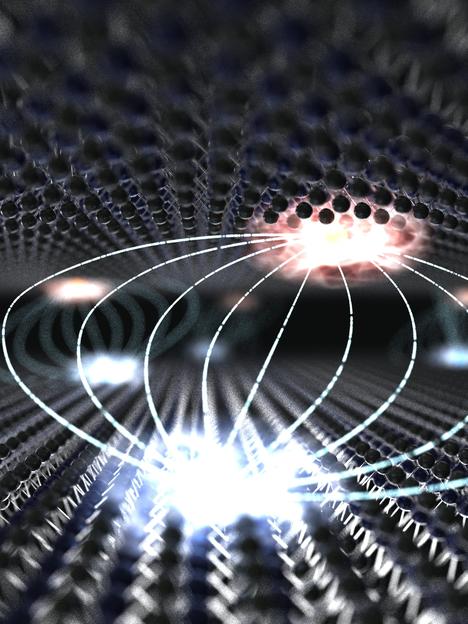
    Artistic representation of an interlayer exciton in a layered structure of monolayer transition metal dichalcogenides. The electron (blue) and the hole (red) interact across the atomic distance.

    Artistic representation of an interlayer exciton in a layered structure of monolayer transition metal dichalcogenides. The electron (blue) and the hole (red) interact across the atomic distance.

    Modern electronics relies on ultrafast charge motion on ever shorter length scales. Physicists from Regensburg and Gothenburg have now succeeded in resolving a key quantum motion of electrons in atomically thin crystals on the time scale of a single oscillation cycle of light. They directly observe, how the electron in a bound electron-hole pair jumps from one atomic layer to the next, creating a pair of charge carriers in a long-distance relationship, a so-called “interlayer exciton”.

    In order to make electronics more powerful, nowadays circuits are becoming ever more compact. Here, the limit is the atomic length scale. Novel, layered crystals of so-called transition metal dichalcogenides, which can be thinned down to a few atomic layers, promise ultimately thin components such as solar cells and transistors. However, charge carriers behave very unconventionally in only two dimensions. For example, if an electron is excited by absorbing light in a transition metal dichalcogenide, it leaves behind a hole at its original location. Electron and hole can form a bound pair, an exciton. The negatively charged electron orbits the positively charged hole in analogy to an electron in the hydrogen atom orbiting the nucleus. Because of the strong attraction between electrons and holes, these excitons are also stable at room temperature.

    For important applications, such as solar cells, however, electrons and holes need to be spatially separated. This is achieved by stacking two different dichalcogenides on top of each other. Physicists from Regensburg led by Professors Rupert Huber, Tobias Korn, John Lupton and Christian Schüller have now observed this charge separation of excitons across only two atomically thin layers in collaboration with Professor Ermin Malic’s group at Chalmers University in Sweden. They excited electrons by ultrashort light pulses creating excitons selectively only in one of the two layers. If these excitons remain within this layer, they are very short-lived, because electrons and holes recombine very rapidly with the electron returning to its initial position. In a layered sample structure, on the other hand, the electron can also jump into the adjacent layer – a spatially separated, so-called interlayer exciton forms.

    “Since the layers are atomically thin, the electron still feels the hole’s presence, so they can continue to interact across the layer,” explains Fabian Mooshammer, PhD student and co-author of the study. Due to the spatial separation, however, it takes much longer for the electron to return to its initial position. This significantly longer lifetime is only one of the reasons why interlayer excitons have caused a lot of excitement in recent years, both in fundamental research and in optoelectronics.

    The scientists were able to observe the behavior of these interlayer excitons during and after their formation. They used a home-built super slow-motion camera to study processes taking place within a few femtoseconds – the millionth part of a billionth of a second. “For the first time worldwide, we observed the formation process of an interlayer exciton and measured how strongly electrons and holes remain bound,” says Philipp Merkl, first author of the publication. In addition, the researchers were able to systematically influence the dynamics of the formation process. To this end, they used another special feature of the layered heterostructures: they twisted the two layers with respect to each other. This changes the electronic and optical properties of the resulting structure, which in turn governs the charge transfer.

    These new findings represent an important milestone in the development of novel, custom-tailored layered structures and could pave the way for a new generation of ultimately compact and efficient electronics, optoelectronics and information technologies.

    This content was originally published here.
  • Strange phenomenon: Lasers make magnets behave like fluids

    Strange phenomenon: Lasers make magnets behave like fluids

    Credit: CC license via WikiMedia Commons

    Hitting an ultrathin magnet with laser abruptly de-magnetizes it. Such sub-picosecond magnetization manipulation via femtosecond optical pumping. However, this strange phenomenon is not yet well understood due to the difficulty in experimentally probing such as rapid dynamics.

    Now, scientists at CU Boulder are digging into how magnets recover from that change, regaining their properties in a fraction of a second. They found evidence on a universal rapid magnetic order recovery in ferrimagnets with perpendicular magnetic anisotropy via nonlinear magnon processes.

    The study suggests that zapped magnets actually behave like fluids. Their magnetic properties begin to form “droplets,” similar to what happens when you shake up a jar of oil and water.

    For the study, scientists drew on mathematical modeling, numerical simulations and experiments conducted at Stanford University’s SLAC National Accelerator Laboratory.

    CU Boulder’s Ezio Iacocca said, “Researchers have been working hard to understand what happens when you blast a . What we were interested in is what happens after you blast it. How does it recover?”

    A computer simulation of magnetic “droplets” forming juxtaposed with a photo of oil in water. Credits: Ezio Iacocca; Pixabay

    Specifically, scientists zeroed in on a short but critical time in the life of a magnet—the first 20 trillionths of a second after a magnetic, metallic alloy gets hit by a short, high-energy laser.

    Iacocca explained, “magnets are, by their nature, pretty organized. Their atomic building blocks have orientations, or “spins,” that tend to point in the same direction, either up or down—think of Earth’s magnetic field, which always points north.”

    “Except, that is when you blast them with a laser. Hit a magnet with a short enough laser pulse and disorder will ensue. The spins within a magnet will no longer point just up or down, but in all different directions, canceling out the metal’s magnetic properties.”

    “Researchers have addressed what happens 3 picoseconds after a laser pulse and then when the magnet is back at equilibrium after a microsecond.”

    During experiments, scientists ran a series of experiments in California, blasting tiny pieces of gadolinium-iron-cobalt alloys with lasers. Then, they compared the results to mathematical predictions and computer simulations.

    And they found that the things got fluid. The metals themselves didn’t turn into liquid. But the spins within those magnets behaved like fluids, moving around and changing their orientation like waves crashing in an ocean.

    CU Boulder’s Mark Hoefer said, “We used the mathematical equations that model these spins to show that they behaved like a superfluid at those short timescales.”

    “Wait a little while and those roving spins start to settle down forming small clusters with the same orientation—in essence, “droplets” in which the spins all pointed up or down. Wait a bit longer, and the researchers calculated that those droplets would grow bigger and bigger, hence the comparison to oil and water separating out in a jar.”

    “In certain spots, the magnet starts to point up or down again. It’s like a seed for these larger groupings. A zapped magnet doesn’t always go back to the way it once was. In some cases, a magnet can flip after a laser pulse, switching from up to down.”

    Iacocca said, “Engineers already take advantage of that flipping behavior to store information on a computer hard drive in the form of bits of ones and zeros. If researchers can figure out ways to do that flipping more efficiently, they might be able to build faster computers.”

    Iacocca said, “That’s why we want to understand exactly how this process happens, so we can maybe find a material that flips faster.”

    The research was partly supported by the U.S. Department of Energy, Basic Energy Sciences.

    Co-authors on the study also included researchers at Chalmers University of Technology, SLAC National Accelerator Laboratory, Tongji University, University of York, Stockholm University, Ca’ Foscari University of Venice, Temple University, European X-Ray Free-Electron Laser Facility, Nihon University, Radboud University, University of Liège, Sheffield Hallam University and Uppsala University.

    The study is published in the journal Nature Communications.

    The post Strange phenomenon: Lasers make magnets behave like fluids appeared first on Tech Explorist

    This content was originally published here.
  • ISRAELI SCIENTISTS ‘PRINT’ WORLD’S FIRST 3D HEART WITH HUMAN TISSUE

    ISRAELI SCIENTISTS ‘PRINT’ WORLD’S FIRST 3D HEART WITH HUMAN TISSUE

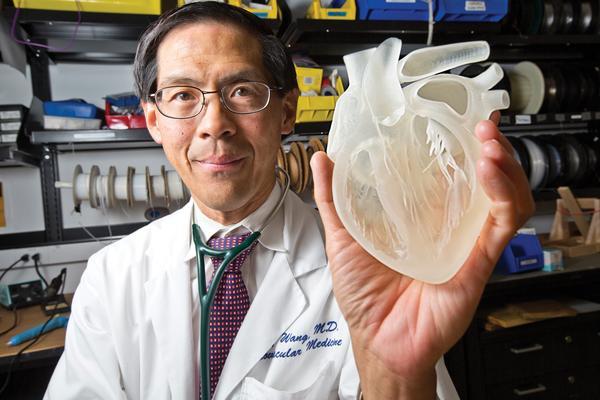
    “This is the first time anyone anywhere has successfully engineered and printed an entire heart replete with cells, blood vessels, ventricles and chambers,” said Prof. Tal Dvir of TAU’s School of Molecular Cell Biology and Biotechnology, Department of Materials Science and Engineering in the Center for Nanoscience and Nanotechnology, and the Sagol Center for Regenerative Biotechnology, who was the lead researcher for the study.  He worked with Prof. Assaf Shapira of TAU’s Faculty of Life Sciences, and Nadav Moor, a doctoral student. Their research was published in Advanced Science.

    Heart disease is the leading cause of death among both men and women in the United States. In Israel, it is the second largest cause of death (after cancer). In 2013, heart disease accounted for about 16% of the total number of deaths in Israel, according to the Health Ministry.  Heart transplantation is often the only treatment available to patients with end-stage heart failure. The waiting list for patients in the US can be as much as six months or more. In Israel and the US, many patients die while on the waiting list, hoping for a chance at survival.  “This heart is made from human cells and patient-specific biological materials. In our process, these materials serve as the bio-inks, substances made of sugars and proteins that can be used for 3-D printing of complex tissue models,” Dvir explained.

    “People have managed to 3D-print the structure of a heart in the past, but not with cells or with blood vessels. Our results demonstrate the potential of our approach for engineering personalized tissue and organ replacement in the future,” he said.
    At this stage, the 3-D heart produced at TAU is sized for a rabbit, but the professors said that larger human hearts could be produced using the same technology.  For the research, a biopsy of fatty tissue was taken from patients, according to a release. The cellular and a-cellular materials of the tissue were then separated. The cells were reprogrammed to become pluripotent stem cells that could then be efficiently differentiated into cardiac or endothelial cells. The extracellular matrix (ECM), a three-dimensional network of extracellular macromolecules, such as collagen and glycoproteins, was processed into a personalized hydrogel that served as the printing “ink.” The differentiated cells were then mixed with the bio-inks and were used to 3D-print patient-specific, immune-compatible cardiac patches with blood vessels and, subsequently, an entire heart.

    According to Dvir, the use of “native” patient-specific materials is crucial to successfully engineering tissues and organs.  The next step, they said, is to teach the hearts to behave like human hearts. First, they will transplant them into animals and eventually into humans. The hope is that within “10 years, there will be organ printers in the finest hospitals around the world, and these procedures will be conducted routinely,” Dvir said.

  • The Weakening Of Earth’s Magnetic Field Has Greatly Accelerated

    The Weakening Of Earth’s Magnetic Field Has Greatly Accelerated

    Earth’s magnetic field is getting significantly weaker, the magnetic north pole is shifting at an accelerating pace, and scientists readily admit that a sudden pole shift could potentially cause “trillions of dollars” in damage.  Today, most of us take the protection provided by Earth’s magnetic field completely for granted.  It is essentially a colossal force field which surrounds our planet and makes life possible.  And even with such protection, a giant solar storm could still potentially hit our planet and completely fry our power grid.  But as our magnetic field continues to get weaker and weaker, even much smaller solar storms will have the potential to be cataclysmic.  And once the magnetic field gets weak enough, we will be facing much bigger problems.  As you will see below, if enough solar radiation starts reaching our planet none of us will survive.

    Previously, scientists had told us that the magnetic field was weakening by about 5 percent every 100 years.

    read more

  • Presidential candidate Andrew Yang will use 3D holograms for remote rallies

    Presidential candidate Andrew Yang will use 3D holograms for remote rallies

    Democratic presidential candidate Andrew Yang revealed this week that he’s planning to use a 3D hologram to hold campaign rallies in multiple cities at the same time. Yang discussed the hologram during an appearance on TMZ Live. The segment showed off a hologram version of Yang dancing and performing with the famous Tupac hologram that appeared at Coachella in 2012.  Somewhat surprisingly, Yang didn’t get ratioed off of Twitter for toying with Tupac’s legacy. Instead, the candidate received a considerable amount of positive feedback for the concept, suggesting there just might be an audience out there for Yang’s ideas, even if they are presented via hologram.

    Yang plans to use the hologram, broadcast from the back of a truck, to deliver a recorded version of his stump speech to crowds in battleground states. Yang would set up in a studio and remotely beam into the rally to answer questions live and in real-time after the speech finished. The technique could save Yang, a longshot for the Democratic nomination at this point, a considerable amount of travel costs while helping to rally supporters and generate interest in key areas.

    One of the youngest candidates in the field of presidential hopefuls, Yang has generated some interest with his embrace of new ideas and technologies. One of the primary promises of his campaign is a universal basic income, a concept that has been favored by many in the tech industry for years as a way to combat creeping automation.

    source

  • NASA Twins Study Reveals Space Travel’s Effects on the Human Body

    NASA Twins Study Reveals Space Travel’s Effects on the Human Body

    A year on the space station has an undeniable impact across the human body, but many of the body’s systems recover after a return to Earth.

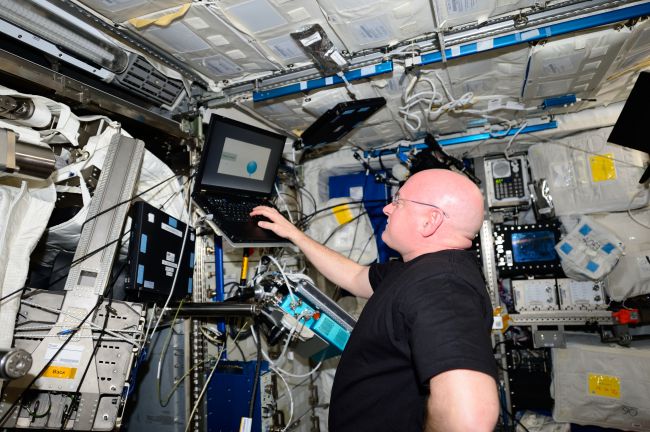
    Human bodies did not evolve to float in microgravity or to thrive under the radiation levels in space. When NASA astronaut Scott Kelly spent nearly a year on the International Space Station, in a mission launching in 2015, his body was put under incredible stress: Fluids swelled his upper body and head, his genes activated in different ways, and his immune system jumped into overdrive compared to that of his identical twin, Mark Kelly. Mark has also flown in space, but he remained on the ground during that long-duration mission. Over time, Scott experienced decreased body mass, instability in his genome, swelling in major blood vessels, changes in eye shape, metabolism shifts, inflammation and alterations in his microbiome — as well as a strange lengthening of his telomeres, the protective structures at the ends of chromosomes. (They shortened again after he landed.)

    Ten teams working on NASA’s Twins Study — encompassing 12 universities and 84 researchers — followed the duo before, during and after the flight, tracking the twins’ biology to see how the brothers changed over the course of the study. While the research was very limited in scope, scientists planning to send astronauts on long trips to the moon, Mars and beyond will find this data on long-duration spaceflight invaluable.

    source

  • Scientists develop clairvoyant machine capable of PREDICTING FUTURE

    Scientists develop clairvoyant machine capable of PREDICTING FUTURE

    The prototype device – which was created as part of a joint venture involving researchers from Australia’s Griffith University and Singapore’s Nanyang Technological University – consists of a photonic quantum information processor capable of mapping out all potential future outcomes of a decision process. Mile Gu of Nanyang, who spearheaded the development of the quantum algorithm algorithm which underpins the device, said: “When we think about the future, we are confronted by a vast array of possibilities. “These possibilities grow exponentially as we go deeper into the future.  The device constructed by the team works on a much smaller scale, holding just 16 possible futures in simultaneous superposition, weighted by their probability of occurrence.

    However, in theory the algorithm which governs them can “scale up” without upper limit.  Lead author Farzad Ghafari of Griffith University said: “Our approach is to synthesise a quantum superposition of all possible futures for each bias. “By interfering these superpositions with each other, we can completely avoid looking at each possible future individually. “In fact, many current artificial intelligence algorithms learn by seeing how small changes in their behaviour can lead to different future outcomes, so our techniques may enable quantum enhanced AIs to learn the effect of their actions much more efficiently.”  Co-author Jayne Thompson said the team had taken inspiration from the late Nobel laureate physicist Richard Feynman.  She explained: “When Feynman started studying quantum physics, he realised that when a particle travels from point A to point B, it does not necessarily follow a single path.” “Instead, it simultaneously transverses all possible paths connecting the points. “Our work extends this phenomenon and harnesses it for modelling statistical futures.”

    Co-author Professor Geoff Pryde said the achievements were comparable with those of analogue computing researchers half a century ago.

    source


  • Do we need smarter Monkeys?

    Do we need smarter Monkeys?

    Why do we need smarter monkeys?  What next?  Dogs, cats, or even birds?

    Making monkeys more smart and human-like, scientists have used gene-editing to insert human brain gene in a monkey.

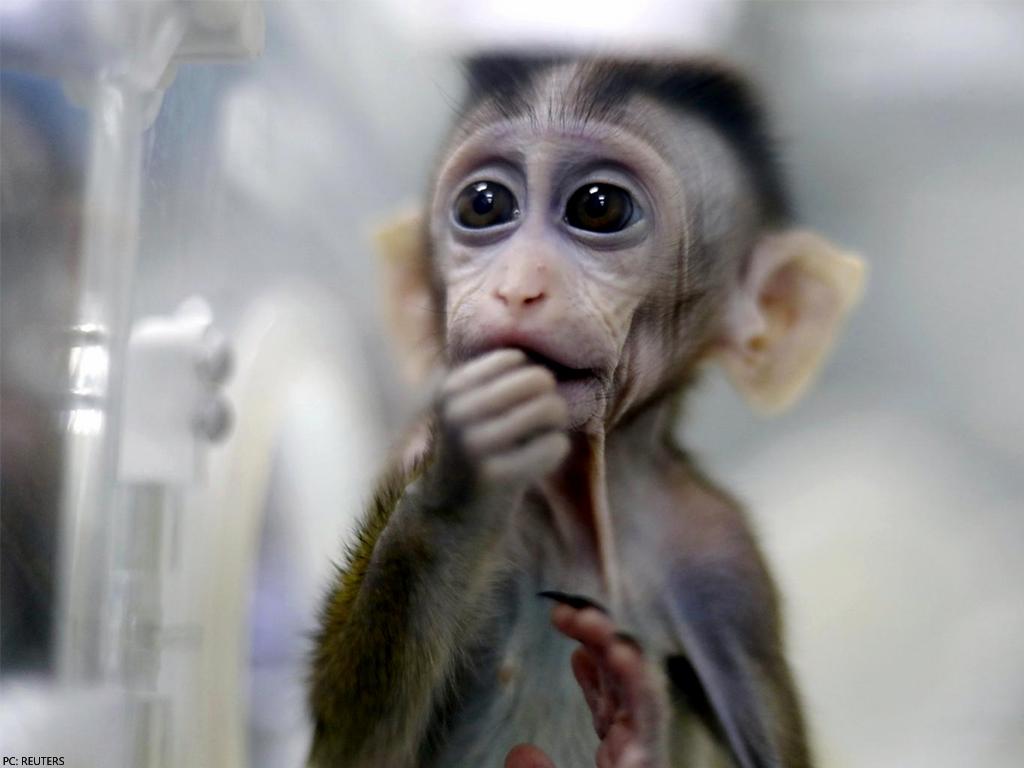
    For the first time, a team of Chinese scientists made use of gene-editing techniques to make monkey brains more human-like. By the end, the monkeys, rhesus macaques, got smarter and had superior memories as compared to the unaltered monkeys.

    Researchers edited the human version of a gene known as ‘MCPH1’ into the macaques. The gene made the monkeys’ brain develop along a more human-like timelineThe gene-hacked monkeys showed better reaction times and improved short-term memories in comparison to their unaltered peers, as per China Daily.

    Chinese scientists clone gene-edited monkeys for disease research

    The team successfully created 11 transgenic rhesus monkeys carrying human copies of MCPH1. They said that a transgenic monkey model is practical and to a large extent can imitate the human-specific status.

    However, few scientists also raised concerns regarding the technique, some even calling it ‘reckless’. Geneticist James Sikela told the MIT Technology Review, “The use of transgenic monkeys to study human genes linked to brain evolution is a very risky road to take. It is a classic slippery slope issue and one that we can expect to recur as this type of research is pursued.”

    source