Category: Science&Technology

  • Narwhals are thriving with very little genetic diversity, study finds | Daily Mail Online

    Narwhals are thriving with very little genetic diversity, study finds | Daily Mail Online

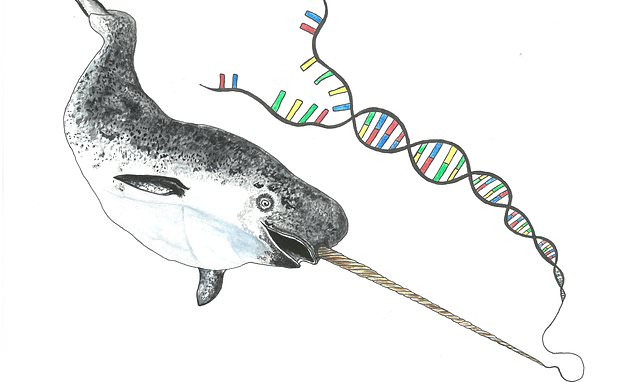
    The genetic diversity of narwhals is strikingly low compared to other Arctic creatures and many less successful species, scientists have revealed.

    Researchers who sequenced their genome are surprised the trait appears to be having for no impact on their survival, as they continue to thrive. 

    It’s contrary to what is usually the case in biology, where low genetic variation often causes a species to struggle in numbers.

    The narwhal’s case shows persistently low diversity and throws into question the popular notion that a narrow gene pool is associated with negative consequences.

    Scroll down for video 

    The genetic diversity of narwhals (pictured) are strikingly low compared to other Arctic creatures and many less successful species

    Scientists have ruled out inbreeding as a cause of the Narwhal’s low genetic diversity, or a sudden event that could have reduced their genetic population to a small representation.  

    Whatever the cause, the trait has likely persisted for tens or hundreds of thousands of years.  

    While researchers still don’t have the answers, they have suggested it could have something to do with the onset of the last Ice Age, roughly 115,000 years ago. 

    The event may have created an habitat so ideal for the significantly smaller population narwhals that it allowed them to rapidly multiply as well as protect them.  

    ‘Narwhals’ long-term low genetic diversity may have allowed them to evolve different mechanisms to cope with their limited genome,’ said Dr Michael Vincent Westbury, a postdoctoral researcher at the Natural History Museum of Denmark.

    Scientists who have sequenced their genome says the trait is surprisingly not impacting on their survival, as they continue to thrive

    A lack of genetic diversity in any species is linked to low survivability as it makes species more vulnerable to disease and environmental pressures. 

    Geneticists studying Narwhal mitochondrial DNA and micro-satellites observed the trait across a number of narwhal populations which are mostly in the Arctic where they are one of three whale species.

    They are now considered globally ‘abundant’, recently estimated at roughly 170,000 in numbers and removing them from the International Union for Conservation of Nature (IUCN) Red List status for ‘Near Threatened’ to ‘Least Concern’ in 2018. 

    This is surprising compared to other Arctic dwelling marine mammal which has significantly greater genetic diversity but only numbers around 1,800 in total. 

    The trait is contrary to what is usually the case in biology – that low genetic variation often cause a species to struggle in numbers. Map of the narwhal distribution range based on International Union for Conservation of Nature distribution data comparing genome-wide diversity of 16 Mammalian Species

    Narwhals are one of three whale species found only in the Arctic and are well-known for their horn-like tusk protruding from their forehead.

    They are mainly found in the Arctic and current estimates have put their numbers at roughly 170,000. 

    Even the panda has greater genetic diversity in comparison, yet their numbers are merely one hundredth of that of the Narwhals.  

    Dr Eline Lorenzen, an associate professor and curator at the Natural History Museum of Denmark and an author on the study said: ‘There’s this notion that in order to survive and be resilient to changes, you need to have high genetic diversity, but then you have this species that for the past million years has had low genetic diversity and it’s still around -and is actually relatively abundant.

    ‘This shows us that just looking at the number of individuals isn’t indicative of the genomic diversity levels of a species, but also looking at the genomic diversity levels isn’t indicative of the number of individuals. 

    The narwhal’s case has thrown into question the notion that narrow gene pool is always associated with negative evolutionary consequences

    ‘Equating those two doesn’t seem to be quite as simple as previously thought.’

    ‘However, the species is still considered vulnerable to changing climates due to its high specialisation and restricted Arctic distribution.’

    ‘We assembled and annotated a genome from a narwhal from West Greenland.’

    ‘We find relatively low diversity at the genomic scale and show that this did not arise by recent inbreeding, but rather has been stable over an extended evolutionary timescale.’ 

    We also find that the current large global abundance most likely reflects a recent rapid expansion from a much smaller founding population. 

    Moving forward, the authors are interested in exploring whether this unexpected finding in narwhals is present in other species as well. 

    WHY DOES GENETIC DIVERSITY MATTER? 

     Genetic diversity is can be used as a marker for the health of a species.

    A group of animal which is more genetically diverse is more likely to be able to deal with threats such as disease, as the individuals will carry slightly different versions of the same genes – some of which could help them fight off disease.

    But species with a low genetic diversity could potentially be at higher risk. 

    If their genes make them more susceptible to succumbing to a virus, for example, a single outbreak could wipe out large numbers, further reducing diversity and tightening the noose. 

    In the study, the researchers showed species and populations in areas outside the tropics and areas that have been more impacted by humans, such as urban areas and croplands, have reduced genetic diversity.

    ‘However we do not know if this reduced genetic diversity puts them at risk of extinction yet,’ Dr Andreia Miraldo, a researcher at the University of Copenhagen, told MailOnline.

    ‘Populations and species can be maintained even with low genetic diversity, although the higher the genetic diversity the more resilient species are to changes in their environment.’ 

    Narwhals are thriving with very little genetic diversity, study finds

    The views expressed in the contents above are those of our users and do not necessarily reflect the views of MailOnline.

    Add your comment

    What’s This?

    By posting your comment you agree to our house rules.

    We will automatically post your comment and a link to the news story to your Facebook timeline at the same time it is posted on MailOnline. To do this we will link your MailOnline account with your Facebook account. We’ll ask you to confirm this for your first post to Facebook.

    You can choose on each post whether you would like it to be posted to Facebook. Your details from Facebook will be used to provide you with tailored content, marketing and ads in line with our Privacy Policy.

    This content was originally published here.
  • Killer asteroid flattens New York in simulation exercise

    Killer asteroid flattens New York in simulation exercise

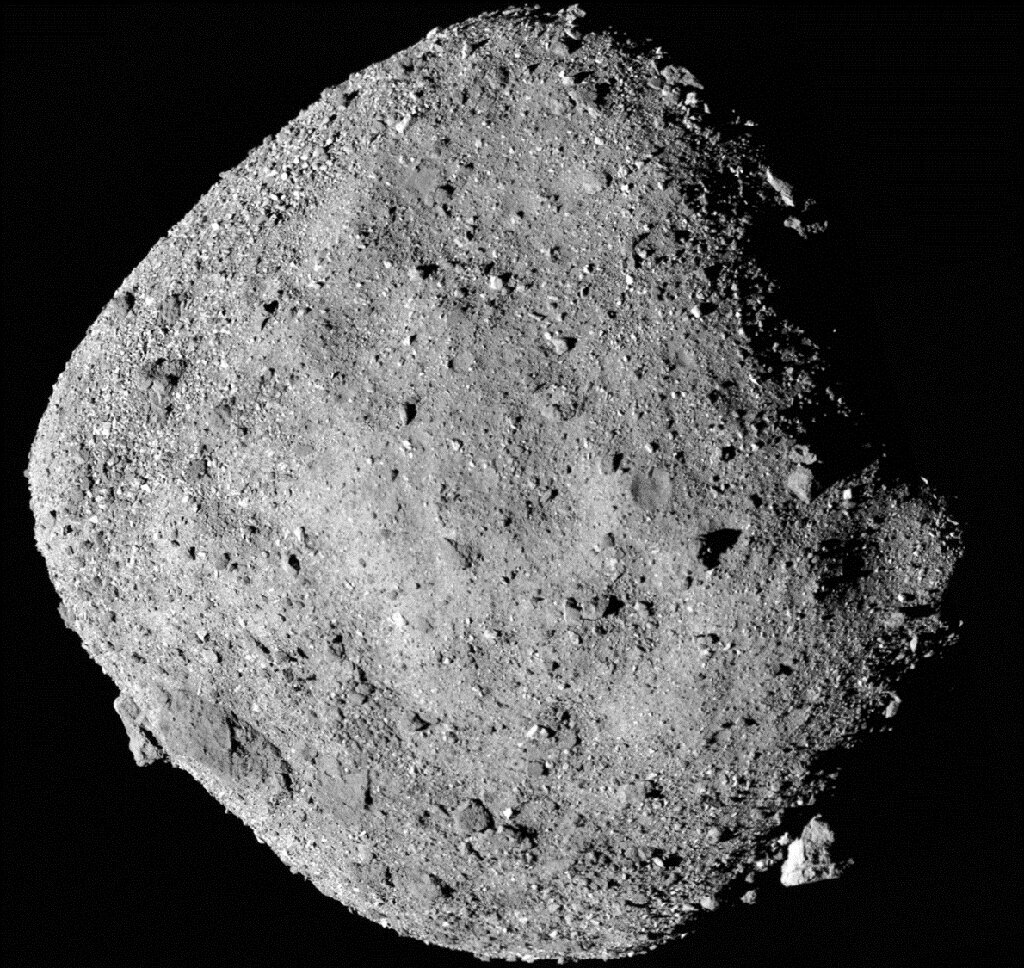
    Asteroid Bennu is shown in this NASA photograph from December 2, 2018
    Asteroid Bennu is shown in this NASA photograph from December 2, 2018

    After devastating the French Riviera in 2013, destroying Dhaka in 2015 and saving Tokyo in 2017, an international asteroid impact simulation ended Friday with its latest disaster—New York in ruins.


    Despite a simulated eight years of preparation, scientists and engineers tried but failed to deflect the killer asteroid.

    The exercise has become a regular event among the international community of “planetary defense” experts.

    The latest edition began Monday near Washington, with the following alert: an asteroid roughly 100 to 300 meters (330 to 1,000 feet) in diameter had been spotted and according to rough calculations had a one percent chance of hitting the Earth on April 29, 2027.

    Each day during the conference, some 200 astronomers, engineers and emergency response specialists received new information, made decisions and awaited further updates from the organizers of the game, designed by a NASA aerospace engineer.

    As fictional months ticked by in the simulation, the probability of the giant space rock crashing into Earth rose to 10 percent—and then to 100 percent.

    NASA launched a probe in 2021 to examine the threat up close. In December that year, astronomers confirmed it was headed straight to the Denver area and that the western US city would be destroyed.

    The major space powers of the United States, Europe, Russia, China and Japan decided to build six “kinetic impactors”—probes meant to hit the asteroid to change its trajectory.

    It took time to build the impactors and wait for the right launch window. The impacts were set for August 2024.

    Three impactors managed to hit the asteroid. The main body was deflected, but a smaller fragment broke off and continued on a deadly path, this time towards the eastern US.

    Washington considered sending a nuclear bomb to deflect the 60-meter rock—repeating a successful strategy that saved Tokyo last year—but it was crippled by political disagreements.

    All that remained was to prepare for impact.

    With six months to go, experts could only predict that the asteroid was headed to the New York area. With two months to go, it is confirmed the city will be destroyed.

    Evacuation!

    The asteroid will enter the atmosphere at a blistering 69,000 kilometers per hour (43,000 miles per hour) and explode 15 kilometers (9.3 miles) above Central Park.

    The energy of the blast will be 1,000 times that of the dropped on Hiroshima.

    It will destroy everything within a 15 kilometer “unsurvivable” radius, scientists said.

    Manhattan will be completely razed. Windows as far as 45 kilometers away will shatter and damage will extend as far out as 68 kilometers from the epicenter.

    The questions raised by the scenario were endless.

    How do authorities evacuate ten million people? Moving people to safety from hurricanes has shown the task’s difficulty.

    “Two months may not be enough time to really evacuate, because you’re evacuating people who are stuck, who have to rebuild their lives where they’re going. You’re going to have fleets of U-hauls,” said Brandy Johnson, an “angry citizen” in the exercise, referring to the rental moving trucks.

    Who will pay? Who will host those displaced? How will authorities protect everything from nuclear and chemical installations to works of art?

    And how will citizens behave in the face of an end-of-the-world scenario?

    “If you knew your home was going to be destroyed six months from now, and that you weren’t going back again, would you keep paying your mortgage?” asked Victoria Andrews, NASA’s deputy planetary defense officer.

    Participants debated insurance and at length: the United States did save Denver, but accidentally destroyed New York.

    “In this situation, under international law, the United States, regardless of fault, as the launching state, would absolutely be liable to pay compensation,” said Alissa Haddaji, coordinator of a group of 15 international space lawyers created to study those very issues.

    The fictional killer asteroid is, of course, “highly unlikely,” Paul Chodas, the NASA engineer who is the game’s designer, told AFP.

    “But we wanted the issues to be exposed and discussed.”

    Astronomers at the conference took the opportunity to defend the NeoCam space telescope project, which would help scientists better identify asteroids and react earlier to threats.

    The next simulation exercise will take place in 2021 in Vienna. Chodas left open the possibility that it will be Europe’s turn in the line of fire.

    © 2019 AFP

    Citation: Killer asteroid flattens New York in simulation exercise (2019, May 4) retrieved 4 May 2019 from https://phys.org/news/2019-05-killer-asteroid-flattens-york-simulation.html
    This document is subject to copyright. Apart from any fair dealing for the purpose of private study or research, no part may be reproduced without the written permission. The content is provided for information purposes only.

    This content was originally published here.

  • NASA and FEMA Will Simulate an Impending Asteroid Strike Next Week

    NASA and FEMA Will Simulate an Impending Asteroid Strike Next Week

    NASA, FEMA, and other national and international agencies are once again gearing up for a hypothetical asteroid impact preparedness scenario. They hope to learn the best strategies for responding to a potential strike, starting from the moment a threatening asteroid is first detected by astronomers.

    Next week marks the start of the International Academy of Astronautics Planetary Defense Conference. As part of this conference, NASA’s Planetary Defense Coordination Office will team up with other partners to perform a “tabletop exercise” on how they’d handle the news of a (fictional) asteroid on a collision course with Earth.

    Again, the following is fictional.

    On March 26, 2019, astronomers discover an asteroid in the night sky, far dimmer than Pluto to their telescopes. They name it 2019 PDC. Initially, it appears that the asteroid’s eccentric orbit bring it within approximately 18 times the Moon’s distance from the Earth, with a chance of hitting the Earth at one in 50,000 in 2027.

    Astronomers continue to track the object as it gets closer. They learn it could be somewhere between 100 and 300 meters wide—the size of a skyscraper. After a month of tracking, the probability of collision with Earth is now 1 percent—the threshold at which international organizations have agreed they must take action.

    Astronomers are able to create a “risk corridor,” measuring where the asteroid might hit. Its potential paths intersect the United States, some of western Africa, and the Atlantic and the Pacific Ocean.

    Though just a drill, these are the kinds of calculations that astronomers must make when a real asteroid comes close to Earth. The fictional 2019 PDC describes a “potentially hazardous asteroid,” the kind that orbits close to Earth and that could have a catastrophic impact if it actually struck the planet. Scientists recently performed a similar simulation to this one, monitoring a nearby asteroid as though it were an actual threat. The new simulation instead will focus less on the scientific questions, and more on governmental response.

    This simulation is the sixth near-Earth-object impact exercise that NASA has taken part in. Not only do these exercises help NASA officials think through what they’d do in the event of a threat, but they also help them know what information is most important to FEMA and other agencies.

    “What emergency managers want to know is when, where and how an asteroid would impact, and the type and extent of damage that could occur,” Leviticus Lewis of the Response Operations Division for FEMA said in the NASA press release.

    We’ll be keeping track of news from the conference next week and reporting on any interesting developments. You can also follow along via a Twitter account run by the European Space Agency, @esaoperations, which will be sharing real-time updates from the exercise.

    This content was originally published here.
  • Scientists explain mysterious, celestial STEVE

    Scientists explain mysterious, celestial STEVE

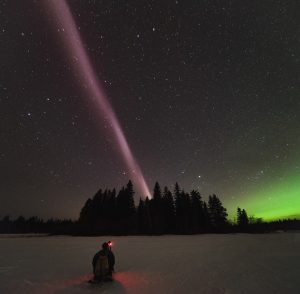
    Long beam of pink light shooting into the sky from behind small forested island.

    A great example of a STEVE display, taken by Ryan Sault of Alberta Aurora Chasers on the evening of April 10, 2018, in Prince George, British Columbia, Canada.

    We’re all aware of, or even familiar with, the aurora borealis – also known as northern lights – those beautiful, shimmering ribbons of light that sometimes dance across the night sky. But there’s another, somewhat lesser-known phenomenon called STEVE (strong thermal emission velocity enhancement) that also puts on fantastic displays, yet isn’t as well understood. Now scientists think they have finally figured out what causes it. They found that STEVE has characteristics similar to those of typical auroras, yet is also uniquely different in how it forms.

    Researchers published the new peer-reviewed findings in Geophysical Research Letters on April 16, 2019.

    In 2018, a previous study had found that STEVE was a kind of sky glow that was distinct from other auroras, but the researchers didn’t know what was causing it. Whatever the source was, it was seemingly not charged particles hitting Earth’s atmosphere the same way as in typical auroras. But, STEVE could also appear during strong magnetic storms, the kind that produce the brightest displays of auroras: hence, a bit of a puzzle. There were some fantastic displays of STEVE in 2018, which garnered much attention on social media, and caught the attention of researchers.

    Unlike other auroras, which are seen as large, brilliant green ribbons, STEVE is a thinner ribbon of pinkish-red or mauve-colored light stretching from east to west, and extending farther south in latitude than other auroras. STEVE displays occur very high up in the atmosphere, at about 15,000 miles (25,000 km) altitude. But, those STEVE displays are also often accompanied by other vertical columns of green light called Picket Fence Auroras that also had not been well understood until now.

    Curved pink beam shoots into sky over lake with green aurora in distance.

    Another beautiful photo of a STEVE display, near Kamloops, BC, Canada, on September 26, 2016. Image via Dave Markel.

    Tall twisted column of pink like beside aurora divided into horizontal pieces.

    In this great photo, both a mauve STEVE and a green Picket Fence Aurora display can be seen. Photo taken on May 8, 2016 near Keller, Washington. Image via Rocky Raybell.

    Arc of pink like next to green aurora divided into vertical lines.

    A stunning Picket Fence Aurora display near Anarchist Mountain, BC, Canada on September 15, 2017. Image via Debra Ceravolo.

    Now, the new study has pinpointed two causes of the two phenomena – energetic electrons like those in other auroras, as well as heating of other charged particles in the atmosphere – that create both STEVE and Picket Fence Auroras. STEVE is caused by the heating of charged particles – plasma heating – in the upper atmosphere, but Picket Fence Auroras result from mechanisms more similar to typical auroras. As Bea Gallardo-Lacourt, a space physicist at the University of Calgary and co-author of the new study, explained:

    Aurora is defined by particle precipitation, electrons and protons actually falling into our atmosphere, whereas the STEVE atmospheric glow comes from heating without particle precipitation. The precipitating electrons that cause the green picket fence are thus aurora, though this occurs outside the auroral zone, so it’s indeed unique.

    The researchers were able to come to these conclusions by studying both satellite data and ground images of STEVE events. Data from several satellites were analyzed as the satellites passed above STEVE events in April 2008 and May 2016. That data was then compared to photographs taken by amateur auroral photographers. In the case of the STEVE displays, it was found that charged particles in the ionosphere – in a “flowing river” – collide with each other. The friction produces heat, and the particles emit mauve-colored light as a result. This is similar to how electricity in an incandescent light bulb heats the filament until it glows.

    Earth with horse shoe shaped areas radiating from pole to pole.

    Artist’s concept of the magnetosphere during a STEVE event, depicting the plasma region which falls into the auroral zone (green), the (blue) and the boundary between them called the (red). Image via Emmanuel Masongsong, UCLA/Yukitoshi Nishimura, BU and UCLA.

    Picket Fence Auroras, on the other hand, are created by energetic electrons hitting the Earth’s atmosphere from space. This is similar to regular auroras at northern latitudes, except that these particles tend to strike the atmosphere farther south in latitude. The electrons are energized by high-frequency waves moving from Earth’s to the ; when the electrons are knocked out of the magnetosphere, they create the stripe patterns reminiscent of a picket fence. This process occurs in both hemispheres simultaneously, indicating that the source of the particles is high enough above Earth that the particles can affect both hemispheres at the same time.

    STEVE events are also a great way for the public to become involved in auroral research. Photos taken from the ground can provide specific time and location data, which is valuable to scientists. As Toshi Nishimura, a space physicist at Boston University and lead author of the new study, said:

    As commercial cameras become more sensitive and increased excitement about the aurora spreads via social media, citizen scientists can act as a ‘mobile sensor network,’ and we are grateful to them for giving us data to analyze.

    Aurora borealis, winding curtains of green light over icy sea.

    A beautiful example of a “regular” aurora, seen on November 2, 2016, from an airplane flying over northern Canada near the Arctic Circle. Image via Shreenivasan Manievannan.

    Learning about exotic phenomena like STEVE and Picket Fence Auroras not only helps scientists understand what causes them, but also how they relate to other auroral phenomena, and what drives such complex processes in Earth’s atmosphere as it interacts with charged particles coming in from space. This is useful not only for understanding the phenomena themselves, but also how to safeguard against possible detrimental effects on radio and GPS signals, which are crucial services in today’s technological world.

    Bottom line: Thanks to data from both the public and satellites, scientists have now figured out what causes both STEVE and Picket Fence Aurora phenomena, which are lesser-known but just as beautiful aurora-like sky displays.

    This content was originally published here.

  • NASA Says Aluminum Fraud Caused $700 Million Satellite Failures | IndustryWeek

    NASA Says Aluminum Fraud Caused $700 Million Satellite Failures | IndustryWeek

    Faulty materials supplied by a unit of Norsk Hydro ASA, one of the world’s top aluminum producers, led to more than $700 million of losses in two failed NASA satellite launch missions, according to an investigation by the space agency.

    NASA’s Orbiting Carbon Observatory mission in 2009 and Glory mission in 2011 didn’t reach orbit and broke-up on re-entry into the Earth’s atmosphere after payloads failed to separate from Taurus XL rockets. Aluminum producer Sapa Profiles Inc. had altered test results and provided false certifications to the rocket’s manufacturer relating to extrusions used in a key component for the payload delivery system, NASA said in a statement.

    “When testing results are altered and certifications are provided falsely, missions fail,” Jim Norman, director for Launch Services at NASA Headquarters in Washington, said in the statement. “The Taurus XLs that failed for the OCO and Glory missions resulted in the loss of more than $700 million, and years of people’s scientific work.” Both missions were intended to launch monitoring instruments related to climate science.

    Oslo-based Norsk Hydro didn’t immediately respond to a phone call and text message seeking comment outside usual office hours. The producer confirmed in an annual report published in March that it had agreed to resolve Department of Justice investigations related to the unit.

    Norsk Hydro agreed to pay $46 million to NASA, the Department of Defense and others to resolve criminal charges and civil claims related to a 19-year fraud, the justice department said in an April 23 statement. Sapa, now known as Hydro Extrusion Portland Inc., is currently excluded from U.S. federal government contracting, NASA said in its statement.

    This content was originally published here.

  • 7 Queen Bee Facts: That Will Amaze You

    7 Queen Bee Facts: That Will Amaze You

    Straight Facts About the Queen Honey Bee

    The queen honey bee is undoubtedly the most popular bee in the hive. Everything involving hive life evolves around the queen bee. However, is the queen bee really in charge? Let’s explore some queen bee facts and see!

    Man (and woman) have beeninteracting with honey bees for thousands of years. So, we know everything about queen bees by now, right? No, nothing could be farther from the truth.  Many queen bee facts remain unknown.

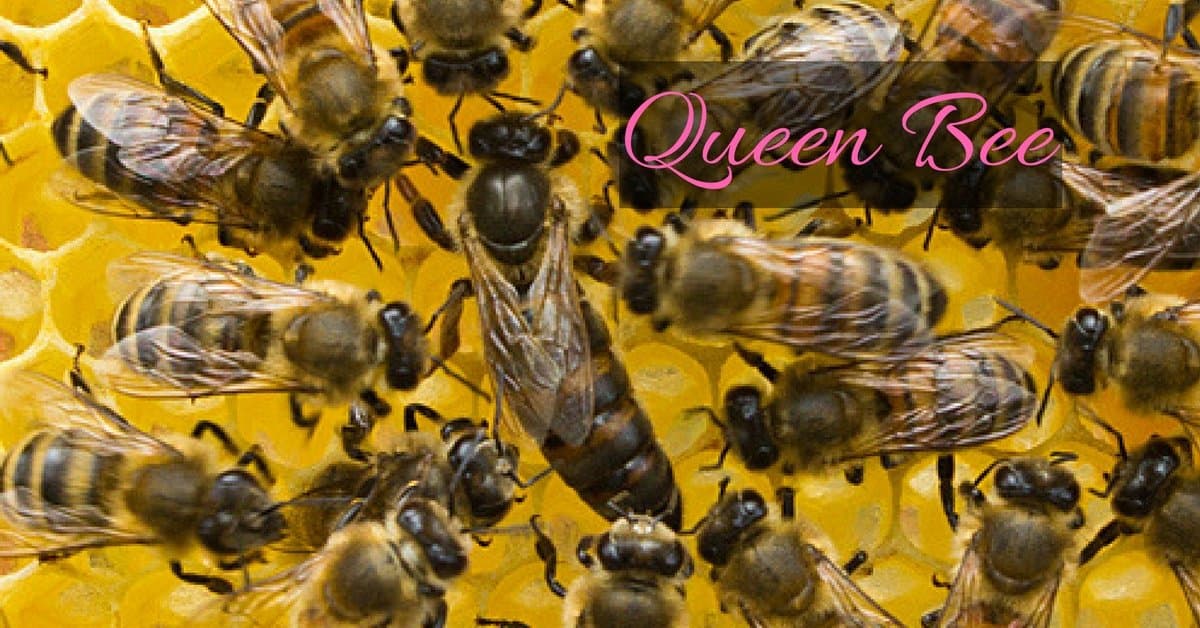
    queen honey bees on comb surrounded by worker bees

    Researchers and beekeepers continue to learn new things about all bees.  How bees communicate with each other, how they interact with the environment and the roles played by individual bees are still being studied.  And we have been studying bees for hundreds of years.

    We have learned some important things about the most popular bee in the box, the queen bee. Here are some Queen Bee Facts that you need to know to be a successful beekeeper. And if you are not a beekeeper, you may still find them very interesting.

    queen honey bee in marking cage - queen bee facts

    Queen Bee Facts – #1 Size

    How Big Is A Queen Bee? 

    The queen bee is the largest bee in the honey bee colony.

    This is due to her long abdomen containing ovaries to produce a lifetime’s quantity of eggs. The length also allows her to cement an egg into the bottom of a honey comb cell.


    Drones (male bees) are often mistaken for a queen by beginning beekeepers. It’s an easy mistake to make. This is especially difficult on a frame with hundreds of bees moving around.

    Drones are wider and noticeably different than regular workers,but they cannot compare in length to a mature queen bee.  The number of drones present vary during the warm season.    But, all drones and no workers is a sign of problems with your queen.

    drone bee and worker bees on front of a beehive

    Another queen bee fact – her size can change!

    It is very easy to over-look a young virgin queen in a crowded colony. A new queen can look very similar in size to some of the workers. As she matures and progresses into her egg laying role, she will plump up.

    Another situation involving queen size is the time of swarming. Worker bees feed the queen honey bee. When the colony is preparing to duplicate by swarming, a queen bee is fed less.

    She will slim down making flight possible. Anyone who has ever stressed to find a slim queen in a hive of 60,000 bees understands the problem.

    Queen Bee Facts – #2 – Genetically Like Workers

    The queen honey bee develops from a fertilized egg.

    Any fertilized egg laid by a queen has the potential to become a queen bee.  The quality and quantity of food feed to bee larva determines reproductive development.

    A queen bee shares the same genetic material as thousands of her sisters. For years, it was believed that only royal jelly was responsible for queen development.  Today, researchers are thinking that other food substances may be involved.

    How Long Does It Take A Queen Bee to Hatch or Emerge?

    The honey bee life cycle is amazing.  Worker bees develop from egg to adult in 21 days.  Drone bees make the same journey in 24 days.

    But it only takes 16 days for the most vital bee in the hive to reach adulthood!  From egg to adult queen bees only requires 16 days.

    worker honey bees building comb for the queen to lay in

    Queen Bee Facts – #3 Her Role in the Hive

    What Does the Queen Bee Do?

    The queen is not the boss of the hive !

    WHAT?! It’s true that she is important. However, it is an amazing queen bee fact that she does not make all the important decisions.

    Workers feed the queen inside the colony. She does not feed, groom or clean herself. If the workers don’t feed her, her health suffers. She relies on her “retinue” of workers for her every need.

    The queen decides where to lay eggs right? 

    Yes, that is true but the workers play an important role in that as well. A queen moves across the honeycomb surface checking empty cells.

    She measures them with her antenna and front legs. This is to determine whether it is a worker-sized cell or a drone-sized cell.

    But, she will not lay an egg if the worker bees have not cleaned and polished the cell.

    So if the colony needs drones, the workers construct and or clean drone cells. If no drones are needed, those honeycomb cells will not be prepared for the queen to use.

    Now that is one amazing queen bee fact for sure! And we thought she was totally in control of egg laying!

    Having a good queen bee is vital to the well being of the colony. So much so, that some beekeepers resort to rearing extra queens to use in their hives or sell to other beekeepers.

    It is never a bad idea to have an extra queen on hand for your colonies. A small “nuc” colony can house an extra queen for a while – ready to be used if needed.

    Queen Bee Facts – #4 – Smooth Stinger

    A queen honey bee does not die if she stings you.

    Almost everyone knows that a worker honey bee dies as a result of stinging a person or other mammal. But a queen bee  can sting you and live to talk to about it!

    Why? Because a worker bee has the job of colony defense. When bees sting, their barbed stinger sticks in your skin. This causes the stinger and poison sac to rip out and continue to inject venom!

    If you get stung by a honey bee, you may try some sting remedies for relief!

    A queen bee does not participate in defending the colony. Her stinger is not barbed, it is smooth. She uses her stinger to repeatedly sting other rival virgin queens.  Queen bees rarely sting humans.

    Queen Bee Facts – #5

    Queen honey bees do not mate inside the hive.

    A few days after emerging from her queen cell, she will take flight on a warm, sunny afternoon. Flying to a location where drone bees are congregated, she will mate in mid-air. 

    Before her mating flights are completed, the queen honey bee will mate with between 12 and 20 drones.

    How does she know where to go? We don’t know the answer to that . (I told you we still had things to learn about bees.)

    If the virgin queen mated inside the hive, she would be mating with her brothers. By mating well away from her colony, she is more likely to mate with unrelated drones. This is a good thing because is promotes genetic diversity.

    Queen Bee Facts – #6 – They Stay Home

    Queen bees just don’t get out a lot.They might be described as home-bodies, or rather, hive-bodies?

    Workers take care of her every need. Royal jelly consumed by the queen bee results in little waste products. Fed and cleaned by her daughters, she has no reason to fly.

    The queen bee only leaves the hive to mate (when she is young) and if the colony swarms.

    Queen Bee Facts #7

    How Honey Bees Recognize Their Queen

    Queen Bees Smell Funny. Okay, let me phrase it another way.


    Each queen bee has a unique smell. Smell is very important to honey bees. They use odors as a form of communication.

    A queen constantly emits pheromones. (These are like our hormones but on the outside.) These pheromones are passed throughout the colony.

    Workers spread them by antenna touching and other grooming activities. As the queen bee ages, she emits less pheromones.

    Eventually, the colony will make a new (pheromone rich) queen to replace her.  Egg production is highest in young queens and declines over time.

    As egg laying and pheromone levels drop, her time is growing short.  She may have the ability to live up to 2 years.  But most colonies replace their queen much sooner.

    How Beekeepers Introduce A New Queen


    This queen pheromone activity is very important. It is the reason why a beekeeper can not simply drop a new queen in a queen-less colony.

    She will smell different than all the other occupants. Workers of the colony view her as a threat and kill her.

    Bee suppliers place a new queen in a special cage (queen cage) that is placed inside the hive. This queen cage gives colony members a chance to get to know her.

    Hive workers will feed her through the wire and after a period of time (usually 3 – 7 days), she is accepted as the new queen.

    I also like to mark my queens, this makes finding and replacing a queen easier. Being able to find your queen is a good skill to perfect. Marked queens are easier to find and good practice.

    Don’t be upset if it take you a while to learn how to find a queen bee: marked or not.  It takes time and practice.

    Want to practice finding queens? (Wish the quality was better  but its still good practice!) – Video

    We know so many things about queen bees and bees in general. But, we have a long way to go to unlock all the mysteries of the honey bee.

    I have been studying honey bees for over 10 years and still feel that I know so little. If you are considering beekeeping, I hope you will check out my online beekeeping class. It contains hours of video with practical beekeeping information.

    Beekeeper Charlotte

    The post 7 Queen Bee Facts: That Will Amaze You appeared first on Carolina HoneybeesBeekeeper Charlotte.

    This content was originally published here.

  • Is time travel is POSSIBLE

    Is time travel is POSSIBLE

    A FORMER NASA scientist has claimed time travel is possible because the “speed of light is changing”.  The scientist analysed lasers that bounced off reflectors left by astronauts on the moon, which appeared to show the moon was moving too fast.  It led her to believe that “the speed of laser light slowing had caused the moon to appear to be moving faster”.  This, she claimed, could be of huge significance when it comes to time travel.  “One thing this says is that we can certainly move forward in time and that we can also change the rate we move forward in time,” Louise told Blake Cousins of YouTube channel thirdphaseofmoon.  “As far as moving backwards in time, if that’s ever possible no equations like this will ever find out that. “The idea that time travellers could visit us today is beyond our understanding so we really can’t say if there are time travellers among us.”  The scientist also said her theory could allow warp speed – similar to that seen in cult series Star Trek – to occur in space. “Warping space to reach other solar systems faster than light is definitely something we might do some day,” she added.

    read more

  • Apple Cracks Down on Apps That Fight iPhone Addiction

    Apple Cracks Down on Apps That Fight iPhone Addiction

    They all tell a similar story: They ran apps that helped people limit the time they and their children spent on iPhones. Then Apple created its own screen-time tracker. And then Apple made staying in business very, very difficult.  Over the past year, Apple has removed or restricted at least 11 of the 17 most downloaded screen-time and parental-control apps, according to an analysis by The New York Times and Sensor Tower, an app-data firm. Apple has also clamped down on a number of lesser-known apps.  In some cases, Apple forced companies to remove features that allowed parents to control their children’s devices or that blocked children’s access to certain apps and adult content. In other cases, it simply pulled the apps from its App Store.  Some app makers with thousands of paying customers have shut down. Most others say their futures are in jeopardy.  “They yanked us out of the blue with no warning,” said Amir Moussavian, chief executive of OurPact, the top parental-control iPhone app, with more than three million downloads. In February, Apple pulled the app, which accounted for 80 percent of OurPact’s revenue, from its App Store.  “They are systematically killing the industry,” Mr. Moussavian said.

    The screen-time app makers are the latest companies to suddenly find themselves both competing against Apple and at the mercy of the tech titan. By controlling the iPhone App Store, where companies find some of their most lucrative customers, Apple has unusual power over the fortunes of other corporations.  Executives at the app makers believe they are being targeted because their apps could hurt Apple’s business. Apple’s tools, they add, aren’t as aggressive about limiting screen time and don’t provide as many options.  “Their incentives aren’t really aligned for helping people solve their problem,” said Fred Stutzman, chief executive of Freedom, a screen-time app with more than 770,000 downloads before Apple removed it in August. “Can you really trust that Apple wants people to spend less time on their phones?”  Timothy D. Cook, Apple’s chief executive, said at a conference this month that Apple had added screen-time tools to help people monitor and manage their phone use. “We don’t want people using their phones all the time,” he said. “This has never been an objective for us.”

    On Thursday, two of the most popular parental-control apps, Kidslox and Qustodio, filed a complaint with the European Union’s competition office. Kidslox said business had plummeted since Apple forced changes to its app that made it less useful than Apple’s tool.  Apple also faces an antitrust complaint in Russia from Kaspersky Lab — a Russian cybersecurity firm that American security officials claim has ties to the Russian government — which said Apple had forced it to remove key features from its parental-control app. The company is exploring a similar complaint in Europe, a Kaspersky spokeswoman said.  “We treat all apps the same, including those that compete with our own services,” said Tammy Levine, an Apple spokeswoman. “Our incentive is to have a vibrant app ecosystem that provides consumers access to as many quality apps as possible.” She said Apple removed or required changes to the apps because they could gain too much information from users’ devices. She added that the timing of Apple’s moves was not related to its debut of similar tools.

    source and more

  • Frustrated pilots got Navy to stop dismissing UFO sightings

    Frustrated pilots got Navy to stop dismissing UFO sightings

    A recent uptick in sightings of unidentified flying objects — or, as the military calls them, “unexplained aerial phenomena” — prompted the U.S. Navy to draft formal procedures for pilots to document encounters, a corrective measure that former officials say is long overdue.  “Since 2014, these intrusions have been happening on a regular basis,” Joseph Gradisher, spokesman for the deputy chief of naval operations for information warfare, told the Washington Post on Wednesday. Recently, unidentified aircraft entered military-designated airspace as often as multiple times per month. “We want to get to the bottom of this. We need to determine who’s doing it, where it’s coming from, and what their intent is. We need to try to find ways to prevent it from happening again.”  Citing safety and security concerns, Gradisher vowed to “investigate each and every report.”  Luis Elizondo, a former senior intelligence officer, told the Post that the new Navy guidelines formalized the reporting process, facilitating data-driven analysis while removing the stigma from talking about UFOs, calling it “the single greatest decision the Navy has made in decades.”  The Senate Intelligence Committee, was less laudatory.

    “I don’t believe in safety through ignorance,” he said, scolding the intelligence community for its lack of “curiosity and courage” and “failure to react” to a strong pattern of sightings.  In some cases, pilots — many of whom are engineers and academy graduates — say they observed small spherical objects flying in formation. Others say they’ve seen white, Tic-Tac-shaped vehicles. Aside from drones, all engines rely on burning fuel to generate power, but these vehicles all had no air intake, no wind, and no exhaust.  “It’s very mysterious, and they still seem to exceed our aircraft in speed,” he said, calling it a “truly radical technology.”  According to Mellon, awestruck and baffled pilots, concerned that reporting unidentified flying aircraft would adversely affect their careers, tended not to speak up. And when they did, he said there was little interest in investigating their reports.  “Imagine you see highly advanced vehicles, they appear on radar systems, they look bizarre, no one knows where they’re from. This happens on a recurring basis, and no one does anything,” said Mellon, who now works with UFODATA, a private organization. Because agencies don’t share this type of information, it’s difficult to know the full extent of activity. Still, he estimated that dozens of incidents were witnessed by naval officers in a single year, enough to force the service to address the issue.

    “Pilots are upset, and they’re trying to help wake up a slumbering system,” he told the Post.  Lawmakers’ growing curiosity and concern also appeared to coax action out of the Navy.  In 2017, the Pentagon first confirmed the existence of the Advanced Aerospace Threat Identification Program, a government operation launched in 2007 to collect and analyze “anomalous aerospace threats.” As the Post’s Joby Warrick reported, the investigation ranged from “advanced aircraft fielded by traditional U.S. adversaries to commercial drones to possible alien encounters.”  According to former Pentagon officials and documents previously seen by the Post, program funding, which totaled at least $22 million, was suspended in 2012.  Gradisher, the Navy spokesman, said that “in response to requests for information from congressional members and staff, officials have provided a series of briefings by senior Naval Intelligence officials as well as aviators who reported hazards to aviation safety.”  Elizondo, who also ran AATIP, said the newly drafted guidelines were a culmination of many things. Most notably: that the Navy had enough credible evidence — including eyewitness accounts and corroborating radar information — to “know this is occurring.”  “If I came to you and said, ‘There are these things that can fly over our country with impunity, defying the laws of physics, and within moments could deploy a nuclear device at will’ — that would be a matter of national security.”  With the number of U.S. military people in the Air Force and Navy who described the same observations, the noise level could not be ignored.  “This type of activity is very alarming,” Elizondo said, “and people are recognizing there are things in our aerospace that lie beyond our understanding.”

  • First it was TV now it is Computers to blame!

    First it was TV now it is Computers to blame!

    Americans are becoming increasingly sedentary, spending almost a third of their waking hours sitting down, and computer use is partly to blame, a new study found.  Over almost a decade, average daily sitting time increased by roughly an hour, to about eight hours for U.S. teens and almost 6 1/2 hours for adults, according to the researchers. That includes school and work hours, but leisure-time computer use among all ages increased too.  By 2016, at least half of American kids and adults spent an hour or more of leisure time daily using computers. The biggest increase was among the oldest adults: 15% of retirement-aged adults reported using computers that often in 2003-04, soaring to more than half in 2015-16.  Most Americans of all ages watched TV or videos for at least two hours daily and that was mostly unchanged throughout the study, ranging from about 60% of kids aged 5 to 11, up to 84% of seniors.  “Everything we found is concerning,” said lead author Yin Cao, a researcher at Washington University’s medical school in St. Louis. “The overall message is prolonged sitting is highly prevalent,” despite prominent health warnings about the dangers of being too sedentary.

    The researchers analyzed U.S. government health surveys from almost 52,000 Americans, starting at age 5, from 2001-2016. Total sitting time was assessed for teens and adults starting in 2007. The results were published Tuesday in the Journal of the American Medical Association.  Studies have shown that prolonged periods of sitting can increase risks for obesity, diabetes, heart disease and some cancers. U.S. activity guidelines released last fall say adults need at least 150 minutes to 300 minutes of moderate-to-vigorous activity each week, things like brisk walking, jogging, biking or tennis. Muscle strengthening two days weekly is also advised. Immediate benefits include reduced blood pressure and anxiety and better sleep. Long-term benefits include improved brain health and lower risks for falls.  Kids aged 6 through 17 need 60 minutes of moderate-to-vigorous physical activity daily. Regular activity is even recommended for kids as young as 3. But only about 1 in 4 U.S. adults and 1 in 5 teens get recommended amounts.

    College student Daisy Lawing spends a lot of time sitting, but says she doesn’t have much choice. Classes and homework on the computer take up much of her day.  “I always feel bad” about being inactive, she said Tuesday at an Asheville, North Carolina, cafe, explaining that she did a school paper about the benefits of physical activity.  “I try to walk a lot, try to work out twice a week. But sometimes I can’t because I’m too busy with school,” Lawing, 21, a junior at Appalachian State University in Boone.  Peter T. Katzmarzyk of the Pennington Biomedical Research Center in Baton Rouge, Louisiana, said people who sit all day need to do more than the minimum recommended amount of physical activity to counteract the harms of being sedentary.  “We’ve just got to really work on the population to get the message out there. Physical activity is good for everyone,” he said.

    source