Category: Conversation Starters

  • KNOWLES: One Of America’s First Slave Owners Was Black. Do His Descendants Get Reparations?

    KNOWLES: One Of America’s First Slave Owners Was Black. Do His Descendants Get Reparations?

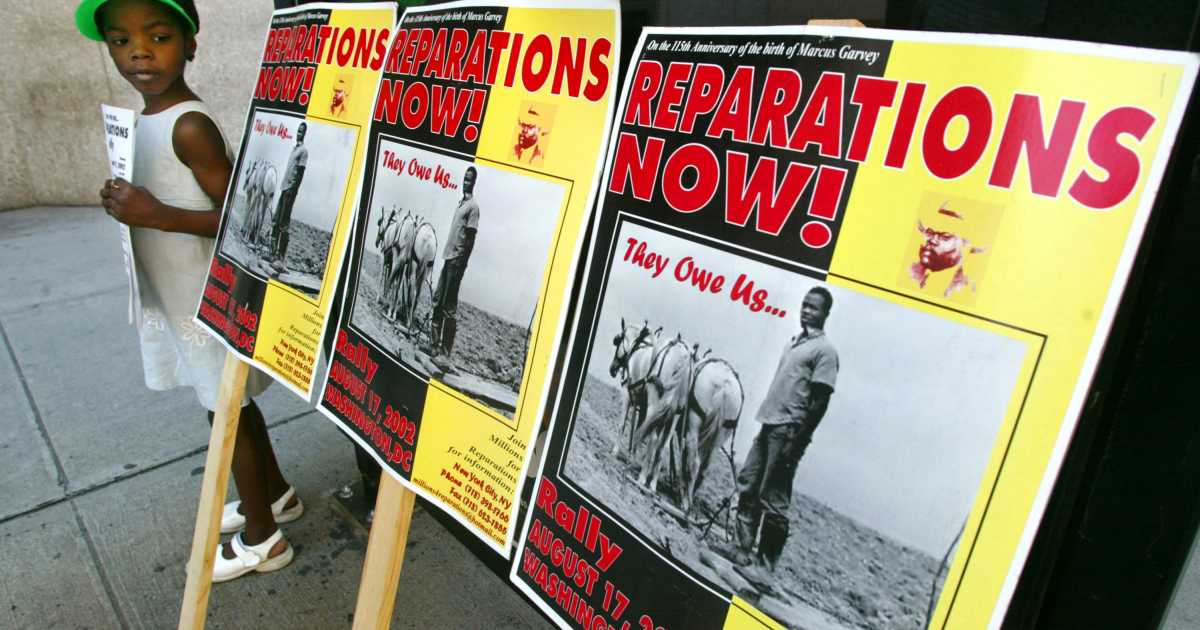
    House Democrats want taxpayers to fund reparations for the great-great-great-great grandchildren of black slaves. Democratic presidential candidate Cory Booker appeared as a witness during the first panel of a Juneteenth hearing on the proposal. “This is a very important hearing,” he declared. “It is historic. It is urgent.” At least seven other 2020 candidates have joined Booker in endorsing reparations for slavery, including Kamala Harris, Bernie Sanders, Julian Castro, Elizabeth Warren, Kirsten Gillibrand, and Beto O’Rourke.

    No country in history has ever paid reparations to the descendants of African slaves for their ancestors’ servitude. Less than 4% of Africans sold in the Atlantic slave trade ended up in the present-day United States. The plurality of captured Africans, a full 40%, wound up in Brazil. Yet neither Brazil nor any other country has ever attempted such an historic restitution.

    Democrats pressing for reparations have yet to answer the central question: how would it work? History raises more questions than answers. On March 8 of either 1654 or 1655, the African indentured servant John Casor became the first person arbitrarily declared a slave for life in America. Casor claimed to have already served his indenture of “seaven or Eight years” [sic]. Nevertheless, a Virginia court ruled in favor of Casor’s master: a black Angolan named Anthony Johnson.

    In a little-known historical irony, the first formally recognized American slave owner was black. How will the existence of black slave owners affect present-day African-Americans’ eligibility for reparations? Can Casor’s descendants sue Johnson’s descendants for restitution? What if someone somehow descended from both men? How about mixed race Americans more broadly? If one descends from both slaves and slave owners, will they pay or collect in a reparations regime? Perhaps the government will purchase 330 million DNA tests to match against a master database of history’s heroes and villains.

    One way or another, the federal government will have to determine the relative historical culpability of its own slavers’ descendants. But who will make the Indian nations pay? Native Americans of the Five Civilized Tribes — the Cherokee, Choctaw, Creek, Chickasaw, and Seminole — owned black slaves at roughly the same rate as neighboring whites, and they held their slaves in bondage longer.

    While the Emancipation Proclamation freed slaves in rebel states as early as 1863, and the Thirteenth Amendment freed all American slaves in 1865, federal law didn’t apply to Indian nations. They held onto slavery until the U.S. government forced them to free their black slaves in the Treaties of 1866. Will the federal government force the Cherokee Nation to pay reparations to the descendants of its own black slaves?

    Beyond slavery, the advocates of reparations point to the historical struggles of black Americans after abolition as a justification for the redistributive program: Jim Crow, segregation, red-lining, lynchings. But while black Americans suffered oppression in a particularly widespread and sustained way, other demographic groups have also endured hardship. The largest mass lynching in American history claimed the lives of 11 Sicilian Americans in New Orleans. Mayor Joseph Shakespeare described Sicilians as “the most idle, vicious, and worthless people among us” and urged his constituents to “teach these people a lesson they will not forget.” Are the descendants of Sicilian immigrants entitled to any reparations for their ancestors’ suffering?

    When determining the right price for reparations payouts, will the government take into account the various federal policies already enacted to combat the legacy of slavery, including half a century of affirmative action regulations and welfare programs? That would be a raw deal. As sociologists have observed for decades, welfare programs often wind up hurting the people they intend to help. Perhaps this new welfare program will include a provision of extra restitution for the victims of past welfare programs.

    For the Left, victimhood has long carried social currency. Now it might carry hard currency as well, if anyone can manage to define it.

    This content was originally published here.

  • Catholic Bishop: Abortion Should Be A Voter’s Top Priority

    Catholic Bishop: Abortion Should Be A Voter’s Top Priority

    Voters should make abortion and the vulnerability of the unborn their top priority, says Catholic Bishop Joseph Strickland of Tyler, Texas.

    Speaking with LifeSiteNews during a Q&A session about the bishops’ voting guide for Catholics at the United States Conference of Catholic Bishops’ spring general assembly meeting in Baltimore, Strickland said that while other issues should be on a voter’s radar, abortion must take precedence.

    “It has a priority, because, unless you can manage to be born you really don’t have any life issues. So certainly that’s foundational,” Strickland said, adding that “atrocious laws” like those in New York and Virginia should stir people’s conscience.

    While Strickland does not discount immigration issues and the quality of life for anyone at any stage of development, he conceded that the unborn child in the mother’s womb is the most vulnerable of all and carries a different set of circumstances than, say, an able-bodied 25-year-old man.

    Certainly, because conception is where it begins, and I think even scientifically we can say that that newly conceived child is about as vulnerable as a human being ever can be. And isn’t it tragic that that vulnerability remains in the womb, even after a child is really developed, and even can be viable outside the womb, they remain vulnerable in today’s society, and even immediately after birth in some places.

    I would very clearly say, absolutely, at conception is where the precious gift of life is given, and that’s where the most important emphasis needs to be, because it’s the most vulnerable. And then as that vulnerability diminishes, still, the value of the person is there. For (example), the 25-year-old, strong, man, is in a different circumstance than a newly conceived child or an unborn child in the womb.

    Later, when LifeSiteNews asked if Catholic bishops should bar pro-abortion politicians from receiving Holy Communion, he said that the bishops should do so not out of punishment but out of care for the politician’s soul, so that they may repent and avoid any further occasion of sin or scandal.

    “We’re not attackers, we’re shepherds, but we should care for that person,” said Strickland. “Care for a presidential candidate who claims to be Catholic but isn’t upholding the basic Deposit of Faith — that we promised to guard as bishops, to guard the deposit of faith, whole and incorrupt, entire and incorrupt I think are the exact words.”

    According to Catholic Canon Law 915, people who publicly express grave sin are not to be admitted to Holy Communion. The Catholic Church has always taught abortion to be intrinsically evil and that people who either procure or support the practice are in grave error that can only be reconciled through the sacrament of confession.

    Bishop Strickland’s support for making abortion a top priority and for barring pro-abortion politicians from Holy Communion stands in direct contrast with Chicago Cardinal Blase Cupich, who recently said he would allow such lawmakers to receive what Catholics believe to be the Body and Blood of Jesus Christ — despite his state of Illinois recently liberalizing its already-permissive abortion regime.

    This content was originally published here.

  • Dear Adult Children, Your Parents Don’t Owe You Anything

    Dear Adult Children, Your Parents Don’t Owe You Anything

    Smiling woman stirring food by family in utensilI recently caught up with a girlfriend whom I hadn’t seen in a while. We engaged in our usual girlish chatter, which eventually gave way to our obligatory, “How are your parents?” question. Little did I know, that question would open the floodgates for complaints. My girl —who just like me, is knocking on 30s door— was in her feelings because her father had stopped paying her car note several months ago since he’s gearing up for retirement. I was stunned, not by the fact that her pops was still paying her car note, but by how ungrateful she sounded. Instead of being appreciative of her father for providing financial support that he definitely did not have to provide, she was dogging him because the gravy train was coming to an end. If your parents are still willing to pick up a bill for you, accept the help and be gracious about it. However, to act as if they’re somehow obligated to do so? Miss me with that.

    I wish I could say that my girl’s attitude was unique, but it’s not. So many of my peers (and adult children in general) have a misguided sense of entitlement that is absolutely nauseating. I know a woman who will jump on Facebook in a heartbeat to sub her mom for not being available to babysit her kids. I know a man who is well over 40 who will badger his elderly mother for something nonstop until she caves from simply not wanting to deal with the stress of his presence anymore.

    Here’s the reality: Our parents are getting older with each passing day. They will not be here forever. Instead of being a constant source of stress and drama, we should be the ones lightening the load for them. They have already done their jobs of raising us. It’s okay to ask for and accept help but to act as if we’re somehow owed something is dysfunctional and manipulative. It’s time to grow up.

    Follow Jazmine on Twitter @and visit her blog, Black Girl Mom.

    This content was originally published here.

  • Spider Eating a Pygmy Possum Is Obviously Australian

    Spider Eating a Pygmy Possum Is Obviously Australian

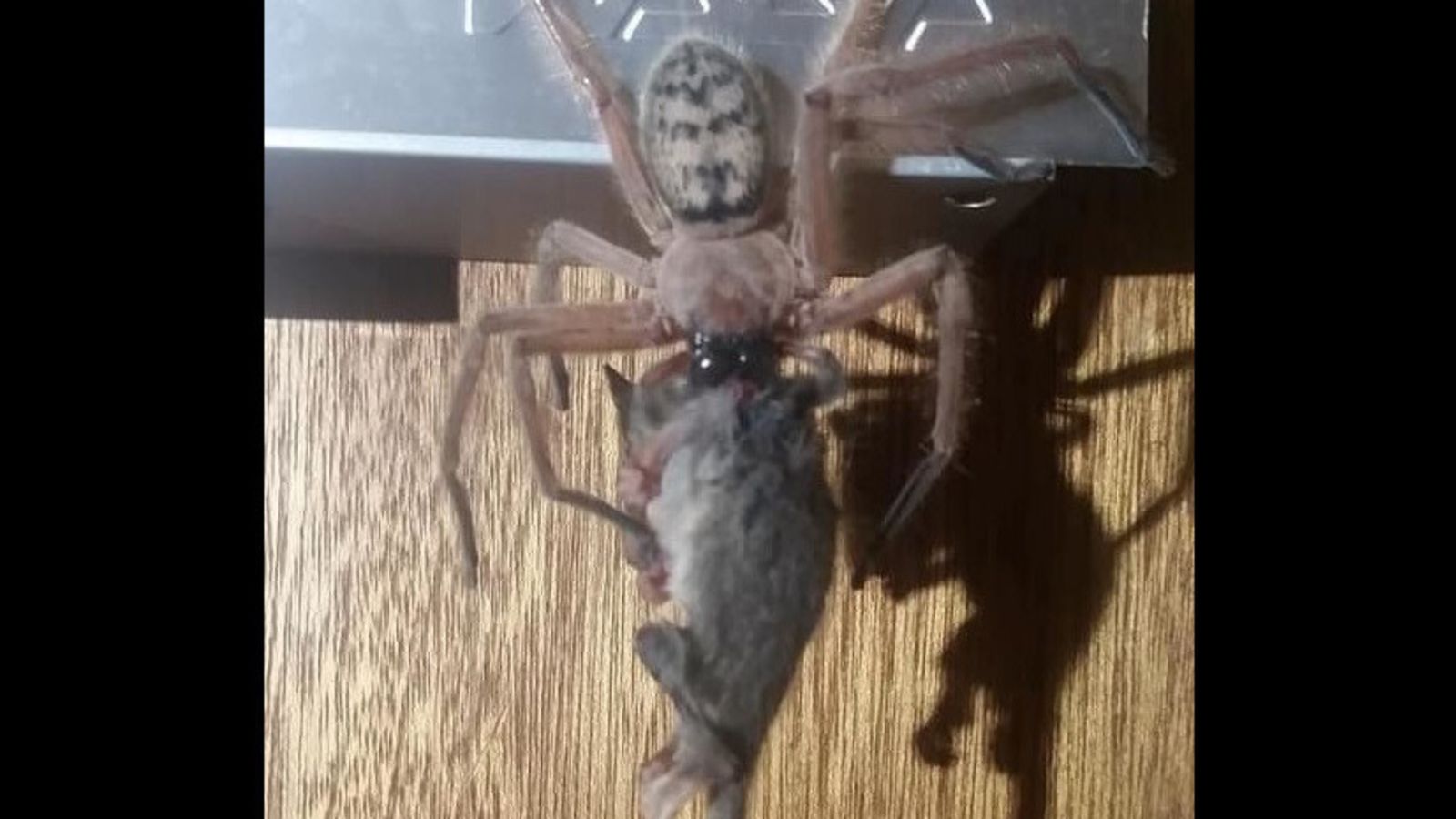
    That’s a photo of a huntsman spider eating a pygmy possum. Yikes!

    A woman named Justine Latton posted this photo in a public Facebook group dedicated to discussing the invertebrates inhabiting the Australian island of Tasmania. Her husband, Adam, spotted the brutal meal at a ski lodge in the island’s Mount Field National Park a few weeks ago, she explained to Gizmodo in a Facebook message.

    “Pygmy possums are quite common up there,” Latton said. “We reckon the spider probably just saw an opportunity and went for it!”

    Huntsman spiders are large arachnids named for the way they actively hunt for their prey. They typically feed on invertebrates and sometimes larger animals like lizards.

    Pygmy possums are nocturnal, mouse-sized marsupials found in Oceania. Though it’s not clear which species of pygmy possum we’re looking at here (I’ve reached out to experts for help identifying it), the island has two species, the Eastern pygmy possum and the Tasmanian pygmy possum. The latter is the smallest possum in the world. Also, as a note to American readers, possums are a family of animals only distantly related to the Western Hemisphere opossums, and are in fact named due to their resemblance to our opossums.

    Gizmodo writer Matt Novak tells me that I should remind readers that not all Australian creatures are scary; some are quite cute. However, we all know that the continent is loaded with deadly snakes, octopuses with enough poison to kill humans, nightmare-inducing spiders, and bees that are even scarier than the spiders.

    So it should surprise no one that the country also produced a possum-eating spider inside of a ski lodge. Ultimately, visitors caught and released the pair, Latton explained, “But no spiders were harmed in the relocation effort (too late for the possum).”

    This content was originally published here.

  • Teen Vogue Encourages Children To Explore Prostitution As A Career

    Teen Vogue Encourages Children To Explore Prostitution As A Career

    On April 26, Teen Vogue posted an article titled “Why Sex Work is Real Work” by Dr. Tlaleng Mofokeng. Teen Vogue tweeted the article out again today.

    Yes, sex work is real work! https://t.co/v9T3b7eBj6

    — Teen Vogue (@TeenVogue) June 16, 2019

    The author, who is also the founder of Nalane Reproductive Justice, explains why she believes sex work should be decriminalized.

    “The idea of purchasing intimacy and paying for the services can be affirming for many people who need human connection, friendship, and emotional support,” Mofokeng said.

    What drew outrage, beyond the obvious, was that the article was published in Teen Vogue, a magazine targeted toward 13-year-old girls.

    This article reduces the work of a medical professional to that of a sex worker. In her piece, Mofokeng questions why having a medical degree to talk about sex-related problems differs from physically performing sexual acts. Both are a transfer of cash, therefore both ought to be legal.

    With that line of logic, we should legalize all drugs because doctors give out drugs; therefore crack dealers should be allowed to give out drugs. They’re both a transfer of cash, after all.

    Mofokeng elaborated:

    “I find it interesting that as a medical doctor, I exchange payment in the form of money with people to provide them with advice and treatment for sex-related problems; therapy for sexual performance, counseling and therapy for relationship problems, and treatment of sexually transmitted infection. Isn’t this basically sex work? I do not believe it is right or just that people who exchange sexual services for money are criminalized and I am not for what I do. Is a medical degree really the right measure of who is deserving of dignity, autonomy, safety in the work place, fair trade and freedom of employment? No. This should not be so. Those who engage in sex work deserve those things, too.”

    Why would a topic of such moral ambiguity be promoted by a magazine for teenagers?

    When I was younger, I used to pick up an issue of Teen Vogue before I would head over to the neighborhood pool. The magazines were filled with trendy models and articles about Selena Gomez. The biggest scandal, from what I can recall, was the Selena Gomez-Justin Bieber break up. How did a magazine that used to dish about celebrity scandals choose a topic as perverted as sex work to preach to young women about?

    Not only was the article was tasteless, given the audience, but it also failed to talk about legitimate problems with consensual prostitution and closely-related sex trafficking:

    I don’t doubt that a small % of women enter into sex work consensually. But it is beyond selfish for @TeenVogue to prioritize their needs & desires above the needs & desires of women who are victims of this industry—women (and girls) who are trafficked, abused, and desperate. https://t.co/PZ6REWnT0N

    — Kelsey Bolar (Harkness) (@kelseybolar) June 17, 2019

    This article was a slap in the face to those young women who are trafficked and abused at skyrocketing rates. Between 2010 and 2015, there was an increase of reported child sex trafficking by 846 percent.

    In 2014, the Department of Justice reported that more than half of sex trafficking victims are 17 years old or younger. While Teen Vogue is pushing a sex liberation agenda on young women, they are bypassing the unfortunate truth that some of their readers may become victims of this industry.

    Promoting unlimited, legal prostitution is not freeing and not something that we should be promoting to young women, especially during a time when women are doing exceptionally well in America and the doors are opening for women in all job fields. In fact, 70 percent of people see the wide-ranging benefits of female leadership. Why should we open up avenues for women to fall into the dangerous clutches of sex work—or worse, sex trafficking—when the working woman’s opinion is of such value?

    We should not be promoting a sex liberation narrative to 13-year-olds. We should be teaching 13-year-olds about community, family, careers, literally anything else. You would think a doctor would know that.

    It is unimaginable how someone would promote such a skewed ideology of feminism to such a vulnerable readership.

    This content was originally published here.

  • Japanese company introduces insanely cute Snorlax sofa

    Japanese company introduces insanely cute Snorlax sofa

    It is low-key one of the most marketable Pokemon in an ever expanding cavalcade of merchandise.

    Cellutane, the Japanese furniture company that created a bread-shaped sofa, is back at it again.

    Here’s their Snorlax sofa.

    Here’s how you are supposed to relax on the Snorlax sofa.

    Here’s a nice little Pokeball to rest your feet on.

    Here are the specs of the Snor-fa and Pokeball cushion.

    And here is how you show three of your friends how much better than them you are.

    Here are the prices.

    The sofa and Pokeball set will cost you 34,599 Yen (S$436.54) while the Snorlax sofa alone is 24,800 Yen (S$312.90).

    However, it doesn’t appear to be shipping to Singapore anytime soon.

    This content was originally published here.

  • Oregon officials kill American black bear because it “habituated,” became too friendly after humans took selfies with it and fed it food near lake

    Oregon officials kill American black bear because it “habituated,” became too friendly after humans took selfies with it and fed it food near lake

    A young black bear was killed after it had been spotted several times near Henry Hagg Lake in Oregon, state wildlife officials said. The bear had become “habituated” or accustomed to the area after people left food for it near Scoggins Valley Park, Oregon Department of Fish and Wildlife officials told KOIN.

    The friendly bear had been fed trail mix, sunflower seeds and cracked corn. 

    It also appeared in several selfies taken by park-goers. Once the bear became used to humans, it became difficult for it to relocate, experts said, increasing the likelihood that the bear would have dangerous interactions with humans in the future. 

    Washington County Sheriff’s Office shared photos of the bear, warning people to stay away from the area while they try to get the cub back into the woods. The bear ultimately had to be put down, KOIN reports.

    Deputies are working to get this bear cub near Hagg Lake to go back into the woods… please stay away from the area near Boat Ramp A. pic.twitter.com/tI8m5yTbyk

    — WCSO Oregon (@WCSOOregon)

    “This is a classic example of why we implore members of the public not to feed bears,” wildlife biologist Kurt Licence told KOIN. “While the individuals who put food out for this bear may have had good intentions, bears should never, ever be fed.” 

    In Oregon, it is illegal to scatter food or garbage that could attract “potentially habituated wildlife,” according to KOIN. 

    Licence said it is unfortunate that the bear was fed in the first place — especially in an area where many families go for recreation and so close to a busy road. 

    Jennifer Harrison, who visited Hagg Lake with her family, said she’s always wanted to see a bear, but it is unfortunate that humans were the cause of this one’s demise.

    “They got [the] bear killed and that’s not OK,” she told KOIN. “They tried to do something they thought was a good thing, but it ended up getting the bear killed so please do not feed the bears.”

    Harrison said she has seen evidence of bears and cougars in the area and that her neighbor actually took a photo of a bear sitting by the side of the road. It’s unclear if the bear in question is the one her friend saw. 

    This content was originally published here.

  • A Swaddling Blanket That Lets You Wrap Your Baby Into A Little Burrito

    A Swaddling Blanket That Lets You Wrap Your Baby Into A Little Burrito

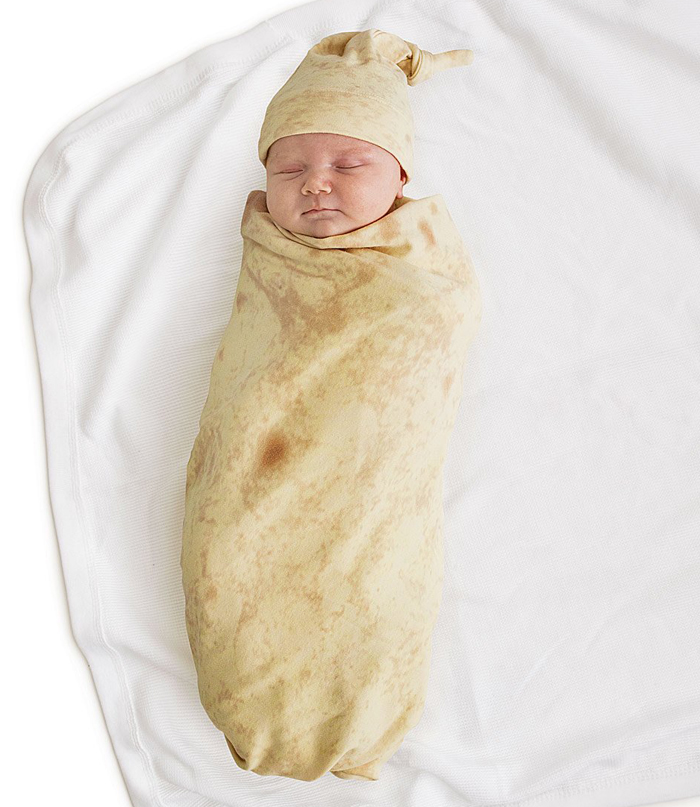
    Babies are so cute sometimes you just want to nibble their toes – well with this tortilla swaddle blanket your little ones will look even more deliciously adorable as they are transformed into a life-sized burrito. Amazon sells tortilla-inspired swaddling blanket and gives parents the opportunity to keep their babies secure and cozy while also yielding the perfect photo-op.

    “From their sweet rosy cheeks to their delectable little toes, you know your baby looks good enough to eat, and now he or she can dress the part with this fiesta-worthy rendition of swaddling clothes,” the site states.The blanket is made from soft layers of stretchy cotton-polyester blend “tortilla,” according to the site which envelops your cutie to keep them cuddled, secure, and looking deliciously adorable.

  • A Cat That Looks Like Accordion

    A Cat That Looks Like Accordion

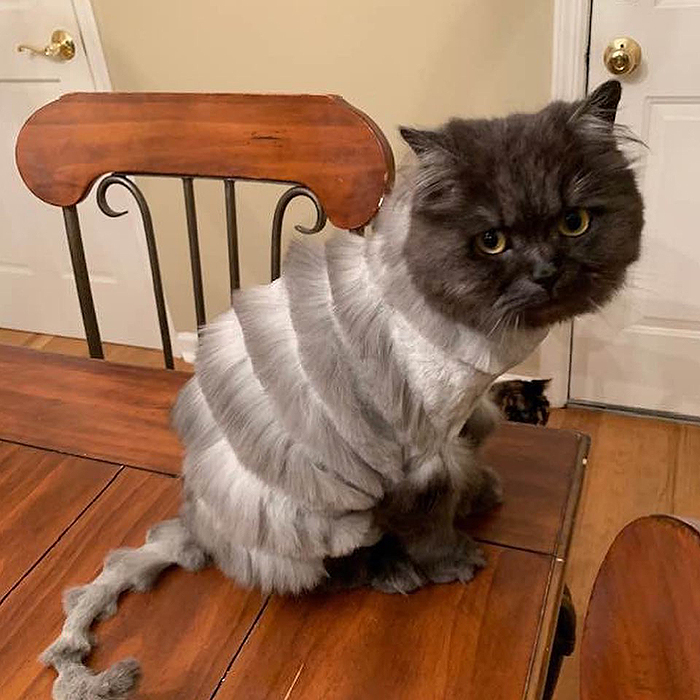
    There probably isn’t anyone on this planet who hasn’t gotten a nightmarish haircut at some point of their lives – it happens to the best of us. But some haircuts are worse than others and that’s what makes them hilarious, especially, if it’s your beloved pet that’s sporting a new look. That’s what happened to Oliver – a handsome boy that recently became a victim of a bad haircut and went viral on the Internet because of it. This Friday, Twitter user Caitlin shared a hilarious story about Oliver’s bizarre new look, which some people compare to that of the accordion. The story quickly went viral and now Oliver the fashionista even has his own Instagram account that you can check out by following the link below.

    source

  • Cultural Differences Between Japan And Other Countries

    Cultural Differences Between Japan And Other Countries

    I studied in Tokyo from 2010 to 2014 and noticed a lot of cultural differences between Japan and my country so to deal with my culture shock, I started creating comic strips about them. I hope my comics will help more foreigners like myself understand Japan and the Japanese people better, as well as increase awareness about some changes in behavior we might have to make when we visit. These comic strips were selected from a collection of over 300 that I created between 2012 and 2015 and posted on my Facebook page. I also compiled these illustrations into two books: “Eva, Kopi and Matcha” and “Eva, Kopi and Matcha 2.0” which are available on Amazon and other eBook platforms (Kindle, iBooks, Google Books, Kobo).

    source