Category: Business

  • Two-thirds of American employees regret their college degrees

    Two-thirds of American employees regret their college degrees

    • Two-thirds of employees report regrets about their advanced degrees, as Americans question the high cost of higher education.
    • Student loan debt has ballooned to nearly $1.6 trillion nationwide in 2019, topping the list of regrets for employees.
    • Science, technology, engineering or math majors, who are more likely to enjoy higher salaries, were least likely to report regrets, while those in the humanities were most likely.

    A college education is still considered a pathway to higher lifetime earnings and gainful employment for Americans. Nevertheless, two-thirds of employees report having regrets when it comes to their advanced degrees, according to a PayScale survey of 248,000 respondents this past spring that was released Tuesday.

    Student loan debt, which has ballooned to nearly $1.6 trillion nationwide in 2019, was the No. 1 regret among workers with college degrees. About 27% of survey respondents listed student loans as their top misgiving, PayScale said.

    The findings illustrate why education loans burdening millions of Americans have become a hot-button issue among some Democratic presidential candidates. Most recently, Sen. Bernie Sanders on Monday proposed a plan to impose a tax on Wall Street trading and use the proceeds to erase that $1.6 trillion of debt.

    About 70% of college students graduated with student loan debt this year, averaging about $33,000 per student. And as younger grads pay off student loan balances, they’re struggling to accumulate wealth or are putting off purchasing homes — some millennials are even struggling to purchase groceries.

    It’s not just millennials. Baby boomers are taking on student loan debt either to help cover college costs for their children or to retrain themselves for a workplace transformed by increased automation, cloud computing and other labor-saving technologies. Some Americans age 62 and older are using their Social Security benefits to pay off more than $86 billion in unpaid college loans.

    Major bummers

    College debt was followed by chosen area of study (12%) as a top regret for employees, though this varied greatly by major. Other regrets include poor networking, school choice, too many degrees, time spent completing education and academic underachievement.

    Most satisfied: Those with science, technology, engineering and math majors, who are typically more likely to enjoy higher salaries, reported more satisfaction with their college degrees. About 42% of engineering grads and 35% of computer science grads said they had no regrets.

    Most regrets: Humanities majors, who are least likely to earn higher pay post-graduation, were most likely to regret their college education. About 75% of humanities majors said they regretted their college education. About 73% of graduates who studied social sciences, physical and life sciences, and art also said the same.

    In the middle: In between the other two categories were 66% of business graduates, 67% of health sciences graduates and 68% of math graduates who said they regretted their education.

    At least one sector of employment bucked the trend: Teachers and other professionals in education, which isn’t typically a high-paying profession, were the second-least likely, after engineering grads, to have any regrets tied to their major, with 37% saying they had no regrets.

    source


  • Elizabeth Warren Wants to Give $57M in Taxpayer Money as Reparations to LGBT Couples

    Elizabeth Warren Wants to Give $57M in Taxpayer Money as Reparations to LGBT Couples

    Why is the government so willing to spend tax dollars on issues that are so irrelevant!  Why are they so reactive to just knee jerk on any issue?  What is it that people really want?  Just be treat as a person!  No sex issues, no past history issues, just give equal rights to everyone.  If they wish to reimburse people for past problems, then hey, I have a long list!  So, do a lot of old folks I know!

    Last week, Democrats wanted the federal government to pay reparations for slavery. Now, Democratic presidential hopeful Sen. Elizabeth Warren (D-MA) wants to spend taxpayer money to give tax refund reparations to same-sex couples who had to file as individuals before their marriages were recognized by the federal government. Warren has introduced a bill named S.1940, known as the Refund Equality Act, which would force the federal government to pay refunds to homosexual couples that they would have allegedly received before the Supreme Court legalized same-sex marriage in the case of Obergefell v. Hodges in 2015. “The federal government forced legally married same-sex couples in Massachusetts to file as individuals and pay more in taxes for almost a decade,” Warren tweeted. “We need to call out that discrimination and to make it right — Congress should pass the Refund Equality Act immediately.” According to NBC News, the refunds would amount to more than $57 million.  The Congressional Budget Office has not done a cost estimate on the measure yet, according to the Congress.gov website.

    When the Supreme Court repealed a part of the Defense of Marriage Act (DOMA) in 2013 during the case of US v. Windsor, it allowed homosexual couples to file joint tax returns. Prior to the high court’s ruling, same-sex couples had to file their tax returns individually. They were also disqualified from any tax benefits given to heterosexual couples. According to CNBC, under current law, you can file an amended return for up to three years from when you originally filed. You also have up to three years from when you filed to claim a refund owed. Warren’s proposed measure would allow same-sex couples to file amended federal tax returns and claim all refunds for all of the years they were legally married in their state before the Supreme Court ruling. The senior senator from Massachusetts first proposed the legislation two years ago, but her idea is getting more attention now that she’s running for president. It’s also getting some fresh support in the Democrat-controlled House of Representatives.

    A similar bill (H.R. 3299) was introduced in the House earlier this month by Rep. Judy Chu (D-CA). Tyler O’Neil, senior editor of PJ Media, shared his thoughts on reparations for LGBT couple refunds in an article published to the website on June 23. “Warren’s bill for same-sex marriage reparations is far more straightforward and is limited to couples in states that had legalized same-sex marriage before the federal government did. Even so, it relies on the claim that the federal government’s definition of marriage as between one man and one woman was wrong before 2015. If so, why not extend the reparations back even further?” O’Neil asked. “This bill champions a new grievance. It is not enough that same-sex couples now have the right to marry under federal law. No, they must be retroactively given the right to file taxes according to that theory. If this law passes, what will they demand next? Already, activists and politicians seek to punish Christian artists who refuse to celebrate same-sex marriage or transgender identity. Will the next reparations push demand that these alleged bigots pay LGBT people to balance the cosmic scales of justice?” he continued.

    source

  • Bill Gates Says Not Challenging iOS his ‘Greatest Mistake’ – The Mac Observer

    Bill Gates Says Not Challenging iOS his ‘Greatest Mistake’ – The Mac Observer

    Bill Gates said that his “greatest mistake” was not challenging iOS and bringing Microsoft into the mobile space. He said that it would have been “natural” for Microsoft to be the main challenger to iOS, but the failure do that cost his firm $400 billion via (Cult of Mac).

    (Image Credit: Frederic Legrand – COMEO / Shutterstock.com)

    Bill Gates: Space For Only One iOS Challenger

    Addressing an audience at venture capital firm Village Global Mr. Gates said:

    In the software world, particularly for platforms, these are winner-take-all markets. So the greatest mistake ever is whatever mismanagement I engaged in that caused Microsoft not to be what Android is. That is, Android is the standard non-Apple phone platform. That was a natural thing for Microsoft to win.

    “It really is winner take all,” Mr. Gates added. “If you’re there with half as many apps or 90 percent as many apps, you’re on your way to complete doom.” He explained that “there’s room for exactly one non-Apple operating system and what’s that worth? $400 billion that would be transferred from company G to company M.”

    This content was originally published here.

  • Cathay Pacific Adds Mattress Pads & Business Class Slippers

    Cathay Pacific Adds Mattress Pads & Business Class Slippers

    While Cathay Pacific is generally a well regarded airline, I don’t find their business class product to be amazing. While their reverse herringbone seats in long haul business class were innovative when first introduced, they’ve become the industry standard at this point.

    Cathay Pacific A350 Business ClassCathay Pacific’s A350 business class

    On the plus side, Cathay Pacific is in the process of installing Gogo 2Ku throughout their fleet, which will be a great addition. The entire fleet should have wifi by 2020.

    Other than that they’ve been testing out various concepts, but haven’t committed to offering pajamas, mattress pads, etc., in business class. Furthermore, while they’ve revamped their business class meal service, it hasn’t gotten rave reviews from customers.

    Well, it looks like some improvements will be made to Cathay Pacific’s business class product as of this fall. Danny Lee at the South China Morning Post reports that Cathay Pacific will be introducing mattress pads and slippers in business class as of October 2019.

    According to a source:

    • Business class passengers will get a thin mattress topper and slippers, in addition to the existing duvet and pillow
    • First class passengers will get a thicker mattress pad, which will be an upgrade over the existing mattress pad
    • Refreshed amenity kits will roll out

    Cathay Pacific A350 Business ClassCathay Pacific A350

    In 2017 Cathay Pacific tested out offering mattress pads in business class for a limited time, though that was dropped after several weeks.

    It seems that in a better financial situation, but also with increased competition, the airline is now investing in their product a bit more. Frankly I’ve always found it shocking that Cathay Pacific hasn’t offered slippers in long haul business class. This is something that a majority of premium airlines in Asia offer, and that you’d get in business class even on a domestic flight within Japan, for example.

    Unfortunately it sounds like we shouldn’t get too excited about the mattress pad, as it’s more of a mattress sheet than anything. In my experience these mattress sheets only really serve the purpose of letting you sleep on a cleaner surface, while they don’t actually add that much comfort.

    I’ll look forward to the official announcement from Cathay Pacific regarding exactly when it will be implemented, and also which routes will feature these additions.

    Are you looking forward to Cathay Pacific introducing mattress pads and slippers in business class?

    The post Cathay Pacific Adds Mattress Pads & Business Class Slippers appeared first on One Mile at a Time

    This content was originally published here.

  • Trump Administration Pushes To Make Health Care Pricing More Transparent | MTPR

    Trump Administration Pushes To Make Health Care Pricing More Transparent | MTPR

    President Trump will sign an executive order Monday on price transparency in health care that aims to lower rising health care costs by showing prices to patients. The idea is that if people can shop around, market forces may drive down costs.

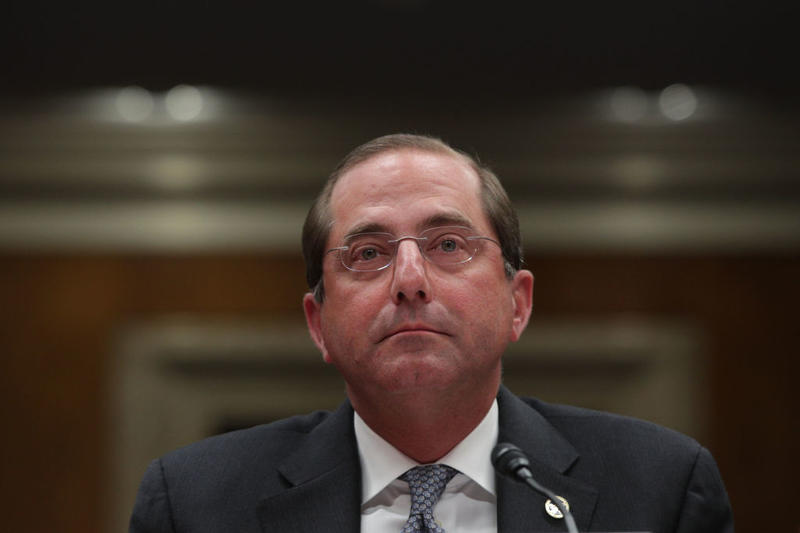
    “The president knows the best way to lower costs in health care is to put patients in control by increasing choice and competition,” Secretary of Health and Human Services Alex Azar said at a phone briefing for reporters Monday morning.

    Like several of President Trump’s other health policy-related announcements, today’s executive order doesn’t spell out specific actions, but amounts to an expression of the president’s desire for HHS to develop a policy and then undertake a lengthy rule-making process.

    Azar outlined five parts of the executive order, two of which are directly related to price transparency.

    It directs the agency to draft a new rule that would require hospitals to disclose the prices that patients and insurers actually pay in “an easy-to-read, patient-friendly format,” Azar said.

    The new rule should also “require health care providers and insurers to provide patients with information about the out-of-pocket costs they’ll face before they receive health care services,” he added.

    The idea is simple. Health care is an industry where consumers don’t have access to the kind of information they have when making other purchasing decisions. The executive order could — if it leads to finalized, HHS rules — pressure the industry to function more like a normal market, where quality and price drive consumer behavior. Some consumer advocates welcomed the move.

    “Today patients don’t have access to prices or choices or even ability to see quality,” said Cynthia Fisher, founder of a group called Patient Rights Advocate. “I think the exciting part of this executive order is the President and administration are really moving to put the patient in the driver’s seat and be empowered for the first time with knowledge and information.”

    Exactly how the rules the executive order calls for would work is still to be determined, administration officials said.

    Push back from various corners of the healthcare industry came quickly, with hospital and health plan lobbying organizations arguing this transparency requirement would have the unintended consequence of pushing prices up, rather than down.

    “Publicly disclosing competitively negotiated, proprietary rates will reduce competition and push prices higher — not lower — for consumers, patients, and taxpayers,” said Matt Eyles, CEO of America’s Health Insurance Plans in a statement. He says it will perpetuate “the old days of the American health care system paying for volume over value. We know that is a formula for higher costs and worse care for everyone.”

    Some health economists and industry observers without a vested interest expressed a similar view. Larry Levitt, senior vice president for health reform the Kaiser Family Foundation, tweeted that although the idea of greater price transparency makes sense from the perspective of consumer protection, it doesn’t guarantee lower prices.

    “I’m skeptical that disclosure of health care prices will drive prices down, and could even increase prices once hospitals and doctors know what their competitors down the street are getting paid,” Levitt wrote.

    This executive order is the latest in a series of moves from the Trump administration on health care price transparency recently. As NPR reported, just last month the White House announced its legislative priorities for ending surprise medical bills, which included patients receiving a “clear and honest bill upfront” before scheduled care. That same week, HHS announced a final rule requiring drugmakers to display list prices of their drugs in TV ads.

    However, several of President Trump’s past health care announcements have gotten tied up before the promises to lower costs could be realized.

    For instance, in May 2018, Trump rolled out a Blueprint To Lower Drug Prices which included a variety of proposals intended to reduce pharmaceutical costs to individuals, the industry and the economy as a whole, as NPR reported.

    In October of last year, the Centers for Medicare and Medicaid Services proposed an international pricing model for setting what Medicare Part B would pay for certain drugs. This is the closest the Trump administration has come to Trump’s campaign promise to have Medicare negotiate with drug companies.

    The proposal was put out for public comment with a December 2018 deadline. Thousands of comments came in, including a lot of pushback from the pharmaceutical industry and the proposed rule has not yet been finalized and it’s not clear it ever will be.

    Copyright 2019 NPR. To see more, visit https://www.npr.org.

    This content was originally published here.

  • Exxon Mobil seeks bids for Norwegian offshore assets

    Exxon Mobil seeks bids for Norwegian offshore assets

    OSLO — Exxon Mobil is considering selling all of the stakes it holds in oil and gas fields off the Norwegian coast, a spokeswoman said.

    Two years ago the U.S. major – the world’s largest oil company – sold its operated assets in the area. But it has retained stakes in more than 20 other fields, including Equinor-operated Snorre and Shell-operated Ormen Lange.

    “Following interest expressed by several parties, Exxon Mobil has decided to open a data room to test the market interest for the upstream portfolio in Norway,” Anne Fougner said, adding that no decision to sell had yet been made.

    A number of private-equity backed firms, including Okea, and independent oil firms Aker BP and DNO, have this year said they were looking to buy more assets on the Norwegian continental shelf.

    Fougner’s remarks confirmed a report in local newspaper Dagens Naeringsliv. She declined to comment on the value of the assets, which the business daily quoted an unnamed industry expert as saying could be worth $3-4 billion.

    In 2017, Exxon Mobil’s net production from fields off Norway was around 170,000 barrels of oil equivalent per day, according to its website.

    Erik Haugane, Okea’s chief executive, told Reuters this week he expected all oil majors except Norway’s Equinor to exit the Norwegian continental shelf in a decade.

    Another Norwegian oil firm, Det norske – controlled by billionaire Kjell Inge Roekke – bought BP’s Norwegian assets in 2016, with BP getting a 30% stake in the new company, Aker BP.

    U.S. major Chevron transferred its last stake in a Norwegian offshore license last year, while ConocoPhillips still operates Ekofisk, the first major oil discovery off Norway.

    *Nerijus Adomaitis; editing: John Stonestreet – Reuters

    Receive Alerts on: Whatsapp: +2348135057899, 

    This content was originally published here.

  • Gold Price Framework – The Next Cycle Unfolds

    Gold Price Framework – The Next Cycle Unfolds

    Via GoldMoney Insights,

    Based on the findings of our gold price framework, we have long argued that we have entered a new gold cycle. However, until now, there was always the risk that strong economic growth could allow the Fed to raise rates above what the FOMC members themselves expected was possible. As markets and the Fed itself rapidly adjust to the new reality of a slowdown in economic growth, those risks have subsided, bolstering our conviction that the next gold cycle is about to unfold.

    In 2018 we published a 3-part series “Gold Price Framework Vol. 2: The Energy Side of the Equation” in which we presented our revised gold price model (part 1), took a deeper dive into the link between longer-dated energy prices and gold by doing an in-depth analysis of the energy exposure of gold mining companies (part 2), and gave an outlook for gold prices (part 3).

    For those unfamiliar with our model, we recommend reading at least part 1 to get a better understanding of our findings in this report. In a nutshell, we found that the majority of changes in gold prices can be explained by just three drivers: Central bank policy (more specifically real-interest rate expectations and QE), changes in longer-dated energy prices, and central bank net gold purchases (the least important driver). These three drivers can explain over 80% of the year-over-year changes in the gold price (see Exhibit 1).

    Based on the outlook for the main drivers of the gold prices, we reiterate our view that the risk to gold prices is clearly skewed to the upside, a position we are holding since early 2016. While our bullish view on gold remains unchanged, there is a clear change in our conviction level. For the past three years we have held the view that we are in a new up-cycle but we always maintained a somewhat cautious stance as we could see a near-term scenario where the Fed was able to continue to raise rates on the back of an acceleration in economic growth. We now think that this risk has all but vanished, with global economic growth pointing down, the FOMC members themselves cutting their future rate expectations and the market beginning to price in rate cuts rather than further rate hikes. In other words, the next cycle is about to unfold.

    current gold price cycle started at the end of 2015…

    Since we have presented our gold price framework the first time in late 2015, we have argued that we have entered a new cycle in the gold market. At the time we believed that longer-dated oil prices (5-year forward Brent) had likely set a bottom in late 2015 (at US$47/bbl, now US$60/bbl) and that real-interest rate expectations (10-year TIPS yields) were close to their cycle peak at 0.8% (now 0.3%) (see Exhibit 2). Our view was that – while there was some room to the downside – risk for gold prices were clearly skewed to the upside. While we weren’t extremely bullish near term for longer dated energy prices, the reason for our bullish view on gold was that we saw much more downside risk than upside risk for real-interest rate expectations.

    By the end of 2015, the FOMC members were predicting terminal Fed funds rates at 3.5% (see Exhibit 3). The Fed also has a PCE (Personal Consumption Expenditure) inflation target of 2%, which, in our view translates into CPI (Consumer Price Inflation) of around 2.5-3% that is embedded in TIPS yields. Thus, we expected TIPS yields not rise much above 1% even if the Fed was able to raise rates as many times as it signaled at the time.

    Importantly, with terminal rates at just 3.5%, any economic slowdown or even a recession would require the Fed to sharply slash rates, maybe to even negative territory, which in turn would bring down real-interest rate expectations. Hence, we argued that the next larger move in gold prices would likely be up due to declining real-interest rate expectations.

    However, we also acknowledged that there was significant uncertainty about the path of real-interest rate expectations for the next few years. The Fed’s famous dot plot simply shows what the FOMC members expect for future nominal rates, not their stated target. A sharp pick-up in economic activity could allow the Fed to raise rates further. In our view, a “normal” 10-year treasury yield of 5-6% would have had quite a strong negative impact on gold prices. Assuming that the Fed would stick to its inflation target of 2%, real-interest expectations would most likely be around 2-2.5%[2]. All else equal, our model would predict gold prices to drop below US$1,000/ozt in such an environment.

    In the aftermath of 2016 US presidential elections, that was exactly what the market started to price in. The market hoped that deregulation would unleash economic growth that would offset the negative impact of the Fed unwinding its balance sheet. And for a while, it looked like the economic environment in the U.S. did indeed gain steam and surprised both the market and the Fed. In turn, the FOMC members started to raise their expectations for terminal rates from just 2.75% back to 3%.

    While this pushed 10-year inflation expectations from 1.2% in early 2016 to 2.2% in 2018, nominal rates rose even more quickly as the Fed was finally able to raise rates multiple times a year, pushing the 10-year Treasury yield to 3.2% in late 2018. The result was that real-interest rate expectations rebounded one more time to 1.2% (see Exhibit 4)

    Gold has predictably struggled a little bit in this environment, but the dreaded gold bear market scenario never materialized.  The price of gold was close to US$1,300/ozt before election day and it was down less than US$100/ozt by the time we saw peak rates late last year, despite also being in a bearish energy environment.

    Part of the reason for this resilience is that, while the Fed tightened monetary conditions by raising rates and unwinding its balance sheets, central banks globally continued to ease, and total central bank assets are right now at an all-time high. This also explains why gold prices in some other currencies are also at all-time highs. On net, the up cycle that started in 2015 remains intact, and it just got confirmed by the Fed. 

    …and it just got confirmed by the chairman of the FED

    The optimism about the pick-up in U.S. economic growth proved to be short lived, and over the past couple months, the FOMC members gradually lowered their expectations to 2.5% (see Exhibit 5) and, more importantly, slashed their expectations for the Fed funds rate by the end of 2019 to just 2.375%, implying zero hikes.

    The market is even more bearish, Fed fund futures are now pricing in near zero probability for a hike. The weighted average forecast for Fed funds rate at the end of 2019 is now 1.7%, implying not one, but two rate cuts. In recent years, the market has always discounted the Fed’s optimism on its ability to hike rates. But what we have witnessed over the past months reflects a complete deterioration in confidence about the FEDs ability to hike rates any further. 

    We argue however that, taking historical Fed policy into account, the market seems yet to be much too optimistic. As we have highlighted before, over the past 30 years, the Fed slashed rates by 5.5% on average when the US entered a recession. This would imply steeply negative 10-year treasury rates (see Exhibit 7).

    And that doesn’t even take the high likelihood into account that the Fed will revert to what was once referred to as unconventional monetary policy: Quantitative Easing (QE). In our view, the most important development in regards to monetary policy was not the FOMC members’ change of heart in terms of forward outlook (the market anticipated that for some time now), but a remark by Fed chairman Powell during a conference on June 4, 2019. Powell sent a powerful message to the market by preparing it for what most people in the gold market have expected all along: that quantitative easing should no longer be considered unconventional but in the future should be a standard tool in the Fed’s arsenal. Powell said:

    There will be a next time,”…[Interest rates so close to zero] “has become the preeminent monetary policy challenge of our time. Perhaps it is time to retire the term ‘unconventional’ when referring to tools that were used in the crisis. We know that tools like these are likely to be needed in some form in the future.

    And not to be outdone by the Fed, ECB President Mario Draghi stunned markets two week later when speaking at the ECB Forum in Portugal by saying:

    In the absence of improvement, such that the sustained return of inflation to our aim is threatened, additional stimulus will be required

    Given that the ECBs target rate has remained at zero, this could only mean more quantitative easing, or a derivate thereof. In other words, when the next recession comes, expect a lot more QE, not just from the Fed, but from virtually every major central bank.

    And it’s just the logical conclusion. If the Fed cannot raise rates over 2.5% before the next recession, slashing rates by 5.5% means the new target rate would have to be -3%. That is a level of NIRP no other central bank has come even close to. The Swiss national bank has been keeping its target rate at -0.75% for the past years, but it argues it is doing this to keep the Swiss Franc from appreciating too much as the surrounding economies of Europe struggle, rather than trying to stimulate the Swiss economy. Hence, it seems inevitable that QE will be redeployed when the next recession arrives, and rates will cut to at least zero.

    While the timing of all this is unclear, the direction is not. Arguably the U.S. economy has so far shown remarkable resilience to rising interest rates, an inverted yield curve, higher energy prices (until very recently) and an escalating trade war between China and the U.S., and potentially other countries[3]. And should the U.S. and China resolve their trade dispute, we could expect a short term rebound in confidence and economic activity. But rates have reached a threshold where they start to have a meaningful, and in our view irreversible effect on the economy. Real estate markets in major cities, which for 10 years knew only one direction, have already started to struggle. Recent employment numbers have also been less than encouraging. And higher U.S. rates have taken a toll on the rest of the world as well. European PMI numbers, for example, have been weak for months. And China has its own issues, likely exacerbated by the ongoing trade war.

    Hence in our view, it’s a question of when – rather than if – the U.S. enters the next recession. In a few weeks, this will become officially the longest period of economic expansion in U.S. history, exceeding the 120 straight months of economic expansion from 1991 until 2001. Given the strong headwinds for economic growth, we have little hope that this expansion has a lot more lifetime. And it seems that the Fed is now agreeing. While the Fed has left its target rate unchanged in the June meeting, both the language in the Feds’ statement as well as the rate expectations of the individual FOMC members has changed significantly. At their March meeting, the median expectation of the FOMC members for end of 2019 and end of 2020 rates was 2.375% and 2.625%. Three months later the end of 2020 expectations have dropped to just 2.125% and while the end of 2019 median expectations remained the same, 8 members now expect lower rates from previously none. The market is taking this as an indication that it is imminent that Fed will reverse course and start cutting rates.

    In our view this means that we are now solidly in the next cycle. The risk of sharply higher rates – meaning 5-6% – are firmly off the table. The next big move in real-interest rate expectations thus will be down. The table below shows the model output for different scenarios (see Exhibit 10).

    It is important to highlight that QE has a positive effect on gold that goes beyond QE’s impact on real-interest rate expectations. Hence more QE will not just push gold higher through lower real-interest rate expectations but is a positive driver on its own. QE’s impact on gold is much harder to estimate in a multiple regression analysis though. Every round of QE had a different impact, and so did the tapering and the subsequent unwind. Hence in the table we show where the model predicts gold prices to go under different scenarios of real-interest rate expectations and longer-dated energy prices. More QE implies that there is more upside to these targets.

    Source link

    This content was originally published here.

  • The economy is awful and that’s great news for investors – ABC News (Australian Broadcasting Corporation)

    The economy is awful and that’s great news for investors – ABC News (Australian Broadcasting Corporation)

    The economy is awful and that’s great news for investors

    Posted June 24, 2019 03:48:57

    Bad news suddenly has become good again. No matter where you look, there are signs of a global slowdown while wars are brewing at a trade, currency and even military level.

    Here at home, the economy is sputtering. Growth is slowing, inflation is on the mat, unemployment is ticking higher.

    The situation has deteriorated to such an extent that it’s even jolted the Reserve Bank into action after three years of nothing.

    It cut rates three weeks ago and now the betting is on that we could see another cut as early as next week.

    Many economists are tipping three cuts this year. And yet, at every turn, investors appear to be overjoyed, clamouring over one another to pile into the stock market.

    After taking a thumping late last year, when the global outlook appeared relatively benign, optimistic even, the local market this year has been on a tear, notching up one of the strongest performances in the world with an 18 per cent gain.

    And things will only get better as the news gets worse.

    Growth slowdown fires up stocks

    Last week, our stock market galloped to an 11-year high and finally is within striking distance of cracking the record, from October 2007 just before the global economy tanked.

    Compare that with Wall Street. Before the crash a decade ago, the Dow Jones Industrial Average peaked at around 14,000 points. On Friday, it closed at 26,719 points, more than double its pre-crash peak.

    For most of the past decade, Australia has outpaced America’s economy. The resources boom saw us power through the worst of the global financial crisis as almost every major developed economy plunged into recession.

    Why then, the relatively poor stock market performance? Shouldn’t the market reflect what’s happening in the economy?

    In days past, stock investors positioned themselves for where they saw the economy six, or even 12 months, ahead.

    Not any longer.

    These days, traders and investors pretty much care about just one thing; interest rates. The lower they go, the better the market performs. And generally speaking, rates only fall in times of trouble, when the economy needs a boost.

    One reason for this apparent mismatch is that there is so much investment cash out there looking for a home, when interest rates fall, it quickly migrates to stocks.

    There’s another factor at work too. The global economy now is so overloaded with debt that, were interest rates ever to rise, there would be a massive spate of defaults that once again could threaten the banking system.

    That’s why Wall Street tanked late last year as the US Federal Reserve persisted with its plan to “normalise” interest rates, to push them higher. December was its worst month since the Great Depression in the 1930s.

    Global debt now stands at more than $US250 trillion ($360 trillion), more than three times its level 20 years ago, much of it backed by property.

    Having painted themselves into a corner by issuing so much debt and printing so much cash, central banks, including our own Reserve Bank, are now so frightened about the potentially catastrophic impact of a downturn in either stock or property markets, that they are prepared to do almost anything to avoid it.

    Market values must be maintained.

    It’s a great strategy for anyone who owns a home or has a share portfolio. For those who don’t, it’s a recipe for disaster — or at the very least a widening of inequality and the wealth gap.

    Why the RBA will cut again… and again

    Reserve Bank governor Philip Lowe won’t have a bar of it. There’s nothing wrong with the economy, really. The RBA isn’t cutting rates because things are deteriorating. Not at all.

    It’s cutting rates because the Non-Accelerating Inflation Rate of Unemployment has slipped. Ah, of course.

    Where we once imagined the NAIRU at 5 per cent unemployment — the point considered “full employment” because anything under that saw labour shortages, wage breakouts and rampant inflation — it’s now closer to 4.5 per cent, maybe even lower.

    That’s an oblique way of saying we’re in unchartered waters and the only way to navigate through is to throw caution to the wind.

    The real reason for the RBA rate cuts is the dramatic fall in housing prices and the prospect that unemployment may spike, particularly if the escalating trade dispute between the US and China further crimps Chinese economic growth.

    Should more people end up out of work, as the graph below from investment bank UBS indicates, there would be a rise in mortgage delinquencies and an acceleration of the housing price slump.

    If there are two more cuts in coming months, that will take the official cash rate to 0.75 per cent. And at that point, we officially will have joined the race to the bottom.

    Of course, quite a few countries already have reached the bottom and gone even further.

    America spent years at zero per cent. Germany and other parts of Europe have seen interest rates at well below zero. Japan, however, is the world leader in negative rates, as this chart below shows.

    Why would anyone lend money, deposit cash or buy a bond that guaranteed you’d lose money? Primarily because they think rates could go even lower. And many banks are forced to hold government-issued bonds, even ones that lose money, for liquidity reasons.

    Once considered radical policy, it’s now becoming the norm and involves various strategies such as quantitative easing (printing money), ZIRP (zero interest rate policy) and NIRP (negative interest rate policy).

    Our monetary mandarins, having explicitly raised the possibility of exploring such actions late last year, this week ruled them out, instead wisely urging governments to start spending big on infrastructure.

    Rate cut goes nowhere — what now?

    The disappointment must be palpable. When the RBA cut rates three weeks ago, its primary goal was to sink the Aussie dollar, to make our exports more competitive and to give a leg up to local industry.

    It worked… for a while. But by the end of last week, the local currency had climbed back above US69c.

    That’s the problem with rate cuts and currency manipulation — it only works when you go it alone or you’re in the minority. When everyone is doing it, it has no effect at all.

    Shortly after our rate cut, US President Donald Trump’s demands for one at home grew louder as he openly discussed sacking Fed chair Jerome Powell if he doesn’t get his way.

    European Central Bank chief Mario Draghi also has abandoned any plans to push rates higher, eliciting an attack from Mr Trump who, bizarrely for a leader engaged in the same strategy, accused him of trying to manipulate the Euro.

    Mr Trump is threatening retaliation, possibly through trade sanctions. None of this bodes well for the global economy.

    Perhaps it’s time to get into the stock market. It’s a great strategy, until it isn’t.

    This content was originally published here.

  • Google Chrome has become surveillance software. It’s time to switch.

    Google Chrome has become surveillance software. It’s time to switch.

    You open your browser to look at the web. Do you know who is looking back at you?

    Over a recent week of web surfing, I peered under the hood of Google Chrome and found it brought along a few thousand friends. Shopping, news and even government sites quietly tagged my browser to let ad and data companies ride shotgun while I clicked around the web.

    This was made possible by the web’s biggest snoop of all: Google. Seen from the inside, its Chrome browser looks a lot like surveillance software.

    Lately I’ve been investigating the secret life of my data, running experiments to see what technology really is up to under the cover of privacy policies that nobody reads. It turns out, having the world’s biggest advertising company make the most-popular web browser was about as smart as letting kids run a candy shop.

    It made me decide to ditch Chrome for a new version of nonprofit Mozilla’s Firefox, which has default privacy protections. Switching involved less inconvenience than you might imagine.

    My tests of Chrome versus Firefox unearthed a personal data caper of absurd proportions. In a week of web surfing on my desktop, I discovered 11,189 requests for tracker “cookies” that Chrome would have ushered right onto my computer, but were automatically blocked by Firefox. These little files are the hooks that data firms, including Google itself, use to follow what websites you visit so they can build profiles of your interests, income and personality.

    Chrome welcomed trackers even at websites you’d think would be private. I watched Aetna and the Federal Student Aid website set cookies for Facebook and Google. They surreptitiously told the data giants every time I pulled up the insurance and loan service’s log-in pages.

    And that’s not the half of it.

    Look in the upper right corner of your Chrome browser. See a picture or a name in the circle? If so, you’re logged in to the browser, and Google might be tapping into your web activity to target ads. Don’t recall signing in? I didn’t, either. Chrome recently started doing that automatically when you use Gmail.

    Chrome is even sneakier on your phone. If you use Android, Chrome sends Google your location every time you conduct a search. (If you turn off location sharing it still sends your coordinates out, just with less accuracy.)

    source

  • Female Student Athletes File Federal Complaint After Transgender Runner Dominates Girls’ Track Meets

    Female Student Athletes File Federal Complaint After Transgender Runner Dominates Girls’ Track Meets

    It took them some time but real females finally figured it out!  Yes, there is a difference, and boys will be boys, always looking for a way to be with the girls!  Funny, it seems a little extreme to me but that is how they do it now days!  Once again the genders who get mixed up try to make it work for them.  There seems to be a selfish side to the gender mix ups.

    On Monday, three female high school athletes filed a federal discrimination complaint against Connecticut’s policy regarding transgender athletes. The girls claim they were racing at a disadvantage against their transgender opponent, a male who identifies as a female, impacting the final results of the race.

    In the complaint, the female track athletes claim that the policy cost them top finishes in their races, as well as potential college scholarships because of their placement.

    The complaint, filed with the U.S. Education Department’s Office for Civil Rights, was submitted by the Alliance Defending Freedom on behalf of the student athletes. They are requesting an investigation be launched to look further into the fairness of the rule.

    Christina Holcomb, legal counsel for Alliance Defending Freedom, argued that federal Title IX rules were supposed to keep the playing field equal for female athletes, not obstruct it.

    “Girls deserve to compete on a level playing field,” Holcomb said. “Women fought long and hard to earn the equal athletic opportunities that Title IX provides. Allowing boys to compete in girls’ sports reverses nearly 50 years of advances for women under this law.

    “We shouldn’t force these young women to be spectators in their own sports,” Holcomb added.

    Selina Soule, a track competitor at Bloomfield High School in Connecticut, and one of the girls behind the complaint knows this feeling personally.

    In a recent interview with Fox News, Soule explained that she was unable to qualify for a 55-meter event at the New England Regionals because two of the top spots were taking by biological boys, identifying as females.

    “No one in the state of Connecticut is happy about this, but no one has enough courage to speak up,” Soule said.

    “I haven’t been the only one affected by this,” she added. “There have been countless other female athletes in the state of Connecticut, as well as my entire indoor track team. We missed out on winning the state open championship because of the team that the transgender athlete was on.”

    According to Soule, the two transgender athletes are the reason that Soule could not go to the New England regionals. If they were unable to complete, she would have placed sixth in the 55-meter, which would have given her the opportunity to run in front of college coaches at regionals.

    “I’ve gotten nothing but support from my teammates and from other athletes,” Soule said. “But I have experienced some retaliation from school officials and coaches.”

    Soules complaint, which is represented by the Alliance Defending Freedom, requests that the Education Department “to investigate illegal discrimination against the Connecticut athletes,” including Soule herself.

    Soule is not the only female athlete who has been affected by the transgender protocol in the Connecticut athletic conference.

    Ever since the Connecticut Interscholastic Athletic Conference created a law “that allows biological males who claim a female identity to compete in girls’ athletic events,” the complaint says, “boys have consistently deprived [Selina] Soule and the other female athletes of honors and opportunities to compete at elite levels.”

    “Girls like Selina should never be forced to be spectators in their own sports, but, unfortunately, that is exactly what is taking place when you allow biological males to compete in sports that have been set aside and specifically designed for women like Selina,” Holcomb pointed out.

    “Title IX was designed to ensure that girls have a fair shake at athletics, and are not denied the opportunity to participate at the highest levels of competition.”

    Emilie Kao, director of the Richard and Helen DeVos Center for Religion and Civil Society at The Heritage Foundation, pointed out that Title IX has helped women in sports dramatically, but that the Connecticut protocol is setting them back.

    “Since Congress passed Title IX in 1972, the number of women and girls participating in sports has risen from 1 in 27 to 2 in 5,” Kao said. “This has benefitted their performance in classes as well as on the playing fields.”

    “By ignoring the reality of sex differences, gender identity policies threaten progress and create unfairness and danger for female athletes,” she concluded.

    According to Trans Athlete, Connecticut is among 17 states that allow transgender high school athletes to compete in whatever gender category they desire.

    source