Author: Truth & Hammer

  • Gluten Free Ultimate Emergency Preparedness Food & Water Package

    Gluten Free Ultimate Emergency Preparedness Food & Water Package

    NEW!! “Gluten Free” 2556 Serving Ultimate Emergency Preparedness Food & Water Package. 6 Month Supply for 1 Person, Factory Sealed and Currently Dated for Freshness! Contains: (32) Blue or Tan 3.5 Gallon WaterBricks (112 Gallons of Clean Water), (2) Waterbrick Spigots, (2) Aquamira 60 Gallon Water Treatment Solution, Gluten-Free Savings Bundle Includes: (6) buckets (84 servings) of gluten-free breakfast and entrees, (3) buckets (120 servings) of long-term whey milk, (3) buckets (156 servings) of fruit, (3) buckets (160 servings) of vegetables, (3) buckets (104 servings) of meat, (3) buckets (144 servings) of powdered eggs. You save more versus buying each bucket individually…Are You Prepared?

    Click Here for More Information

  • Heater Ex Meals Hot Meals 12 Assorted / Heater in the Box12 meals total. These 9 ounce meals come in a box that serves as the oven to cook the meal in. The box contains the heating element to have a hot meal in 5 minutes. Up to 5 year shelf life. Each Case Includes two: Chicken Pasta Italiana Green Pepper Steak with Rice Homestyle Chicken Noodles in Gravy Vegetarian Pasta Fagioli Southwest Style Chicken with Rice and Beans Zesty BBQ Sauce Potatoes with Beef

    Heater Ex Meals Hot Meals 12 Assorted / Heater in the Box12 meals total. These 9 ounce meals come in a box that serves as the oven to cook the meal in. The box contains the heating element to have a hot meal in 5 minutes. Up to 5 year shelf life. Each Case Includes two: Chicken Pasta Italiana Green Pepper Steak with Rice Homestyle Chicken Noodles in Gravy Vegetarian Pasta Fagioli Southwest Style Chicken with Rice and Beans Zesty BBQ Sauce Potatoes with Beef

    12 meals total. These 9 ounce meals come in a box that serves as the oven to cook the meal in. The box contains the heating element to have a hot meal in 5 minutes. Up to 5 year shelf life. Each Case Includes two: Chicken Pasta Italiana Green Pepper Steak with Rice Homestyle Chicken Noodles in Gravy Vegetarian Pasta Fagioli Southwest Style Chicken with Rice and Beans Zesty BBQ Sauce Potatoes with Beef

    • 12 meals total
    • 9 Ounce meals for camping or emergency situations
    • Hot meals in 5 minutes
    • Up to 5 year shelf life
    Click Here for more Information

  • MRE STAR Preparedness Packages – 60 or 20 Cases

    MRE STAR Preparedness Packages – 60 or 20 Cases

    FREE Shipping, MRE (Meals Ready to Eat), means that all the contents are fully cooked and can be eaten hot or cold. Each MRE has an average of 1,100-1,300 calories, which replicates the calorie count of a complete meal. There is no need to add water to an MRE. Simply open the pouch and enjoy! MREs are perfect for any outdoor use and/or emergency situation. Their aluminum thermo stabilized pouches provide a long shelf stable without refrigeration. Many private entities, law enforcement, hospitals, fire departments, FEMA, Red Cross and government agencies storage depend on MREs as a part of their emergency plan for food supplies. Our PREPAREDNESS PACKAGES can be bought either 20 or 60 cases of MRE STAR MRE’s. MRE’s Come with 12 Complete Meals per Case delivered to your door. Complete Meals Include: 8oz entree, 2oz dried fruit mix, 2oz nut and raisin mix, 2oz sugar cookies, 24g fruit flavored drink mix, Accessory Pack (utensil, coffee, sugar, creamer, salt, pepper, napkin, wet napkin, IRH – flameless entree meal heater. Entree Varieties Include:Beef Stew, Chicken Noodle Stew, Chicken with Rice and Vegetables, BBQ Chicken with Black Beans and Potatoes, Cheese Tortellini, Pasta with Marinara Sauce, Pinto Beans and Ham, Lentil Stew with Ham, Vegetarian Chili, 6 Entree Varieties in each Case (2 of each), 12 Complete Meals in each Case. SHELF LIFE – Our meals meet the military specifications of the MRE industry; however, shelf life depends on storage conditions, average life is approx 5-10 years….Are You Prepared?

    Click Here for more information

  • Forecast Modelers  predict Trump will win in 2020

    Forecast Modelers predict Trump will win in 2020

    Steven Rattner, “car czar” and counselor to the Treasury secretary in the Obama administration, cites three different modelers in his N.Y. Times commentary, “Trump’s Formidable 2020 Tailwind.”

    The big picture: Trump wins all three modelers. Economists predict that the tailwind is large.

    • Ray Fair, a professor at Yale, “found that the growth rates of gross domestic product and inflation have been the two most important economic predictors — but he also found that incumbency was also an important determinant of presidential election outcomes.”
    • “Mark Zandi, the chief economist at Moody’s Analytics, has looked at 12 models, and Mr. Trump wins in all of them.”
    • “Donald Luskin of Trend Macrolytics has reached the same conclusion in his examination of the Electoral College.”

    source

  • First-ever private border wall built in New Mexico

    First-ever private border wall built in New Mexico

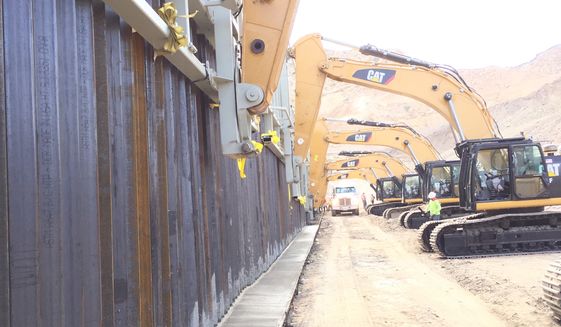
    A private group announced Monday that it has constructed a half-mile wall along a section of the U.S.-Mexico border in New Mexico, in what it said was a first in the border debate. The 18-foot steel bollard wall is similar to the designs used by the Border Patrol, sealing off a part of the border that had been a striking gap in existing fencing, according to We Build the Wall, the group behind the new section. The section was also built faster and, organizers say, likely more cheaply than the government has been able to manage in recent years. Kris Kobach, a former secretary of state in Kansas and an informal immigration adviser to President Trump, says the New Mexico project has the president’s blessing and says local Border Patrol agents are eager to have the assistance. “We’re closing a gap that’s been a big headache for them,” said Mr. Kobach, who is general counsel for We Build the Wall. The announcement comes at a critical time for the border. Mr. Trump’s plans to build hundreds of miles of new and replacement wall took a hit late last week when a federal judge ordered a halt to part of his emergency declaration and shifting of money within the Pentagon to make up for Congress’s refusal to grant him the money he wanted. Judge Haywood Gilliam says the president can’t spend money when Congress has debated it and refused to approve it.

    Enter We Build the Wall, which says, now that it’s proved it can build border wall, that it has eyes on other areas where private parties hold border lands and want to build barriers there to cut down on the illegal traffic across their property.The new wall begins at the Rio Grande and runs up to the lower elevations of Mount Cristo Rey. The wall on the Texas side ends at the river, and there used to be a gap on the New Mexico side running from the river over to Mount Cristo Rey. Two parking lots, one on the Mexican side and one on the U.S. side, with nothing but a ditch to separate them, offered a convenient staging point for would-be migrants.  Mr. Kobach says agents have told him perhaps 100 migrants a night cross — but the bigger problem is that they would cross, gaining agents’ attention, then drug smugglers would use the distraction to run drugs through elsewhere in the gap. A typical night could exceed $100,000 worth of drugs through the gap, Mr. Kobach said.

    We Build the Wall made waves over the last six months as it used crowdfunding to raise money. Its campaign set a $1 billion goal and has raised more than $22 million from more than 265,000 pledges through GoFundMe. The group posted photos of the New Mexico section to the pledge page on Monday. “We did it,” the group said on Facebook.  Construction began Friday and will be completed Tuesday, Mr. Kobach said. Tommy Fisher’s Fisher Sand & Gravel did the construction. Mr. Fisher has been in the news recently with Mr. Trump suggesting repeatedly and publicly that the government should consider his outfit for future border wall construction. He was one of the contractors selected in 2017 to build wall prototypes in San Diego. None of those prototypes was deemed contract-worthy, and Congress has forbidden the Border Patrol from using any of those designs anyway. More recently Mr. Fisher announced he could build 234 miles of fencing at $1.4 billion — or about $6 million per mile. That’s about a quarter of the cost of Mr. Trump’s current fencing, which goes off at about $25 million per mile.

    source

  • Who Owns The American Land?

    Who Owns The American Land?

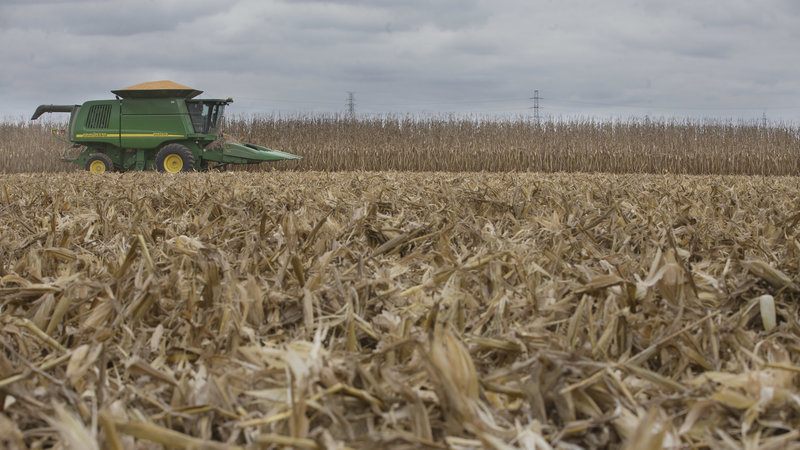
    Those are two words that are commonly used to stir up patriotic feelings. They are also words that can’t be taken for granted, because today nearly 30 million acres of U.S. farmland are held by foreign investors. That number has doubled in the past two decades, which is raising alarm bells in farming communities. When the stock market tanked during the past recession, foreign investors began buying up big swaths of U.S. farmland. And because there are no federal restrictions on the amount of land that can be foreign owned, it’s been left up to individual states to decide on any limitations. It’s likely that even more American land will end up in foreign hands, especially in states with no restrictions on ownership. With the median age of U.S. farmers at 55, many face retirement with no prospect of family members willing to take over. The National Young Farmers Coalition anticipates that two-thirds of the nation’s farmland will change hands in the next few decades. “Texas is kind of a free-for-all, so they don’t have a limit on how much land can be owned,” say’s Ohio Farm Bureau’s Ty Higgins. “You look at Iowa and they restrict it — no land in Iowa is owned by a foreign entity.” Ohio, like Texas, also has no restrictions, and nearly half a million acres of prime farmland are held by foreign-owned entities. In the northwestern corner of the state, below Toledo, companies from the Netherlands alone have purchased 64,000 acres for wind farms.

    There are two counties in this region with the highest concentration of foreign-owned farmland — more than 41,000 acres each. One of those is Paulding County, where three wind farms straddle the Ohio-Indiana line. His other concern is that every acre of productive farmland that is converted over to something other than agriculture is an acre of land that no longer produces food. That loss is felt from the state level all the way down to rural communities, where one in six Ohioans has ties to agriculture. Angela Huffman is a sixth-generation farmer in Wyandot County, which, along with Paulding County, has more than 41,000 acres of foreign-owned farmland. Her modest, two-story white farmhouse has been in her family for almost 200 years. Her grandfather was the last person to actively farm the land here. When he got out of farming due to declining markets, none of his five children wanted to take over, and the cropland is now leased. But Huffman, a young millennial who lives here with her mother, wants to try to keep the farm going and revive her family heritage. Walking out to the barn, a huge white Great Pyrenees dog watches over a small flock of sheep. Huffman says she’s worried about the effects of foreign land ownership on her rural community — which she describes as similar to Walmart pushing local businesses out of the market.

    “Right out my back door here, Chinese-owned Smithfield Foods, the largest pork producer in the world, has recently bought out a couple grain elevators,” Huffman says, pointing across the field behind her house, “basically extracting the wealth out of the community.” To be fair, U.S. farmers and corporations also invest in overseas agriculture, owning billions of dollars of farmland from Australia to Brazil, but the Smithfield Food buyout has really raised concerns with American farmers. As part of that 2013 sale, a Chinese company now owns 146,000 acres of prime U.S. farmland. Back in the Huffman farmhouse, Joe Maxwell is typing on a laptop at the kitchen table. Maxwell is a fourth-generation farmer from Missouri. He and Huffman are part of the Organization for Competitive Markets, an advocacy group of farmers and ranchers across the nation. Maxwell points to the Smithfield Foods elevators across the field: “The money that those elevators used to make stayed within the community. Today the money those elevators make will go into the pocket of someone thousands of thousands of miles away. This is going on across America.” Maxwell is concerned that, as other states put restrictions on foreign purchases in place, Ohio in particular is being targeted. “So when they’re looking for investments in the U.S. and agriculture,” he says, “Ohio’s a great ag state, and you don’t have any restrictions like other states.” Nationwide, Canadian investors own the most farmland. In Ohio, it’s Germany, with 71,000 acres.

    On the southern central part of the state, John Trimmer manages 30,000 acres of corn and soybeans for German investors. He’s been working with German families that have wanted to get into U.S. agriculture since the 1980s. “They started to buy land in Iowa and Minnesota,” Trimmer explains, “but right when they started, [Iowa and Minnesota] passed state laws which restricted foreign ownership.” Instead, the Germans turned to Ohio. But, Trimmer says, there is a misconception about foreign owners — that they aren’t good neighbors or good stewards of the land. What he sees is a growing divide between older family members who still live on the farm, and their children who have no interest in the family business and want to cash out the land. “The last two farms we bought here, through an owner, her and her brothers and sisters inherited it from their mother, and none of them wanted to farm. None of them have an interest in the farm.” Trimmer explains that his German clients have established a reputation in the community for letting the tenants — often aging parents or grown children — continue to live in the houses on the farms they buy. Sellers work directly with his German clients — instead of putting the property up on the market, the sale ensures that family members can live out their lives in the family homestead, while still getting cash value for the farmland.

    source

  • Dangerously High Levels of Antibiotics In World Rivers

    Dangerously High Levels of Antibiotics In World Rivers

    Why are we really surprised when the rest of the world is as polluted as our own country.    Wonder what it does to the fish?  Hundreds of sites in rivers around the world from the Thames to the Tigris are awash with dangerously high levels of antibiotics, the largest global study on the subject has found. Antibiotic pollution is one of the key routes by which bacteria are able develop resistance to the life-saving medicines, rendering them ineffective for human use. “A lot of the resistance genes we see in human pathogens originated from environmental bacteria,” said Prof William Gaze, a microbial ecologist at the University of Exeter who studies antimicrobial resistance but was not involved in the study. The rise in antibiotic-resistant bacteria is a global health emergency that could kill 10 million people by 2050, the UN said last month. The drugs find their way into rivers and soil via human and animal waste and leaks from wastewater treatment plants and drug manufacturing facilities. “It’s quite scary and depressing. We could have large parts of the environment that have got antibiotics at levels high enough to affect resistance,” said Alistair Boxall, an environmental scientist at the University of York, who co-led the study.

    The research, presented on Monday at a conference in Helsinki, shows that some of the world’s best-known rivers, including the Thames, are contaminated with antibiotics classified as critically important for the treatment of serious infections. In many cases they were detected at unsafe levels, meaning resistance is much more likely to develop and spread. Samples taken from the Danube in Austria contained seven antibiotics including clarithromycin, used to treat respiratory tract infections such as pneumonia and bronchitis, at nearly four times the level considered safe. The Danube, Europe’s second-largest river, was the continent’s most polluted. Eight per cent of the sites tested in Europe were above safe limits. The Thames, generally regarded as one of Europe’s cleanest rivers, was contaminated, along with some of its tributaries, by a mixture of five antibiotics. One site on the river and three on its tributaries were polluted above safe levels. Ciprofloxacin, which treats infections of the skin and urinary tract, peaked at more than three times safe levels.

    Even rivers contaminated with low levels of antibiotics are a threat, Gaze said. “Even the low concentrations seen in Europe can drive the evolution of resistance and increase the likelihood that resistance genes transfer to human pathogens,” he says. The researchers tested 711 sites in 72 countries and found antibiotics in 65% of them. In 111 of the sites, the concentrations of antibiotics exceeded safe levels, with the worst cases more than 300 times over the safe limit. Lower-income countries generally had higher antibiotic concentrations in rivers, with locations in Africa and Asia performing worst. They peaked in Bangladesh, where metronidazole, used to treat vaginal infections, was found at more than 300 times the safe level. The residues were detected near a wastewater treatment facility, which in lower-income countries often lack the technology to remove the drugs. Inappropriate disposal of sewage and waste dumped straight into rivers, as was witnessed at a site in Kenya, also resulted in high antibiotic concentrations of up to 100 times safe levels.

    “Improving the safe management of health and hygiene services in low-income countries is critical in the fight against antimicrobial resistance,” said Helen Hamilton, health and hygiene analyst at the UK-based charity Water Aid.  The research team is now planning to assess the environmental impacts of antibiotic pollution on wildlife including fish, invertebrates and algae. They expect severe effects. The drug levels in some Kenyan rivers were so high that no fish could survive. “There was a total population crash,” Boxall said.

  • Jetson Green –   Foldable Home Can Be Installed in a Day

    Jetson Green – Foldable Home Can Be Installed in a Day

    Living Room

    Prefab homes are a great solution when looking to build fast, and now there is another awesome option to do so on the market.  The Italian architect Renato Vidal has recently unveiled a prefab foldable home, which can be installed in less than a day. The so-called M.A.Di home comes flat-packed and is built using sustainable materials and means, but designed with durability in mind.  It can also withstand earthquakes.

    The M.A.Di home is made of CLT (cross laminated timber) and manufactured by wood specialist Area Legno in Italy. It is available in several sizes, namely a 290-sq ft (27-sq m) tiny home, a slightly larger 495-sq ft (46-sq m) home, a 603-sq ft (56-sq m) home, a family sized 753-sq ft (70-sq m) home, or an even larger family home of 904-sq ft (84-sq m).  All the models have two levels and have a kitchen, dining area and bathroom located on the ground level, and bedrooms on the upper level. The homes feature an A frame structure, which makes it easy to fold them for flat-packing and easy transport to the build site.

    The home features a steel profile and steel hinges, meaning that each module can be opened and closed with ease.  When closed and folded, the height of the package is just 4.9 ft (1.5 m), while opened, it measures 21.3 ft (6.5 ft) in height. All of the M.A.Di modules have galvanized steel frames which are designed to support the home’s opening and closing movement. The homes are waterproofed using Polyurethane foam, which also provides the thermal insulation. In addition to this, the walls are insulated using high-density rockwool, while the windows can either be PVC or aluminum.

    The actual installation is very simple, since each module just unfolds up.  The home doesn’t need a foundation, since it can be anchored in place with a specially-designed screw pile system, which has virtually no impact so this home has a very tiny footprint.   The home can also be built on a reinforced concrete foundation, if so desired.

    Large Module Plan

    Single Module Plan

    The home can be easily packed away, while it is possible to extend the existing home by adding new modules. It can also be designed according to passive house standards, while there is also the option of taking it off-the-grid by installing a solar power array, composting toilet, water tanks and a gray water system.

    The price of this home is $933 (€800) per square meter, so the smallest home will cost about $25,195 (€21,600) and the largest $73,385 (€67,200).

    This content was originally published here.

  • GXV Patagonia Expedition Vehicle | Cool Material

    GXV Patagonia Expedition Vehicle | Cool Material

    You can keep your freakin’ Winnebago because you’ll struggle to get over that mall curb trying to escape the teeming hordes of post-apocalyptic mad cow disease-ridden zombies. That’s where the Global Expedition Vehicles Patagonia conquers all thanks to its rugged and battle-ready specifications that are more related to big off-roaders than they are to family campers, though the interior appointments may have you thinking otherwise. Using already toughened vehicles like the medium-duty Mercedes-Benz Unimog or Kenworth as the base truck, the Patagonia adds daily livable features like a kitchen, full bathroom, bed, dining table, diesel generator, and even solar power so off-the-grid survival doesn’t seem like survival at all. For a little more coin, you can add heated floors, a sofa, king-size bed, winch, roof box, extra charging batteries, and even an induction stove and a motorcycle lift, just to name a few. The options seem endless, as does the Patagonia’s capabilities for when the shit goes down.

    This content was originally published here.

  • How much rooftop solar does it take to cover your daily EV recharging? | One Step Off The Grid

    How much rooftop solar does it take to cover your daily EV recharging? | One Step Off The Grid

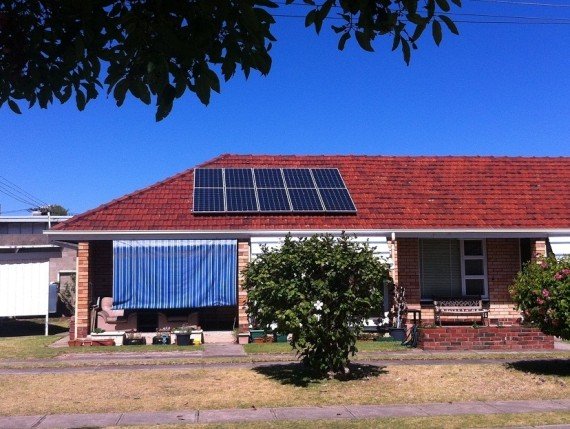
    So you’ve got rooftop solar, and you’ve got an electric vehicle. But can you power both your house and your car with the one PV system?

    The answer, of course, is complicated. It depends on the size of your rooftop solar system, the time of day you want to charge your car, the battery size of your EV, and how much you drive around every day.

    The short answer, however, from solar brokerage company Shine Hub, is that it is possible to get extra panels and batteries to cover most if not all ordinary commutes – as long as you “top up” each time. It will be hard to  charge a car battery from near empty to full with only rooftop solar.

    “Instead of aiming to recharge a completely flat battery, households should endeavour to be able to recharge the car from a typical day of driving around your community,” says Shine Hub CEO Alex Georgiou.

    “This is much more achievable and won’t break the bank.”

    But it will still mean adding extra panels, and possibly a battery storage system, depending on when you are most likely to need to charge your car.

    Shine Hub put together the below table working on a few assumptions, including that a typical home uses around 20kWh of electricity a day – which could be covered by a 5kW (16 panels) solar system; and that a typical driver has a commute of between 10km/day to 60km/day.

    Table: How many panels you would need to cover your daily EV driving with solar?

    By Shine Hub’s calculations, a commute of 40 km/day would use only around 15 per cent of the battery of a Nissan Leaf, or around 8 per cent of a Tesla battery.

    In terms of kWh of electricity, you would need an extra solar supply of 6kWh/day for the Nissan Leaf, or 8kWh/day for the Tesla, to recharge your EV from solar for that 40 km/day.

    Which means that, for most people, the average solar system of around 5kW would be plenty to provide the day-to-day top ups, during the day.

    By adding a battery storage system you can use some of that electricity at night. A system ranging from 5kWh to 15 kWh would to store between 25 per cent to 75 per cent, respectively, Georgiou says.

    As for how much extra solar would be needed for a full EV charge? To work this out, you need to factor in the car’s battery size.

    The examples Shine Hub uses are a Nissan Leaf, fitted with a 40kWh battery pack and with a range of around 270km.

    At the other end of the scale is a top-range Tesla, with a 100kWh battery pack and a range of around 540km.

    Take the Nissan Leaf example to start. Georgiou says to full charge the car’s battery during the day using solar power, households would need to add an additional 10kW (32 panels) to their rooftop system.

    That will produce an additional 40kWh/day which is the same amount of power required for a full car charge, he says.

    If you wanted to fully charge your EV overnight, when you got home from work, you would need to install 40kWh of battery storage as well.

    As for the Tesla, you would need to an additional 25kW solar system (80 panels), and 100kWh of battery storage if you want to charge it at night.

    As Georgiou notes, this could be pretty difficult, considering it is rare that network operators will allow any home to install more than 15kW of solar panels.

    “Renewable energy is never a ‘one size fits all’ approach,” he said.

    “We’re moving towards a future where EV charging stations will be common fixtures in our communities – they will be found at our workplaces, our shopping centres, along our highways and of course within our homes, potentially as part of community virtual power plants.

    “So, if you’re considering solar with an EV future in mind – make sure you consider the bigger picture, and plan for the future.”

    This content was originally published here.