Author: Truth & Hammer

  • Hackers targeting airport charging stations to steal data

    Hackers targeting airport charging stations to steal data

    Security experts are issuing a warning for travelers to think twice about using airport charging stations.

    They say using the public USB ports could put unsuspecting users at risk of what’s called “juice jacking.”

    Just by plugging in, hackers can steal data, text messages, pictures, and email from your phone.

    “There’s really no way to tell, and you have to be really technically savvy to detect such an attack,” IBM cybersecurity expert Charles Henderson said.

    Experts recommend bringing your own charger or portable battery along to avoid using the public USB ports.

    source

  • Ohio Weatherman Snaps at Viewers as Tornado Warning Interrupts ‘The Bachelorette’ (Video)

    Ohio Weatherman Snaps at Viewers as Tornado Warning Interrupts ‘The Bachelorette’ (Video)

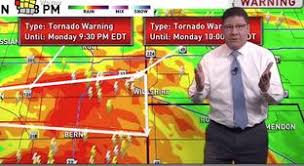
    A meteorologist for Fox 45 in Dayton, Ohio snapped at viewers who complained on social media about a tornado warning that interrupted Monday night’s broadcast of “The Bachelorette,” saying that the cutaway was due to a “dangerous situation.” “I was just checking social media, we have viewers complaining already. ‘Just go back to the show.’ No, we’re not going back to the show, folks. This is a dangerous situation, okay,” Jamie Simpson said during the live broadcast. Simpson scolded viewers who cared more about who Hannah Brown would give the next rose to than to a dangerous weather situation, which has caused massive damage to the region. “Think about if this was your neighborhood. I’m sick and tired of people complaining about this,” Simpson said. “Our job here is to keep people safe, and that is what we’re going to do. Some of you complained that this is all about my ego. Stop. It’s not. I’m done with you people, I really am, this is pathetic.” Fox 45 did not immediately respond for a request for comment. However, Simpson did apologize later in the broadcast. “Alright, I’m sorry I did that, it just really bothers me that we have people that don’t care about other people’s safety around here,” Simpson said.

    source

  • Army’s ‘Google Earth On Steroids’ Can Look Inside Buildings

    Army’s ‘Google Earth On Steroids’ Can Look Inside Buildings

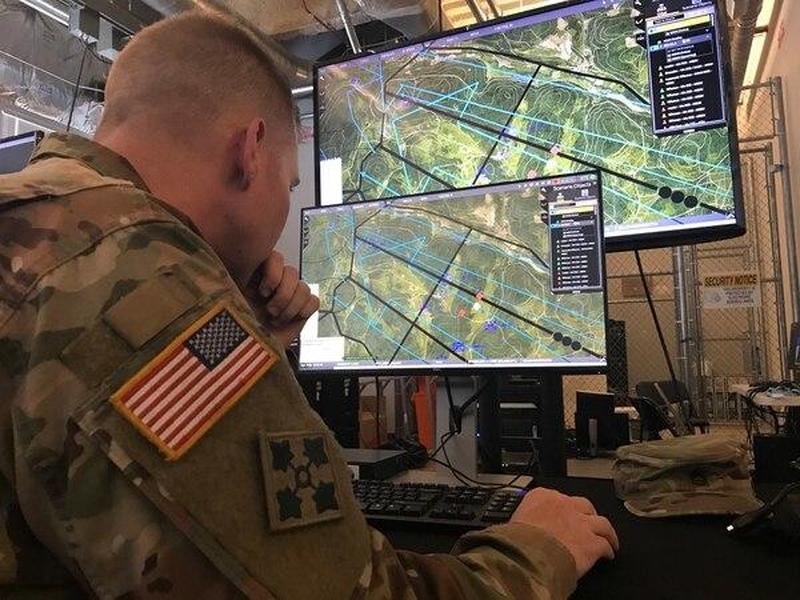
    New mapping technology that is expected to transform training and simulation exercises for America’s warfighters was unveiled at the IEEE Transportation Electrification Conference and Expo (ITEC) 2019 conference on May 15 in Stockholm, Sweden, reported National Defense Magazine.

    Jason Knowles, director of geospatial science and technology at the University of Southern California’s Institute for Creative Technologies, an Army affiliated research center, spoke at ITEC about the new terrain capture and reconstruction software that recreates complex environments including cities for simulation exercises and war planning. The institute is part of a cross-functional team working on the mapping software (called One World Terrain (OWT) project).

    At a briefing during ITEC, Knowles showed the audience a picture of an enemy base that was captured and digitally re-created in about an hour using commercial software and a small drone. “We were able to throw that UAS up, capture that in an hour, put it on the laptop, process it, and push it out,” he said.

    “The ability to have an individual or a squad go out, collect their own organic 3D model for ingesting into their modeling and simulation is huge for us,” he said.

    “The interior of buildings are now being fused and snapped inside of that 3D model,” Knowles said. The software can “strip the outside of a building level by level and see what’s inside the building. That’s obviously very useful for operators.”

    He said the software is linked with GPS data so war planners can organize future real operations.

    The rapid 3D terrain capture and reconstruction system is supported by aerial imagery from satellites and aircraft. For higher resolution, reconnaissance teams can deploy small, handheld drones to collect much higher resolution imagery, he added.

    The software uses machine learning and artificial intelligence for the data merging component to “make the model smart, so it’s not just [identifying objects in] pictures,” he said. For example, it can tell troops if a perimeter wall of an enemy base needs to breached with a vehicle or munition.

    The new mapping software is one of the Army’s top modernization priorities, besides long-range precision missiles, next-generation combat vehicle, future vertical lift, air-and-missile defense, directed energy weapons, next-generation combat rifle, and soldier lethality.

    source

  • Horror movie ‘The Perfection’ is making people sick

    Horror movie ‘The Perfection’ is making people sick

    Netflix’s new movie “The Perfection” is sick — and not in the good way. Viewers are reporting headaches, nausea and even vomiting after watching the 90-minute horror flick’s particularly gory scenes. In the thriller, which started streaming on Netflix May 24, “Girls” star Allison Williams plays Charlotte, an elite cellist who travels to Shanghai for a music competition, meeting her teacher Anton (Steven Webber) and up-and-coming prodigy Lizzie (Logan Browning, best known for “Dear White People”). Charlotte and Lizzie quickly bond, heading off on a road trip to the Chinese countryside after Lizzie downs ibuprofen for a hangover. In the back of an old-school bus, Lizzie projectile vomits, leaving puke smeared across the window. The next shot shows it crawling with maggots. After Lizzie is struck by diarrhea on board, the pair is thrown off the bus, after which Lizzie once again throws up bug-infested bile. Fans are taking to Twitter to announce they’re physically sickened by the recurring tableaus in the thriller.

    source

  • Alligator and Sharks encounters are on the rise, Maybe they really like the taste of humans!

    Alligator and Sharks encounters are on the rise, Maybe they really like the taste of humans!

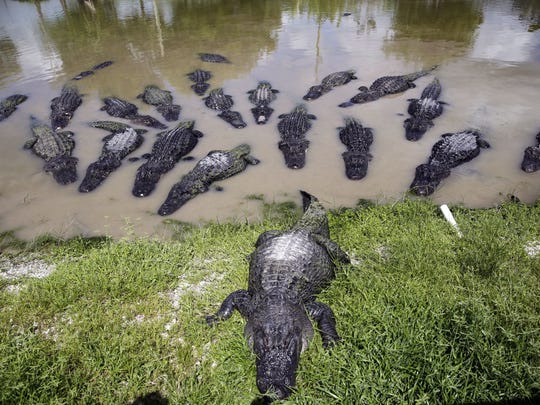
    Tony Aarts’ shot left his ball resting near the hole at Magnolia Landing Golf & Country Club in North Fort Myers. He grabbed his putter and walked past a water hazard toward the green. Then he heard a splash. Aarts assumed a golfer behind him hit without waiting for him to move Then he saw the alligator. “He was coming right at me. Just, boom,” Aarts recalled of the February day in 2017. The gator grabbed Aarts’ right foot and began pulling him into the water. Aarts dug his left foot into the mud, a futile attempt to slow the gator down. He clubbed the gator in the head with his putter. No use. The gator relented only after Aarts began bashing its eye. The golfer suffered only minor injuries to his foot. He was one of 12 people bitten by an alligator in Florida in 2017, and one of 410 people bitten since the Florida Fish and Wildlife Conservation Commission began keeping track in 1948. Twenty-five of those attacks were fatal. And although alligator attacks are rare, this is the time of year when the reptiles are most active. With the weather warming and their hormones hopping during mating season, which usually starts in April, alligators have been popping up all over Florida in recent weeks.

    source

  • A New Area 51?

    A New Area 51?

    While the US Air Force facility known as Area 51 has already become the staple of conspiracy theories regarding extraterrestrial spacecraft and alien lifeforms, famous UFO hunter Scott C. Waring now claims that a new underground installation is being constructed in the vicinity.  According to Waring, who had apparently stumbled upon this discovery while studying satellite maps, the new facility is located 55 miles to the north-east of Area 51’s perimeter. One YouTuber, however, claimed that Waring’s discovery is merely “an artwork allegedly being made by a single artist” who has been given continuous grants to build these mounds for years. In response, Waring argued that no artist would be allowed to do their art inside Area 51, dubbing this sort of explanation as an “expert way to cover it up, by leaving calling it something different”.

    YouTube

  • Is the fish you eat caught by ‘slaves’?

    Is the fish you eat caught by ‘slaves’?

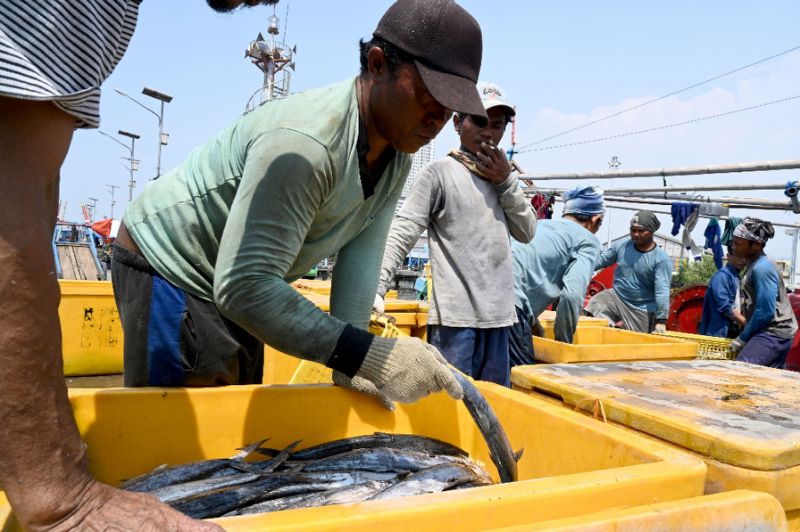
    Enslaved, beaten, malnourished, and so desperate for water he had to collect condensation to drink: Rahmatullah left Indonesia seeking better prospects at sea — instead he endured a living hell. The global fishing industry is riddled with forced labour, anti-trafficking experts say, warning that consumers are unaware of the “true cost” of the seafood they buy in stores and restaurants. Exploited workers face non-payment, overwork, violence, injury, and even death. Indonesia and Southeast Asia are major sources of such labour and unscrupulous brokers target the poor and uneducated with promises of good wages at sea. Rahmatullah was told he was heading to Peruvian waters where he would receive $400 a month salary, plus a per ton bonus, but he was allegedly duped by an Indonesian recruiting agency and trafficked to Somalia, where he spent nine brutal months aboard a Chinese fishing vessel, working 18-hour days. “I felt like a slave,” the 24-year-old told AFP, adding: “The Chinese crew drank clean water while we had to collect water from the air conditioning.” “We were often beaten when we didn’t catch enough, even if we were sick.”

    – ‘Couldn’t fight back’ –

    Rahmatullah is one of 40 Indonesians pushing for compensation after allegedly being tricked with false promises by recruiter PT Maritim Samudera. Some were sent to vessels in the seas off Japan, and others to boats sailing the Somalian coast. In interviews with AFP and accounts provided to police and government officials, the men recounted beatings and psychological abuse, hunger, and dehydration. Two crewmates died from thirst and exhaustion, according to Rahmatullah’s testimony. Most of the men subsisted on white rice scattered with cabbage or boiled fish, while some grew so desperate for water they collected condensation from the air conditioning unit. “The food was terrible,” said 21-year-old Arianus Ziliwu, who was on a boat in Japanese waters. “And the sleeping conditions didn’t seem fit for humans,” he explained. Cellphone video footage and images provided to AFP showed some men slept without mattresses in a grimy cargo hold. “We couldn’t fight back — I’m from a village and didn’t know any better,” added Rahmatullah, who had never worked on a fishing boat before. Both groups were rescued after sending SOS messages in brief windows of access to mobile internet.

    – Targeting the vulnerable –

    The young men spent between six and nine months manning nets and packing fish before being saved, and all are owed thousands of dollars in unpaid wages, according to sworn statements to police. Faced with plummeting global fish stocks due to overfishing, seafood companies have increasingly turned to vulnerable migrant workers in a bid to remain profitable, anti-trafficking advocates said. “If you want cheap tuna or squid, the way to do it is with cheap labour,” said Arifsyah M. Nasution, oceans campaigner at Greenpeace Indonesia. “And cheap labour comes from Southeast Asia,” he added. The Global Slavery Index says labour exploitation and modern slavery in some fisheries are well documented. But few shoppers know about these high-seas horrors. “There is still very little awareness among consumers about the true costs and hidden facts of the seafood products that they buy at stores and supermarkets,” he said. Critics say the Indonesian government is not doing enough to combat widespread abuse of its migrant sailors, despite efforts to clamp down on human rights violations in its own territorial waters. Although there are no reliable estimates on the number of Indonesian migrant fishermen that fall victim to trafficking, authorities estimated in 2016 that some 250,000 Indonesians were working as “unprotected” crew on foreign fishing vessels. Most are destined for fishing fleets that often obscure their origins through foreign flagging, a system that complicates monitoring and jurisdictional oversight by allowing ships to register in a country other than the owner’s own, to avoid strict labour and environmental standards. Both public and private agencies in Indonesia are licensed to send people abroad, but some recruiters — and fishermen — choose to work outside formal channels, and poor oversight puts workers at risk. “The first problem is lack of supervision, the second is toothless enforcement,” said Imam Syafi’i, from the Indonesian Seafarers’ Movement (PPI).

    – ‘No more victims’ –

    PT Martim Samudera Indonesia, the company that recruited Rahmatullah, was not legally registered to send people abroad and falsified documents for some workers, according to PPI, the union which is advocating on behalf of the 40 men. Despite paying about $100 in processing fees, Rahmatullah was sent overseas without basic training, a seaman’s book or a medical certificate, Syafi’i said. Indonesia’s manpower ministry, which is responsible for overseeing migrant workers, has recommended that the men be compensated for their ordeal, but the recruiter has so far refused to pay, according to the union.Police are looking into possible trafficking charges, although progress on the case has been slow, Syafi’i said. The firm declined to answer AFP’s questions about the allegations and said it was cooperating with the police investigation. Although the government has taken steps to minimise the problem by revising regulations, enforcement is haphazard and complicated by overlapping laws and poor cooperation between agencies, observers said. Yuli Adiratna, head of Indonesia’s sub-directorate for protecting workers abroad, conceded that “supervision of seafarers could improve”, adding that his inspectors have been more focused on other migrant workers at risk. Jakarta is looking to beef up monitoring and inter-agency cooperation, Adiratna said.That can’t come quickly enough for some, who want to stop the exploitation. “I want the company to be punished so that there are no more victims,” said Lufti Awaludin Fitroh, another fishermen allegedly tricked by PT Maritim Samudera.

    “It’s enough for me and my friends to be the last — no more.”

    source

  • Venezuela’s murderous ‘Crazy Boys’ who make their living by kidnapping

    Venezuela’s murderous ‘Crazy Boys’ who make their living by kidnapping

    Venezuela’s murderous ‘Crazy Boys’ gang who make their living by kidnapping in one of the world’s most violent cities – Caracas – have given an astonishing interview shedding light on the reality of life inside the failing socialist state. The gangsters make money by kidnapping ordinary citizens off the streets and demanding ransoms that can be as little as a car or fancy watch, but such meagre items still represent a tidy profit in the impoverished nation. Venezuela has been ruled by Russian-backed Nicolás Maduro for five years, and the country was at the centre of a stand off between Vladimir Putin and Donald Trump this year as the White House tried to support Juan Guadio who claimed to have won an election. However Maduro clung to power and socialist rule continues in the nation amid soaring hyper inflation that is making many of Caracas’ hardened criminals consider leaving the country. Feared Caracas street gangster El Negrito, 24, sleeps with a silver revolver under his pillow and says he’s lost track of his murder count. El Negrito says the hyperinflation has disrupted his bloody track record and firing his gun has become an expensive luxury. Ten bolivars – now worth just $1 – used to get you a gun, now that doesn’t even get you a pack of cigarettes.

    ‘If you empty your clip, you’re shooting off $15,’ said El Negrito, speaking to The Associated Press on the condition he be identified only by his street name and photographed wearing a hoodie and face mask to avoid attracting unwelcome attention. ‘You lose your pistol or the police take it and you’re throwing away $800.’ He leads for-hire hoodlums called the Crazy Boys, a band that forms part of an intricate criminal network in Petare, one of Latin America’s largest and most feared slums.  The gangster, who agreed to an interview with two associates at their hillside hideout in Caracas, said his group now carries out roughly five kidnappings a year, down considerably from years past.  Such express abductions are big business. Typically, a victim is nabbed and held hostage for up to 48 hours while loved ones scramble to gather as much cash as they can find, with kidnappers focused on speed and a quick return rather than on the size of the payout. El Negrito said the ransom they set depends on what a victim’s car costs, and a deal can turn deadly if demands aren’t met.

    But like many of his associates, he has considered leaving the trade in Venezuela and emigrating. He said some people have quit the world of crime and sought more honest work abroad, fearing stiff penalties in other countries where laws are more enforced.  While explaining that he struggles to support his wife and young daughter, El Negrito passed his silver pistol between his hands. A Bible lay open to Proverbs on a dresser as a breeze turned the pages.  Another Crazy Boy called Dog, said, ‘A pistol used to cost one of these bills,’ crumpling up a 10 bolivar ($1) note that can no longer be used to buy a single cigarette. ‘Now, this is nothing.’ Bullets are expensive at $1 each and with less cash circulating on the street, he says robberies just don’t pay like they used to.  Officials of Maduro’s socialist administration stopped publishing statistics charting crime trends long ago.

    source

  • Horses keep dying at Santa Anita racetrack

    Horses keep dying at Santa Anita racetrack

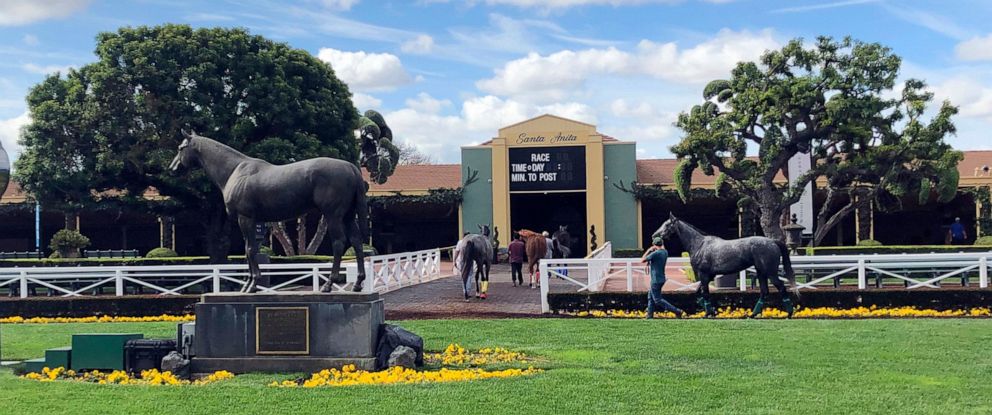
    Animal rights activists are again calling for races to be suspended at Santa Anita Park amid a string of horse deaths that forced the park to temporarily shut down earlier this year.  The famed Arcadia, California, racecourse, which will play host to this year’s Breeders’ Cup World Championships in November, recorded its 26th death since December when Kochees was injured during a race Saturday. The 9-year-old gelding had to be put down Sunday. Track spokesman Stefan Friedman told CNN the track is safe and there will be consequences in Kochees’ death. He would not go into detail but said the rules at Santa Anita require that every horse who races be seen by a trainer’s veterinarian and by the track’s vet. He said two trainers also got the boot last week, again declining to provide details. “Everybody’s got to be pointed at the fact that the horse comes first,” he said. “If you do not put the safety of the horse first at this track, you will not be welcome here.”

    source

  • Trump Doubles Down on Ineffective Tariffs, Further Harming U.S. Farmers and Consumers – Reason.com

    Trump Doubles Down on Ineffective Tariffs, Further Harming U.S. Farmers and Consumers – Reason.com

    Last week, President Donald Trump announced he would impose new tariffs on hundreds of billions of dollars of goods produced in China. Many of those tariffed goods—just like the U.S. goods China has imposed retaliatory tariffs on—are farm products. Consequently, this latest round of tariffs is expected to add to the already higher prices Americans are paying for a variety of foods.

    U.S. agricultural exports to China totaled $20 billion in 2017. Those exports come in about as broad a range as you could imagine. China’s retaliatory tariffs have hit U.S. farmers hard.

    Soybean farmers, pork producers and a growing number of other agricultural interests across a range of states—including cherry producers, corn growers, and lobstermen—have complained that they are collateral damage caught in the middle of the escalating trade battle,” the Washington Post reported this week.

    The CEO of Del Monte, makers of popular canned produce, said this week that the company was forced to raise prices on U.S. consumers by 10 percent due to Trump’s tariffs.

    “Since China imposed tariffs last fall, [Indiana soybean and corn farmer Brent] Bible has nowhere to sell his soybean and corn crops,” NPR reported this week. “And that situation just got worse, because the futures trading market started planning for higher tariffs earlier this week.” Bible told NPR the tariffs had cost him $50,000 over just the past three days.

    Earlier this week, Reason‘s Eric Boehm suggested that the most likely winner of the ongoing trade skirmishes between Trump and China would probably be bacteria, roaches, and rats, the appetites of which will be tested by all the food grown by American farmers that tariffs would cause to rot in warehouses rather than be sold.

    Trump, who gave billions to subsidize U.S. farmers (and, um, Brazilian criminals) who were impacted by his earlier tariffs, has already proposed billions of new bailout dollars to help them deal with the inevitable fallout from his latest tariffs.

    Does that make any sense?

    It does to Trump, who loves tariffs. Last year he famously dubbed himself Tariff Man. In his 2011 New York Times bestseller, Time to Get Tough: Make America Great Again!, Trump writes that “a true commander in chief would sit down with the Chinese and demand a real deal, a far better deal. Either China plays by the rules or we slap tariffs on Chinese goods. End of story.”

    But it’s not the end of the story.

    Back in March, Trump hailed the “substantial progress” he says he’d made on trade with China. Those days are over.

    [A]fter weeks of optimistic statements by Trump and members of his administration about how trade talks were progressing, Trump abruptly escalated tariffs on $200 billion of Chinese goods last week and opened the door to even more,” CNN reported this week. The network also noted that U.S. farmers are pissed over the move. That includes farmers such as this guy, who says he voted for Trump.

    Trump’s attempts to calm farmers came in the form of a typical Word Salad that was anything but soothing.

    Our great Patriot Farmers will be one of the biggest beneficiaries of what is happening now,” Trump tweeted earlier this week. He also let those “great Patriot Farmers” know that his administration “will be making up the difference”—the income shortfall Trump’s tariffs have wrought on those same great Patriot Farmers—out of “the massive Tariffs being paid to the United States for allowing China, and others, to do business with us.

    Well, um, er, not exactly.

    “White House economic adviser Larry Kudlow on Sunday acknowledged that the Chinese do not directly pay tariffs on goods coming into the U.S.,” CNBC reported this week, “contradicting President Donald Trump’s claims that China will pay for tariffs imposed by the U.S.”

    Kudlow also admitted something Trump, to my knowledge, has not: the very real harm that American tariffs inflict on American consumers.

    Walmart, the country’s largest grocer, says the latest round of tariffs will force the retailer to hike prices for consumers in the United States.

    China is not paying the cost of tariffs,” Washington Post columnist Mark Thiessen, who supports the tariffs, wrote this week. “American businesses and consumers are paying.

    “Trump is taxing consumers to bolster farmers, a core part of his political base,” wrote Washington Post columnist Philip Bump this week.

    Those taxes add up. One recent scholarly assessment of the impact of Trump’s tariffs says they’ll add roughly $500 to $800 in new costs to every American household, and will cost the U.S. economy tens of billions of dollars over the next year.

    As messy as things are, they could get uglier still. An editor at a Chinese state-owned media company suggested “that China might cease purchases of U.S. agricultural products” altogether.

    There are a lot of moving parts here—tariffs, bailouts, reprisals, tough messaging, pleas, calls for restraint, threats, and promises—seemingly with new ones added each day. I’m not an economist. Even if I were, though, I’d have a hard time comprehending what every move meant to the bottom line of U.S.-China trade.

    Nevertheless, the whole is clear. Tariffs are bad for American and Chinese consumers, farmers, and food producers. In short, tariffs make things worse, not better. 

    This content was originally published here.