Author: Truth & Hammer

  • Cuba forced into rationing as US sanctions and Venezuela crisis bite | World news | The Guardian

    Cuba forced into rationing as US sanctions and Venezuela crisis bite | World news | The Guardian

    The Cuban government has announced that it is launching widespread rationing of chicken, eggs, rice, beans, soap and other basic products in the face of a grave economic crisis.

    Betsy Díaz Velázquez, the commerce minister, told the state-run Cuban News Agency that various forms of rationing would be employed in order to deal with shortages of staple foods. She blamed the hardening of the US trade embargo by the Trump administration.

    Economists give equal or greater blame to a plunge in aid from Venezuela, where the collapse of the state-run oil company has led to a nearly two-thirds cut in shipments of subsidised fuel that Cuba used for power and to earn hard currency on the open market.

    “We’re calling for calm,” Díaz said, adding that Cubans should feel reassured that at least cooking oil would be in ample supply. “It’s not a product that will be absent from the market in any way.”

    Shop shelves on the Caribbean’s largest island have been increasingly empty of late with scarcity of basic products such as eggs, flour and chicken, and massive, hours-long queues for them whenever they come into stock.

    Cubans have been flooding social media with photos of the queues they are in, under the hashtag #lacolachallenge (queue challenge) to highlight the problem.

    Cuba imports 60% to 70% of its food. A handful of agricultural reforms in recent years have failed to boost output and it also suffers from a decades-old US trade embargo.

    A decline in aid from key ally Venezuela and lower exports have left it struggling to find the cash to import. More US sanctions since Donald Trump became president have worsened its liquidity crisis.

    Diaz said another problem was hoarding by Cubans worried about whether products would disappear and speculators aiming to resell goods on the black market.

    As a result Cuban supermarkets would from now on limit how much each person can buy of certain products like chicken and soap, she said. Other products such as eggs, rice, beans and sausages, would only be available to purchase with the ration card, and limited to a certain quantity each month.

    “Our mission is to fracture all the measures the US government imposes, and today we are setting priorities,” Diaz said on the midday state-run news broadcast.

    Some Cubans, particularly those on low state salaries and pensions who cannot afford black market prices, expressed relief.

    “These measures are important for those Cubans most in need,” said pensioner Elizabeth Ortega, 72.

    Others said it highlighted the mismanagement of the economy.

    “These measures are a temporary remedy but they do not resolve Cubans’ problems in the long run,” said Ihosvany Perez Rodriguez, 34, who runs a small shop in Havana. “The country produces too little and so does not have enough money.”

    The head of the Communist party, Raúl Castro, introduced a series of reforms around a decade ago in the hope of opening up and boosting the economy, which is one of the world’s last Soviet-style command economies.

    However that reform drive has tapered off in recent years partly due to discontent with some of its consequences such as rising albeit still low inequality and less state control.

    The move on Friday represents a setback to one of the proposed reforms, to end the universal rationing system, introduced just after the 1959 revolution.

    This content was originally published here.

  • 5G signal could jam satellites that help with weather forecasting | World news | The Guardian

    5G signal could jam satellites that help with weather forecasting | World news | The Guardian

    The introduction of 5G mobile phone networks could seriously affect weather forecasters’ ability to predict major storms.

    That is the stark warning of meteorologists around the world, who say the next-generation wireless system now being rolled out across the globe is likely to disrupt the delicate satellite instruments they use to monitor changes in the atmosphere.

    The result will be impaired forecasts, poorer warnings about major storms, and loss of life, they say.

    “The way 5G is being introduced could seriously compromise our ability to forecast major storms,” said Tony McNally of the European Centre for Medium-Range Weather Forecasts in Reading. “In the end it could make the difference between life and death. We are very concerned about this.”

    The crisis facing the world’s meteorologists stems from the fact that the radio frequencies the new 5G networks will use could contaminate critical Earth observations made by weather satellites.

    Instruments on board the satellites peer down into the atmosphere and study variables such as water vapour, rain, snow, cloud cover and ice content – all crucial factors that influence our weather.

    One example is the 23.8 gigahertz (GHz) frequency. Water vapour emits a faint signal at this specific natural wavelength, and this data is monitored and measured by weather satellites. Forecasters then use this information to work out how a storm or weather system is likely to develop.

    “Such data is critical to our ability to make forecasts,” said Niels Bormann, also of the Reading weather centre. “They are a unique natural resource, and if we lose this capability, weather forecasts will get significantly worse.”

    The problem is that some 5G phone networks may transmit near a frequency similar to that emitted by water vapour, and so would produce a signal that looks very like its presence in the atmosphere.

    “We would not be able to tell the difference and so would have to discard that data,” added Bormann. “That would compromise our ability to make accurate forecasts.”

    The urgency of the problem is underlined by the fact that US Federal Communications Commission and similar agencies in other countries have already started to auction off frequencies close to the 23.8 GHz frequency to future 5G network providers. In addition, other bands that are used to probe our weather include the 36-37 GHz band, which is used to study rain and snow; the 50 GHz band, which is used to measure atmospheric temperature; and the 86-92 Ghz band, which helps to analyse cloud and ice.

    All these contain sections of waveband that are being auctioned off in the US. It remains to be seen if other nations will follow suit and sell these frequencies in their own countries over coming months. The issue is set to be debated at a global conference in Egypt later this year.

    Forecasters say the US move has already compromised their ability to collect data, and promise to lobby other nations to limit use of crucial frequencies to preserve their ability to provide accurate forecasts. They accuse phone operators of ransacking the radio spectrum for wavelengths to exploit, and regulators of failing to protect the natural frequencies vital for Earth observation from space. “The more we lose, the greater the impact will be,” states meteorologist Jordan Gerth, of the University of Wisconsin-Madison, in the current issue of Nature. “This is a global problem.”

    This content was originally published here.

  • How to help get rid of ticks on your property | TreeHugger

    How to help get rid of ticks on your property | TreeHugger

    Or, a lesson in learning to love opossums.

    Biting bugs suck, so to speak – they are a nuisance and carry diseases. Deer ticks, in particular, are vexing. They put the ick in tick. They bring us Lyme disease, the bacterial infection anaplasmosis, the parasitic infection babesiosis and the Powassan virus, all of which can be serious (and even fatal) at times. And in general, tick populations are expanding their turf.

    Most of us know to take precautions when we’re out and about and to check for ticks that have hitched on for a dinner cruise.. But if only there were less ticks out in the wild. Like, if only there were an animal that really really liked to eat ticks. Oh wait, there is!

    Natural pest control is a beautiful thing. Even if the controller is an animal that many consider less than beautiful. Case in point, the animal that makes more people skittish than most, the tick’s biggest enemy, the opossum.

    Dr. Rick Ostfeld, author of a book on Lyme disease and a senior scientist at the Cary Institute of Ecosystem Studies, sees opossums as walking tick vacuums.

    “Many ticks try to feed on opossums and few of them survive the experience,” Ostfeld writes for the Cary Institute. “Opossums are extraordinarily good groomers it turns out – we never would have thought that ahead of time – but they kill the vast majority, more than 95 percent, of the ticks that try to feed on them. So these opossums are walking around the forest floor, hoovering up ticks right and left, killing over 90 percent of these things, and so they are really protecting our health.”

    Opossums seem to have a knack for ticks. According to numbers calculated from a study published by the Proceedings of the Royal Society B, a single opossum can consume between 5,500 and 6,000 ticks per week.

    I, for one, adore opossums – give me an underdog, or undermarsupial as the case may be, and I’m its biggest fan. But opossums are often vilified; they tend to freak people out a bit. OK, maybe the “giant beady-eyed rat” thing is a little off-putting – or the whole “terrifying when playing dead” act (see photo below) – but they are neither dirty nor threatening as many believe. In fact, they are tidy self-cleaners with strong immune systems. One study published in the American Journal of Public Health found that opossums are around eight times less likely to be carrying rabies than feral dogs. And wait, there’s more!

    Opossum playing dead“My super fearsome death grimace will fool them, I’m sure of it.” (Wikimedia Commons)/CC BY 2.0

    “Although by most standards he is not a pretty fellow, our much-maligned marsupial, the Virginia opossum, should be viewed as the great ‘groundskeeper,’” notes Texas’ DFW Wildlife Coalition. “Silently and without cost, he fulfills his role in the natural world, tending to it diligently and without fail. When left alone, the opossum does not attack pets or other wildlife; he does not chew your telephone or electric wires, spread disease, dig up your flower bulbs or turn over your trashcans. On the contrary, the opossum does a great service in insect, venomous snake, and rodent control.”

    While misperceptions may lead to people shunning opossums rather than encouraging them; they can be your allies.

    If you have opossums, consider not calling critter control or trying to get rid of them. Don’t scare them away, don’t follow tips for discouraging them. The Cary Institute goes so far as to recommend building opossum nesting boxes to entice them to stick around. You may not like them at first, but for the pest control and potential disease prevention alone, they’re so worth learning to love … beady eyes, fearsome death grimace, and all.

    This updated article was originally published in 2015.

    This content was originally published here.

  • The forgotten art of untucking the tail

    The forgotten art of untucking the tail

    A tiny detail we’ve lost since the hunter-gatherer times and how to fix it
    I’ve been spending most of my time lately learning about biomechanics, healthy alignment and how movement affects our bodies on cellular level. The research from the last few years shows that the way we move affect us not only mechanically, as it was previously thought, but also causes biochemical changes in our cells, changing us from inside out. This process of the body adapting to and being shaped by movement is called mechanotransduction.


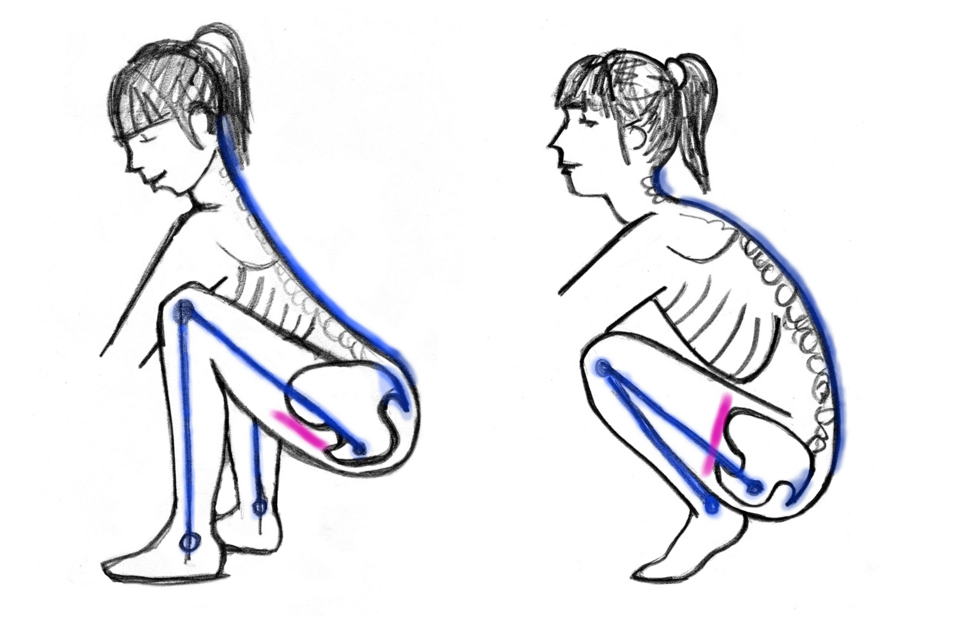
    We seem to be living in the world that encourages sitting with the tail tucked under.


    The furniture we use sitting all day is optimised for comfort and convenience, but usually not ergonomically adapted for pelvic floor health. Who would even think about that?
    There is a well spread myth in our society that pelvic floor issues are a normal consequence of ageing or child birth. But we would rarely think of looking for a cause a bit deeper, in the way we have been living and moving before that.
    Did you know that the anatomic function of our remnant of a tail is, amongst others, to control opening and closing of the pelvic outlet? If you look at a dog or a another tailed animal you can see that they keep their tail up happily wagging when they are in a good mood. And this is the default. When you see a dog wearing his tail down between his back legs, it’s usually a sign that the dog is on the fight or flight mode and his pelvic floor is tense as a part of his whole body reacting to danger.
    Even though we now have only a tiny part of what was once a real mammalian tail, it behaves the same. Untucking the tailbone opens the pelvic outlet, tucking it closes it — tightening the pelvic floor. The dog with his tail down between his legs is an equivalent of you sitting on your sacrum, the back supported by a chair or a couch. If you spend multiple hours a day in this position, your pelvic floor doesn’t really have a chance to release and allow the muscle fibres to regain their natural length at resting state. So gradually it shortens.
    In his book Pelvic Power, dance educator Eric Franklin compares natural movement of the pelvic floor to a kite. As you stand up the pelvic floor slightly lifts and narrows, similarly to a kite picking the wind and taking off. Reversely, as you sit down (with untucked tail, using your sit bones) the pelvic floor widens and releases to its full length, like a kite descending down, opening and landing. But what if we never allow it to release?


    Tight muscle does NOT equal a strong muscle.


    Biomechanist Katy Bowman compares an optimally functioning pelvic floor to a trampoline. It supports the weight of all our pelvic organs and allows any extra load to just bounce off its healthy, elastic fibres, tensing and releasing naturally. Keeping the muscles in the shortened position all the time doesn’t let them perform their function optimally. And further on, as our bodies adapt to the way we use them, we gradually end up with shortened muscles.
    This is why pelvic floor exercises (Kegels) can only be a short term fix. Practising contractions of a muscle isolated from the rest of the body and without allowing it to ever fully release you get a muscle that is tight and locked short. A tight muscle does NOT equal a strong muscle. A strong muscle is able to both fully contract and fully release.
    So why am I telling you all this now? Reading Katy Bowman’s last book — Move Your DNA , I’ve started to incorporate more variety movement into my life other than and independently from exercising. And especially, I’ve started to squat more, when playing with my toddler, picking things off the floor and going to the toilet.
    Learning how to untuck my tail has made me finally realise why I still had to push my baby out and not bear it gently down, letting the gravity do the job, in spite of all the birth preparations and beautiful relaxation techniques I mastered beforehand.


    To “breathe the baby out” you have to first untuck your tail.


    Anatomically, in order for the baby to come out the pelvic floor has to release, but you can’t possibly release the pelvic floor with the tailbone tucked under. You can only use the strength of your muscles (transverse abdominals and diaphragm as they instruct you to hold your breath and “puuuuussssh!”) against your pelvic floor. And that’s a sure way to end up with a nice tear and possibly a pelvic floor disfunction. I was lucky that this mad pushing in my case ended without any serious damage. The body just took over at the last moment and jumped on a dining chair in a strange half-squat with untucked pelvis, fully opening the pelvic outlet. The tucked squats and kneeling with rounded back would have probably taken me to an assisted delivery.
    “Modern birthing science has placed a large burden on secreted hormones (like relaxin) to prepare the body for needed mobility.” Katy Bowman says. Yes, relaxin is useful in letting the body open up for the birth, but it’s not enough, unless we have strong, yielding muscles that can fully contract, but also fully release.
    And there is one more thing that we might be missing nowadays.


    In order to have bodies able to smoothly perform all their biological functions, we need to build a whole-body endurance.


    A great way to develop endurance as well as a strong pelvic musculature and a responsive pelvic floor is to walk a lot. You can gradually build up the mileage and frequency of walking in the day. Up the hill, down the hill. Not just on flat pavements but on a variety of terrains and ideally in a shoe that allows your feet to experience and respond to them.
    It’s about building up towards more movement, but also more variety of movement. Gradually adding more and more little movements into your life will allow the body to adapt to them, building capacity to make them easy.
    So, the bottom line is: we really need to get off our tails and sit on the sit bones instead and walk more, squat more, move more. It’s all about really using the body. Reintroducing a frequent and varied movement in our day-to-day life we can gradually reclaim the lost ranges of movement and functional strength.
    Reference list:


    • Donald E. Ingber, MD, PhD — Tensegrity and Mechanotransduction, Journal of Bodywork and Movement Therapies Volume 12, Issue 3, July 2008, Pages 198–200
    • Katy Bowman, MA — Move Your DNA: Restore Your Health Through Natural Movement, Propriometrics Press, September 2014
    • Katy Bowman — Natural Mama, blog post from 3 January 2012 http://nutritiousmovement.com/natural-mama/
    • Eric Franklin — Pelvic Power: Mind/Body Exercises for Strength, Flexibility, Posture, and Balance for Men and Women, Elysian Editions, November 2003
    • Doug Keller — Yoga as Therapy Ground breaking insights into the use of yoga as therapy (Volume One: Foundations), Do Yoga Productions, 2008
    • Katy Bowman, MA — Alignment Matters: The First Five Years of Katy Says, Propriometrics Press, 2013
    •  


    This content was originally published here.


  • Angela Merkel warns against dark forces on the rise in Europe – CNN

    Angela Merkel warns against dark forces on the rise in Europe – CNN

    “There is to this day not a single Synagogue not a single daycare center for Jewish children, not a single school for Jewish children that does not need to be guarded by German policemen,” she added.

    “There is to this day not a single Synagogue not a single daycare center for Jewish children, not a single school for Jewish children that does not need to be guarded by German policemen”

    Merkel, who has been Chancellor for more than 13 years and outlasted many global leaders, has shouldered much of the blame for Europe’s populist wave, with some pinning the spike in support for the far-right, anti-Islam Alternative for Germany (AfD) on her handling of the European refugee crisis.
    The Chancellor again defended her decision to allow nearly 1 million refugees into Germany, saying that the best way to manage immigration in the wake of humanitarian crises, like those in Syria and Iraq, was not to “shut ourselves off from each other,” but to be more “vigilant” in making sure that refugees fleeing these countries are “sufficiently cared for.”
    That the forecasted far-right surge in last week’s European elections didn’t happen was largely attributed to increased support for pro-European Union green and liberal parties and an increased turnout across the bloc.
    In Germany, the green party finished second to Merkel’s Christian Democratic Union.

    JUST WATCHED

    Angela Merkel reacts to European election results

    Angela Merkel reacts to European election results 00:56
    The Chancellor said that she was “pleased that more people went to the elections than in the last European elections,” but conceded that the Greens’ performance “has to do with issues that people are interested in the most these days, for example climate change, and that is also for my party, of course, a challenge now.”
    Merkel has been criticized for her reliance on burning coal and bowing to pressure from German industry — catering to their needs rather than the needs of the environment. This might seem strange, given that Merkel has previously been dubbed the “climate Chancellor” due to her public support for green and clean energy initiatives. Indeed, she was one of the most vocal critics of US President Donald Trump’s decision to pull out of the Paris climate accord.
    Of her relationship with Trump, Merkel responded to a question about the public perception of her being a punching bag for the US President, by acknowledging that they have “had contentious debates” but that they’ve managed to find “common ground” where it was needed.
    German Chancellor Angela Merkel deliberates with US President Donald Trump on the sidelines of the G7 summit on June 9, 2018 in Charlevoix, Canada.
    She said that all German Chancellors had an “obligation” to forge a relationship with the US President.
    “One of the most important decisions that (the) United States took after the second world war, to give Germany and Europe a chance to actually develop themselves, well … That was achieved by the Marshall Plan. America has always defended us,” Merkel said.
    It’s widely assumed that Merkel had a better relationship with Trump’s predecessor, Barack Obama. But Merkel revealed to CNN that her relationship with the former President “did not start very smoothly” and that “it was not that easy in the beginning.”
    She recalled the speech he almost gave at the Brandenburg Gate, saying, “I had been criticized a lot when he wanted to speak in Berlin in front of the Brandenburg Gate, but I said he’s not the President yet. And only presidents can speak there.” Obama ended up speaking instead at the Victory Column.
    Speaking of another ex-US leader, Merkel responded to the viral image of President George W. Bush giving her what appeared to be an uninvited neck rub at a 2006 meeting in Russia. The Chancellor brushed off the much-commented-on interaction as a “kind gesture at the time, a friendship” from the then-President.

    JUST WATCHED

    Who is Angela Merkel?

    Who is Angela Merkel? 02:15
    Merkel is nearly halfway through her fourth and final term as Chancellor. Reflecting on nearly 15 years as leader of one of the world’s most powerful nations, the most powerful politician in Europe and, arguably, the most powerful woman in the world, she spoke of the responsibility she felt to women and girls that looked up to her.
    Asked if she sees herself as a feminist, the Chancellor said that, having been asked this question before, the Dutch Queen Maxima helped her find her own definition of feminism.
    She said the Queen explained to her that feminism meant “women having the same rights everywhere and this is parity… from politics to the media, to the business community, that must be our objective, we are not there yet.”
    “For many girls, apparently, I have become indeed a role model, during my time of chancellorship,” she added. “We need more women in these relevant positions and that means men have to change their way of life.”

    “For many girls, apparently, I have become indeed a role model, during my time of chancellorship … we need more women in these relevant positions and that means men have to change their way of life.”

    With Merkel’s final term as Chancellor ending in 2021, backers of her brand of politics fear it’s on the way out as populism from both the left and right erodes the political center.
    Merkel strongly rejected ceding any ground to populist forces, instead saying there was a need to show “why we are for democracy, why we try to bring about solutions, why we always have to put ourselves into the other person’s shoes, why we stand-up against intolerance, why we show no tolerance towards violations of human rights.”
    In the immediate aftermath of the European elections, in which the center-right European People’s Party had its dominance eroded, exactly how popular Merkel’s signature pragmatism is remains far from clear. Especially as her Christian Democratic centrism is currently at the heart of the EPP’s vision for Europe’s future.
    As Merkel prepares to leave office, she might find that those who replace her sweep away her legacy not only in Germany, but across the continent she has for so long dominated.
    This story has been updated to clarify where Barack Obama gave his 2008 speech in Berlin.

    This content was originally published here.

  • Frances Arnold Turns Microbes Into Living Factories – The New York Times

    Frances Arnold Turns Microbes Into Living Factories – The New York Times

    Rather than seeking to design new proteins rationally, piece by carefully calculated piece — as many protein chemists have tried and mostly failed to do — the Arnold approach lets basic evolutionary algorithms do the work of protein composition and protein upgrades.

    You start with a protein that already has some features you’re interested in, such as stability in high heat or a knack for clipping apart fats. Using a standard lab trick such as polymerase chain reaction, you randomly mutate the gene that encodes the protein.

    Then you look for slight improvements in the resulting protein — a quickened pace of activity, say, or a vague inclination to carry out a task it wasn’t performing before, or a willingness to operate under conditions it deplored in the past.

    You mutate the improved version again and screen the output for even better performance. Repeat as needed. You do your experiments with the help of a bacterial workhorse such as E. coli, or with an exotic microbe isolated from hot springs in Iceland where temperatures can exceed 175 degrees F.

    You consciously treat proteins and their carrier microbes exactly as people unconsciously treat disease microbes when blasting them willy-nilly with antibiotics: You encourage the microbes to rise to the challenge, adapt, survive.

    Through directed evolution, Dr. Arnold’s lab has generated microbes that do what organisms in nature have never been known to do. Some of them, for instance, stitch together carbon, the element that defines life, and silicon, the stuff of sand, glass and computer chips but heretofore not of life (unless you are a Horta, the rock-shaped beings who famously mind-melded with Mr. Spock on “Star Trek”).

    “We showed for the first time that living organisms can use their own machinery to bring carbon and silicon together to form a bond,” said Jennifer Kan, a postdoctoral scholar in Dr. Arnold’s lab who performed the experiments. “We didn’t even have to nag the protein too hard to get it to do it.”

    Dr. Arnold has another favorite mantra: “Nature doesn’t care about your calculations.” Analyzing the evolved mutations that proved most effective at tweaking a protein’s performance, the Arnold team found the changes in all sorts of unpredictable places.

    Natalie Angier became a columnist for Science Times in January 2007. She joined The Times in 1990, covering genetics, evolutionary biology, medicine and other subjects, and was awarded the 1991 Pulitzer Prize in Beat Reporting.

    A version of this article appears in print on , on Page D1 of the New York edition with the headline: Evolution in the Lab. Order Reprints | Today’s Paper | Subscribe

    This content was originally published here.

  • Celebs Go Dating bosses sign Lady Colin Campbell, 69, as show’s oldest ever contestant looking for love

    Celebs Go Dating bosses sign Lady Colin Campbell, 69, as show’s oldest ever contestant looking for love

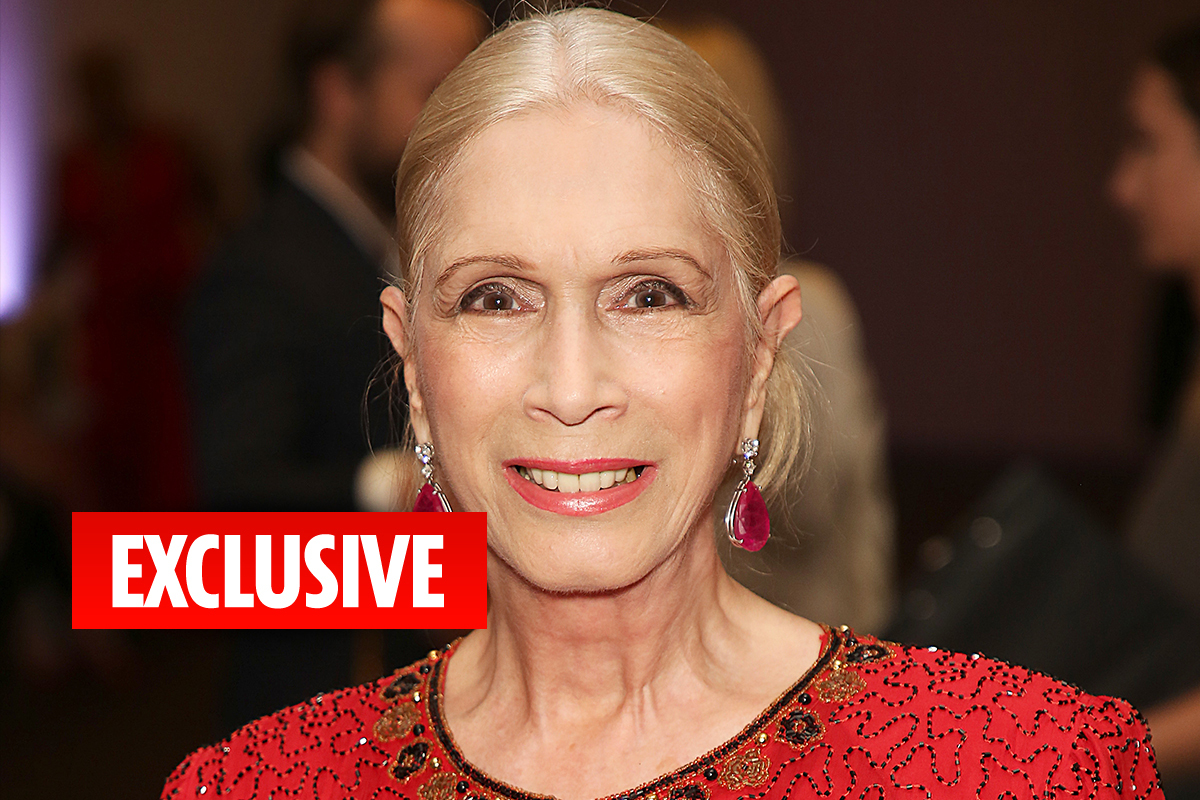
    LADY Colin Campbell has signed up for Celebs Go Dating as the show’s oldest ever contestant.

    The 69-year-old, who penned Princess Diana’s biopic and appeared on I’m A Celebrity in 2015, joined her co-stars Lauren Goodger and Megan Barton-Hanson for filming today.


    Splash News

    Lady Colin Campbell has signed up for Celebs Go Dating, alongside Lauren Goodger and Megan Barton-Hanson[/caption]


    Lady C had previously appeared on Channel 4’s Celebrity First Dates in October last year but had failed to find her perfect match.

    A source said: “Signing up Lady C for Celebs Go Dating is a genius move because she’s hilarious and won’t take any crap from potential suitors.

    “She’s really keen to find someone to spend the rest of her life with and when she was approached she jumped at the chance to take part.

    “Lady C has been giving dating advice to the younger women on the show but is also excited to get some advice from the experts and start putting it into practice.”


    Getty – Contributor

    The author, who penned Princess Diana’s biography, is the show’s oldest ever star, aged 69[/caption]


    The author-turned reality star’s own love life makes for interesting reading.

    Lady C married Lord Colin Ivar Campbell in 1974, just five days after meeting him.

    But their romance didn’t last for long and the couple divorced just over a year later.

    She’s since not dated anyone publicly and adopted her two sons, Misha and Dima, in 1993.


    Channel 4

    She previously appeared on Channel 4’s Celebrity First Dates in October 2018 but failed to find love[/caption]


    When asked about her love life, Lady C has previously admitted she’s allowed to be fussy and said she wasn’t interested in going on dates.

    She said: When you have had some of the most desirable men in the world after you, you don’t get nervous about a date. On principle, I don’t do dates.

    MOST READ IN TV & SHOWBIZ

    Blunder wall

    BGT viewers spot The Haunting blunder as Elizabeth hides behind a wall

    her little jem

    Jemma Lucy reveals she’s given birth to her daughter as she shares first pic

    COUGAR LOVE

    EastEnders’ toyboy Keanu gets soap veteran Sharon pregnant in bizarre storyline

    NIP & TWEAK

    Katie Price accused of Photoshopping snap to make her waist smaller after lipo

    WHAT’S OCCURRING?

    Baby Neil’s 11 & Gwen teaches Pilates… what Gavin & Stacey cast do now

    RY DO!

    Kerry Katona is planning a ‘low key wedding’ to toyboy ex-boyfriend Ryan Mahoney

    “One does not need to go on dates to have someone interested in one and I find them rather contrived.

    “Anything where you have to be a performing seal or jump through hoops does not appeal to me.”

    Lady C is the oldest ever star to take part in the hit E4 series and joins Blue’s Lee Ryan and Geordie Shore’s Nathan Henry on the search for love.

    The Sun has contacted Lime Pictures for comment.

    This content was originally published here.

  • Meghan Markle Will Skip Royal Family Meeting With Donald Trump

    Meghan Markle Will Skip Royal Family Meeting With Donald Trump

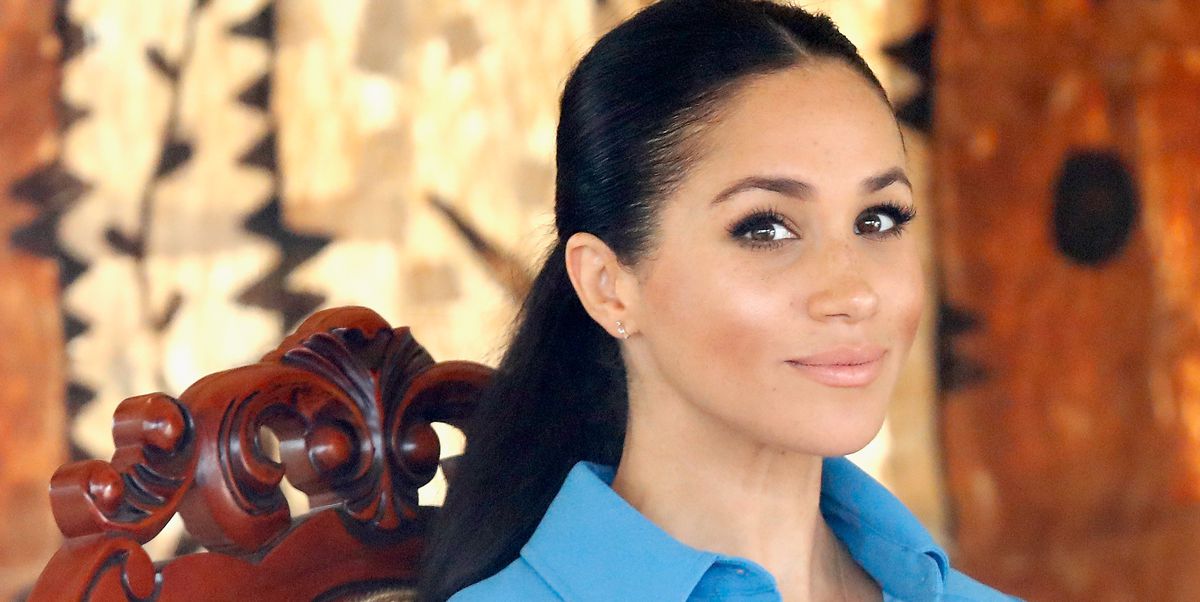
    Even though the royal family doesn’t actually hold any political power in the UK—they just “play an important part in the life of the nation”—they still hobnob with heads of state. On June 3, the Queen, Prince William, Prince Harry, and Kate Middleton will all meet Donald Trump and Melania Trump during their three-day visit, but Meghan Markle definitely won’t make an appearance.

    According to reports, Harry will have a private lunch with Donald and talk about who even knows what, and William and Kate will have tea with Donald on his second day. William and Kate will also join Prince Charles, Duchess Camilla, and Donald for a welcome ceremony at Buckingham Palace.

    During all these engagements, Meghan, who just gave birth a couple weeks ago, will likely be hanging out at Frogmore Cottage with her newborn son, Archie. And while you shouldn’t read too much into Meghan skipping this event because she hasn’t even made a statement about it, she probably isn’t upset about missing this because she’s definitely not a Donald fan.

    Meghan once called Donald “divisive” and “misogynistic” and was a major supporter of Hillary Clinton during the 2016 election. Meghan explained why she wasn’t voting for Trump during an interview with television host Larry Wilmore and said:

    Welp, this visit will definitely give the royal family group text something to talk about.

    This content was originally published here.

  • How to Make Your New House Feel Like Home After a Move

    How to Make Your New House Feel Like Home After a Move

    1. Create Calm in the Bedroom

    Having one serene, put-together space where you can retreat at the end of the day is essential, especially during those first chaotic weeks in a new home. Make setting up the bedroom the No. 1 priority: Roll out the rug, make the bed, set up the nightstands and lamps, hang a mirror and put up some artwork. It may be tempting to jump from one task to another when there’s so much to do, but resist — it’s worth the effort to enjoy a restful bedroom.

    2. Take the Time to Get Organized From the Start

    Whether you opt to do it yourself or hire a professional organizer or closet designer to help you, taking the time to get a few key areas neat and tidy from the get-go will make life in your new home much more pleasant. Instead of putting things away in your new space as quickly as possible, slow down and think about how you would like your home to be organized, paying special attention to the closets, drawers and garage or storage shed.

    3. Fill Your Shelves With Books

    Shelves full of books make a house feel cozy and inviting — and if you’re a book lover, there’s nothing better than being able to sit down with a cup of tea and pull a favorite book off the shelf. As you’re unpacking your books, think about how you’d like them to be organized. Perhaps you’d like to sort your books into sections by topic, genre, mood or alphabetically? Whichever method you choose, don’t put off shelving those books: The sooner they’re on the shelves, the quicker you can sit down and read.

    4. Host a Super-Casual Kitchen Dinner

    It’s easy to put off cooking a real meal at home in a new space: Getting takeout is so much easier when you don’t know where anything is! But once you’re settled in a bit, getting in the kitchen to cook dinner is actually a great way to feel more at home in your new house. And if you invite a few close friends over to chat while you cook, all the better. Let it be simple and imperfect — and if it’s not all homemade, no big deal. The important thing is to get started. After all, you’re not just cooking, you’re laying down the first memories of good times in your new house.

    5. Hang a Few Sturdy Hooks

    Wall hooks are helpful in just about every room. They can hold coats and hats in the hall, aprons and market bags in the kitchen, towels in the bathroom and necklaces in the closet. If you’ve been trying to get settled into your new space but it still feels like a mess, wall hooks could be just what you need to make cleaning up a bit easier.

    6. Set Up the Entertainment Center

    Getting the cable and internet turned on was probably one of the first things you did when moving into your new home — but is the TV set up just the way you want it? In the rush to get settled, it’s easy to overlook messy cords, awkwardly angled screens and inconvenient power outlets. Taking the time to remedy these little annoyances (hire a repair pro if needed) will make your movie nights and game days more enjoyable.

    7. Display Family Photos

    It’s hard to put the first holes into pristine walls — but putting up photos is one of the best ways to personalize your new space and make it feel like your own. If you’re feeling unsure about where you ultimately want your family photo wall to go, consider using removable picture hanging hooks or strips instead of a hammer and nails. No one will be able to tell the difference, and you won’t have to fill holes if you decide to move things around in a couple of months.

    8. Clean the House From Top to Bottom

    It seems as if a new (or new-to-you) house should be clean — but the truth is, the moving process creates a lot of dirt and grime. And if your home was just built or remodeled before you moved in, there may also be remodeling dust coating some surfaces. Giving your home a top-to-bottom cleaning is a great way to start fresh in your new space.

    9. Bring in Houseplants

    Houseplants quite literally bring a breath of fresh air into the home. And if you’ve moved a long distance, chances are you had to give up your old houseplants before the move. Take note of light conditions in each room, and bring these notes along when you go plant shopping. Be sure to get pots, a watering can and any other supplies needed to keep your new plant babies healthy and happy.

    10. Hang Out on Your Front Porch

    Part of feeling at home is being connected to your neighborhood. And one of the best ways to feel like a part of the neighborhood is by hanging out on your front porch. Set out a fresh , clean up your porch furniture, grab a tall glass of something good to drink and set aside some time to just kick back and relax. Say hi or wave to neighbors passing by, let your kids play in the front yard, take your dog for a walk — let yourself be open to interaction. Before you know it, you’ll feel connected to your new home in a way that extends beyond its four walls.

    Your turn: Have you moved into a new house recently? Share what has helped it feel more like home in the Comments.

    This content was originally published here.

  • Gardening 101: How to Use Eggshells in the Garden

    Gardening 101: How to Use Eggshells in the Garden

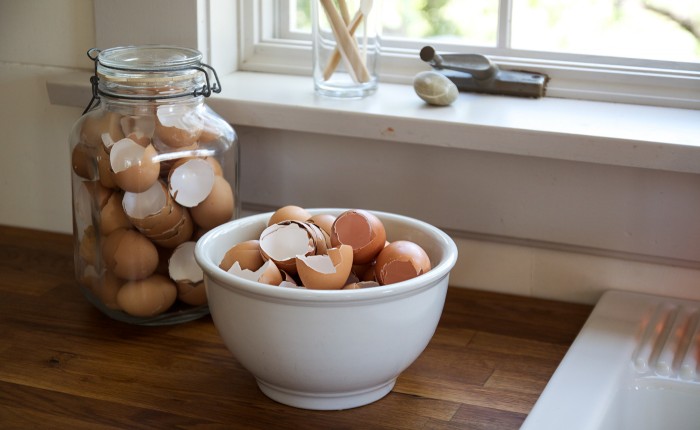
    Last fall I started collecting eggshells after I read an article on Real Farmacy that touted their usefulness in the garden for everything from fertilizer to organic pest control. This spring I’m using the crushed eggshells in the garden five ways.

    Photography by Justine Hand for Gardenista.

    Above: All winter long I’ve been saving eggshells by simply rinsing them and placing them in an open container where they could dry out. (No, they do not smell. Everyone who comes to my house and sees them asks me this question.)

    When my containers are full, I set the kids to pulverizing them into little bits with wooden spoons, thus compacting the shells so that I can collect more.

    Fertilizer

    Above: When tilled into the soil, ground eggshells provide your plants with calcium.

    Though nitrogen, phosphorus, and potassium are most vital for healthy growth, calcium is also essential for building healthy “bones”—the cell walls of a plant. Composed of calcium carbonate, eggshells are an excellent way to introduce this mineral into the soil. To prep the eggshells, grind with a mixer, grinder, or mortar and pestle and till them into the soil. Because it takes several months for eggshells to break down and be absorbed by a plant’s roots, it is recommended that they be tilled into the soil in fall. More shells can be mixed into your soil in the spring.

    By the same token, finely crushed shells mixed with other organic matter at the bottom of a hole will help newly planted plants thrive. (Tomatoes especially love calcium.) For an exciting recycled garden cocktail, try mixing your eggshells with coffee grounds, which are rich in nitrogen.

    Finally, eggshells will reduce the acidity of your soil and help to aerate it.

    Seed Starters

    Above: Because they are biodegradable, eggshells make excellent, no-waste seed starters. For this, reserve some of your deeper shell halves. Sterilize the shelves by boiling them or by placing them in a 200°F oven for 30 minutes. (If you put them in a cooling oven after, say, you baked a roast chicken, you can sterilize eggs without using excess energy.)

    Next, with a nail or awl, make a hole in the bottom for drainage. Add soil and seeds according to the packaging. When sprouts appear, plant them—egg and all—right into the soil. See a complete DIY at 17 Apart.

    Pest Control

    Above: A coating of crushed eggshells in the garden is said to help deter several pests, both large and small. Deer dislike the smell of the albumen and will stay away.

    Apparently you can also use egg’s insides to deter deer. See DIY: Homemade Deer Spray. Be aware, however, that while deer hate the smell of eggs, rodents love it. Therefore, it may not be best to use this deterrent near the house.

    Many gardeners also tout the use of crushed eggshells as a snail and slug repellent. But a recent test by All About Slugs in Oregon seems to have dispelled this. If you’ve had any success with eggshells as slug repellent, we’d be curious to know.

    Bird Food

    Above: Like plants and people, birds also benefit from a bit a calcium in their diet, especially the females who need extra before and after laying their eggs. To make bird food, start by sterilizing the shells by leaving them in a cooling oven after you bake a meal. Then crush them into fine bits and mix with your favorite seed.

    Mulch

    Above: Like oysters, eggshells used as mulch provide a striking accent in the garden. If you gather enough, you can even apply a layer thick enough to deter weeds.

    Looking for more recycled garden how-tos? See our guide to Edible Gardens 101 and more posts:

    Issue 51: Homesteaders, DIY Projects, DIY, Gardening 101, Composting, Recycled, Organic, Soil & Fertilizers, Birds, Eggs, Mulch, Insects, Seeds

    This content was originally published here.