Author: Truth & Hammer

  • Meghan Markle to Edit and Pose for September Issue of ‘British Vogue’

    Meghan Markle to Edit and Pose for September Issue of ‘British Vogue’

    Things have finally come full circle for Meghan Markle, the founder and editor of the now-defunct lifestyle website The Tig. It’s been a little over two years since Meghan shut down her site (RIP) to be more involved in her royal duties, but it looks like she’s ready to get back into the editorial world.

    Apparently, Meghan will guest edit the 2019 September issue of British Vogue, which is a big f*cking deal, mmkay? If magazine issues were school cafeteria tables in Mean Girls, the September issue would be like The Plastics. It’s typically the biggest issue of the year, sets the tone for fashion trends for fall and winter, and it takes a lot of time and effort to perfect. So the fact that Meghan was entrusted to do it justice is nothing to sneeze at.

    According to an Us Weekly source, Meghan won’t just edit the magazine—she’ll also write an opinion piece, which one can only hope is about all those Kate Middleton feud rumors or Donald Trump and the upcoming election because we all know she has some opinions!

    She’ll also reportedly be “bringing a selection of female change-makers on board to write their own personal essays,” so that’s definitely something to look forward to. (Fingers crossed for Priyanka Chopra and Serena Williams essays.)

    A post shared by The Duke and Duchess of Sussex (@sussexroyal) on

    And finally, she’ll appear in the magazine in “new photos that haven’t been taken yet.” These photos will reportedly be taken at Frogmore Cottage next week, so there’s a slight chance that Prince Harry and Archie may be involved.

    Can’t wait to see if Meghan will be a Miranda Priestly type of editor who signs her editor’s letter with “everybody wants to be us.”

    This content was originally published here.

  • David Bowie’s son Duncan Jones reveals how late dad was keen to discover his Doncaster roots – Doncaster Free Press

    David Bowie’s son Duncan Jones reveals how late dad was keen to discover his Doncaster roots – Doncaster Free Press

    The son of late music icon David Bowie has revealed how the star was keen to discover his Doncaster roots before he died.

    Duncan Jones, the singer’s film director son, revealed on Twitter that Bowie – who had many connections with Doncaster – had been ‘digging into his family tree’ before his death in 2016.

    The family has strong connections to the town – Bowie’s dad was born here and his grandfather ran a successful boot and shoe empire.

    His grandmother is buried in Hyde Park Cemetery and his second cousin, Shirley Rust, wife of late TV weatherman Bob Rust, has previously spoken of her connections to the Ziggy Stardust icon.

    In a tweet, Jones wrote: “Need to get more info, but dad was really digging into his family tree when he was still around. Believe his grandad ran a boot shop in Sheffield. Anyone up there know anything about it?

    Rock icon David Bowie. (Photo: Adam Bielawski).

    He later corrected himself and wrote: “Forgive me! Was Doncaster, not Sheffield!”

    Bowie’s father, Haywood Stenton Jones, more commonly known as John, was born at 41 St Sepulchre Gate in the town centre in 1912. His birthplace is where the Caffe Nero coffee shop is now situated.

    At that time, it was the Jubilee Boot and Shoe Company, run by the singer’s grandad.

    The singer himself was born David Jones in London in 1947 by which time his father was a promotions officer for Barnardo’s.

    Following his death in January 2016, his Doncaster cousin spoke of her thirty year quest to get in touch with the superstar.

    Second cousin Shirley Rust revealed how she never met or spoke to the Space Oddity star – but she spent several years trying to contact the singer who appeared on stage twice in the town during his Ziggy Stardust era.

    She said: “I tried many times over the years to try and make contact after finding out the family connection, but never managed it.

    “We contacted his management, biographers, everything to try and make the connection but he was so elusive.”

    Mrs Rust, whose husband Bob was weatherman for Yorkshire Television during the 1980s and who died earlier this year at the age of 77, said: “Haywood was orphaned at around the age of five and was brought up by my grandparents until the age of 21.

    “He lived and went to school here. “They lived at Morley Road and Copley Road before he moved down to London to find fame and fortune and where he eventually settled with his wife and where they had David in 1947.”

    After moving to the capital, Mr Jones lost touch with his Doncaster roots – although he did return to the town in the 1960s to open a Barnardo’s children’s home – he worked for the charity as a publicity officer during his later years.

    The family also have links with the Doncaster Free Press – Haywood’s cousin Lilian Blackburn was a majority shareholder of the newspaper during its formative years and the star’s grandma, Zillah Blackburn, is buried in Hyde Park Cemetery.

    Added Mrs Rust: “My husband worked in TV so had connections and we tried to contact him by fax in Switzerland, where he was living at the time, but never heard anything. We tried umpteen times over the years but never had any joy. There were so many barriers stopping us getting to him.”

    The singer also performed twice in Doncaster during his career.

    On September 1, 1972 he presented his other-worldly ego Ziggy Stardust, playing at the Top Rank in Silver Street.

    Tickets were 95p in advance and £1.10 on the night and he returned a year later to the same venue on June 27, 1973.

    This content was originally published here.

  • California’s Budget Proposal Would Expand Health Care To Some Undocumented Immigrants | KTEP

    California’s Budget Proposal Would Expand Health Care To Some Undocumented Immigrants | KTEP

    California lawmakers are poised to offer low-income young adults living in the country illegally access to full health benefits, putting the state on track to become the first in the country to expand its insurance program to all working poor under the age of 26 regardless of immigration status.

    The Democratic-controlled state legislature agreed on Sunday to allow 19 to 25-year-old undocumented residents to receive Medi-Cal, the state’s health insurance program partly funded by federal dollars.

    Gov. Gavin Newsom applauded negotiation efforts by committee chairs Sen. Holly Mitchell and Assembly member Phil Ting in a statement, saying the budget — which includes a $21.5 billion surplus for the state — “is structurally balanced and invests in a California for All.”

    State officials estimate the health care program would provide coverage for about 138,000 residents at a cost of $98 million in the first year. The vast majority — 75% — are already covered by the Medi-Cal system, and are either receiving restricted-scope benefits or services under SB 75, the Governor’s Budget Summary states.

    Efforts by some Democrats to include undocumented seniors in the plan were rejected by Gov. Gavin Newsom and other legislators.

    Cynthia Buiza, executive director of the California Immigrant Policy Center, called the move a “wise investment in legal representation for immigrants facing deportation in a cruel and callous system.”

    But Buiza said lawmakers failed to achieve universal health care coverage, as they had pledged to do. “The exclusion of undocumented elders from the same health care their U.S. citizen neighbors are eligible for means beloved community members will suffer and die from treatable conditions.”

    The agreement is part of a sweeping $213 billion budget plan that includes another national first: It would stretch eligibility for health insurance subsidies under Covered California to middle-class families earning up to 600% of the federal poverty level. That means a family of four can earn up to $154,500 per year and still qualify for a discount.

    The programs would be partially funded by tax dollars collected from fines paid by Californians who forego health insurance coverage. It is similar to the federal penalty imposed by the Obama administration’s Affordable Care Act called the individual mandate, which was rolled back in 2017. Enrollment will begin in the fall and the plans will go into effect on Jan. 1.

    Legislators cited a recent study favoring the expansion, saying that without state action “the uninsured rate will rise to 12.9 percent by 2023—a 24-percent increase from 2016.”

    Republicans pushed back on the idea, arguing that Californians enrolled in the Medicaid program already face difficulties getting in to see a doctor, Capitol Public Radio’s Ben Adler told NPR.

    “Reimbursement rates to doctors are so low that doctors aren’t willing to take Medicaid patients,” Adler said. Instead, Republicans lobbied for the governor to shore up the program as it exists now.

    Immigrant children are already covered in California under Medi-Cal, as they are in six other states under their respective Medicaid programs, according to the Kaiser Family Foundation. California, the District of Columbia, Illinois, Massachusetts, New York, Oregon and Washington cover income-eligible children who are not otherwise eligible due to immigration status using state-only funds.

    The full state Legislature is expected to vote and pass the budget later this week. California law sets a June 15 deadline to enact a budget, otherwise lawmakers face losing their pay.

    Copyright 2019 NPR. To see more, visit https://www.npr.org.

    This content was originally published here.

  • Supreme Court Rejects Atheists’ Attempt To Remove ‘In God We Trust’ From U.S. Currency | Daily Wire

    Supreme Court Rejects Atheists’ Attempt To Remove ‘In God We Trust’ From U.S. Currency | Daily Wire

    The U.S. Supreme Court has rejected a case filed by atheists to remove the phrase “In God We Trust” from all currency issued by the Department of Treasury.

    The phrase, which has become the national motto, was first stamped on a 2-cent U.S. coin in 1864 and was officially added to both coins and paper money in 1955 after Congress passed legislation.

    The high court on Monday declined to take up the case, which means the finding from the last court to hear the case stands. The 8th U.S. Circuit Court of Appeals dismissed the case in 2018.

    The case was brought by Michael Newdow, an activist who also sought to scrub the phrase “under God” from the Pledge of Allegiance. He had argued that Congress’ decision to put the phrase “In God We Trust” on currency violated the First Amendment because it was tantamount to a government endorsement of religion.

    The Establishment Clause of the First Amendment says “Congress shall make no law respecting an establishment of religion.”

    “The lawsuit also argued that the phrase violated the Fifth Amendment’s due process clause and the 1993 Religious Freedom Restoration Act because it forces ‘Petitioners (who are Atheists) to bear and proselytize that Montheistic message,’” the Free Beacon reported.

    Representing clients and groups that identify as atheist, Newdow said that “by mandating the inscription of facially religious text on every coin and currency bill,” the U.S. government turned his clients into “political outsiders on the basis of their fundamental religious tenet.”

    “Petitioners are Atheists,” the suit said. “As such, they fervidly disagree with the religious idea that people should trust in God. On the contrary, their sincere religious belief is that trusting in any God is misguided. Thus, by mandating the inscription of facially religious text (i.e., ‘In God We Trust’) on every coin and currency bill, Defendants have turned Petitioners – among whom are nine children – into ‘political outsiders’ on the basis of their most fundamental religious tenet.

    “Moreover, Defendants have conditioned receipt of the important benefit of using the nation’s sole ‘legal tender’ upon conduct proscribed by Petitioners’ Atheism (i.e., upon Petitioners’ personally bearing – and proselytizing – a religious message that is directly contrary to the central idea that underlies their religious belief system),” the suit said.

    The lawsuit was filed by the groups Atheists for Human Rights, the Saline Atheist & Skeptic Society, and 27 individuals, including nine children.

    One child petitioner wrote this, the suit says: “The government won’t give me money that doesn’t have god things on them, so I have to use their god money and say it is my money, that says things I don’t believe in, and forces me to give this message I don’t believe in to other people when I give them my money. The government is asking me to pretend that I believe it, they are asking me to lie just so I can use their god money and help them spread a message about a god I don’t believe in. The government shouldn’t make kids and grown ups says things they don’t mean and do bad things that are not right. That is not a good government to make kids like me lie when we are always supposed to tell the truth.”

    But in its 2018 ruling, the 8th U.S. Circuit Court of Appeals said the phrase “does not compel citizens to engage in a religious observance.” The Supreme Court’s rejection of the case means that ruling stands.

    Newdow has brought numerous suits before, challenging what he says is the federal government’s unconstitutional endorsement of religion. His fight in 2004 to remove “under God” from the Pledge of Allegiance failed before the Supreme Court.

    He also sought to block Chief Justice John Roberts from using the phrase “So help me God” as he administered the presidential oath of office to President Obama in 2009 and 2013, and President Trump in 2017. All of those cases failed, too.

    This content was originally published here.

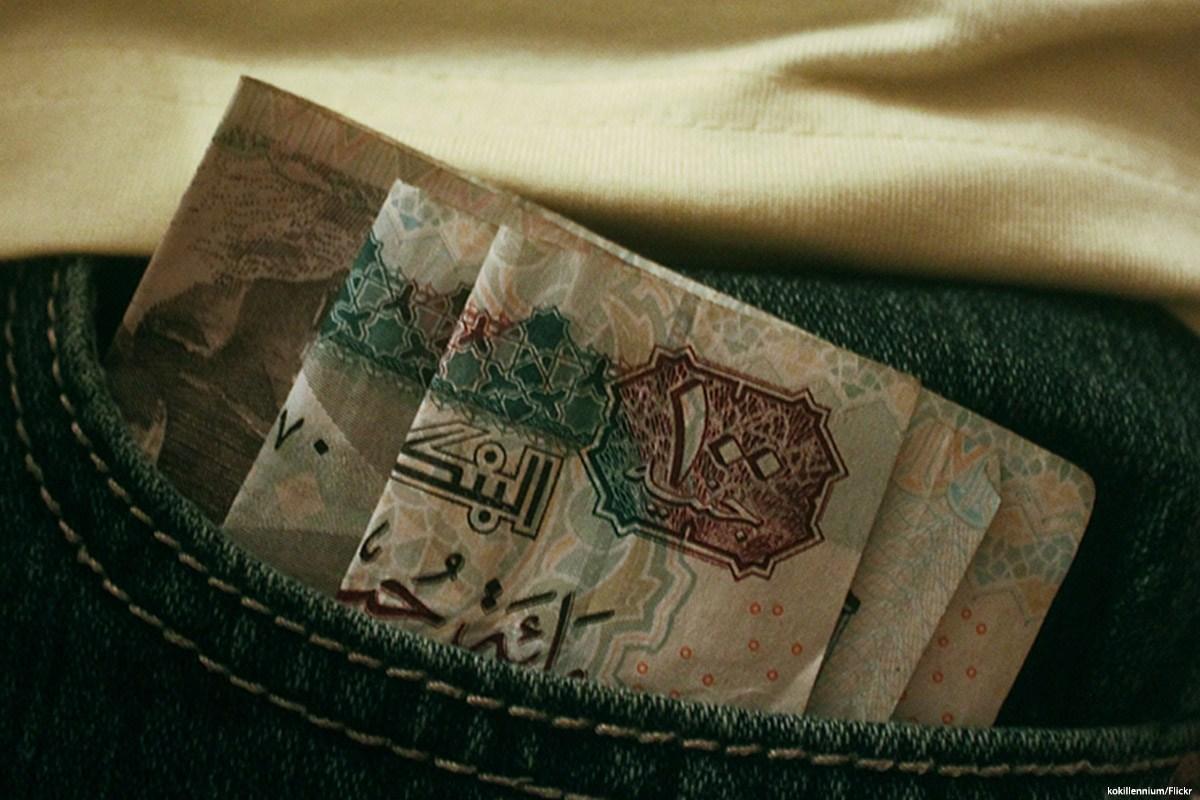
  • Egypt nearly ‘bankrupt’ due to mishandling of public funds

    Egypt nearly ‘bankrupt’ due to mishandling of public funds

    An article in Foreign Policy authored by the Muslim Brotherhood’s former minister of investment Yehia Hamed has said that the chronic mismanagement of public finances by the current administration in Egypt has meant that in the last five years external debt has risen fivefold and public debt has more than doubled.

    “The government currently allocates 38 percent of its entire budget merely to pay off the interest on its outstanding debt. Add loans and instalments, and more than 58 percent is eaten up,” writes Hamed.

    If the current trend continues, Egypt will soon be bankrupt.

    Critics draw attention to a 2016 IMF loan in which the global institution offered Egypt $12 billion to bring down public debt and control inflation as adding to Egypt’s economic woes.

    In return Egypt committed to austerity measures to restore economic growth and in April this year, Egypt’s finance minister announced it would cut fuel subsidies by 40.5 per cent and electricity by 75 per cent in the financial year 2019-20.

    Inflation has soared after authorities made the decision to float the Egyptian pound in 2016 and the decision made by the treasury to increase public tax revenues by 131 per cent by 2022 has left ordinary Egyptians struggling to afford basic services.

    It is not a small segment of society who are affected. A recent report by the World Bank revealed nearly 60 per cent of Egyptians are poor or vulnerable.

    Egyptians authorities are indifferent about the plight of poor people in their country, or about strengthening civil society. Keen to continue to attract foreign investment and concerned about the damage the article may have, they have lashed out at Hamed.

    In 2016 British investment in Egypt reached $30 billion. Yet even this investment sees little return for the Egyptian people.

    Former Egyptian MP Hatem Azzam has said that a 2015 British Petroleum deal which secured the foreign investor 100 per cent of the profit, rather than the traditional 20-30 per cent share, cost the Egyptian people some $32 billion.

    After the article was published, Egypt Today accused Foreign Policy of becoming a Muslim Brotherhood platform, whilst Minister of Planning Hala El Saeed said the article contains false information.

    This content was originally published here.

  • Unemployment is at record low, but Canadians worry about job insecurity, recession and cost of living: survey | Financial Post

    Unemployment is at record low, but Canadians worry about job insecurity, recession and cost of living: survey | Financial Post

    Despite record-low unemployment numbers, 32 per cent of Canadians have reported feeling very negatively about their current job security, according to the latest Forum Research poll published Tuesday.

    The dour outlook persists in spite of the nationwide unemployment rate hitting a low of 5.4 per cent for the first time since that data was collected in 1976.

    “I think what masks everything is the idea about precarious work where someone could be working but we don’t know if that’s an permanent job in the old-fashioned sense or if its precarious,” said Dr Lorne Bozinoff, president of Forum Research.

    Nearly two-thirds of Canadians, or 65 per cent of respondents, also believe the country has become more expensive to live in, while 29 per cent said it’s neither more nor less expensive.

    Precarious work refers to freelancing, contract and part-time work. A Bank of Canada report from February found that almost a third of Canadians participate in precarious work. The report found the majority did so out of necessity rather than choice. The equivalent number of full-time jobs was estimated to be around 700,000.

    While there are certainly economic downsides to precarious work, Craig Alexander, the chief economist at Deloitte, sees these downsides more for millennials as they struggle to find full-time jobs. For many baby boomers, it is the opposite.

    “For part time work, the majority of the growth is by people aged 55+. A lot of older baby boomers that are leaving their primary careers are staying attached to the labour market in a tangential fashion,” said Alexander. “Similarly, if we look at the share of workers aged 55+ in temporary work we can see that there’s been a significant increase.”

    Alexander also notes that Statistics Canada does not produce data on how many people are involuntarily in temporary or contract work.

    Aside from precarious work, there are many potential causes for the disconnect between Canadians’ perceptions and the statistics presented. Dr Sherry Cooper, the chief economist at the Dominion Learning Centres, says Canada’s outlook is reflective of global changes.

    “The oil sector has been in the doldrums for a long time. And then there’s the risk of trade concerns,” said Cooper. “We saw the trade data improve for the month of April but we’ve been sideswiped by the U.S. tariffs and by the risk of a trade war… we’ve all seen the difficulties in global geopolitical tensions, most of them the result of an unusually unstable U.S. diplomatic stance.”

    Cooper’s thoughts regarding the oil sector correlate with Bozinoff’s findings, where 45 per cent of Albertans were feeling job insecurity. The latest report finds Alberta’s unemployment rate at 6.7 per cent, behind only New Brunswick, Prince Edward Island and Newfoundland and Labrador.

    Bozinoff also notes that the relationship between perceptions of job security and income levels was a perfectly linear one, with 54 per cent of people making less than $20,000 had a negative feeling, whereas 81 per cent of the wealthiest recipients felt secure.

    Canadians are also feeling the pinch in their pocketbooks, with 65 per cent of recipients believing that the country has become more expensive to live in.

    Interestingly, the perception of whether or not Canada has become more expensive did not vary by income level.  Voting intentions were also seen to correlate with perceptions around job security.

    “You’ll find that supporters of three parties, the Liberals, Greens, and Bloc Québécois are feeling better about their job prospects,” said Bozinoff. “Less likely to feel good about their job security are Conservative and NDP supporters.”

    An additional discovery of the poll was that 67 per cent of Canadians feel a recession is imminent within the next three years, with 21 per cent saying it is very likely. Only 12 per cent think a recession is not likely at all. Seventy-five per cent of Albertans think it is very likely. Cooper doesn’t think it is inevitable, but does not rule out the possibility.

    “Expansions don’t last forever and for sure if there’s a great deterioration in the trade situation and an all-out trade war then a global recession is possible but it won’t be made in Canada, that’s for sure,” said Cooper.

    Alexander is doubtful a recession is in the offing, although political headwinds could trigger a downturn.

    “I continue to believe the most likely outcome is continued growth but at a very modest pace. When you are growing at a very slow rate it’s as if your immune system is run down and it makes you more vulnerable to any shocks that come around,” said Alexander. “Unfortunately, all of the big shocks that could create that recession are political in nature.”

    The results were derived from a random survey of 1,633 Canadians aged 18 or older, conducted from May 31 to June 2. Forum Research states that the results have a 3 per cent margin of error.

    This content was originally published here.
  • Ocasio-Cortez, Who Makes $174,000, Wants $4,500 Raise: ‘It’s Not Even Like A Raise’ | Daily Wire

    Ocasio-Cortez, Who Makes $174,000, Wants $4,500 Raise: ‘It’s Not Even Like A Raise’ | Daily Wire

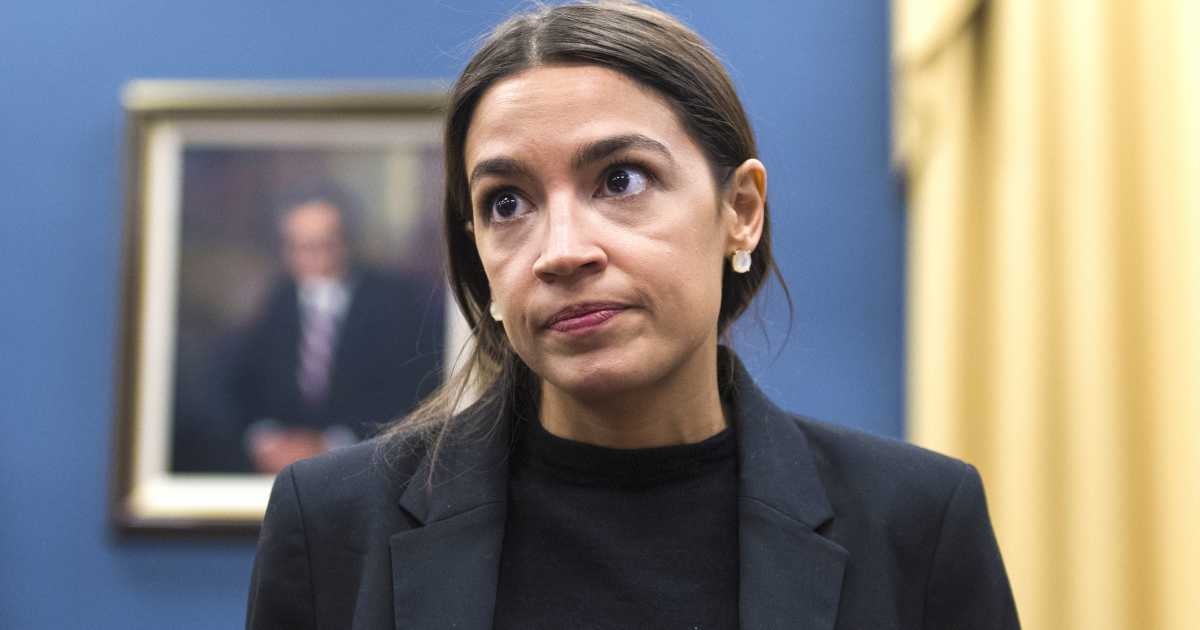
    Socialist Rep. Alexandria Ocasio-Cortez (D-NY) whined on Monday about the possibility that she may not get a $4,500 pay raise — which she downplayed as only being a cost of living adjustment — as she compared members of Congress to minimum wage workers.

    Fox News’ Gregg Re reported that there has not been a cost of living adjustment for members of Congress for the past nine years and that Democrats in vulnerable states are worried about how a $4,500 pay increase will look during the next election.

    Fox News’ Chad Pergram caught up with Ocasio-Cortez — who makes $174,000 per year —on Monday and asked her about the possibility that Congress would not get the pay raise.

    Ocasio Cortez says efforts to hike Congressional pay “may not be politically popular to say but honestly this is why there’s so much pressure to turn to lobbying firms and to cash in on member service after people leave because precisely of this issue.”

    — Chad Pergram (@ChadPergram)

    Ocasio-Cortez says efforts to hike Congressional pay are “superficial. You can you can vote against pay increases all you want..it’ll look good on its surface” & voting yea “may not be great optics..your opponents could use it as a political exploit as a political issue.“

    — Chad Pergram (@ChadPergram)

    “You know, it may not be politically popular to say, but honestly, this is why there’s so much pressure to turn to lobbying firms and to cash in on members service after people leave because, because precisely of this issue,” Ocasio-Cortez said. “So it may be politically convenient and it may make you look good in the short term for saying, ‘oh, we’re not voting for pay increases,’ but we should be fighting for pay increases for every American worker. We should be fighting for a $15 minimum wage pegged to inflation so that everybody in the United States with a salary, with a wage gets a cost of living increase.”

    “Members of Congress, retail workers, everybody should get cost of living increases to accommodate for the changes in our economy and then when we don’t do that it only increases the pressure on members to exploit loopholes like insider trading loopholes to make it on the backend,” Ocasio-Cortez continued. “And that’s my issue, is that it’s superficial, you know, can vote against pay increases all you want, it’s in my opinion voting against a pay, voting against a, it’s not even like a raise, it’s a cost of living adjustment.”

    “So, you can vote against a cost of living adjustment all you want and it’ll look good on its surface but it will, every cost-of-living adjustment that, that gets bypassed, is voting to increase the pressure to exploit loopholes and legal loopholes to kind of lean on other ways to enrich oneself through service,” Ocasio-Cortez concluded. “And so my whole side of it is like, it may not be optics, it may not be great optics, it may not like look the best in terms of your opponents could use it as a political, exploit as a political issue, but in substance, you might as well be transparent about a cost-of-living increase.”

    WATCH:

    This content was originally published here.
  • The Moment When Peonies Bloom

    The Moment When Peonies Bloom


    It’s a beautiful thing when peonies bloom. The following ode to peonies was first published in Yankee Magazine in 1991.

    peonies

    “The Moment of Peonies” | Yankee Magazine, 1991

    Pixabay

    It is the month of peonies – the week, the day, and the hour of peonies. In late March their red asparagus-like shoots begin to push towards the intensely blue spring sky with its scudding clouds. Through April and May the stalks gained height and turned green; buds formed and swelled tantalizingly. Ants crawled over the veined globes with gathering excitement, and now, at last, comes the hot day after warm rain when the flowers open. And we are blessed, we are undone by them.

    Five years ago we made a big change in the yard here. We dug up the hosta lilies that grew along the porch, which had been planted when three or four large elms grew in the yard, shading the front garden. In the years since Dutch elm disease destroyed the trees, the hosta had been getting too much sun, burning up every summer.

    So we moved the hosta to a raised bed under the maples (where the hummingbirds continue to patronize them), and that fall I planted seven peonies in their place – Festiva Maxima – from my favorite mail order nursery in Connecticut. I dig labor-intensive holes for them, taking out the subsoil and replacing it with compost and peat. I added prodigious amounts of bonemeal and mixed it up with the compost. I did everything right for these flowers, mulching them after the ground was frozen, fertilizing them in the spring when the shoots had grown a couple of inches, even drenching them with Captan, against fusarium wilt and against my principles. The first year they made a modest but respectable beginning, with three or four blossoms to a plant, and every year they have gained in stature.

    This year the plants exceeded every expectation. Suddenly they’ve come into their full adult beauty, not strapping, but statuesque – the beauty of women, as Chekhov says, “with plump shoulders” and with long hair held precariously in place by a few stout pins. They are white, voluminous, and here and there display flecks of raspberry red on the edges of their fleshy, heavily scented petals.

    peonies

    Peonies | The Official Flower of Summer

    Pixabay

    These are not Protestant-work-ethic flowers. They loll about in gorgeousness; they live for art; they believe in excess. They are not quite decent, to tell the truth. Neighbors and strangers slow their cars to gawk. Yesterday violent thunderstorms battered Hillsborough county, to the south, and I heard on the car radio that three-quarter-inch hailstones were falling there. All I could think about was getting home to my peonies. I floored it and imagined myself saying to the man in the broad-rimmed tan felt hat, “But officer, this is an emergency!” We in Merrimack county had no hail, as it turned out, but rain bent the heavy-headed flowers over the wire supports and shattered many blossoms.

    This morning petals whiten the ground as if snow had fallen in the night or as if a swan had molted in the garden. The smaller, ancillary buds have yet to bloom, but the great display is over. Some gardeners pinch out these small side buds so that the plant’s energy will go into a few huge blooms, but I never have the heart. At least my little ones are left – my debutantes.

    I suppose if I had to declare a favorite flower, it would be peonies, and here I find myself in the moment just after their great, abandoned splurge. They seem like the diva in her dressing gown after the opera – still glistening, but spent. “Death is the mother of beauty,” the poet Wallace Stevens tells us. Maybe never again will all the elements conspire to make another such marvelous moment of flowers. I’m glad I wasn’t away from home or, as the Buddhists say, asleep.

    Do you look forward each year to the moment when peonies bloom?

    Excerpt from “The Moment of Peonies,” Yankee Magazine, June 1991.

    This content was originally published here.
  • Mystery as mass 5 times the size of Hawaii found under moon crater

    Mystery as mass 5 times the size of Hawaii found under moon crater

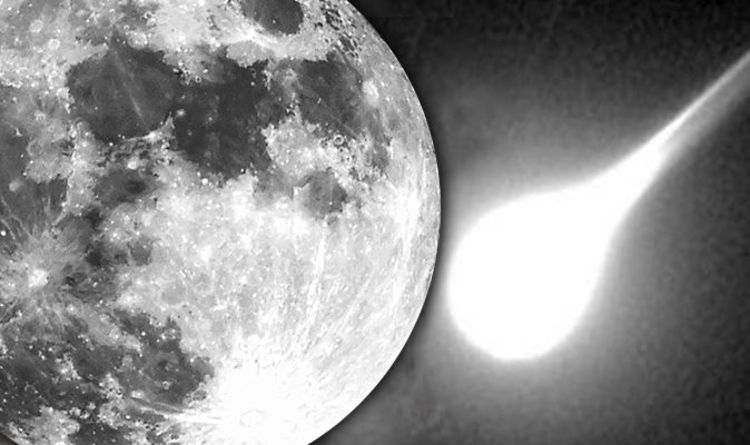
    The remains of the asteroid could be buried beneath the SouthPole-Aitken basin – a crater that measures approximately 1,553 miles across and eight miles deep. Dr Peter James, a professor of planetary geophysics from Baylor University in Texas, said: “Imagine taking a pile of metal five times larger than the Big Island of Hawaii and burying it underground. The discovery – which was published in the journal Geophysical Research Letters in April – was made after astronomers measured slight differences in the moon’s gravity using data collected by NASA’s Gravity Recovery and Interior Laboratory mission (GRAIL). They found the force of gravity was affected by the gigantic mass, as it weighed the basin floor downward by more than half a mile. Renowned conspiracy theorist Tyler Glockner has since posted a video offering his take on the find on YouTube channel secureteam10. Tyler has often published clips exposing the “mysteries” of the lunar surface – from supposed alien structures to UFOs in its atmosphere. In his latest video, he said: “There are a ton of craters on our moon and, strangely enough, none of them appear to have giant pieces of metal five times bigger than Hawaii underneath.

    “Something is strange about this, something massive is buried underneath the moon. “We know that it is a massive metallic structure and that the astronauts said the moon rang like a bell. “We know about all the strange artificial structures on the moon’s surface so, with that, it’s a total mystery. “One of many mysteries about our moon – there’s just something not right about our moon.” More than 118,000 people have seen Tyler’s video since it was posted yesterday. I’ve always been open to the idea that the moon is a satellite or ship with a possible civilisation still inside,” one viewer bizarrely said. Another wrote: “Honestly, that is really strange.” And a third commented: “That’s crazy how all this comes together.” It comes just days after Tyler claimed to have found underground bases on Mars, using mapping software Google Earth. And Professor Brian Cox recently revealed how “extraterrestrial life”  could be hiding in a 900-mile-wide crater on the Red Planet.

    source

  • 106-year-old NC woman credits longevity to faith in God

    106-year-old NC woman credits longevity to faith in God

    Ruth Hilliard was born on June 5, 1913. That’s well before your iPhone or Google. It was even a time before stoplights, Band-Aids, bubble gum, ballpoint pens, microwave ovens and the discovery of penicillin.

    Hilliard spent decades teaching children. She was a teacher by trade and mentor by heart.

    Hilliard has one son, three grandchildren and a great-grandchild.

    She credits her longevity to faith in God. Hilliard’s vision is not as good as it once was, but she still recites Christian scripture on a regular basis.

    In honor of her time on this earth, the North Carolina House of Representatives sent her a certificate of special recognition.

    source