Author: Truth & Hammer

  • INVASION: ILLEGALS CRAWL OUT OF MANHOLE IN US BORDER TOWN

    INVASION: ILLEGALS CRAWL OUT OF MANHOLE IN US BORDER TOWN

    Footage from El Paso, Texas, shows the moment several men crawl out of a manhole in the middle of a city street near the US-Mexico border.

    An anonymous viewer sent us this video of people coming out of a manhole in the middle of the road in south El Paso Saturday night.

    In a Twitter clip uploaded by apparel company Uncle Sam’s Misguided Children, several people suspected of being illegal aliens are witnessed crawling out of a sewage manhole at the intersection of 4th Ave. and S. El Paso St.

    “An anonymous viewer sent us this video of people coming out of a manhole in the middle of the road in south El Paso Saturday night. #BuildTheWall” the company wrote in a tweet.

    The intersection, near a business called Dyana’s Fashions, is less than half a mile away from the US-Mexico border.

    source

  • Edible Insects You Can Consume When Stuck In The Wild

    Edible Insects You Can Consume When Stuck In The Wild

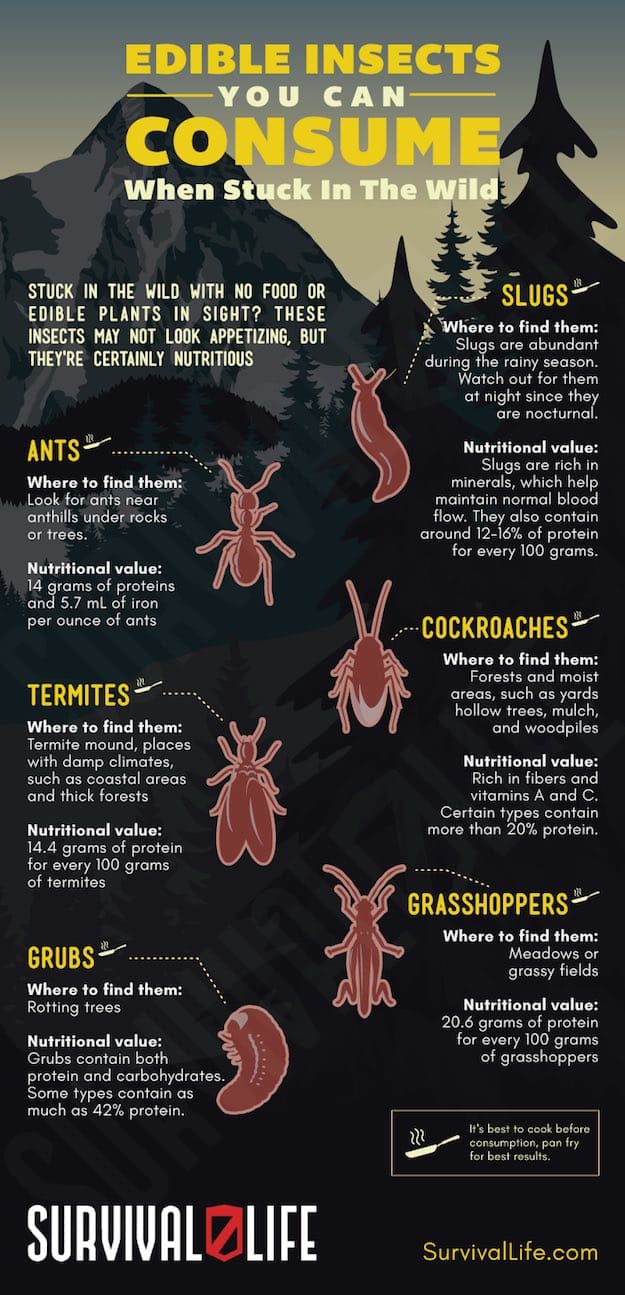
    In the wild, you can survive by making a meal out of edible insects. You’ll be glad to know they are actually nutritious and could fill your protein needs.

    7 Edible Insects to Survive Starvation Outdoors

    Eating Insects in the Wild

    Being stuck in the wild can make you think of crazy things like having insects for lunch. Disgusting as it may sound, this could actually save your life.

    If you’re in no luck finding some edible wild plants outdoors, you might as well start looking for edible insects to get through your hunger problem. You’d be surprised to know of this edible insects list is, in fact, abundant with nutrients that can provide your cellular needs.

    It’s better to be prepared and know what can help you survive in the wild, so go on and read along!

    1. Ants

    |
    One great thing about ants is that you can find them in a lot of places. Dig among anthills and scoop up the ants into a container.

    It is recommended for you to boil them first before eating to remove the bitter and vinegary taste it has. An ounce contains about 14 grams of proteins and 5.7ml of iron.

    2. Termites

    |

    Termites can be found in hordes and fill your protein needs easily. 100 grams of termites is equivalent to 14.4 grams of protein.

    A termite mound can feed a couple of people in one go. These edible bugs for humans are in damp climates like coastal areas and thick forests.

    3. Maggots

    |
    If you ever find a corpse of an animal laying there and being fed on by maggots, never think of these maggots as a waste.

    While the maggots are feeding upon the corpse of an animal, you may feed on those maggots in exchange and have the meat they’ve eaten for yourself. Maggots contain both protein and carbohydrates you would need for energy.

    4. Slugs

    |

    These slimy creatures are rich in minerals which help maintain normal blood flow. Slugs are carriers of harmful parasites that can kill you so it would be wise to cook them first before eating it.

    These edible insects can be found abundantly during the rainy season.

    5. Cockroaches

    |
    These are the ones you can find in the wild and not those pesky little buggers that fly around your house. The ones found in the wild feed on fruits and vegetation which are rich in fibers and vitamins A and C.

    Have them fried or boiled to kill any bacteria they might have.

    6. Locusts

    |
    Locusts can actually save your life from hunger plus it is rich in both protein and calcium. They travel in swarms and are much bigger than the grasshoppers.

    Locusts go to places that have fertile soil, thus, it would be best to look for these edible insects in those places.

    7. Grasshoppers

    |
    Grasshoppers are very rich in protein — for every 100 grams of grasshoppers, there are around 20.6 grams of protein. They can be eaten raw or cooked. But, to add some palate of crunchiness, consider having them cooked.

    You can find them on meadows and grassy fields.

    Here’s what you need to know about eating edible insects by STORYHIVE:

    When SHTF and you run out of food to eat or there are no edible plants in sight, hunt for these edible insects and you’ll get by. However, while these insects are quite nutritious, there are also some that can be poisonous.

    Be aware of what you can eat or it could lead to having an upset stomach or something even worse. Make sure to know how these edible insects look like and not mistake them for a poisonous kind.

    With that said, it’s also imperative to know how to identify edible insects for your safety.

    Have you tried eating any of these edible insects? How was the experience? Share your survival stories in the comments section below!

    Follow us on Facebook, Instagram, Twitter, Pinterest, and Tumblr!

    Editor’s Note: This post was originally published on July 17, 2017, and has been updated for quality and relevancy.

    This Article Was First Found at survivallife.com Read The Original Article Here

    The post Edible Insects You Can Consume When Stuck In The Wild appeared first on Total Survival.

    This content was originally published here.

  • Gear in the Wild: The importance of cover and concealment | The Loadout Room

    Gear in the Wild: The importance of cover and concealment | The Loadout Room

    “U.S. and Allied conduct joint sniper training at the International Special Training Centre (ISTC) Basic Sniper Course held in Hohenfels, Germany.”

    This image of U.S. and allied Special Operations war fighters conducting sniper training was provided by the official U.S. Spec Ops Europe Twitter account. Follow U.S. Spec Ops Europe to learn more about the unique missions America’s Special Operations forces are tasked with, and the incredible ways they accomplish their objectives.

    To learn more about U.S. Special Forces sniper training, watch the video below:

    This content was originally published here.

  • In Business: New Virtual Reality Arcade Now Open In Baxter

    In Business: New Virtual Reality Arcade Now Open In Baxter

    A new business in Baxter is bringing a new form of media immersion to the Brainerd Lakes Area. VR Odyssey, a new virtual reality arcade, is the first of its kind in the area and one of the only VR arcades in Minnesota outside of the Twin Cities.

    Stand on the edge of a skyscraper, battle virtual monsters, or hang glide through mountains are just a few of the things you can do all from the comfort of a studio in Baxter thanks to virtual reality.

    “Being able to fly over a city, that’s one of our most popular ones. Some of them are facing down people’s fears. Kind of like standing before a giant spider approaching you,” said VR Odyssey owner Nick Sucik.

    VR Odyssey opened in Baxter in the beginning of June and during open hours, patrons can visit the parlor and try out the technology.

    “I was in Washington state where somebody had opened one of these and I was telling my folks back home about how it was unlike anything else I’ve ever done,” explained Sucik. “And they said maybe we should bring that to Brainerd. I thought they were joking and four months later, here we are.”

    Virtual reality uses a headset to simulate and create immersive environments that make the user feel as if they are actually there. The headsets have two screens that trick your brain and create and authentic, 3D experience.

    “When you move your head, you are moving your head in an actual digital space and it hijacks the brain. You become convinced that you’re in that space facing whatever entity or creature, or whatnot, is before you,” added Sucik.

    When people try virtual reality for the first time, many say it is unlike anything they have ever experienced.

    “I liken it to when a little kid is watching a scary movie and you say, “It’s just a movie, it’s not real,” well you’re back in that place again. Your brain is going to be taken over by this visual sensory experience and you have to intellectually tell yourself it’s not real,” Sucik said. “Because your instincts are screaming at you.”

    The possibilities for the future of virtual reality are endless, and VR Odyssey hopes to be able to make it possible for people in the Brainerd Lakes Area to be in the forefront of the new and evolving technology.

    “In addition to running, hopefully, a successful business, we are looking forward to being a way to engage with the community in offering, not just a glimpse of a new technology but a way to get on to a new rising technological phenomena,” said Sucik.

    This content was originally published here.

  • Bigelow aims to sell rides to space station on SpaceX Dragon ships for $52M a seat

    Bigelow aims to sell rides to space station on SpaceX Dragon ships for $52M a seat

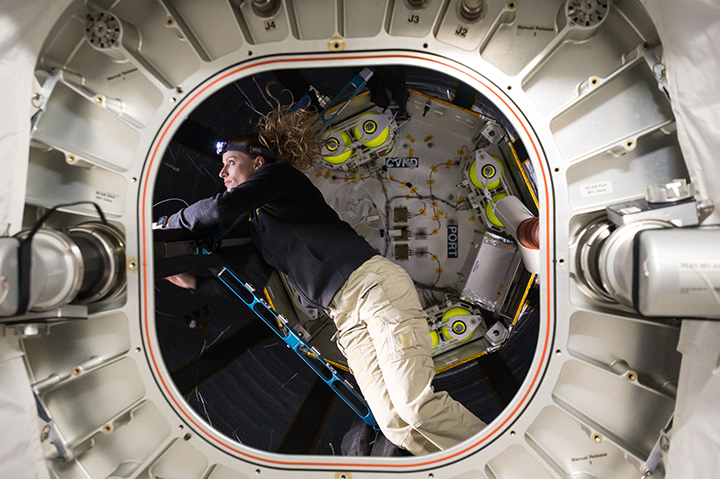
    Kate Rubins in BEAM module
    NASA astronaut Kate Rubins conducts tests and replaces parts inside the International Space Station’s Bigelow Expandable Activity Module in 2016. (NASA Photo)

    Just days after NASA laid out its ground rules for commercial travel to the International Space Station, Nevada-based Bigelow Space Operations says it’s targeting a fare of roughly $52 million a seat for rides that will make use of SpaceX’s Falcon 9 rocket and Crew Dragon capsule.

    Bigelow Space Operations is the service subsidiary of Bigelow Aerospace, the space venture founded by Nevada real-estate development magnate Robert Bigelow. Three years ago, Bigelow Aerospace had one of its expandable modules attached to the space station for testing, and it’s still being used.

    Following up on Friday’s NASA announcement, Bigelow said his company has put down substantial deposits and reservation fees for up to four SpaceX launches to the space station. Each launch would be capable of sending up to four people into orbit for a stay of up to one or two months, in accordance with the space agency’s ground rules.

    Bigelow, who holds the title of president at Bigelow Aerospace as well as Bigelow Space Operations, said NASA’s requirements would be thoroughly digested “so that all opportunities and obligations to properly conduct the flights and activities of new astronauts to the ISS can be responsibly performed.”

    “In these early times, the seat cost will be targeted at approximately $52,000,000 per person,” he wrote in a statement released today.

    That cost presumably doesn’t include the roughly $35,000-a-night fee that NASA plans to charge as reimbursement for station-related expenses such as life support and food.

    “The next big question is, when is this all going to happen?” Bigelow wrote. “Once the SpaceX rocket and capsule are certified by NASA to fly people to the ISS, then this program can begin.  As you might imagine, as they say, ‘the devil is in the details,’ and there are many. But we are excited and optimistic that all of this can come together successfully, and BSO has skin in the game.”

    Bigelow isn’t the only one with skin in the game: Virginia-based Space Adventures says it will be selling seats on Boeing’s CST-100 Starliner capsule, which will be launched on a United Launch Alliance Atlas 5 rocket. Neither Space Adventures nor Boeing has named a precise price, but Boeing spokesman Josh Barrett told GeekWire last week that NASA’s estimate of $58 million per seat was in the right ballpark.

    In contrast to the full-flight reservations that Bigelow has with SpaceX, Space Adventures plans to sell the “fifth seat” on Starliner trips that will take four NASA-funded astronauts to the space station. Private-sector astronauts would fly alongside public-sector astronauts.

    The first crewed Starliner mission to the space station will set the model for this arrangement: Boeing test pilot Chris Ferguson, a former space shuttle commander, will be flying as a private astronaut alongside NASA’s Nicole Mann and Mike Fincke.

    That mission, and SpaceX’s first crewed Dragon trip to the station, are currently expected to take place by the end of this year – with the caveat that the flight schedule has repeatedly slipped and may well do so again. Only after those demonstration flights will NASA assess the space taxis’ performance and issue certification for regular service.

    This content was originally published here.

  • Meet the World’s Most Playfully Named Creatures

    Meet the World’s Most Playfully Named Creatures

    But giving them those crazy names isn’t always fun and games.

    In the shallow tropical waters of Indonesia and the Philippines lives a species of octopus with reddish skin, beautifully marked with brilliant white stripes and spots. Each individual has a unique pattern, like a snowflake. A darling of divers and underwater photographers, the cephalopod with the dramatic looks has an equally dramatic scientific name: Wunderpus photogenicus.

    This and other critters with amusing-sounding monikers, both scientific and common, are the subject of a new, fancifully illustrated children’s book Encyclopedia of Strangely Named Animals, Volume One. Authors Fredrik Colting and Melissa Medina say they were fascinated by “how each animal has a specialized feature or habit that carries through in their names.”

    article-image

    But putting these official labels on the natural world isn’t always quite as much fun. “People give all sorts of whimsical names to animals, but remember that there is the common name—American robin— and the scientific name—Turdus migratorius,” says Brian Brown, curator of entomology at the Natural History Museum of Los Angeles County. All scientific names must be in Latin and follow a general set of rules for a new species. Scientists get to name the species they identify, but each name needs to be unique, so sometimes the novelty wears off.

    “Choosing names is fun in small doses, but when you have 100 new species of Apocephalus [a genus of ant-hunting flies] to describe, it starts becoming a chore,” says Brown. “Eventually, you just try to think of something to attach to that species concept.”

    That means, for example, giving a species name that references a defining feature, a place, maybe a person—or sometimes a pun or something more whimsical. “Within the taxonomic process, there is some latitude for humor,” Brown adds, “like Terry Erwin’s beetles of the genus Agra … he called one Agra vation, for example.” Entomologist Erwin has an entry in Strangely Named Animals as well: an elegant canopy beetle he dubbed Agra cadabra.

    article-image

    The book also finds the joy and humor of less official but more widely used common names: the tasselled wobbegong (a near-threatened species of shark in northern Australia with masterful camouflage skills), or the pink fairy armadillo (the small, Argentinian species with big claws and a fair complexion), or the sparklemuffin (a colorful and hairy spider with a leg-shaking mating dance, also from Australia). Brown says scientists don’t usually bother to propose common names, except for extremely popular animals. “I have never given a fly a common name, for instance,” he says, “even though I have described more than 500 of them.”

    Choosing animals with amusing common or scientific names for their children’s book, the writers also, not accidentally, put together a menagerie reflecting the weird and wonderful in nature. From the gaping maw of the Californian sarcastic fringehead to the delicate colors of the moustached puffbird from Colombia and Venezuela, the creators in this whimsical zoo are charmingly rendered by artist Vlad Stankovic.

    Atlas Obscura has a selection of images from the Encyclopedia of Strangely Named Animals, Volume One.

    article-image
    article-image
    article-image
    article-image
    article-image
    article-image
    article-image

    This content was originally published here.

  • In the 1970s, Scientists Discovered a 2 Billion-Year-Old Nuclear Reactor in West Africa

    In the 1970s, Scientists Discovered a 2 Billion-Year-Old Nuclear Reactor in West Africa

    In June 1972, nuclear scientists at the Pierrelatte uranium enrichment plant in south-east France noticed a strange deficit in the amount of uranium-235 they were processing. That’s a serious problem in a uranium enrichment plant where every gram of fissionable material has to be carefully accounted for.
    The problem lay in the ratio of uranium isotopes in their samples. Natural uranium contains three isotopes, always in the same ratios: uranium-238 (99.2744 per cent), uranium-235 (0.7202 per cent) and uranium-234 (0.0054 per cent).
    The problem was with the uranium-235 of which there was only 0.600 per cent.
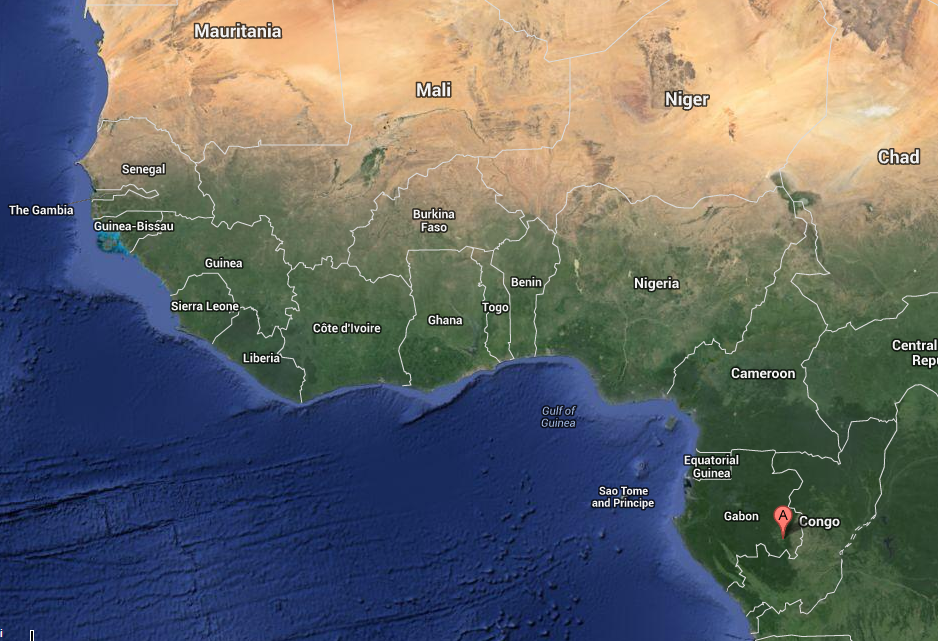
    Physicists soon traced the anomaly to the supply of uranium ore from Gabon in West Africa, which contained far less uranium-235 than the ore from anywhere else on the planet, a problem that caused some consternation among nuclear scientists.
    So France’s top nuclear scientists began an investigation and, in the process, made one of the more remarkable discoveries in recent history.
    This kind of depleted uranium is only found inside nuclear reactors, which burn uranium-235. That set off a hunt for a reactor that could have produced this stuff.
    On 25 September 1972, they announced that the depleted uranium had come from Gabon where nuclear scientists had discovered a 2 billion year-old nuclear reactor at the site of the Oklo uranium mines near a town called Franceville. This was a naturally occurring deposit of uranium where the concentration of uranium-235 had been high enough to trigger a self-sustaining nuclear reaction.
    Today, say Edward Davis at Kuwait University and a couple of pals who review the scientific history of the discovery at Oklo, one of the most extraordinary natural phenomena on the planet.
    Since its discovery, the Oklo reactor has been a significant driver of important research in nuclear physics. In particular, physicists have used it to study how buried nuclear waste might spread through the environment. And since the reactor began operating some 2 billion years ago, they’ve also used it to study how the universe’s fundamental constants may have changed during that time.
    But the first puzzle that physicists had to deal with in 1972 was how a naturally-occurring reactor could work at all. Nuclear scientists well know that reactors do not work with natural uranium because the level of uranium-235 is too low at only 0.7202 per cent. Instead, the uranium-235 has to be enriched so that it is about 3.5 per cent of the total. So how did so much end up at Oklo?
    The answer to this puzzle is that uranium-235 has a shorter half-life than other uranium isotopes and so would have been present in much higher quantities in the Earth’s distant past. When the Solar System was created, for example, about 17 per cent of uranium would have been the 235 isotope. That percentage has fallen steadily since then.
    When the ore in Gabon was laid down some 2 billion years ago, the concentration of uranium-235 would have been about 4 per cent, more than enough for a self-sustaining nuclear reaction.
    The idea is that when a neutrons hits an atom of uranium-235, the atom splits producing two smaller nuclei and several neutrons. These neutrons go on to split other atoms in an ongoing chain reaction.
    However, the liberated neutrons are high-energy particles that tend to fly away rapidly. So nuclear reactors usually contain a moderating material that slows down the neutrons so that they can interact with other uranium atoms.
    It turns out that water is a reasonable neutron moderator. So an important component of this natural reactor was the presence of water seeping through the uranium ore. And this had an interesting impact on the way the reactors operated.
    Nuclear scientists believe that the Oklo reactors operated in pulses. As water flowed into the rock, it moderated the neutrons, allowing a chain reaction to occur. But this increased the temperature of the rock, boiling the water into steam which escaped.
    When this happened, the neutrons were no longer able to interact with and split uranium nuclei and the chain reaction stopped. The rock then cooled allowing water to flow back in.
    So the Oklo reactors operated in pulses. Today, nuclear scientists have calculated that the chain reaction probably lasted for 30 minutes and then switched off for about 2.5 hours, a pulsing process that continued for about 300,000 years..
    While they were on, the reactors were powerful devices. “The reactors likely operated under conditions similar to present day pressurized water reactor systems, with pressures about 150 atmospheres and temperatures of about 300 degrees C,” say Davis and co.
    French nuclear scientists carried out a detailed survey of the Oklo site, discovering not just one reactor zone but up to 17 of them over an area of several tens of square kilometres. Some of these were close to the surface and so had been influenced by weathering processes, while others were at depths of up to 400 metres and were more or less pristine.
    In addition to the depleted uranium-235, these zones contained numerous fission fragments such as isotopes of zirconium, yttrium, neodymium and cerium. The unusual ratios of these isotopes was an important indicator of what had gone on there almost 2 billion years earlier.
    The presence of these fission by-products immediately piqued the interest of nuclear scientists, particularly in the US. Perhaps the biggest challenge facing the nuclear industry is to find a way to deal with the highly radioactive waste that reactors produce. One idea is to bury it but that raises the question of what would happen to this waste over the millions of years during which it remains toxic.
    The Oklo reactors were a natural test of this question. So US scientist, in particular, began a program to measure the way in which different fission products migrated away from the reactor zones. “One of the most important, and surprising, early findings was that uranium and most of the rare earth elements did not experience significant mobilization in the past two billion years,” say Davis and co. “Because the wastes were contained successfully in Oklo, it appears not unrealistic to hope that long term disposal in specially selected and engineered geological repositories can be successful.”
    This evidence has since become one of the main arguments in favour of nuclear waste repositories such as the one planned at Yucca Mountain in Nevada.
    Oklo has also become the focus of physicists studying the possibility that the universe’s fundamental constants may have changed over time. The reason that Oklo may be able to help is that it stopped operating over 1.5 billion years ago. So the nuclear processes that occurred at that time must’ve been governed by the fundamental constants as they were then.
    In particular, physicists are interested in the fine structure constant which determines the strength of the electromagnetic interaction. This in turn determines the way neutrons are absorbed in chain reactions and consequently the yields of different fission products.
    The focus of most research has been on the amount of samarium-149 produced by these natural reactors. The data places bounds on how much the constant may have changed in the past. The consensus is that the data is consistent with the fine structure constant being actually constant although it doesn’t rule out tiny changes.
    Davis and co point out that the Oklo data can also constrain changes in other constants, such as the ratio of light quark masses to the proton mass. To date, this work is consistent with these constants being constant.
    The Oklo story ends with a damp squib. After a period of intense interest in the early 1970s, mining continued at Oklo and eventually all the natural reactors were mined out. The one exception was a shallow reactor zone at a place called Bangombé, some 30 kilometres from Oklo, although this has largely been washed out by ground water.
    So these zones have been largely lost to science. That’s a shame. It also means that nuclear scientists are unlikely to get better data on natural nuclear reactors using the advanced techniques than those of available in the 1970s.
    No other natural reactors have been discovered anywhere on Earth, making Oklo unique. At least for the moment.
    Ref: arxiv.org/abs/1404.4948 : Oklo Reactors And Implications For Nuclear Science


    This content was originally published here.


  • Is modern life poisoning me? I took the tests to find out | US news | The Guardian

    Is modern life poisoning me? I took the tests to find out | US news | The Guardian

    Sitting on a plastic chair in a small office, I’m wearing medical scrubs rolled up to my knees and I have an X-ray machine strapped to my shin.

    The machine is scanning my bones for lead as an expert monitors readings streaming on to a screen.

    Earlier that day, after arriving at a Mount Sinai facility in New York City, I dropped off a urine sample that will be studied for 81 chemicals in lab tests far more advanced than at a regular doctor visit.

    A couple of weeks earlier, I spent five days wearing a silicone wristband designed to measure dangerous chemicals in my environment. I wore it while I cleaned my apartment, applied cosmetics and commuted to work.

    All this testing came during a six-month journey to try to answer what sounds like a very simple question: how toxic am I?

    As an environment reporter for the Guardian in Washington DC, I had noticed a growing number of experts expressing concerns about how Americans are exposed to potentially toxic chemicals just by living our everyday lives.

    But how concerned should individuals be? How worried should I be?

    Pinterest

    Childhood in Cancer Alley

    I grew up in south Louisiana, where cancer is a common part of life.

    In Baton Rouge, I passed industrial facilities churning out gasoline and petrochemicals on drives to the airport or my favorite po boy shop for lunch. At home, I rarely thought about those chemicals when I moved my dad’s dirty coveralls from the washer to the dryer.

    So when the Guardian decided to explore how Americans encounter toxic substances, I couldn’t turn my mind away from my own quiet worries. Tallying the people in my extended family who have died from cancer, I texted my parents. We stopped counting at eight.

    The hour-long drive between my hometown and New Orleans is technically called the “petrochemical corridor”, but more Louisianans know it as Cancer Alley.

    In Louisiana from 2011 to 2015, about 188 people out of 100,000 died each year from cancer, according to the Centers for Disease Control and Prevention (CDC). That’s higher than all but three states: Kentucky, Mississippi and West Virginia. One town outside New Orleans, which the Guardian is reporting from in a series through this year, has a cancer rate 50 times higher than the national average because of toxic air.

    Our ‘body burden’

    Humans are more vulnerable to chemicals in utero and in youth, so my concerns aren’t unreasonable. Even the most health-conscious people have carcinogens and other harmful chemicals in their bodies – from plastics, cosmetics, cleansers, pesticide-soaked food, polluted air and water and the many other exposures that are a part of modern life.

    All the chemicals together form what is known as a person’s “body burden”. Almost none of us can test ourselves to see our own body burdens. Doctors’ offices don’t offer the option and private labs don’t routinely test individuals and cost thousands of dollars.

    With that in mind, I set out to quantify one person’s health risks from chemicals. As the complex world of toxicology unfolded, I realized just how much none of us know.

    Are Americans getting sicker?

    Cancer refers to a group of related diseases involving abnormal cell mutation. As these cells grow in number and spread, they can form growths called tumors.

    The impact of cancer on Americans has changed over time with medicine, lifestyle and the environment. In the last four decades, more Americans have been diagnosed with cancer, but more have survived, the US National Cancer Institute reports.

    In the last two decades, rates of lung and bronchus cancer from smoking (accounting for one in four US cancer deaths) have declined, but remain dominant.

    Liver, thyroid and skin cancers, which remain a minority, are on the rise. There is evidence that flame retardants could cause thyroid cancer, and that the chemicals mimic hormones in animal trials.

    The rates of people who are obese or overweight have tripled globally since 1975. Nearly 40% of US adults are obese, with the most pronounced increase among people considered obese or extremely obese. Most research looks to the “big two”: Americans eat more “energy dense foods”, such as sugar-sweetened beverages and processed foods, and institutional changes have discouraged non-participation in physical activity.

    While big two research dominates, other factors may play a role. A growing body of research examines how obesity might be related to an increase in industrial chemical exposure characterized as “obesogens”.

    Food allergies

    Food allergies appear to be increasing in prevalence, especially in westernized countries. However, the reasons for this rise are unclear, according to Harvard researchers. Even the prevalence itself is difficult to measure, given the dangers of testing large populations for food allergies.

    As much as 10% of the population of westernized countries could have a food allergy. Some evidence shows that children of Asian or African descent who are raised in a westernized environment are at increased risk of developing a food allergy.

    Infertility rates globally are difficult to determine, but the worst rates are in undeveloped countries, and are often indexed to women. Some of the best estimates come from a global survey which compared rates of infertility in 1990 and 2010. Researchers found little change.

    At the same time, researchers have become increasingly convinced of a decline in male fertility, especially in the western world. While the cause of male sperm count decline are debated, one increasingly accepted theory posits people’s increasing exposure to industrial chemicals, especially of those used in plastics such as bisphenol A and phthalates, could impact sperm counts.

    Learning difficulties

    In general, the prevalence of learning disabilities is estimated at between 5% and 9% of the US population. Researchers believe roughly 840,000 school-aged children have a severe learning disability. The percent of students with a learning disability is highly correlated with poverty, and the gap between poor and middle class appears to be widening.

    It is difficult to disentangle learning disabilities from poverty, which can also impact health through trauma and the effects of poor housing.

    Autism Spectrum Disorder impacts about 1% of US children, roughly in line with other industrialized nations, according to the US Centers for Disease Control and Prevention.

    Autism diagnoses increased rapidly in recent decades. However, whether the absolute number of people with autism has increased has confounded researchers, as diagnostic criteria broadened and community awareness rapidly increased.

    Was this helpful?

    Of the tens of thousands of chemicals in commerce, scientists have closely studied the health impacts of roughly 50 to 100. The CDC records some of the average levels shown in the bodies of a representative sample of Americans.

    We know what levels are average, but we don’t know what levels are safe. We also don’t know how various chemicals react together in the human body.

    Individually, some of the chemicals commonly in use and in human bodies are known to be linked with cancer, organ problems, reproductive difficulties, endocrine disruption, obesity, diabetes, birth defects, neural issues and developmental delays. Together, we don’t know what they do.

    One analysis of CDC data found that mixtures of chemicals can heighten toxicity in the body. But chemicals are typically studied only for their individual effects. And the existing research covers only a small fraction of chemicals people are exposed to – many more are unknown.

    I didn’t understand most of this when I started working on this story.

    Pinterest

    The science of ‘exposomics’

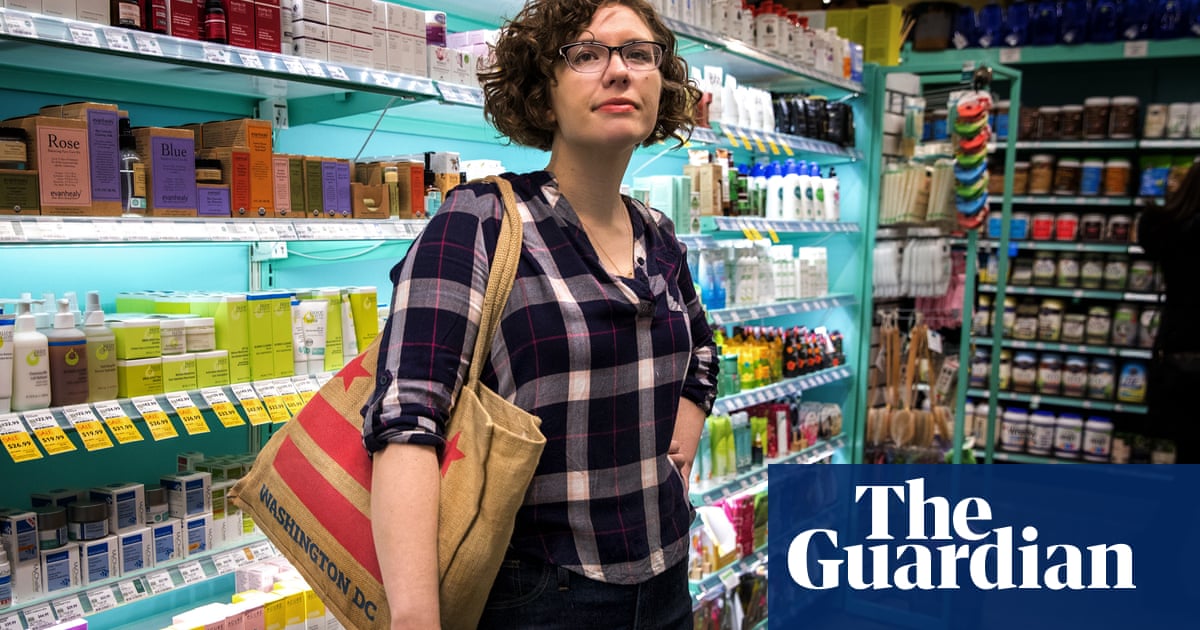
    I think of myself as a relatively cautious consumer. I buy most of my soaps and lotions at Whole Foods, but I don’t closely examine the hair products from my salon or the cleaning products I’ve always used. I eat mostly organic when I cook at home, but I dine out often too. Plastic is everywhere in my life, although I try to purchase as little of it as possible. I bought a special mattress specifically to avoid flame retardants.

    So I was fascinated when I first heard of exposomics – the burgeoning study of how toxic chemicals affect a body over a lifetime.

    “I like to say that exposomics is roughly where genomics was 15 years ago,” says Robert Wright, a pediatrician, medical toxicologist and epidemiologist at Mount Sinai in New York.

    “There’s a growing realization among geneticists that genetic information in the absence of environmental information doesn’t have very much value because everything interacts.”

    In the US, Wright says, companies start using new chemicals and don’t stop using them unless people get sick and can prove how it happened. Medicines are tested before market, but most other products aren’t.

    I know this, but hearing it from an expert makes me hyper aware of my environment. I start wearing socks after cleaning my floors. At a restaurant, I smell disinfectant and cringe at the silverware resting on the table.

    Pinterest

    Searching for tests

    Wright tells me we can test my body for a small number of chemicals but we won’t know where in my life they’re coming from.

    To examine my current-day risk, I can wear a newly developed silicone wristband designed by another researcher that will show what toxic substances I encounter in a given week.

    For a longer history, we would need to analyze my baby teeth, which I don’t have. They would show signs of early exposures to toxic substances like lead and pesticides.

    As I start seeking tests, I also find Leonardo Trasande, a doctor at New York University who helped a reporter with a similar experiment years ago. He tells me that unfortunately not much has changed since then.

    Which everyday chemicals are toxic?

    Phthalates make plastic flexible and are used as solvents in cosmetics. They can damage the liver, kidneys, lungs and reproductive system, according to animal studies.

    Bisphenols go into hard plastic products, beverage bottles, metal cans and other food packaging. The best known one is BPA, which many companies have phased out because of its cancer risk. Its replacements are not necessarily safer, however.

    Flame retardants

    Flame retardants are likely to be in most things you sit on: couches, beds and carpets. Evidence links them to endocrine and thyroid disruption, immune and reproductive problems, adverse effects on fetal and child development and cancer.

    Organophosphates are the most widely used insecticides, or poisons for bugs. Acute exposure can cause death. They disrupt a neurotransmitter that carries signals between brains and muscles. Chronic low-level exposure may increase the risks of neurological disorders.

    Was this helpful?

    Trasande suggests starting with four categories: phthalates, bisphenols, polybrominated diphenyl ethers (flame retardants) and organophosphate pesticides.

    Aside from popping up in products and food, many of these chemicals enter the air, water and soil where they are manufactured and used.

    I tick through my daily life and hypothesize that I probably have moderate levels of all four categories.

    Pinterest

    How much do we want to know?

    Wright, the exposomics expert, says people educated about risks can reduce their toxic burdens, and this makes me feel my personal research is worthwhile.

    However, Paolo Vineis, the chair of environmental epidemiology at Imperial College in London, tells me I should consider the psychological impact of my quest. He says he worries about a future where people are frequently testing their exposures. “I’m not sure it is good mental health to be that concerned about pollution,” he says.

    Andreas Kortenkamp, a researcher looking at the effects of mixtures of chemicals, says there are limits to how much individuals can do. “It requires regulatory action from government,” he says.

    What all the experts agree on, however, is that the best thing is to maintain a healthy lifestyle – to be active, eat fruits and vegetables and never smoke.

    I’m unsure of how much I really want to know until I speak to Philippe Grandjean, a Harvard environmental pollution specialist who splits his time between Copenhagen and Cambridge, Massachusetts.

    His studies have made him an expert in lead, mercury and most recently, manmade non-stick perfluorinated chemicals, or PFAS , which most people have in their bodies.

    “The lower you can get your exposure, the better, and simply use your brain,” Grandjean says. There may be bigger hazards we haven’t discovered “so we should try to limit our exposure to essentially all chemicals”, he adds.

    Grandjean is also hyperaware. He doesn’t scrape melted cheese off chemically treated pizza boxes. He doesn’t eat popcorn microwaved in a bag.

    If he can be that careful, I figure I can throw out some old perfumes and lotions. But for months while I’m learning about this invisible world, I try to keep my routines the same for the sake of our experiment.

    Pinterest

    The wristband test

    After a few weeks, Kim Anderson, who developed the wristband for chemical testing at Oregon State University that Wright told me about, sends me a thick resealable plastic bag with a Livestrong-style bracelet.

    For five days I don’t take it off. It’s bright orange and black, and I can’t help but notice it constantly. When I put on makeup or clean a counter, I think about whether it will show. When I take a deep breath, I wonder about the day’s air quality.

    A photographer comes to document my everyday life and we line up my shower products on the edge of the bathtub. I feel overwhelmed: I don’t know much about the ingredients in what I use.

    A few weeks later, Wright and Mount Sinai volunteer to test me for some of the chemicals the experts I’ve interviewed highlighted as important. I take a train to New York City and tour the lab where my samples will be collected and analyzed. Expensive machinery whirs all around.

    I head to the bone scanner – which exposes me to a small fraction of the radiation involved in an annual dental X-ray. I was born in 1989, the year lead was phased out of gasoline. So if I was exposed, it was probably from old wall paint or drinking water pipes.

    The full results of the lead test will take time to analyze, but Andrew Todd – who operated the machine on my leg – tells me I’m in the clear. “Because you’re not lighting up like a Christmas tree,” he says.

    Lead is the only heavy metal we’re testing. The other tests we’ve arranged – after months of phone and video calls, emails and train trips – focus on the kinds of chemicals most Americans encounter every day, which worry me more.

    Pinterest

    Reviewing my products

    With all my testing complete, I get home and start to make some changes.

    I collect what I understand to be my riskiest products throughout my home, according to a database and app maintained by the Environmental Working Group, a health advocacy group.

    I keep some of my personal care products and cosmetics but discard others. I struggle to part with a poorly rated hair cream I used since I was a teenager and perfumes that remind me of my first years in Washington DC. I remind myself that cosmetics, and particularly fragrance, in the US are largely unregulated.

    Friends who hear about the project ask if I’m scared. But I’m actually relieved to know I’m making better-educated decisions.

    Then the results arrive.

    The test results from the wristband

    My wristband was analyzed for 1,530 chemicals. Twelve were detected, and the remaining 1,518 analytes were below the detection limit.

    I Google the 12, and they sound terrifying, but I have no frame of reference. There is no database for chemicals Americans are exposed to on a daily basis.

    Most on my list are fragrances used in body care products and cleaning supplies. Several are phthalates, the plasticizers used in food packaging and cosmetics. One is a flame retardant.

    Olga Naidenko, a senior scientist at the Environmental Working Group, goes through the list with me. She notes phthalates can mimic hormones, affect the endocrine system and harm a developing fetus. She adds that the flame retardant – TPP – is used in some nail polishes and is another suspected endocrine disruptor.

    Pinterest

    Endocrine function is important to a healthy body. Endocrine disruptors can turn on or off, or modify, signals that hormones carry. They are linked with developmental, neural, immune and reproductive problems.

    Naidenko reminds me that research can’t yet tell us the effects of cumulative exposure to multiple chemicals simultaneously.

    “In EWG’s view, this question should have been answered by chemicals and products manufacturers before the chemicals were released on the market,” she says. “In the meantime, EWG recommends avoiding various possible sources of exposure to endocrine disrupting chemicals in everyday products.”

    This, she adds, will “require a bit of detective work … since ingredients are not typically listed on consumer products”.

    At first, I don’t aggressively pursue that detective work – I’m busy and I’ve been living this way without major problems for years, right? But I find I can’t help myself. Within the month I decide to start skipping pedicures and painting my toenails at home or not at all.

    Results from the rest of my tests

    When Mount Sinai completes my lab tests, Wright won’t send them to me until we talk. He knows I would go straight to Googling.

    First he asks if I have chronic illnesses or take medications. I don’t, but I do take two pills a day for minor issues. I work in front of a computer, but I’m otherwise active and eat plenty of fruits and vegetables. I’m also gluten intolerant, so I skip many processed foods.

    Wright tells me I have at least 36 chemicals in my body – phthalates, flame retardants and pesticides, as well as some phenols used in plastics and polycyclic aromatic hydrocarbons from air pollution.

    I also have a metabolite from cigarette smoke, called cotinine. I don’t smoke and I’m rarely around smokers, but I did briefly visit relatives who were smoking two weeks before my test.

    It’s remarkable to me that this could show up in my results.

    “There’s no such thing as a ‘normal’ level for any of these chemicals,” Wright says.

    But compared with the CDC data, I’m fairly average for a person living in a city.

    Two of my phthalate levels are two to three times higher than the American average. Those are the chemicals found in my fancy soaps and shampoos. But they’re also in the plastic medicine capsules I swallow each day. And they’re in food packaging – like the plastic sheets that wrap American cheese. They are associated with obesity and reproductive problems, particularly for males.

    “All those things are not directly causal, they’re risk factors,” Wright explains.

    Even average levels aren’t necessarily healthy.

    Trasande says he would have compared my numbers to the ranges of levels – rather than the averages – present in Americans. He says results like mine “are associated with a host of health consequences that can develop in folks who don’t have clinical symptoms of any disease or burden”. He counsels me to avoid the exposures I can.

    But Wright says that since I don’t have any illnesses – like type 2 diabetes – he wouldn’t advise any extraordinary measures to limit my encounters with phthalates.

    “My bet is you’re more in tune than most people and probably have a lower risk,” Wright says. He says taking your health seriously, “more than anything else, will help no matter what you’re exposed to and pretty much no matter what your DNA says.”

    Based on one result, my elevated polycyclic aromatic hydrocarbons, I decide to get a big fan and open the window when I cook over my stove.

    My kitchen doesn’t have an exhaust. It’s unclear whether the air pollution my labs show is from cars in a traffic jam or smoke inside my home.

    “I think the important message is it’s not that we think that all chemicals should be banned,” Wright says. “Chemicals have positive uses. It’s just that we need to be aware of what’s in [products] and then make informed choices.”

    This content was originally published here.

  • Green therapy: how gardening is helping to fight depression | Society | The Guardian

    Green therapy: how gardening is helping to fight depression | Society | The Guardian

    Sydenham Garden feels out of step with its surroundings in urban south London. Fringed by houses on most sides, with a school on its doorstep, it is hard to imagine that this small patch of green space is bringing a new lease of life to people struggling with their mental health.

    The site, run by the Sydenham Garden charity trust, is just under an acre and boasts a wellbeing centre with gardens, a nature reserve and activity rooms. Therapeutic gardening sessions are held weekly, and are run by experienced staff, who are in turn supported by a team of volunteers.

    Christine Dow, 63, was originally referred to the garden by her GP to help overcome her depression. After a year of “green” therapy, she became a volunteer; for the past decade she has spent a few hours every week supporting others referred to the project.

    “I’ve lived in Sydenham for 42 years and my husband was born here, but we never realised the garden was here,” she says.

    “My GP referred me to the garden years ago when I had depression. It was quite mild, but he thought gardening would be good for me. He was right. I came here for a year and saw all the seasons change,” she recalls. “It’s an oasis of calm. You can come here and, for however long you are here, the outside world stays outside.”

    During 2017-2018, Sydenham Garden received 313 patient referrals from health professionals. A typical referral will be between six and 12 months. “I know from our stats that people are going to get as good mental health benefits from us as talking therapies,” says Sydenham Garden director Tom Gallagher. “On top of that, you can also get physical, social and physiological benefits from gardening.”

    The majority of people referred will score in the low wellbeing category – according to the Warwick-Edinburgh scale – when starting, but score in the moderate wellbeing category upon completion.

    Sydenham Garden is part of a growing movement devoted to increasing the role that gardening and other forms of “green” therapy can play in patient recovery and rehabilitation settings.

    It is one of the 1,500 organisations signed up to Growing Health, a national scheme set up seven years ago by the charity Garden Organic and the membership organisation Sustain, the alliance for better food and farming.

    “Gardening is not for everyone,” says Maria Devereaux, a project officer at Sustain. “But, increasingly now, we’ve got evidence that even people who aren’t gardeners are able to reap the benefits of being outside, working with nature and all the things that come with it.”

    Growing Health’s original remit was to evaluate research into how gardening can impact on health, but it also set out to discover how food growing and other green projects could work more closely with the health service.

    From the evidence it collated, it found that simply viewing a green space through a window can help people relax and reduce stress levels. Other evidence confirmed that the physical activity of gardening can improve mental wellbeing.

    Growing Health is also keen to spread best practice by publishing case studies illustrating how organisations got to where they are, and how they forged links with other services.

    “Collating all that information together [means that] other projects can use it to work with the health service,” says Devereaux.

    GPs have been keen for years to adopt various forms of “social prescribing” – referring patients to non-clinical activities in a bid to improve their physical or mental health, says Prof Helen Stokes-Lampard, chair of the Royal College of GPs.

    “GPs and our teams will see over a million patients today across the country, and for some of them, the underlying reason they are visiting their GP is not principally medical,” she says. But it is only recently that the social prescribing option has been taken more seriously.

    “Some people might mock the idea of recommending a gardening group or exercise class to patients, but learning new skills, meeting people and being active can have a really positive impact on a patient’s physical and emotional health and wellbeing,” says Stokes-Lampard.

    Devereaux agrees: “It’s an exciting time; there are a lot of gardens out there and it’s about accessing those for people’s wellbeing.

    Pinterest

    Experience: ‘The real learning is connecting with people’

    Becoming a community garden volunteer helped retired dancer Mikloth Bond manage mental illness. Interview by Debbie Andalo

    I was diagnosed with paranoid schizophrenia 40 years ago. Two years ago I decided to look into gardening and get close to nature. That was me saying: “Well, mental health services haven’t worked.” It was time for me to take my own health in hand.

    I wanted to connect with nature. I had an instinct that it would help my mental health if I could connect with the seasons, to live in nature’s time. I wanted to spend time with other gardeners, because they are special people.

    I started as a volunteer for Spitalfields farm and it really inspired me. The gardeners would sit and talk about the plants and what they were doing and it just motivated me – I thought I’d like some of that.

    When its funding ended I came to Core Landscapes, where I am a volunteer support worker twice a week. I support people on the project by just engaging with them, and in that way they support me. I’ve learned about different soils, how to do cuttings and how to plant seeds.

    But that isn’t the real learning. The real learning is in connecting with people and becoming confident in yourself and just feeling part of nature; that is the real learning, especially for people with mental health issues.

    I enjoy the company and look forward to going every week because it’s a close group, a group that care for one another and help each other and whose expectations of one another are not too great.

    When you are gardening you get very involved, because of all the elements and the seasons. You can’t run away from it; you can’t feel superior. And by watching things grow, you realise that it isn’t always the fault of the plant if things don’t work – it’s about the seasons and the weather. It’s the same with mental health issues: it’s not always your fault.

    I am also a peer support tutor at the Recovery College in Tower Hamlets, where I co-produce courses for students [recovering from mental ill health] and for health professionals as well.

    I am hoping to combine my two roles in the future, as there is talk about co-producing a three-day horticultural course in partnership with Core Landscapes.

    This content was originally published here.

  • Short Film Reveals the Lunacy of Water Fluoridation

    Short Film Reveals the Lunacy of Water Fluoridation

    The U.S. Centers for Disease Control (CDC) has hailed water fluoridation as one of the top 10 public health achievements of the 20th century. Beginning in 1945, it was claimed that adding fluoride to drinking water was a safe and effective way to improve people’s dental health. Over the decades, many bought into this hook, line and sinker, despite all the evidence to the contrary. The featured film, “Our Daily Dose,” reviews some of this evidence. As noted in the film’s synopsis:

    “Filmmaker Jeremy Seifert lays out the dangers of water fluoridation informatively and creatively, highlighting the most current research and interviewing top-tier doctors, activists, and attorneys close to the issue. Through thoughtful examination of old beliefs and new science, the film alerts us to the health threat present in the water and beverages we rely on every day.”

    Share This Film With Those Still Sitting On the Fence on Fluoride!

    The film may not offer many brand new revelations to those of you who are already well-informed about the history and documented hazards of fluoride.

    It was primarily created as an educational vehicle aimed at those who may not be aware of these issues, or who might not yet be entirely convinced that drinking fluoride isn’t a good thing. So PLEASE, share this video with all of your friends and family who are on the fence on this issue, and ask them to watch it. It’s only 20 minutes long, but it packs a lot of compelling details into those 20 minutes.

    Understanding how fluoride affects your body and brain is particularly important for parents with young children, and pregnant women. It’s really crucial to know that you should NEVER mix infant formula with fluoridated tap water for example, as this may overexpose your child to 100 times the proposed “safe” level of fluoride exposure for infants!

    If your child suffers with ADD/ADHD, drinking fluoridated water may also worsen his or her condition. Ditto for those with underfunctioning thyroid. So please, do share this video with your social networks, as it could make a big difference in people’s health.

    Fluoride Is Both an Endocrine Disruptor and a Neurotoxin

    Scientific investigations have revealed that fluoride is an endocrine-disrupting chemical, and a developmental neurotoxin that impacts short-term and working memory, and lowers IQ in children.It has been implicated as a contributing factor in the rising rates of both attention-deficit hyperactive disorder (ADHD), and thyroid disease.

    Indeed, fluoride was used in Europe to reduce thyroid activity in hyperthyroid patients as late as the 1970s, and reduced thyroid function is associated with fluoride intakes as low as 0.05 to 0.1 mg fluoride per kilogram body weight per day (mg/kg/day).

    For Over 50 Years, Fluoride Levels Were Too High, Government Admits

    Children are particularly at risk for adverse effects of overexposure, and in April 2015, the US government admitted that the “optimal” level of fluoride recommended since 1962 had in fact been too high. As a result, over 40 percent of American teens show signs of fluoride overexposure — a condition known as dental fluorosis. In some areas, dental fluorosis rates are as high as 70 to 80 percent, with some children suffering from advanced forms.

    So, for the first time, the U.S. Department of Health and Human Services (HHS) lowered its recommended level of fluoride in drinking water,, by 40 percent, from an upper limit of 1.2 milligrams per liter (mg/L) to 0.7 mg/L. The HHS said it will evaluate dental fluorosis rates among children in 10 years to assess whether they were correct about this new level being protective against dental fluorosis. But just what is the acceptable level of harm in the name of cavity prevention?

    A number of studies,,, have shown that children with moderate to severe dental fluorosis score worse on tests measuring cognitive skills and IQ than peers without fluorosis — a clear revelation highlighted in the film, as some still insist that dental fluorosis is nothing more than a cosmetic issue.

    The Price We Pay for Cavity Prevention

    According to the film, the CDC estimates water fluoridation decreases dental decay by, at most, 25 percent. Recent research, however, suggests the real effect may be far lower. Based on the findings of three papers assessing the effectiveness of fluoridation on tooth decay, the researchers concluded that water fluoridation does not reduce cavities to a statistically significant degree in permanent teeth.

    If that’s the case, then why are we still jeopardizing our children’s long-term thyroid and brain health by adding fluoride to drinking water?

    Fluoride — like many other poisons — was originally declared safe based on dosage, but we now know that timing of exposure can play a big role in its effects as well. Children who are fed infant formula mixed with fluoridated water receive very high doses, and may be affected for life as a result of this early exposure.

    Fluoride can also cross the placenta, causing developing fetuses to be exposed to fluoride. Considering the fact that fluoride has endocrine-disrupting activity, this is hardly a situation amenable to the good health of that child. It’s important to realize that fluoride is not a nutrient. It’s a drug, and it’s the ONLY drug that is purposely added directly into drinking water. 

    This route of delivery completely bypasses standard rules relating to informed consent, which is foundational for ethical medical practice. What’s worse, there’s no way to keep track of the dosage. And no one is keeping track of side effects.

    Infants Are Severely and Routinely Overdosed on Fluoride

    According to the recent Iowa Study, funded by the National Institutes of Health (NIH) and the CDC, infants and young children are being massively overdosed on fluoride. This study, which is the largest U.S. study conducted measuring the amount of fluoride children ingest, concluded that:

    • 100 percent of infants receiving infant formula mixed with fluoridated tap water get more than the allegedly safe dose of fluoride. Some formula-fed infants receive 100 times the safe level on a daily basis
    • 30 percent of 1-year-olds exceed the recommended safe dose
    • 47 percent of 2- to 3-year-olds exceed the safe dose

    Most Water Authorities Use Toxic Waste Product, Not Pharmaceutical Grade Fluoride

    As stated, fluoride is a drug, and research into the health effects of fluoride are based on pharmaceutical grade fluoride. However, a majority of water authorities do not even use pharmaceutical grade fluoride; they use hydrofluosilicic acid, or hexafluorosilicic acid — toxic waste products of the phosphate fertilizer industry, which are frequently contaminated with heavy metals such as arsenic, mercury, cadmium, lead and other toxins.

    This is a key point that many fluoride proponents fail to address when arguing for its use. Indeed, holding elected officials accountable for procuring proof that the specific fluoridation chemical used actually fulfills fluoride’s health and safety claims and complies with all regulations, laws and risk assessments required for safe drinking water, has been a successful strategy for halting water fluoridation in a number of areas around the U.S.

    While the idea of hiding toxic industrial waste in drinking water would sound like a questionable idea at best to most people, it was welcomed by the U.S Environmental Protection Agency (EPA). In a 1983 letter, Rebecca Hanmer, Deputy Assistant Administrator for Water, wrote:

    “… In regard to the use of fluosilicic acid as a source of fluoride for fluoridation, this Agency regards such use as an ideal environmental solution to a long-standing problem. By recovering by-product fluosilicic acid from fertilizer manufacturing, water and air pollution are minimized, and water utilities have a low-cost source of fluoride available to them…”

    Data and Science Do Not Support Water Fluoridation

    Ninety-seven percent of Western European countries do not fluoridate their water, and data collected by the World Health Organization (WHO) show that non-fluoridating countries have seen the exact same reduction in dental cavities as the U.S., where a majority of water is still fluoridated. If fluoride were in fact the cause of this decline, non-fluoridating countries should not show the same trend.

    Clearly, declining rates of dental decay are not in and of themselves proof that water fluoridation actually works. It’s also worth noting that well over 99 percent of the fluoride added to drinking water never even touches a tooth; it simply runs down the drain, contaminating and polluting the environment.

    Source: KK Cheng et.al. BMJ 2007. Rates of cavities have declined by similar amounts in countries with and without fluoridation.

    Ending Fluoridation Will Be the Greatest Public Health Achievement of the 21st Century

    Despite the fact that the scientific evidence does not support fluoridation, those who question or openly oppose it are typically demonized and written off as crazy conspiracy theorists. Many fluoride supporters claim the science of fluoridation was “settled” some 50 years ago — effectively dismissing all the revelations produced by modern science!

    To defend their position, they rely on outdated science, because that’s all they have. You’d be extremely hard-pressed to find modern research supporting water fluoridation.

    Indeed, as noted in the film, ending water fluoridation will be one of the greatest public health achievements of the 21st Century, and I for one will not stop until that happens. To learn more about why water fluoridation runs counter to good science, common sense and the public good, please see the following video, which recounts 10 important fluoride facts.

    The Best Cavity Prevention Is Your Diet

    The best way to prevent cavities is not through fluoride, but by addressing your diet. One of the keys to oral health is eating a traditional diet or real foods, rich in fresh, unprocessed vegetables, nuts and grass fed meats. By avoiding sugars and processed foods, you prevent the proliferation of the bacteria that cause decay in the first place.

    According to Dr. Francesco Branca, Director of WHO’s Department of Nutrition for Health and Development:”We have solid evidence that keeping intake of free sugars to less than 10 percent of total energy intake reduces the risk of overweight, obesity and tooth decay.”

    Other natural strategies that can significantly improve your dental health are eating plenty of fermented vegetables, and doing oil pulling with coconut oil. Also make sure you’re getting plenty of high-quality animal-based omega-3 fats, as research suggests even moderate amounts of omega-3 fats may help ward off gum disease. My favorite source is krill oil.

    This content was originally published here.