New border surge prompts 10% jump in 2019 prediction to 1,072,000 illegal immigrants
Calling the surprising May surge in illegal immigrant arrests on the border the “worst case scenario,” a top immigration analyst has boosted the expected level of crossings 10%, to over 1 million. U.S. Customs and Border Protection on Wednesday revealed that May apprehensions topped 144,000. This year has seen 676,315 apprehensions so far, up 99% over this time last year. That shocked immigration officials who had hoped it would drop in part due to the Trump administration’s get tough efforts on the border and the potentially deadly heat migrants encounter traveling through northern Mexico
Steven Kopits, the president of Princeton Policy Advisors which has predicted that immigrant apprehensions would reach 931,000 this year, expressed concern about the May numbers and boosted his prediction to 1,072,000.
“This is the highest for the month of May since 2000 and the highest for any calendar month since March 2006,” he said in a report provided to Secrets.
“We had expected a major surge heading into the summer months, but this is above our worst case scenario,” he added.
And it could go up again if his predictions of high June illegal crossings comes true.
“Forecasting remains a challenge, but our current estimates, allowing for seasonal fluctuations, projects 1,072,000 apprehensions at the southwest border for calendar year 2019. This would be the highest full year since 2005,” he said.
“No doubt President Trump had a sense of these numbers a few days ago, hence the Mexico tariff initiative. Notwithstanding, we expect a similarly bad June,” Kopits added.
President Donald Trump is commemorating the 75th anniversary of D-Day, joining numerous world leaders and dignitaries in Portsmouth, England today.
That was a key launching point for the Allied forces that sailed from England to storm the beaches of Normandy, France to begin pushing back the Nazi occupiers during World War II. It was a key turning point, and a day of great sacrifice by US troops.
During a special ceremony, President Trump read from President Franklin Delano Roosevelt’s famous D-Day prayer that he read to the entire nation on June 6, 1944.
Trump read a portion of FDR’s prayer, saying:
“Almighty God. Our sons, pride of our nation, this day have set upon a mighty endeavour. A struggle to preserve our republic, our religion and our civilization and to set free a suffering humanity. They will need thy blessings for the enemy is strong. He may hurl back our forces but we shall return again and again. And we know that by thy grace and by the righteousness of our cause, our sons will triumph. Some will never return. Embrace these Father and receive them, the heroic servants, into thy kingdom and O Lord, give us faith. Give us faith in thee, faith in our sons, faith in each other and faith in our united crusade. Thy will be done, almighty God. Amen.”
It was a somber and peaceful ceremony, kicking off two days of D-Day observances.
Leaders representing Allied countries showed up from the US, Canada, Australia, Belgium, the Czech Republic, Slovakia, Luxembourg, Denmark, France, Greece, the Netherlands, New Zealand, Norway and Poland.
Other leaders at the event included Queen Elizabeth II, British Prime Minister Theresa May, French president Emmanuel Macron. On Thursday the focus shifts to France for more events.
D-Day involved more than 150,000 Allied troops flooding the beaches of Normandy in northwest France on June 6, 1944. They were carried by 7,000 boats in a battle codenamed Operation Overlord.
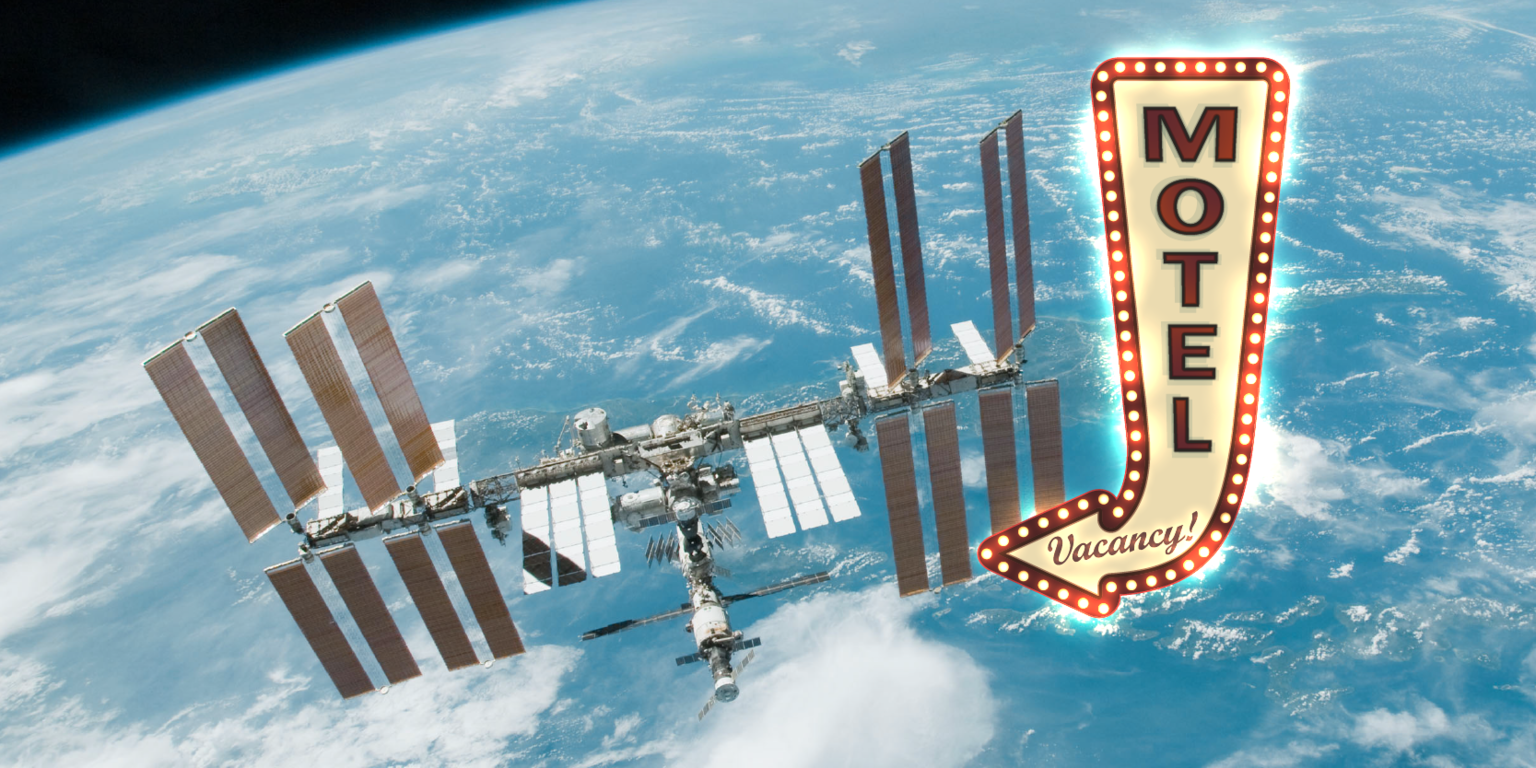
The space agency plans to open the floating lab up to private astronauts as well as commercial companies, it said. That could include film crews, for instance, who could be allowed to make ads or whole films in space. The first space tourists could head up to the ISS in 2020, Nasa said. The plans allow private companies to lease out time on Nasa’s part of the International Space Station. They will also be able to borrow its own astronauts for their commercial work, and take their technologies to the floating lab – though they are expected to pay heavy prices for the opportunity. Nasa has long been resistant to the idea of commercialising its operations, including the ISS. Previously, anything that was taken up to the ISS needed to have an educational or research component. But in recent times it has become more open to the idea, with administrator Jim Bridenstine even suggesting that the US could allow companies to buy the naming rights to rockets, for example. The missions will be part of Nasa’s broader plan to allow commercial companies into space. It hopes that private industry can develop the space technologies of the future, and help with its plans to return to the Moon in 2024, taking the first ever woman and the first person in decades. Nasa hopes that the missions help test out and encourage future private missions into space, which could provide funding for further exploration in years to come.
The space agency will keep using the ISS as a place for research and testing in low-Earth orbit, doing work that will help contribute towards its plans to head to the Moon, it said. But it will also work with the private sector to allow it to use the ISS to test technologies, train astronauts and encourage the development of the “space economy”, it said. The tourists – whom Nasa refers to as “private astronauts” – will go on missions of up to 30 days. While there they will perform duties that can include commercial and marketing activity, which will be limited by Nasa’s rules. There can be two of those short-duration missions each year, Nasa said. They will go on privately funded, dedicated spaceflights that will use a US spacecraft, developed under Nasa’s plan to encourage the private sector to build new spacecraft. The private astronauts will still have to pass Nasa’s medical standards and the training procedures to ensure they are safe on board the ISS. Eventually, private companies could use floating habitations like the ISS to stop off at on their way to further destinations deeper in the solar system. Nasa’s decision to open up the space station comes as a variety of companies start to offer the possibility of space tourism in the future. Elon Musk’s SpaceX, for instance, will send a Japanese billionaire and eight artists around the Moon in a private mission slated for 2023.
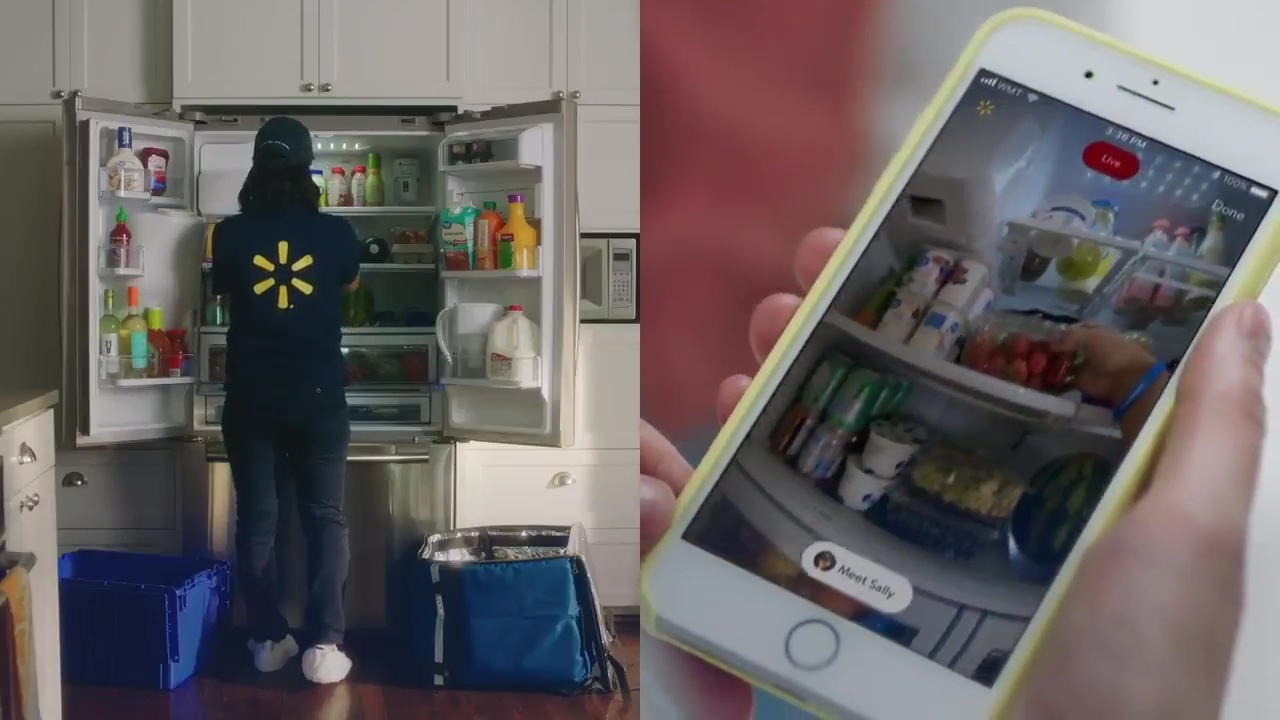
Walmart is now offering to have one of its employees deliver fresh groceries and put them in your refrigerator when you’re not home. The nation’s largest grocer said Friday that it will be offering the service this fall for more than one million customers in three cities: Pittsburgh, Kansas City, Missouri, and Vero Beach, Florida. Later this year, the service, called InHome Delivery, will also accept returns for items purchased on Walmart.com. Two years ago, Walmart tested a similar service in the Silicon Valley area but teamed up with delivery startup Deliv and worked with August Home, makers of smart locks and smart home accessories. That test has since been stopped. The new service is part of Walmart’s drive to expand its shopping options that include curbside pickup and online grocery delivery.
Amazon offers a similar service in certain cities, dropping off packages inside homes, garages or car trunks. But the service is not for groceries. With Walmart’s new service, customers place a grocery delivery order online and then select InHome Delivery and a delivery day at checkout. Walmart workers will use smart entry technology and a proprietary wearable camera to access the customer’s home. That allows shoppers to control access into their home and give them the ability to watch the delivery remotely. Walmart said that the workers will go through an extensive training program that would prepare them for things like how to select the freshest groceries and how best to organize the refrigerator. Walmart declined to give specifics on the technology. It said it will share the fee details ahead of the fall launch. “Now, we can serve customers not in just the last mile, but in the last 15 feet,” wrote Marc Lore, CEO of Walmart’s U.S. e-commerce division, in a corporate blog post.
With Amazon’s service, customers need to be an Amazon Prime member and they have to buy a camera and a Wi-Fi-connected lock from the Seattle-based company that starts at $250. Shoppers will then be able to select in-home delivery on the Amazon app. When the delivery person shows up, he or she will knock first and scan the package, then Amazon will make sure the delivery person is at the right home and unlock the door. No codes are needed and the indoor camera will record the in-home delivery.
The march was organised by the Civil Human Rights Front – a coalition of pro-democracy groups.
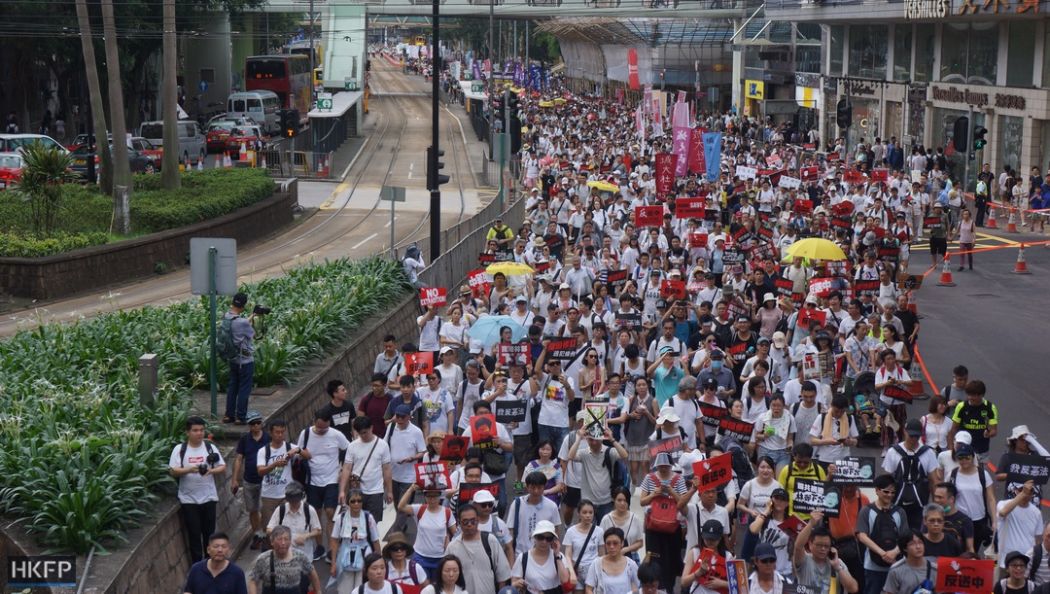
Protesters march during a rally against a controversial extradition law proposal in Hong Kong on June 9, 2019. Photo: Philip Fong/AFP.
Demonstrators brought Hong Kong Island to a halt, chanting “Scrap the evil law,” “Oppose China extradition” and “Carrie Lam resign,” in reference to the Chief Executive.
Police urged protesters to march from Victoria Park before the 3pm start-time to ease overcrowding.
The MTR also enacted crowd control measures, with protesters still leaving Victoria Park up to four hours after the start time. Protesters were still arriving at the end-point seven hours after the protest began.
Police opened up all lanes on Hennessey Road after initially refusing to do so.
Photo: Tom Grundy/HKFP.
Lam declined to answer questions at a public appearance in Ocean Park on Sunday afternoon.
The organiser turnout figure would make it the largest protest Hong Kong has ever seen, surpassing the turnout seen at mass rallies in 1989 and 2003.
Photo: InMediahk.net.
The protesters marched towards the legislature over an issue that has underscored divisions in society over trust in the legislature and the Chinese judicial system.
‘Nonsense’
Hong Kong’s government first proposed legal amendments in February to allow the city to handle case-by-case extradition requests from jurisdictions with no prior agreements, most notably China and Taiwan.
The plan would enable the chief executive and local courts to handle extradition requests without legislative oversight and could reach a final vote before the current legislative period ends in July.
The government has said the law will allow it to close a legal “loophole,” but lawyers,journalists, foreign politicians and businesses have raised concerns over the risk of residents being extradited to the mainland.
Photo: Tom Grundy/HKFP.
HK Lau, a retired civil servant in his 60s, told HKFP he believed the passing of the extradition law would mean the end of the One Country Two Systems principle.
“Communist China has never changed,” Lau said. “If anything has changed it is that they are richer and more powerful, and now it’s spreading.”
At the once-busy beach resort of Patanemo, tourism has evaporated over the last two years as Venezuela’s economic crisis has deepened and deteriorating cellphone service left visitors too afraid of robbery to brave the isolated roads.
Gone are the vendors who once walked the sands of the crescent-shaped beach hawking bathing suits and empanadas – a traditional savory pastry.
These days, its Caribbean shoreline flanked by forested hills receives a different type of visitor: people who walk 10 minutes from a nearby town carrying rice, plantains or bananas in hopes of exchanging them for the fishermen’s latest catch.
With bank notes made useless by hyperinflation, and no easy access to the debit card terminals widely used to conduct transactions in urban areas, residents of Patanemo rely mainly on barter.
It is just one of a growing number of rural towns slipping into isolation as Venezuela’s economy implodes amid a long-running political crisis.
From the peaks of the Andes to Venezuela’s sweltering southern savannahs, the collapse of basic services including power, telephone and internet has left many towns struggling to survive.
The subsistence economy stands in stark contrast to the oil boom years when abundance seeped into the most remote reaches of what was once Latin America’s richest nation.
“The fish that we catch is to exchange or give away,” said Yofran Arias, one of 15 fishermen who have grown accustomed to a rustic existence even though they live a 15-minute drive from Venezuela’s main port of Puerto Cabello.
“Money doesn’t buy anything so it’s better for people to bring food so we can give them fish,” he said, while cleaning bonefish, known for abundant bones and limited commercial value.
In visits to three villages across Venezuela, Reuters reporters saw residents exchanging fish, coffee beans and hand-picked fruit for essentials to make ends meet in an economy that shrank 48% during the first five years of President Nicolas Maduro’s government, according to recent central bank figures.
Venezuela’s crisis has taken a heavy toll on rural areas, where the number of households in poverty reached 74% in 2017 compared with 34% in the capital of Caracas, according to an annual survey called Encovi carried out by private Venezuelan universities.
Residents rarely travel to nearby cities, due to a lack of public transportation, growing fuel shortages and the prohibitive cost of consumer goods.
Sister Rita Callanan has endured a year from hell after a court battle with Katy Perry over her order’s Los Angeles convent — a fight that, she says, has left her nearly paralyzed, penniless and without a home. “I really didn’t like Katy Perry. I’m sure she doesn’t like me,” the 81-year-old nun told The Post. Callanan, the only surviving sister of the Order of the Most Holy and Immaculate Heart of the Blessed Virgin Mary, also claims that the singer has “blood on her hands.” On March 9, 2018, Sister Callanan’s best friend, Sister Catherine Rose Holzman, 89, collapsed and died in a Los Angeles court as they prepared to face the star’s legal team yet again. Holtzman’s last words: “Katy Perry. Please stop.” Perry had bought the convent in 2015, from the Los Angeles archdiocese, for $14.5 million in cash. But the nuns claimed that only they had the right to sell the eight-acre property having pooled their money together to purchase it in 1972. According to insiders, they had raised the cash by letting production companies film at the convent. The sisters occupied it until 2011, when, they say, the archdiocese forced them to move. The nuns then sold the 30,000-square-foot Spanish-Gothic home to businesswoman Dana Hollister in 2015. The archdiocese, claiming the nuns had no right to do so, approved a sale to Perry.
In 2016, a judge declared the nuns’ sale invalid, and a jury awarded Perry and the archdiocese damages totaling more than $15 million. But the turmoil didn’t end there. Callanan claims that the priest who conducted her friend’s funeral service was not the one Holtzman had requested, and that he did not let Callanan speak, despite the family’s wishes.
Enlarge ImageSister Rita Callanan in 2015LA Times via Getty Images As he was about to begin closing prayers, “I said, ‘Excuse me, Father, but I’ve been asked to say a few words,’ ” Callanan said. “I started to talk . . . then he said: ‘OK, that’s enough,’ but I kept on. He then said, ‘I said, that’s enough.’
“I was quiet for a minute, then thought: ‘No, I’m going to go on, Sister Rose wanted this.’ But another priest got up and went to the organ player and told him to start playing so he would drown out my words . . . The congregation yelled out, ‘Let her speak!’ ” Callanan claims that employees of the archdiocese then got access to Holzman’s apartment at St. John of God Retirement Home in LA. She believes they were after correspondence between the Sisters and the Vatican about the convent.“They took the hard drive from her personal computer, which had all the stuff from Rome on it,” Callanan said. “The following day, we learned that attorneys for the archdiocese tried to break into [Holtzman’s] mailbox and storage unit.” A rep for the Archdiocese said that Holzman’s “family had primary responsibility for her belongings and documents, and the Archdiocese coordinated directly with them on all decisions.” Callanan claimed the archdiocese demanded her laptop as well. “I had to get a friend to hide it,” she said. Her personal bank account has been controlled by the archdiocese since 2011, according to a Callanan source, adding that money has not been doled out on time.
“Medical insurance, TV, her credit cards, there were always late charges, but she was too scared to speak about it. She had to borrow money from friends,” the source said of Callanan. “She had to go to the Sister Christian Service Group to get bags of food. She had nothing in the pantry as she wasn’t getting enough money.” (A representative for the Los Angeles archdiocese said: “More than 10 years ago, the Archbishop of Los Angeles undertook responsibility for their future care and well-being [at the Vatican’s behest]. Since then, the Archdiocese has continuously provided . . . for all the living, medical and other costs for the care of Sister Rita and all remaining [Immaculate Heart of Mary] Sisters.”) Callanan said she needs daily help after an emergency spine operation. “I would have been a paraplegic and in a wheelchair for the rest of my life if [doctors] hadn’t operated,” the nun said. “I now need physical, occupational and speech therapy.” She is now in a rehab center and the source said it’s unknown where she will eventually live.
“The Archdiocese doesn’t understand what they have done to these women, [or] just how devastated [the nuns] were when they kicked them out and really destroyed their community,” said the source. After all the drama, the convent is now back on the market for $25 million. Callanan’s legal team told The Post that Perry no longer wants the property. (Perry’s representative did not return requests for comment. The LA archdiocese said: “While the formal legal option on the property has expired, the Archdiocese and Ms. Perry continue to be in communication concerning her continued interest in the property.”) Callanan admits that perhaps the sisters acted without authority. “We asked Dana to buy our property as we didn’t want it to go to Katy Perry. Yes, we put the wheels in motion to sell our property. Was it legal? Probably not entirely. But it wasn’t legal for Katy Perry to buy [it] either.”Despite her failing health, Callanan said she will stick to her guns.
“The problem is that we had too many migrants and we lost the spirit of openness there was initially,” said Trifoli.
Former mayor Domenico “Mimmo” Lucano encouraged migrants and refugees to come to the village to counter a gradual decline of inhabitants and workers and show how migrant integration could be done.
But now he is no longer even a member of the town council after his left-backed list lost in the elections, and he has been barred from the town.
Colourful, multi-ethnic murals can still be seen on walls, testimony to the experiment that took place here and the hopes for migrant integration it spawned in Italy and beyond, before it failed amid alienated locals and allegations of fraud.
“They were fighting among themselves, they didn’t want the crucifix, or the creche,” Falchi said of the migrants.
“It’s not racism, it’s just that this is our home. We welcome them and then they make problems.”
Locals are reluctant to talk about the past or discuss the predicament of the village, which, like so many in Calabria is seeing its youth leave in search of work as the elderly slowly die off.
“People wanted things to change. After 15 years of talking only about welcoming and refugees, they got tired,” said mayor Trifoli.
“Taking in refugees gave Riace prestige around the world but its inhabitants lost interest.”
Sending everyday people to space has been a dream since the days of the Apollo missions but space travel has long been out of reach for all but a select few humans in history. However, space tourism is slowly coming closer to reality, with companies like Richard Branson’s Virgin Galactic and Jeff Bezos’ Blue Origin closing in on taking short trips up to the edge of space and back. But what if spaceships went farther — and faster? A recent UBS report analyzed the market for what’s known as point-to-point space travel. It’s been touted by SpaceX as one of the business lines of the massive Starship rocket that Elon Musk’s company is developing. In essence, point-to-point space travel would be the equivalent of flying on an airplane across the world — but in less than an hour, rather than 16 hours. UBS believes that, if the obstacles to point-to-point space travel can be overcome, the service would represent an annual market of more than $20 billion. But some disagree, saying the technology’s safety is nowhere close to being reliable or that the travel method doesn’t solve key logistical issues to long haul air travel.
In-between leading his team to the NBA finals, and being a dad to three kids under seven, Steph Curry released episode fiveThe episode, titled “Faith,” details the impact Curry’s relationship with Jesus Christ has had on his basketball career, his family, and how he deals with every obstacle that comes his way.
“Faith” begins with Curry explaining how at the end of the day, his faith resides in his creator because he knows he can only control so much, and that there is a much bigger power controlling the universe.
“My faith is tested on the court as much as it is in life,” Curry said on the show.
“It’s the part that always keeps me focused on what I need to do when it comes to my family, when it comes to my job, when it comes to how I treat other people, my appreciation for life and all the good things that happen and how to deal with the bad things that happen.”
The 3X NBA Champion point guard for the Golden State Warriors believes fully that his strengths, abilities, and talents come from God. This pushes him put his faith first in all aspects of life, whether that is family, or on the court.