Author: Truth & Hammer

  • ‘Dead Zone’ in Gulf of Mexico Could Soon Grow Larger Than the Size of Massachusetts

    ‘Dead Zone’ in Gulf of Mexico Could Soon Grow Larger Than the Size of Massachusetts


    Why Global Citizens Should Care
    Pollution generated by human activities like urbanization and agriculture often end up in water bodies, where they disrupt the ecosystem and can ultimately wipe out marine life. Chemical nutrients commonly used in farming can upset marine ecosystems to the point of creating large “dead zones” where no life can thrive. You can join the movement to protect our oceans and life below water here.   

    This year’s “dead zone” in Gulf of Mexico, where oxygen is too scarce to support marine life, is predicted to be one of the area’s largest in history, according to a report released by National Oceanic and Atmospheric Administration (NOAA) on Monday.

    “Dead zones” occur cyclically in the Gulf and are caused by excessive nutrient pollution that makes its way from agricultural sites into water bodies. This year’s is expected to grow to roughly 7,829 square miles, or about the size of Massachusetts, the NOAA said. However, a similar study released by the Louisiana State University (LSU) last week, predicts the zone will be even bigger than that, reaching approximately 8,717 square miles, about the same size as New Jersey.

    Both estimates put the size of this year’s “dead zone” just slightly behind the record of 8,766 square miles observed in 2017. Still the predictions exceed the five-year average of 5,770 square miles by a hefty amount.

    “We think this will be the second-largest, but it could very well go over that,” Nancy Rabalais, marine ecologist and co-author of the LSU report, told CNN.

    The NOAA blames unusually heavy spring rainfalls and enormous amounts of pollutants in rainwater runoff for the alarming forecast.

    Nitrogen and phosphorus from fertilizers are carried by rainwater into the Gulf of Mexico where they encourage the growth of excessive amounts of phytoplankton (microscopic algae) blooms. These eventually die and sink to the bottom of the Gulf, where, as they decompose, they eat up the water’s oxygen supply. The low oxygen levels then threaten all living organisms in the water body — creating a “dead zone” — including fish, shrimp, and crabs, both an important source of food and income for people in the area.

    Embed from Getty Images

    Water from 41% of the US drains into the Mississippi River, which eventually joins the Gulf of Mexico. The US Geological Survey reported that the average river discharge carried 156,000 metric tons of nitrate and 25,300 metric tons of phosphorus into the Gulf this past May alone — 67% higher than the long-term average over the past four decades.

    The US Environmental Protection Agency has employed a task force to monitor the issue and several US states are also working to reduce the amount of nutrients that run into the Gulf.

    While little can be done to reduce the expected size of the “dead zone” and reverse the impact of this nutrient runoff on the Gulf this year, farmers can take action to prevent similar destruction in the future. Switching to eco-friendly and natural fertilizers can help reduce the amount of nitrogen and phosphorus at risk of entering the Gulf. Farmers can also plant more crops like wheat grass that have longer roots and can retain soil nutrients more easily.

    “It is all a part of how we treat our ecosystem and our consumptive nature,” Rabalais said.

    “It’s all connected to our carbon footprint and the nitrogen used in farming and used to feed animals that we don’t need to eat. It is all tied together with the global economy and now tariffs and the way subsidies are given to farming.”

    This content was originally published here.

  • Study of olfactory bulb ratio in modern birds suggests dinosaurs may have had strong sense of smell

    Study of olfactory bulb ratio in modern birds suggests dinosaurs may have had strong sense of smell

    beak
    Credit: CC0 Public Domain

    A team of researchers at University College Dublin has found evidence that suggests some dinosaurs may have had a very strong sense of smell. In their paper published in Proceedings of the Royal Society B, the group describes their study of the olfactory bulb ratio in modern birds and how they used it to predict possible olfactory strength in certain dinosaurs.


    In most modern animals, the size of the olfactory bulb correlates with the strength of their sense of —its size relative to the rest of the brain is its olfactory bulb ratio. For many years, scientists have used the olfactory ratio as a means of estimating how well an animal can smell. Prior research has shown that the size of the olfactory bulb is related to the number of smell receptor genes in the DNA of a given animal, and how much diversity they represent. Taken together, it is called the olfactory repertoire (OR). In this new effort, the researchers used the OR of and an alligator to estimate the olfactory ability of several types of .

    The brains of dinosaurs do not fossilize, of course, so there are no examples of olfactory bulbs from dinosaurs to examine. But there are endocasts—brain imprints found on the inside of a skull. The researchers used them to estimate the size of the olfactory bulb in several dinosaurs. They then gathered OR data on a large variety of birds and one alligator. In looking at average ORs for alive today and comparing them with olfactory size in non-avian extinct dinosaurs, the researchers were able to come up with estimates of the strength of their sense of smell.

    The researchers found that many of the larger dinosaurs likely had very good senses of smell—Tyrannosaurus Rex, for example, was likely able to rely on its sense of smell for various purposes, including obtaining food. They point out that their study does not, however, clear up the controversy regarding whether the fearsome dinosaur was a strong predator or simply a scavenger.

    This document is subject to copyright. Apart from any fair dealing for the purpose of private study or research, no part may be reproduced without the written permission. The content is provided for information purposes only.

    This content was originally published here.

  • A new trend in the Middle East? Oman taxes energy drinks as oil income falls — RT Business News

    A new trend in the Middle East? Oman taxes energy drinks as oil income falls — RT Business News

    Beginning June 15th, pork meat, tobacco, and alcohol as well as energy drinks will be subject to a 100-percent tax, with carbonated drinks subject to a 50-percent levy. Last November, a senior Oman government official said the taxes could generate around US$260 million in annual revenues.

    Oman is not a member of OPEC but it is not a minor producer: the average daily rate for April was more than 970,000 barrels of crude and condensate. Its exports go to Asia, with China soaking in almost 84 percent of the total and the rest divided between India and Japan.

    Yet like other Persian Gulf producers, the sultanate has suffered its fair share of the 2014 price crisis fallout. Also like others, it has been reluctant to introduce any measures that would be unpopular among the locals, but has in the end found it necessary to risk it. This year, analysts surveyed by Bloomberg say, its current account deficit could swell to 9.1 percent, hence the countermeasures.

    Additional taxation, however, is not the only measure Oman is looking to diversify its economy away from oil. It is also pursuing renewable energy projects: the two most recent ones both solar and, interestingly, both to be utilized in the oil industry, Oxford Business Group reported last month.

    Despite the oil price-related troubles that no one in the Middle East seems immune to, Oman is doing fairly well. A recent report by the World Bank said Oman will book the highest economic growth among members of the Gulf Cooperation Council in 2020, at 6 percent, not least thanks to its diversification efforts but also because of the expansion of its oil and gas production.

    This article was originally published on Oilprice.com

    This content was originally published here.
  • UK wage growth faster than expected as unemployment hits 40 year low

    UK wage growth faster than expected as unemployment hits 40 year low

    Wage growth beat market and economist expectations in the three months from February to April.

    Pay rose by 3.4% compared with a year ago. After taking inflation into account, wage growth was 1.4%, official figures show.

    The unemployment rate remained at 3.8%, and has not been lower since the October to December 1974 period, the Office for National Statistics said.

    The employment rate for women was 72%, the highest on record.

    This is after changes to the state pension age leading to fewer women retiring between the ages of 60 and 65.

    Matt Hughes, deputy head of labour market statistics at the ONS, said: “With employment growth among women coming from full-timers, the overall gap between men and women in hours worked is now the lowest ever – women now average about three-quarters of men’s weekly hours, compared with around two-thirds 25 years ago.”

    Sterling rose from five-month lows against the euro after wages rose faster than expected, beating some economists predictions of a 3% rise.

    While employment growth slowed, the jobless rate held at 3.8%.

    John Hawksworth, PwC chief economist, said it was “interesting” that female employment rose by 60,000 compared with the previous quarter, while male employment fell by 27,000.

    “This is consistent with a longer-term trend towards a narrowing gender employment gap.

    “Male employment is still higher at around 80%, but this is well below its historical highs of over 90% back in the 1970s.”

    Tej Parikh, chief economist at the Institute of Directors, said: “The buoyant labour market is still going strong for the UK economy, even as it weathers widespread political uncertainty.”

    “However, the employment boom cannot last forever, and is certainly showing signs of softening.”

    Read more:
    UK wage growth faster than expected as unemployment hits 40 year low

    This content was originally published here.

  • Morgan Stanley: The Fed’s Interest Rate Cut Will NOT Stop A Recession

    Morgan Stanley: The Fed’s Interest Rate Cut Will NOT Stop A Recession

     Morgan Stanley’s economists have taken to changing their forecasts for global growth to stagnation through year-end rather than a continued recovery. This is a result of “sustained escalation and incremental tariffs further slowing growth projections to the point of recession.”

    Morgan Stanley also stated that even if the Federal Reserve cuts interest rates, the economy won’t be saved from a deep recession.  There is simply too many bubbles and too much debt for any rate cut to help in any meaningful capacity. Morgan Stanley’s Mike Wilson, already the most bearish of Wall Street’s sell-side research analysts, turned his bearishness up a notch once more when he slashed his EPS forecast for next year, according to ZeroHedge.

    Wilson summarizes his “doom and gloom” outlook as follows: “we believe an exogenous cost shock would be very hard to absorb. Autos, electrical equipment and machinery, textiles, computers/electronics, and certain chemical/commodity sectors appear the most exposed to rising tariffs on goods from China.

    Goldman Sachs: Tariffs Costs Fall “ENTIRELY” On U.S. Households & Businesses

    Although president Donald Trump isn’t the only one to blame, he’s certainly not helping by applying tariffs to imports either.

    Decades of easy money and money printing has caused so much untold damage to the economy that only a complete collapse of the entire debt-based system will reveal the true scopes of just how much carnage the central banks have caused and a rate cut won’t be able to help. The entire system is just too far gone.

    Financial Crisis: The Trade War Cost AMERICANS $1.4 Billion PER MONTH Last Year

    Morgan Stanley also sees more downgrades to the economy as necessary because of the trade war. Not only is Wilson predicting a further decline in earnings in 2019 but also unchanged earnings in 2020. That’s a downward revised trend from a prior forecast of a +5% increase in EPS, as corporate profit hit their plateau for this cycle. And obviously, once the recession hits, it’s only downhill from there.

    The basis of Wilson’s latest cut to corporate profits is a scenario analysis which assesses economic growth in three distinct paths around U.S.-China trade tensions and uses these paths to scenario test the S&P itself.

    We further use the results to adjust our official S&P forecasts, though we note that since our forecasts take into account additional considerations beyond trade, our bull, base,and bear cases do not match the three trade paths one for one. Even in the absence of incremental trade escalation, our earnings model is already calling for negative EPS growth over the next 12 months and trade tensions add to the downside in earnings growth.

    “Investor enthusiasm around the idea of easier Fed policy is understandable,” Wilson writes, but cautions that  “if the Fed were to cut out of concern that we are entering a real unemployment cycle, such a cut should not be bought.” In other words, a Fed cut – precautionary or not – may hit as soon as July “but it may not halt [the coming] slowdown/recession,Wilson added according to ZeroHedge.

    As a result, until there is further clarity on the employment picture (which was absolutely abysmal in May), Wilson thinks “Friday’s rally should be faded and investors should continue to skew portfolios defensively with a cautious eye toward expensive growth stocks that are now at a greater risk of missing earnings estimates due to these very real macroeconomic risks that are independent of the trade outcome or monetary policy.”

    On Friday, Bank of America’s CIO warned that a rate cut now would be a “huge risk” to the market as it would prompt a furious scramble for stocks. Macro data does not actually require a rate cut either, let alone three of them. As such, cuts by Jerome Powell would precipitate the next big bubble – a sentiment which was echoed just days later by One River’s Eric Peters – similar to the mistake the Fed did in 1998 which spawned the dot com bubble and the crash of 2000.

    A recession is imminent. We could argue semantics and timing all day, but the truth is, if you haven’t started preparing for an economic crisis, you could be in trouble within a year. This isn’t meant to scare anyone or be “fear porn,” rather it’s meant to prompt you to prepare.  Many were caught with their proverbial pants down in the last recession, and many have still not learned the lessons of the past. 

    This content was originally published here.

  • 3 Things to Know in the Housing Market Today!

    3 Things to Know in the Housing Market Today!

    A lot is happening in the world, and it’s having a direct impact on the housing market. The reality is this: some of it is positive and some of it may be negative. Some we just don’t know yet.

    The following three areas of the housing market are critical to understand: interest rates, building materials, and the outlook for an economic slowdown.

    1. Interest Rates

    One of the most important things to consider when buying a home is the interest rate you will be charged to borrow the money. In our recent post we posed the question, “Are Low Interest Rates Here To Stay?” The latest information from Freddie Mac makes it appear they are. We are currently at a 21-month low in interest rates.

    2. Building Materials

    Talk of tariffs could also affect the housing market. According to a recent article, the National Association of Home Builders reports that as much as $10 billion in goods imported from China are used in homebuilding. Depending on the outcome of the tariff and trade discussions between several countries, there could be as much as a 25% boost in the cost of building materials.

    3. Economic Slowdown

    In a prior blog post on this topic, we began the year with many economic leaders thinking we could expect a recession in late 2019 or early 2020. As spring approached, we reported that economists had started to push that projection past 2020.  Now, three leading surveys indicate that it may begin in the next eighteen months.

    Bottom Line

    We are in a strong housing market. Wages are increasing, home prices are appreciating, and mortgage rates are the lowest they have been in 21 months.  Whether you are thinking of buying or selling, it’s a great time to be in the market.

    This content was originally published here.

  • Bradley Cooper and Lady Gaga Reportedly Have a Huge Connection

    Bradley Cooper and Lady Gaga Reportedly Have a Huge Connection

    Bradley Cooper and Irina Shayk are 100 percent over, and while she’s over here winning at Instagram with her totally unbothered waterfall pictures, Bradley is reportedly mulling over his friendship with Lady Gaga.

    As you very well know, Gaga and B. Coop acted and sang and smashed a lot of things (mirrors and pills. Eek!) together in a ~film~ called A Star Is Born. They had insane chemistry onscreen and even off when they performed “Shallow” during one of Gaga’s Vegas shows and during the Oscars, and their friendship and professional relationship had everyone speculating that they may have actually been in love the whole time. Gaga previously denied all those rumors, but according to some new People sources, there may be more to the story.

    First off, People reported that the movie had a huge effect on Bradley and Irina, who preferred her formerly “quiet” life. Their source said, “The rumors about Bradley and Gaga having a love affair didn’t help especially with his constant travels [promoting the film].”

    Then the source added this bombshell, which is specifically about Bradley and Gaga’s relationship, which will make your jaw drop: “He has a huge and overwhelming connection to Gaga but whether it becomes a real love story in their lives for all the world to see is premature, and it’s difficult to speculate at this sensitive time.”

    The world’s reaction in a series of GIFs:

    Some possibilities on what this might mean: 1) People may have been right about their chemistry all along. 2) There may be a possibility for some “love story,” as the source put it. 3) There could (emphasis on could) be a chance that this situationship never becomes public or “for all the world to see.”

    If you’ll excuse me, I’ll be analyzing everyone’s body language to see if there are any hints that this is true until I hear otherwise!

    This content was originally published here.

  • Reese Witherspoon shares first look at ‘Little Fires Everywhere’ series – It’s a Southern Thing

    Reese Witherspoon shares first look at ‘Little Fires Everywhere’ series – It’s a Southern Thing

    Reese Witherspoon gave fans a first look at the upcoming Hulu series “Little Fires Everywhere,” and we cannot wait to see more.

    Witherspoon shared a photo of herself and actress Kerry Washington on the set of the show, which is based on Celeste Ng’s 2017 bestselling novel. In the photo shared by Witherspoon, the two actresses are seen in character. Witherspoon captioned the image “Bringing it back to the ’90s! Meet Mia Warren and Elena Richardson. So excited to be shooting @LittleFiresHulu with the incredibly talented @kerrywashington!”

    The cast of the show will also include Rosemarie DeWitt, Joshua Jackson, Jade Pettyjohn, Jordan Elsass, Gavin Lewis, Megan Stott and Lexi Underwood, reports Entertainment Weekly.

    The series follows “the intertwined fates of the picture-perfect Richardson family and an enigmatic mother and daughter who upend their lives. The story explores the weight of secrets, the nature of art and identity, the ferocious pull of motherhood – and the danger in believing that following the rules can avert disaster,” according to Hulu.

    The series is set to premiere in 2020. For more information, visit ew.com.

    This content was originally published here.

  • Denzel Washington Praises Wife Pauletta For Being His ‘Biggest Life Achievement’

    Denzel Washington Praises Wife Pauletta For Being His ‘Biggest Life Achievement’

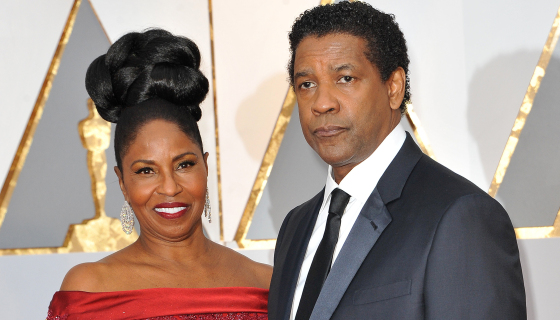
    Denzel Washington was the guest of honor at the 47th AFI Life Achievement Award gala tribute in Hollywood Thursday night.

    The Oscar-winning actor and his wife of 35 years,Pauletta Washington, hit the red carpet at the star-studded event held at the Dolby Theater, where Entertainment Tonight asked Denzel what he considers his biggest lifetime achievement.

    Washington turned to his devoted wife and said she’s his “biggest lifetime achievement.”

    The actor also opened up about being honored by the American Film Institute, and support from the stars who came out to help celebrate his career and legacy.

    “I’m humbled, I’m grateful, I’m thankful… I’ve never done this before so I can’t really tell you how I feel,” he admitted. “It doesn’t feel like other times I’m on the red carpet. I’m usually promoting a film or at an award show. [Here] I’ve already won, I guess, so it’s different. It’s relaxed.”

    The gala included appearances and speeches from Spike Lee, director Antoine Fuqua, Chadwick Boseman, Jennifer Hudson, Mahershala Ali, Michael B. Jordan, Cicely Tyson and Julia Roberts, to name just a few.

    Boseman called Washington the G.O.A.T. (greatest of all time).

    “There is no Black Panther without Denzel Washington,” he said. “Not just because of me, but my whole cast, that generation stands on your shoulders.”

    The biggest surprise of the evening was Beyonce, who came out to present honoree Melina Matsoukas with the Franklin J. Schaffner Award — see the Twitter video embed above. Matsoukas has directed some of the singer’s biggest music videos.

    This content was originally published here.
  • Plant Profile: Penstemon

    Plant Profile: Penstemon

    June is the month of flowers, with favorites like roses, irises and peonies in bloom. But one of my favorite June flowers is Penstemon, sometimes referred to as beardtongue because of the fuzzy growths inside the plants bloom.

    dark towers penstemon

    Dark Towers penstemon is a popular cultivar. (Photo courtesy of Terra Nova Nursery)

    Penstemon is a group of plants that includes more than 250 species and most of them are native to areas of North America from the southern states up through Canada. They are considered one of the most attractive (to humans, at least) of the wildflowers. Because they are comfortable in northern climates, penstemon grow very well in our northern gardens. Many are hardy to USDA Zone 3 (northern Minnesota) and they are easy to grow. You can grow them easily from seed, too.

    Large beardtongue (Penstemon grandiflorus) is native to Minnesota, growing in the prairie and lakes areas from the Twin Cities all the way up to Grand Forks. This plant is about 3 feet tall with large pinkish purple tubular shaped blooms. Each plant will have up to 6 blooms arranged around the stem. It grows well in sandy soil and full sun.

    Husker red penstemon

    Penstemon will bloom in a variety of light, but hails from sunny prairies.

    More commonly seen in gardens is foxglove beardtongue (Penstemon digitalis), which is native as far north as Iowa and is found all over Minnesota, though it is not native here. Foxglove beardtongue typically has white flowers and is an adaptable plant, growing in a variety of sun situations. It is very attractive to pollinators, especially mason and bumblebees as well as hummingbirds. Whenever mine are in bloom, the bumblebees are all over it, flying in and out of the tubular flowers.

    Foxglove beardtongue has also been the subject of some breeding efforts. ‘Husker Red’ is perhaps the most used cultivar in home gardens. With its reddish stems, purple toned leaves and abundant pink-to-white flowers, it’s a contrast plant in beds and borders. Blooms can last up to three weeks and this plant looks great planted in masses. An even more dramatic cultivar is ‘Dark Towers,’ which has deep maroon leaves and blooms that lean more toward reddish pink than white. Both cultivars grow about 3 feet tall and don’t spread too much.

    Plant penstemon where the foliage and flowers will stand out, in the middle of the border. They look especially at home with other prairie plants, such as coneflower, grasses and perennial sunflowers.

    The post Plant Profile: Penstemon appeared first on Minnesota State Horticultural Society.

    This content was originally published here.