Author: Truth & Hammer

  • Juliana v. United States: The climate change lawsuit that could stop the U.S. government from supporting fossil fuels – 60 Minutes – CBS News

    Juliana v. United States: The climate change lawsuit that could stop the U.S. government from supporting fossil fuels – 60 Minutes – CBS News

    Of all the cases working their way through the federal court system, none is more interesting or potentially more life changing than Juliana versus the United States. To quote one federal judge, “This is no ordinary lawsuit.” It was filed back in 2015 on behalf of a group of kids who are trying to get the courts to block the U.S. government from continuing the use of fossil fuels. They say it’s causing climate change, endangering their future and violating their constitutional rights to life, liberty and property. As we first reported earlier this year, when the lawsuit first began hardly anyone took it seriously, including the government’s lawyers, who have since watched the supreme court reject two of their motions to delay or dismiss the case. Four years in, it is still very much alive, in part because the plaintiffs have amassed a body of evidence that will surprise even the skeptics and have forced the government to admit that the crisis is real.

    The case was born here in Eugene, Oregon, a tree-hugger’s paradise, and one of the cradles of environmental activism in the United States. The lead plaintiff, University of Oregon student Kelsey Juliana, was only five weeks old when her parents took her to her first rally to protect spotted owls. Today, her main concern is climate change, drought and the growing threat of wildfires in the surrounding Cascade Mountains.

    Kelsey Juliana: There was a wildfire season that was so intense, we were advised not to go outside. The particulate matter in the smoke was literally off the charts. It was past severe, in terms of danger to health.

    Steve Kroft: And you think that’s because of climate change.

    Kelsey Juliana: That’s what scientists tell me.

    It’s not just scientists. Even the federal government now acknowledges in its response to the lawsuit that the effects of climate change are already happening and likely to get worse, especially for young people who will have to deal with them for the long term.

    “The government has known for over 50 years that burning fossil fuels would cause climate change. And they don’t dispute that we are in a danger zone on climate change.”

    Steve Kroft: How important is this case to you?

    Kelsey Juliana: This case is everything. This is the climate case. We have everything to lose, if we don’t act on climate change right now, my generation and all the generations to come.

    She was 19 when the lawsuit was filed and the oldest of 21 plaintiffs. They come from ten different states and all claim to be affected or threatened by the consequences of climate change. The youngest, Levi Draheim, is in sixth grade.

    Steve Kroft: You’re 11 years old, and you’re suing the United States government, that’s not what most 11-year-olds do, right?

    Levi Draheim: Yeah…

    He’s lived most of his life on the beaches of a barrier island in Florida that’s a mile wide and barely above sea level.

    Steve Kroft: What’s your biggest fear about this island?

    Levi Draheim: I fear that I won’t have a home here in the future.

    Steve Kroft: That the island will be gone.

    Levi Draheim: Yeah. That the island will be underwater because of climate change.

    Steve Kroft: So you feel like you’ve got a stake in this.

    Levi Draheim: Yes.

    The plaintiffs were recruited from environmental groups across the country by Julia Olson, an oregon lawyer, and the executive director of a non-profit legal organization called “Our Children’s Trust.” She began constructing the case eight years ago out of this spartan space now dominated by this paper diorama that winds its way through the office.

    Steve Kroft: So what is this?

    Julia Olson: So this is a timeline that we put together…

    It documents what and when past U.S. administrations knew about the connection between fossil fuels and climate change. The timeline goes back 50 years, beginning with the presidency of Lyndon Johnson.

    Julia Olson: During President Johnson’s administration, they issued a report in 1965 that talked about climate change being a catastrophic threat.

    Whether it was a Democrat or a Republican in office, Olson says, there was an awareness of the potential dangers of carbon dioxide emissions.

    Julia Olson: Every president knew that burning fossil fuels was causing climate change.

    Fifty years of evidence has been amassed by Olson and her team, 36,000 pages in all, to be used in court.


    Julia Olson: Our government, at the highest levels, knew and was briefed on it regularly by the national security community, by the scientific community. They have known for a very long time that it was a big threat.

    Steve Kroft: Has the government disputed that government officials have known about this for more than 50 years and been told and warned about it for 50 years?

    Julia Olson: No. They admit that the government has known for over 50 years that burning fossil fuels would cause climate change. And they don’t dispute that we are in a danger zone on climate change. And they don’t dispute that climate change is a national security threat and a threat to our economy and a threat to people’s lives and safety. They do not dispute any of those facts of the case.

    The legal proceedings have required the government to make some startling admissions in court filings. It now acknowledges that human activity – in particular, elevated concentrations of greenhouse gases – is likely to have been the dominant cause of observed warming since the mid-1900s… That global carbon dioxide concentrations reached levels unprecedented for at least 2.6 million years… That climate change is increasing the risk of loss of life and the extinction of many species and is associated with increases in hurricane intensity, the frequency of intense storms, heavy precipitation, the loss of sea ice and rising sea levels.

    Julia Olson: It’s really the most compelling evidence I’ve ever had in any case I’ve litigated in over 20 years.

    The lawsuit claims the executive and legislative branches of government have proven incapable of dealing with climate change. It argues that the government has failed in its obligation to protect the nation’s air, water, forests and coast lines. And it petitions the federal courts to intervene and force the government to come up with a plan that would wean the country off fossil fuels by the middle of this century.

    Steve Kroft: You’re just saying, “Do it. We don’t care how.”

    Julia Olson: Do it well and do it in the timeframe that it needs to be done.

    Steve Kroft: You’re talking about a case that could change economics in this country.

    Julia Olson: For the better.

    Steve Kroft: Well, you say it changes the economy for the better, but other people would say it would cause huge disruption.

    Julia Olson: If we don’t address climate change in this country, economists across the board say that we are in for economic crises that we have never seen before.

    The lawsuit was first filed during the final years of the Obama administration in this federal courthouse in Eugene.

    Steve Kroft: Did they take this case seriously when you filed it?

    Julia Olson: I think in the beginning they thought they could very quickly get the case dismissed.

    In November 2016, a federal judge stunned the government by denying its motion to dismiss the case and ruling it could proceed to trial. In what may become a landmark decision, Judge Ann Aiken wrote, “Exercising my reasoned judgment, I have no doubt that the right to a climate system capable of sustaining human life is fundamental to a free and ordered society.”

    Steve Kroft: A federal judge ever said that before?

    Julia Olson: No judge had ever written that before.

    The opinion was groundbreaking because the courts have never recognized a constitutional right to a stable climate.

    Ann Carlson: That’s a big stretch for a court.

    Ann Carlson is a professor of environmental law at UCLA. Like almost everyone else in the legal community, she was certain the case was doomed.

    Ann Carlson: There’s no constitutional provision that says the that environment should be protected.

    Steve Kroft: Why is the idea that the people of the United States have a right to a stable environment such a radical idea?

    Ann Carlson: Well, I think that Judge Aiken actually does a very good job of saying it’s not radical to ask the government to protect the health, and the lives and the property of this current generation of kids. Look, If you can’t have your life protected by government policies that save the planet, then what’s the point of having a Constitution?

    Steve Kroft: How significant is this case?

    Ann Carlson: Well, if the plaintiffs won, it’d be massive, particularly if they won what they’re asking for, which is get the federal government out of the business of in any way subsidizing fossil fuels and get them into the business of dramatically curtailing greenhouse gases in order to protect the children who are the plaintiffs in order to create a safe climate. That would be enormous.

    So enormous that the Trump administration, which is now defending the case, has done everything it can to keep the trial from going forward. It’s appealed Judge Aiken’s decision three times to the ninth circuit court in California and twice to the Supreme Court. Each time it’s failed.

    Julia Olson: They don’t want it to go to trial.

    Steve Kroft: Why?

    Julia Olson: Because they will lose on the evidence that will be presented at trial.

    Steve Kroft: And that’s why they don’t want one.

    Julia Olson: That’s why they don’t want one. They know that once you enter that courtroom and your witnesses take the oath to tell the truth and nothing but the truth the facts are the facts and alternative facts are perjury. And so, all of these claims and tweets about climate change not being real, that doesn’t hold up in a court of law.

    The Justice Department declined our request for an interview, but in court hearings, in briefs, it’s called the lawsuit misguided, unprecedented and unconstitutional. It argues that energy policy is the legal responsibility of Congress and the White House, not a single judge in Oregon. And while climate change is real it’s also a complicated global problem that was not caused and cannot be solved by just the United States government.

    In other words, it’s not responsible.

    Steve Kroft: Why is the federal government responsible for global warming? I mean it doesn’t produce any carbon dioxide. How are they causing it?

    Julia Olson: They’re causing it through their actions of subsidizing the fossil fuel energy system, permitting every aspect of our fossil fuel energy system, and by allowing for extraction of fossil fuels from our federal public lands. We are the largest oil and gas producer in the world now because of decisions our federal government has made.

    Steve Kroft: What about the Chinese government? What about the Indian government?

    Julia Olson: Clearly, it’s not just the United States that has caused climate change but the United States is responsible for 25 percent of the atmospheric carbon dioxide that has accumulated over the many decades.

    Julia Olson is confident they’re going to prevail in court. Ann Carlson and most of the legal community still think it’s a longshot, but she says she’s been wrong about this case every step of the way.

    Ann Carlson: Courts have asked governments to do bold things. The best example would be Brown versus the Board of Education, when the court ordered schools to desegregate with all deliberate speed. So there have been court decisions that have asked governments to do very dramatic things. This might be the biggest.

    Steve Kroft: You’ve been stunned by how far this case has gotten. Why has it gotten this far?

    Ann Carlson: I think there are several reasons this case has actually withstood motions to dismiss. I think the first is that the lawyers have crafted the case in a way that’s very compelling. You have a number of kids who are very compelling plaintiffs who are experiencing the harms of climate change now and will experience the harms of climate change much more dramatically as they get older. I think the hard question here is the law.

    The latest oral arguments in Juliana versus the United States were heard earlier this month in portland. But whatever happens next will certainly be appealed. Two-thousand miles away, in the aptly named town of Rayne, Louisiana, the family of one of the plaintiffs, 15-year-old Jayden Foytlin, is still rebuilding from the last disaster in 2016 that dumped 18 inches of rain on Rayne and Southern Louisiana in just 48 hours.

    Jayden Foytlin: That’s just something that shouldn’t happen. You can’t really deny that it, climate change has something to do with it. And you can’t deny that it’s something that we have to pay attention to. I’m not sure if most of Louisiana, of South Louisiana is going to be here, that’s just a really big worry of mine.

    For the foreseeable future, it’s impossible to predict when and how the storms and the lawsuit are likely to end.

    Produced by Draggan Mihailovich. Associate producers, Katie Brennan and Chrissy Jones

    This content was originally published here.
  • Holy Jingle Bells! 40 New Christmas Movies Are Coming to the Hallmark Channel This Year

    Holy Jingle Bells! 40 New Christmas Movies Are Coming to the Hallmark Channel This Year

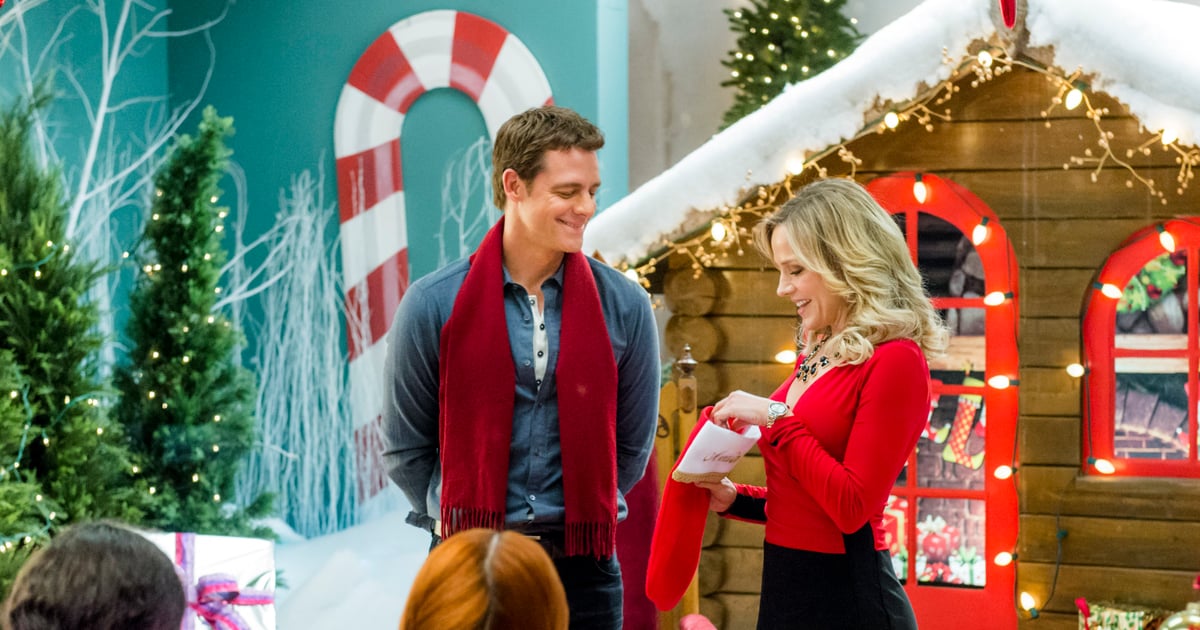
    Grab a warm cup of cocoa and get ready to celebrate the holidays a little sooner than expected, because Hallmark has more Christmas movies lined up this year than ever before. Entertainment Weekly revealed that the television network will break their annual Countdown to Christmas record by debuting 40 new Christmas TV movies in 2019, and we are so ready to binge them all.

    We would expect nothing less for the Hallmark Channel’s 10th anniversary than a record-breaking lineup of movies – 24 of which will air on the Hallmark Channel and 16 of which will debut on Hallmark’s sister network, Hallmark Movies & Mysteries. While official release dates have not yet been revealed, the first of the 40 Christmas films will reportedly air in July to mark Hallmark’s Halfway to Christmas campaign, because it’s apparently never too soon to celebrate Christmas.

    The official Countdown to Christmas kicks off Oct. 25, and we’re expecting to see a whole sleigh-full of familiar faces to count us down for the holidays. See the schedule so far ahead:

    • Christmas Camp: Starring Lily Anne Harrison and Bobby Campo – July 7
    • A Merry Christmas Match: Starring Ashley Newbrough and Kyle Dean Massey – July 13
    • Holiday For Heroes: Starring Melissa Claire Egan and Marc Blucas – November
    • Christmas Wishes and Mistletoe Kisses: Starring Matthew Davis and Jill Wagner – November
    • Time For Me to Come Home For Christmas Sequel?: Executive-produced by Blake Shelton – Late 2019
    • A Family Under the Christmas Tree: Starring Merritt Patterson and Jon Cor – Late 2019
    • Merry and Bright: Starring Jodie Sweetin and Andrew Walker – Late 2019

    This content was originally published here.
  • The economy is awful and that’s great news for investors – ABC News (Australian Broadcasting Corporation)

    The economy is awful and that’s great news for investors – ABC News (Australian Broadcasting Corporation)

    The economy is awful and that’s great news for investors

    Posted June 24, 2019 03:48:57

    Bad news suddenly has become good again. No matter where you look, there are signs of a global slowdown while wars are brewing at a trade, currency and even military level.

    Here at home, the economy is sputtering. Growth is slowing, inflation is on the mat, unemployment is ticking higher.

    The situation has deteriorated to such an extent that it’s even jolted the Reserve Bank into action after three years of nothing.

    It cut rates three weeks ago and now the betting is on that we could see another cut as early as next week.

    Many economists are tipping three cuts this year. And yet, at every turn, investors appear to be overjoyed, clamouring over one another to pile into the stock market.

    After taking a thumping late last year, when the global outlook appeared relatively benign, optimistic even, the local market this year has been on a tear, notching up one of the strongest performances in the world with an 18 per cent gain.

    And things will only get better as the news gets worse.

    Growth slowdown fires up stocks

    Last week, our stock market galloped to an 11-year high and finally is within striking distance of cracking the record, from October 2007 just before the global economy tanked.

    Compare that with Wall Street. Before the crash a decade ago, the Dow Jones Industrial Average peaked at around 14,000 points. On Friday, it closed at 26,719 points, more than double its pre-crash peak.

    For most of the past decade, Australia has outpaced America’s economy. The resources boom saw us power through the worst of the global financial crisis as almost every major developed economy plunged into recession.

    Why then, the relatively poor stock market performance? Shouldn’t the market reflect what’s happening in the economy?

    In days past, stock investors positioned themselves for where they saw the economy six, or even 12 months, ahead.

    Not any longer.

    These days, traders and investors pretty much care about just one thing; interest rates. The lower they go, the better the market performs. And generally speaking, rates only fall in times of trouble, when the economy needs a boost.

    One reason for this apparent mismatch is that there is so much investment cash out there looking for a home, when interest rates fall, it quickly migrates to stocks.

    There’s another factor at work too. The global economy now is so overloaded with debt that, were interest rates ever to rise, there would be a massive spate of defaults that once again could threaten the banking system.

    That’s why Wall Street tanked late last year as the US Federal Reserve persisted with its plan to “normalise” interest rates, to push them higher. December was its worst month since the Great Depression in the 1930s.

    Global debt now stands at more than $US250 trillion ($360 trillion), more than three times its level 20 years ago, much of it backed by property.

    Having painted themselves into a corner by issuing so much debt and printing so much cash, central banks, including our own Reserve Bank, are now so frightened about the potentially catastrophic impact of a downturn in either stock or property markets, that they are prepared to do almost anything to avoid it.

    Market values must be maintained.

    It’s a great strategy for anyone who owns a home or has a share portfolio. For those who don’t, it’s a recipe for disaster — or at the very least a widening of inequality and the wealth gap.

    Why the RBA will cut again… and again

    Reserve Bank governor Philip Lowe won’t have a bar of it. There’s nothing wrong with the economy, really. The RBA isn’t cutting rates because things are deteriorating. Not at all.

    It’s cutting rates because the Non-Accelerating Inflation Rate of Unemployment has slipped. Ah, of course.

    Where we once imagined the NAIRU at 5 per cent unemployment — the point considered “full employment” because anything under that saw labour shortages, wage breakouts and rampant inflation — it’s now closer to 4.5 per cent, maybe even lower.

    That’s an oblique way of saying we’re in unchartered waters and the only way to navigate through is to throw caution to the wind.

    The real reason for the RBA rate cuts is the dramatic fall in housing prices and the prospect that unemployment may spike, particularly if the escalating trade dispute between the US and China further crimps Chinese economic growth.

    Should more people end up out of work, as the graph below from investment bank UBS indicates, there would be a rise in mortgage delinquencies and an acceleration of the housing price slump.

    If there are two more cuts in coming months, that will take the official cash rate to 0.75 per cent. And at that point, we officially will have joined the race to the bottom.

    Of course, quite a few countries already have reached the bottom and gone even further.

    America spent years at zero per cent. Germany and other parts of Europe have seen interest rates at well below zero. Japan, however, is the world leader in negative rates, as this chart below shows.

    Why would anyone lend money, deposit cash or buy a bond that guaranteed you’d lose money? Primarily because they think rates could go even lower. And many banks are forced to hold government-issued bonds, even ones that lose money, for liquidity reasons.

    Once considered radical policy, it’s now becoming the norm and involves various strategies such as quantitative easing (printing money), ZIRP (zero interest rate policy) and NIRP (negative interest rate policy).

    Our monetary mandarins, having explicitly raised the possibility of exploring such actions late last year, this week ruled them out, instead wisely urging governments to start spending big on infrastructure.

    Rate cut goes nowhere — what now?

    The disappointment must be palpable. When the RBA cut rates three weeks ago, its primary goal was to sink the Aussie dollar, to make our exports more competitive and to give a leg up to local industry.

    It worked… for a while. But by the end of last week, the local currency had climbed back above US69c.

    That’s the problem with rate cuts and currency manipulation — it only works when you go it alone or you’re in the minority. When everyone is doing it, it has no effect at all.

    Shortly after our rate cut, US President Donald Trump’s demands for one at home grew louder as he openly discussed sacking Fed chair Jerome Powell if he doesn’t get his way.

    European Central Bank chief Mario Draghi also has abandoned any plans to push rates higher, eliciting an attack from Mr Trump who, bizarrely for a leader engaged in the same strategy, accused him of trying to manipulate the Euro.

    Mr Trump is threatening retaliation, possibly through trade sanctions. None of this bodes well for the global economy.

    Perhaps it’s time to get into the stock market. It’s a great strategy, until it isn’t.

    This content was originally published here.
  • Mike Pence on “Face the Nation” blames Congress for harsh conditions at migrant detention centers – CBS News

    Mike Pence on “Face the Nation” blames Congress for harsh conditions at migrant detention centers – CBS News

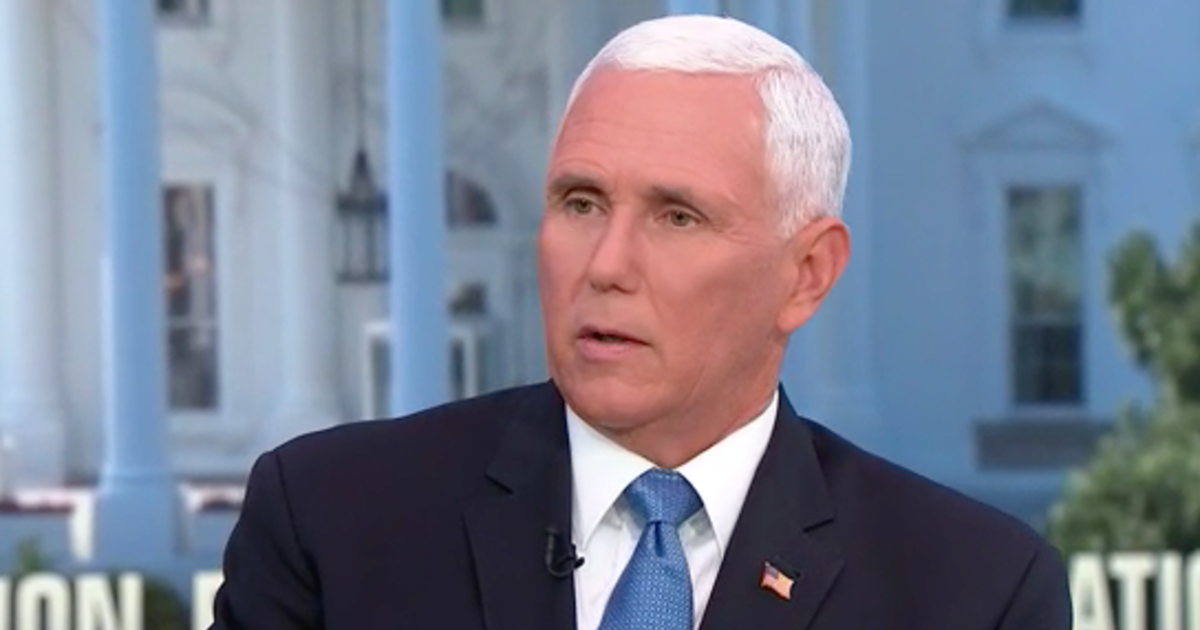
    Pence blames Congress for harsh conditions at migrant child detention centers

    Vice President Mike Pence called the grim conditions in some detention centers for migrant children in U.S. custody “heartbreaking” and “unacceptable,” but said there was little his administration could do to remedy them unless congressional Democrats agreed to sign off on more funding and expand detention space. 

    “We’re doing a lot with what the Congress has given us, but again Congress refused to increase the bed space in the last appropriations bill,” Pence said on “Face the Nation” Sunday. 

    “They continue to delay efforts on additional humanitarian support,” he added. 

    Lawyers this week detailed harsh conditions faced by approximately 250 migrant children — including infants — at an overcrowded Border Patrol station in Clint, Texas. According to the attorneys, older children were taking care of the younger ones. Some young mothers had to wear clothes stained with breast milk. The children also did not have access to soap and toothbrushes, and most had not showered since they crossed the southern border. 

    Border Patrol is supposed to transfer unaccompanied migrant children to the Department of Health of Human Services (HHS) within 72 hours. Lawyers and advocates, however, have documented cases in which some children are being held for longer. 

    Asked if the American people should come to accept these conditions, Pence replied, “absolutely not.”

    Still, he reiterated that he believes the problems in detentions centers stem from what he portrayed as a “refusal” by the Democratic-led House to approve the administration’s multi-billion-dollar request to fund border enforcement, shelters for unaccompanied migrant children and other efforts to deal with the unprecedented surge of Central American families heading towards the U.S.-Mexico border.

    “It’s amazing to think that Mexico has done more to secure our southern border in the last 10 days than Democrats have done in the last 10 years,” Pence said. “The American people deserve better.”

    Republicans and Democrats in Congress are currently negotiating legislation to allocate some of the funds to different agencies, including Border Patrol, that the administration has asked for.

    In a move that was widely seen as preemptive action to prevent talks from falling part, President Trump on Saturday delayed a wave of roundups of undocumented families which immigration authorities were expected to start carrying out Sunday. He nevertheless threatened to order mass deportations unless congressional Democrats agreed to revamp the nation’s asylum laws within two weeks.  

    This content was originally published here.
  • Quantum Computers Could Be True Randomness Generators | WIRED

    Quantum Computers Could Be True Randomness Generators | WIRED

    Say the words “quantum supremacy” at a gathering of computer scientists, and eyes will likely roll. The phrase refers to the idea that quantum computers will soon cross a threshold where they’ll perform with relative ease tasks that are extremely hard for classical computers. Until recently, these tasks were thought to have little real-world use, hence the eye rolls.

    Quanta Magazine

    Original story reprinted with permission from Quanta Magazine, an editorially independent publication of the Simons Foundation whose mission is to enhance public understanding of science by covering research develop­ments and trends in mathe­matics and the physical and life sciences.

    But now that Google’s quantum processor is rumored to be close to reaching this goal, imminent quantum supremacy may turn out to have an important application after all: generating pure randomness.

    Randomness is crucial for almost everything we do with our computational and communications infrastructure. In particular, it’s used to encrypt data, protecting everything from mundane conversations to financial transactions to state secrets.

    Genuine, verifiable randomness—think of it as the property possessed by a sequence of numbers that makes it impossible to predict the next number in the sequence—is extremely hard to come by.

    That could change once quantum computers demonstrate their superiority. Those first tasks, initially intended to simply show off the technology’s prowess, could also produce true, certified randomness. “We are really excited about it,” said John Martinis, a physicist at the University of California, Santa Barbara, who heads Google’s quantum computing efforts. “We are hoping that this is the first application of a quantum computer.”

    Randomness and Entropy

    Randomness and quantum theory go together like thunder and lightning. In both cases, the former is an unavoidable consequence of the latter. In the quantum world, systems are often said to be in a combination of states—in a so-called “superposition.” When you measure the system, it will “collapse” into just one of those states. And while quantum theory allows you to calculate probabilities for what you’ll find when you do your measurement, the particular result is always fundamentally random.

    Physicists have been exploiting this connection to create random-number generators. These all rely on measurements of some kind of quantum superposition. And while these systems are more than sufficient for most people’s randomness needs, they can be hard to work with. In addition, it’s extremely difficult to prove to a skeptic that these random-number generators really are random. And finally, some of the most effective methods for generating verifiable randomness require finicky setups with multiple devices separated by great distances.

    The Google AI lab introduced a 72-qubit quantum processor called Bristlecone in 2018.

    One recent proposal for how to pull randomness out of a single device—a quantum computer—exploits a so-called sampling task, which will be among the first tests of quantum supremacy. To understand the task, imagine you are given a box filled with tiles. Each tile has a few 1s and 0s etched onto it—000, 010, 101 and so on.

    If there are just three bits, there are eight possible options. But there can be multiple copies of each labeled tile in the box. There might be 50 tiles labeled 010 and 25 labeled 001. This distribution of tiles determines the likelihood that you’ll randomly pull out a certain tile. In this case, you’re twice as likely to pull out a tile labeled 010 as you are to pull out a tile labeled 001.

    LEARN MORE

    The WIRED Guide to Quantum Computing

    A sampling task involves a computer algorithm that does the equivalent of reaching into a box with a certain distribution of tiles and randomly extracting one of them. The higher the probability specified for any tile in the distribution, the more likely it is that the algorithm will output that tile.

    Of course, an algorithm isn’t going to reach into a literal bag and pull out tiles. Instead, it will randomly output a binary number that’s, say, 50 bits long, after being given a distribution that specifies the desired probability for each possible 50-bit output string.

    For a classical computer, the task becomes exponentially harder as the number of bits in the string gets larger. But for a quantum computer, the task is expected to remain relatively straightforward, whether it involves five bits or 50.

    The quantum computer starts with all its quantum bits—qubits—in a certain state. Let’s say they all start at 0. Just as classical computers act on classical bits using so-called logic gates, quantum computers manipulate qubits using the quantum equivalent, known as quantum gates.

    But quantum gates can put qubits into strange states. For example, one kind of gate can put a qubit that starts with an initial value 0 into a superposition of 0 and 1. If you were to then measure the state of the qubit, it would collapse randomly into either 0 or 1 with equal probability.

    Even more bizarrely, quantum gates that act on two or more qubits at once can cause the qubits to become “entangled” with each other. In this case, the states of the qubits become intertwined, so that the qubits can now only be described using a single quantum state.

    If you put a bunch of quantum gates together, then have them act on a set of qubits in some specified sequence, you’ve created a quantum circuit. In our case, to randomly output a 50-bit string, you can build a quantum circuit that puts 50 qubits, taken together, into a superposition of states that captures the distribution you’d like to re-create.

    When the qubits are measured, the entire superposition will collapse randomly to one 50-bit string. The probability that it’ll collapse to any given string is dictated by the distribution that is specified by the quantum circuit. Measuring the qubits is akin to reaching blindfolded into the box and randomly sampling one string from the distribution.

    Scott Aaronson, a computer scientist at the University of Texas, Austin, says that random number generation will probably be “the first application of quantum computers that will be technologically feasible to implement.”
    Computer Science Department, University of Texas at Austin

    How does this get us to random numbers? Crucially, the 50-bit string sampled by the quantum computer will have a lot of entropy, a measure of disorder or unpredictability, and hence randomness. “This might actually be kind of a big deal,” said Scott Aaronson, a computer scientist at the University of Texas, Austin, who came up with the new protocol. “Not because it’s the most important application of quantum computers—I think it’s far from that—rather, because it looks like probably the first application of quantum computers that will be technologically feasible to implement.”

    Aaronson’s protocol to generate randomness is fairly straightforward. A classical computer first gathers a few bits of randomness from some trusted source and uses this “seed randomness” to generate the description of a quantum circuit. The random bits determine the types of quantum gates and the sequence in which they should act on the qubits. The classical computer sends the description to the quantum computer, which implements the quantum circuit, measures the qubits, and sends back the 50-bit output bit string. In doing so, it has randomly sampled from the distribution specified by the circuit.

    Now repeat the process over and over—for example, 10 times for each quantum circuit. The classical computer uses statistical tests to ensure that the output strings have a lot of entropy. Aaronson has shown, partly in work published with Lijie Chen and partly in work yet to be published, that under certain plausible assumptions that such problems are computationally hard, no classical computer can generate such entropy in anywhere near the time it would take a quantum computer to randomly sample from a distribution. After the checks, the classical computer pastes together all the 50-bit output strings and feeds it all to a well-known classical algorithm. “It produces a long string that is nearly perfectly random,” Aaronson said.

    The Quantum Trapdoor

    Aaronson’s protocol is best suited for quantum computers with about 50 to 100 qubits. As the number of qubits in a quantum computer passes this threshold, it becomes computationally intractable for even classical supercomputers to use the protocol. This is where another scheme for generating verifiable randomness using quantum computers enters the picture. It uses an existing mathematical technique with a forbidding name: a trapdoor claw-free function. “It sounds much worse than it is,” said Umesh Vazirani, a computer scientist at the University of California, Berkeley, who devised the new strategy along with Zvika Brakerski, Paul Christiano, Urmila Mahadev and Thomas Vidick.

    Imagine a box again. Instead of reaching in and extracting a string, this time you drop in an n-bit string, call it x, and out pops another n-bit string. The box is somehow mapping an input string to an output string. But the box has a special property: For every x, there is another input string y that generates the same output string.

    In other words, there exist two unique input strings—x and y—for which the box returns the same output string, z. This triplet of x, y and z is called a claw. The box, in computer science speak, is a function. The function is easy to compute, meaning that given x or y, it’s easy to calculate z. But if you are only given x and z, finding y—and hence the claw—is impossible, even for a quantum computer.

    Urmila Mahadev, Umesh Vazirani and Thomas Vidick (from left) developed a random number generator by linking cryptography with quantum information processing.
    Jana Asenbrennerova/Quanta Magazine; Simons Institute for the Theory of Computing; Courtesy of Caltech

    The only way you could get at the claw is if you had some inside information, the so-called trapdoor.

    Vazirani and his colleagues want to use such functions not only to get quantum computers to generate randomness, but to verify that the quantum computer is behaving, well, quantum mechanically—which is essential to trusting the randomness.

    The protocol starts with a quantum computer that puts n qubits into a superposition of all n-bit strings. Then a classical computer sends over a description of a quantum circuit specifying the function to be applied to the superposition—a trapdoor claw-free function. The quantum computer implements the circuit, but without knowing anything about the trapdoor.

    At this stage, the quantum computer enters a state in which one set of its qubits is in a superposition of all n-bit strings, while another set holds the result of applying the function to this superposition. The two sets of qubits are entangled with each other.

    The quantum computer then measures the second set of qubits, randomly collapsing the superposition into some output z. The first set of qubits, however, collapses into an equal superposition of two n-bit strings, x and y, because either could have served as input to the function that led to z.

    The classical computer receives the output z, then does one of two things. Most of the time, it asks the quantum computer to measure its remaining qubits. This will collapse the superposition, with a 50-50 chance, into either x or y. That’s equivalent to getting a 0 or a 1, randomly.

    Occasionally, to check on the quantum computer’s quantumness, the classical computer asks for a special measurement. The measurement and its outcome are designed so that the classical computer, with the help of the trapdoor that only it has access to, can ensure that the device answering its queries is indeed quantum. Vazirani and colleagues have shown that if the device gives the correct answer to the special measurement without using collapsing qubits, that’s equivalent to figuring out the claw without using the trapdoor. This, of course, is impossible. So there must be at least one qubit collapsing inside the device (providing, randomly, a 0 or a 1). “[The protocol] is creating a tamper-proof qubit inside an untrusted quantum computer,” Vazirani said.

    This scheme might be faster than Aaronson’s quantum sampling protocol, but it has a distinct disadvantage. “It’s not going to be practical with 50 or 70 qubits,” Aaronson said.

    Aaronson, for now, is waiting for Google’s system. “Whether the thing they are going to roll out is going to be actually good enough to achieve quantum supremacy is a big question,” he said.

    If it is, then verifiable quantum randomness from a single quantum device is around the corner. “We think it’s useful and a potential market, and that’s something we want to think about offering to people,” Martinis said.

    Original story reprinted with permission from Quanta Magazine, an editorially independent publication of the Simons Foundation whose mission is to enhance public understanding of science by covering research developments and trends in mathematics and the physical and life sciences.

    More Great WIRED Stories

    This content was originally published here.
  • Beth Chapman in medically induced coma at Queen’s, family says

    Beth Chapman in medically induced coma at Queen’s, family says

    DENNIS ODA / JAN. 25

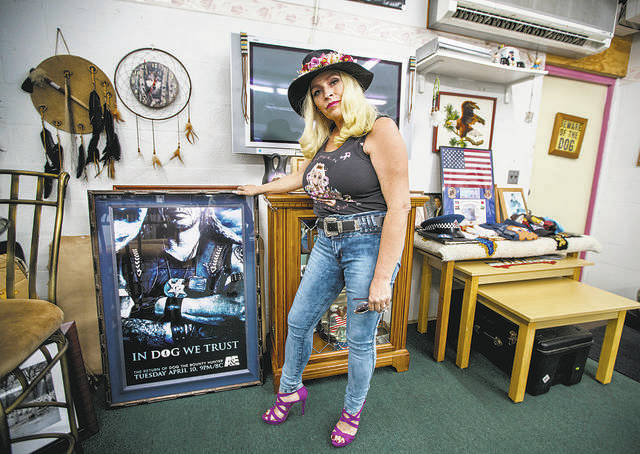
    Beth Chapman, co-owner of Da Kine Bail Bonds, poses for a photo at the business on Queen Emma Street in January. Da Kine Bail Bonds shut down its office and Dog the Bounty Hunter storefront at the end of January.

    Beth Chapman has been admitted to Queen’s Medical Center and is in a medically induced coma in the hospital’s intensive care unit, her husband Duane “Dog” Chapman said.

    According to a statement late Saturday night from the Chapmans’ publicist, only “immediate family” are being allowed access to the reality television star at this time, with the family asking the general public to “please pray for Beth” while also sending “sincere thanks to everyone for their prayers throughout Beth’s battle with cancer.”

    Beth Chapman, 51, was first diagnosed with stage 4 lung cancer in September 2017, and said in November that the cancer had returned despite surgery to remove it.

    In April, she was hospitalized “due to an accumulation of fluid in her lungs” and underwent a procedure to relieve pressure that had built up, according to her family.

    The Chapmans first starred in the reality TV series “Dog the Bounty Hunter,” and most recently appeared together in “Dog & Beth: On the Hunt,” both of which were filmed throughout Hawaii, including the couple’s Da Kine Bail Bonds office on Queen Emma Street. That office, along with a storefront for the Dog the Bounty Hunter shop, shut down at the end of January.

    This content was originally published here.

  • Janet Jackson Breaks Her Silence, Says Michael’s Legacy ‘Will Continue’  | TMZ.com

    Janet Jackson Breaks Her Silence, Says Michael’s Legacy ‘Will Continue’ | TMZ.com

    Janet Jackson has broken her silence amid new allegations against her brother, Michael Jackson, in “Leaving Neverland” — and her message is simple … his rep will be just fine. 

    Michael’s younger sister spoke with The Sunday Times, and addressed what she thought would happen to the King of Pop’s legacy going forward … saying, “It will continue.” Janet went on to say that she still sees Michael’s influence in the world today … a reassuring sign.

    Janet says, “I love it when I see kids emulating him, when adults still listen to his music. It just lets you know the impact that my family has had on the world.” She added, “I hope I’m not sounding arrogant in any way — I’m just stating what it is. It’s really all God’s doing, and I’m just thankful for that.”

    In the interview, Janet did not speak on Wade Robson and James Safechuck‘s specific allegations head-on … but it’s pretty clear where she stands on the issue. According to Billboard, Janet has been playing Michael’s tunes during her concerts without hesitation.

    She’s also defended him in the past, specifically when Jordy Chandler accused Michael of sexual abuse in ’93. At the time, Janet called it a money grab. 

    Other members of Michael’s family have gone to bat for him in the wake of “Leaving Neverland,” calling Wade and James’ claims full-blown lies. His estate is even taking HBO to court for airing the explosive documentary … saying the network violated a decades-old contract they signed with him back in the day, in which it agreed not to disparage MJ.

    Janet’s latest comments come just days ahead of Michael’s 10-year death anniversary. TMZ broke the story … MJ died on June 25, 2009. He was 50 years old. 

    This content was originally published here.

  • Barack Obama and George Clooney Take a Boat Ride in Italian Lake | TMZ.com

    Barack Obama and George Clooney Take a Boat Ride in Italian Lake | TMZ.com

    Barack Obama is continuing his European vacation with a stop in Italy — where he and George Clooney are taking suited-and-booted boat rides together … comfortably, of course.

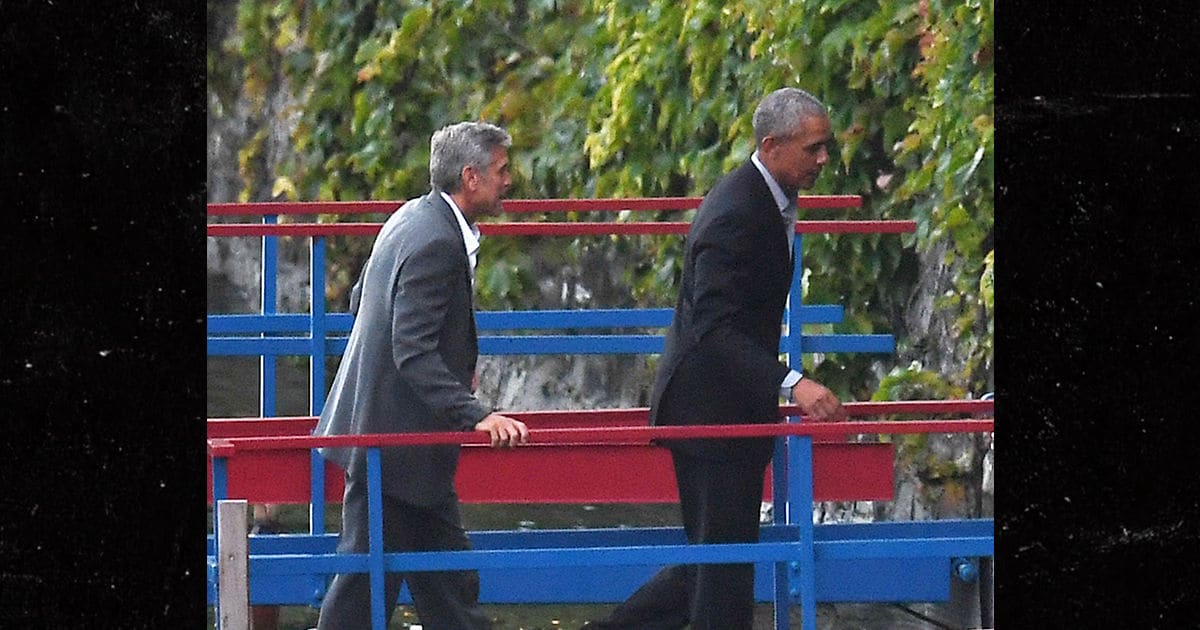
    The former POTUS was spotted getting off a vessel with his actor pal Sunday near a dock on Lake Como in Cernobbio. It’s a gorgeous area at the foot of the Alps — right next to Switzerland’s southern border — and 44 and George were dressed for the occasion.

    Both guys were wearing jackets and dress pants — but neither appear to be rockin’ ties, as their collars are open and unbuttoned. Gotta keep it business caj for those Italian lake views, right? No sign of Michelle, Amal or the kids here … might’ve just been a bro sesh.

    Barack and his fam were seen in the south of France earlier this week, where they grabbed dinner with friends … and Barack showed off his many faces of delight at the table. A few days later, they kept the dream vacay going by hanging out with Bono and co. 

    At this rate, there’s no telling which famous faces the Obamas will be meeting with next. *Checks Rolodex for celebs that stay in Europe* … lots more to come, probably.

    This content was originally published here.
  • These dogs are getting a cancer vaccine. If it works, humans could be next

    These dogs are getting a cancer vaccine. If it works, humans could be next

    If you ask most experts in the cancer community, creating a wide-ranging vaccine that prevents tumors like we prevent infectious diseases is damn near impossible.

    The idea may be tantalizing, but study after study over the last several decades has taught doctors that cancer is personal. Everyone’s looks different on a molecular level. And each tumor is an agile, devious adversary that mutates as it grows to outwit the human immune system.
    “They may be right,” Stephen Johnston says, but “if the chance is 10% that it might work, I can’t see any reason why we shouldn’t take that chance.”
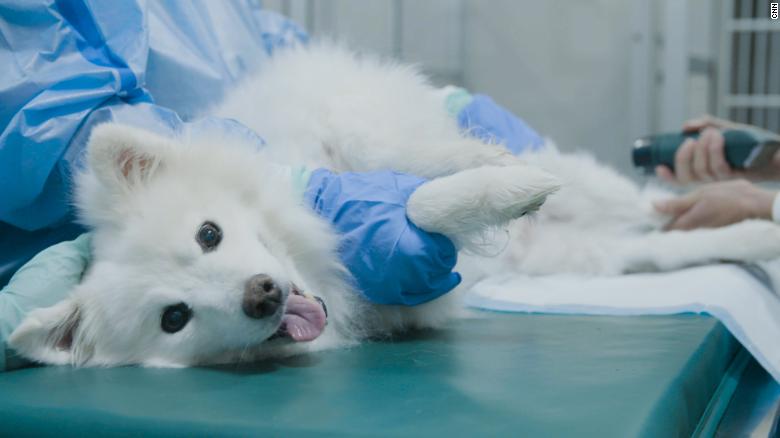
    Johnston isn’t an oncologist. He’s a scientist, inventor and director of Arizona State University’s Center for Innovations in Medicine. He recently launched a clinical trial to test a cancer vaccine in hundreds of dogs across the country. The trial will examine whether the vaccine delays or prevents a variety of cancers in healthy, older dogs. If it’s successful, Johnston says, it could lay the groundwork for developing a similar vaccine for humans.
  • Google Chrome has become surveillance software. It’s time to switch.

    Google Chrome has become surveillance software. It’s time to switch.

    You open your browser to look at the web. Do you know who is looking back at you?

    Over a recent week of web surfing, I peered under the hood of Google Chrome and found it brought along a few thousand friends. Shopping, news and even government sites quietly tagged my browser to let ad and data companies ride shotgun while I clicked around the web.

    This was made possible by the web’s biggest snoop of all: Google. Seen from the inside, its Chrome browser looks a lot like surveillance software.

    Lately I’ve been investigating the secret life of my data, running experiments to see what technology really is up to under the cover of privacy policies that nobody reads. It turns out, having the world’s biggest advertising company make the most-popular web browser was about as smart as letting kids run a candy shop.

    It made me decide to ditch Chrome for a new version of nonprofit Mozilla’s Firefox, which has default privacy protections. Switching involved less inconvenience than you might imagine.

    My tests of Chrome versus Firefox unearthed a personal data caper of absurd proportions. In a week of web surfing on my desktop, I discovered 11,189 requests for tracker “cookies” that Chrome would have ushered right onto my computer, but were automatically blocked by Firefox. These little files are the hooks that data firms, including Google itself, use to follow what websites you visit so they can build profiles of your interests, income and personality.

    Chrome welcomed trackers even at websites you’d think would be private. I watched Aetna and the Federal Student Aid website set cookies for Facebook and Google. They surreptitiously told the data giants every time I pulled up the insurance and loan service’s log-in pages.

    And that’s not the half of it.

    Look in the upper right corner of your Chrome browser. See a picture or a name in the circle? If so, you’re logged in to the browser, and Google might be tapping into your web activity to target ads. Don’t recall signing in? I didn’t, either. Chrome recently started doing that automatically when you use Gmail.

    Chrome is even sneakier on your phone. If you use Android, Chrome sends Google your location every time you conduct a search. (If you turn off location sharing it still sends your coordinates out, just with less accuracy.)

    source