Author: Truth & Hammer

  • The Wonderful Benefits Of Tea Rinses For Your Hair – Black Hair Information

    The Wonderful Benefits Of Tea Rinses For Your Hair – Black Hair Information

    Every 10 minutes it seems a new method or technique of hair care is popularized. Most are just minor adjustments to an older method that may be purported to be better than the original. Very rarely do they live up to the hype.

    However when it comes to tea rinses, there’s is no hype required because they have been used forever by us hair growers most commonly to combat excessive shedding. Personally I am a huge fan of regular black tea rinses but my experience notwithstanding, lets find out some of the other benefits of this easy hair treatment.

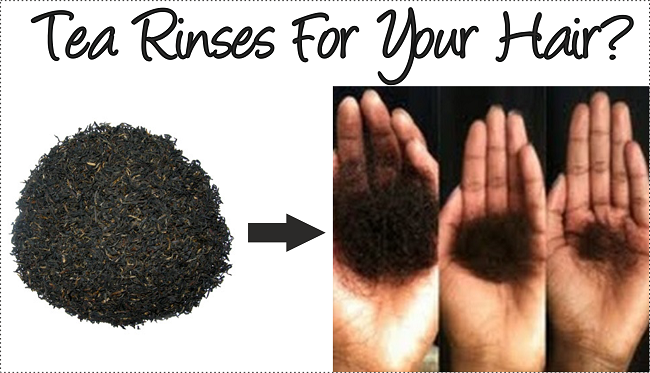
    What is a tea rinse and what are the benefits?

    A tea rinse is done by pouring black, green or other herbal teas over the hair and scalp as part of the wash day routine. The benefits of tea rinses are:

    1. Increased hair growth from the caffeine.

    2. Reduced shedding, again another great side effect of the caffeine.

    3. Some teas are natural astringents which dissolve excess oils on your scalp which means less dandruff.

    4. Some tea rinses restore or brighten your hair color.

    5. Along with the reduced shedding, there have been some reports from women who claim that tea rinses also stop breakage dead.

    What proof is there?

    The makers of the caffeine rich shampoo Alpecin have conducted their own studies showing the growth benefits of their product. Although the internet is awash with articles proclaiming the benefits of tea rinses, I could not find a single independent study looking at topically applied tea on it’s own but it’s a safe bet that with pure caffeine showing an improvement in hair growth and reduced shedding, the same benefits would apply to caffeine rich tea varieties too.

    Still there is information however that too much caffeine can actually stunt hair growth which suggests that high caffeine teas are probably not ideal unless diluted. You will also notice that Alpecin advise their customers to leave the product in their hair for just 2 minutes before rinsing. If you wash your hair multiple times a week, it would also be advisable to do the tea rinse with just one of those washes.

    Types of teas and their benefits:

    Black tea – Has the highest caffeine content so it may not be ideal. Only use black tea if you are going to dilute it.

    Green tea – It has a lower caffeine content and helps combat shedding and soothes the scalp

    Chamomile tea – Accentuates your hair’s natural highlights

    Sage tea – Reduces oil build up on your scalp

    Nettle tea – Prevents dandruff and increases circulation to the scalp which could also benefit hair growth

    Rosemary tea – As with rosemary oil it promotes hair growth and soothes the scalp

    How to do a tea rinse:

    1. Brew 1-3 teabags in 5 cups of hot water and allow to cool. For high caffeine teas stick with just 1 teabag.

    2. Section your hair and twist in preparation for your wash.

    3. You can use a color applicator bottle or a spray bottle to douse your scalp with the tea, I find it easier to pour the mixture through my scalp using a jug.

    4. Let it sit for 2-5 minutes. You can leave caffeine poor tea in for up to 30 minutes if you wish.

    5. Shampoo and DC as usual.

    You may notice that shedding will reduce very quickly thereafter but the hair growth benefits will take a few months to become apparent. As time goes on and more of your strands stay attached to your scalp, you should see a marked increase in the thickness of you hair. Here is a video done by YouTuber Sabrina showing her reduced shedding as a result of tea rinses.

    This content was originally published here.
  • The Perfect Keto Bagel Recipe To Curb Those Morning Carb Cravings

    The Perfect Keto Bagel Recipe To Curb Those Morning Carb Cravings

    Who doesn’t like a nice toasty bagel? Even the thought is enough to elicit fond scent memories of epic weekend brunches. But, given the high carb count and relative lack of nutrition (most are made from refined wheat flour), they may not be part of your regular breakfast rotation—especially if you’re on a keto diet.

    The good news: Bagels are still on the breakfast table—as long as you’re willing to get a little creative. By making strategic ingredient swaps and adding in the appropriate keto-friendly foods, you can still find comfort in your favorite carby flavors and textures without sabotaging your keto goals.

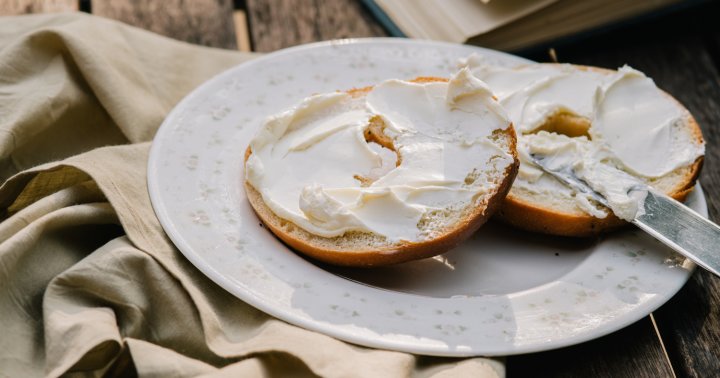
    To prove we’re not bluffing, scroll down for a totally drool-worthy Asiago Rosemary Bagel recipe from the cookbook Keto Gatherings by Kristie Sullivan. While we still consider it somewhat of a treat—after all, most functional nutrition experts recommend formulating your keto diet to be rich in nutrient-rich whole foods and heavy on the veggies—it’s a great way to make weekend mornings feel a little extra special without knocking you out of ketosis.

    This content was originally published here.

  • Miracle or malarkey? Can arm-swinging stave off cancer?

    Miracle or malarkey? Can arm-swinging stave off cancer?

    YouTube video on arm swinging exercise.

    PETALING JAYA: A miraculous treatment for cancer has been found and it apparently involves the simple act of swinging one’s arms repeatedly for prolonged periods of time.

    If science could only prove this to be true, it would certainly spread like wildfire across the world.

    For now, the supposed cancer-curing capabilities of Ping Shuai – literally meaning ‘swing hand’ – Qi Gong are only believed to be fact by the most hardcore proponents of the exercise.

    Whether one believes in the effectiveness of Eastern medicine and health practices or otherwise, it is undeniable that some people swear by them.

    However, the possibility of the placebo effect being hard at work is always lurking in the background. Then again, scientists have discovered the medicinal properties of several herbs that are traditionally used in Chinese medicine.

    Thus, it should be with an open mind when one considers the benefits of Ping Shuai.

    The exercise is said to have been introduced to the East by Master Da Mo, also known as Bodhidharma, a 5th/6th century Buddhist monk.

    It is a rather simple exercise that can be done by both the young and old.

    This is how to do it:

    • Stand with legs shoulder-width apart.

    • With palms facing downwards, raise both arms to chest level.

    • Swing arms in a pendulum-like motion.

    • After every five swings, bend knees slightly and spring up quickly.

    The exercise demands little use of actual strength and on the contrary, encourages relaxation of the body.

    On the surface level, it appears that this exercise does help provide the body with a level of physical activity, and it is simple enough for even the most unfit of persons to do.

    Practitioners of Ping Shuai are encouraged to maintain a healthy, preferably vegetarian diet and avoid acidic foods such as meat.

    Ping Shuai explained

    Qi Gong master, Lee Feng San, expressed his hope that the exercise would become more widespread among the public.

    According to him, the exercise, “improves qi (life energy) and blood circulation through the theory of ’10 fingers connecting the heart.’”

    Ping Shuai, he said, opens all the meridian points (the path through which qi flows) and stimulates the bone marrow to rid toxins from the body.

    The energy flows to the fingertips, then on to the body’s internal organs and brain; opening and unblocking arteries and veins along the way.

    Many have since claimed that their practice of Ping Shuai has cured them of a variety of ailments including eczema and backache.

    There has even been a fantastical but contested claim about the exercise curing a man of cancer.

    The term “correlation does not imply causation” applies quite a bit to the benefits of Ping Shuai.

    It is not necessarily the exercise of arm swinging in particular that brings about a healthy life.

    It is more likely that the combination of physical exercise and a healthy diet simply leads to a stronger immune system; a medically known fact.

    The type of physical exercise, be it running, swimming, jogging or aerobics, would ultimately not matter, as long as it is done consistently and in a safe manner.

    By its nature, Ping Shuai is not harmful and is indeed probably a good form of exercise due to how easy it is.

    Until the day its cancer-curing capabilities are proven, it would not hurt to swing your arms for a bit to try knocking some chub off them.

    This content was originally published here.

  • 16 Amazing Reasons Why You Need To Eat Pineapples

    16 Amazing Reasons Why You Need To Eat Pineapples

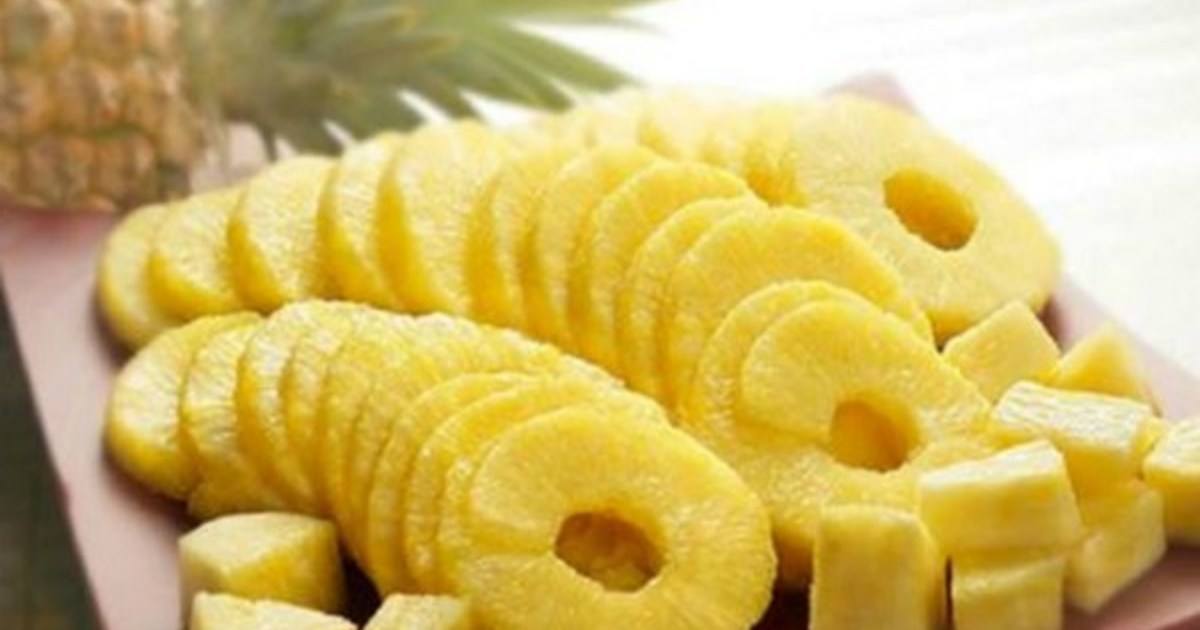
    16 Amazing Reasons Why You Need To Eat More PineapplesDo you eat pineapples regularly?

    If you only whip out the fruit during barbecues and cocktail hour, you’re missing out on a lot.

    Not only are pineapples absolutely delicious, they’re also great for your skin, bones, and digestive tract. And that’s not all!

    Here are 16 reasons to put eat pineapples more often.

    1. It’s Rich in Nutrients

    This tropical fruit is packed with vitamin C, thiamin, vitamin b6, folate, manganese, and copper. Not convinced that you should eat more? Well, pineapple is also packed with niacin, pantothenic acid, magnesium, potassium, and countless other vitamins and minerals (1).

    Sign up for our FREE daily newsletter.
    Get daily health tips and exclusive offers delivered straight to your inbox.

    Enter your email below to sign up.

    We hate SPAM and will NEVER violate your privacy.

    2. It Keeps Your Bones Strong

    Just one cup of pineapple contains 76% of your daily value of manganese. Combined with zinc, calcium, and copper, manganese prevents bone loss caused by osteoporosis (2).

    3. It Helps You Digest

    Eating a few slices of pineapple for dessert can help your digest a meat-heavy meal since bromelain help break down proteins (3). It also fights inflammation in the pancreas to assist with sugar metabolism and reverse diabetes (4).

    4. It Improves Your Smile

    Your dentist probably never you this, but vitamin C is essential for your gums. Vitamin C deficiency is known to cause gum inflammation, bleeding gums, capillary fragility, and eventually, tooth loss (5). Eating more pineapple will strengthen your gums and keep gingivitis, periodontal disease, and other gum conditions at bay (6)!

    5. It Soothes Sore Joints

    Pineapple is so good for your joints that the Arthritis foundation recommends its use to manage joint pain and mobility loss. The fruit works just as well as nonsteroidal anti-inflammatory drugs (like ibuprofen) in treating rheumatoid arthritis (RA) and osteoarthritis (7).

    6. It Regulates Blood Pressure

    Pineapple contains potassium citrate, which has the ability to control blood pressure by counteracting the debilitating effects of excessive sodium consumption (8).

    7. It Prevents Cancer

    Pineapple stem, which can be steeped into a tea, prevents cancer cell proliferation and even induce apoptosis. It’s suggested its active compound, bromelain, can be used as a chemopreventive agent against the notoriously aggressive colon cancer (9).
    The fruit can also act against prostate cancer and researchers believe it may have even more therapeutic uses (10).

    This content was originally published here.
  • MIT Researchers Present Cryptographic System That Secures Almost Anything – CoinWire

    MIT Researchers Present Cryptographic System That Secures Almost Anything – CoinWire

    The Computer Science and Artificial Intelligence Laboratory (CSAIL) at MIT has announced a newly-developed system designed to keep online communication secure by running them through complex mathematical algorithms.

    Called Fiat Cryptography, the code is currently being used to secure about 90 percent of communications sent and received by Google’s Chrome browser.

    Google has since used Fiat Cryptography in its open-source cryptographic library, BoringSSL. The library is being used by a multitude of programs including the Chrome browser and numerous Android apps.

    CSAIL researchers presented their paper on Fiat Cryptography at the EEE Symposium on Security and Privacy in May. CSAIL graduate student Andres Erbsen was credited as first author while fellow grad students Jade Philipoom and Jason Gross were listed as co-authors. They were joined by Adam Chlipala and Robert Sloan.

    Faster than manual encryption

    The code can automatically generate and simultaneously verify optimized cryptographic algorithms for all hardware platforms. Perhaps most notably, this process used to be done by hand as recently as just a year ago, as the technology was deployed at MIT labs last year.

    Researchers first looked for a solution in C programming and assembly languages and then transferred the best-performing algorithms they identified for each architecture to their own code library.

    They then converted programming languages into code using a compiler and proffed them automatically with a mathematical theorem prover called Coq. Each iteration was then tested until the best-performing one is identified for each particular chip architecture.

    The researchers found that their automated process was able to match the performance of the best code manually written by humans and was able to complete it much faster.

    It’s basically like taking a process that ran in human brains and understanding it well enough to write code that mimics that process,” said Chlipala, who along with rest of the research team is working on making their compiler find optimized algorithms even faster.

    This content was originally published here.

  • Trump Is Winning the Little Cold War With Iran

    Trump Is Winning the Little Cold War With Iran

    The small-minded critics of his policy are doing themselves and our Mideast allies no favors.

    BRANDON J. WEICHERT | THE AMERICAN SPECTATOR

    Since the rise of the Islamic Republic of Iran in 1979, Iran has been in a state of ideological, religious cold war against the United States and its allies. Desiring to become the dominant force in the Mideast, Iran has worked to export its particular brand of Islamist revolution beyond its present borders. At the same time, like the Soviet Union with its specific version of Marxist-Leninism, Iran’s leaders have sought to expand their country’s zone of influence and control beyond its current national boundaries, to encompass the entire region — looking at the outside world in Manichean terms: divided between Iran’s Twelver Shiite brand of political Islam and the unbelieving world waiting to be liberated by their green revolution.

    Setting the Mideast Ablaze

    Iran engaged in behavior very similar to that of the old Soviet Union when its fervor for worldwide revolution was at its highest. In his book Setting the East Ablaze: Lenin’s Dream of an Empire in Asiathe incredible Peter Hopkirk details how Soviet agents of influence spread out to the former Russian imperial states in Central Asia with intentions of reabsorbing them into Lenin’s ideological Soviet empire.

    With similar zeal and malign ideological intentions, Iranian agents have (since the start of their regime) moved out beyond Iranian territory, along the axis of half-moon-shaped part of the Middle East in which most of the region’s Shiite Muslims reside — it’s known as the Shia Crescent — and attempted to bring about Iranian-style Islamic revolutions there. The goal has been to expand Iran’s regional reach and increase its power relative to its perceived enemies in the Sunni Arab states, Israel, and the West.

    And, just like the Soviets of yesteryear (and many other autocratic regimes today), the Iranians have assessed that their only path to regime survival is to develop and threaten the world with nuclear weapons. Such a threat cannot — and should not — be ignored. Every American president since 1979 has had to deal with a different Iranian provocation. Despite this quiet, “little” cold war between the West and Iran, though, the United States and her allies have long had the advantage over Iran.

    Obama Unilaterally Disarmed

    Yet, in 2015, the Obama Administration convinced itself that unilaterally disarming in the face of Iranian brinkmanship was the only path to peace and stability in the region. The result of this deal with Iran was not greater stability and security. Instead, it ensured the mad mullahs would be given an easy path to not only nuclear weapons capability, but also a complete integration of Iran into the global economic system!

    Since that time, Iran has become more emboldened to threaten and decrease U.S. power. Since Donald Trump became president, he effectively ended the Obama era agreement and focused on building up not just the American military’s capabilities to deter Iran, but more importantly, the military capabilities of America’s regional allies (the Sunni Arab states and Israel).

    Winning the Little Cold War

    Intuitively recognizing the mini-cold war that Iran has waged upon the United States since 1979, Trump has assiduously worked to replicate the winning strategies from the Cold War and apply them to the conflict with Iran. Oddly enough, his political rivals in the United States continue to belittle his efforts by arguing that he is simultaneously a warmonger and wimp even as they undercut the Administration’s efforts to enhance the ability of our regional partners, such as Saudi Arabia, to resist Iranian aggression in the Mideast.

    Trump’s rivals are the feckless ones.

    Yes, the United States faces an ideological foe ensconced in an apocalyptic version of Shia Islam. No, the United States does not need to rush headlong into another Mideast war that will only erode Trump’s political legitimacy at home and usher in another decade of American weakness abroad. As Victor Davis Hanson has written recently: the United States holds all of the cards in the conflict with Iran. As I have long advocated, the best approach to this ideological war against Iran is through containment, deterrence, and multilateralism — the same tools that the United States effectively used to defeat the Soviet Union’s global threat in the Cold War.

    That’s why it’s strange that, at the same time that tensions with Iran are increasing, the Republican-controlled Senate has voted to terminate a vital arms deal with Saudi Arabia (on vacuous “moral” grounds). They want to invade Iran. But they want the United States to go it alone as we did in Iraq — thereby replicating the mistakes of the previous decade and hastening American decline (whether this is their true goal or not, this is what would happen).

    The recent decision by President Trump not to retaliate for Iran’s idiotic attack on an expensive U.S. drone flying in international waters was a victory for the president’s foreign policy. He alone is walking the dangerous line between war and peace — and winning in the process. Ideological warfare is not necessarily kinetic. It requires other, non-kinetic tools of statecraft. More importantly, it requires alliances with states that are far more threatened by Iran than we are. Also, Trump’s careful balancing act on Iran is pivotal as it allows him to resist a true threat to U.S. interests in the region, while at the same time upholding a key campaign promise not to engage in wasteful Mideast wars.

    In the Cold War, the United States deftly built the institutions of NATO and other multilateral organizations meant to burden-share and to increase the defensive capacities of Europe. Similarly, the Trump Administration has attempted to replicate some semblance (although on a smaller scale) of this policy against Iran in the Mideast.

    If the “Deep State” would get out of the Trump Administration’s way, then it is more than likely an Israeli-Sunni Arab alliance could be solidified and its members would work together to return Iran to its proverbial box, which it had been loosed from during the Iraq War of 2003, while creating some regional stability and enhancing U.S. interests along the way.

    Brandon J. Weichert can be reached via Twitter: @WeTheBrandon.

    This content was originally published here.

  • If you build it, they will come… sometimes | Backyard and Beyond

    If you build it, they will come… sometimes | Backyard and Beyond

    But not always. This wannabe Purple Martin colony waits patiently at the Narrows Botanical Garden. The half dozen bird-shapes are decoys It’s thought that the birds like to see that someone has done some recon. The so-called “scout” phenomenon of martins who arrive weeks in advance of others at a colony is, in explained by this: veteran birds returning to their nesting colony do it faster than the year-olds. Having made it back once, they’re able to do the migration rather quicker in subsequent years. (The oldest Purple Martin on record was 13-years-old.)

    I don’t know of any Purple Martins nesting in Brooklyn. It’s certainly possible to see them passing through during migration. Meanwhile, here’s an established colony on Staten Island. Here’s another at Great Swamp.Meadows, meanwhile, are a very good bet for attracting: pollinators; the creatures that eat pollinators; creatures that eat plants; creatures that lay their eggs on plants. It cascades, it becomes more complicated, it triumphs over the sterile, water-wasting, poison-filled grass lawn.This hillside in Green-Wood is looking good. More than 99% of the place is still grass, though. Gotta start convincing people that life is better than lawn, and Green-Wood that its honeybee hives are a mistake.

    This content was originally published here.

  • Canadian Astronaut David Saint-Jacques Is Returning from Space

    Canadian Astronaut David Saint-Jacques Is Returning from Space

    A week is separating Canadian astronaut David Saint-Jacques from Earth. The astronaut will return to Earth because his mission to the International Space Station is coming to an end. On Wednesday, it was day 199 for Saint-Jacques, and he says that Monday night will return to Earth. Even if the returning to gravity will be painful for the body than living six months in Space, he is excited to go back to his wife and children.

    How Was Saint-Jacques Experience in Space?

    The astronaut says he now knows how to fly, how to do flips, he can now stay upside down, and the sense of gravity doesn’t bother him anymore. The little issue will be here on Earth; he says that he should learn how to walk again. The last moments of his experience in Space will be enjoyed for sure, and he will return with a Russian Soyuz capsule.

    Besides this, Saint-Jacques is saying that he’s trying to soak all in because once he is on Earth, everything will seem like a dream. His first Space mission was with astronaut Anne McClain from NASA and cosmonaut Oleg Kononenko from Russia. The purpose started on December 3, and they arrived with a Soyuz capsule.

    Also, he is officially the first Canadian who stayed in Space that long. Saint-Jacques participated in a six and a half hour spacewalk on April 8, and this one is a highlight for him. He is the first Canadian to walk in Space since 2007 when David Williams has done it. His presence there was useful in many ways; he used the Station’s Canadarm 2, which is a robotic arm, for catching the SpaceX Dragon cargo. This operation was the first time again for a Canadian.

    Finally, the Canadian astronaut David Saint-Jacques is saying that he will miss the view from Space, but he misses a lot more the little pleasures from our planet. He is packing his belongings and could take a small box aboard the Soyuz, the rest of the items will be sent with the Dragon spacecraft.

    The post Canadian Astronaut David Saint-Jacques Is Returning from Space appeared first on Canadian Homesteading.

    This content was originally published here.

  • Hollyhock Plant: Growing & Care Of Hollyhock Flowers (Alcea Rosea)

    Hollyhock Plant: Growing & Care Of Hollyhock Flowers (Alcea Rosea)

    Alcea Rosea [al-KEE-uh, ROH-see-uh] the hollyhock plant is a genus of about 60 species of flowering plants in the Mallow (Malvaceae) family originating from southwestern China and exported to Europe in the 15th century.

    When it became popular in Europe, William Turner, a renowned herbalist of the time, named the plant.

    The Hollyhock plant fits the definition of old-fashioned garden plants.

    They’re closely related to okra, cotton, and hibiscus.

    The plant comes in a wide variety of colors: red, white, blue, pink, yellow, purple, and even black.

    Common Hollyhock Plant Care

    Size and Growth

    Common Hollyhock grows tall with an average height of 6′ – 8′ feet tall.

    It spreads around 1′ – 2′ feet, allow ample room for it to grow properly in your garden.

    The hairy leaves of the Hollyhock are borne in clumps reaching 6″ – 8” inches across.

    Blooms start at the base of the stem and continue to move upward 1′ – 2′ feet.

    This ensures the entire stem is covered in bloom when the growing season starts.

    Hollyhock flowers grow 2″ – 4″ inches in width.

    Flowering and Fragrance

    The Alcea rosea has a two-year life cycle, known as biennial plants.

    Many of the available hollyhock varieties are biennials.

    Depending on the soil and care, it will be annual or a short-lived perennial.

    The first year is spent growing foliage and storing energy.

    The second year or last year flowers bloom in late summer, seeds form, and flower stalks shoot up.

    This species is a hermaphrodite (having both female and male organs).

    It can have spires of single flowers and double flowers.

    They have numerous stamens, and the stalks grow together.

    The large, showy blooms attract hummingbirds, butterflies, and bees.

    They have no particular scent.

    Light and Temperature

    Hollyhock plants need full sun and cannot grow in the shade.

    A warm sunny location sheltered from the wind is ideal.

    The plant is tolerant of the cold, but their flowers can become damaged by frost.

    Seeds of the Hollyhock plant need to be sown from March-June in well-drained soil.

    They should plant in large plug cells, and a pH level of 5.8-6.0 should be maintained.

    For optimum germination, you need 55° – 60° degrees Fahrenheit (13° C – 16° C).

    Germination can take place in up to 8 – 10 days.

    After this occurs, you need a day temperature of about 65° – 70° degrees Fahrenheit (18° C – 21° C) while the night temperature should be 55° – 60° degrees Fahrenheit (13° C – 16° C).

    Watering and Feeding

    Alceas Roseas are heavy feeders and need high maintenance.

    You will need to apply potassium nitrate and calcium at a rate of 75-100 ppm constant feed.

    Don’t allow the soil to dry out since Hollyhocks need the ground to be evenly moist.

    Soil and Transplanting

    Hollyhocks are hardy to USDA Hardiness Zone 6.

    They’re temperamental plants so transplanting is often discouraged.

    They have large tap roots making them a challenge to dig up.

    However, you may be able to do it successfully if you are careful enough.

    Hollyhock seeds shouldn’t be moved until they have at least 4 leaves and the day temperature is more than 50° degrees Fahrenheit (10° C).

    The soil where you plant Hollyhocks should be mixed with clay, sand, and plenty of compost.

    Remove the seedling from its pot gently and crumble the soil from the root ball.

    If it was growing in the ground, use a trowel to dig it out gently.

    Plant Hollyhock seeds in a hole prepared with composted soil and slide the roots of the seedling into it.

    Press the soil down with your hands but don’t cover the crown where the stem meets the roots.

    If you do, the plant will rot.

    Hollyhocks will readily self-seed new plants if not maintained.

    While planting Hollyhock locate them where this won’t be a nuisance.

    Growing Hollyhocks Grooming and Maintenance

    The foliage of the plant needs to be kept trimmed and free from insects.

    Remove any yellow leaves by hand.

    High fertilizer levels also need to be maintained to prevent yellowing of lower leaves.

    Do not use ammonium nitrate, it will produce cabbage-like leaves.

    If proper maintenance isn’t conducted, the foliage becomes unkempt and tattered.

    How to Propagate Alcea Rosea

    Hollyhocks propagate by seed and by division.

    Sow seeds outdoors about a week before the last frost.

    For same year growth, sow throughout the growing season until 2 months before the first expected fall frost.

    In non-blooming seasons, loosen the ground around full-grown plants and pull out the stalks.

    Retain their long roots and place them in water.

    Grow new plants in early spring, they need 4 months to mature, this is key to their summer colors.

    If you missed this year’s spring it may be worth waiting until next spring.

    Pests and Diseases of Hollyhocks

    Anthracnose can damage the foliage, leaf spot, and rust.

    Hollyhock rust is treated with proper ventilation and fungicide.

    Prevent rust by watering from below, providing good air circulation and giving a thorough late fall cleanup.

    Japanese beetles and spider mites feast on the leaves.

    If unprotected from the wind, it needs staking.

    Suggested Alcea Rosea Uses

    Common Hollyhocks provide great architectural height which looks great against old cottage gardens.

    They grow well against fences and walls.

    In herbal medicine, the Alcea Rosea is used as a laxative and emollient.

    It’s often used to control inflammation and bedwetting.

    Some cultures use it as a mouthwash to prevent bleeding gums.

    The young leaves can be eaten raw or cooked.

    They have a mild flavor and textured leaves are desirable.

    Chop them up and throw them in your salad.

    The root has a nutritious starch which is good for your health.

    The petals are often used to make a refreshing tea or extract oil.

    This content was originally published here.

  • The mainstream media was WRONG again with its phony climate change predictions – DC Dirty Laundry

    The mainstream media was WRONG again with its phony climate change predictions – DC Dirty Laundry

    (Natural News) Back in 2008, ABC aired a global warming propaganda series entitled, “Earth 2100” that predicted major calamities to occur all around the world by the year 2015 as a result of climate change. But, wouldn’t you know it? None of the show’s fear-mongering prognostications ever actually came to pass.

    During a recent episode of his radio show, conservative commentator Rush Limbaugh mocked the contents of a trailer for “Earth 2100” that once aired as part of a “Good Morning America” promotion. In it, the on-screen subtitles suggested that past civilizations like the Roman and Mayan empires collapsed, not because of war and conflict, but because of climate change.

    “100 years from now, if New York is abandoned, I picture some explorer coming to Manhattan saying, ‘Those ignorant people! How on earth could they have ever expected to survive?’” one of the film’s “experts” is heard saying during the promo, along with scary music and imagery of the planet dying.

    “We’re running out of oil. We’re running out of water. We’re running out of atmosphere. We’re poisoning the whole planet,” another “expert” declares during the promo, amid graphics of oil wells, deserts, and street pollution.

    You can watch the full clip of the promo below:

    Global warming fear-mongers hilariously claimed that a gallon of milk would be $13, and a gallon of gas more than $9, by 2015

    It’s admittedly difficult to get through this entire promo clip without at least a chuckle, seeing as how the claims made in it are about as credible as Al Gore insisting that the normal tide cycles in Miami are a consequence of global warming-induced rising ocean levels.

    But this is what passes as “science” to deranged climate cultists, many of whom continue to lament that inclement weather patterns must be a result of global warming. Even though the evidence is questionable, at best, in defense of such claims, climate apologists insist that the polar ice caps are melting, polar bears are starving, and everyone is going to die in 12 years unless global climate taxes are forcibly implemented.

    “They were predicting that by 2015 – four years ago – milk would be 13 bucks a gallon, and gasoline over $9 a gallon,” Limbaugh joked on his show. “The video effects show Manhattan half underwater. They show very little of Miami left.”

    Perhaps the worst part of the promo are the clips of young people stating that they’re ‘scared as hell right now’ about climate change destroying the planet – these extreme symptoms of climate anxiety stemming from the doomsday nonsense constantly being peddled by climate lunatics like those featured in the promo.

    “One can hope that suddenly society will realize that it’s on a doomsday path, and change very rapidly,” one such lunatic is heard stating in the video.

    “If we continue on the business-as-usual trajectory, there will be a tipping point that we cannot avert. We will indeed drive the car over the cliff,” laments another.

    “We have a chance to get it right. We have a chance to move in the right direction now. I don’t think that window of opportunity is going to be open for very long,” states yet another, hilariously using infomercial Act Now! marketing tactics to sell the idea to viewers that we must do something immediately if we’re to even have a chance at surviving global warming.

    More than a decade has since passed, however, and we’re all still here – along with the ice caps and polar bears that these crazies said should already have been long gone. Who’s in denial now?

    For more stories like this, be sure to check out ClimateScienceNews.com.

    Sources for this article include:

    This content was originally published here.