Author: Truth & Hammer

  • Commonly prescribed drugs could increase the risk of dementia, says a new study

    Commonly prescribed drugs could increase the risk of dementia, says a new study

    DEMENTIA
    Credit: CC0 Public Domain

    The study, carried out by experts from the University of Nottingham and funded by the NIHR School for Primary Care Research, found that there was nearly a 50% increased risk of dementia among patients aged 55 and over who had used strong anticholinergic medication daily for three years or more.

    Anticholinergic drugs help to contract and relax muscles. They work by blocking acetylcholine, a chemical that transmits messages in the nervous system.

    Doctors prescribe the drugs to treat a variety of conditions, including , bladder conditions, allergies, gastrointestinal disorders and symptoms of Parkinson’s disease.

    These medicines can have short-term side effects, including confusion and memory loss, but it is less certain whether long-term use increases the .

    The research, published in the JAMA Internal Medicine journal and led by Professor Carol Coupland from the University’s Division of Primary Care, looked at the medical records of 58,769 with a diagnosis of and 225,574 patients without a diagnosis of dementia, all aged 55 and over and registered with UK GPs contributing data to the QResearch database, between 1 January 2004 and 31 January 2016.

    The study findings showed increased risks of dementia for anticholinergic drugs overall and specifically for the anticholinergic antidepressants, antipsychotic drugs, antiparkinsons drugs, bladder drugs and epilepsy drugs after accounting for other risk factors for dementia.

    No increased risks were found for the other types of anticholinergic studied such as antihistamines and gastrointestinal drugs.

    Professor Tom Dening, Head of the Centre for Dementia at the University of Nottingham and a member of the research study team, said: “This study provides further evidence that doctors should be careful when prescribing certain drugs that have anticholinergic properties. However, it’s important that patients taking medications of this kind don’t just stop them abruptly as this may be much more harmful. If patients have concerns, then they should discuss them with their doctor to consider the pros and cons of the treatment they are receiving.”

    The 58,769 patients with dementia had an average age of 82 and 63% were women. Each dementia case was matched to five control patients of the same age, sex, and general practice.

    Anticholinergic drug exposure was assessed using prescription information over a complete period of 10 years from 1 to 11 years before diagnosis of dementia or the equivalent dates in control patients, and was compared between the two patient groups. Further analysis looked at prescriptions for anticholinergic drugs up to 20 years before diagnosis of dementia.

    This is an observational study so no firm conclusions can be drawn about whether these anticholinergic drugs cause dementia, and it is possible that the drugs were being prescribed for very early symptoms of dementia.

    Professor Coupland said: “Our study adds further evidence of the potential risks associated with strong anticholinergic drugs, particularly antidepressants, bladder antimuscarinic drugs, anti-Parkinson drugs and epilepsy drugs.

    “The risks of this type of medication should be carefully considered by healthcare professionals alongside the benefits when the drugs are prescribed and should be considered where possible, such as other types of antidepressants or alternative types of treatment for bladder conditions. These findings also highlight the importance of carrying out regular medication reviews.

    “We found a greater risk for people diagnosed with dementia before the age of 80 which indicates that anticholinergic drugs should be prescribed with caution in middle-aged people as well as in older people.”

    These results, along with those of a similar study published in 2018 help to clarify which types of anticholinergic drug are associated with the highest risks of dementia.

    In the 1-11 years before the dementia diagnosis date or equivalent in controls, nearly 57% of cases and 51% of controls were prescribed at least one strong anticholinergic drug, with an average of six prescriptions in cases and 4 in controls. The most frequently-prescribed types of drugs were antidepressants, anti-vertigo and bladder antimuscarinic drugs—which are used to treat an overactive bladder.

    The increased risk associated with these drugs indicates that if the association is causal around 10% of dementia diagnoses could be attributable to drug exposure, which would equate to around 20,000 of the 209,600 new cases of dementia per year in the UK.

    This is a sizeable proportion and is comparable with other modifiable risk factors for dementia, including 5% for midlife hypertension, 3% for diabetes, 14% for later life smoking and 6.5% for physical inactivity.

    Citation: Commonly prescribed drugs could increase the risk of dementia, says a new study (2019, June 24) retrieved 24 June 2019 from https://medicalxpress.com/news/2019-06-commonly-drugs-dementia.html

    This content was originally published here.

  • Apple releasing fifth iOS 12.4 beta today ahead of Apple Card release – 9to5Mac

    Apple releasing fifth iOS 12.4 beta today ahead of Apple Card release – 9to5Mac

    Apple is continuing iOS 12.4 developer and public beta testing with the fifth release coming later today. iOS 12.4 is expected to be the first software update to support Apple Card, the company’s new consumer credit card launching in the US sometime this summer.

    Bloomberg reported last week thast Apple has expanded internal Apple Card testing to include retail employees, vastly growing the test group beyond corporate staff. Today’s new beta release and the recent test expansion suggest that Apple Card likely isn’t coming in June, but perhaps a launch sometime next month is being planned.

    Apple will also release the fourth watchOS 5.3 developer beta for Apple Watch today, although most developers are likely testing Apple’s major software releases coming later this fall: iOS, iPad, and tvOS 13, watchOS 6, and macOS Catalina.

    For more on what’s coming with Apple Card, check out our Apple Card Guide and our latest roundup.

    This content was originally published here.

  • ‘Real-life Loch Ness Monster’ fossil found in Antarctica after 70 MILLION years – World News – Mirror Online

    ‘Real-life Loch Ness Monster’ fossil found in Antarctica after 70 MILLION years – World News – Mirror Online

    Thank you for subscribingWe have more newslettersShow meSee our privacy notice

    The fossil of a giant sea creature that resembles the Loch Ness Monster has been unearthed in Antarctica.

    It took decades for researchers to recover the 70-million-year-old remains of the elasmosaur, which would have weighed as much as 15 tons.

    The creature – with a snake-like head, a long neck like a giraffe and a body similar to that of a manatee – lived during the Cretaceous period alongside the dinosaurs.

    This 40-ft long elasmosaur – found on a small, desolate island off Antarctica – is believed to be the heaviest of its kind, and it is one of the most complete ancient reptile fossils ever discovered on the southernmost continent.

    The aquatic reptile, which had four flippers, was a member of the reptile family elasmosaurid, and the discovery points to a vibrant marine ecosystem just before the mass extinction of dinosaurs.

    Researchers believe the creature belongs to the genus Aristonectes, which was considered an outlier to other elasmosaurs because they have shorter necks and a larger skull.

    Jose O’Gorman, a paleontologist from Argentina, told National Geographic: “For years it was a mystery … we didn’t know if they were elasmosaurs or not.

    “They were some kind of weird plesiosaurs that nobody knew.”

    The fossil was discovered on Seymour Island – close to the northern tip of the Antarctic Peninsula – in 1989.

    Brutally cold weather and logistics meant that it took years for the fossil to be unearthed.

    Researchers could only dig for a few weeks in January and early February every year, and some years they were unable to visit the site at all.


    Mr O’Gorman said: “The weather is one of the problems. The weather controls all. Maybe one day you can work, and the next day you cannot because you have a snowstorm.”

    When the excavation finished in 2017, much of the skeleton had been recovered.

    Mr O’Gorman said the creature’s diet likely included crustaceans and small fish.

    The fossil is now being analysed to learn more about the ancient sea reptile.

    Plesiosaurs been likened to the Loch Ness Monster and some even believe ‘Nessie’ somehow survived when the dinosaurs became extinct.

    Read More

    This content was originally published here.

  • Bill Gates Says Not Challenging iOS his ‘Greatest Mistake’ – The Mac Observer

    Bill Gates Says Not Challenging iOS his ‘Greatest Mistake’ – The Mac Observer

    Bill Gates said that his “greatest mistake” was not challenging iOS and bringing Microsoft into the mobile space. He said that it would have been “natural” for Microsoft to be the main challenger to iOS, but the failure do that cost his firm $400 billion via (Cult of Mac).

    (Image Credit: Frederic Legrand – COMEO / Shutterstock.com)

    Bill Gates: Space For Only One iOS Challenger

    Addressing an audience at venture capital firm Village Global Mr. Gates said:

    In the software world, particularly for platforms, these are winner-take-all markets. So the greatest mistake ever is whatever mismanagement I engaged in that caused Microsoft not to be what Android is. That is, Android is the standard non-Apple phone platform. That was a natural thing for Microsoft to win.

    “It really is winner take all,” Mr. Gates added. “If you’re there with half as many apps or 90 percent as many apps, you’re on your way to complete doom.” He explained that “there’s room for exactly one non-Apple operating system and what’s that worth? $400 billion that would be transferred from company G to company M.”

    This content was originally published here.

  • Council of Europe vs Russia: stay or go?

    Council of Europe vs Russia: stay or go?

    These amendments have been proposed as a potential way out of the current crisis prompted by imposing restrictions on Russian delegation’s rights in 2014-2015 in response to the annexation of Crimea and Russia’s involvement in the conflict in Donbas.

    Russia, in its turn, starting from 2016 refused to participate in the work of the assembly until its delegation’s rights are fully restored and the very opportunity of imposing such sanctions is eliminated, and in 2017 stopped paying its financial dues to the Council of Europe’s (CoE) budget.

    We have reached the point where Russia threatens to leave the CoE and cease to be party to the European Convention on Human Rights.

    The current amendments appear to be a reasonable solution, as they resolve the discrepancy between the provisions of the assembly’s rules of procedure on restrictions of national delegations rights and those of the CoE’s statute on equal participation of member states in making key decisions in the organisation.

    Importantly, the amendments preserve the opportunity of imposing certain restrictions. They are also in line with the decision of the committee of ministers on the matter adopted in Helsinki on 17 May.

    This approach has its pros and cons, but its critics do not propose any alternative options, apart from keeping the status quo.

    It is clear, though, that it cannot be preserved any longer: if the crisis is not resolved this week, there is a high risk of Russia’s pre-emptive withdrawal from the CoE at the end of June.

    Besides, Russian authorities have flagged their participation in the elections of the new CoE secretary general, also scheduled for this week’s session, as an essential condition for staying. The prospect of Russia’s withdrawal should be taken very seriously and not seen as ‘just a bluff’.

    Not adopting any decision this week would likely trigger Russia’s departure from the organisation with all the negative consequences for the Russian public and the CoE as a whole.

    As pointed out by Russian human rights defenders in November 2018, this move would by no means stop massive human rights violations in the country or contribute to the resolution of the conflict in Donbas and the return of Crimea under Ukrainian jurisdiction.

    No more influence?

    Instead, it would have irreversible consequences and eliminate even the existing limited opportunities for the CoE to influence the situation in Crimea and Donbas as well as inside Russia.

    Any sanctions are a tool to achieve some goal, not a goal in itself.

    The goal of introducing restrictions on the rights of the Russian delegation to the PACE was pushing Russia to observe the norms of international law with regard to the annexed Crimea and the conflict in Donbas.

    Five years after, we have to admit that these sanctions have not achieved their goal.

    So, those who really care about compelling the Russian authorities to observe international law should rather focus on finding more effective ways and tools for ensuring that.

    How this can be done?

    First, the continued membership of Russia in the CoE should be actively used by all concerned parties as an opportunity to build up stronger pressure on Russia to ensure implementation of its obligations.

    The PACE should much more actively use all the other tools it has, such as the monitoring procedure, thematic reports and resolutions, posing questions to the committee of ministers and prompting it to apply Article 46 in the cases of persistent non-implementation of judgements of the European Court of Human Rights by Russia.

    These measures should be complemented by other practical tools outside of the CoE, including in bilateral relations with Russia.

    Secondly, the current crisis should lead to an upgrade of the CoE’s toolbox to address grave and systemic violations of the organisation’s norms by its member states.

    Follow-up to the committee of ministers’ suggestion to develop a new procedure for a coordinated response to such situations, including a decision on suspension or expulsion of a member state, should be prioritised.

    Developing the two above-mentioned lines of action would demonstrate that the PACE has not just resorted to a short-term tactical solution to the crisis by allowing an ‘unconditional return of the Russian delegation’ and thus ‘appeasing the aggressor’ but, on the contrary, is working on a long-term stronger strategy of responding to violations committed by Russia, as well as other member states.

    This content was originally published here.

  • Scientists Capture Rare Footage of 12-Foot Giant Squid in Gulf of Mexico – Geek.com

    Scientists Capture Rare Footage of 12-Foot Giant Squid in Gulf of Mexico – Geek.com

    A rare, giant squid made an appearance on camera, delighting scientists who were exploring the deep waters in the Gulf of Mexico for a sighting of the elusive deep-sea creature.

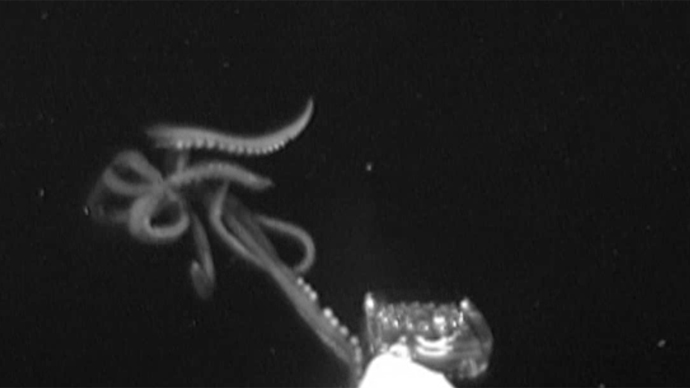
    Researchers working with NOAA’s Office of Ocean Exploration and Research spotted the giant squid just 100 miles off the coast of New Orleans on Wednesday. They identified it in video captured by Medusa, an underwater camera system that features a lighting system designed to mimic a bioluminescent jellyfish.

    The expedition was part of the NOAA Journey into Midnight mission, which is investigating deep, dark areas of the Gulf of Mexico below 3,800 feet, known as the bathypelagic (midnight) zone.

    “We knew immediately that it was a squid. It was also big, but because it was coming straight at the camera, it was impossible to tell exactly how big. But big – at least 3 to 3.7 meters (10 to 12 feet) long,” Duke University Professor Sonke Johnsen and Ocean Research & Conservation Association CEO Edie Widder said in a blog post.

    Squid expert Michael Vecchione at the NOAA National Marine Fisheries Services – National Systematics Laboratory at the Smithsonian later said that he was “nearly certain” that the creature filmed was a juvenile giant squid.

    Footage released by NOAA shows the giant squid approaching Medusa, its tentacles flaring as though it had mistaken the camera for an actual jellyfish and was preparing to attack.

    After beginning to wrap its tentacles around Medusa, the squid appeared to have realized that something was not right and disappeared back into the dark depths of the ocean.

    Researchers of the NOAA Journey into Midnight mission gather around to watch the squid video. (Photo Credit: Courtesy of Danté Fenolio)

    The scientists said previous submersible dives had failed to film giant squid in the Gulf of Mexico.

    “This suggests that the animal does not like the bright lights of ROVs and that stealth monitoring of the sort possible with the Medusa can allow us to see what has never been seen before,” Johnsen and Widder wrote.

    In the blog post, the scientists also wrote that the squid was spotted in an area that was often depicted in old maps as containing “monsters” with warnings to sailors in the area.

    “We did not find a monster. The giant squid is large and certainly unusual from our human perspective, but if the video shows anything of the animal’s character, it shows an animal surprised by its mistake, backing off after striking at something that at first must have seemed appealing but was obviously not food,” Widder and Johnsen said.

    They added: “Our perspective as humans has changed. What were once monsters to be feared are now curious and magnificent creatures that delight. We like to feel that science and exploration has brought about this change, making the world less scary and more wondrous with each new thing we learn.”

    Recovering the Medusa camera. (Photo Credit: Courtesy of Dante Fenolio)

    The giant squid remains largely a mystery to scientists despite being the biggest invertebrate on Earth, according to National Geographic. The largest of these elusive giants ever found measured 59 feet in length and weighed nearly a ton.

    Giant squid, along with their cousin, the colossal squid, have the largest eyes in the animal kingdom, measuring some 10 inches in diameter, National Geographic said.

    Their inhospitable deep-sea habitat has made them uniquely difficult to study, and almost everything scientists know about them is from carcasses that have washed up on beaches or been hauled in by fishermen.

    But in 2004, researchers in Japan took the first images ever of a live giant squid. And in late 2006, scientists with Japan’s National Science Museum caught and brought to the surface a live 24-foot female giant squid. In 2012, a research team collaborating with the Discovery Channel spotted another giant squid and filmed it in its natural habitat thousands of feet beneath the surface. Now, scientists have filmed the elusive giant squid — and in America’s “backyard,” too.

    More on Geek.com:

    This content was originally published here.

  • Mood neurons mature during adolescence

    Mood neurons mature during adolescence

    Mood neurons mature during adolescence
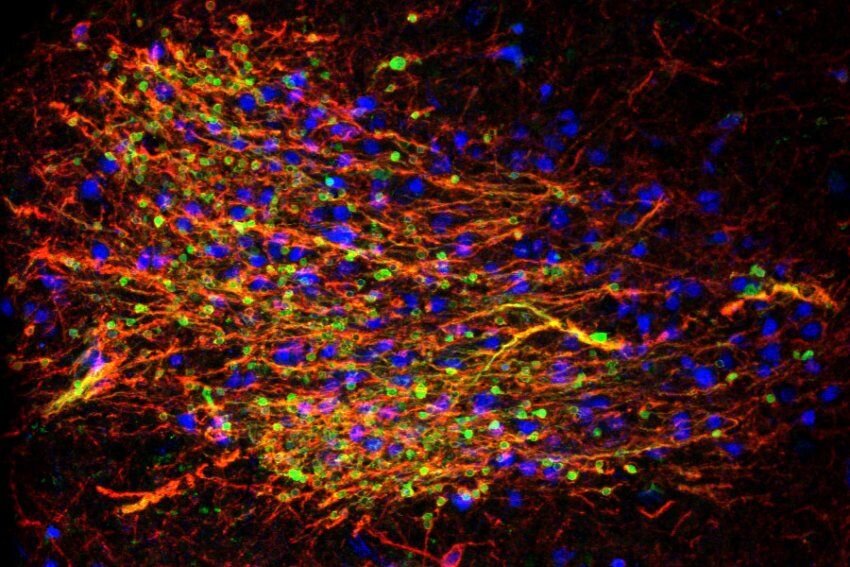
    Immature amygdala neurons (green and red) in a 13-year-old brain. As the brain’s mood circuits mature during adolescence, most of these cells would be replaced by mature neurons (blue). Credit: Alvarez-Buylla lab / UCSF

    Researchers have discovered a mysterious group of neurons in the amygdala—a key center for emotional processing in the brain—that stay in an immature, prenatal developmental state throughout childhood. Most of these cells mature rapidly during adolescence, suggesting a key role in the brain’s emotional development, but some stay immature throughout life, suggesting new ideas about how the brain keeps its emotional responses flexible throughout life.

    “Most have matured far beyond this stage by the time you are born,” said study lead author Shawn Sorrells, Ph.D., a former UCSF researcher who is now assistant professor of neuroscience at the University of Pittsburgh. “It’s fascinating that these are some of the very last cells to mature in the , and most do so during puberty, precisely when huge developments in emotional intelligence are going on.”

    The is an almond-shaped brain structure located deep in the brain’s temporal lobes (you actually have two, one on each side of the brain) that plays a key role in learning appropriate emotional responses to our environment. During childhood and adolescence—long after most of the rest of the human brain is finished growing—the amygdala continues to expand by as many as two million , a late growth spurt that researchers believe is likely to play a key role in human , and which may go awry in . For example, this expansion is absent in children with autism, and mood disorders that frequently emerge in adolescence, such as depression, anxiety, bipolar disorder, and post-traumatic stress disorder (PTSD), have also been linked to problems with amygdala development.

    Recent studies had detected a unique group of immature neurons in a region of the amygdala called the paralaminar nuclei (PL), which could help explain the amygdala’s rapid growth, but researchers had little idea where these cells came from or what role they play in mature brain circuits—even whether they are excitatory or inhibitory, the two main functional classes of neurons.

    In the new study, published June 21, 2019, in Nature Communications, researchers from the lab of Arturo Alvarez-Buylla, Ph.D., the Heather and Melanie Muss Endowed Chair and Professor of Neurological Surgery and a member of the Eli and Edythe Broad Center of Regeneration Medicine and Stem Cell Research at UCSF, set out to understand the identity of these cells and their role in the amygdala’s rapid growth during childhood.

    The researchers examined postmortem human amygdala tissue from 49 human brains—ranging in age from 20 gestational weeks to 78 years of age. Using both anatomical and molecular techniques to classify individual neurons’ maturity and function within neural circults, they found that the percentage of immature cells in the PL region of the amygdala remains high throughout childhood, but declines rapidly during adolescence: from birth to age 13, the number of immature cells declines from approximately 90 percent to just under 70 percent, but by the end of adolescence, only about 20 percent of PL cells remain immature.

    Based on quantification of neurons in different stages of development coupled with analysis of gene expression patterns in individual neurons extracted from PL, the researchers showed that as the immature cells disappear, they are replaced by mature excitatory neurons—suggesting that the cells have taken their place in the amygdala’s maturing emotion processing circuitry. Since this is the first time these neurons have been clearly studied, scientists don’t know exactly what function the neurons serve, but the timing of their maturation suggests they may play a role in the rapid emotional development that occurs during human adolescence.

    “Anyone who’s met a teenager knows that they are going through a rapid and sometimes tumultuous process of emotional learning about how to respond to stress, how to form positive social bonds, and so on,” Sorrells said. “At the same time, adolescence is when many psychiatric disorders known to involve the amygdala first manifest, suggesting that perhaps something has gone wrong with the normal process of emotional and cognitive development—though whether these cells are involved is a matter for future study.”

    Notably, the researchers also found that some immature neurons appear to remain in the amygdala throughout life, and were even found in one 77-year-old brain. These results were in stark contrast to the hippocampus—a nearby structure in which the authors recently found that newborn and immature neurons completely decline to undetectable levels by adolescence.

    Mood neurons mature during adolescence
    Researchers found that the percentage of immature cells in a region of the amygdala remains high throughout childhood, but declines rapidly during adolescence. Immature (green and blue) and mature (red) amygdala neurons in a 13-year-old brain. Credit: Alvarez Buylla lab / UCSF

    “This is consistent with what we have seen before: that immature neurons are vanishingly rare in the adult hippocampus, but they do appear to persist in the amygdala,” Alvarez-Buylla said. “As far as we can tell, these cells aren’t being born throughout life, but seem to be maintained in an immature state from birth, though we can’t say this for sure given the techniques we’ve used here.”

    In other animals, such as mice, new neurons continue to be born throughout life in the memory-forming hippocampus—and possibly at low rates in the amygdala—which researchers believe allows the brain to continuously rewire neural circuits to adapt to new experiences and environments. Following on the authors’ 2018 study showing that the birth of new neurons declines in the human brain during childhood and is very rare or absent in adults, the new study suggests that the human brain may maintain reserves of immature neurons throughout life, using these “Peter Pan” cells in a similar manner to the neurogenesis seen in other species—as new cells to be called on as needed to keep the brain’s emotional responses flexible and adaptable into old age.

    “You could imagine these let the brain continue to sculpt the structure of neural circuits and their growth once you are out in the world experiencing what it’s like,” Sorrells said. “Of course, that’s just speculation at this point—one of the fascinating questions these findings open up for future study.”

    Neurogenesis Debate: New or Long-Lived Immature Neurons?

    Whether new neurons are born in the adult primate or human remains controversial. In 2018, Alvarez-Buylla, Sorrells and colleagues published results of the most rigorous search yet for new neurons in the human hippocampus, and they found that the birth of new neurons declined rapidly in childhood and was undetectable in adults.

    Subsequently, other groups published data that appears to show newborn neurons in the adult human hippocampus, but Alvarez-Buylla and colleagues believe these studies rely too strongly on a small number of molecular markers for newborn neurons. They have shown that these markers can also be found in fully mature neurons and in non-neuronal cells called glia—which are known to continue dividing throughout life.

    “Identifying new neurons is technically very challenging,” Alvarez-Buylla said. “It’s easy to forget that the molecular markers we use to identify particular molecules are not produced for our benefit—cells are using these molecules for their own biological needs, which are always going to be messy from the perspective of someone looking for simple classification. This is why we have endeavored to examine as many lines of evidence as possible—not just molecular markers but also cells’ shape and appearance—to make sure we are confident in what types of cells we are actually looking at in these analyses.”

    The new study in the amygdala uses comprehensive single-cell gene expression techniques to sensitively detect immature neurons based on multiple lines of molecular evidence, and reinforces the group’s earlier findings in the hippocampus—showing that the precursors that divide to give birth to new neurons disappear within the first two years of life in the human amygdala, and that most immature neurons disappear during adolescence.

    “Single-cell sequencing not only clearly identifies these long-lived immature neurons, but also shows that they express many developmental genes involved in axon development, synaptogenesis, dendrite morphogenesis, and even neuronal migration,” Sorrells said. “These cells could be erroneously assumed to be newborn neurons, but based on our developmental perspective, and the fact that we see few dividing present nearby, it looks as though they are already present at birth and decline throughout life.”

    This content was originally published here.
  • Did a Nuclear Bomb in Philippines Sea Cause Earthquake?

    Did a Nuclear Bomb in Philippines Sea Cause Earthquake?

    Could a One-Megaton Nuclear Bomb that was lost in the Philippines Sea have caused a earthquake and a tsunami?

    Last week we published an article about a One-Megaton Nuclear Bomb that was lost in the Philippines Sea, this got a friend of ours thinking if it could have caused as earthquake if it went off.

    Doing some research he discovered that there was an earthquake not far from where the nuclear bomb was lost and it happened 2 years 5 months after the bomb was lost.

    We are by no means saying that the earthquake was caused by the nuclear bomb we are just exploring the possibility.

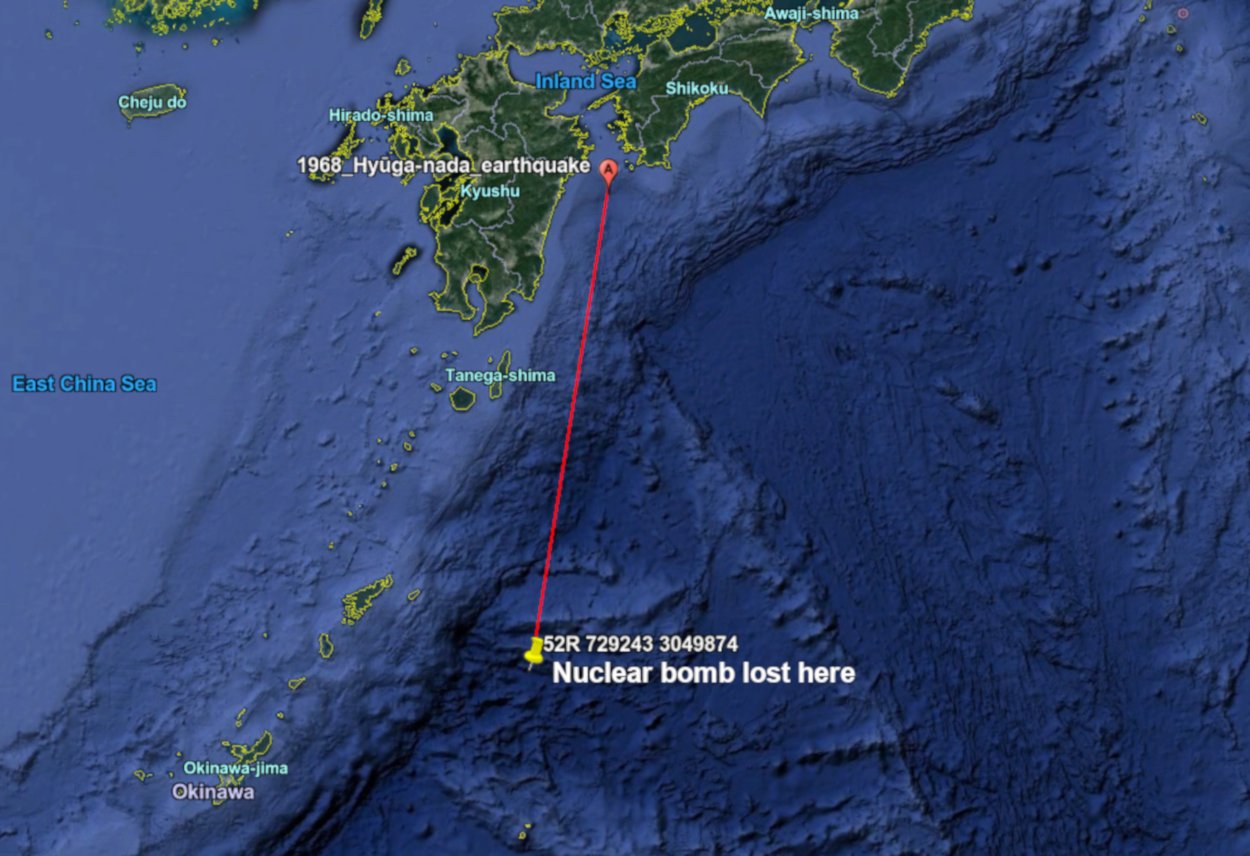
    The earthquake was the 1968 Hyūga-nada earthquake off the islands of Kyushu and Shikoku, Japan.

    OK there are a lot of earthquakes around Japan so it could just be coincidence that it was close to where the nuclear bomb was lost, however the Hyūga-nada earthquake was unique in the fact it was the strongest ever earthquake recorded in the Hyūga-nada Sea region.

    If you look at the image you will see how close the bomb was to the centre of the Hyūga-nada earthquake.

    It would have been seen on the surface

    You might think that if the bomb had exploded it would have been seen on the surface of the sea. It was something we also thought but after some research we discovered it would be unlikely to brake the surface.

    The bomb was or is at a depth 4,938 metres (16,200 feet) below the Philippines sea. At that depth the water pressure on it would be 500 atmospheres equal to 7347 pounds of force per square inch (psi).

    A Nuclear explosion from a One-Megaton Nuclear Bomb produces a blast of 50 psi. So the water pressure is far greater that the pressure from the blast.

    The deepest we could find a nuclear weapon had been tested at was at 1,000 metres so they have never been tested at 5,000 feet.

    Underwater tests

    What underwater tests have discovered is that when a nuclear explosion happens in deep water it forms a flattened gas bubble, this happens because water can not be compressed so it pushes the water out to the sides.

    The gas bubble rises but then the pressure of the water above it forces it back down causing it to bounce of the seabed so it rises again. This bouncing happens many times but loses force with each bounce.

    With so much pressure above the blast most of the force would go into the seabed, add to that the energy from the gas bubble bouncing and it puts a huge amount of pressure on the seabed.

    If you follow a line from where the nuclear bomb was last to where the earthquake happened you will notice underwater cliffs. The force of the water being pushed sideways by the gas bubble would hit these cliffs and spread north. When it gets to near where the 1968 Hyūga-nada earthquake happened you will notice there is a curve which would trap most of the force of the water being pushed by the gas bubble, putting a huge amount of pressure on the underwater cliff at that point.

    Can a nuclear explosion cause an earthquake?

    This is an interesting question. At the time when America was carrying out nuclear tests the experts said a nuclear explosion could not cause an earthquake. However now it is North Korea carrying out nuclear tests experts claim that the tests carried out by North Korea are causing earthquakes.

    So that is not much help because the answer of the experts seem to be more down to agenda than it is down to facts.

    What does seem to be sure is a nuclear explosion can not move tectonic plates, it is the movement of tectonic plates that causes most earthquakes.

    We also know that fracking can cause earthquakes, at first they thought fracking only caused small earthquakes, but new research is showing that they can be quite large and damaging.

    Scientific and government research indicates that fracking can cause earthquakes in two ways:

    1. Primarily, during the fracking process: “[Earthquakes] were caused by fluid injection during hydraulic fracturing in proximity to pre-existing faults.”

    2. Secondarily, via the disposal of fracking wastewater via underground injection.

    We would presume that a nuclear explosion at nearly 5,000 metres deep would do much the same as fracking, it would force water deep into the earth. Also the gas bubble bouncing would also be forcing water at great pressure into the earth.

    If the Earthquake was caused by a bomb they would have known

    In this case they would not have known because only the Americans knew there was a nuclear bomb there. It was not until 1989 the Americas owned up to the fact they had lost a nuclear bomb.

    So the only people that could know if it was caused by a nuclear explosion would be America and they would have been unlikely to own up.

    We are not saying that the 1968 Hyūga-nada earthquake was caused by the lost nuclear bomb we are just exploring the possibilities.

    This content was originally published here.
  • Certain cells secrete a substance in the brain that protects neurons

    Certain cells secrete a substance in the brain that protects neurons

    Certain cells secrete a substance in the brain that protects neurons, USC study finds
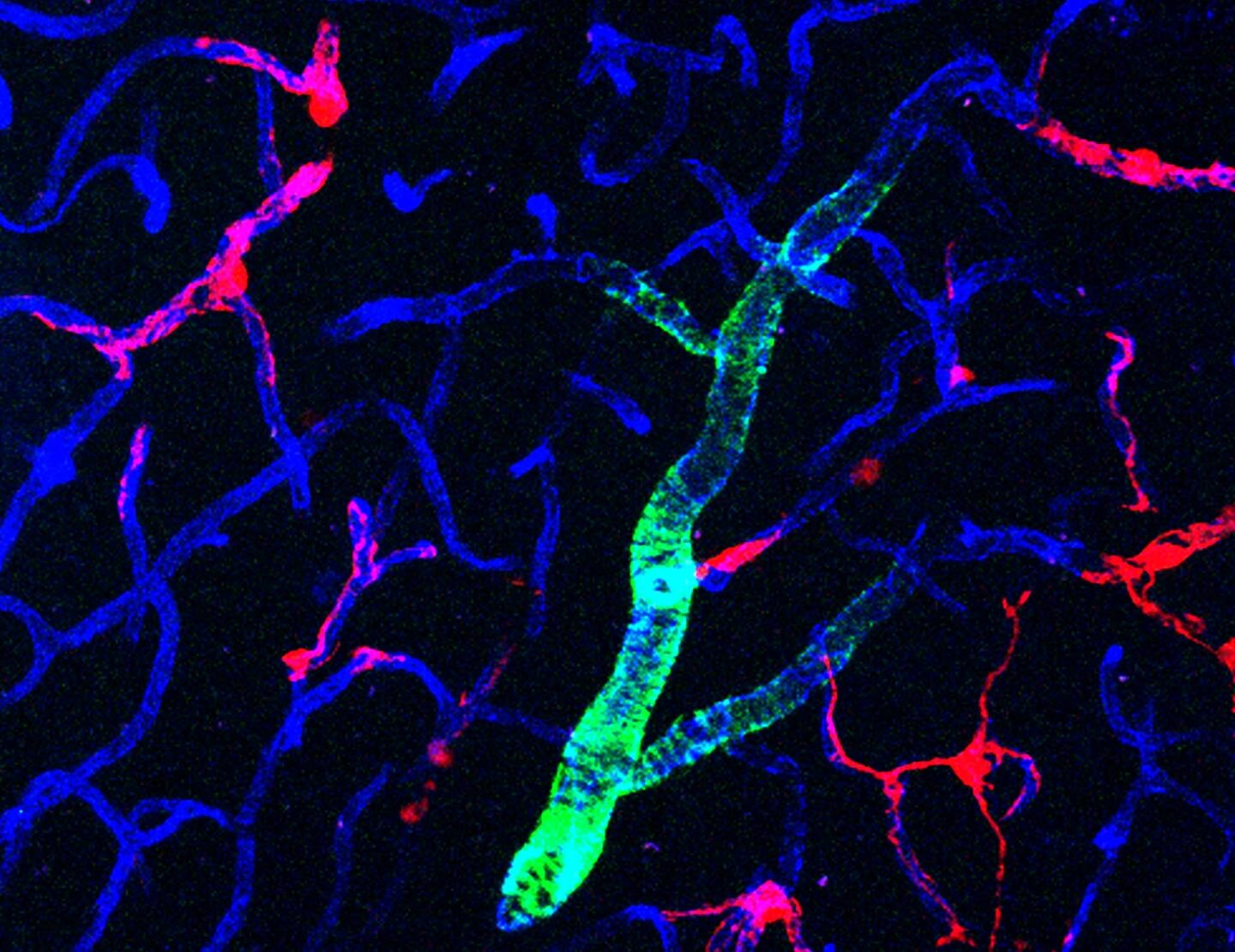
    This image depicts capillaries in a mouse brain. Pericytes are labeled with a fluorescent red protein. Credit: A. M. Nikolakopoulou – Zlokovic Lab

    USC researchers have discovered a secret sauce in the brain’s vascular system that preserves the neurons needed to keep dementia and other diseases at bay.

    The finding, in a mouse model of the human , focuses on specific cells called pericytes and reveals that they play a previously unknown role in brain health. Pericytes secrete a substance that keeps neurons alive, even in the presence of leaky blood vessels that foul brain matter and result in .

    The study, which appears today in Nature Neuroscience, helps explain the cascade of problems that lead to neurodegeneration after stroke or , as well as in diseases like Alzheimer’s and Parkinson’s—and suggests a potential strategy for therapy.

    “What this paper shows is if you lose these vascular cells, you start losing neurons. The link with neurodegeneration was really not that clear before,” said senior author Berislav Zlokovic, director of the Zilkha Neurogenetic Institute at the Keck School of Medicine of USC.

    The discovery comes at a time when scientists are beginning to understand Alzheimer’s disease as the result of multiple processes that begin long before memory loss sets in. Many researchers are shifting their focus from the amyloid plaques that accumulate in the brain later in life toward other targets earlier in the timeline.

    Zlokovic, for example, studies the layers of cells that make up blood vessels in the brain. His previous research shows that the more permeable, or leaky, a person’s brain capillaries, the more cognitive disability they have.

    For this new experiment in mice, Zlokovic zeroed in on pericytes in the brain’s . Pericytes help regulate blood flow and keep blood vessel walls sealed tight. When researchers artificially removed pericytes, they saw rapid degeneration of the blood-brain barrier, a slowdown of blood flow and the loss of brain cells.

    To further understand the role of pericytes, the scientists infused mice with a protein, or , secreted by pericytes in the brain and not found elsewhere in the body. They found that, even with pericyte cells artificially removed, the growth factor protected neurons and the brain cells didn’t die. The results persisted even with constricted .

    Because these pericytes are implicated in many diseases—including Huntington’s, Parkinson’s, stroke, brain trauma and —the research offers intriguing possibilities for further investigation.

    “This opens up an entirely new view of the possible pathogenesis of Alzheimer’s disease,” Zlokovic said.

    This content was originally published here.

  • Tribune Editorial: Let Utah’s uranium dreams decay

    Tribune Editorial: Let Utah’s uranium dreams decay

    Ready for another uranium boom?

    News that the Trump Administration may require the U.S. nuclear industry to use at least 25% American uranium is raising prospects and suspicions in southern Utah.

    The reason given for this change is that it’s a matter of national security. The United States currently imports about 95% of uranium used in its nuclear power plants — including from Russia and China. A halt or reduction in imports could leave the nation vulnerable, the argument goes.

    That would be more convincing if uranium was rare. But it’s mined across the globe. No single nation can control the market or decide who gets supplied.

    The real reason is a familiar one: propping up a domestic industry with protectionism. The price of uranium has been flat or falling in recent years, and U.S. companies have shut down production. The 25% requirement would instantly quadruple the demand for U.S. yellowcake.

    If that happens, we could see new life in old mines and mills in southeastern Utah — including near Bears Ears National Monument.

    We have been here before, and we should know what to expect. Once again, the benefits will be fleeting. And, once again, the price will be paid long after the reward is spent.

    In the 1950s, Moab became known as “the uranium capital of the world,” a speculative boom that was followed by the inevitable bust in the 1960s as the fantasy of a nuclear future was replaced by reality. Utah’s uranium industry has had a few ups but mainly downs ever since.

    Same for Utahns who have worked in the industry. Uranium is radioactive. It sends out particles and gamma rays in numbers that disrupt biological life. The stuff is poison, and miners have to dig it out of the ground before mill workers concentrate it to make it more useful, and more hazardous. The federal government has compensated thousands for earlier mistakes. Radioactive waste remains a hazard across southeastern Utah.

    For those willing to live dangerously in the name of prosperity, the cash flow would be brief, if it flows at all.

    This is a widely available commodity being propped up by one president who may not be around in two years. If an honest market is allowed to return for U.S. nuclear plants, we’ll be in bust times again.

    Even in our carbon-conscious era when nuclear energy is getting a second look, the uranium game is still for gamblers. And the odds look worse in a region now known more for its splendor than its isotopes.

    Fool us twice? Shame on us.

    This content was originally published here.