Author: Truth & Hammer

  • Bonsai Master Masahiko Kimura Takes The Craft To A Whole New Level By Creating Gravity-Defying Mini Forests

    Bonsai Master Masahiko Kimura Takes The Craft To A Whole New Level By Creating Gravity-Defying Mini Forests

    Masahiko Kimura, not to be confused with the famous Japanese judoka of the same name, is a world-renowned bonsai master. Born in Saitama, Japan on March 31, 1940, his exceptional sculpting and styling technique later gave him the title “Magical Technician of Kindai Shuppan”. He started his career as a bonsai artist at the age of 15. It all began when he served as an apprentice to a bonsai master named Motosuke Hamano in Toju-en Bonsai Garden. After eleven years of working under Hamano, he decided to pursue the craft on his own. Since then, he has created many masterpieces that are considered the best in the world. But his latest creation, the Hinoki forest that features gravity-defying mini forest, is his most stunning piece so far.

    Bonsai (Japanese term for planting in a container), is an art form involving cultivation techniques to yield small trees that mimic the scale and shape of full size trees. The Japanese tradition of producing artificially dwarfed trees dates back over a thousand years. And is still a popular horticulture technique up to this day, not only Japan but also in many different parts of the world. For centuries, bonsai artists have strictly adhered to the conventional rules of traditional bonsai making. Masahiko Kimura, on the other hand, chose to create his own path by creating his own style and design.

    His unconventional bonsai creations have stirred controversy at first. Deemed by some traditionalists as a non-conforming artist, Kimura continued to break the traditional rules of bonsai making. Typically, the art involves cultivating a single tree or shrub planted on a container. Instead of planting just one miniaturized tree, Kimura brilliantly created a mini-forest sprouting from a slanted deadwood. He has produced and sold several versions of the Hinoki Forest. But the original version, which he created more than 20 years ago, still sits proudly in his garden. His garden is located in Omiya, Japan and is open to the public upon request.

    Take a virtual tour to the bonsai garden of Masahiko Kimura in Omiya, Japan

    The exceptional bonsai techniques of Masahiko Kimura have enthralled many bonsai artists from all around the world. In order to share his unique cultivation techniques, he offered demonstrations and workshops within and outside Japan. His works have been featured in various major publications around the globe. Since 1988, he has been garnering prestigious awards and has gained a number of apprentices coming from different countries. His students include Marco Invernizzi, Ryan Neil, Salvatore Liporace, Marc Noelanders, and Ernie Kuo who all later became bonsai masters in their own rights.

    Learn more about the world-renowned bonsai master in this 2016 interview

    This content was originally published here.

  • Bentley’s car of the future is so luxurious, it’s self-chauffeured

    Bentley’s car of the future is so luxurious, it’s self-chauffeured

    For Bentley Motors Ltd., the future of luxury driving combines electric motors, artificial intelligence and the scent of moss and sandalwood.

    In honor of its 100th anniversary, the maker of the official car of Queen Elizabeth II unveiled the EXP 100 GT concept, sketching a vision that fuses self-driving technology with interior comforts featuring special scents, wood from naturally fallen trees and seats made from wine-making leftovers.

    The car skips past the looming Brexit struggles for the British brand — a unit of Germany’s Volkswagen AG — to offer a glimpse of luxury driving sometime around 2035. Featuring an electric drivetrain that can go as far as 700 kilometers (435 miles) on a single charge, the fully-autonomous car can switch into driving mode on-demand.

    In an era when every car could be its own chauffeur, elite automotive brands are trying to find a new way to define luxury. In 2015, Mercedes-Benz presented a concept car with open-pore walnut wood and ice-white leather that featured front seats that can swivel to the rear to create self-driving luxury lounge. BMW AG’s Rolls-Royce presented a prototype in 2016 with dramatic styling that made the body appear to float above the road and door and roof panels that retract for elegant access.

    ‘Sense of Occasion’

    Bentley’s offering, which measures 2.4 meters (7.9 feet) across, has doors pivoting outwards and upwards “adding to the sense of occasion on arrival,” it said.

    At the EXP 100 GT debut event, held Wednesday at Bentley’s headquarters in Crewe, England, Chief Executive Officer Adrian Hallmark called the concept an embodiment of the brand’s promise to deliver “extraordinary journeys“ to customers for 100 years to come.

    “It is a grand tourer designed to enrich and enhance the journey for the lucky people who have one,” he said.

    The car incorporates now-emerging technologies such as hand-gesture controls and seats that sense the “biometric mood“ of the driver, automatically adjusting everything from drive style to interior lighting, sound levels and fragrance.

    The zero-emissions grand touring coupe has an even-more-massive-than-before silver matrix grille and Bentley’s signature round diamond-cut headlights. A three-dimensional horseshoe-shaped OLED taillight configuration blends with the precise lines of its angular sides and trunk. Fiber optics are woven into sustainable fabrics inside the interior, allowing for mood lighting throughout. The roof is a full glass canopy.

    “We are using light as a precious material,“ said Stefan Sielaff, the lead designer.

    Bentley hasn’t committed to producing the car for sale. If it did, it would be the fastest Bentley ever made, traveling 0 to 60 mph in less than 2.5 seconds, with a top speed of 186 mph. A charge to 80 per cent of total battery power would take 15 minutes.

    Near-Term Challenges

    Making the journey into the new automotive era poses a challenge for Bentley. The brand, which plans to offer more hybrid variants within four years, built its reputation on catering to well-heeled customers with sporty sedans and coupes powered by combustion engines, traditionally with 12 cylinders.

    The strain to lower emissions and the uncertainty of Brexit are adding to pressures to turn around Bentley. The unit suffered technical problems that hit the changeover of its popular US$220,000 Continental GT model, triggering a loss last year. The brand swung back to a profit in the first quarter.

    To minimize the disruption of a no-deal Brexit, the company boosted stock of vital components to as many as 10 days from two days as a precautionary measure, Hallmark told Bloomberg TV in April.

  • Illegal immigrant population to surge 10% this year, flood schools

    Illegal immigrant population to surge 10% this year, flood schools

    The continued surge of Latin American illegal immigrants at the U.S.-Mexico border will lead to hundreds of thousands being released into the country, increasing the already massive population of migrants by some 10%, according to a new analysis. “We anticipate more than 700,000 migrants will successfully enter the country, increasing the unauthorized Hispanic population by nearly 10%,” said the influential Princeton Policy Advisors. What’s more, wrote the group’s president Steve Kopits in a memo provided to Secrets, “By year end, nearly 300,000 migrant children are expected to enter the U.S. Over time, these will show up in the U.S. public school system.” While apprehensions slowed last month, Kopits said that over 1 million illegal immigrants will be caught at the border, with most getting a pass into the United States while awaiting a court hearing on their status.

    An estimated 7 million to 9 million illegal immigrants are in the U.S., and are the focus of new federal efforts to find and deport those with criminal records and orders to leave.

    “Forecasting in the current environment is all but impossible, but at the moment it appears we are past the year’s peak and anticipate slightly lower, but still elevated, apprehensions levels going forward. This yields 937,000 apprehensions for FY 2019. Of these, we anticipate 538,000 will be adults traveling alone or in family units, and 354,000 will be minors. Given that we are three-quarters of the way through the fiscal year now, these numbers may be considered indicative.

    “Because apprehensions have been growing over time, forecasts for calendar year 2019 are higher than for the fiscal year. For the calendar year, we anticipate 1,040,000 apprehensions (v. 1,072,000 last month), with more than 400,000 of these children.”

    source

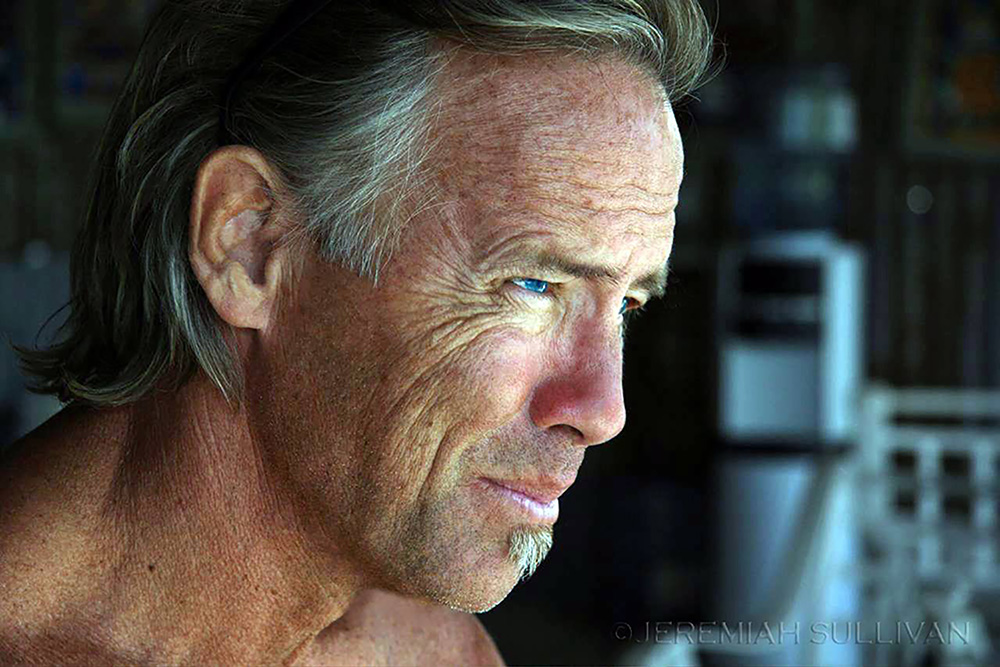
  • Jeremiah Sullivan has been studying sharks for over forty years, and on July 17, the world will see him get bitten by a shark (several times) on NatGeo

    Jeremiah Sullivan has been studying sharks for over forty years, and on July 17, the world will see him get bitten by a shark (several times) on NatGeo

    I’ve been bitten thousands of times,” offers a chuckling Jeremiah Sullivan. “Been thrown around a bit. Beaten up pretty good. Nearly had my teeth knocked out. Certainly chewed on a lot.”

    Since the early ‘70s, Sullivan has been the world’s leading chronicler of human-shark interactions. A bearded, shredded-up marine biologist in his sixties, he’s taken thousands of dives, and been intentionally bitten by sharks more times than he can count in order to test his custom-designed suits of armor to protect humans from shark bites.

    “We’re studying human-shark interactions, and the only ones I’m interested in are those that are most accurate and realistic so that we can protect anyone who happens to be in the sea and learn the behavioral range and capabilities of these apex predators so we can conduct safer interactions,” he tells me.

    On the evening of July 17th, National Geographic will air the special Man vs. Shark, featuring Sullivan being intentionally bitten by a deadly, 14-foot tiger shark in order to test his latest protective gear—a composite suit built to withstand the blow from an ax. Given its saw-shaped teeth, so sharp they can easily mash through turtle shell and bone, even Sullivan found himself a tad bit nervous about the risky stunt.

    “I felt pretty confident in what I was doing but the tiger sharks I’d been saving for later, they’re known to have among the most destructive bites and to do a lot of damage when they get ahold of things and try to chew on them for a bit,” he says. “We weren’t sure what was going to happen. I had a lot of people with me that were quite sure that when one bit me, the other tiger sharks were gonna come swarm on me.”

    He laughs: “I had to approach this thing knowing that it could be bad, but I was sure I was on the right track.”

    Sullivan’s fascination with sharks began early on. He grew up in Hawaii (“before it was state”) and Puerto Rico, where he was raised by his mother, who worked for the World Health Organization (his father, a Hollywood actor of the same name, was largely out of the picture). In addition to his proximity to sharks and access to the sea, one of his biggest inspirations came in the form of the film Born Free, a 1966 picture telling the tale of a couple raising orphan lions in Africa.

    source


  • Federal Department Now Spending $100 Billion Per Month

    Federal Department Now Spending $100 Billion Per Month

    For the first time in our nation’s history, there is now a federal department spending an average of more than $100 billion per month. No, it is not the Department of Defense, which is charged with the core federal responsibility of defending us from foreign enemies. It is the Department of Health and Human Services, which, if Democratic Sen. Bernie Sanders of Vermont has his way, will run the “Medicare for All” program. As it now stands, HHS runs Medicare for many and Medicaid for more. “In 2019, the program will cover an estimated 61 million persons (52 million aged and 9 million disabled),” the Congressional Research Service said of Medicare in a report published in May. “Medicaid is a means-tested entitlement program that finances the delivery of primary and acute medical services as well as long-term services and supports (LTSS) to an estimated 75 million people at a cost to states and the federal government of $616 billion in FY2018,” CRS said in a report published in June. “CBO also estimates that federal Medicare spending (after deduction of beneficiary premiums and other offsetting receipts) will be about $637 billion in 2019, accounting for about 14% of total federal spending and 3% of GDP,” said CRS. “Mandatory spending typically accounts for the majority of the HHS budget,” CRS explained in a report published in March. “Two programs — Medicare and Medicaid — are expected to account for 86% of all estimated HHS spending in FY2019,” it said.

    In the first eight months of this fiscal year, which began in October, HHS spent $834,346,000,000, according to the Monthly Treasury Statement for May. That is up from $731,724,000,000 in the first eight months of last fiscal year. Through all of fiscal 2018, HHS spent approximately $1,120,500,000,000 — or $93,375,000,000 per month. Through this full fiscal year, according to the estimate published in the Monthly Treasury Statement, HHS will spend approximately $1,230,273,000,000 — or $102,522,750,000 per month. In May alone, according to the Monthly Treasury Statement, HHS spent $146,552,000,000. That equaled about $4.9 billion per day, or $196.98 million per hour, or $3.28 million per minute. In the same month, the Department of Defense and military programs were spending $61,801,000,000 — or about 42.17 percent of what HHS was spending that month. In the first eight months of the fiscal year, the DOD and military programs spent $439,289,000,00 — or about 52.65 percent of the $834,346,000,000 billion that HHS spent. The Monthly Treasury Statement estimates that the DOD and military programs will spend a total of approximately $652,234,000,000 this fiscal year — or about 53 percent of the $1,230,273,000,000 it estimates HHS will spend.

    Most other departments of the federal government spend just a small fraction of what HHS spends. The Department of Homeland Security, which is charged with securing our borders and enforcing our immigration laws, will spend an estimated $62,267,000,000 — or just 5.06 percent of the $1.23 trillion HHS will spend. The Department of Justice, which is charged with enforcing federal laws, will spend an estimated $41,366,000,000 — or just 3.36 percent of what HHS will spend. The Department of State, which manages U.S. relations with foreign nations, will spend an estimated $29,690,000,000 — or just 2.41 percent of what HHS will spend. The legislative branch, which makes the laws, will spend an estimated $5,826,000,000 — or just 0.47 percent of what HHS will spend.Only one other federal agency or department rivals HHS for spending money. It is the Social Security Administration.

    It is the federal government’s other trillion-dollar baby. In fiscal 2019, according to the estimate published in the Monthly Treasury Statement, it will spend $1,104,449,000,000. In the first eight months of this fiscal year, it spent $730,000,000,000 — or an average of $91,250,000,000 per month. In fiscal 2018, according to the Monthly Treasury Statement for September 2018, the Social Security Administration spent $1,039,902,000,000 while HHS was spending $1,120,500,000,000. Those two elements of the federal government spent a combined $2,160,402,000,000 in a year when total federal spending was $4,107,741,000,000. HHS and the Social Security Administration accounted for 52.59 percent of all federal spending. To be sure, HHS spent money on many other things in fiscal 2018 besides Medicare and Medicaid — including, for example, $33.2 billion on the National Institutes of Health and $7.97 billion on the Centers for Disease Control and Prevention. But its main charges, as the Congressional Research Service noted, are Medicaid and Medicare.

    Medicaid, Medicare and Social Security have one thing in common besides being the primary factors that have driven federal spending above $4 trillion per year: They make people dependent on government.

    source

  • Big Pharma Fail: No Evidence Of Added Benefit In Most New Drugs, Study Finds

    Big Pharma Fail: No Evidence Of Added Benefit In Most New Drugs, Study Finds

    There seems to be a new drug to treat anything and everything these days, but are these medications as effective as they claim to be? A new study has concluded that the answer to that question is no. Furthermore, researchers say that international drug development processes, standards, and policies are fundamentally broken and must be reformed.

    According to the study performed at the German Institute for Quality and Efficiency in Health Care, more than half of the new drugs entering the German healthcare system show absolutely no added benefit.

    Between 2011 and 2017, researchers examined 216 drugs that passed regulatory approval and entered the German market. Most of these assessed drugs were also approved by the European Medicines Agency for widespread use throughout greater Europe.

    Alarmingly, only a quarter of those drugs showed any significant medical added benefit based on the available evidence. What’s more, 16% showed even a minor added benefit, and a whopping 58% of studied drugs did not show any added benefit over standard patient care.

    When the drugs were separated by speciality, the results were just as unsettling: just 6% of psychiatric drugs showed added benefit, along with 17% of diabetes drugs..

    Even in the investigated drugs that did show significant benefit, most of the research could only apply to sub-groups. “For the overall patient population, the current output of drug development may thus be resulting in even less progress than our assessments suggest,” the study reads.

    The study’s authors say that some within the healthcare industry argue that limited information on a drug at the time of its approval is how things have always been done, and is simply the “price to be paid” in order to provide patients with early access to unprecedented new drugs.

    To refute this argument, researchers revisited a study on cancer drugs conducted between 2009 and 2013 that found most of the drugs had been approved with little evidence of any benefits to cancer patients quality of life or survival chances. After following up on the cancer drugs’ success rates, researchers found minimal additional evidence of the drugs’ effectiveness.

    The research team says drugs are almost never studied after being initially approved, and even when a drug is found to be ineffective, global regulators do little to punish offending drug manufacturers.

    “As a consequence, patients’ ability to make informed treatment decisions consonant with their preferences might be compromised, and any healthcare system hoping to call itself ‘patient centred’ is falling short of its ethical obligations,” the study states.

    The authors recommend a much more strict drug approval process that demands stronger evidence from long-term studies conducted on large, randomized control groups. Even after a drug is approved, research should continue in order to fill in any and all information gaps that may remain.

    The entire way these drugs are priced and incentivized needs to be overhauled as well; right now vague and unclear results are being rewarded with monetary gain, whereas real tangible results should be the only final outcome that produces profit.

  • How to Care for Orchids

    How to Care for Orchids

    How to Care for Orchids

    Orchids are no more difficult to care for than ordinary houseplants. They require slightly different watering and fertilizing techniques, but with this easy guide you’ll be growing beautiful orchids in your home in no time. Bonus: We name the easiest orchid varieties to care for to guarantee success.

    Oops, we’re sorry. Something went wrong. Please try again later.

    Oops, we’re sorry. Something went wrong. Please try again later.

    Share your take on this idea!
    Upload your photo here.
    CLOSE

    Orchids are a large, diverse group of plants, and not all of them are difficult. Some are quite easy. Gain confidence with these gorgeous plants with the ones that are easiest to succeed with!

    How to Water Orchids

    Overwatering is a common cause for dead orchids. People typically ask about a plant’s water needs by inquiring how often they should water, and it’s this “how often” mindset that is a big part of the problem. How often you should water a plant depends on how much water it uses, which is a function of humidity, light, air movement, and what its roots are growing in. Watering by the calendar rather than a plant’s needs is a recipe for failure.

    So the short answer to the question of when to water most orchids, including Phalaenopsis and Cattleya, is: Just before it goes dry. How often is that? In practice, it can vary from every few days to every couple of weeks. It depends on the orchid and on the conditions in your home. One of those conditions — an important one — is the medium the orchid is growing in.

    The best way to judge moisture is the old-fashioned way — stick your finger in the planting medium. Pull it out, then rub your fingers together. You can easily feel if any moisture is present. If you don’t feel any, it’s time to water. Eventually, you’ll develop a sense of how often to water, and how conditions (seasonal changes, for example) affect frequency. You’ll also develop a “feel” for how heavy the pot is when the planting medium is dry, another way to gauge moisture levels.

    Editor’s Tip: A few suppliers (Charley’s Greenhouse, for example) sell clear plastic pots. When moss or bark — the best planting media for orchids — is moist, you’ll see the condensation on the inside of the pot. When it’s dry, you won’t, and you’ll know it’s time to water again.

    Watering is no more complicated than pouring water into the potting medium and letting the excess drain through the bottom. I’ve noticed that some orchids available in stores are in pots with no drainage holes. That makes it far more difficult to water properly, so I’d suggest repotting in a different container (or drilling holes, if you have the tools).

    Why Potting Mix Is Important

    It’s impossible to properly discuss watering without considering rooting media. Orchids are commonly potted in one of two media: moss or bark. Both are perfectly good materials, but they require somewhat different care. Moss acts like a sponge, and it takes a lot longer to dry out. Thus, for orchids like Phalaenopsis and Cattleya that need to dry out thoroughly before watering, moss requires a longer wait before watering and is less forgiving of too-frequent watering. Bark, which holds little water, poses less risk for these orchids. The rule of thumb for these orchids is: Water the day before the medium is completely dry.

    Lady slipper and nun’s orchids enjoy conditions on the moist side and they’ll do better if you don’t let them go completely dry. Moss is a good choice for them, supplying adequate water for longer intervals between watering. Can these moisture lovers be grown in bark, too? Sure, if it’s fine-textured. But be prepared to water more frequently.

    Step 1: Remove dead roots when repotting an orchid.

    Orchid media decomposes over time, especially bark. When this happens, the bark loses the fast-draining properties that many orchids prefer. That’s why it’s necessary to repot in new bark every year or two. It’s a simple two-step process. Just remove the orchid from the old bark, which you can just throw on the compost pile. Clip off dead roots (which will be dark and shriveled, compared to the firm, fleshy, light-color healthy roots). Place the orchid back into the pot and refill it with new bark.

    Fertilizing Orchids

    Step 2: Place the orchid into a slightly larger pot filled with fresh bark.

    A common recommendation is fertilizing with quarter-strength, water-soluble fertilizer each time you water. That means whatever the fertilizer label says to mix into the water, use only one-fourth that amount, and add it every time you water. This constant “spoon-feeding” is good for plants and ensures you never have to worry about when you fertilized last.

    Orchids and Light

    Homes generally have dim light (from a plant’s perspective), so orchids that tolerate low light levels stand a better chance than those that require strong light. An east-facing windowsill is a great spot to grow your orchid. The sunshine from an unscreened south-facing window can be a bit too bright (and hot), but a sheer curtain offers just the right amount of filtering. Or set the orchid back away from the window so that it’s not constantly in strong indirect light.

    West-facing windows make it simply too hot for orchids. However, with some filtering (as you would with a south-facing window) you might make a go of it. The light at a north window is usually just too dim for orchids.

    You may want to use a blooming orchid as a table centerpiece, or put it somewhere away from a window. There’s no harm in doing so, as long as you return the orchid to better light once it’s done blooming.

    Orchids and Humidity

    These orchids don’t require rain forest humidity, and may do OK in your home without extra measures. But the dry atmosphere of an air-conditioned home can be challenging. That’s why a daily mist, or setting orchids on a moist bed of gravel, helps success.

    One precaution: Orchid pots should sit atop the gravel, not nestled within it. Otherwise, you risk wicking moisture up through the bottom of the pot and saturating the roots.

    The Easiest Orchids for Novices

    Yellow nun orchid

    Three orchids are especially commendable (from a novice’s perspective): the nun’s orchid (Phaius); a closely related hybrid, Phaiocalanthe; and the tropical lady slipper orchids (Paphiopedilum, not to be confused with Cypripedium, a related but distinct type of lady slipper). They thrive with care similar to that of many houseplants: regular water and average light. If you can grow a ficus or a pothos, you can probably grow one of these orchids. It would be hard to overwater these moisture-loving orchids, which is important because that’s perhaps the most common way that people kill orchids.

    Moth orchid

    Phalaenopsis (the moth orchid) and Cattleya hybrids (the “corsage orchid”) prefer dry roots, so are vulnerable to being “loved to death” with too much watering, but are otherwise reasonably easy to grow. 

    Corsage orchid

    Another orchid worth noting is the Cymbidium. It’s a great orchid for Northerners because it responds to the short days of winter by flowering. In the South, with its relatively long winter days, it can be difficult to get to bloom. And like the other orchids we covered, Cymbidium can succeed in a home environment.

    Resources

    Pots: Try Charley’s Greenhouse Supply: charleysgreenhouse.com.

    To purchase orchids try the following companies:
    EFG Orchids: efgorchids.com
    Orchids.com: orchids.com
    Costa Farms: costafarms.com (They supply the orchids sold in Lowe’s, The Home Depot, and other retailers.)

    Learn more about growing and choosing orchids from the links below.
    The American Orchid Society: aos.org

    Oops, we’re sorry. Something went wrong. Please try again later.

    Oops, we’re sorry. Something went wrong. Please try again later.

    Share your take on this idea!
    Upload your photo here.
    CLOSE

    This content was originally published here.

  • FDA Reveals Dog Food Brands Possibly Linked to Canine Heart Disease

    FDA Reveals Dog Food Brands Possibly Linked to Canine Heart Disease

    The Food and Drug Administration continues to investigate 16 brands of dog food that may be linked to canine heart disease.

    Dogs that have eaten certain brands of pet food may be connected with dilated cardiomyopathy (DCM), resulting in congestive heart failure.

    statement was released on June 27 disclosing the brand names of dog food reported to the FDA.

    “We understand the concern that pet owners have about these reports: the illnesses can be severe, even fatal, and many cases report eating “grain-free” labeled pet food. The FDA is using a range of science-based investigative tools as it strives to learn more about this emergence of DCM and its potential link to certain diets or ingredients.”

    Dry dog food containing protein like chicken and lamb were among the highest reported of cases. Grain-free products ranked at the top of the list during testing along with brands containing peas and lentils.

    The original investigation began in July 2018 when the FDA announced that breeds of dogs not genetically prone to the disease were affected by DCM.

    Champion Petfoods owns Acana and Orijen brand dog food which made the list for most frequently reported DCM cases.

    “While we and the industry work to learn more about DCM, you can trust that Champion foods (ACANA and ORIJEN) are safe for your pets,” the dog food manufacturer wrote on its website. ” We make all our foods ourselves, we don’t use contract producers, so you can trust that ACANA and ORIJEN are made in strict accordance to our own recipes from high quality ingredients.”

    source

  • Former IKEA Employee Sues Company After Being Fired for Expressing Biblical Beliefs

    Former IKEA Employee Sues Company After Being Fired for Expressing Biblical Beliefs

    IKEA is being sued by a former employee after he was fired for posting Bible verses on the company’s corporate network.

    The Christian Post reports that the employee, Tomasz K., worked at an IEKA store location in Poland. He was let go from the store in Krakow after he refused to delete a comment he posted on the company’s intranet. In May, the company celebrated International Day Against Homophobia, Biphobia and Transphobia (IDAHOT). An article celebrating the IDAHOT event and the LGBT community was published on IKEA’s site. Employees were asked to attend a pro-LGBT event at the company. Tomasz did not agree with promoting homosexuality, according to the  Catholic News Agency.  “I was shaken up,” Tomasz explained. “I’ve been hired to sell furniture but I’m a Catholic and these aren’t my values.”

    He replied to the company’s article, expressing his biblical beliefs and Christian values. He was subsequently fired from IKEA. A statement released by IKEA said “One of our employees published a comment under the article, expressing his opinion in a way that could affect the rights and dignity of LGBT + persons.” Tomasz and his attorneys argue that his right to express his beliefs in an open forum was violated. He is being helped by lawyers from the conservative legal organization Ordo Iuris Institute. His lawyers contend that the company falsely implied Tomasz was calling for violence, when he was just quoting scripture from the Bible. IKEA issued an updated statement on July 4 saying that the whole situation was a misuderstanding. The disclousre said, “we focus mainly on minimizing the negative impact of the entire situation on our employees.”

    In addtion to the lawsuit, the CP reports Poland’s justice minister has also ordered an investigation into Tomasz’s case.