Washington is just a governor’s signature away from becoming the first state in the U.S. to legalize the “natural organic reduction” of human remains, colloquially known as “composting.” On Friday, the state Senate and House of Representatives finalized their approval of bill 5001 (titled “concerning human remains”), which enshrines “organic reduction” and alkaline hydrolysis, a dissolving process sometimes called “liquid cremation,” as acceptable alternatives to traditional burial and cremation. Gov. Jay Inslee’s office said the governor hasn’t had a chance to review the final legislation yet. (Once it crosses his desk, he’ll have five days to act.) If Inslee signs the bill, the law would take effect May 1, 2020.
“I am very much in favor of the composting of human bodies!” said Wes McMahan, a retired cardiovascular intensive-care nurse who lives in Randle, Lewis County, and testified in support of the bill this week. “When I’m done with this body that served me very well for the past 64 years, do I want to poison it with formaldehyde and other embalming chemicals? No,” McMahan said. “Burned? Not my first choice. But what about all the bacteria I’ve worked with so long in this body — do I want to give them a chance to do what they do naturally? I believe in doing things as naturally as possible.” Passage of the bill fulfills a longtime hope for Seattle-based Katrina Spade, and is another step in a years-long effort to realize her vision for an urban, soil-based, ecologically friendly death-care option. She is the founder and CEO of Recompose, which aspires to be the first “natural organic reduction” funeral home in the U.S.
The architectural and artistic feats of the ancient Egyptians never cease to amaze not only in the creation but in their preservation. Recently the country’s Ministry of Antiquities, Khaled al-Enani, revealed a “new” well-preserved tomb decorated with inscriptions and colorful reliefs. The archeological discover dates back more than 4,000 years – yet the vibrant paint of the reliefs look almost as fresh as the day they were painted.
The intricate tomb is said to belong to an official named Khuwy, a nobleman from the Fifth Dynasty, a period that spanned the 25th to the 24th century BCE. At the unveiling Minister al-Enani brought along 52 foreign ambassadors, cultural attachés, and well-known Egyptian actress Yosra, to inspect the vivid depictions.
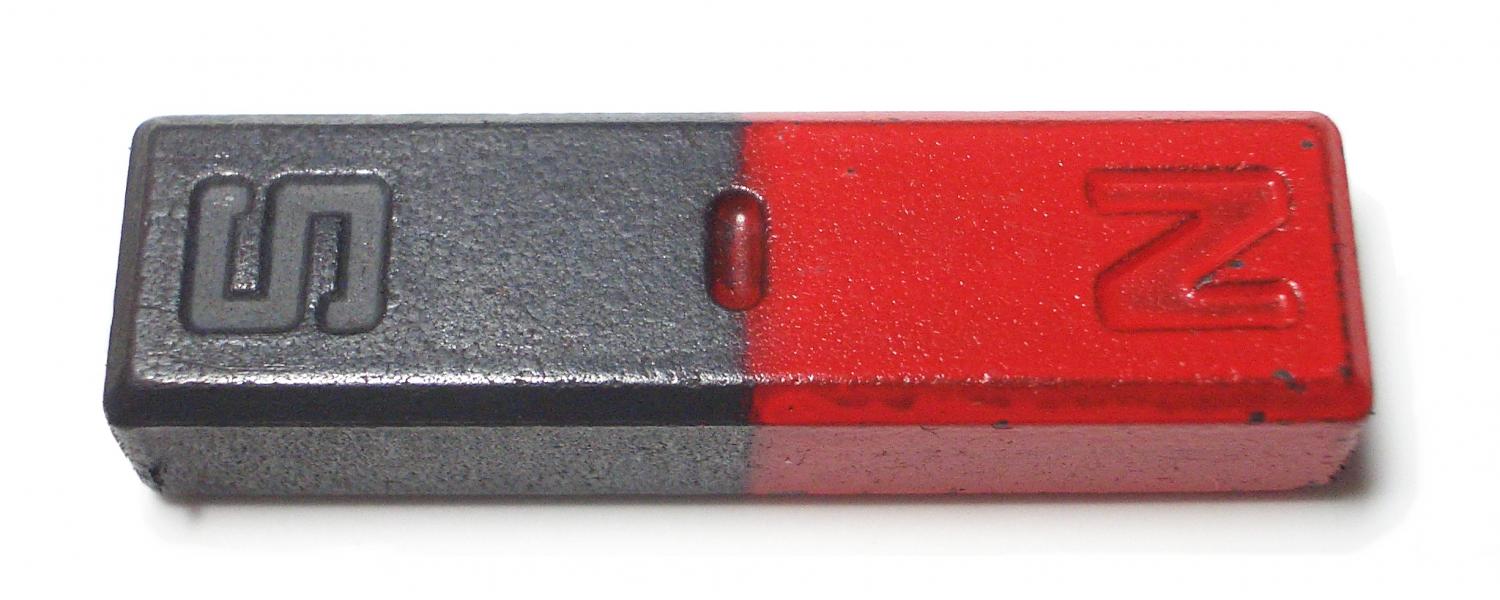
Hitting an ultrathin magnet with laser abruptly de-magnetizes it. Such sub-picosecond magnetization manipulation via femtosecond optical pumping. However, this strange phenomenon is not yet well understood due to the difficulty in experimentally probing such as rapid dynamics.
Now, scientists at CU Boulder are digging into how magnets recover from that change, regaining their properties in a fraction of a second. They found evidence on a universal rapid magnetic order recovery in ferrimagnets with perpendicular magnetic anisotropy via nonlinear magnon processes.
The study suggests that zapped magnets actually behave like fluids. Their magnetic properties begin to form “droplets,” similar to what happens when you shake up a jar of oil and water.
For the study, scientists drew on mathematical modeling, numerical simulations and experiments conducted at Stanford University’s SLAC National Accelerator Laboratory.
CU Boulder’s Ezio Iacocca said, “Researchers have been working hard to understand what happens when you blast a . What we were interested in is what happens after you blast it. How does it recover?”
A computer simulation of magnetic “droplets” forming juxtaposed with a photo of oil in water. Credits: Ezio Iacocca; Pixabay
Specifically, scientists zeroed in on a short but critical time in the life of a magnet—the first 20 trillionths of a second after a magnetic, metallic alloy gets hit by a short, high-energy laser.
Iacocca explained, “magnets are, by their nature, pretty organized. Their atomic building blocks have orientations, or “spins,” that tend to point in the same direction, either up or down—think of Earth’s magnetic field, which always points north.”
“Except, that is when you blast them with a laser. Hit a magnet with a short enough laser pulse and disorder will ensue. The spins within a magnet will no longer point just up or down, but in all different directions, canceling out the metal’s magnetic properties.”
“Researchers have addressed what happens 3 picoseconds after a laser pulse and then when the magnet is back at equilibrium after a microsecond.”
During experiments, scientists ran a series of experiments in California, blasting tiny pieces of gadolinium-iron-cobalt alloys with lasers. Then, they compared the results to mathematical predictions and computer simulations.
And they found that the things got fluid. The metals themselves didn’t turn into liquid. But the spins within those magnets behaved like fluids, moving around and changing their orientation like waves crashing in an ocean.
CU Boulder’s Mark Hoefer said, “We used the mathematical equations that model these spins to show that they behaved like a superfluid at those short timescales.”
“Wait a little while and those roving spins start to settle down forming small clusters with the same orientation—in essence, “droplets” in which the spins all pointed up or down. Wait a bit longer, and the researchers calculated that those droplets would grow bigger and bigger, hence the comparison to oil and water separating out in a jar.”
“In certain spots, the magnet starts to point up or down again. It’s like a seed for these larger groupings. A zapped magnet doesn’t always go back to the way it once was. In some cases, a magnet can flip after a laser pulse, switching from up to down.”
Iacocca said, “Engineers already take advantage of that flipping behavior to store information on a computer hard drive in the form of bits of ones and zeros. If researchers can figure out ways to do that flipping more efficiently, they might be able to build faster computers.”
Iacocca said, “That’s why we want to understand exactly how this process happens, so we can maybe find a material that flips faster.”
The research was partly supported by the U.S. Department of Energy, Basic Energy Sciences.
Co-authors on the study also included researchers at Chalmers University of Technology, SLAC National Accelerator Laboratory, Tongji University, University of York, Stockholm University, Ca’ Foscari University of Venice, Temple University, European X-Ray Free-Electron Laser Facility, Nihon University, Radboud University, University of Liège, Sheffield Hallam University and Uppsala University.
The study is published in the journal Nature Communications.
We need bees. They’re the world’s most important pollinator of food crops. In fact, it is estimated that one third of the food that we consume each day relies on pollination mainly by bees. But as much as we are used to seeing them buzzing with work, they need their beauty sleep as well. Recently, wildlife photographer Joe Neely captured two bees snuggling in a flower, and the shot shows a beautiful side of them we rarely witness.
“Wel,l I never knew that bees slept in flowers but as it turns out these bees (Diadasia diminuta) sleep in the orange flowers called Globe Mallows.” The Diadasia diminuta – or simply the globe mallow bee – collects pollen from its favorite food plant, globe mallow (Sphaeralcea). According to Forest Service at the United States Department of Agriculture, their nests are commonly found in partially compacted soil along the margins of dirt roads in the western United States. The globe mallow bees play a major role in the flower’s reproduction. “The bees become covered with pollen visiting the flowers [and] most of this pollen is groomed into the pollen basket on the hind legs and taken back to the nest,” the organization writes on its website. “However, some remains on the body and is deposited on the stigma of each of the next few globe mallow flowers visited. Thus, Diadasia contributes to globe mallow reproduction.
When it comes to bees sleeping, there are a few interesting details. “They don’t have eyelids, so you can’t just look for bees with their eyes closed,” Brandon Hopkins, a bee researcher at Washington State University, said. “By carefully watching bees, scientists have found that honey bees stop moving their antenna and in some cases fall over sideways.” The nuances of exactly how and where a bee sleeps depend on where it lives. After all, there are more than 20,000 known species of bees living on our planet. Honey bees, for example, work day and night and take shifts sleeping inside the hive. Their sleep patterns change as they grow up. Younger bees sleep less but older bees catch between 30 minutes and an hour and a half each night, taking little naps of about 15 to 30 seconds at a time.
Just days after the roof of Notre Dame cathedral went up in flames, France’s prime minister announced the country will invite architects from across the globe to submit designs for a new spire to top the Paris landmark.
Prime Minister Edouard Philippe said Wednesday the country is seeking “a new spire that is adapted to the techniques and the challenges of our era,” according to France 24.
The 12th-century Gothic cathedral’s spire — which was installed during an 1860s reconstruction — came crashing down when a fire broke out in the building’s roof Monday.
Clint Eastwood is circling to next direct The Ballad Of Richard Jewell, and has been in discussions with Disney/Fox drama based on the life of a security guard whose life was turned upside down in a moment after it was leaked by law enforcement to a reporter that Jewell was a possible suspect in the Olympic Park bombing during the 1996 Atlanta Olympics. From the moment he was outed by an article written by an overzealous reporter at the Atlanta Journal Constitution, Jewell went from hero to one of the most hated men in America.
Jewell discovered a suspicious backpack in the Olympics compound, cleared the area and saved lives that day, but after he was falsely accused he became a pariah. The project, based on the Vanity Fair article The Ballad Of Richard Jewell was originally set at 20th Century Fox. Even though the FBI cleared Jewell as a suspect three months later, the true American hero never fully got his reputation back or his confidence in himself, and his health was forever damaged. Jewell, who later became a police officer, died in 2007 of a heart attack at the age of 44. The film will be produced by Appian Way’s DiCaprio and Jennifer Davisson, Hill and Kevin Misher, the latter of whom brought in the article. Misher Films’ Andy Berman also will have a producing role. Mike Ireland is overseeing for Fox.
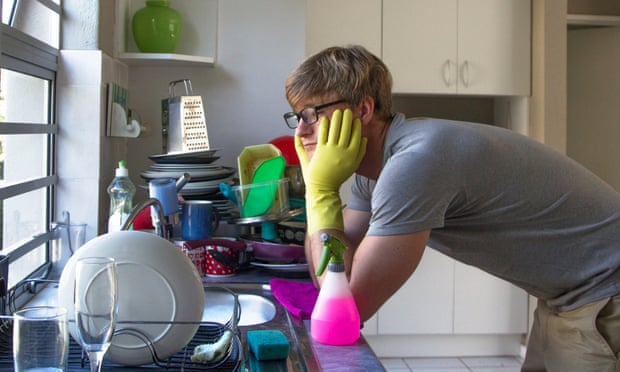
Even light activity such as household chores might help to keep the brain young, researchers say, adding to a growing body of evidence that, when it comes to exercise, every little helps. The findings mirror upcoming guidance from the UK chief medical officers, and existing US guidelines, which say light activity or very short bouts of exercise are beneficial to health – even if it is just a minute or two at a time – countering the previous view that there was a threshold that must be reached before there were significant benefits. “Our study results don’t discount moderate or vigorous physical activity as being important for healthy ageing. We are just adding to the science, suggesting that light-intensity physical activity might be important too, especially for the brain,” said Dr Nicole Spartarno, first author of the study from Boston University, adding that light activity might include a gentle walk or household chores. Writing in the journal Jama Network Open, the international team of researchers report how they came to their findings by studying at least three days of activity-tracker data from 2,354 middle-aged adults from the US, together with the participants’ brain scans.
From the latter, the researchers worked out individuals’ brain volume, a measure linked to ageing: about 0.2% of the volume of the brain is lost every year after the age of 60. Loss or shrinkage of brain tissue is linked to dementia, Spartano noted. After taking into account factors including sex, smoking status and age, the team found that every extra hour of light physical activity per day was linked to 0.22% greater brain volume, equal to just over a year’s less brain ageing. What’s more, those who took at least 10,000 steps a day had a 0.35% greater brain volume than those who took, on average, fewer than 5,000 steps a day – equivalent to 1.75 years’ less brain ageing. The results were even starker when the team looked at those who did not meet recommended guidelines for physical activity – just over half of the participants.
While the results also suggested that greater levels of moderate to vigorous physical activity were linked to higher brain volumes, the team say further analysis suggests this could just be because these people were also doing more light activity. But Spartano said, even if true, that did not mean people should stop trying to break a sweat. “Higher levels of fitness are linked to longevity and a better quality of life in older age, not to mention being associated with lower rates of dementia,” she said. However the study has limitations: it is based on a snapshot in time, used mainly white participants, and cannot prove cause and effect – those with more brain ageing might move less. The authors add that not all time spent sedentary is necessarily “bad” for the brain – particularly if people are engaged in a task that takes a lot of thinking.
Emmanuel Stamatakis, professor of physical activity, lifestyle and population health at the University of Sydney, welcomed the overall message, but questioned some of the results. “The finding that even light-intensity physical activity, that it is usually part of daily living, is associated with brain volume is very encouraging as such activities are feasible for most middle-aged and older people, even those who are less likely to do structured exercise,” he said. But, he added, there was no biologically plausible reason moderate to vigorous activity would have less effect on brain volume than light activity. For cardiovascular health, said Stamatakis, a minute of high-intensity activity was known to be more beneficial than a minute of light activity. Dr James Pickett, head of research at Alzheimer’s Society, stressed that the research did not look at the impact of different levels of activity on dementia risk, although it is known that, in general, exercise reduces the risk of such conditions. “Don’t worry if you’re not hill-running, but find something you enjoy and do it regularly, because we know that what’s good for the heart is good for the head,” he said.
Leaked internal discussion threads from Google provided exclusively to Breitbart News show left-wing Google employees reporting one of their colleagues for alleged “leaks,” while worrying about the legal implications of cracking down on a conservative at the company over his public complaints about working conditions. The discussion took place last week on the “transparency and ethics” discussion group, from which the alleged leaker had recently been ejected – a failed attempt to stem the tide of leaks showing political bias at the tech giant. Announcing the ejection of the alleged leaker, a Google employee wrote that vigilance about leaks was “especially important in light of the recent leaks that named our friends and colleagues in Breitbart and the Daily Caller.”
“If you have any knowledge of someone else who definitely leaked from THIS group, be sure to report it at go/stop-leaks,” wrote another Google software developer, referring to an internal messaging system for reporting potential leaks. “I noticed a certain someone who leaked from this group still works here. Is that the new norm? Is there something specific that makes his leak okay? What’s up with all this” wrote a different employee. Another Google software engineer said that it would set “an incredibly bad precedent if he is not terminated in light of acknowledging responsibility for the leak.”
The “leak” in question was a Medium post by conservative Google software engineer Mike Wacker. In the post, the employee published anonymized messages from inside the company to draw attention to hostile working conditions faced by employees who express non-leftwing opinions at Google. Leftists at Google are now also blaming Wacker for the leak of messages from the transparency and ethics discussion group about Kay Coles James, the conservative voice on Google’s now-canceled AI advisory council. In the messages, Google employee accused the African-American grandmother and president of the Heritage Foundation of being a “vocal bigot” who supported “exterminationist views.”
Like many traders, Johan Aguirre makes a daily check on his holdings’ ups and downs across an electronic spreadsheet.
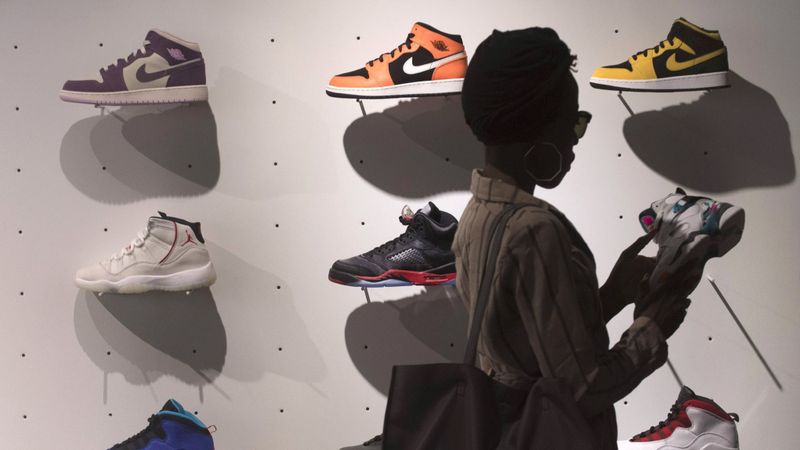
Aguirre, however, isn’t analyzing stocks, bonds or cryptocurrencies. He specializes in an increasingly tradable asset class — sneakers — on his favorite shoe reseller platform, StockX.Sometimes, he’ll pick up only one pair; at other times, he’ll buy in bulk.
“If it’s a shoe that I know I can sell,” he said, “typically I’ll buy the whole inventory that’s presented to me. And from the moment I know the sizes and the styles and the product code, I list it on StockX and it’s live right away.”
Aguirre, 31, is part of the evolution of the multibillion-dollar worldwide sneaker resale market,which is looking less like a hobby these days and more like an occupation.
Most are small-time entrepreneurs hoping to earn some spending money on one or two pairs, maybe dreaming of snagging once-in-a-lifetime kicks that might bring five figures in the thriving secondary market for basketball-inspired shoes.
But for Aguirre, this is a serious second-income business. Aguirre says he sold $50,000 in sneakers last year and estimates he cleared about $7,000 in profit.
“The sales depend on the shoes I list,” Aguirre said, “but it can get to the point that I’m selling more than a hundred pairs of shoes a month. It’s almost become a full-time job.”
Dedicated resellers like Aguirre drive the action at StockX, which Chief Executive Josh Luber helped found in 2016 with the idea of bringing Wall Street to streetwear.
Now Luber’s pushing the investment angle even harder by striking exclusive deals with manufacturers to sell products through blind auctions in something StockX is calling a “sneaker IPO,” for initial product offering. There’s benefit for shoe companies and deep-pocketed buyers, but the product-drop-via-auction approach could leave behind the small-time sneakerhead that was the core of the resale market.
Sneaker resellers have been around for decades, but it took the likes of Ebay, Craig’s List, Facebook and Instagram to enable a vibrant secondary market, said Matt Powell, vice president and senior industry advisor for the research firm NPD Group.
NPD’s last study of the global reseller market estimated sales at $1 billion in 2016, a total that Powell said could be as high as $3 billion today but “no one really knows.”
That compares with a retail sneaker industry of about $100 billion in sales worldwide, up from $55 billion in 2016, Powell said.
Investors lately have been showering money on resale platforms.
In February, retail giant Foot Locker announced a $100-million equity investment in Culver City-based GOAT Group, which a year earlier had raised $60 million and acquired Flight Club, another sneaker sales marketplace.
A huge police presence did not deter the rowdy behavior at Millennium Park.
The crowd then moved to State and Lake, where Chicago police were preparing to hold a press conference about the chaos. Police said they told most of the teens to go home, and some moved towards public transportation. Officers arrested those who disobeyed orders from police.
A huge police presence did not deter the rowdy behavior at Millennium Park.
The crowd then moved to State and Lake, where Chicago police were preparing to hold a press conference about the chaos. Police said they told most of the teens to go home, and some moved towards public transportation. Officers arrested those who disobeyed orders from police.