Author: Truth & Hammer

  • The Weakening Of Earth’s Magnetic Field Has Greatly Accelerated

    The Weakening Of Earth’s Magnetic Field Has Greatly Accelerated

    Earth’s magnetic field is getting significantly weaker, the magnetic north pole is shifting at an accelerating pace, and scientists readily admit that a sudden pole shift could potentially cause “trillions of dollars” in damage.  Today, most of us take the protection provided by Earth’s magnetic field completely for granted.  It is essentially a colossal force field which surrounds our planet and makes life possible.  And even with such protection, a giant solar storm could still potentially hit our planet and completely fry our power grid.  But as our magnetic field continues to get weaker and weaker, even much smaller solar storms will have the potential to be cataclysmic.  And once the magnetic field gets weak enough, we will be facing much bigger problems.  As you will see below, if enough solar radiation starts reaching our planet none of us will survive.

    Previously, scientists had told us that the magnetic field was weakening by about 5 percent every 100 years.

    read more

  • Brad Pitt, Angelina Jolie now officially single

    Brad Pitt, Angelina Jolie now officially single

    Brad Pitt, Angelina Jolie now officially single Los Angeles, April 14 (IANS) Over two years after filing for divorce, actors Brad Pitt and Angelina Jolie are legally single now. According to court documents obtained by The Blast, a judge accepted their request for bifurcation, which means they can be legally

    This content was originally published here.

  • Best Sun-Loving Houseplants | 5 Windowsill Choices

    Best Sun-Loving Houseplants | 5 Windowsill Choices


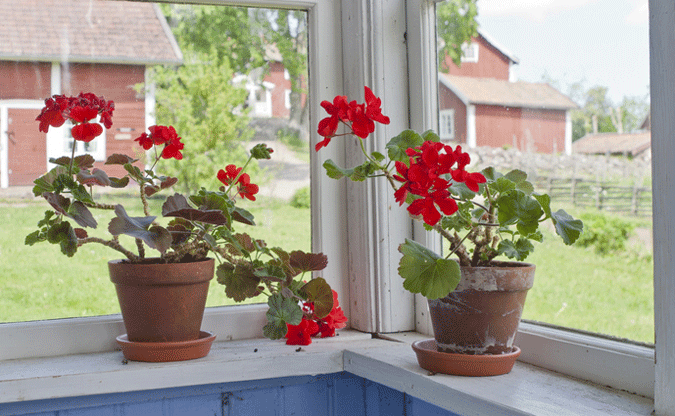
    Windowsills receiving full light exposure provide an optimum environment for sun-loving houseplants. With just a bit of effort, your healthy houseplants will add a pop of color that can be viewed and enjoyed from both sides of the window.

    windowsill geraniums sun-loving houseplants

    Sun-Loving Houseplants | Geraniums

    Dreamstime

    Turn the plants’ pots every week or so to adequately expose all sides of the houseplants to the outside sun for even growing patterns. And to protect the sill and floor below from water damage, be sure to use pots with a saucer to collect water at the base. To increase use of the window space, try hanging sun-loving houseplants in windows from a hook as well.

    5 SUN-LOVING HOUSEPLANTS

    Succulents

    Succulent plants require lots of light and very little water. A misting once a week is usually enough for these drought-tolerant plants to flourish. Succulents are unique because of their unusual shapes, sizes and colors. They grow well grouped together in container gardens, but a single succulent in its own pot can make a statement as well. For best results, plant succulents in semi-sandy soil and in a pot that matches the size of the plant—they should fill the pot but not look crowded.

    Sun-Loving Houseplants

    Succulents | Sun-Loving Houseplants

    Pixabay

    Cactus

    All varieties of cactus thrive in windows that receive full sun during the day. In the right conditions, some, such as the Christmas cactus, can flower more than once a year. There are many varieties of cactus to choose from, coming in all shapes and sizes. A grouping of cactutes will feel right at home when showcased on a sunny windowsill. Cactus need very little watering and sandy soil.

    Geraniums

    Virtually all varieties of geraniums are sun lovers. When it comes to houseplants, there are a variety of indoor geraniums available. The Martha Washington variety is more delicate in appearance and has several flower color choices to choose from. But don’t overlook bringing traditional porch geraniums inside at the end of the season, as they should do just as well indoors.

    Umbrella Plants

    A leafy deep green plant with stems that are capped by slender petals that hang in the shape of an umbrella, this plant is a sunny window favorite. Keep the soil moist by watering weekly, but don’t allow the roots to sit in water.

    Crotons

    With its colorful foliage, crotons are a good pick for a sunny winter at the front of the house. This plant has large, heavy leaves, usually with lines and patterns on the top. The leaves start out green with yellow and can show hues of pink, orange and reds, but will change color as it matures and is exposed to the direct sun. Soil should be kept moist, but never wet.

    Which sun-loving houseplants are your favorites?

    This post was first published in 2016 and has been updated.

    The post Best Sun-Loving Houseplants | 5 Windowsill Choices appeared first on New England Today.

    This content was originally published here.

  • 2 more fatal falls at Grand Canyon follow dozens of others

    2 more fatal falls at Grand Canyon follow dozens of others

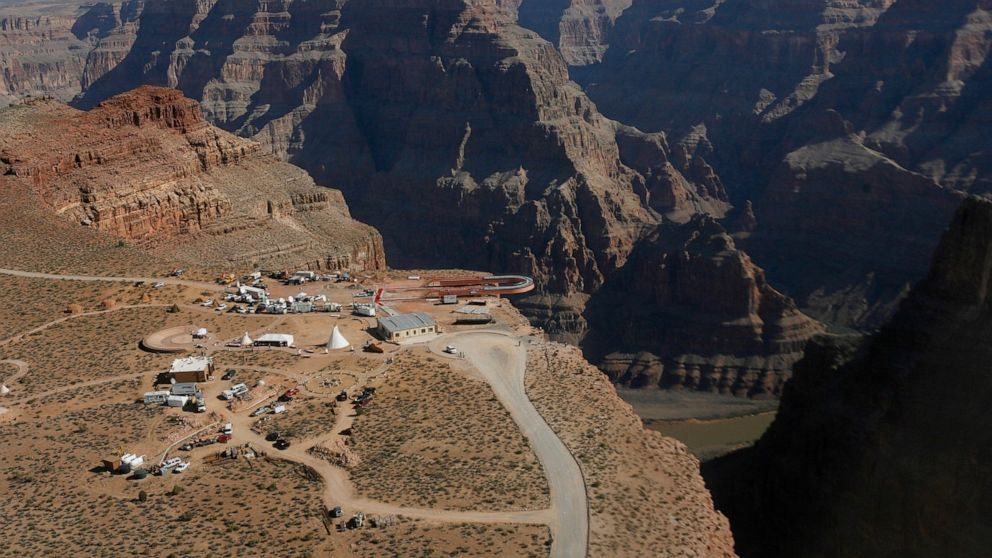
    Two recent deaths in which men plummeted in the Grand Canyon follow dozens of apparently accidental fatal falls since the national park was established 100 years ago.  Michael Obritsch, of Santa Rosa, California, died April 3 after falling from the edge of the South Rim in Grand Canyon Village, near the Yavapai Geology Museum.  His body was found 400 feet (more than 122 meters) below the rim, according to park officials.  A tourist from Macau, China, fell to his death on March 28. The man was at least 50 years old, park officials said.  The man was trying to take a photo at Grand Canyon West’s Eagle Point — close to the Skywalk located on the Hualapai Reservation outside the park — when he stumbled and fell, The Arizona Republic reported earlier this week.

    The body of a Japanese tourist was found March 26 in a wooded area south of Grand Canyon Village, away from the rim.  All three deaths still were under investigation by the Investigative Services branch of the National Parks Service and the Coconino County Medical Examiner, according to park spokeswoman Vanessa Ceja-Cervantes.  No amount of signage, railings or even verbal warnings will be enough to end the falls, said Michael P. Ghiglieri, author of “Over the Edge: Death in the Grand Canyon.”  Sixty-four fatal falls have been recorded in the park’s history, Ghiglieri said. Forty-nine of the victims were male and 15 female. Many deaths involve someone going around a guardrail to get closer to the edge or accidentally driving off the rim.  This number does not include any death that was ruled a suicide.

    Park officials currently don’t plan to add increased railing or signage in light of the string of deaths, Ceja-Cervantes said. Ample signage is already commonplace in highly traveled areas of the canyon.  Only one person fell to his death in the park in 2018. Andrey Privin of Illinois died in July after he climbed over the railing at Mather Point, a popular viewpoint at the South Rim. Some visitors said they saw Privin throw his backpack over the railing and onto an intended landing spot before jumping. He fell 500 feet (152 meters) to his death. About 12 people die each year within the park, Ceja-Cervantes said. The deaths can be attributed to everything from accidental falls, to heat-related deaths and drownings during rafting trips on the Colorado River.

    source

  • Presidential candidate Andrew Yang will use 3D holograms for remote rallies

    Presidential candidate Andrew Yang will use 3D holograms for remote rallies

    Democratic presidential candidate Andrew Yang revealed this week that he’s planning to use a 3D hologram to hold campaign rallies in multiple cities at the same time. Yang discussed the hologram during an appearance on TMZ Live. The segment showed off a hologram version of Yang dancing and performing with the famous Tupac hologram that appeared at Coachella in 2012.  Somewhat surprisingly, Yang didn’t get ratioed off of Twitter for toying with Tupac’s legacy. Instead, the candidate received a considerable amount of positive feedback for the concept, suggesting there just might be an audience out there for Yang’s ideas, even if they are presented via hologram.

    Yang plans to use the hologram, broadcast from the back of a truck, to deliver a recorded version of his stump speech to crowds in battleground states. Yang would set up in a studio and remotely beam into the rally to answer questions live and in real-time after the speech finished. The technique could save Yang, a longshot for the Democratic nomination at this point, a considerable amount of travel costs while helping to rally supporters and generate interest in key areas.

    One of the youngest candidates in the field of presidential hopefuls, Yang has generated some interest with his embrace of new ideas and technologies. One of the primary promises of his campaign is a universal basic income, a concept that has been favored by many in the tech industry for years as a way to combat creeping automation.

    source

  • Crude oil touted as health cure in Azerbaijan

    Crude oil touted as health cure in Azerbaijan

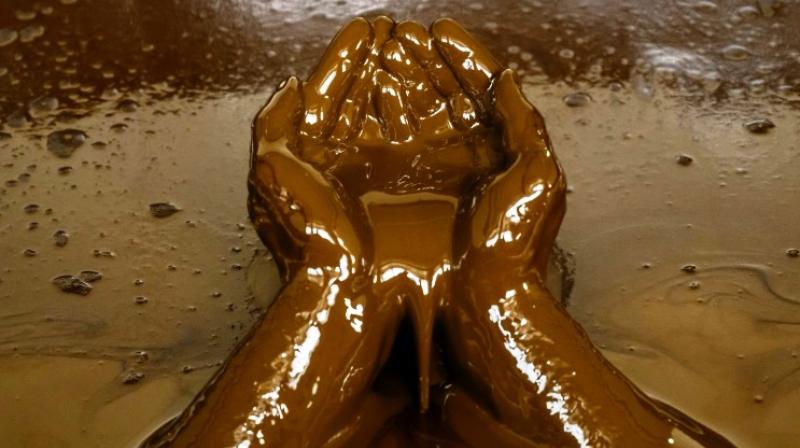
    Naftalan (Azerbaijan) (AFP) – Immersed up to her neck in a dark viscous liquid, Sulfiya smiles in delight, confident that the fetid substance will cure her painful condition.  Sulfiya, a Russian woman in her 60s, has travelled to Azerbaijan’s north-western city of Naftalan in the hope that crude oil baths at a local sanatorium will end her years of suffering from polyarthritis, a disease affecting the joints.  “This is so pleasant,” she enthuses, despite the reek of engine oil.  Her naked dip in oil heated to just above body temperature lasts 10 minutes, after which an attendant scrapes the brown oil off her skin and sends her into a shower.  The native of Russia’s Tatarstan region said she and her friends “have long dreamed of coming” for treatment in Naftalan.

    The petroleum spa resort in the oil-rich Caucasus country is a draw for visitors despite its proximity to Nagorny Karabakh, a region disputed between Azerbaijan and Armenia in a long-running armed conflict.  After 10 days of bathing in crude oil Sulfiya says she now feels “much better” and has even reduced her medication for the polyarthritis that she has had for 12 years.  “It is a gift from God,” agrees 48-year-old Rufat, an Azerbaijani journalist and opposition party member who is undergoing treatment in the sanatorium called Sehirli, or “magic” in Azerbaijani.  Azerbaijan’s vast oil deposits were discovered in the mid-19th century, making what was at the time part of the Russian Empire one of the first places in the world to start commercial oil production.

    Oil exports to markets all over the world are the largest sector of Azerbaijan’s economy, but the crude that comes from subsoil reservoirs in Naftalan is not suitable for commercial use.  Instead the local oil is used to treat muscular, skin and bone conditions as well as gynaecological and neurological problems.  According to a legend, which spa staff readily tell clients, the healing properties of Naftalan’s “miraculous oil” were discovered by accident when a camel left to die near a pool of oil was cured.  The small town of Naftalan some 300 kilometres (185 miles) from the capital Baku became a popular health resort for Soviet citizens in the 1920s.

    “In the past, when there weren’t any hotels or sanatoriums, people would come to Naftalan and stay with locals,” said one of the doctors at the Sehirli sanatorium, Fabil Azizov, sitting in her office under a portrait of strongman President Ilham Aliyev. “But as time passed, sanatoriums were built and treatment methods developed.”

    – Controversial benefits –

    Some specialists warn the method has dangerous side effects.  “Despite the stories of past cures, the use of crude oil for medicinal purposes has been condemned by Western doctors as potentially carcinogenic,” former journalist Maryam Omidi wrote in a 2017 book published in Britain about Soviet-era sanatoriums.  In fact, the oil at Naftalan is almost 50 percent naphthalene, a carcinogenic substance found in cigarette smoke and mothballs that in large amounts can damage or destroy red blood cells.  But doctors and patients at Naftalan brush aside any misgivings and the sanatorium even has a small museum displaying crutches that once belonged to patients who have recovered from their illnesses.

    source

  • Decades after nuclear disaster, tourism is booming in Chernobyl

    Decades after nuclear disaster, tourism is booming in Chernobyl

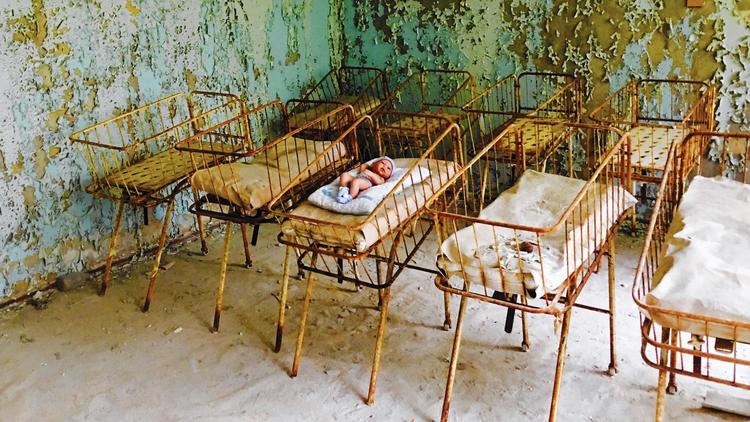
    Climbed 16 flights of slippery, icy stairs in an abandoned apartment building — the iron railings long ago pilfered, balcony doors stuck open — until we reached the roof and peered over the ghost town of Pripyat, the once-hailed Soviet “futuristic city” where Chernobyl nuclear plant workers and their families lived.  Thirty-three years after the Chernobyl nuclear reactor explosion, Pripyat’s broad boulevards are crowded with tangles of overgrown trees. Its once gleaming buildings are dark and brooding — windows gone, interiors looted, hallways littered with crumbling books.  It was twilight, and from our rooftop perch, the only light we could see came from the silver dome encasing the Chernobyl reactor, lit up as if it were still on fire. Someone in our group blasted music from an iPhone, and suddenly a dozen Americans broke out dancing. We were among the only humans in this deserted city.

    “What else do you do at the end of the world?” someone yelled.  Welcome to the apocalypse vacation: a weekend in Chernobyl.  Ever since the Ukrainian government opened Chernobyl to tourists in 2011, the number of annual visitors continues to climb. Last year, the government reported nearly 72,000 visitors, up from 50,000 the year before. “Travel to Ukraine has become cheap,” said Sergii Ivanchuk, owner of SoloEast, a company that last year shuttled nearly 12,000 tourists to the site of the infamous nuclear disaster.  “We don’t have Crimea anymore, and less and less people are interested in religion and churches,’’ he added. “But we have cheap beer and Chernobyl!”  In the early morning of April 26, 1986, when this area belonged to the Soviet Union, nuclear reactor No. 4 exploded during a safety test at this power plant north of Kiev. The deadly accident, initially cloaked in Soviet secrecy, spewed radioactive fallout over much of Europe. More than 115,000 people were evacuated from a 1,000-square-mile area known as the Chernobyl Exclusion Zone.

    Years later, stories and photos from Chernobyl continue to stoke the world’s curiosity — horses born with eight legs, giant catfish found in the waters near the plant, octogenarian “self-settlers” who seemingly thrived after returning to the Exclusion Zone, eating vegetables grown in contaminated soil. Even now, interest in Chernobyl shows no signs of ebbing. Journalist Adam Higginbotham’s book, “Midnight in Chernobyl: The Untold Story of the World’s Greatest Nuclear Disaster,” hit shelves earlier this year, and HBO’s new drama miniseries “Chernobyl” debuts May 6.  I first visited Chernobyl in late October 2016, not long before a massive silver containment shield designed to prevent radiation leaks was rolled over the crumbling sarcophagus encasing reactor No. 4. A hundred yards from the sarcophagus, our Geiger counters shot off readings several times higher than the suggested safe levels; our guide discouraged us from lingering.

    source

  • The Key To Happiness? Just Smile, Study Suggests

    The Key To Happiness? Just Smile, Study Suggests

    If you’re having a rough day, one way to help turn that frown upside down may be as simple as doing just that. A new study reveals that smiling actually makes people feel happier.

    Researchers from the University of Tennessee and Texas A&M say that, in fact, several of our emotions can be manipulated to a degree by our facial features. The effect, they note, isn’t necessarily long-lasting or even profoundly powerful, but it’s significant enough to show a correlation between our emotions and how we carry ourselves.

    “It appears that the physical act of smiling can make us feel happy, that frowning can make us feel sad, that scowling can make us feel angry,” says lead researcher Nicholas Coles, a PhD student in social psychology at UT, in an interview posted by the university.

    Coles’ conclusion comes following a meta-analysis of 138 studies conducted over the past 50 years. The research included data more than 11,000 participants from around the world. Just two years ago, one project involving 17 teams of researchers was unsuccessful in proving a prominent experiment that found a link between smiling and happiness. Coles says psychologists have debated this theory for more than a century, but he believes his team’s research is the strongest evidence yet.

    “Some studies have not found evidence that facial expressions can influence emotional feelings,” Coles says in a statement. “But we can’t focus on the results of any one study. Psychologists have been testing this idea since the early 1970s, so we wanted to look at all the evidence.”

    Ultimately, Coles found that there is a clear and noteworthy connection between our facial expressions and our feelings, albeit a small one. The effect can vary from person to person and may depend on the circumstances and setting. He doesn’t suggest that smiling more will cure a depressed person, but it might help in bringing some level of uplift.

    source

  • Millions of Chinese youth ‘volunteers’ to be sent to villages in echo of Maoist policy

    Millions of Chinese youth ‘volunteers’ to be sent to villages in echo of Maoist policy

    China is planning to send millions of youth “volunteers” back to villages, raising fears of a return to the methods of Chairman Mao’s brutal Cultural Revolution of 50 years ago.  The Communist Youth League (CYL) has promised to despatch more than 10 million students to “rural zones” by 2022 in order to “increase their skills, spread civilisation and promote science and technology”, according to a Communist party document.  The aim is to bring to the rural areas the talents of those who would otherwise be attracted to life in the big cities, according to a CYL document quoted in the state-run Global Times daily on Thursday.

    Users on the Twitter-like Weibo social platform reacted warily. Many evoked the chaos of the 1966-76 Cultural Revolution, when Mao sent millions of “young intellectuals” into often primitive conditions in the countryside, while universities were closed for a decade.  “Has it started again?” wondered one user named WangTingYu. “We did that 40 years ago,” wrote Miruirong. “Sometimes history advances, sometimes it retreats,” noted KalsangWangduTB.  President Xi Jinping, known for his nostalgia for the Mao era, himself spent seven years in a village in the poor northern province of Shaanxi from the age of 16.

    source
  • Judge Warns: No Right to ‘Visual Bodily Privacy’ for High School Girls

    Judge Warns: No Right to ‘Visual Bodily Privacy’ for High School Girls

    After a three-year legal battle, a federal judge for the Northern District of Illinois has ruled a lawsuit can proceed against an Illinois school district that said it was OK for high school transgender students to use girls’ locker rooms, restrooms, and showers.

    But the court’s decision wasn’t all good news for the families who are fighting to protect their children’s safety and privacy. The College Fix reports the judge also took a swipe at individual privacy rights, ruling the girls have no right to “visual bodily privacy” if the government says so.

    As CBN News reported, dozens of families joined in the lawsuit against Chicago-area Township High School District 211 back in 2016 because of the district’s policy of letting children as young as 14 choose to use the locker rooms of the opposite sex without informing parents.

    The district opened the girls’ locker room to a boy after the Obama administration’s Department of Education threatened the district’s federal funding.

    Under the Trump administration, the agency rescinded the Obama administration’s attempt to rewrite federal law and restored the understanding that, under Title IX, “sex” means male or female and not one’s beliefs about their gender.

    The 1972 federal law prohibits schools from discriminating “on the basis of sex,” which for more than 40 years has meant being male or female. Title IX’s existing regulations specifically state that a school receiving federal funds can “provide separate toilet, locker room, and shower facilities on the basis of sex” without putting that funding at risk.

    US District Judge Jorge Alonso ruled the Title IX and religious freedom claims can go forward in the lawsuit.

    Tom Petersen, director of community relations for the district, emphasized that “only three” of the five claims in the lawsuit are going forward.

    “The District will continue to defend our practices that affirm and support the identity of all our students,” he wrote in an email to The College Fix.

    The families are represented by attorneys for the Alliance Defending Freedom.

    “We need a compassionate approach to protecting students’ privacy, and we welcome the court’s decision to allow key claims to move forward,” ADF Legal Counsel Christiana Holcomb said in a press release. “The district officially authorizes opposite-sex use of school privacy facilities, and that violates Title IX. Letting boys into girls’ showers, restrooms, and locker rooms is sexual harassment. Students should be confident that their school will protect their privacy and dignity. So far, this school district has failed to do so.”

    source