The Mueller report flatly states that Russia began interfering in American democracy in 2014. Over the next couple of years, the effort blossomed into a robust attempt to interfere in our 2016 presidential election. The Obama administration knew this was going on and yet did nothing. In 2016, Obama’s National Security Adviser Susan Rice told her staff to “stand down” and “knock it off” as they drew up plans to “strike back” against the Russians, according to an account from Michael Isikoff and David Corn in their book “Russian Roulette: The Inside Story of Putin’s War on America and the Election of Donald Trump”. Why did Obama go soft on Russia? My opinion is that it was because he was singularly focused on the nuclear deal with Iran. Obama wanted Putin in the deal, and to stand up to him on election interference would have, in Obama’s estimation, upset that negotiation. This turned out to be a disastrous policy decision.
Author: Truth & Hammer
-

Russians meddled in our democracy while Obama administration did nothing about it.
Obama’s supporters claim he did stand up to Russia by deploying sanctions after the election to punish them for their actions. But, Obama, according to the Washington Post, “approved a modest package… with economic sanctions so narrowly targeted that even those who helped design them describe their impact as largely symbolic.” In other words, a toothless response to a serious incursion.But don’t just take my word for it that Obama failed. Congressman Adam Schiff, who disgraced himself in this process by claiming collusion when Mueller found that none exists, once said that “the Obama administration should have done a lot more.” The Washington Post reported that a senior Obama administration official said they “sort of choked” in failing to stop the Russian government’s brazen activities. And Obama’s ambassador to Russia, Michael McFaul, said, “The punishment did not fit the crime” about the weak sanctions rolled out after the 2016 election.A legitimate question Republicans are asking is whether the potential “collusion” narrative was invented to cover up the Obama administration’s failures. Two years have been spent fomenting the idea that Russia only interfered because it had a willing, colluding partner: Trump. Now that Mueller has popped that balloon, we must ask why this collusion narrative was invented in the first place.Given Obama’s record on Russia, one operating theory is that his people needed a smokescreen to obscure just how wrong they were. They’ve blamed Trump. They’ve even blamed Mitch McConnell, in some twisted attempt to deflect blame to another branch of government. Joe Biden once claimed McConnell refused to sign a letter condemning the Russians during the 2016 election. But McConnell’s office counters that the White House asked him to sign a letter urging state electors to accept federal help in securing local elections — and he did.But the Mueller report makes it clear that the Russian interference failure was Obama’s alone. He was the commander-in-chief when all of this happened. In 2010, he and Eric Holder, his Attorney General, declined to prosecute Julian Assange, who then went on to help Russia hack the Democratic National Committee’s emails in 2016. He arguably chose to prioritize his relationship with Putin vis-à-vis Iran over pushing back against Russian election interference that had been going on for at least two years. -
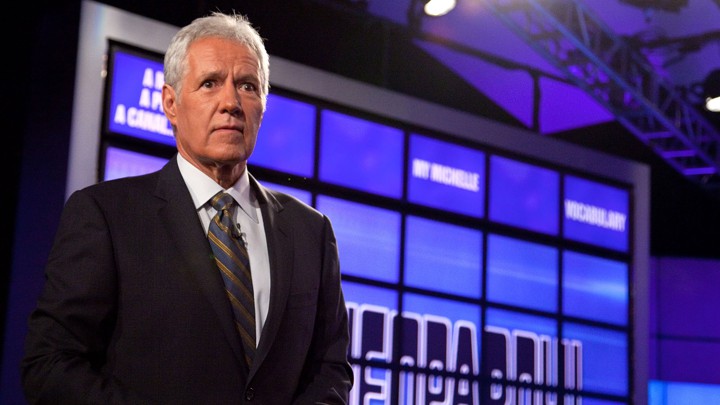
Jeopardy Wasn’t Designed for a Contestant Like James Holzhauer
Ken Jennings rose to fame after an unprecedented run on Jeopardy 15 years ago: Over the course of 74 episodes, he won a total of roughly $2.5 million. Recently, a contestant named James Holzhauer has been working toward Jennings’s record at an astonishing pace. After the Friday-evening broadcast of the quiz program, Holzhauer had won about $850,000 over just 12 episodes. If he keeps up that rate, he’ll reach $2.5 million in less than half the time it took Jennings to do so.
Before Holzhauer went on the show, the most money earned in a single episode of Jeopardy was $77,000. During his 12-episode streak, he’s beaten that total not once, but five times, and has set a new record of $131,127. Holzhauer’s success has been attributed not just to his deep trivia knowledge, but also to his aggressive style of play—he homes in on high-value tiles that might contain Daily Doubles, and then often bets enormous sums when he finds them—and his unmatched buzzer-pressing reflexes.
Whatever his method, Holzhauer is far exceeding the show’s average single-day winnings, which a Jeopardy fan website calculated to be $19,980. With his sometimes six-figure daily prizes, how much damage is Holzhauer doing to the show’s finances?
“Every game show has a prize budget,” says Bob Boden, a former head of programming at Game Show Network who has worked on dozens of shows there and elsewhere, including Family Feud. “Typically, for a long-running show the prize budget is determined by way of averages of what has been won in the past.” Large deviations from such averages can strain these prize budgets. “James’s performance, I’m sure, is causing grief for an accountant somewhere,” says Boden, who’s now an executive at the production company Entertainment Studios.
-

Cornell scientists create ‘living’ machines that eat, grow, and evolve
The field of robotics is going through a renaissance thanks to advances in machine learning and sensor technology. Each generation of robot is engineered with greater mechanical complexity and smarter operating software than the last. But what if, instead of painstakingly designing and engineering a robot, you could just tear open a packet of primordial soup, toss it in the microwave on high for two minutes, and then grow your own ‘lifelike’ robot?
If you’re a Cornell research team, you’d grow a bunch and make them race. Scientists from Cornell University have successfully constructed DNA-based machines with incredibly life-like capabilities. These human-engineered organic machines are capable of locomotion, consuming resources for energy, growing and decaying, and evolving. Eventually they die. That sure sounds a lot like life, but Dan Luo, professor of biological and environmental engineering in the College of Agriculture and Life Sciences at Cornell, who worked on the research, says otherwise. He told The Stanford Chronicle:
Basically, the Cornell team grew their own robots using a DNA-based bio-material, observed them metabolizing resources for energy, watched as they decayed and grew, and then programmed them to race against each other. We would have made them compete in a karaoke competition, but Cornell’s application is also impressive. As unbelievable as it sounds, the team is actually just getting started. Lead author on the team’s paper, Shogo Hamada, told The Stanford Chronicle that “ultimately, the system may lead to lifelike self-reproducing machines.” This work is still in its infancy, but the implications of organically grown, self-reproducing machines are incredible. And the debate over whether robots can be “alive” will likely have an entire new chapter to discuss soon.
For a deeper dive you can read the research paper here.
-

Study: 1 In 5 Children Suffers From A Mental Health Disorder
HAMILTON, Ontario — One in five children suffers from a mental disorder — with notable increases in depression and anxiety over the past 30 years — yet less than one-third have had contact with a mental healthcare provider, a new study finds. Results from the 2014 Ontario Child Health Study actually mirror findings from a similar study conducted in 1983, but this latest version shows a higher proportion of children and youth with disorders have had contact with health providers and in other settings, usually via schools. The new study also found that the patterns of prevalence among different genders and age groups have changed. Specifically, hyperactivity disorders in boys between four and 11 years old spiked from 9% to 16%. Conversely, there was a significant decrease in disruptive behavior in boys 12 to 16 years old, with numbers from 10% to 3%.
Researchers also found a significant increase in anxiety and depression in male and female youth. That total jumped from 9% in 1983 to 13% in the 2014 study. There was also a notable rise — from 7% to 19% — in the perceptions of need for professional help with mental health disorders. However, the researchers wrote it was difficult to determine if this is tied to the growing prominence of anti-stigma and mental health awareness over the past 30 years. In that time, the prevalence of all mental disorders increased in communities with a population of 1,000 to 100,000, not in large urban areas. There was strong evidence suggesting that poor children are more likely to have a mental disorder if their neighborhood is more violent than others.
The study also revealed that in the past year, over 8% of youth thought about suicide, and 4% reported a suicide attempt. The study included 10,802 children and youth between the ages of four and 17 from 6,537 families in Ontario. The sample size was much larger than the study conducted in 1983, when 3,290 children from 1,869 families participated. “This is a very robust study we feel represents the situation in Canada,” says Michael Boyle, co-principal investigator of the study, in a statement. “That means there are more than a million Canadian children and youth with a mental health problem. This needs to be addressed.”
Eight papers, each focused on a different aspect of 2014 OCHS data, were published simultaneously in the Canadian Journal of Psychiatry.
-

LOVE – ABUNDANCE
Conjuring a Love Revolution: Everyday Acts of Love to Transform Our Communities
Vanessa Jackson is a Soul Doula and licensed clinical social worker who is passionate about creating healing spaces and supporting individuals and communities in being powerful and authentic. She is a graduate of Washington University in St. Louis-George Warren Brown School of Social Work. She practices her craft in Atlanta, Georgia and worldwide via Skype. You can learn more about Vanessa at HealingCircles.org.“I am an activist with a passion for women’s health and community building. This interest led me to pursue a masters degree in social work with a focus on women’s issues and social and economic development at Washington University, George Warren Brown School of Social Work. Over the years, I embarked on my own spiritual journey which allowed me to honor many spiritual traditions and to be present for others who are trying to live spirit-centered lives in a world which does not always honor the spiritual life. As I negotiated the inevitable crises in my own life, I noticed that I found it most helpful and healing to take integrated approach that explored the emotional, intellectual, spiritual and community aspects of my “problems”. Over time, it made sense for me to offer this perspective to individuals and families who came to me for consultation. I sought additional training in reiki, energy healing, Emotional Freedom Techniques (EFT), crystal healing and aromatherapy to add to my clinical training in family systems, narrative therapy and power dynamics. I was once asked about my “theoretical orientation” and my heart-centered response was “My theoretical orientation is magic. It is my goal to fully express the magic in me and to invite out the magic in you!” -

A long-distance relationship in femtoseconds
Brad BaxleyArtistic representation of an interlayer exciton in a layered structure of monolayer transition metal dichalcogenides. The electron (blue) and the hole (red) interact across the atomic distance.
Artistic representation of an interlayer exciton in a layered structure of monolayer transition metal dichalcogenides. The electron (blue) and the hole (red) interact across the atomic distance.
Modern electronics relies on ultrafast charge motion on ever shorter length scales. Physicists from Regensburg and Gothenburg have now succeeded in resolving a key quantum motion of electrons in atomically thin crystals on the time scale of a single oscillation cycle of light. They directly observe, how the electron in a bound electron-hole pair jumps from one atomic layer to the next, creating a pair of charge carriers in a long-distance relationship, a so-called “interlayer exciton”.
In order to make electronics more powerful, nowadays circuits are becoming ever more compact. Here, the limit is the atomic length scale. Novel, layered crystals of so-called transition metal dichalcogenides, which can be thinned down to a few atomic layers, promise ultimately thin components such as solar cells and transistors. However, charge carriers behave very unconventionally in only two dimensions. For example, if an electron is excited by absorbing light in a transition metal dichalcogenide, it leaves behind a hole at its original location. Electron and hole can form a bound pair, an exciton. The negatively charged electron orbits the positively charged hole in analogy to an electron in the hydrogen atom orbiting the nucleus. Because of the strong attraction between electrons and holes, these excitons are also stable at room temperature.
For important applications, such as solar cells, however, electrons and holes need to be spatially separated. This is achieved by stacking two different dichalcogenides on top of each other. Physicists from Regensburg led by Professors Rupert Huber, Tobias Korn, John Lupton and Christian Schüller have now observed this charge separation of excitons across only two atomically thin layers in collaboration with Professor Ermin Malic’s group at Chalmers University in Sweden. They excited electrons by ultrashort light pulses creating excitons selectively only in one of the two layers. If these excitons remain within this layer, they are very short-lived, because electrons and holes recombine very rapidly with the electron returning to its initial position. In a layered sample structure, on the other hand, the electron can also jump into the adjacent layer – a spatially separated, so-called interlayer exciton forms.
“Since the layers are atomically thin, the electron still feels the hole’s presence, so they can continue to interact across the layer,” explains Fabian Mooshammer, PhD student and co-author of the study. Due to the spatial separation, however, it takes much longer for the electron to return to its initial position. This significantly longer lifetime is only one of the reasons why interlayer excitons have caused a lot of excitement in recent years, both in fundamental research and in optoelectronics.
The scientists were able to observe the behavior of these interlayer excitons during and after their formation. They used a home-built super slow-motion camera to study processes taking place within a few femtoseconds – the millionth part of a billionth of a second. “For the first time worldwide, we observed the formation process of an interlayer exciton and measured how strongly electrons and holes remain bound,” says Philipp Merkl, first author of the publication. In addition, the researchers were able to systematically influence the dynamics of the formation process. To this end, they used another special feature of the layered heterostructures: they twisted the two layers with respect to each other. This changes the electronic and optical properties of the resulting structure, which in turn governs the charge transfer.
These new findings represent an important milestone in the development of novel, custom-tailored layered structures and could pave the way for a new generation of ultimately compact and efficient electronics, optoelectronics and information technologies.
This content was originally published here.
-

Ocasio-Cortez Appears On ‘The Price Is Right,’ Guesses Everything Is Free
HOLLYWOOD, CA—Alexandria Ocasio-Cortez was pumped to attend a taping of The Price Is Right in Hollywood this week. The special guest introduced herself as a U.S. representative and rising star of the Democratic Party. Things got interesting when the game began and every time it was her turn to estimate the price of an item her answer was “free. Items included a set of Italian leather handbags, an all expenses paid trip to the Bahamas, and a brand new 2019 BMW 330i, at all of which Ocasio-Cortez shouted, “FREE!”
When host Drew Carey asked if Ocasio-Cortez understood the game’s rules, she told Carey not to cat-call her and then responded, “Don’t hate me cause you ain’t me.” She went on to guess that diamond earrings, a set of jet skis, and even a giant pile of cash were all free. Carey unveiled a package containing world-class healthcare and she said, “Definitely free.” She was at one point puzzled by a stack of croissants but eventually guessed that they also were free. Cortez was never able to advance to the game proper, and as the credits rolled she appeared visibly upset. A hot mic picked up comments she made in frustration, claiming that the game was rigged by capitalism and that “everybody knows giant piles of money are free, that’s like basic economics 101”.
-
911–Man Down– After Hearing Slightly Differing Viewpoint
Shortly before 12:30 p.m., Glendale PD officers responded to a 911 call at the Java Lounge Coffee House in the 900 block of North Emerson Road. They found a person who had collapsed in shock and went to the station for help. Witnesses say the man was having a casual conversation about politics with another patron when the minutely opposing viewpoint was expressed.
“They were both Democrats, Bernie supporters,” said Janice Hughson, a barista at the Java Lounge. “Then the guy he was talking to said he had some issues with abortion and thinks there should at least be a few limitations put on the practice. That’s when the man seized up and began foaming at the mouth. It was terrible.” Four other bystanders were also emotionally injured by the moderately divergent opinion but were not hospitalized. The man is being kept stable on ideology support at St. Francis medical center, surrounded by friends and family who agree with him 100% on every single issue.
-

This Organic Hobbit House Is Perfectly Integrated Into Its Surroundings And Is Almost Invisible To Passers-By
Conceived by renowned Mexican architect Javier Senosiain, this 1985 house is a perfect example of ‘organic architecture’ that takes its shape from nature and aims for minimal impact on the environment. The green dune wraps itself around the inside spaces almost completely, rendering it almost invisible to the passer-by.
“To take a walk in the garden is to walk over the roof of the house itself without even realizing it,” Senosiain said. The Mexican architect is famous for his organic architecture—to date, he has built houses inspired by the shape of a snake, a shark, and a flower to name just a few.
-

Where Americans are moving to retire?
About 10,000 Baby Boomers turn 65 every dayOpens a New Window., according to data from the Government Accountability Office, and some who are retiringOpens a New Window. are packing their bags and relocating.
According to United Van Lines’ National Movers Study, which analyzed its nearly 27,000 customers’ state-to-state migration patterns over the past year, many retirees sought destinations in the West – meaning Florida surprisingly was not the top location.
New Mexico (43%):
This was the first year New Mexico topped the list. Forty-three percent of moves to New Mexico were related to retirement, while 60 percent of people moving there were between the ages of 55 and 74. The cost of living in the state is 3 percent less than the national average, while income taxes are low.
Florida (39%):
While it did not make the top spot this year, Florida ranked second with 39 percent of moves into the state being retirement related. Aside from the warm weather and beach communities, Floridians are not subject to state income taxes.
Arizona (37%):
Trailing Florida slightly, about 37 percent of moves to Arizona last year were made based on retirement-related decisions. Arizona has perpetually ranked high as a destination for retiring workers.
Here are the states that rounded out the top 10:
South Carolina (37%)
Idaho (34%)
Maine (33%)
Vermont (31%)
Nevada (29%)
Wyoming (27%)
Montana (26%)