Author: Truth & Hammer

  • Frustrated pilots got Navy to stop dismissing UFO sightings

    Frustrated pilots got Navy to stop dismissing UFO sightings

    A recent uptick in sightings of unidentified flying objects — or, as the military calls them, “unexplained aerial phenomena” — prompted the U.S. Navy to draft formal procedures for pilots to document encounters, a corrective measure that former officials say is long overdue.  “Since 2014, these intrusions have been happening on a regular basis,” Joseph Gradisher, spokesman for the deputy chief of naval operations for information warfare, told the Washington Post on Wednesday. Recently, unidentified aircraft entered military-designated airspace as often as multiple times per month. “We want to get to the bottom of this. We need to determine who’s doing it, where it’s coming from, and what their intent is. We need to try to find ways to prevent it from happening again.”  Citing safety and security concerns, Gradisher vowed to “investigate each and every report.”  Luis Elizondo, a former senior intelligence officer, told the Post that the new Navy guidelines formalized the reporting process, facilitating data-driven analysis while removing the stigma from talking about UFOs, calling it “the single greatest decision the Navy has made in decades.”  The Senate Intelligence Committee, was less laudatory.

    “I don’t believe in safety through ignorance,” he said, scolding the intelligence community for its lack of “curiosity and courage” and “failure to react” to a strong pattern of sightings.  In some cases, pilots — many of whom are engineers and academy graduates — say they observed small spherical objects flying in formation. Others say they’ve seen white, Tic-Tac-shaped vehicles. Aside from drones, all engines rely on burning fuel to generate power, but these vehicles all had no air intake, no wind, and no exhaust.  “It’s very mysterious, and they still seem to exceed our aircraft in speed,” he said, calling it a “truly radical technology.”  According to Mellon, awestruck and baffled pilots, concerned that reporting unidentified flying aircraft would adversely affect their careers, tended not to speak up. And when they did, he said there was little interest in investigating their reports.  “Imagine you see highly advanced vehicles, they appear on radar systems, they look bizarre, no one knows where they’re from. This happens on a recurring basis, and no one does anything,” said Mellon, who now works with UFODATA, a private organization. Because agencies don’t share this type of information, it’s difficult to know the full extent of activity. Still, he estimated that dozens of incidents were witnessed by naval officers in a single year, enough to force the service to address the issue.

    “Pilots are upset, and they’re trying to help wake up a slumbering system,” he told the Post.  Lawmakers’ growing curiosity and concern also appeared to coax action out of the Navy.  In 2017, the Pentagon first confirmed the existence of the Advanced Aerospace Threat Identification Program, a government operation launched in 2007 to collect and analyze “anomalous aerospace threats.” As the Post’s Joby Warrick reported, the investigation ranged from “advanced aircraft fielded by traditional U.S. adversaries to commercial drones to possible alien encounters.”  According to former Pentagon officials and documents previously seen by the Post, program funding, which totaled at least $22 million, was suspended in 2012.  Gradisher, the Navy spokesman, said that “in response to requests for information from congressional members and staff, officials have provided a series of briefings by senior Naval Intelligence officials as well as aviators who reported hazards to aviation safety.”  Elizondo, who also ran AATIP, said the newly drafted guidelines were a culmination of many things. Most notably: that the Navy had enough credible evidence — including eyewitness accounts and corroborating radar information — to “know this is occurring.”  “If I came to you and said, ‘There are these things that can fly over our country with impunity, defying the laws of physics, and within moments could deploy a nuclear device at will’ — that would be a matter of national security.”  With the number of U.S. military people in the Air Force and Navy who described the same observations, the noise level could not be ignored.  “This type of activity is very alarming,” Elizondo said, “and people are recognizing there are things in our aerospace that lie beyond our understanding.”


  • DHS Releases 7K Illegal Aliens into U.S. in Five Days; 1.4K Released Every Day

    DHS Releases 7K Illegal Aliens into U.S. in Five Days; 1.4K Released Every Day

    The latest catch and release totals obtained by Breitbart News revealed that, currently, DHS is releasing about 1,400 border crossers and illegal aliens into the interior of the U.S. every day. Between April 18 to April 22, DHS released about 7,000 border crossers and illegal aliens into the country.

    The catch and release process often entails federal immigration officials busing border crossers into nearby border cities and dropping them off with the promise that they will show up for their immigration and asylum hearings, sometimes years later. The overwhelming majority of border crossers and illegal aliens are never deported from the country once they are released into the U.S.

    source

  • Dairy Queen Is Selling a Dreamsicle Dipped Cone

    Dairy Queen Is Selling a Dreamsicle Dipped Cone

    This is very important news.

    This content was originally published here.

  • Kathie Lee Gifford On ‘Crippling Loneliness’ Since Husband Frank’s Death

    Kathie Lee Gifford On ‘Crippling Loneliness’ Since Husband Frank’s Death

    Christian celebrity Kathie Lee Gifford lost her beloved husband, Frank, in 2015. Since then, she’s been through a lot of ups and downs. And a recent interview with AARP gives us a glimpse into the thoughts of Kathie Lee Gifford on the ‘crippling loneliness’ of being a widow. Kathie Lee and Frank Gifford were married for 29 years before Frank passed away at age 84. Like any marriage, the couple experienced ups and downs. But when Frank died suddenly in their Connecticut home, the loss was devastating for Kathie Lee. Still, in what most people would call a tragedy, faith helped Kathie Lee Gifford see God at work. “A 4-year-old girl having cancer is a tragedy,” co-host Hoda Kotb recalled Kathie Lee telling her after Frank’s death. “His life is a triumph.” WATCH: Kathie Lee Gifford On Husband Frank’s Death While Frank’s life had ended, Kathie Lee realized she had to keep living hers. “You have a moment where you just accept that you are a widow,” Kathie Lee told Hoda. “It looks weird to you for the longest time. You don’t define yourself that way.” So, Kathie Lee put on a brave face and forged ahead. She returned to work about a week after Frank’s death and kept busy starring in and directing a movie called “Love Me to Death” . But as anyone who has ever lost a loved one knows, time eases but never erases the pain. And in a 2019 interview with AARP The Magazine, Kathie Lee finally opened up about what life was really like after becoming a widow. Kathie Lee Gifford On ‘Crippling Loneliness’ She Experienced One of the biggest places Kathie noticed Frank’s absence was in their Connecticut home. “I didn’t have a reason to have to stay in this big house anymore,” she said. “I found myself dealing with crippling loneliness.” Kathie Lee knew she couldn’t just wallow in self-pity and goes on to explain, “I had to make a move to someplace physically, and I had to make emotional moves and spiritual moves. You gotta make new memories or the old ones are going to kill you.” And it’s not just Frank’s death that for Kathie Lee Gifford brings on ‘crippling loneliness’. “You battle different things as you get older, especially as a widow, you battle the loneliness when you lose a spouse,” Kathie Lee said. “It dawned on me the other day, I’m a widow, I’m an orphan, because my mother also passed, and I’m an empty nester all at the same time.” But Kathie Lee is working hard to choose joy over grief. And in her search to identify the things that bring her joy, she’s also figuring out some of the things that trigger that overwhelming sense of loss. For example, sunsets. Why Sunsets Are The Saddest Part Of Kathie Lee Gifford’s Day People don’t usually associate sunsets with sorrow. Their beauty often makes them a favorite time of day. But for Kathie Lee Gifford, sunsets are some of the saddest moments of her day. That’s because of the memories they trigger. “Sunset used to be a huge thing in our family,” she said. “Every day, no matter what, we’d yell, ‘Sunset alert!’ and we had to stop whatever we were doing, go out, and honor another day.” But now, “sunset alerts” just remind Kathie Lee that she is living alone. “Now I still say it out loud to the puppies. We still go and do it, but sunset alerts are some of my saddest moments when it’s just me and the dogs at home.” Those are the kinds of moments anyone fighting through grief will experience. And that’s when Kathie Lee encourages others to choose joy. “If you’re not careful, what you’ve lost in life can define you,” she says. “It’s so much better to be defined by what you still have, it’s just healthier. I’m making big changes in my life because I need to, really big changes that are feeding my soul. Otherwise, despair sets in and loneliness can be crippling.” Kathie Lee Gifford Talks About Being Single Another place where Frank’s absence can really be felt is at social engagements. “When you’re part of a couple, you don’t realize that the whole world is just made up of couples,” she said. For 29 years, Kathie Lee attended events with Frank by her side. But now, it’s just her. “And all of a sudden, you’re that odd number at a dinner party,” she explained. “You’re the fifth, seventh, ninth person at the table. They’re always making an adjustment for you.” Kathie Lee certainly seems like she could easily be the life of any party. But becoming a widow has made it tougher for her to enjoy social gatherings the way she did previously. “So I didn’t want to go out and go alone to things,” she said. “I go to professional things alone, but nothing social. I just wasn’t comfortable. And I didn’t want people giving me that widow look. ‘Oh, how are you? Are you OK?” Kathie Lee Chooses Joy Over Despair The transition from two to one certainly stirs up that feeling of loneliness. Thankfully, Kathie Lee Gifford had friends and family to support her. “My dearest friends during my darkest, darkest time, which was last year, my dearest friends already knew I was going through a terrible time. A desert,” she said. And Kathie Lee Gifford’s story of battling loneliness is so inspiring because she can use it to encourage other people dealing with grief. It’s not always easy to see the light when we are in the valley. Sometimes you have to pursue joy. And there’s only one place it can be found — in Jesus Christ! No matter how hard things get, Kathie Lee recognizes that those feelings of loneliness and despair don’t come from our Creator. “God is not the enemy of joy,” Kathie Lee says . “He is the creator of joy! We got a lot to rejoice about. You wanna fly, you wanna soar, you want to dream big dreams and see them come true? You need to partner with the right person: only Jesus.” Kathie Lee has her faith to remind her she’s not alone. So, as a widow, an orphan, and an empty nester, Kathie Lee will keep on choosing joy over loneliness. WATCH: Kathie Lee Gifford Finds Unconditional Love In Her Dogs “My joy is non-negotiable,” she says . “I tell you, that’s the beginning of bliss in life. You understand where your joy comes from and then you protect it with everything in you. I want to be purposeful every day of my life – every moment of it.” If you or someone you know is battling grief today, we sincerely hope Kathie Lee’s inspirational short story brings you encouragement! “He comforts us in all our troubles so that we can comfort others. When they are troubled, we will be able to give them the same comfort God has given us.” 2 Corinthians 1:4

    This content was originally published here.

  • What to Ask Yourself When Building a Pool – Home Style Blog

    What to Ask Yourself When Building a Pool – Home Style Blog

    Who hasn’t dreamt of having their pool in the backyard to relax in and get a tan after work? It’s the best way of de-stressing after a busy day at work and a great excuse for gathering the family on weekends. You’ll thank yourself for having one during summer when it’s hot and you want to cool off by swimming laps.

    Installing a swimming pool in your property will not only increase the price of your home but will also improve you and your family’s lifestyle. It’s an excellent way to entertain young kids and keep them busy during school holidays, and also effective in keeping you healthy and fit with the opportunity to do laps whenever you feel like it. But before finding a contractor to build it for you, you need to be sure of your property boundaries. You can get a party wall surveyor to do it for you to make sure that the excavation is within your property limits so you’re sure that you won’t upset your neighbours by invading their property.

    If you’ve finally decided that it’s time to build one, below are some of the things that you might start asking yourself.

    How long will it take to build a pool?

    It doesn’t take one night to finish a pool. It’s a big job to dig the lot up, install tiles and install the water system. The best way to make it efficient is to hire a contractor that can make the job a breeze for you. With them to rely on, they can make planning easy by designing your chosen pool, taking care of the licences and permission from the council, and coordinating with other contractors involved in the job.

    How is planning done?

    The labour itself is a long process, and planning is a lengthier one. Building a pool is a big investment, and you’ll want to make sure that you do it once and do it right. This is why you need to take the time to plan it properly so that once construction starts, it’ll go smoothly and without issues. From deciding on the size and type of pool to the tile placement, these factors should be determined early on so that building your pool will be completed as soon as possible.

    How much budget should I allocate?

    Building a pool isn’t cheap and before everything else, you need to decide how much you’re willing to spend to have one. Talk to your contractor so they can give recommendations that will fit your budget.

    Take your time when deciding because a pool will be a permanent part of your property and it’s a significant investment to get one built. While some people already have a design and type in mind, there are homeowners who take a longer time to make up their minds before proceeding with the construction.

    A swimming pool is an excellent addition to any home because it’s the perfect spot for the family to spend quality time together. If you have the extra money and space to build a pool, rest assured it’s a decision you won’t regret.

    This content was originally published here.

  • America’s new pastime? Milking goats.

    America’s new pastime? Milking goats.

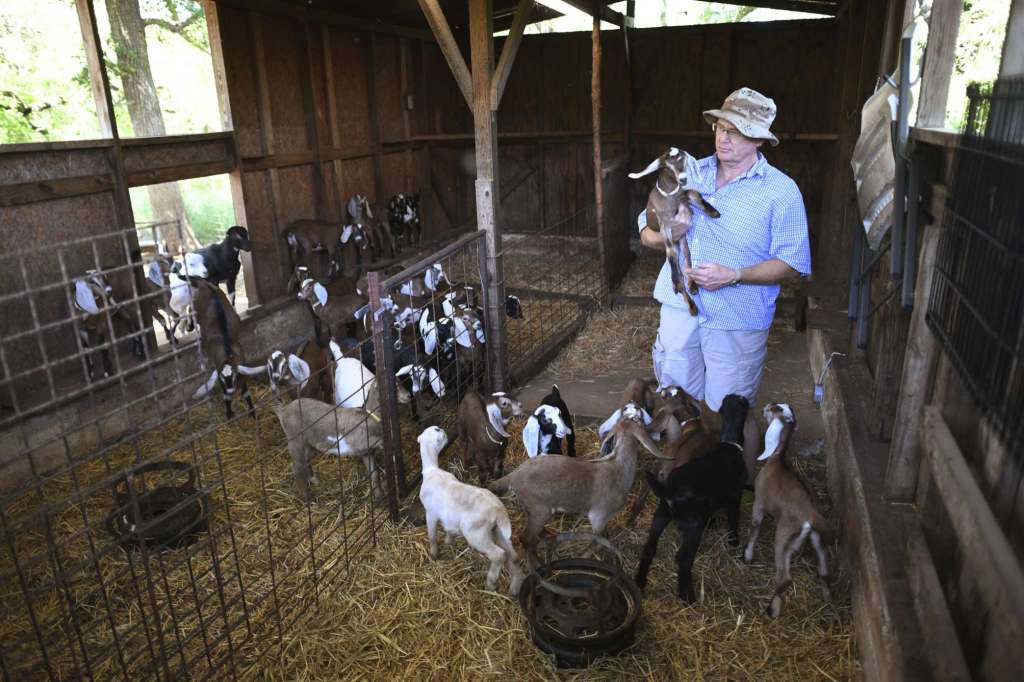
    The most popular milk worldwide comes out of goats. The U.S., where cow is queen, is an outlier. But new data shows that even in America, dairy goats are having a moment.  Dairy goats herds expanded faster than any other major livestock group in the U.S. over the past decade. They’ve grown 61 percent between 2007 and 2017, according to the USDA’s latest Census of Agriculture, a once-every-five-years inventory of the nation’s farms. For context, broiler hens and beef cattle were relatively flat and numbers for specialty animals such as llamas, ostriches and emus fell off a cliff.  The surge comes as goats have permeated pop culture. We’ve seen them frolicking and doing parkour while sporting adorable onesies on YouTube. We’ve maybe hoisted a 20-pound Nubian aloft in everybody’s favorite novelty yoga practice. And rent-a-goats are running amok in Boise and helping clear brush and prevent wildfires in California.  Dairy-goat herds grew in all 48 states for which we have data. But the greatest increases came in the nation’s three biggest goat-dairy states: Wisconsin (up 47,000), Iowa (up 18,000) and Texas (up 20,000).  Wisconsin’s growth came even as the number of goat dairies in the state shrank and the number of goats per dairy soared, a sign of increasing consolidation in the industry.

    According to Janet Fletcher, publisher of the Planet Cheese blog and author of three books on cheese, small-time goat-milkers are being bought out by those with enough cash to compete on a global scale. She points to the 2017 sale of Meyenberg Goat Milk Products of Turlock, California, and the 2015 sale of Redwood Hill Farm in Sebastopol, California. Both were scooped up by Swiss dairy giant Emmi, which also bought Cypress Grove Chèvre, makers of the cult cheese Humboldt Fog.  And at the end of 2017, Canadian dairy giant Saputo bought Wisconsin-based Montchevre for $265 million. It’s now one of the largest goat cheese producers in North America.  Dairy goats’ gain may be dairy cows’ loss. The nation’s dairy herd grew just 3 percent from 2007 to 2017, with growth so concentrated in Texas, Michigan and Idaho that about three out of every five states actually ended the period with fewer cows.  Studies show more than 3 percent of children have a cow’s milk allergy. It can cause gut symptoms and skin problems such as eczema. But allergies alone don’t explain the decline of cow’s milk. According to the USDA, an average American drinks about 18 gallons a year. In the 1970s, it was closer to 30. As cow’s milk loses the healthy reputation that once immunized it from competition, alt-milks like oat, almond and soy milks have swept in to claim market share. Goats aren’t far behind.  Americans’ demand for goat’s milk has steadily risen since the late 1980s when chefs like Alice Waters at Chez Panisse blew our minds with fresh goat’s cheese on salads. Early goat cheese producer Laura Chenel became nearly a household name, but her product was still a specialty item you’d buy in a fancy gourmet shop or health food store.

    Carrie Liebhauser, marketing director of LaClare Family Creamery in Malone, Wisconsin, says America is finally catching up with the rest of the world – at least in terms of milk from goats.  “We are developing a palate for things that are more international and European, and there’s much more awareness of lactose intolerance. Goat’s milk isn’t free of lactose but it’s lower, and the fat globules in goat’s milk are much smaller and break down more easily.”  Liebhauser says LaClare has grown 300 percent just in the past two years, with a full line of pasteurized milk, fresh chèvre and traditional cheeses like mozzarella, jack and cheddar made of goat’s milk.  The LaClare story is typical. Larry and Clara Hedrich wanted to raise their kids on a farm. In 1978 they bought one that came complete with chickens, peacocks and two goats. They sold milk at the local farmers’ markets and in 2008 started experimenting with cheese. LaClare now processes milk from 7,000 goats.  In goats as in many things, producers are pressed to grow big or get out. In 2006, as milk-goat growth was beginning to accelerate, Laura Chenel’s Chèvre rocked the artisan cheese world when it was sold to a French firm.  Redwood Hill Farm used to make cheeses, but now leads a growing market for other cultured goat milk products. Helen Lentze, the company’s senior marketing director, says sales have risen more than 30 percent in the past five years as their goat’s milk yogurts and kefir (a fermented milk drink) found purchase among millennials and Gen Z.

    While cows can be milked year round, goats are seasonal. There is often a surfeit of goat’s milk in the summer and a dearth in the winter, Lentze said. Business models have to support those seasonal fluctuations, either by producing products with different cycles and shelf lives, or by grouping producers together in a coop to ensure a steady supply. Redwood Hill sources from its own dairy as well as six others in California and Nevada.  Lentze pointed out another phenomenon that rapidly becomes clear to anyone dipping their toe into the dairy goat world: It is dominated by women.  “There are reports of women business executives dropping out to raise goats,” Lentze says, explaining their allure to women. “They are smaller and a gregarious social animal, and they are quite frankly easier on the environment and don’t produce as much methane. Their environmental hoofprint is a lot smaller.”  Mary Keehn, the founder of Cypress Grove, is considered one of the four grand dames of American goat cheese. She acknowledges the meteoric rise in U.S. dairy goats, but says it’s not all easy street.

    “America’s a cowboy country and cowboys look down on goats. To this day, banks have not wanted to loan to goat dairies. People think you can start as a hobby and scale up, but a small cow dairy is 250 cows and it takes 10 goats to equal the milk of one cow. You really need 1,000 goats to have a viable business, which means 2,000 babies you have to feed by bottle. The only path to success is having systems that manage larger quantities of goats.”  There are other impediments, she says. Because there’s less money in it, fewer veterinarians specialize in goats and few pharmaceutical companies invest in goat-specific drugs. Nonetheless, she said, Cypress Grove has enjoyed years of double-digit growth. The booming industry is now attracting a different level of entrant. They aren’t hobbyists, they’re an elite group with ready capital who sit, as Keehn says, “at that intersection of business and agriculture.”  The math will continue to be tricky, she says. A gallon of goat’s milk is $4.50 wholesale, while a gallon of cow’s milk runs from $1 to $1.50. Producers can’t charge four times as much for goat cheese and other products. Still, she said, cheese finds a way: At the first American Cheese Society competition in 1983 there were three card tables arrayed with cheeses. In 2018 there were more than 2,000 entrants.

    source

  • First it was TV now it is Computers to blame!

    First it was TV now it is Computers to blame!

    Americans are becoming increasingly sedentary, spending almost a third of their waking hours sitting down, and computer use is partly to blame, a new study found.  Over almost a decade, average daily sitting time increased by roughly an hour, to about eight hours for U.S. teens and almost 6 1/2 hours for adults, according to the researchers. That includes school and work hours, but leisure-time computer use among all ages increased too.  By 2016, at least half of American kids and adults spent an hour or more of leisure time daily using computers. The biggest increase was among the oldest adults: 15% of retirement-aged adults reported using computers that often in 2003-04, soaring to more than half in 2015-16.  Most Americans of all ages watched TV or videos for at least two hours daily and that was mostly unchanged throughout the study, ranging from about 60% of kids aged 5 to 11, up to 84% of seniors.  “Everything we found is concerning,” said lead author Yin Cao, a researcher at Washington University’s medical school in St. Louis. “The overall message is prolonged sitting is highly prevalent,” despite prominent health warnings about the dangers of being too sedentary.

    The researchers analyzed U.S. government health surveys from almost 52,000 Americans, starting at age 5, from 2001-2016. Total sitting time was assessed for teens and adults starting in 2007. The results were published Tuesday in the Journal of the American Medical Association.  Studies have shown that prolonged periods of sitting can increase risks for obesity, diabetes, heart disease and some cancers. U.S. activity guidelines released last fall say adults need at least 150 minutes to 300 minutes of moderate-to-vigorous activity each week, things like brisk walking, jogging, biking or tennis. Muscle strengthening two days weekly is also advised. Immediate benefits include reduced blood pressure and anxiety and better sleep. Long-term benefits include improved brain health and lower risks for falls.  Kids aged 6 through 17 need 60 minutes of moderate-to-vigorous physical activity daily. Regular activity is even recommended for kids as young as 3. But only about 1 in 4 U.S. adults and 1 in 5 teens get recommended amounts.

    College student Daisy Lawing spends a lot of time sitting, but says she doesn’t have much choice. Classes and homework on the computer take up much of her day.  “I always feel bad” about being inactive, she said Tuesday at an Asheville, North Carolina, cafe, explaining that she did a school paper about the benefits of physical activity.  “I try to walk a lot, try to work out twice a week. But sometimes I can’t because I’m too busy with school,” Lawing, 21, a junior at Appalachian State University in Boone.  Peter T. Katzmarzyk of the Pennington Biomedical Research Center in Baton Rouge, Louisiana, said people who sit all day need to do more than the minimum recommended amount of physical activity to counteract the harms of being sedentary.  “We’ve just got to really work on the population to get the message out there. Physical activity is good for everyone,” he said.

    source

  • ‘Lighter-than-air’ aircraft has first test flight

    ‘Lighter-than-air’ aircraft has first test flight

    An innovative aircraft that turns into a “lighter-than-air” balloon to propel itself forward has been flown for the first time.  The Phoenix is designed to repeatedly switch between being lighter and heavier than air to generate thrust and allow it to stay in the skies indefinitelyOfficially known as an “ultra-long endurance autonomous aircraft,” it was developed by scientists in Scotland and flown over a distance of 120 meters (394 feet) during its first test flight in March.  The blimp-like aircraft, which is 15 meters long and has a wingspan of 10.5 meters, has been designed for businesses and scientific use, and its creators hope it will revolutionize the telecommunications industry.  “The Phoenix spends half its time as a heavier-than-air aeroplane, the other as a lighter-than-air balloon,” explains Andrew Rae, professor of engineering at the University of the Highlands and Islands Perth College, who was involved in the project. “The repeated transition between these states provides the sole source of propulsion.  “This system allows the Phoenix to be completely self-sufficient,” he adds in a statement. “Vehicles based on this technology could be used as pseudo satellites and would provide a much cheaper option for telecommunication activities.”  The team behind the aircraft also believe it could be used to provide Wi-Fi coverage to remote areas.  The vehicle’s fuselage contains helium, allowing to to ascend, as well as an air bag that inhales and compresses air, enabling it to descend.  It also features solar cells on its wings and tail, which charge the battery that powers its valves and pumps.  Gas-filled dirigible-style aircraft have been making a return to the skies in recent years. The Airlander 10, a massive helium-filled airship claimed as the world’s biggest aircraft, is hoping to make its commercial debut in the next few years.

    source

  • This is a  High School Textbook, Referring to Trump ‘Mental Stability’ and ‘Not Very Hidden Racism’?

    This is a High School Textbook, Referring to Trump ‘Mental Stability’ and ‘Not Very Hidden Racism’?

    High school students are being taught US history from a textbook that focuses on arguments made by Hillary Clinton’s supporters, labeling Donald Trump as mentally ill and racist, and his supporters as white and angry. The American history textbook By the People: A History of the United States has a section entitled “The Angry Election of 2016” which is critical of the president.  According to The Federalist, the textbook is published by Pearson Education and authored by New York University professor James Fraser, and it started being rolled out to public schools in 2018.  Fox News’ Todd Starnes reports one student, Tarra Snyder of Rosemount High School in Minnesota, obtained a copy of the book from her school. She said she was “appalled” after seeing the election section and how the textbook ignored the Democratic presidential issues at the time.

    “It was really, really surprising to me,” she said. “I really believe that learning should be objective and that students can make their own decisions based on what they’re able to learn in a classroom, and if the facts are skewed then students aren’t able to make well-rounded decisions on what they believe.”  The author wrote in the textbook, “Most thought that Trump was too extreme a candidate to win the nomination, but his extremism, his anti-establishment rhetoric, and, some said, his not very hidden racism connected with a significant number of primary voters.”  The author went on to state the president’s supporters were “mostly older, often rural or suburban, and overwhelmingly white.”  “Clinton’s supporters feared that the election had been determined by people who were afraid of a rapidly developing ethnic diversity of the country, discomfort with their candidate’s gender and nostalgia for an earlier time in the nation’s history,” the author continues. “They also worried about the mental stability of the president-elect and the anger that he and his supporters brought to the nation.”

    Scott Overland, a spokesperson for the British-based Pearson Education, told CBN News, “AP History ‘By the People’ was developed by an expert author and underwent rigorous peer review to ensure academic integrity… This work is designed to convey college-level information to high school students and meet specific Advanced Placement standards.”  But critics say the book crosses a line.  “In case you didn’t think there was an effort going on in public schools to indoctrinate kids with an anti-conservative agenda, a friend of mine took pictures and highlighted parts of this AP US History book,” tweeted Alex Clark, co-host of The Joe and Alex Show on WNOW in Indianapolis, Ind.

    source


  • Men’s Well being & Health Ideas, Advice

    Men’s Well being & Health Ideas, Advice

    The muse for wholesome existence. This Republican scheme would work finest for the healthiest. It could additionally work correctly for the poor as a result of the premium subsidy system would shield them from the even greater costs inside Obamacare. Bob Laszewski was named the Washington Publish’s Wonkblog Pundit of the 12 months” for 2013 for some of the correct and public accounts” detailing the first few months of the Obamacare rollout. Well being and Health – Well being and Health is a extremely attention-grabbing subject as you get to be further aware of your physique and the fitting strategies to check Yoga, Weight loss plan, Consuming routine, Sports, and many others. This might assist in creating a complete new you by being aware of what is going into your physique and the way harmful some substances could be to you.

    How i earn from amazon associates program shoutmeloud on Thu, 30 Nov 2017 23:57:00 GMT Learn how to build an affiliate website using wordpress on Tue, 27 Mar 2018 23:54:00 GMT 20 tips i used to make 90 336 sixty five with amazon up gas on Thu, 05 Apr 2018 21:42:00 GMT How you can build an amazon affiliate website make an internet site hub on Thu, 17 Mar 2016 07:59:00 GMT 8 finest amazon affiliate plugins for amazon how you can use wordpress on Thu, 07 Sep 2017 12:forty four:00 GMT How you can become a profitable amazon affiliate the work at home wife on Mon, 18 Nov 2013 14:25:00 GMT Easyazon amazon wordpress plugin specials.

    Our YMCAs supply a wide variety of group health lessons for almost each capacity and interest. Every month our Affiliation holds more than 300 group health lessons across YMCA branches throughout Central Ohio. You will find low-impact and beginner lessons, cardio health, …

    This content was originally published here.