Author: Truth & Hammer

  • ‘Prayer Works Miracles and Prayer Saves Lives’: Trump Cites Power of Prayer, Announces Conscience Protections

    ‘Prayer Works Miracles and Prayer Saves Lives’: Trump Cites Power of Prayer, Announces Conscience Protections

    President Donald Trump and Vice President Mike Pence hosted a Rose Garden ceremony for the National Day of Prayer Thursday morning, and the president spoke about the power of prayer while also announcing practical steps to protect religious freedom.  “Our Nation’s honored tradition of prayer has sustained us and strengthened our trust that God will continue to watch over and accompany us through the best of times and the darkest hours. May we as Americans never forget the power of prayer and the greatness of our Creator,” Trump declared in his day of prayer proclamation.  The president made news by announcing new conscience protections for religious health care providers so that they’re not forced to violate their religious beliefs about abortion.  “Just today we finalized new protections of conscience rights for physicians, pharmacists, nurses, teachers, students and faith-based charities,” Trump said.  “Every citizen has the absolute right to live according to the teachings of their faith and the convictions of their heart. This is the bedrock of American life. To protect this heritage my Administration has strongly defended religious liberty,” he said.  And he cited other important faith-based actions he’s taken, like working to liberate preachers from the IRS threats they’ve faced because of the Johnson Amendment, which bans non-profits like churches and ministries from supporting or opposing political candidates.

    He further explained his support for religious freedom in his proclamation, saying, “Our Nation acknowledges that religious liberty is a natural right, given to us by our Creator, not a courtesy that government extends to us. The First Amendment recognizes the freedom of religion and safeguards this right against government infringement.”  The president went on to cite the success of prison reform efforts, and then turned to a real-life example of the power of faith helping fight the drug crisis in America. He called up a recovering opioid addict named Ashley Evans, who briefly shared how faith has restored her life.  “Finding God saved my life. It’s been incredible,” Ashley said. “It’s been a journey, but without Him, I could not do this… God has been with me every step of the way and everything has worked out.”  She said it’s only “by the grace of God” that she’s now free. And she also thanked her behavioral health worker Angie Dennis whom Trump called up to the podium as well.

    Angie explained she helped Ashley by sharing with her, “The biggest honor I could have was to pass along to Ashley that it’s a relationship with Jesus, it’s not a religion or a bunch of rules. It’s just that personal relationship. And if you trust Him and do your part, then trust Him and ask for help for the rest. He’ll open doors that no one can close.”  As he thanked them for sharing their story, Trump declared, “Prayer works miracles and prayer saves lives.”  The president went on to cite the verse from Isaiah 40:31, that those who hope in the Lord will “run and not grow weary, they will walk and not be faint.” He said that’s how he and Vice President Pence have survived two tough years so far in the White House.  “Today we pray for America,” Pence said in some prepared remarks. “And as we pray, let’s pray with confidence, as was inscribed in those ancient words millennia ago, that if His people, who are called by His name will humble themselves and pray, that He’ll do like He’s always done through the long and storied history of this nation: He’ll hear from Heaven and He’ll heal this land, this one nation, under God, indivisible, with liberty and justice for all.”

    In closing, President Trump said, “We once again place our hopes in the hands of our Creator.”

    Later, Pastor Paula White prayed the closing prayer, speaking God’s word over President Trump, citing Psalm 139:16 that God has ordained every one of his days. She also declared the White House to be holy ground and launched into spiritual warfare, asking God to watch over the president and his family.


    source and more


  • You Kill Them Now or You Kill Them Later’

    You Kill Them Now or You Kill Them Later’

    Why do we only see the problem and not the solution?  Why do people feel so bad they want to kill their young?  Where in nature do you see this?  In animals who see no future for themselves let  alone their offsprings.  People are the same, people who kill their young are hopeless.  We should be doing something about that instead of killing babies.

    Kill now are kill later, are the words that came from the mouth of Alabama State Rep. John Rogers as Democrats and Republicans debated the passage of a bill Tuesday that virtually banned abortion in the state of Alabama.  Rogers, a Democrat, argued that the decision to allow a child to live is a “woman’s choice” and that some children are simply unwanted.  “I’m not about to be a male telling a woman what to do with her body,” he said. “Some kids are unwanted, so you kill them now or you kill them later. You bring them into the world unwanted, unloved, you send them to the electric chair. So, you kill them now or kill them later.”  “Some parents can’t handle a child with problems.  It could be retarded. It might have no arms and no legs,” Rogers added, according to the Alabama Political Reporter.   Conservatives strongly condemned Rogers’ statements.

    Donald Trump Jr. called the remarks “truly sickening.”  “This is stomach curling and makes Ralph Northam look like a moderate on abortion,” he said, referring to a Virginia governor who suggested that some babies should be allowed to die right after they are born.  “Every Democrat running for President needs to be asked where they stand on this. The extreme turn we’ve seen from Dems on abortion recently is truly sickening,” he continued.

    more

  • Muslim Tells Christians: ‘We Tried Warning You,’ It’s Time to ‘Wake Up’ about Threat of Radical Islam

    Muslim Tells Christians: ‘We Tried Warning You,’ It’s Time to ‘Wake Up’ about Threat of Radical Islam

    As Sri Lankan authorities worry about the potential of more suicide attacks by the group behind the Easter Sunday bombings, one Muslim activist is issuing an urgent warning to Christians around the world about the growing and very real threat of radical Islam.

    “If Christians don’t wake up, if Christians leaders don’t wake up, then we Muslims who fled from extremists can’t help you anymore,” said Mohammad Tawhidi, a Muslim author from Australia. “We tried warning you.”

    Tawhidi, a third-generation Iranian-born Muslim and author of The Tragedy of Islam, says political correctness is allowing radical Muslims with their dangerous and deadly ideology, to flourish.

    “When we come to the West and try to warn the governments and intelligence agencies about what is happening, about the people we fled from, we have this new political correctness agenda that tells us that ‘oh, we are the racists, we are the ones who are traitors and the extremists need to be understood and embraced’.”

    Tawhidi says even though the Islamic terror group ISIS lost its territory in Syria and Iraq, the group’s followers and sympathizers are still actively planning mayhem.

    “We are fighting a real caliphate, not a so-called caliphate, this is the true extremist Islamist militant ideology that is taking over our lands and our countries,” Tawhidi warned.

    This week, a German newspaper published an exhaustive study of all Islamic terror attacks around the world since the September 11, 2001, strikes on America.

    According to the German newspaper Die Welt Islamic extremists have carried out 31,211 attacks in the last 18 years.

    Those attacks have killed 146,811 people around the world. Most of the victims have been Muslims.

    The newspaper analyzed all the information gathered by the Global Terrorism Database at the University of Maryland to come up with the number of attacks and lives lost.

    The list concludes with the recent attacks in Sri Lanka that killed at least 253 people and injured more than 500 when suicide bombers targeted churches and hotels on the island nation.

    Tawhidi, who describes himself on his website as “Muslim scholar, thinker and educator,” says he’s on a mission to tackle the “spread of Islamic extremism” and believes the key is to reform Muslim societies and their mindset.

    “Look, I’m a Muslim, but I cannot live in an Islamist theocracy,” Tawhidi told CBN News. “I can live in a Christian government, based on their constitution, because that is where peace lies. I cannot live in a place where ISIS rules the area.”

    “No Muslim with a brain that works would want to live under ISIS,” Tawhidi added.

    For more, watch author Mohammad Tawhidi share his views on how America can fight the forces of radical Islam.

    Follow George Thomas on TwitterFacebook & Instagram for stories and insights from a fresh and unique persepective.


  • Covington Catholic Student Sandmann Sue NBC Universal for $275M for Defamation

    Covington Catholic Student Sandmann Sue NBC Universal for $275M for Defamation

    Covington Catholic High School student Nicholas Sandmann’s attorney is suing NBC Universal for $275 million.  Sandmann is the teenager who found himself at the center of controversy after attending a March for Life event in January.  Video of him standing face-to-face with a Native American man went viral. Reports went out that he and other schoolmates were mocking the Native Americans at rallies that day, and that he had blocked a Native American activist from walking to the Lincoln Memorial.  Sandmann’s lawyer says the NBC Universal media corporation “created a false narrative by portraying the alleged ‘confrontation’ as a ‘hate crime’ committed by Nicholas.”  “Today, @LLinWood and I filed a $275,000,000 lawsuit against NBCUniversal on behalf of Nicholas Sandmann.  The facts of the suit show the anti-Trump narrative NBC pushed so hard,” attorney Todd V. McMurtry posted on Twitter

    The lawsuit later states:

    NBCUniversal’s attacks on Nicholas included at least fifteen (15) defamatory television broadcasts, six (6) defamatory online articles, and many tweets falsely accusing Nicholas and his Covington Catholic High School (“CovCath”) classmates of racists acts…  NBCUniversal created a false narrative by portraying the “confrontation” as a “hate crime” committed by Nicholas.

    It continues:

    NBCUniversal created panels on its talk shows to frame the January 18 incident as one involving a “hate crime” and demonstrating “white supremacy” as a result of “whites” being “emboldened” by President Trump’s presence in the White House and repeated these premises over and over, while continuously showing a carefully selected few seconds from the heavily edited videos that omitted the entire context of the incident.

    Sandmann’s attorneys have already filed defamation lawsuits against CNN and the Washington Post as well.

    After the wall-to-wall media coverage, Sandmann and other students at Covington faced violent threats that escalated to the point where their school had to be closed down for security reasons.

    source

  • Burly Man Coffee Co. donates 100 Cars for Single Moms

    Burly Man Coffee Co. donates 100 Cars for Single Moms

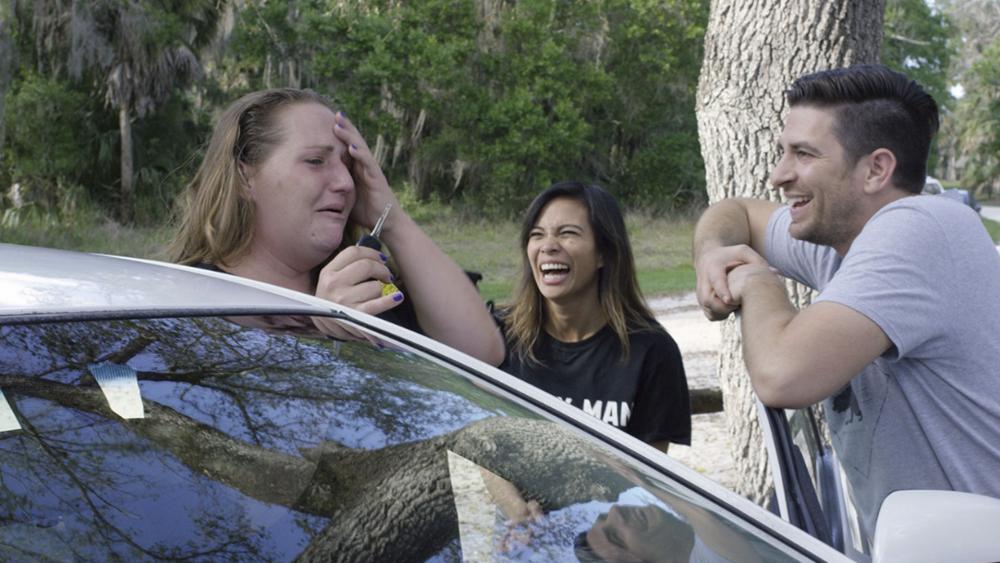
    A South Florida coffee company says it’s fighting back against the message of “toxic masculinity” by donating their profits to help struggling single mothers.  Back in March, Burly Man Coffee launched their charitable giving campaign by giving a vehicle to a single mom in Lake Worth, Fla.  The company’s ultimate goal is to donate 100 cars to single mothers.  The first recipient was Celeste Bokstrom, who’s a full-time caretaker for her severely non-verbal, autistic 16-year-old son, Logan.  She has spent four years without a vehicle, making it difficult to buy groceries or get to doctors’ appointments.  It took Bokstrom two years to save enough money to purchase a used car online. Then she faced utter disappointment when she went to register the vehicle and found out the car was stolen.  “I was shocked and extremely disappointed,” Bokstrom said in a press release. “It took me a long time to save up enough money to buy a car. I lost it all in a moment. I was devastated.”  Burly Man Coffee learned about the single mother’s struggles and decided to give her a new car, an iPad for her son to communicate, and many other resourceful tools for his care. The company also provided her with a shopping spree and a makeover.  In addition, Mike Cohen, director of the Center for Brain in Jupiter, Fla., partnered with the coffee company to provide Logan with Neurofeedback therapy. Using this innovative technology, Cohen has helped autistic individuals to be able to speak and has also improved the quality of life for numerous other people suffering from brain trauma.  When representatives of the coffee company came to give her the gifts, Bokstrom couldn’t believe it.

    source

  • Ancient 3,000-year-old tablet suggests Biblical king may have existed

    Ancient 3,000-year-old tablet suggests Biblical king may have existed

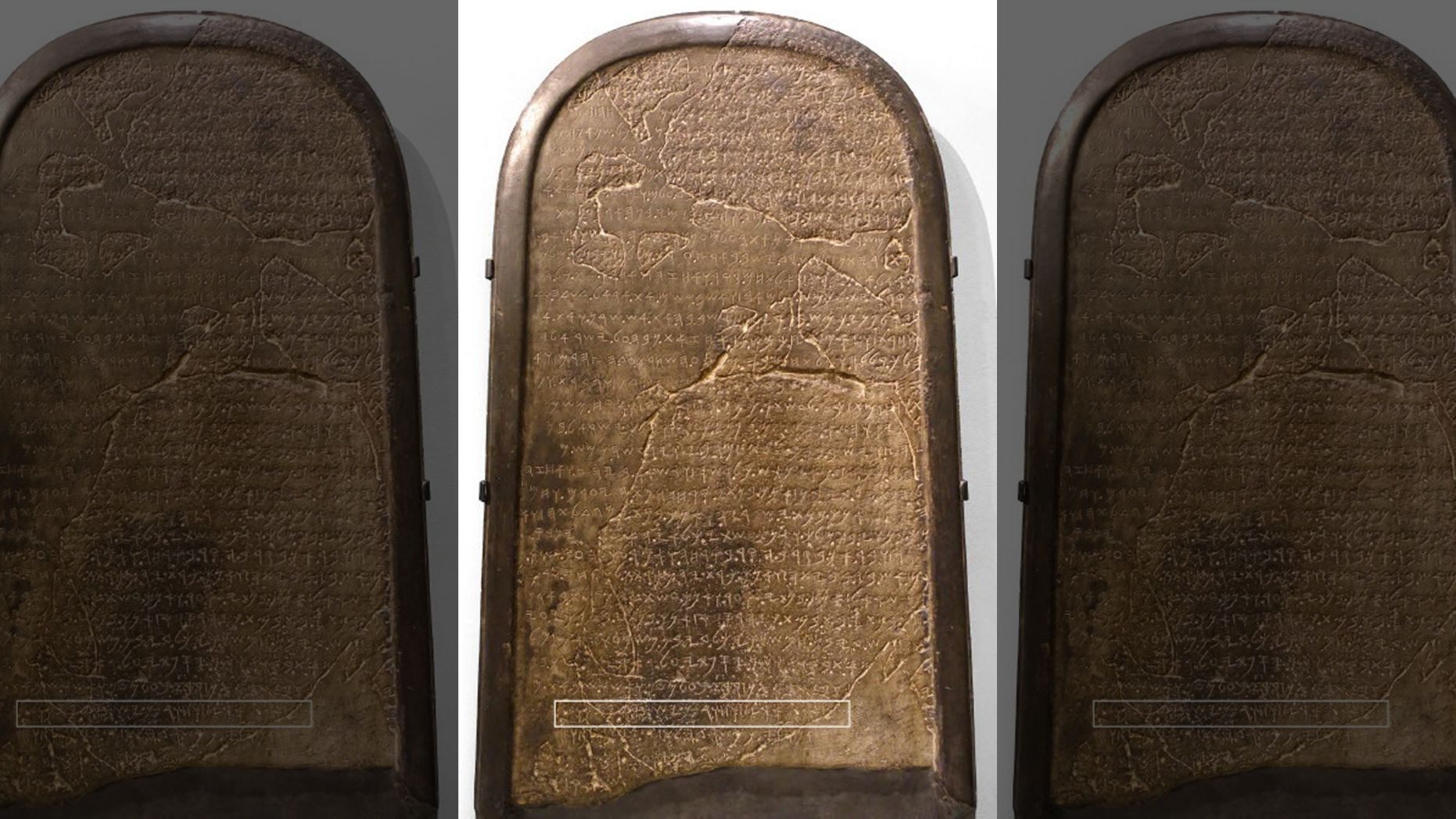
    The study of an ancient tablet that dates back nearly 3,000 years suggests that the biblical King Balak may have been an actual historical figure.

    Published in Tel Aviv: The Journal of the Institute of Archaeology of Tel Aviv University, the study looks at the Mesha Stele and makes the determination that after looking at new photos of the cracked tablet, Balak existed, though the researchers are not 100 percent certain of it.

    “After studying new photographs of the Mesha Stele and the squeeze of the stele prepared before the stone was broken, we dismiss Lemaire’s proposal to read  (‘House of David’) on Line 31,” the researchers wrote in the study’s abstract. “It is now clear that there are three consonants in the name of the monarch mentioned there, and that the first is a beth. We cautiously propose that the name on Line 31 be read as Balak, the king of Moab referred to in the Balaam story in Numbers 22–24.”

    ‘s Line 31 that is tempering the researchers’ enthusiasm. There are “[a]bout seven letters are missing from the beginning of the line [31], followed by the words (“sheep/small cattle of the land”),” the study’s abstract adds.

    The abstract continues: “Next there is a vertical stroke that marks the transition to a new sentence, which opens with the words (“And Hawronēn dwelt therein”). Evidently a name is expected to follow. Then there is a legible beth, followed by a partially eroded, partially broken section with space for two letters, followed by a waw and an unclear letter. The rest of the line, with space for three letters, is missing.”

    The Mesha Stele, which is also known as the Moabite Stone, is an inscribed tablet that dates back to 840 B.C. and was discovered in 1868 by researcher Frederick Augustus Klein.

    It had previously been theorized that Line 31 was a reference to the House of David. However, the researchers, led by the study’s lead author, Israel Finkelstein, believe the letter “B” is there and it is not a reference to “beth,” the Hebrew word for “house,” but rather Balak.

    Although the study’s authors, Finkelstein, Nadav Na’aman and Thomas Römer, have theorized that Balak may have been an actual person, their “proposal is very tentative,” Ronald Hendel, a professor of the Hebrew Bible and Jewish Studies at the University of California, Berkeley, told Live Science. Hendel was not involved in the study.

    read more

  • Interacting with houseplants does this for the mind and body | TreeHugger

    Interacting with houseplants does this for the mind and body | TreeHugger

    This might explain why houseplants are so popular again.

    It’s often been suggested that talking to one’s plants is good for the plants. But what if we have it all backwards; what if it is the humans who benefit from these little chit-chats? If you think about it, that the sound of our voice may help plants is pretty anthropocentric. They’ve been thriving forever without us, but we could not exist without them.

    We rely on plants for their gifts of oxygen and food, for starters. But exposure to them – from spending time in nature to having a few houseplants – also does incredible things for our health and well-being. This is especially well illustrated by a study that was published a few years ago in the Journal of Physiological Anthropology.

    The researchers set the stage for the paper by introducing this simple but profound truth:

    “The living space of modern people has moved from outdoors to indoors – more than 85% of a person’s daily life is spent indoors.”

    They explain that a life indoors is made increasingly possible thanks to advances in information technology, which allows us to “connect and remain connected to the computer environment,” as they put it. Or, as I put it, which allows us to work, socialize, learn, shop, and entertain ourselves … without ever having to step foot outside.

    “However, this diffusion of information technology causes a great deal of stress, such as technostress,” the authors explain, “which is a modern disease of adaptation caused by an inability to cope with the new computer technologies in a healthy manner.”

    Uhm, does that ring a bell for anyone?

    So, enter the plants. There has been plenty of research looking at the health benefits of nature and houseplants as well. Indoor plants have been a popular topic of study and have been found to enhance job satisfaction in the office, reduce psychological stress, improve moods, and enhance cognitive health. These effects can positively affect resistance to diseases and chronic stress, explain the authors, but few studies have examined the actual physiological mechanisms that are at play.

    Thus, the research team decided to look at the physiological benefits of indoor plants in modern people, focusing on the cardiovascular changes that happen when a person interacts with a plant. They measured autonomic nerve system activity, as well as quantifying the psychological changes during the contact with plants.

    Granted, the study was pretty small – and limited in demographics: 24 men all around the age of 25 years. But the results resonate nonetheless. You can read about the methods in the study itself, but the condensed version goes something like this: Half the men repotted a plant while the other half were assigned computer tasks; the next day, each group did the other activity. Data for heart rate variability, blood pressure, and pulse rate were collected before, during, and after.

    With the heart rate variability (HRV) they could measure activity of the parasympathetic nervous system (which increases in a relaxed state) as well as the activity of the sympathetic nervous system (which increases in a stressed state).

    The participants also filled out self-rating assessments about their feelings before, during and after the tasks.

    It may come as little surprise that the men felt “comfortable, soothed, and natural” after transplanting a plant; and they felt “uncomfortable, awakened, and artificial” after the computer task. And in fact, there were significant differences between the two after the tasks, despite the absence of significant differences in these feelings before the tasks, when they mostly felt neutral.

    The physical changes were also significant, with the authors concluding:

    “The results of HRV analysis indicate that indoor plants have positive physiological effects on the autonomic nervous system by suppressing sympathetic activity, which often increases when a subject is exposed to a stressor.”

    In contrast, the computer task increased sympathetic nervous system activity and increased diastolic blood pressure as well.

    In the end, the researchers say that active interaction with indoor plants can have positive effects on our stress response vis-a-vis cardiovascular activities. And that the physiological benefits may result from a number natural stimuli acting on the senses of vision, hearing, touch, and smell.

    “Our results suggest that active interaction with indoor plants can reduce physiological and psychological stress compared with mental work.” they conclude. “This is accomplished through suppression of sympathetic nervous system activity and diastolic blood pressure and promotion of comfortable, soothed, and natural feelings.”

    Given that we have mostly moved indoors, away from the nature that we have evolved with – and now remain inside and so closely connected to this relatively new concept of computer technology, is it any wonder that we are wired to respond to the living, green things around us?

    And on that note, I’m going to go pet my plants …

    This content was originally published here.

  • Trump announces illegal immigrants will be ‘given to Sanctuary Cities’

    Trump announces illegal immigrants will be ‘given to Sanctuary Cities’

    This is a breaking news story. Please check back for updates as more information becomes available.

    Illegal immigrants who can no longer be legally held in custody in the United States will now be released into sanctuary cities and states, President Donald Trump announced via tweet.

    “Those Illegal Immigrants who can no longer be legally held (Congress must fix the laws and loopholes) will be, subject to Homeland Security, given to Sanctuary Cities and States,” he tweeted just after noon on Monday.

    Those Illegal Immigrants who can no longer be legally held (Congress must fix the laws and loopholes) will be, subject to Homeland Security, given to Sanctuary Cities and States!

    — Donald J. Trump (@realDonaldTrump) April 15, 2019


    There is no indication just yet of how this process will play out.

    Trump last week had said he was considering this move.

    “Due to the fact that Democrats are unwilling to change our very dangerous immigration laws, we are indeed, as reported, giving strong considerations to placing Illegal Immigrants in Sanctuary Cities only The Radical Left always seems to have an Open Borders, Open Arms policy – so this should make them very happy!” Trump had said Friday afternoon.

    Trump has long criticized sanctuary cities for protecting those who violate immigration laws and even commit violent crimes. He has even suggested cutting federal funding to sanctuary cities.

    Last week, the Ninth Circuit Court of Appeals ruled that the Trump Administration can’t return asylum seekers to Mexico for them to wait for court appearances.

    Today, the President also went so far as to say he agreed with singer and entertainer Cher, who tweeted over the weekend about understanding the U.S. should help “struggling immigrants,” but that the country also needs to take care of its own homeless citizens – including veterans.

    “I finally agree with Cher,” he wrote.

    I finally agree with @Cher! pic.twitter.com/i5acSgUrCk

    — Donald J. Trump (@realDonaldTrump) April 15, 2019

    Cher had tweeted Sunday, “I Understand Helping struggling Immigrants,but MY CITY (Los Angeles) ISNT TAKING CARE OF ITS OWN.WHAT ABOUT THE 50,000+🇺🇸Citizens WHO LIVE ON THE STREETS.PPL WHO LIVE BELOW POVERTY LINE,& HUNGRY? If My State Can’t Take Care of Its Own(Many Are VETS)How Can it Take Care Of More.”

    I Understand Helping struggling Immigrants,but MY CITY (Los Angeles) ISNT TAKING CARE OF ITS OWN.WHAT ABOUT THE 50,000+🇺🇸Citizens WHO LIVE ON THE STREETS.PPL WHO LIVE BELOW POVERTY LINE,& HUNGRY? If My State Can’t Take Care of Its Own(Many Are VETS)How Can it Take Care Of More

    — Cher (@cher) April 14, 2019

    This content was originally published here.

  • Scientists explain mysterious, celestial STEVE

    Scientists explain mysterious, celestial STEVE

    Long beam of pink light shooting into the sky from behind small forested island.

    A great example of a STEVE display, taken by Ryan Sault of Alberta Aurora Chasers on the evening of April 10, 2018, in Prince George, British Columbia, Canada.

    We’re all aware of, or even familiar with, the aurora borealis – also known as northern lights – those beautiful, shimmering ribbons of light that sometimes dance across the night sky. But there’s another, somewhat lesser-known phenomenon called STEVE (strong thermal emission velocity enhancement) that also puts on fantastic displays, yet isn’t as well understood. Now scientists think they have finally figured out what causes it. They found that STEVE has characteristics similar to those of typical auroras, yet is also uniquely different in how it forms.

    Researchers published the new peer-reviewed findings in Geophysical Research Letters on April 16, 2019.

    In 2018, a previous study had found that STEVE was a kind of sky glow that was distinct from other auroras, but the researchers didn’t know what was causing it. Whatever the source was, it was seemingly not charged particles hitting Earth’s atmosphere the same way as in typical auroras. But, STEVE could also appear during strong magnetic storms, the kind that produce the brightest displays of auroras: hence, a bit of a puzzle. There were some fantastic displays of STEVE in 2018, which garnered much attention on social media, and caught the attention of researchers.

    Unlike other auroras, which are seen as large, brilliant green ribbons, STEVE is a thinner ribbon of pinkish-red or mauve-colored light stretching from east to west, and extending farther south in latitude than other auroras. STEVE displays occur very high up in the atmosphere, at about 15,000 miles (25,000 km) altitude. But, those STEVE displays are also often accompanied by other vertical columns of green light called Picket Fence Auroras that also had not been well understood until now.

    Curved pink beam shoots into sky over lake with green aurora in distance.

    Another beautiful photo of a STEVE display, near Kamloops, BC, Canada, on September 26, 2016. Image via Dave Markel.

    Tall twisted column of pink like beside aurora divided into horizontal pieces.

    In this great photo, both a mauve STEVE and a green Picket Fence Aurora display can be seen. Photo taken on May 8, 2016 near Keller, Washington. Image via Rocky Raybell.

    Arc of pink like next to green aurora divided into vertical lines.

    A stunning Picket Fence Aurora display near Anarchist Mountain, BC, Canada on September 15, 2017. Image via Debra Ceravolo.

    Now, the new study has pinpointed two causes of the two phenomena – energetic electrons like those in other auroras, as well as heating of other charged particles in the atmosphere – that create both STEVE and Picket Fence Auroras. STEVE is caused by the heating of charged particles – plasma heating – in the upper atmosphere, but Picket Fence Auroras result from mechanisms more similar to typical auroras. As Bea Gallardo-Lacourt, a space physicist at the University of Calgary and co-author of the new study, explained:

    Aurora is defined by particle precipitation, electrons and protons actually falling into our atmosphere, whereas the STEVE atmospheric glow comes from heating without particle precipitation. The precipitating electrons that cause the green picket fence are thus aurora, though this occurs outside the auroral zone, so it’s indeed unique.

    The researchers were able to come to these conclusions by studying both satellite data and ground images of STEVE events. Data from several satellites were analyzed as the satellites passed above STEVE events in April 2008 and May 2016. That data was then compared to photographs taken by amateur auroral photographers. In the case of the STEVE displays, it was found that charged particles in the ionosphere – in a “flowing river” – collide with each other. The friction produces heat, and the particles emit mauve-colored light as a result. This is similar to how electricity in an incandescent light bulb heats the filament until it glows.

    Earth with horse shoe shaped areas radiating from pole to pole.

    Artist’s concept of the magnetosphere during a STEVE event, depicting the plasma region which falls into the auroral zone (green), the (blue) and the boundary between them called the (red). Image via Emmanuel Masongsong, UCLA/Yukitoshi Nishimura, BU and UCLA.

    Picket Fence Auroras, on the other hand, are created by energetic electrons hitting the Earth’s atmosphere from space. This is similar to regular auroras at northern latitudes, except that these particles tend to strike the atmosphere farther south in latitude. The electrons are energized by high-frequency waves moving from Earth’s to the ; when the electrons are knocked out of the magnetosphere, they create the stripe patterns reminiscent of a picket fence. This process occurs in both hemispheres simultaneously, indicating that the source of the particles is high enough above Earth that the particles can affect both hemispheres at the same time.

    STEVE events are also a great way for the public to become involved in auroral research. Photos taken from the ground can provide specific time and location data, which is valuable to scientists. As Toshi Nishimura, a space physicist at Boston University and lead author of the new study, said:

    As commercial cameras become more sensitive and increased excitement about the aurora spreads via social media, citizen scientists can act as a ‘mobile sensor network,’ and we are grateful to them for giving us data to analyze.

    Aurora borealis, winding curtains of green light over icy sea.

    A beautiful example of a “regular” aurora, seen on November 2, 2016, from an airplane flying over northern Canada near the Arctic Circle. Image via Shreenivasan Manievannan.

    Learning about exotic phenomena like STEVE and Picket Fence Auroras not only helps scientists understand what causes them, but also how they relate to other auroral phenomena, and what drives such complex processes in Earth’s atmosphere as it interacts with charged particles coming in from space. This is useful not only for understanding the phenomena themselves, but also how to safeguard against possible detrimental effects on radio and GPS signals, which are crucial services in today’s technological world.

    Bottom line: Thanks to data from both the public and satellites, scientists have now figured out what causes both STEVE and Picket Fence Aurora phenomena, which are lesser-known but just as beautiful aurora-like sky displays.

    This content was originally published here.

  • Madonna performs “Medellín” live for the first time at 2019 Billboard Awards: Watch

    Madonna performs “Medellín” live for the first time at 2019 Billboard Awards: Watch

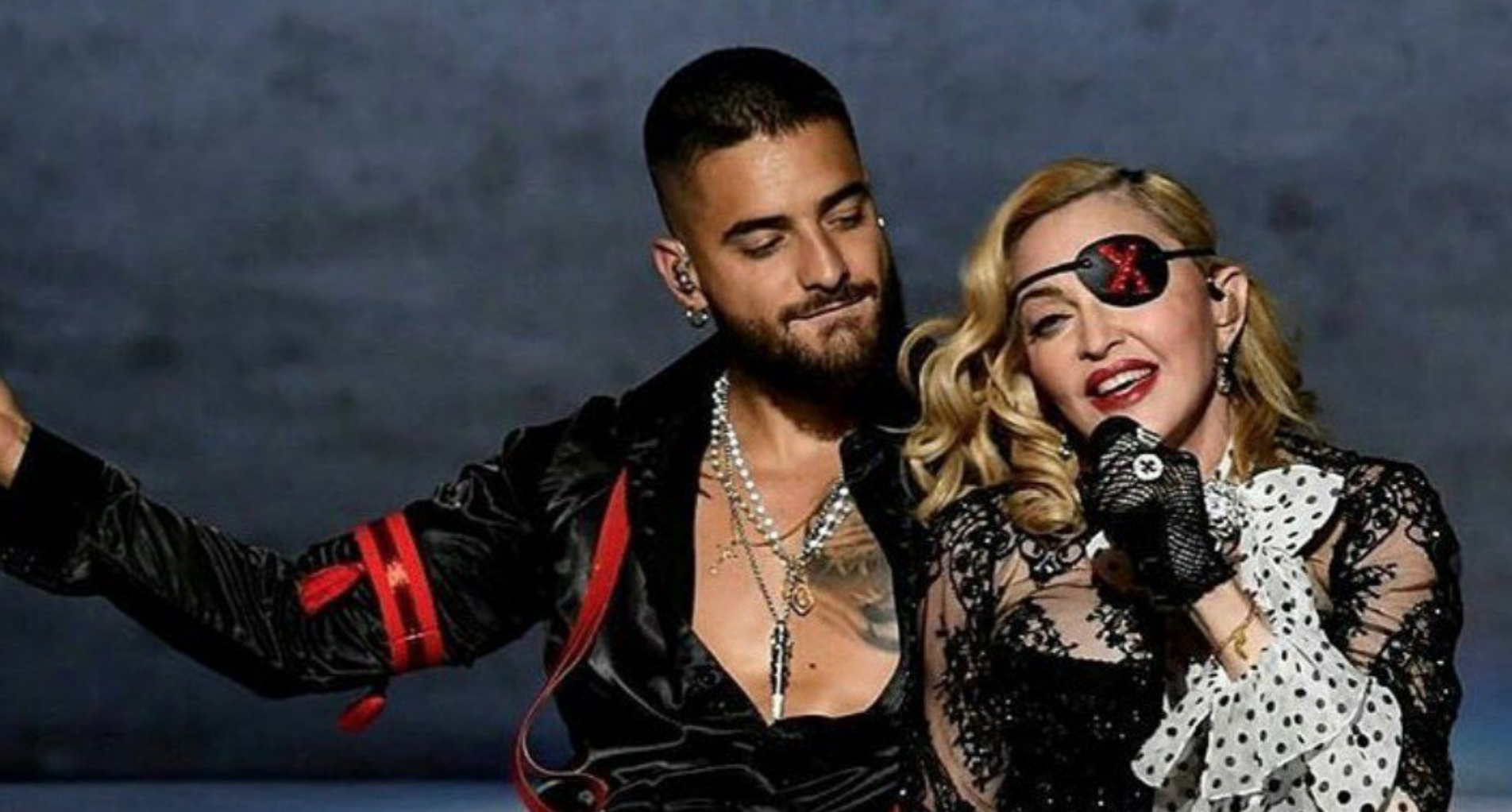
    Madonna took the stage at the 2019 Billboard Music Awards on Wednesday night to debut her comeback single, “Medellín”, live for the first time. And she did so in epic fashion.

    According to reports, the massive performance cost The Queen of Pop a whopping $5 million (!) to produce. Every penny appeared to be well spent, though, as Madonna was joined not only by collaborator Maluma, but also a host of CGI effects and even holograms.

    (Read: The 10 Most Anticipated Pop Albums of 2019)

    Replay it down below.

    MADONNA & MALUMA LIVE IN BILLBOARD MUSIC AWARDS pic.twitter.com/Wz6wcluV4e

    — Bianca (@rayofciccone) May 2, 2019

    The reggaeton-inflected “Medellín” is the singer’s first in four years and serves as the first preview of Madonna’s long-awaited Madame X album. Due out June 14th va Interscope Records, it features additional collaborations with Migo’s Quavo and Rae Sremmurd’s Swae Lee, along with production from Diplo and Mike Dean.

    image

    Billie Eilish Announces When We

    image

    Lady Gaga’s Memorable Awards Show

    image

    5 Songs You Didn’t Know

    image

    Ariana Grande’s Top 5 Songs

    image

    Backstreet Boys – DNA World

    This content was originally published here.