Author: Truth & Hammer

  • Why did Jesus ask Peter “Do you love me?” three times?

    Why did Jesus ask Peter “Do you love me?” three times?

    In the text, we find Jesus sharing breakfast with the disciples, shortly after his Resurrection. The Gospel reads as follows:

    When they had finished breakfast, Jesus said to Simon Peter, “Simon, son of John, do you love me more than these?” He said to him, “Yes, Lord; you know that I love you.” He said to him, “Feed my lambs.” He said to him a second time, “Simon, son of John, do you love me?” He said to him, “Yes, Lord; you know that I love you.” He said to him, “Tend my sheep.” He said to him the third time, “Simon, son of John, do you love me?” Peter was grieved because he said to him the third time, “Do you love me?” and he said to him, “Lord, you know everything; you know that I love you.” Jesus said to him, “Feed my sheep.”

    Again, the fact that Jesus replies to Peter’s answer —“Yes, Lord; you know that I love you”— with a mandate —either “feed my lambs” or “tend my sheep”— has at least two meanings that run in parallel, one being the consequence of the other. One the one hand, this is a clear instantiation of the Great Commandment: if Peter really loves his Lord —Kyrie is the word Peter uses, according to the original Greek text—then he will surely care for those who belong to him. On the other hand, this is a concrete moment of divine forgiveness: despite his three denials, Jesus confirms Peter three times in his role as leader of the church. This gesture suggests God’s love is bigger than our own personal sin, no matter how grave.

    In Greek, unlike in English, there are at least five different words for “love.”

    But don’t we know from some other passages in the Gospel that confirming something twice is more than enough? Is this not how the classic passage in Matthew, “but let your ‘Yes’ be ‘Yes,’ and your ‘No,’ ‘No,’ for whatever is more than these is from the evil one” has also been commonly interpreted?

    Surely, this “let your ‘Yes’ be ‘Yes’” also indicates the “yes” one pronounces must match the “yes” in one’s heart, as to avoid hypocrisy, but it is also read as implying a solemn confirmation of one’s ‘yes’ or ‘no’ suffices, making subsequent oaths, promises, and compromises unnecessary (and thus avoiding swearing in God’s name, as if looking for even further confirmation). Why then would Jesus ask Peter three times instead of just two? Is it really only about revisiting Peter’s denial? The Greek text might provide us with an interesting twist here.

    In Greek, unlike in English, there are at least five different words for “love.” The love one feels for friends is philía. The love one feels for one’s family is storge. The love one might feel for one’s betrothed is eros. A fourth kind of love, philautia, is the love one feels for oneself. And a fifth kind of love, agape —at least in its Greco-Christian usage— refers to a transcendent kind of love, a higher form of love commonly conceived as the love of God for man, and that of man for God. What kind of love are Jesus and Peter discussing here?

    Read more:

    The first two times Jesus asks “Simon Ioannou, agapas me?” The translation, as can be seen, is a tricky one. Jesus is indeed asking “Simon, son of John” if he loves him transcendentally, unconditionally, divinely, using the verb agapein, referring to divine, transcendental love. But Peter replies “Nai, Kyrie; su oidas oti philo se” (“Yes, Lord; you know that I love you”) using the verb philein, which implies loving yet in a more friendly, “limited” way.

    But the third time, Jesus moves from agape to philein: “Simon Ioannou, phileis me?” seemingly pushing Peter further. It is almost as if Jesus is asking his disciple something along the lines of “Really, Peter? Do you love me like you love any other of your friends?” In fact, John’s text tells us that when Peter notices Jesus is not only asking him for a third time but that he is also using another verb, as in going from transcendental to a “simpler” kind of love, “he was grieved (…) and said to him ‘Lord, you know all things; you know I love you” but still using the very same verb, philein. Can we then draw any conclusions from the different usages of these verbs referring to different kinds of love?

    Jesus seems to be trying to get Peter to remember not only his denial but, moreover, the very moment they first met by the Sea of Galilee

    Here is a suggestion: Jesus seems to be trying to get Peter to remember not only his denial but, moreover, the very moment they first met by the Sea of Galilee, when Jesus told him to “put out into deep water, and let down the nets for a catch.” Moving from philia into agape is indeed emotionally equivalent to moving from the “shore” into deeper waters, and the condition of possibility of being able to not only tend to a flock but, as Jesus told Peter after that first miraculous catch of fish, to be a proper fisher of men.

    This content was originally published here.

  • 7 Ways Hemp Plastic Could Change the World

    7 Ways Hemp Plastic Could Change the World

    Did you know that it takes between 500-1,000 years for plastic to degrade?

    Plastic pollution is destroying our planet by the minute. In fact, so much plastic is thrown away each year it could circle the earth four times. And these numbers are on the rise.

    In the United States alone, Americans throw away 35 billion plastic water bottles every year. This plastic ends up in the land and the sea, devastating natural ecosystems. Worse yet, this same plastic pollution ends up in our bodies.

    It’s estimated that 93 percent of Americans over the age of six test positive for BPA, a chemical in plastic linked to cancer, diabetes, impaired immunity, and much more.

    Clearly, plastic pollution is an environmental and health hazard. But what if hemp could help?

    The basic building blocks of plastic are cellulose. Currently, cellulose is primarily obtained from petroleum. However, petroleum-based plastics are harmful to human health. Not to mention destructive to the environment.

    Hemp, on the other hand, happens to be an excellent source of cellulose and is sustainable.

    Here are 7 ways how hemp plastic could change our planet.

    1. Hemp plastic is completely biodegradable

    One reason plastic is so toxic is because of its long shelf life.

    A water bottle may only be used for a few minutes but will take years to decompose. Account for other plastic wares like grocery bags, tupperware, buttons, packaging, electronics – it’s easy to see why plastic pollution is growing worldwide.

    Meanwhile, hemp plastic can be completely biodegradable when made with biodegradable polymers. Unlike conventional plastics, plastic made from hemp doesn’t contribute to permanent pollution.

    In the right environment hemp plastic takes around 3-6 months to decompose. This is astonishing in comparison to conventional plastics. Hemp plastic can also be recycled indefinitely. While petroleum-based plastic can be recycled, because this type of plastic is chemical-laden, it is a toxic process. Conventional plastics that are recycled still leak harmful substances into the environment such as BPA.

    Plastic made from hemp avoids these toxins completely.

    2. Hemp plastic is non-toxic

    Plastic is toxic to our health.

    Conventional plastics contain endocrine disruptors. Endocrine disruptors, such as BPA, interfere with the endocrine (aka hormone) system in the human body. Once inside the body, endocrine disruptors act like the hormone estrogen.

    Why is this dangerous?

    This hormonal imbalance in the body can stimulate the development of tumors. In fact, endocrine disruptors are linked to birth defects, cancer, learning disabilities, and more.

    The dangers of toxic chemicals from plastic don’t end with digestion. Endocrine disruptors can also leach into the soil and groundwater, devastating the natural environment and our health.

    Yet, hemp plastic is non-toxic. Plastic manufactured from hemp doesn’t contain harmful endocrine disruptors like petroleum-based plastics. Nor does it release toxins into the air during production.

    Why continue to destroy our environment and health when there is an alternative?

    3. Hemp plastic could help save endangered wildlife

    Plastic is polluting the ocean at alarming rates.

    A study by the Commonwealth Scientific and Industrial Research Organization and Imperial College of London found that 60% of seabirds today have plastic in their gut. By 2050, they expect that number could rise to 99%

    How does this plastic end up in wildlife? 

    When plastic is exposed to sunlight, it breaks down into smaller pieces. These small pieces of plastic end up being ingested by marine and other sea life. As plastic disintegrates, it moves down the food chain.

    Animals, like humans, are not designed to consume plastic.

    Ingesting plastic can lead to a number of detrimental health effects. Many of which we are likely still unaware of.

    Hemp plastic, on the other hand, is biodegradable. It is also non-toxic. Instead of filling up our seas with deadly petrochemical plastics, we could create sustainable initiatives to recycle hemp plastic safely.

    4. Hemp plastic is extraordinarily versatile

    Did you know thousands of everyday plastic products could be made from hemp instead of petroleum? Hemp plastic can be molded into almost any shape. Uses of hemp plastic include:

    This list is only a fraction of plastic products that could be made from hemp. Hemp plastic can replace toxic plastic products in every way. And unlike petrochemical plastics, manufacturing hemp plastic is environmentally friendly and cost-effective.

    5. Hemp plastic decreases environmental pollutants

    There is more carbon dioxide in the atmosphere today than at any point in history during the last 80,000 years.

    Rising carbon dioxide concentrations are responsible for the warming of the earth’s atmosphere. Otherwise known as the greenhouse effect. Much of this rise in carbon dioxide can be attributed to the burning of fossil fuels.

    Conventional plastics are made from fossil fuels like petroleum. Therefore, plastic is a big contributor to rising CO2 emissions.

    Hemp plastic and products can actually reduce the greenhouse effect. This is because hemp absorbs carbon dioxide from the atmosphere and converts it into oxygen. In addition, hemp plastic generates zero toxic byproducts.

    Seed to sale, hemp plastic is a sustainable process. This is the complete opposite from the toxic manufacturing process of petrochemical plastics.

    6. Hemp plastic is stronger than petroleum-based plastics

    Plastic made from hemp is five times stiffer and 3.5 stronger than polypropylene, one of the most common types of plastic. It is also a lot lighter. This makes hemp unique from other manufacturing materials.

    Hemp also doesn’t pose the health risks conventional plastics do.

    So not only is hemp plastic stronger, it’s safer. Hemp plastic provides durability and strength while also being lightweight.

    These features combined make hemp plastic a no brainer. Why risk health and safety when there is a perfectly suitable alternative?

    7. Hemp plastic is a renewable resource

    From the moment the seed enters the soil; hemp enriches its environment.

    Hemp is a sturdy plant with deep roots. As such, hemp helps prevent soil erosion, thereby reducing water pollution. Hemp can also be cultivated in the same soil for years without jeopardizing quality.

    Even once hemp is manufactured into plastic, it continues to be sustainable. Hemp plastic is 100% biodegradable. Which means that under the right conditions it will decompose within a few months. (Unlike traditional plastics that take an indefinite amount of time while leeching toxins in the process.)

    Conventional plastics are not worth the risk. The alternative is right in front of us.

    No other natural resource offers the capabilities of hemp. Start to finish hemp is renewable. While hemp certainly isn’t the only answer to our environmental and health concerns, it’s a start.

    Share this article if you agree that hemp plastic is important for our environment…

    Learn from the Top Leaders in Hemp Today

    Green Flower sits down with the leading CEOs, innovators, policymakers, entrepreneurs and experts shaping the future of hemp.

    This content was originally published here.

  • Children from Philadelphia Islamic Center Issue Threat in Video, ‘We Will Chop Off Their (Christian) Heads’

    Children from Philadelphia Islamic Center Issue Threat in Video, ‘We Will Chop Off Their (Christian) Heads’

    A video from an event at an Islamic center in Philadelphia, Pennsylvania, shows Muslim children saying they are willing to sacrifice themselves and chop off the heads of the enemies of Islam.  The Muslim American Society Islamic Center in Philadelphia posted the video on its Facebook of the children participating in the center’s “Ummah Day” celebration on April 17.  The Middle East Media Research Institute posted the video on YouTube, as well as a translation of the children’s statements on its websit . “Those who reject oppression are the ones who assert their existence, and they eliminate the injustice from the land of the Arabs,” one child said, according to MEMRI’s translation.  The children then sing, “Rebels! Rebels! Rebels! Glorious steeds call us and lead us onto paths leading to the Al-Aqsa Mosque. The blood of martyrs protects us. Paradise needs real men!”

    “The land of the Prophet Muhammad’s Night Journey is calling us. Our Palestine must return to us. Oh Saladdin, your men are among us — shame will be washed away!”  The song continues, “Take us, oh ships, until we liberate our lands – until we reach our shores and crush the treacherous ones! Blow, oh winds of Paradise — flow, oh rivers of martyrs! My Islam is calling, who is going to heeds its call? Rise, oh righteous ones!”  One young girl then reads a passage about martyrdom and violence.  “Our martyrs sacrificed their lives without hesitation. They attained Paradise, and the scent of musk emanates from their bodies. They compete with one another to reach Paradise. Will Jerusalem be their capital city, or will it be a hotbed for cowards?” she read.

    “We will defend the land of divine guidance with our bodies, and we will sacrifice our souls without hesitation. We will chop off their heads, and we will liberate the sorrowful and exalted Al-Aqsa Mosque. We will lead the army of Allah fulfilling His promise, and we will subject them to eternal torture,” she read, according to the translation.  “We warn the West from what we fled from in the Middle East, but the West doesn’t want to listen. This is your next generation,” he tweeted.  We warn the West from what we fled from in the Middle East, but the West doesn’t want to listen. — Imam Mohamad Tawhidi (@Imamofpeace) May 3, 2019

    ‘These are not isolated incidents; they are happening in major centers of the country — including in Pennsylvania,” MEMRI said in a statement to Fox News.The video was not the only one from the Philadelphia center in which children sang songs with disturbing messages.

    IPT Exclusive Video: Philadelphia #Muslim school students sing song with violent anti-Semitic pro-terrorist lyrics pic.twitter.com/5tPSqypd2V

    — InvestigativeProject (@TheIPT) May 1, 2019

    IPT Exclusive Video: Children at a Muslim school run by @mas_national in #Philadelphia sing about the “Blood of Martyrs” and fighting #Israel pic.twitter.com/Rw9dTEfaqm

    — InvestigativeProject (@TheIPT) May 1, 2019

    The Muslim American Society, which has 42 chapters in the United States, did not respond to a request to comment, Fox News reported.

    We are committed to truth and accuracy in all of our journalism. Read our editorial standards.

    This content was originally published here.
  • Trump’s Economy Makes Michael Novogratz ‘More Bullish’ on Bitcoin

    Trump’s Economy Makes Michael Novogratz ‘More Bullish’ on Bitcoin

    By CCN: Go right ahead lefties with your monetary policies. You’re rallying crypto bulls. And you right leaners who are calling for lower interest rates are as good as gold for crypto, too.

    That’s the message from former hedge fund manager Michael Novogratz. The bitcoin bull weighed in on monetary policies being bandied about that are essentially making the case for crypto. Novogratz is the CEO of cryptocurrency merchant bank Galaxy Digital.

    In a tweet this weekend, he pointed to calls for interest rate cuts being made by Vice President Mike Pence as well as former Fed contenders Stephen Moore and Herman Cain. While nominated by Trump, Moore and Cain eventually withdrew their names from consideration.

    Then there’s the controversial Modern Monetary Theory (MMT) that Rep. Alexandria Ocasio-Cortez has proposed as a way to fund her Green New Deal. She is the gift that keeps on giving. For the crypto space, her push for MMT does just that.

    This makes me more bullish Bitcoin. Stephen Moore, Herman Cain, and Mike Pence all make me bullish hard money. To be fair, MMT and some of the far left’s policies also makes me bullish crypto. https://t.co/BdKCUUnhEX

    — Michael Novogratz (@novogratz) May 4, 2019

    To Cut or Not to Cut

    The Federal Reserve decided to leave interest rates unchanged last week. This was disappointing to Pence and others who see the strong economy as one reason rates should be cut. Pence recently told CNBC:

    “I think it might be time for us to consider lowering interest rates. We just don’t see any inflation in this economy at all. We’re seeing jobs being created all over the country; that should be an encouragement to every American and also to people that operate our monetary policies.”

    President Trump sharply criticized the Fed’s move last December to raise rates. He, along with his administration’s economic adviser Larry Kudlow and Treasury Secretary Steven Mnuchin, has long championed lower interest rates.

    The constant worry is, “what happens when there is a recession?” The Federal Reserve’s toolbox that includes quantitative easing (QE) may not do the trick to stop the bleeding from a slowing economy.

    Bring It, MMT Zealots

    The basic idea behind MMT is that a government that issues its own money can never fail to meet its obligations because it can simply print money to cover them.

    However, critics of MMT charge it could result in an inflationary spiral. The policy doesn’t account for a scenario where too much money chases too few goods causing inflation. Governments would have to raise taxes to suppress inflationary pressure.

    The policy began making headlines this spring when Ocasio-Cortez started pushing it to pay for her $93 trillion Green New Deal. As reported by CCN, the idea, which has been regarded as a borderline lunatic one, is making a serious comeback into the political and economic conversation.

    Still, it may be the future of US economic theory, said hedge fund manager Ray Dalio, the founder of Bridgewater Associates, the world’s largest hedge fund.

    That’s just fine for crypto bulls like Michael Novogratz.

    This content was originally published here.

  • Question: Should All Sanctuary City Leaders Be Arrested?

    Question: Should All Sanctuary City Leaders Be Arrested?

    At some point, their lawless actions cross a line. Have they actually crossed that line?

    The so-called ‘resistance’ has been making a lot of noise since Trump was elected.

    Now that Oakland’s mayor kicked a hornet’s nest, things have gotten even worse.

    Many planned roundups of repeat criminals by ICE agents were thwarted by her warning that Illegal aliens should scatter.

    The DOJ has initiated a lawsuit against Cali concerning laws that undermine the legitimate Constitutional powers of the Fed.

    And we have a rough idea of just how many crimes the re-released illegals can be expected to commit.

    Are these lawless lawmakers aiding and abetting criminals? Obstructing justice?

    What do you think? Should they face charges?

    We have a poll.

    Should All Sanctuary City Leaders Be Arrested?

    • This field is for validation purposes and should be left unchanged.

    Doug Giles, best-selling author of Raising Righteous And Rowdy Girls and Editor-In-Chief of the mega-blog, ClashDaily.com, has just penned a book he guarantees will kick hipster males into the rarefied air of masculinity. That is, if the man-child will put down his frappuccino; shut the hell up and listen and obey everything he instructs them to do in his timely and tornadic tome. Buy Now:The Effeminization Of The American Male

    Ladies, tell everyone that you don’t like the emasculated, metro-sexual ‘feminists’ — you’d rather have a President with balls:

    And gents, let everyone know that you want your President to be just as much of a man as you are:

    Donald J. Trump is our 45th President. Why? Because Americans from all races and classes are sick of whining Republicans and corrupt Democrats. Finally, we have a President who isn’t afraid to say what he thinks even if it is not popular with the press. Trump is not a typical politician. Trump can’t be bought. He will back up what he says with action, no matter the cost. Finally. A president with balls!
    Get yours today and trigger the leftists and the RINO NeverTrumpers.

    6.5k

    This content was originally published here.
  • 11 Herbs That Grow From Cuttings | Balcony Garden Web

    11 Herbs That Grow From Cuttings | Balcony Garden Web

    Here’re 11 Herbs that Grow from Cuttings, it’s an easy and less time-consuming method than seed propagation.

    You can save a lot of money by growing herbs from cuttings. And, don’t forget it’s an easy way to multiply your herbs and less time consuming as well.

    Growing Herbs from Cuttings

    There are three types of cuttings which are Softwood Cuttings, Semi-hardwood cuttings, and hardwood cuttings:

    Softwood cuttings are taken from the young and tender stem growth when they’re green, as the stem starts to change from green to brown and become hard and old, the cuttings that are taken at this time are known as hardwood cuttings.

    Usually, the success rate from softwood cuttings is higher than hardwood cuttings, which means you should prefer the cuttings from the new growth instead of old growth as they are most likely to grow roots.

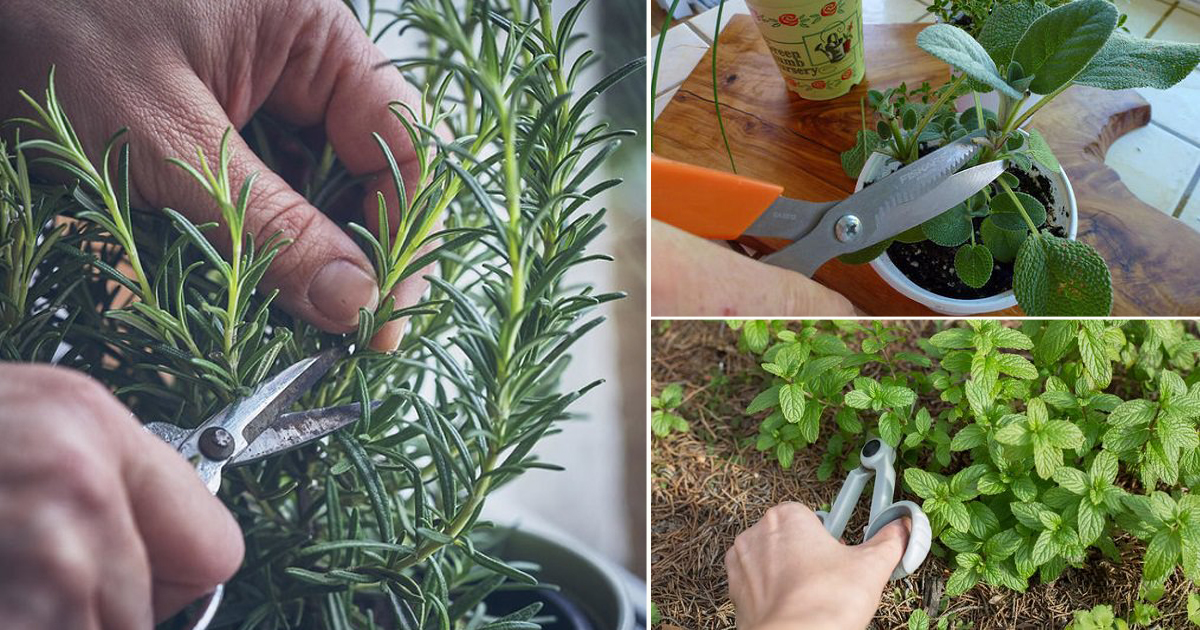
    Take cuttings using a sharp tool; cuttings must be at least 3-6 inches long. Take the cuttings at an angle just below a leaf node. A leaf node is where a leaf is attached. Remove all the lower set of leaves from the cuttings except the top few, so that the energy could be focused only on the root generation.

    You can grow them in either soil or water. Soil is preferable as it provides the necessary nutrients for plants to grow. To increase the propagation rate, before planting, drop the node end of the cuttings into the water and then dip them in rooting hormone. Rooting hormone will stimulate the root growth. You can use a commercial rooting hormone or make your own at home. You can use honey or aspirin for this purpose, learn more about this here.

    1. Thyme

    This amazing herb has been used for thousands of years for medicinal and culinary uses. Cuttings should be taken at a node from the point where leaves grow, as roots are most responsive at this point. The cuttings should be planted in damp soil and away from the direct sun after removing lower leaves.

    2. Basil

    One of the best herbs that grow from cuttings. Propagating basil will keep the supply of this herb going year around. All you have to do is cleave a basil stem (about 4-5 inches long) just below the leaf node, and follow the steps we shared above. You can also place the basil cutting in the glass of water near the windowsill, so it gets sufficient sunlight and grow roots. Avoid taking cuttings from the flowering part.

    3. Sage

    With its refreshing mood fragrance and essential oils, sage is a must-have herb in your garden. Growing sage from cuttings is super easy: Take the cutting from a shoot approximately 6 cm below the node. Plant this cutting in moist soil and place it in a spot where it can receive morning sunlight. You can also grow cuttings in a glass of water to multiply your sage plants. Within two weeks roots will start to appear!

    4. Lavender

    The best time to grow lavender from cuttings is in the summer season as they root easily in this season. You will need Lavender plant, sharp knife, a small 10 cm pot, multi-purpose compost, Rooting hormone (liquid or powder), clear polythene bags to propagate lavender plants. Check the detailed step by step DIY available here.

    5. Rosemary

    Growing rosemary from seeds is tedious work, so it’s better to propagate it from cuttings. Snip off 3-6 inches non-flowering shoots, and remove all the lower leaves so that only 2-3 top leaves are left. Keep the cuttings in cold frame or any sheltered and shaded space until they root in the next few weeks.

    6. Oregano

    This herb requires very less attention and can be grown indoor or outdoor. Oregano thrives in a moderately warm climate and is a hardy perennial. To propagate, take a few inches long cuttings from a healthy oregano plant. It is better to take the cuttings from the young shoots as they are more likely to sprout roots. Remove the leaves from the bottom half. Plant it in the lightweight porous soil.

    7. Mint

    Mint is a very popular herb that can be used either fresh or in dried form in many dishes. Mint has one of the highest antioxidant properties compared to many other herbs. Growing mint from cuttings is as easy as growing it, in both the soil and water. Roots start to appear mostly within a week.

    8. Sweet Woodruff

    This herb has multiple uses and is most well known as an ingredient in May wine. It does not only have the culinary uses, but it also works as an excellent ground cover in the garden. It thrives in partial shade and shade, so should be planted under trees. Its fragrance resembles freshly-mown hay or vanilla. Once planted this herb thrives on its own if watered regularly. If you want to plant them at some other place, you can propagate this herb easily from cuttings.

    9. Bee Balm

    This herb has both culinary and medicinal uses. These plants bear bright flowers that attract butterflies and possess a minty fragrance which makes them ideal for bordering. The best time to propagate this herb by cuttings in late springs. Cut a 6-inch stem tip without flowers. Remove the leaves from the bottom half and dip the cutting in rooting hormone. Stick the cutting two inches deep in a small pot filled with well-aerated soil.

    10. Marjoram

    Marjoram is a versatile herb and has many uses in cooking and is also used in aromatherapy. This herb has many health benefits. Seed germination is slow, and it takes approximately 2 weeks to germinate. Propagating marjoram is an easy way to multiply this herb in a short period. Take cuttings from the tip of the stem which is not less than 3 inches in length. Leave 4-6 leaves from the top and remove all other leaves. You should plant cuttings in late summer or early springs. In a hot climate, do this in winters.

    11. Parlsey

    Growing parsley from cuttings is possible, but the success rate is low. For this, take 4-5 inches long stem with some leaves on top and place it an inch deep in the pot. Maintain the moisture and keep the cutting in a shady spot that receives indirect light, wait for a couple of weeks for the emergence of roots.

    This content was originally published here.


  • High School Girl’s loses to Transgender Students Took Her Sport

    High School Girl’s loses to Transgender Students Took Her Sport

    It is cheating for boys to be competing in girls sports.  If you do not know why then study your biology.  There is a reason we have girls sports and boys sports.  Maybe this is a sign we should not have sports in schools.  If we cannot give girls equal rights, forget the sports program.

    When two high school athletes who were born male but identify as female took first and second place at Connecticut’s girls indoor track championship this year, it wasn’t just a local news story.  To some, it was a story of triumph and courage. The winner, a junior from Bloomfield High School, set a girls state indoor record of 6.95 seconds in the 55-meter dash, and went on to win the New England titles in both the 55-meter dash and the 300-meter dash.  To others, it was a story of shock and disappointment: Is this the end of women’s sports?

    To Selina Soule, a 16-year-old runner from Glastonbury, it was personal.  A junior, Selina missed qualifying for the 55-meter in the New England regionals by two spots. Two spots, she said, that were taken by biological boys.  Had the boys who identify as girls not been allowed to compete, Selina would have placed sixth, qualifying to run the 55 in front of college coaches at the New England regionals.  Instead, she placed eighth, watching the 55 from the sidelines after qualifying in only the long jump, an event in which the transgender athletes didn’t compete.

    “It’s very frustrating and heartbreaking when us girls are at the start of the race and we already know that these athletes are going to come out and win no matter how hard you try,” Selina told The Daily Signal. “They took away the spots of deserving girls, athletes … me being included.”F . While the debate over transgender athletes and fairness is complex, the situation in Connecticut has brought forth another complicating layer: Plenty of parents and high school girls appear to object to the participation of biological boys in girls sports, but fearing public bullying and backlash, they’re not speaking out.

    source

  • Preventing Tick Bites: Best Practices and Useful Gear

    Preventing Tick Bites: Best Practices and Useful Gear

    In Partnership with Sawyer

    No matter what we’re doing in the outdoors, showing up prepared makes us feel more confident, less afraid of the unknowns, and—perhaps obvious but it’s worth stating—better able to take care of ourselves and others.

    One aspect of prevention is dealing with bugs, especially ticks. Ticks aren’t something we love spending a good deal of time thinking about, but a lack of preparation when it comes to them can lead to anxiety when going outdoors. Plus, if you’re not prepared, it can also lead to being exposed to serious diseases, like Lyme, should you encounter a tick bite.

    There are a few basic practices and pieces of gear to know about when it comes to preventing tick bites, so we did some research and compiled it all here to get you started. Because your adventures might take you to unpredictable places, but preventing tick bites (or knowing how to respond accordingly) is something you can have some control over.

    Do all ticks carry Lyme?

    First and foremost, not all ticks carry Lyme disease. The Blacklegged Tick, also known as the Deer Tick, is known to carry Lyme-causing bacteria. That said, it’s important to know that not all Blacklegged Ticks carry Lyme, so just because you are bitten by a tick, or bitten by a Blacklegged Tick, does not automatically mean you were exposed to Lyme Disease.

    However, because preventing tick bites is the best way to avoid contracting Lyme or other tick-born diseases, below are some basics for how to be prepared this season.

    Preventing Tick Bites: Basic Tips

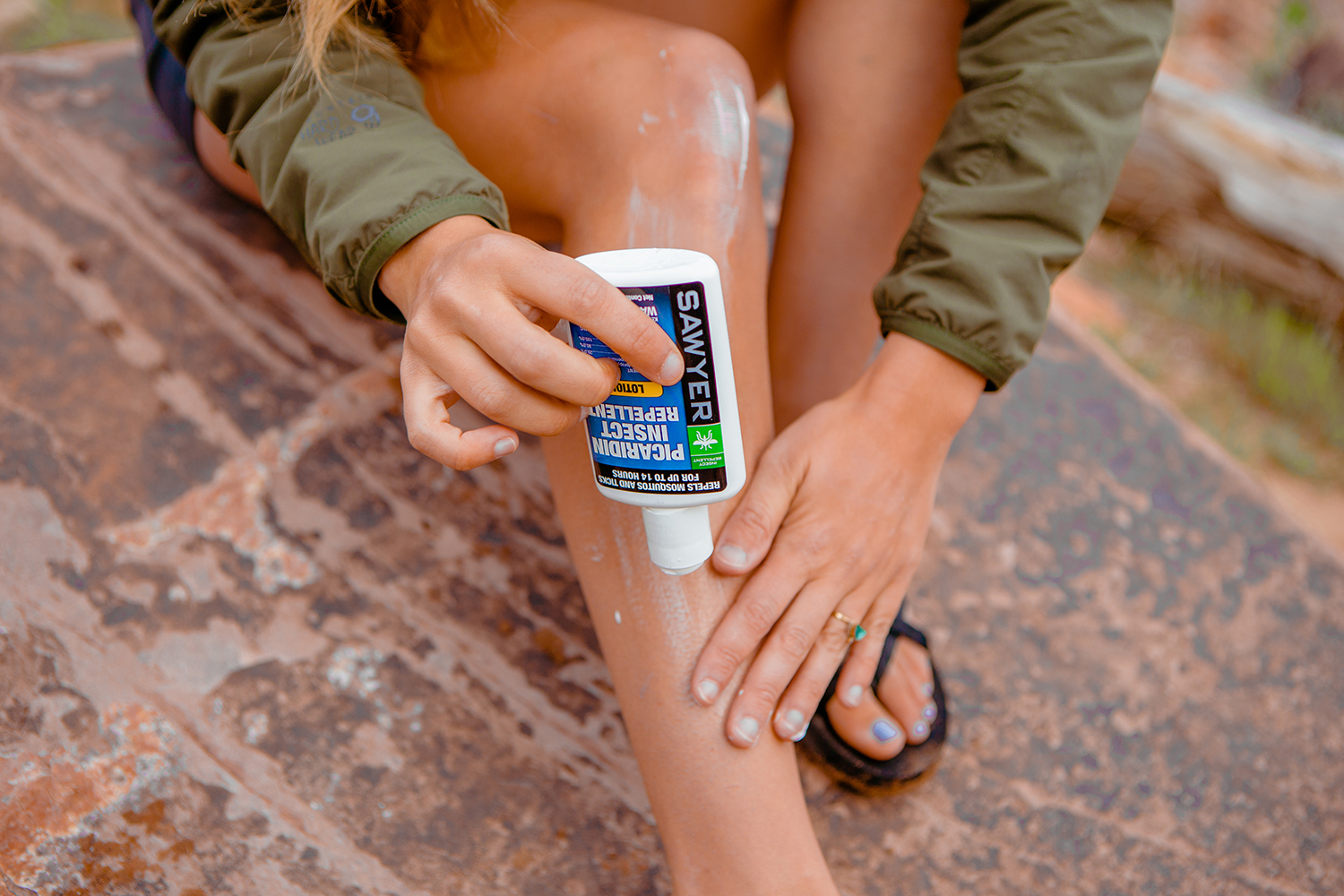
    Wear repellent: If you’re going outdoors, you will want to consider wearing a spray repellent that addresses ticks and other insects. While DEET has been a popular go-to active ingredient for decades, it can be rough on your skin, clothes, and gear. Fortunately, there are alternatives that work just as well if not better, like picaridin (pick-air-eh-den), an ingredient derived from peppers. Our team has tested Sawyer’s Picaridin Insect Repellent in a variety of climates and feel safe wearing it while on the trails.

    Treat your gear: In addition to treating your skin, you can treat your gear and clothing to make it less hospitable to ticks. The active ingredient in this type of spray is permethrin (per-meth-ren) and once applied, it can be effective for 6 weeks or 6 washings. Sawyer’s Permethrin Spray is easy to use, odorless, and safe for dogs—which makes it a go-to in our book.

    Consider your attire: Ticks can show up as translucent in earlier stages of development, but are generally dark brown, red, or black in color. Wearing light-colored clothing could help you to identify them easier. There is also research available showing that ticks seem to be attracted to darker-colored clothing. Whatever colors you choose to wear, it’s good to consider tucking in your clothes when in a tick-prone area (shirt into pants, pants into socks—there’s no shame in preventing tick bites!).

    Stay on trail: Not only is staying on established trails good for the environment, but defined trails generally have less overgrowth, meaning that you’ll be exposed to less ticks.

    Do a full body tick check: It’s recommended to check for ticks at least once daily—more if you’re going outside multiple times per day. Ticks don’t fly or jump, but they do like the naturally warmer areas of your body like your armpits, belly button, behind your ears, in your hairline, in the crooks of your knees and elbows, and between your legs. They can be as small as a poppyseed, so a buddy and a magnifying glass might both be helpful for your scans!

    If you take your pets outdoors with you, make sure to check your pets for ticks, too. People can often get tick bites because they forget to check their furry friends!

    Shower sooner: Research has shown that taking a shower within 2 hours of coming home drastically helps reduce your chance of tick bites. Taking this approach will also make sure ticks don’t linger in your home, vehicle, or anywhere else you’ve been eating your post-hike meal.

    Heat treat your clothing: Research has also shown that ticks will not survive in the dry air of a clothing dryer, so when you get home from a tick-thick environment, pop your clothing into a dryer for at least 10 minutes (possibly longer if they started out wet).

    Tick Bite Prevention Pack List

    Just as you would pack a First Aid Kit, water, and your favorite snacks in your day pack, bringing the proper tick bite prevention gear will help you to focus more on enjoying your time outside. After doing some research, here’s what we recommend bringing with you:

    Preventing Tick Bites for Travelers

    Some ticks thrive in certain environments better than others. Before you travel to a new region, especially one you are less familiar with, consider checking out what ticks might be prevalent there so you know what to look for.

    A simple online search can generally be helpful. For instance, we found this handy map from the Center for Disease Control (CDC) showing the geographic distribution of ticks in the United States.

    Preventing Tick Bites for Backyard Adventures

    It can be easy to overlook ticks in (literally) your own backyard. If you live in a tick-prone region or have a decent amount of vegetation in and around your property, you might want to consider creating a tick-safe zone, which is a strategic natural barrier that you can create in your yard.

    How to Respond to a Tick Bite

    Part of showing up prepared is knowing how to manage a tick bite. If you or someone you’re with does get bit by a tick, here are a few tips we found to safely address the situation:

    Remember that a tick bite does not equate to contracting a tick-born disease. In fact, the sooner you find and extract the tick, the better chance you have of preventing diseases like Lyme. That said, following a tick bite, you should remain cognizant of possible symptoms and call a doctor if you have unusual symptoms—especially rash, a bull’s eye marking around the bite area, or fever.

    Lyme Resources

    For those wanting to learn more about the research, support, and communities for those with Lyme Disease, consider starting with (and supporting) the following:

    Editor’s note: This piece is sponsored by Sawyer and our opinions are all our own. The photos above feature Sawyer’s Picaridin Insect Repellent, Permethrin Spray, and Tick Pliers. Check out their full product collection here.

    How do you prevent insect and tick bites?

    Provide your email for our latest stories.

    Your email will be used exclusively by She Explores as described above.

    This content was originally published here.

  • Narwhals are thriving with very little genetic diversity, study finds | Daily Mail Online

    Narwhals are thriving with very little genetic diversity, study finds | Daily Mail Online

    The genetic diversity of narwhals is strikingly low compared to other Arctic creatures and many less successful species, scientists have revealed.

    Researchers who sequenced their genome are surprised the trait appears to be having for no impact on their survival, as they continue to thrive. 

    It’s contrary to what is usually the case in biology, where low genetic variation often causes a species to struggle in numbers.

    The narwhal’s case shows persistently low diversity and throws into question the popular notion that a narrow gene pool is associated with negative consequences.

    Scroll down for video 

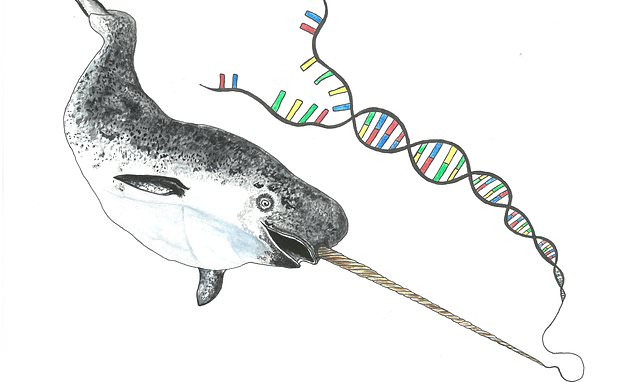
    The genetic diversity of narwhals (pictured) are strikingly low compared to other Arctic creatures and many less successful species

    Scientists have ruled out inbreeding as a cause of the Narwhal’s low genetic diversity, or a sudden event that could have reduced their genetic population to a small representation.  

    Whatever the cause, the trait has likely persisted for tens or hundreds of thousands of years.  

    While researchers still don’t have the answers, they have suggested it could have something to do with the onset of the last Ice Age, roughly 115,000 years ago. 

    The event may have created an habitat so ideal for the significantly smaller population narwhals that it allowed them to rapidly multiply as well as protect them.  

    ‘Narwhals’ long-term low genetic diversity may have allowed them to evolve different mechanisms to cope with their limited genome,’ said Dr Michael Vincent Westbury, a postdoctoral researcher at the Natural History Museum of Denmark.

    Scientists who have sequenced their genome says the trait is surprisingly not impacting on their survival, as they continue to thrive

    A lack of genetic diversity in any species is linked to low survivability as it makes species more vulnerable to disease and environmental pressures. 

    Geneticists studying Narwhal mitochondrial DNA and micro-satellites observed the trait across a number of narwhal populations which are mostly in the Arctic where they are one of three whale species.

    They are now considered globally ‘abundant’, recently estimated at roughly 170,000 in numbers and removing them from the International Union for Conservation of Nature (IUCN) Red List status for ‘Near Threatened’ to ‘Least Concern’ in 2018. 

    This is surprising compared to other Arctic dwelling marine mammal which has significantly greater genetic diversity but only numbers around 1,800 in total. 

    The trait is contrary to what is usually the case in biology – that low genetic variation often cause a species to struggle in numbers. Map of the narwhal distribution range based on International Union for Conservation of Nature distribution data comparing genome-wide diversity of 16 Mammalian Species

    Narwhals are one of three whale species found only in the Arctic and are well-known for their horn-like tusk protruding from their forehead.

    They are mainly found in the Arctic and current estimates have put their numbers at roughly 170,000. 

    Even the panda has greater genetic diversity in comparison, yet their numbers are merely one hundredth of that of the Narwhals.  

    Dr Eline Lorenzen, an associate professor and curator at the Natural History Museum of Denmark and an author on the study said: ‘There’s this notion that in order to survive and be resilient to changes, you need to have high genetic diversity, but then you have this species that for the past million years has had low genetic diversity and it’s still around -and is actually relatively abundant.

    ‘This shows us that just looking at the number of individuals isn’t indicative of the genomic diversity levels of a species, but also looking at the genomic diversity levels isn’t indicative of the number of individuals. 

    The narwhal’s case has thrown into question the notion that narrow gene pool is always associated with negative evolutionary consequences

    ‘Equating those two doesn’t seem to be quite as simple as previously thought.’

    ‘However, the species is still considered vulnerable to changing climates due to its high specialisation and restricted Arctic distribution.’

    ‘We assembled and annotated a genome from a narwhal from West Greenland.’

    ‘We find relatively low diversity at the genomic scale and show that this did not arise by recent inbreeding, but rather has been stable over an extended evolutionary timescale.’ 

    We also find that the current large global abundance most likely reflects a recent rapid expansion from a much smaller founding population. 

    Moving forward, the authors are interested in exploring whether this unexpected finding in narwhals is present in other species as well. 

    WHY DOES GENETIC DIVERSITY MATTER? 

     Genetic diversity is can be used as a marker for the health of a species.

    A group of animal which is more genetically diverse is more likely to be able to deal with threats such as disease, as the individuals will carry slightly different versions of the same genes – some of which could help them fight off disease.

    But species with a low genetic diversity could potentially be at higher risk. 

    If their genes make them more susceptible to succumbing to a virus, for example, a single outbreak could wipe out large numbers, further reducing diversity and tightening the noose. 

    In the study, the researchers showed species and populations in areas outside the tropics and areas that have been more impacted by humans, such as urban areas and croplands, have reduced genetic diversity.

    ‘However we do not know if this reduced genetic diversity puts them at risk of extinction yet,’ Dr Andreia Miraldo, a researcher at the University of Copenhagen, told MailOnline.

    ‘Populations and species can be maintained even with low genetic diversity, although the higher the genetic diversity the more resilient species are to changes in their environment.’ 

    Narwhals are thriving with very little genetic diversity, study finds

    The views expressed in the contents above are those of our users and do not necessarily reflect the views of MailOnline.

    Add your comment

    What’s This?

    By posting your comment you agree to our house rules.

    We will automatically post your comment and a link to the news story to your Facebook timeline at the same time it is posted on MailOnline. To do this we will link your MailOnline account with your Facebook account. We’ll ask you to confirm this for your first post to Facebook.

    You can choose on each post whether you would like it to be posted to Facebook. Your details from Facebook will be used to provide you with tailored content, marketing and ads in line with our Privacy Policy.

    This content was originally published here.

  • Wall Street bankers make triumphant return to Saudi Arabia just in time for mass beheadings — RT Business News

    Wall Street bankers make triumphant return to Saudi Arabia just in time for mass beheadings — RT Business News

    Big investors, particularly from Wall Street, joined panels at the two-day financial forum which began on Wednesday in Riyadh.

    Larry Fink, CEO of US investment corporation BlackRock, told the conference that his company had bought some of Saudi state-owned oil giant Aramco’s bonds and was looking for other “opportunities” in the kingdom.

    “This is an economy that we have a lot of confidence in, I think the future is bright,” he said, adding: “We are excited about the role that we can continue to play here.”

    Fink added: “The changes here in the kingdom in the last two years are pretty amazing.”

    He was joined by HSBC CEO John Flint, co-president of JPMorgan Chase Daniel Pinto, and others. Goldman Sachs CEO David Solomon reportedly visited Riyadh earlier this month, just days before the bank helped arrange a multibillion dollar bond sale for Aramco.

    The summit is taking place as Riyadh announced on Tuesday it had executed 37 people in connection with alleged ‘terrorism crimes.’ The majority of those killed were Shiite Muslims.

    United Nations High Commissioner for Human Rights Michelle Bachelet condemned the mass executions, calling them “shocking” and “abhorrent.” “At least 3 [of the men] were minors when sentenced & one of the men’s bodies was put on public display,” her office said in a statement on Twitter.

    The presence of global leaders is in sharp contrast to a similar event last year. Many political and business elite decided to skip that forum due to the international scandal over the killing of Washington Post journalist Jamal Khashoggi. After initial denials, Riyadh admitted that Khashoggi was murdered by “rogue” agents of the Saudi government while visiting the country’s consulate in Istanbul last October.

    Despite that, big investors appear to be focused on potential deals in the largest Arab economy.

    Saudi Energy Minister Khalid al-Falih told the forum that Aramco would be active in debt markets and that the $12 billion it raised in its debut bond issue was “only the beginning.” The country’s stock market, which has seen an upsurge in foreign fund flows since the start of 2019, is one of the best performing in the region, up nearly 18 percent year-to-date.

    For more stories on economy & finance visit RT’s business section

    This content was originally published here.